




Crested geckos are one of the most popular pet reptiles for beginners and experienced keepers alike. Known for their unique eyelashes, climbing ability, and calm temperament, these arboreal lizards are relatively easy to care for. With proper crested gecko care, the right habitat setup, and a balanced diet, they can thrive for many years. This complete guide covers crested gecko size, lifespan, feeding, morphs, tail care, and everything you need to know.
Crested Gecko Facts for Beginners
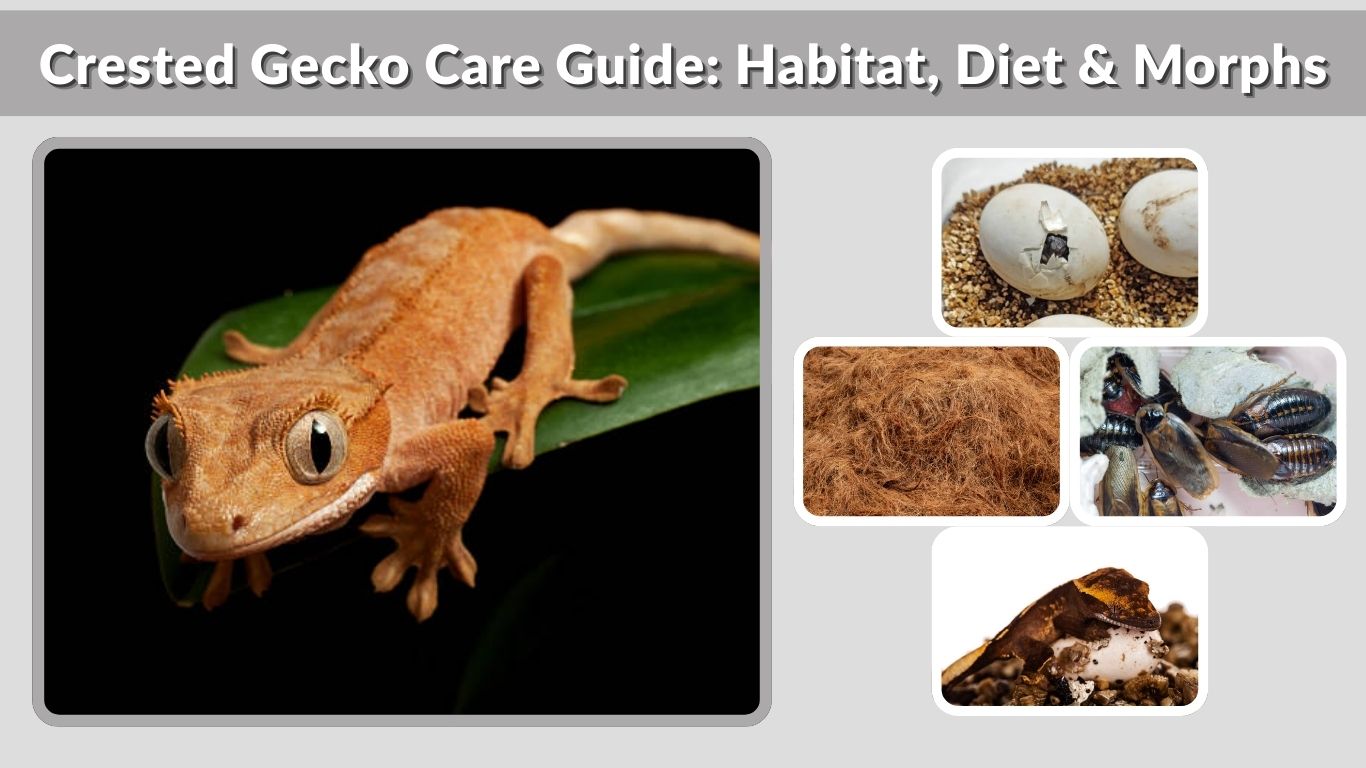
The crested gecko (Correlophus ciliatus) is native to New Caledonia, a group of islands in the South Pacific. They were once believed to be extinct until they were rediscovered in 1994.
Here are some quick crested gecko facts:
- They are arboreal, meaning they live in trees.
- They have sticky toe pads for climbing glass and branches.
- They are nocturnal and most active at night.
- They have soft, velvety skin and eyelash-like crests above their eyes.
- They do not require intense UVB lighting like many reptiles.
Are crested geckos nocturnal? Yes. They sleep during the day and become active in the evening, making them interesting pets for nighttime observation.
Crested Gecko Size and Growth
Crested gecko size depends on age, genetics, and diet. Hatchlings are very small but grow steadily during their first year.
On average:
- Hatchlings: 2–3 inches long
- Juveniles: 4–6 inches
- Adults: 7–9 inches total length
Adult crested geckos typically weigh between 35 and 60 grams.
Crested Gecko Growth Chart
| Age | Weight | Size |
| Hatchling (0–2 months) | 2–4 grams | 2–3 inches |
| Juvenile (3–9 months) | 7–25 grams | 4–6 inches |
| Sub-Adult (9–18 months) | 25–35 grams | 5–8 inches |
| Adult (18+ months) | 35–60 grams | 7–9 inches |
A crested gecko baby grows rapidly during the first year. Growth slows once they reach adulthood, usually around 18 months.
A healthy crested gecko adult should have a filled-out body and strong climbing ability.
Crested Gecko Lifespan
Many new owners ask, how long do crested geckos live? With proper crested gecko care, they typically live between 15 and 20 years in captivity.
The crested gecko life span depends on several factors:
- Proper temperature and humidity
- Balanced crested gecko diet
- Clean habitat
- Low stress levels
- Access to veterinary care
In the wild, lifespan may be shorter due to predators and environmental challenges. In captivity, consistent care can significantly increase longevity.
Because of their long lifespan, crested geckos should be considered a long-term commitment.
Crested Gecko Habitat Setup
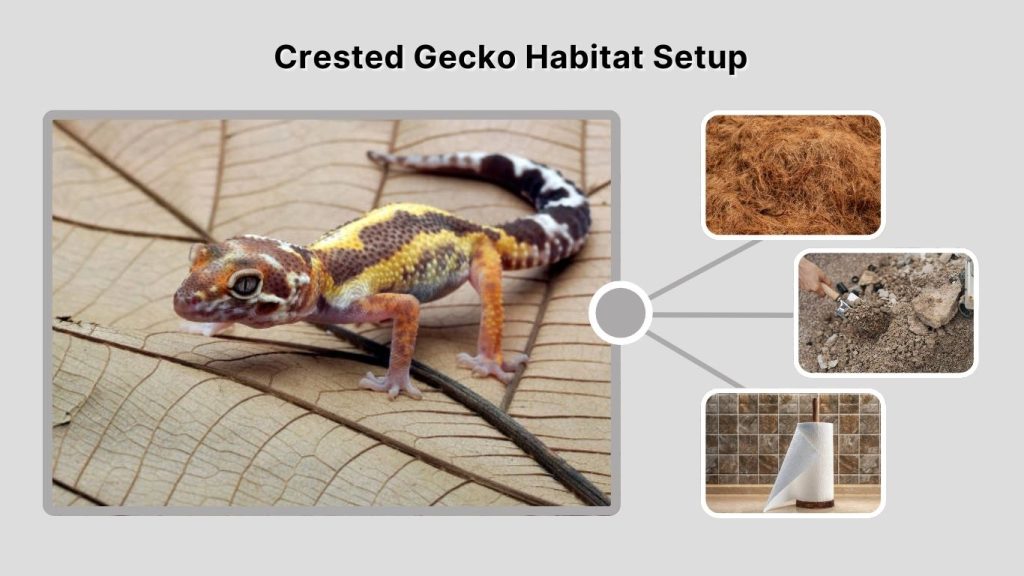
Creating the right crested gecko habitat is essential for health and comfort. Unlike leopard geckos, crested geckos require vertical space because they are tree dwellers.
Tank Size
A proper crested gecko setup includes a vertically oriented enclosure:
- Juvenile: 12x12x18 inches minimum
- Adult: 18x18x24 inches minimum
Larger enclosures are always better, especially for adults.
Temperature Requirements
Crested geckos prefer moderate temperatures:
- Ideal range: 72–78°F
- Avoid temperatures above 82°F
Overheating is one of the biggest risks in crested gecko care. They do not require basking lights in most homes.
Humidity Levels
Humidity should stay between 50–70%. Light misting once or twice daily helps maintain proper moisture levels.
The enclosure should dry slightly between mistings to prevent mold growth.
Substrate Options
Safe substrate choices include:
- Coconut fiber
- Reptile soil mixes
- Paper towels (especially for babies)
Loose sand should never be used.
Plants and Climbing Decor
Because they are arboreal, crested geckos need:
- Vertical branches
- Cork bark
- Vines
- Live or artificial plants
These provide hiding spots and climbing surfaces, reducing stress.
Crested Gecko Diet and Feeding
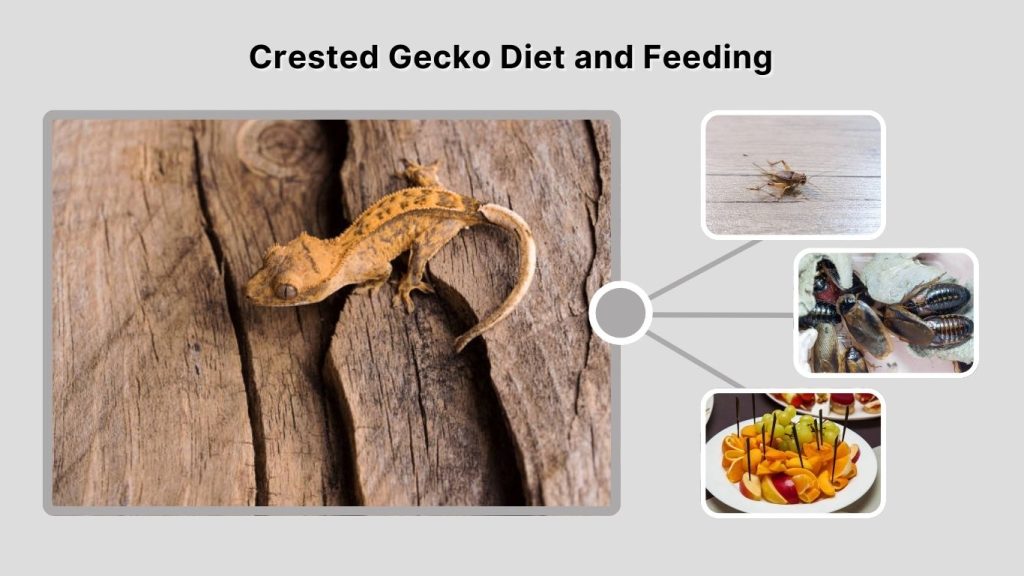
Understanding what do crested geckos eat is key to proper care. Unlike many reptiles, crested geckos do not require a fully insect-based diet.
What Do Crested Geckos Eat?
Their main diet should consist of commercial crested gecko diet (CGD), a powdered formula mixed with water. These diets are specially designed to provide balanced nutrition.
In addition to CGD, they may eat:
- Crickets
- Dubia roaches
- Occasional fruit treats
Insects should be offered occasionally and dusted with calcium.
Crested Gecko Feeding Schedule
Feeding frequency depends on age:
- Baby crested gecko: Feed daily
- Juvenile: Every other day
- Adult: 3 times per week
Always remove uneaten food after 24 hours to maintain cleanliness.
Crested Gecko Diet List
A balanced crested gecko diet is essential for long-term health. While commercial powdered food should be the staple, variety can improve enrichment and nutrition.
Here is a simple crested gecko diet list:
Staple Food
- Commercial crested gecko diet (CGD powder)
Protein Sources (Occasional)
- Crickets
- Dubia roaches
- Black soldier fly larvae
Occasional Treats
- Mashed banana
- Mango
- Papaya
Fruit should only be offered sparingly because too much sugar can upset digestion. Insects should be gut-loaded and lightly dusted with calcium before feeding.
A balanced feeding routine supports proper growth, strong bones, and a healthy crested gecko life span.
Crested Gecko Morphs and Colors
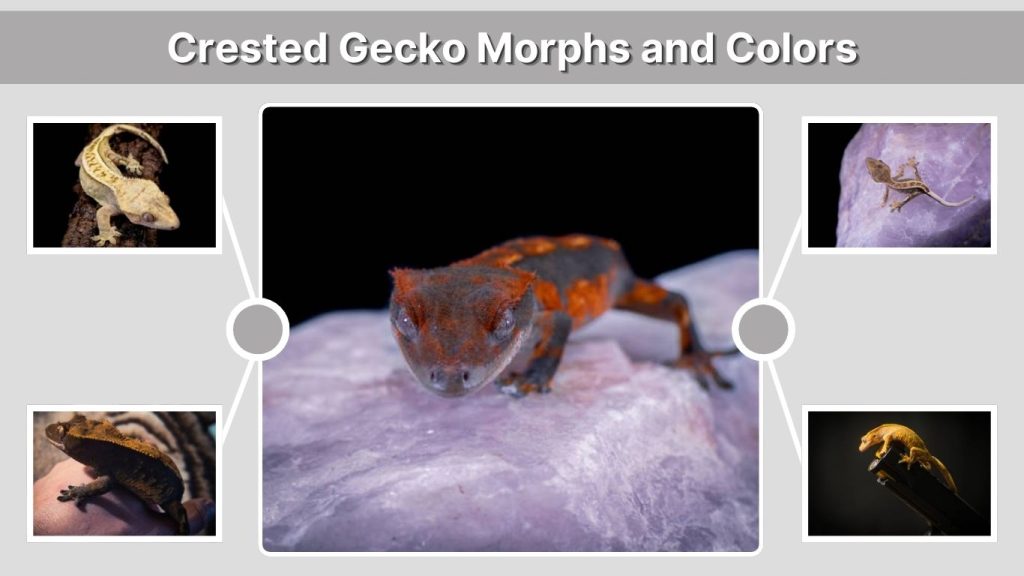
One reason crested geckos are so popular is their incredible variety of morphs and colors. Crested gecko morphs refer to different color patterns and genetic traits.
Common crested gecko colors include:
- Red
- Orange
- Yellow
- Cream
- Brown
- Black
Popular Crested Gecko Morphs
Here are some well-known morph types:
- Flame – Cream pattern on sides and back
- Harlequin – Heavy side and leg patterning
- Dalmatian – Black or red spots across body
- Pinstripe – Light-colored lines along the back
- Tiger/Brindle – Vertical stripe patterns
Crested Gecko Lily White
The crested gecko Lily White is one of the most sought-after morphs. It displays strong white patterning along the sides and back. Because it is a dominant genetic trait, breeding requires careful planning.
Black Crested Gecko
A black crested gecko is usually a very dark morph, often referred to as axanthic or melanistic types. These geckos have reduced yellow or red pigment, giving them a darker appearance.
Crested Gecko Morph Chart
| Morph | Key Features | Rarity Level |
| Flame | Light pattern on sides | Common |
| Harlequin | Heavy cream pattern | Common |
| Dalmatian | Black/red spots | Common |
| Pinstripe | Cream lines along dorsal ridge | Common |
| Lily White | Strong white coloration | Rare |
| Axanthic (Dark/Black) | Reduced warm colors | Rare |
Morphs affect appearance only and do not change basic care requirements.
Crested Gecko Tail Guide
The crested gecko tail is prehensile, meaning it helps them grip branches while climbing. It acts like a fifth limb for balance and stability.
However, crested geckos can drop their tail if stressed or frightened. Unlike some lizards, the tail does NOT grow back.
A crested gecko without tail is often called a “frog butt” because of the rounded appearance. Fortunately, a crested gecko no tail can live a perfectly healthy life. The tail is helpful for climbing but not required for survival.
Avoid grabbing the tail and minimize sudden stress to reduce the risk of tail loss.
Crested Gecko Eggs and Breeding
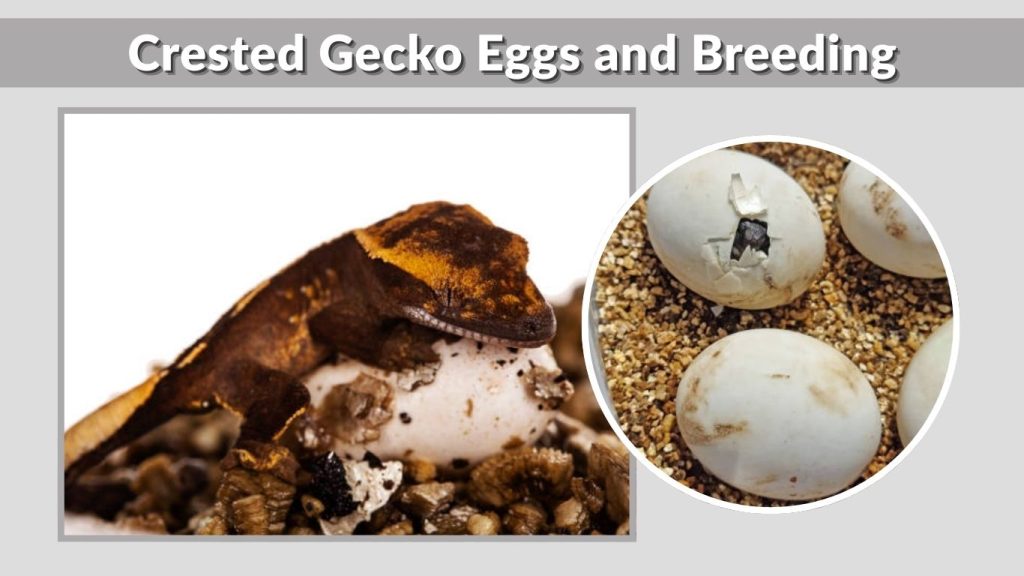
Female crested geckos can lay eggs once they reach maturity, typically around 18 months of age and 40 grams in weight.
Crested Gecko Male vs Female
There are several visible differences between males and females:
- Males have a noticeable hemipenal bulge at the base of the tail.
- Males develop femoral pores along the underside.
- Females usually lack a pronounced bulge.
Females lay two eggs per clutch and may lay multiple clutches during breeding season.
Incubation
Crested gecko eggs typically incubate for 60–90 days at stable temperatures between 70–75°F. Proper humidity is crucial to prevent egg dehydration.
Breeding should only be attempted by prepared keepers with proper housing for hatchlings.
Baby Crested Gecko Care
Caring for a crested gecko baby requires slightly more attention than caring for adults.
Baby crested geckos should be housed in smaller enclosures to help them locate food easily. Paper towels are recommended as substrate for easy cleaning and monitoring.
Humidity should remain consistent but not overly wet. Light misting daily helps support proper shedding.
Because babies are more delicate, avoid excessive handling during the first few months. Proper nutrition and stable environmental conditions are critical for healthy growth.
Common Crested Gecko Care Mistakes
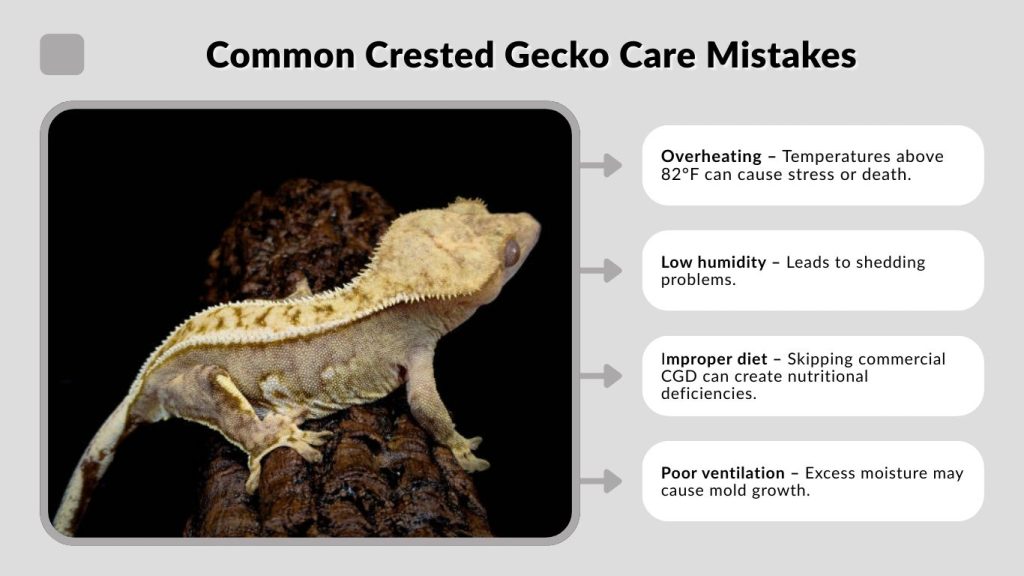
Even though they are hardy reptiles, certain mistakes can cause health problems.
Common issues include:
Overheating – Temperatures above 82°F can cause stress or death.
Low humidity – Leads to shedding problems.
Improper diet – Skipping commercial CGD can create nutritional deficiencies.
Poor ventilation – Excess moisture may cause mold growth.
Overhandling – Causes stress and possible tail loss.
Following a structured crested gecko care routine prevents most of these problems.
Complete Crested Gecko Care Checklist
- Vertical enclosure (18x18x24 for adults)
- Temperature between 72–78°F
- Humidity 50–70%
- Commercial crested gecko diet as staple
- Occasional insects
- Daily light misting
- Plenty of climbing decor
- Gentle handling
With proper care, crested geckos can thrive for many years and make fascinating, low-maintenance reptile pets.
FAQs
How long do crested geckos live in captivity?
With proper crested gecko care, they typically live 15 to 20 years in captivity. Stable temperatures, correct humidity, and a balanced diet play a major role in longevity. Poor husbandry, especially overheating, can significantly shorten their life span.
What do crested geckos eat daily?
Crested geckos primarily eat commercial powdered crested gecko diet (CGD) mixed with water. Babies may eat daily, while adults eat several times per week. Insects like crickets or roaches can be offered occasionally for extra protein and enrichment.
Are crested geckos nocturnal?
Yes, crested geckos are nocturnal. They sleep during the day and become active at night. This means feeding and interaction are best done in the evening when they are naturally alert and exploring their enclosure.
Can a crested gecko live without its tail?
Yes, a crested gecko without tail can live a healthy, normal life. Unlike some lizards, their tail does not grow back once dropped. While the tail helps with balance, it is not essential for survival or long-term health.
How can you tell a male vs female crested gecko?
Male crested geckos have a visible hemipenal bulge at the base of the tail and noticeable femoral pores. Females lack the pronounced bulge and typically have a smoother underside. These differences become more obvious once the gecko reaches maturity.