





A white weasel is not a separate animal species but a seasonal form of certain weasels that turn white during winter. Most commonly, the white weasel refers to the stoat (Mustela erminea) in its winter coat, also known as an ermine. This striking color change helps the animal blend into snowy landscapes for survival. In this article, you’ll learn what a white weasel really is, where it lives, why it changes color, and how it differs from similar animals.
What Is a White Weasel?
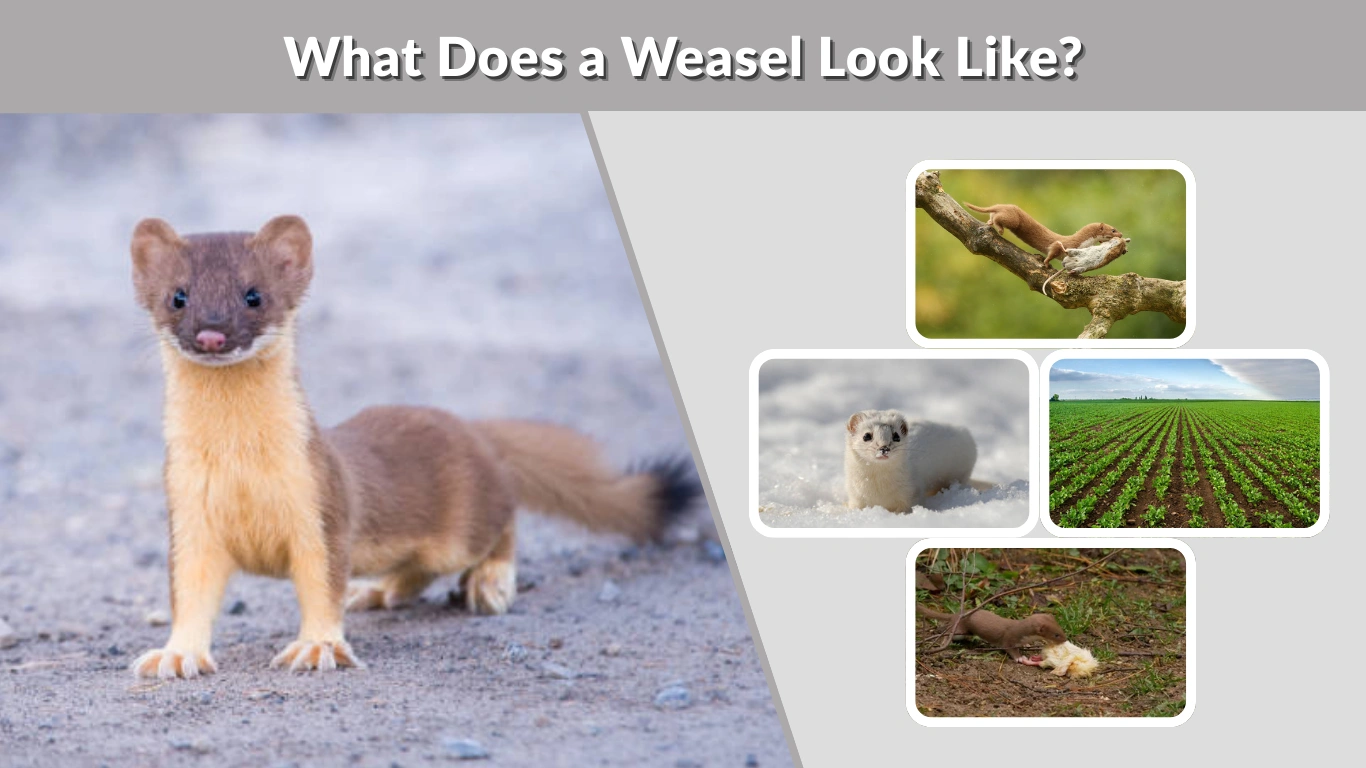
A white weasel is typically a stoat or sometimes a weasel that has changed its fur color for winter. During warmer months, these animals are usually brown with lighter underbellies. As temperatures drop and daylight hours shorten, their fur molts and grows back white.
The term “ermine” is often used when referring to the white winter coat of the stoat. Historically, ermine fur was highly valued and even worn by royalty as a symbol of purity.
Is It a Separate Species?
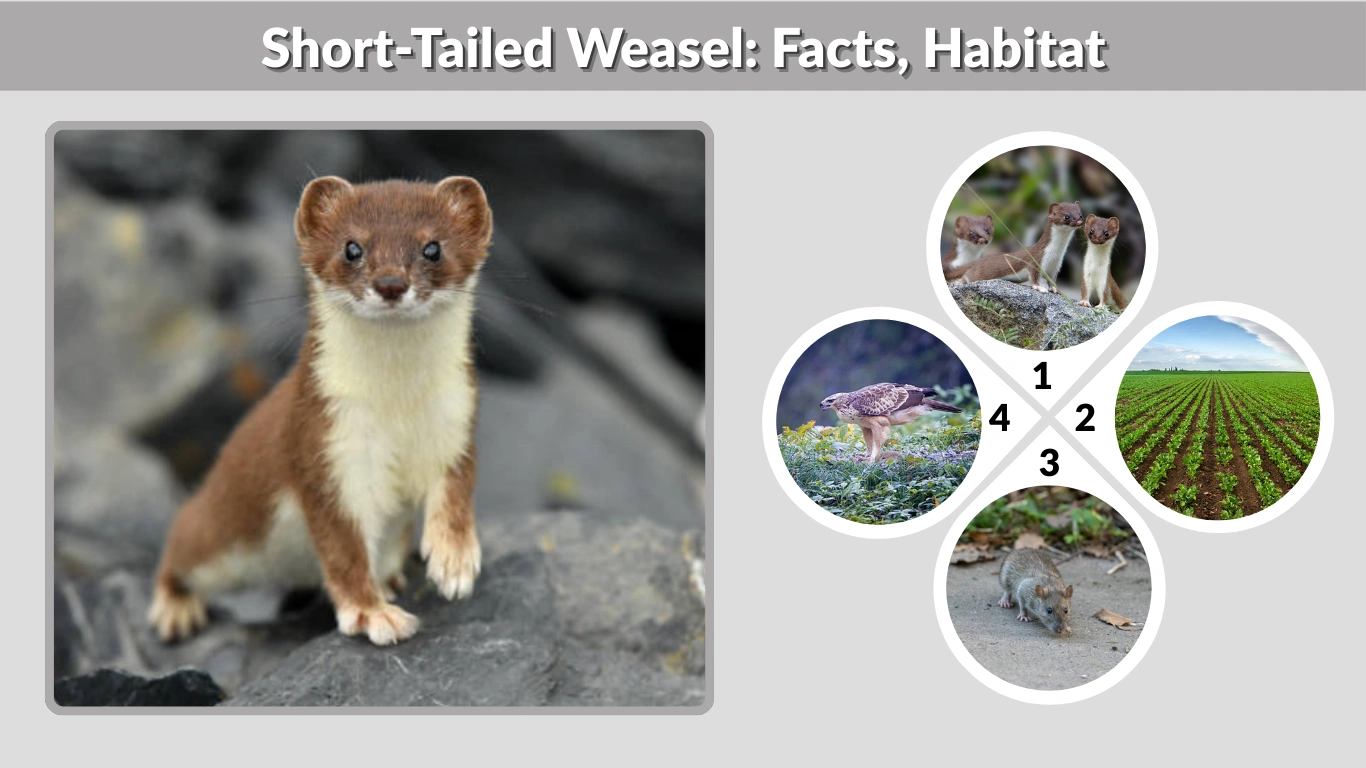
No, a white weasel is not its own species. It is simply the winter phase of certain weasel species. The most well-known example is the stoat. In summer, it has a reddish-brown back and cream-colored belly. In winter, its coat turns white—except for the tip of its tail, which remains black.
This black tail tip is one of the easiest ways to identify a stoat, even in its white form.
Scientific Classification
White weasels belong to the Mustelidae family. This group includes:
- Weasels
- Ferrets
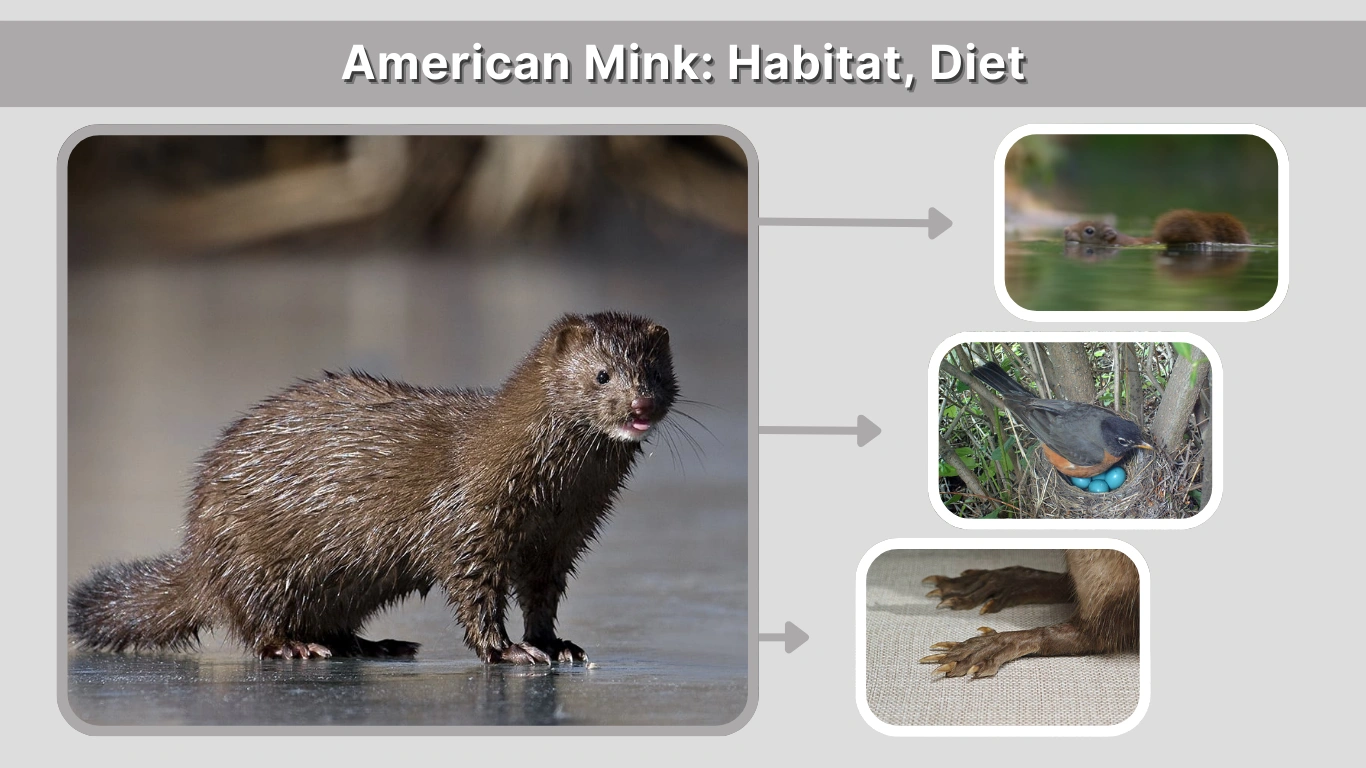
- Mink
- Otters
- Badgers
The scientific name of the stoat is Mustela erminea. It is closely related to the least weasel (Mustela nivalis), which may also turn white in colder climates.
Why Do Weasels Turn White in Winter?

The white coat is a survival adaptation. In snowy regions, brown fur would make the animal highly visible to predators and prey. By turning white, the weasel gains camouflage in winter environments.
Seasonal Camouflage
Camouflage serves two main purposes:
- Protection from predators such as foxes, hawks, and owls
- Improved hunting success against rodents and small mammals
When snow covers the ground, a white coat allows the weasel to move nearly unseen. This gives it a significant advantage both as hunter and prey.
Interestingly, in areas where snow cover is inconsistent due to climate change, white weasels may become more visible and vulnerable.
The Molting Process
The color change is triggered primarily by daylight length rather than temperature alone. As days grow shorter in autumn, hormonal changes signal the weasel to shed its brown coat and grow white fur.
In spring, the reverse happens. Longer daylight hours cause the white fur to molt, revealing the brown summer coat once again.
This transformation can take several weeks and ensures the animal is prepared for seasonal conditions.
Where Do White Weasels Live?
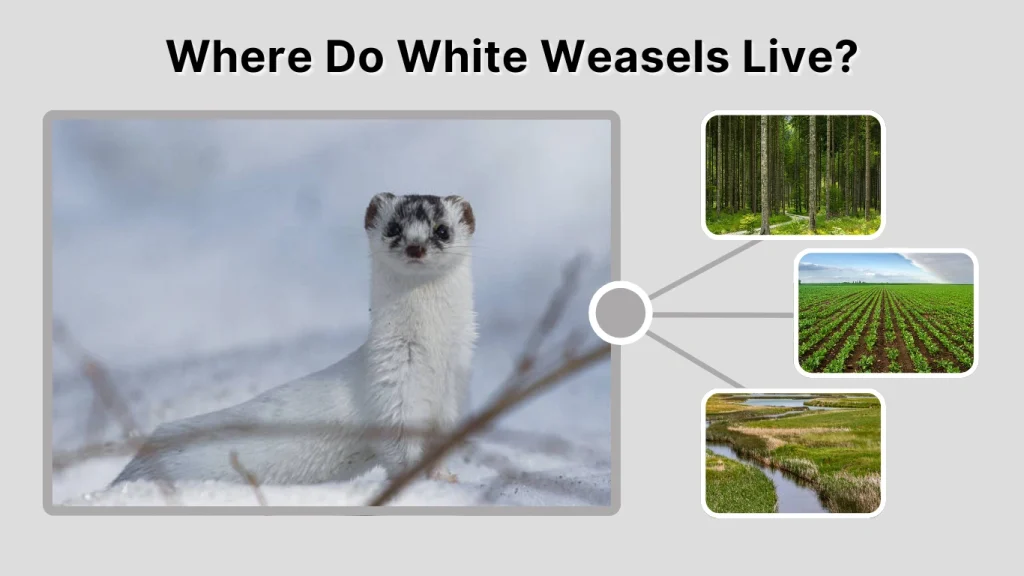
White weasels are found in regions with cold winters and regular snowfall. They are widely distributed across the Northern Hemisphere.
Geographic Distribution
You can find white-phase stoats in:
- North America (Canada, northern United States, Alaska)
- Europe
- Northern and central Asia
They are especially common in tundra and boreal forest regions.
Preferred Habitat
White weasels are highly adaptable and can live in:
- Woodlands
- Grasslands
- Farmland
- Marsh edges
- Tundra
They prefer areas with plenty of small mammals, particularly rodents, which make up the majority of their diet.
Despite their small size, white weasels are bold and active predators. They are known for entering burrows and tunnels to chase prey underground.
White Weasel vs Ermine vs Ferret
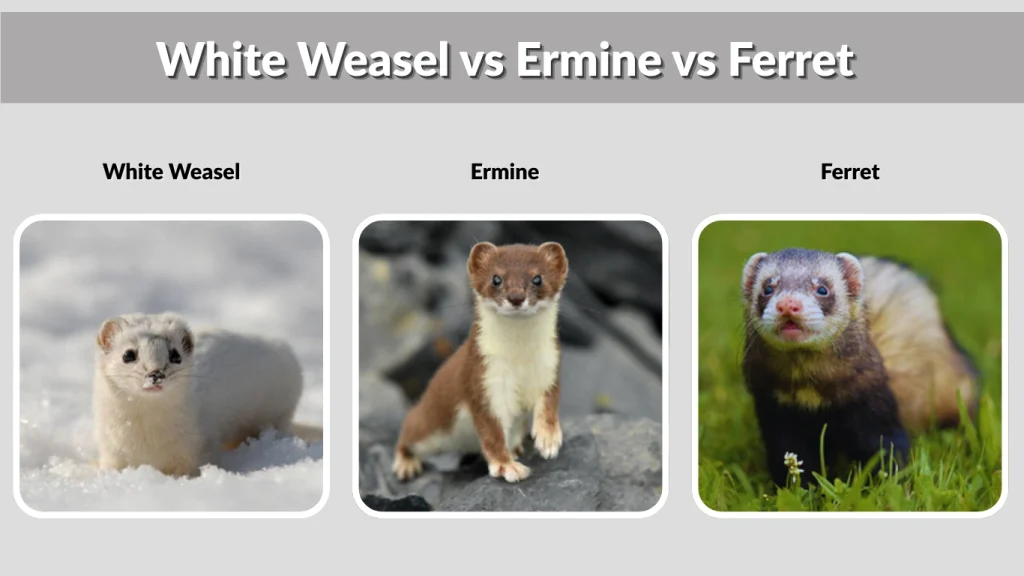
Many people confuse white weasels with ermines or ferrets. While they may look similar, there are important differences.
White Weasel vs Ermine
A white weasel and an ermine are usually the same animal. The term “ermine” specifically refers to the stoat when it has its white winter coat. In summer, the animal is called a stoat. In winter, it is often called an ermine.
One key identifying feature is the black tip on the tail. Even in winter, the stoat keeps this black tail tip, which helps distinguish it from other small white mammals.
White Weasel vs Ferret
Ferrets are domesticated animals, while white weasels are wild. Although they belong to the same Mustelidae family, they differ in behavior and body structure.
Main differences include:
- Body shape: Ferrets are stockier and slightly larger.
- Tail: Ferrets usually do not have a distinct black tail tip.
- Temperament: White weasels are solitary and territorial; ferrets are social and often kept as pets.
- Habitat: Ferrets live with humans, while white weasels live in forests, fields, and tundra.
If you see a slim, fast-moving white animal in the wild during winter with a black-tipped tail, it is likely a stoat in its ermine phase—not a ferret.
Physical Characteristics
White weasels may look delicate, but they are agile and efficient predators.
Size and Weight
The stoat typically measures:
- Body length: 6 to 12 inches (15–30 cm)
- Tail length: 3 to 5 inches (7–12 cm)
- Weight: 5 to 15 ounces (140–430 grams)
Males are generally larger than females.
Identifying Features
Key characteristics of a white weasel include:
- Long, slender body
- Short legs
- Small rounded ears
- Sharp teeth
- Black-tipped tail (in stoats)
Their body design allows them to enter narrow burrows while hunting. Even in snow, they move quickly and gracefully.
Diet and Hunting Behavior
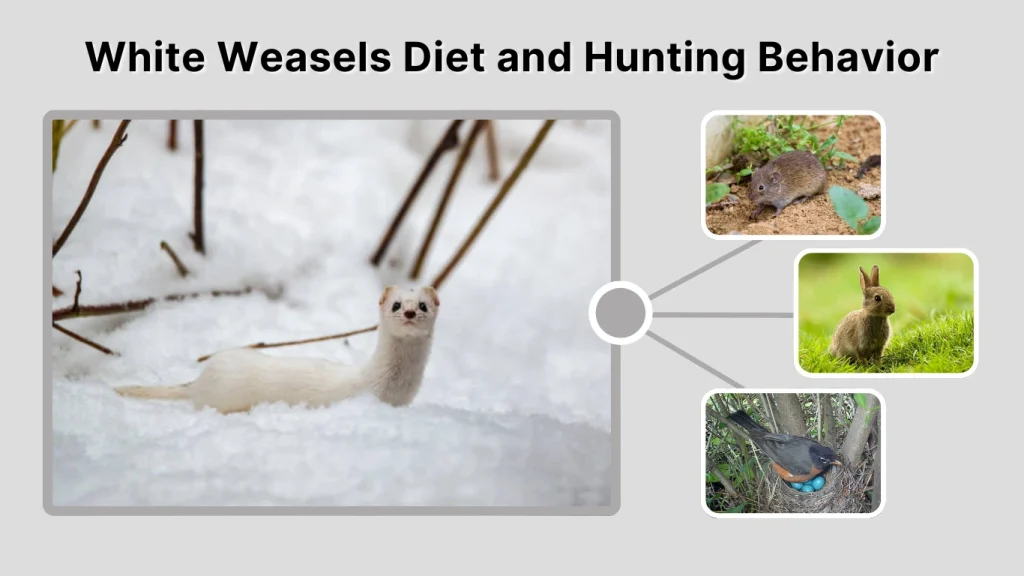
White weasels are carnivores and highly skilled hunters.
What Do White Weasels Eat?
Their diet mainly consists of:
- Mice and voles
- Rats
- Rabbits
- Small birds
- Eggs
They sometimes hunt animals larger than themselves, using speed and surprise to overpower prey.
Hunting Techniques
White weasels rely on stealth and agility. They can:
- Chase prey through tunnels
- Leap quickly to grab victims
- Deliver a precise bite to the neck
They are active both day and night, depending on prey availability. Their high metabolism requires them to eat frequently.
Are White Weasels Rare?
White weasels are not rare in regions with consistent snowfall. However, they may appear uncommon in warmer areas where winter coats do not fully develop.
Seasonal Appearance
In northern climates, seeing a white weasel in winter is normal. In southern regions, many stoats remain brown year-round because snow cover is limited.
Climate changes affecting snowfall patterns may influence how often weasels change color.
Albino vs Winter White
It is important to distinguish between a winter-white weasel and an albino weasel.
- Winter-white weasels have normal dark eyes and a black tail tip (if stoat).
- Albino weasels have pink or red eyes and lack pigment entirely.
Albino weasels are rare and have a genetic condition, while seasonal whitening is a natural adaptation.
Symbolism and Cultural Meaning
The white weasel, particularly the ermine, has held symbolic meaning throughout history.
Ermine in Royalty
In medieval Europe, ermine fur was associated with royalty and nobility. The pure white coat symbolized:
- Purity
- Honor
- High status
Royal robes were often trimmed with ermine fur as a display of wealth and power.
Folklore and Myth
In some cultures, the weasel represents cleverness, agility, and determination. Its fierce hunting ability despite its small size has made it a symbol of bravery and strategy.
FAQs
What is a white weasel called?
A white weasel is usually called an ermine, which is the winter coat phase of the stoat (Mustela erminea). The name “ermine” specifically refers to the animal when its fur turns white during snowy months.
Do all weasels turn white in winter?
No, only certain species living in cold climates change to white. Stoats and some least weasels develop winter coats, while weasels in warmer regions remain brown throughout the year.
How can you tell a white weasel from a ferret?
A white weasel is slimmer, wild, and often has a black-tipped tail. Ferrets are domesticated, slightly bulkier, and usually lack the distinctive black tail tip seen in stoats.
Are white weasels dangerous?
White weasels are not dangerous to humans. However, they are aggressive hunters toward small animals like rodents, rabbits, and birds.
Is a white weasel an albino?
Most white weasels are not albino. Their color change is seasonal. Albino weasels are rare and have pink eyes due to a lack of pigment.