



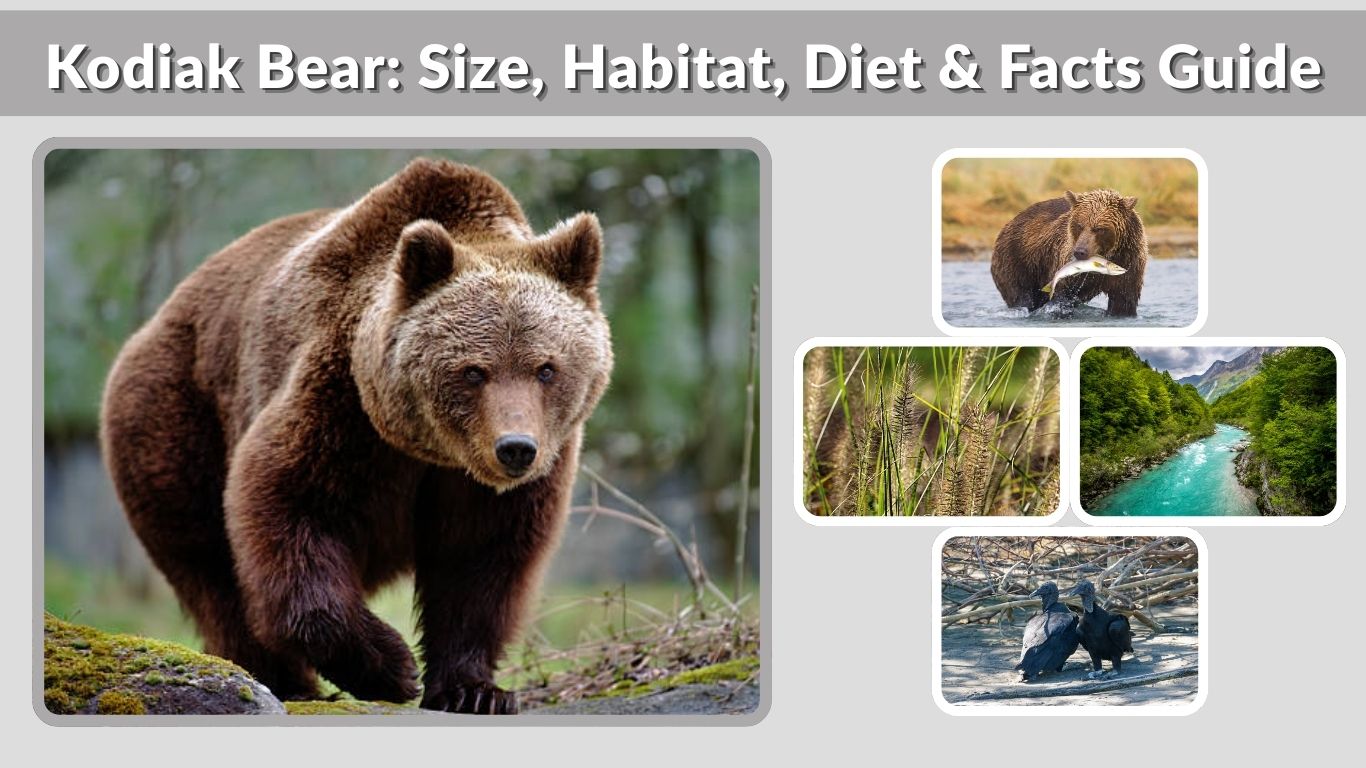
The Kodiak bear, also known as the Kodiak brown bear, is one of the largest bears in the world. Native to Alaska’s Kodiak Archipelago, this massive predator rivals the polar bear in size and strength. Isolated on islands for thousands of years, Kodiak bears have developed unique traits and behaviors. Despite their enormous size and power, they are not constantly aggressive and play a vital role in their ecosystem.
What Is a Kodiak Bear?
The Kodiak bear (Ursus arctos middendorffi) is a subspecies of the brown bear. It belongs to the same species as the grizzly bear but evolved separately due to geographic isolation.
Around 12,000 years ago, rising sea levels separated the Kodiak Archipelago from mainland Alaska. This isolation allowed the Kodiak brown bear population to develop distinct genetic and physical characteristics. Today, they remain one of the most impressive land mammals in North America.
Although people often compare Kodiak bears to grizzlies, Kodiaks are generally larger because of abundant food sources and less competition on the islands.
Where Do Kodiak Bears Live?
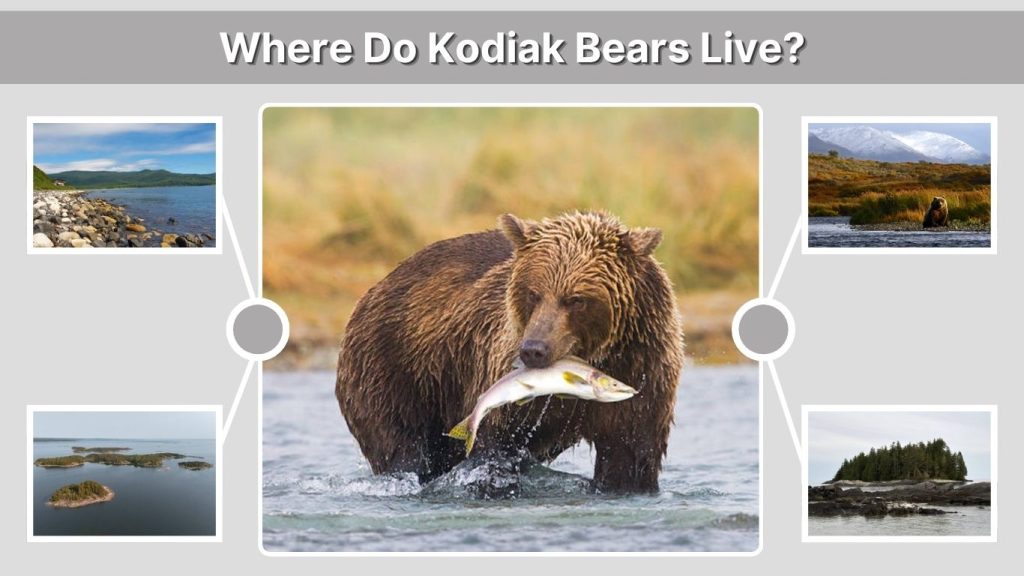
Kodiak bears live exclusively in the Kodiak Archipelago in southern Alaska. This island group includes:
- Kodiak Island
- Afognak Island
- Shuyak Island
- Several smaller surrounding islands
Because they are geographically isolated from mainland grizzly bears, Kodiak bears form a unique and carefully managed population.
Kodiak Bear Habitat and Range
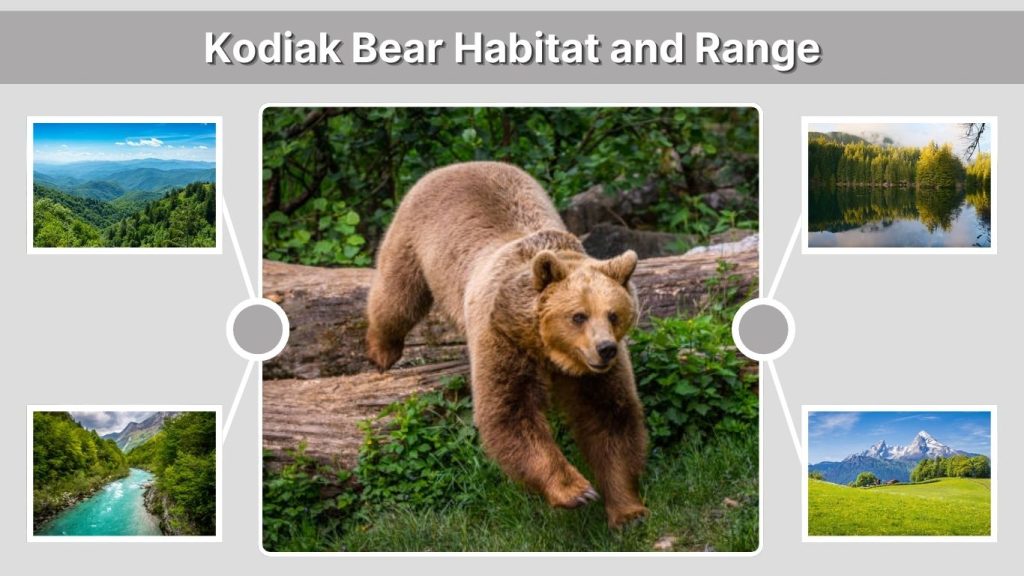
Kodiak Bear Habitat
Kodiak bears thrive in a variety of environments across the archipelago, including:
- Coastal forests
- Alpine meadows
- Mountain slopes
- River valleys
- Tundra areas
One of the main reasons Kodiak bears grow so large is the richness of their habitat. The islands provide abundant salmon, berries, and vegetation, allowing them to build substantial fat reserves before winter hibernation.
Kodiak Bear Range Map Overview
Unlike grizzly bears that roam across large portions of North America, Kodiak bears are restricted to about 5,000 square miles of island territory.
Their limited range has helped wildlife managers closely monitor the population. Strict conservation and regulated hunting programs have maintained a stable bear population for decades.
Kodiak Bear Size and Physical Characteristics
Kodiak bears are among the largest land carnivores on Earth.
Kodiak Bear Height
- Shoulder height: 4 to 5 feet (1.2–1.5 meters)
- Standing height on hind legs: up to 10 feet (3 meters)
When fully upright, a large male Kodiak bear can tower over most humans.
Kodiak Bear Weight
- Adult males: 600 to 1,500 pounds (270–680 kg)
- Adult females: 400 to 700 pounds (180–320 kg)
The largest recorded individuals have exceeded 1,500 pounds before hibernation.
Males are significantly larger than females, a difference known as sexual dimorphism. During late summer and fall, males gain enormous amounts of weight to prepare for winter dormancy.
Kodiak Bear Size Compared to Other Bears
Kodiak bears compete with polar bears for the title of largest bear species in the world. While polar bears may be slightly longer, Kodiak bears are often heavier at peak weight.
Compared to grizzly bears, Kodiaks are typically larger due to:
- High-protein salmon diets
- Limited human disturbance
- Favorable island habitat
Physically, Kodiak bears have:
- Massive heads
- Powerful shoulders
- Long claws for digging and fishing
- Thick brown fur that ranges from light blonde to dark chocolate
Kodiak Bear Diet – What Do Kodiak Bears Eat?
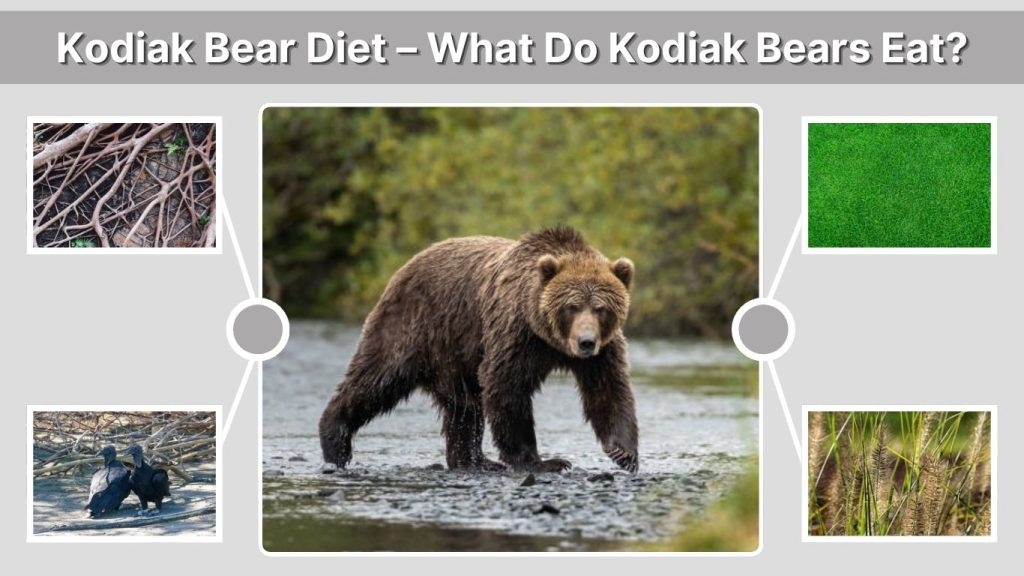
Kodiak bears are omnivores, meaning they eat both plants and animals. However, their diet changes with the seasons.
Spring Diet
After emerging from hibernation, Kodiak bears feed on:
- Grasses
- Sedges
- Roots
- Carrion
At this stage, they focus on rebuilding muscle mass after months without eating.
Summer Diet – Salmon Season
Summer is the most important feeding period. Salmon runs provide a high-protein, high-fat food source that allows Kodiak bears to grow rapidly and store fat.
Bears often gather along rivers and waterfalls to catch salmon. Despite their size, they can be surprisingly agile when fishing.
Fall Diet
In autumn, Kodiak bears eat:
- Berries
- Nuts
- Vegetation
- Late salmon runs
During this time, they enter a phase called hyperphagia, meaning they eat almost constantly to prepare for winter.
Do Kodiak Bears Eat Large Animals?
Occasionally, Kodiak bears may prey on:
- Sitka black-tailed deer
- Small mammals
However, salmon and plant matter make up the majority of their calories.
Kodiak Bear Behavior and Temperament
Are Kodiak Bears Dangerous?
Kodiak bears are extremely powerful animals and should always be treated with caution. However, they are not constantly aggressive.
Most Kodiak bears prefer to avoid human contact. Attacks are rare but can occur if a bear feels threatened, surprised, or is protecting cubs.
Because Kodiak Island has a small human population and controlled hunting regulations, human-bear conflicts are relatively low compared to mainland grizzly regions.
Social Behavior
Unlike many solitary bear species, Kodiak bears can tolerate each other in areas with abundant food, especially during salmon runs.
At fishing sites, bears establish a dominance hierarchy:
- Larger males dominate prime fishing spots
- Females with cubs are often given space
- Younger bears wait for opportunities
This structured behavior reduces conflict and injury among individuals.
Kodiak Bear vs Other Bears
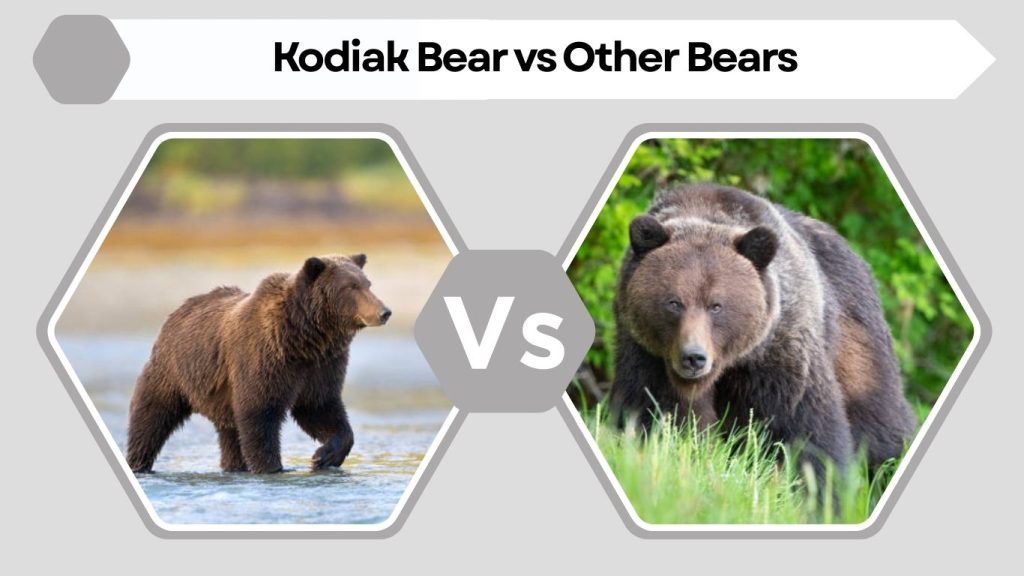
Kodiak Bear vs Grizzly Bear
Kodiak bears and grizzly bears are both subspecies of the brown bear (Ursus arctos), but they have key differences due to geography and environment.
Size: Kodiak bears are generally larger than grizzlies. While large male grizzlies may weigh 600–900 pounds, male Kodiak bears often exceed 1,200 pounds before hibernation.
Habitat: Grizzlies live across mainland Alaska, western Canada, and parts of the northwestern United States. Kodiak bears live only on the Kodiak Archipelago.
Diet: Both eat salmon and vegetation, but Kodiaks benefit from especially rich coastal food sources, which contributes to their larger size.
Behavior: Kodiak bears tend to show more social tolerance at salmon streams due to predictable food abundance.
Overall, Kodiak bears are typically bigger and more geographically isolated than grizzlies.
Kodiak Bear vs Polar Bear
The Kodiak bear and polar bear are often compared because they are considered the two largest bear types in the world.
Size Comparison:
Polar bears are generally longer in body length, while Kodiak bears are often heavier at peak fall weight. Both can stand nearly 10 feet tall on their hind legs.
Habitat:
- Polar bears live in Arctic sea ice regions.
- Kodiak bears live in coastal and mountainous areas of Alaska.
Diet:
- Polar bears are primarily carnivorous and depend heavily on seals.
- Kodiak bears are omnivores, relying on salmon, berries, and vegetation.
While both are massive and powerful, their lifestyles are very different. Polar bears are specialized marine hunters, whereas Kodiak bears thrive in rich island ecosystems.
Kodiak Bear Reproduction and Cubs
Kodiak Bear Cubs
Female Kodiak bears typically give birth during winter hibernation, usually in January or February. Cubs are born inside dens where they remain protected from harsh weather.
A typical litter consists of:
- 1 to 3 cubs
- Most commonly 2 cubs
At birth, cubs are tiny—usually weighing less than one pound. They are blind, hairless, and completely dependent on their mother.
Cub Development
Cubs nurse throughout winter and begin emerging from the den in spring. During their first two to three years, they stay close to their mother, learning:
- How to fish for salmon
- Where to find seasonal food sources
- How to avoid dominant males
Mother bears are highly protective. Because cub survival depends heavily on maternal care, females reproduce only every three to four years.
This slow reproduction rate helps maintain population balance but limits rapid population growth.
Kodiak Bear Lifespan
In the wild, Kodiak bears typically live 20 to 25 years. Some individuals may live longer under ideal conditions.
Few natural predators threaten adult Kodiak bears. The main risks include:
- Conflicts with humans
- Competition with other bears
- Accidents or disease
In captivity, where food and medical care are consistent, Kodiak bears can sometimes live beyond 30 years.
Kodiak Bear Population and Conservation
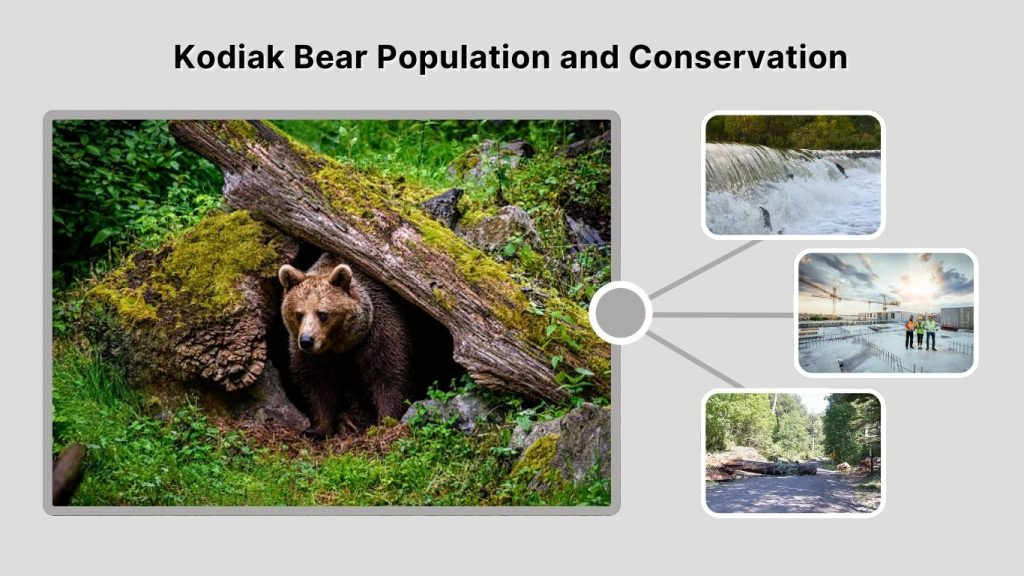
Population Estimates
The Kodiak bear population is estimated at around 3,500 individuals across the archipelago. Unlike many large predators worldwide, Kodiak bears are considered a conservation success story.
Conservation Success
Wildlife management on Kodiak Island is carefully regulated. Conservation measures include:
- Strict hunting quotas
- Habitat protection laws
- Scientific population monitoring
- Limited development in key bear habitats
Regulated hunting has been practiced sustainably for decades, helping maintain a stable population without overharvesting.
Current Threats
Although their population is stable, Kodiak bears still face potential threats such as:
- Climate change affecting salmon runs
- Increased human development
- Habitat disturbance
Because their range is limited to islands, environmental changes could significantly impact the entire population.
Interesting Kodiak Bear Facts
Here are some fascinating facts about Kodiak bears:
- They are among the largest land carnivores on Earth.
- They can run up to 30 miles per hour despite their size.
- They have an incredible sense of smell, detecting scents from miles away.
- They are strong swimmers and frequently cross rivers and coastal waters.
- They hibernate for up to seven months during winter.
- Large males can consume over 20,000 calories per day during peak feeding season.
Their combination of size, strength, and adaptability makes them one of North America’s most impressive wildlife species.
FAQs
What is a Kodiak bear?
A Kodiak bear is a subspecies of the brown bear that lives exclusively on Alaska’s Kodiak Archipelago. Scientifically known as Ursus arctos middendorffi, it is one of the largest bear types in the world and closely related to grizzly bears.
How big is a Kodiak bear?
Adult male Kodiak bears typically weigh between 600 and 1,500 pounds and can stand up to 10 feet tall on their hind legs. Females are smaller, usually weighing between 400 and 700 pounds.
Are Kodiak bears bigger than grizzlies?
Yes, Kodiak bears are generally larger than grizzly bears. While both are subspecies of brown bears, Kodiaks grow bigger due to rich food sources and geographic isolation on the Kodiak Islands.
Are Kodiak bears dangerous?
Kodiak bears are powerful animals and can be dangerous if threatened. However, they usually avoid humans. Most conflicts occur when bears are surprised or when mothers are protecting their cubs.
Where do Kodiak bears live?
Kodiak bears live only on the Kodiak Archipelago in southern Alaska, including Kodiak Island, Afognak Island, and nearby smaller islands.