



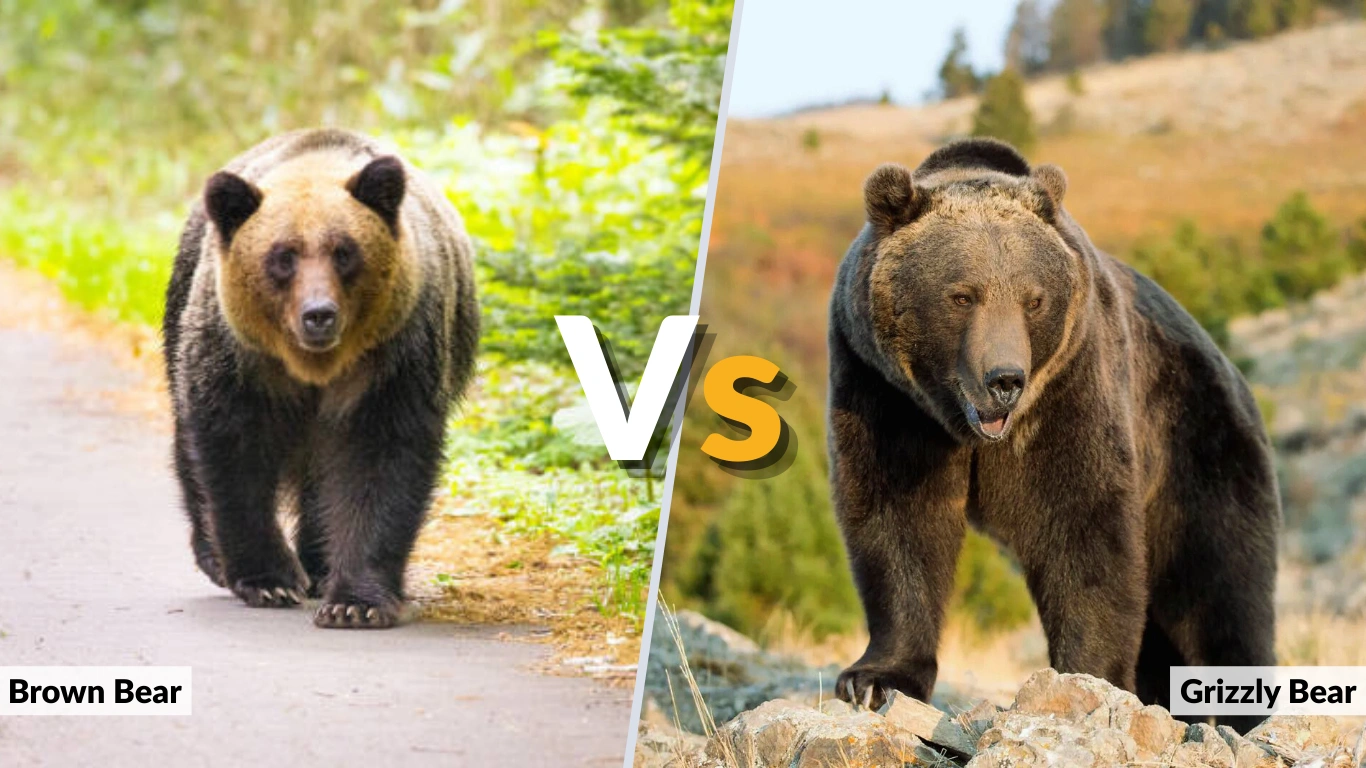
Brown bear and grizzly bear are terms often used interchangeably, which leads many people to assume they are completely different species. In reality, the relationship between the two is more nuanced. All grizzly bears are brown bears, but not all brown bears are grizzlies. The differences mainly come down to habitat, diet, physical characteristics, and geographic location. Understanding these distinctions helps clarify common misconceptions and provides a deeper look into one of the world’s most powerful predators.
Are Brown Bears and Grizzlies the Same Species?
Scientific Classification Explained
Both brown bears and grizzly bears belong to the same species: Ursus arctos. The brown bear is the broad species classification, found across North America, Europe, and Asia. Within this species, there are several subspecies.
The grizzly bear, scientifically known as Ursus arctos horribilis, is one of those subspecies. It primarily refers to brown bears living in inland areas of North America. Other subspecies include the Kodiak bear (Ursus arctos middendorffi), which inhabits Alaska’s Kodiak Archipelago.
In simple terms, “brown bear” is the umbrella category, while “grizzly bear” refers to a specific population within that category.
Why the Names Are Used Interchangeably
The confusion largely stems from regional naming traditions. In North America, inland brown bears are commonly called grizzlies, while coastal populations are usually referred to simply as brown bears. In Europe and Asia, however, they are almost always called brown bears.
Media portrayals and wildlife documentaries often blur the distinction, using the terms without clarification. As a result, many people assume they are entirely separate animals rather than closely related populations of the same species.
Physical Differences Between Brown Bears and Grizzlies
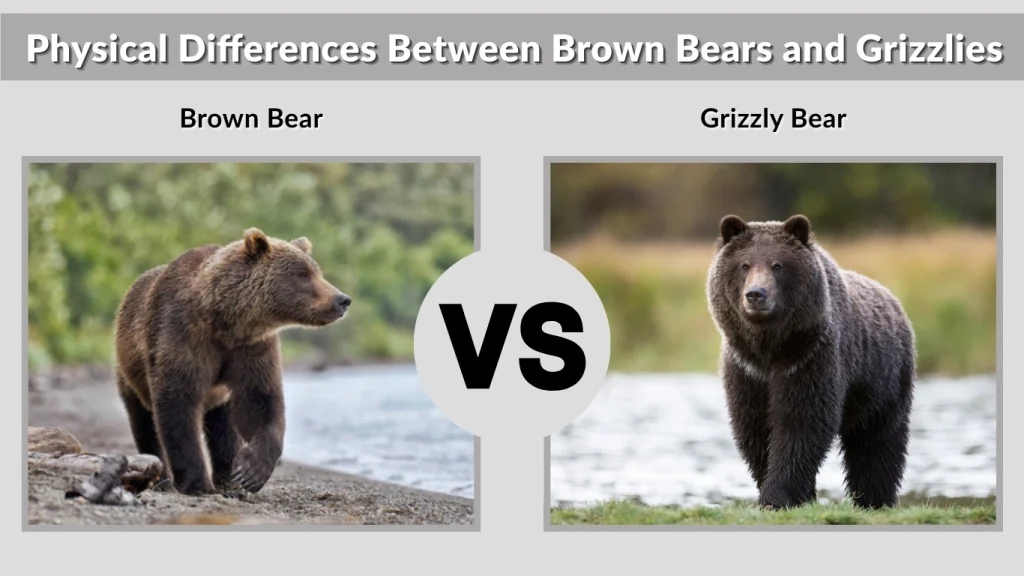
Although they are the same species, noticeable physical differences can appear depending on where the bear lives and what it eats.
Size and Weight Comparison
One of the most significant differences is size. Coastal brown bears tend to be much larger than inland grizzlies. This size difference is primarily due to diet rather than genetics.
- Coastal brown bears can weigh between 600 and 1,200 pounds for adult males.
- Inland grizzlies typically weigh between 400 and 800 pounds.
Kodiak bears, a subspecies of brown bear living in Alaska, are among the largest in the world and can rival polar bears in size.
Females in both groups are significantly smaller than males, often weighing 30–40% less.
The abundance of high-protein food sources, particularly salmon, allows coastal brown bears to grow much larger than their inland relatives.
Shoulder Hump and Body Structure
Both brown bears and grizzlies have a distinctive shoulder hump. This hump is made of powerful muscles used for digging roots, excavating dens, and hunting small mammals.
However, the hump tends to be more noticeable in grizzly bears. Inland grizzlies rely heavily on digging for food, such as ground squirrels and roots, which strengthens these shoulder muscles.
Grizzlies also typically have:
- Longer, straighter claws (adapted for digging)
- A slightly concave facial profile
- Smaller, rounded ears
Coastal brown bears often appear bulkier with broader faces and slightly shorter claws, though these traits can overlap.
Fur Color and Appearance
Despite the name, grizzly bears are not a separate color from brown bears. Both can range from light blond to dark brown and even nearly black.
The term “grizzly” actually comes from the word “grizzled,” meaning tipped with gray or silver. Many grizzlies have fur that appears frosted at the ends, giving them a slightly silver sheen in certain lighting.
However, fur color alone is not a reliable way to tell the difference between a brown bear and a grizzly. Habitat and body size are better indicators.
Habitat and Geographic Distribution
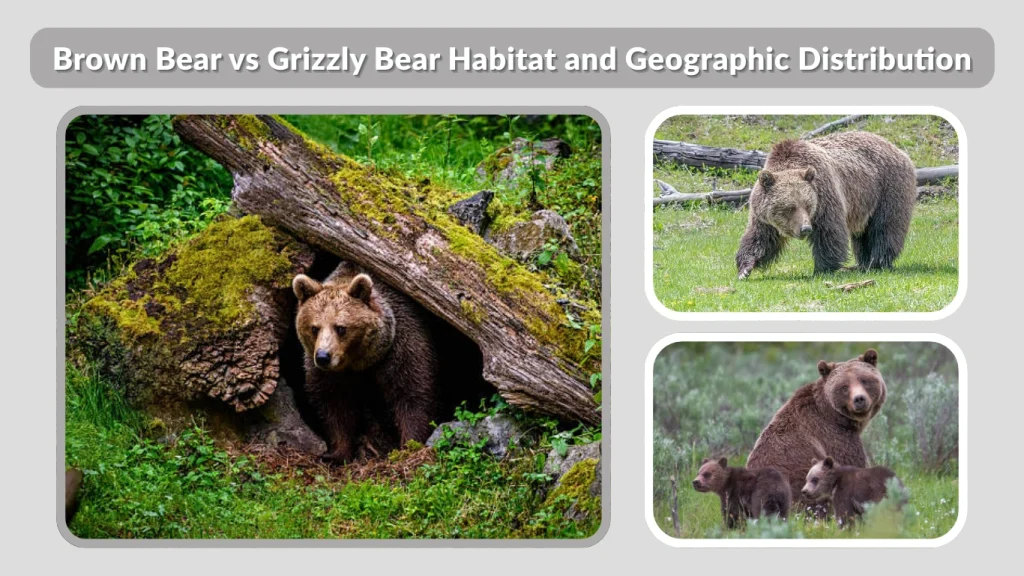
Geography plays a major role in defining whether a bear is called a brown bear or a grizzly.
Where Brown Bears Live Worldwide
Brown bears are one of the most widely distributed bear species in the world. They can be found in:
- Alaska
- Western Canada
- Parts of the northwestern United States
- Russia
- Scandinavia
- Eastern Europe
- Parts of Central Asia
Russia holds the largest population of brown bears globally.
Where Grizzly Bears Live
Grizzly bears specifically refer to inland brown bears in North America. Today, they are primarily found in:
- Alaska
- Western Canada
- Montana
- Wyoming (Greater Yellowstone Ecosystem)
- Idaho
Historically, grizzlies roamed much of the western United States, including the Great Plains. However, habitat loss and hunting drastically reduced their range.
Coastal vs Interior Environments
The most important distinction between brown bears and grizzlies is habitat type.
Coastal brown bears live near shorelines and rivers rich in salmon. These areas provide abundant, calorie-dense food. The mild coastal climate and steady food supply support larger body sizes.
Interior grizzlies inhabit mountains, forests, and plains. Food sources are more seasonal and less protein-rich. They eat berries, roots, insects, and occasionally large mammals such as elk.
Because inland environments provide fewer calories, grizzlies generally remain smaller than their coastal relatives.
Diet Differences and Their Impact on Size
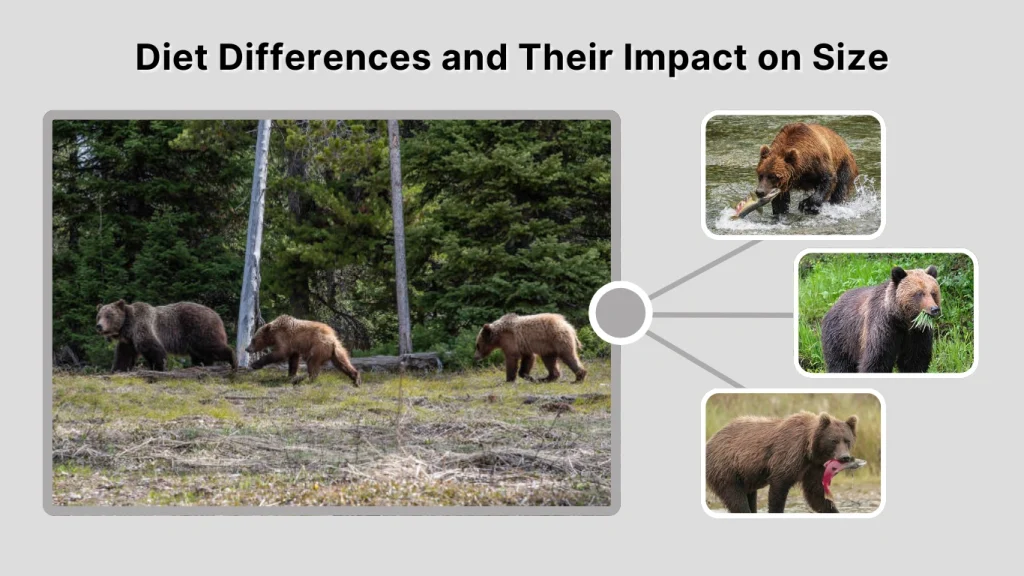
Both brown bears and grizzly bears are omnivores, meaning they eat both plants and animals. However, the type and availability of food in their habitats significantly influence their size, behavior, and overall health.
Coastal brown bears benefit from one of the richest natural food sources in the world: spawning salmon. During salmon runs, bears can consume large quantities of fish daily, building up massive fat reserves before winter hibernation. This protein- and fat-rich diet allows them to grow larger and bulkier than inland grizzlies.
In contrast, interior grizzlies rely more on seasonal vegetation such as berries, grasses, and roots. They also dig for insects and small mammals and may hunt elk or deer when opportunities arise. While they are skilled predators, large prey is not available year-round, making their diet less consistent in calories compared to coastal bears.
This dietary difference explains much of the size variation. Bears in food-rich coastal regions grow bigger, while those in harsher inland environments remain smaller but highly adaptable.
Behavior and Temperament
Behavioral differences between brown bears and grizzlies are often exaggerated, but habitat and human interaction can influence temperament.
Are Grizzlies More Aggressive?
Grizzly bears have a reputation for being more aggressive, especially in North America. However, this perception largely stems from the fact that inland grizzlies often share space with hikers, ranchers, and rural communities.
Grizzlies are highly defensive animals. They are more likely to stand their ground if surprised, particularly if they are protecting cubs or a food source. Defensive attacks usually occur when a bear feels threatened at close range.
Coastal brown bears, especially in Alaska, often encounter humans in controlled settings like national parks. In areas with abundant salmon, bears may tolerate each other—and occasionally humans—because food is plentiful.
Aggression in both groups is typically defensive rather than predatory.
Factors That Influence Behavior
Several factors shape bear behavior:
- Presence of cubs: Mothers are extremely protective.
- Food scarcity: Limited resources increase competition and stress.
- Human interaction: Bears that become accustomed to human food can become dangerous.
- Season: Pre-hibernation feeding periods may increase activity levels.
Ultimately, both brown bears and grizzlies are powerful wild animals whose behavior depends heavily on context rather than classification.
Brown Bear vs Grizzly Bear – Quick Comparison
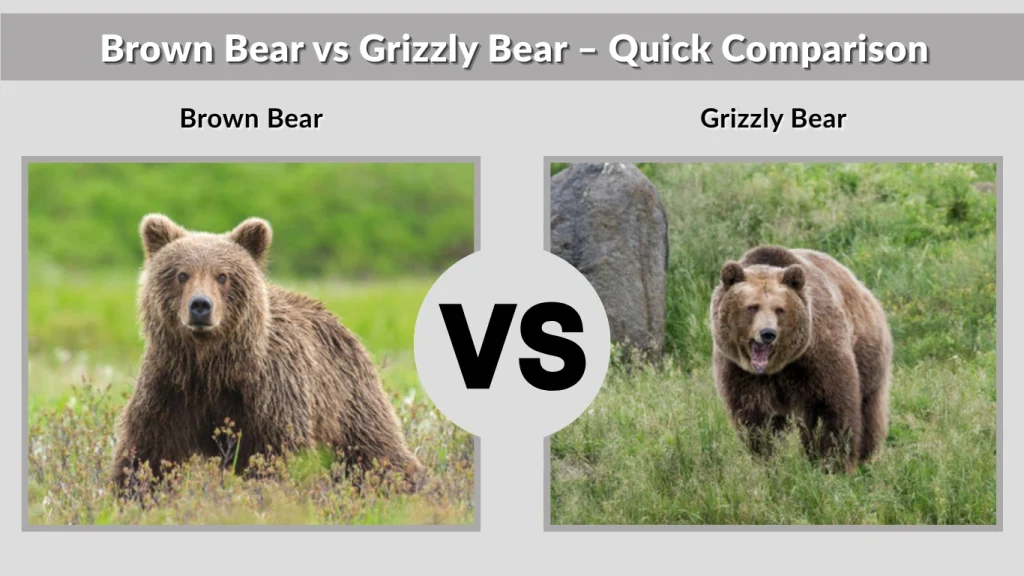
| Feature | Brown Bear | Grizzly Bear |
| Species | Ursus arctos | Ursus arctos horribilis (subspecies) |
| Size | Larger in coastal areas | Generally smaller (inland) |
| Habitat | Worldwide (N. America, Europe, Asia) | Inland North America |
| Diet | Often salmon-rich (coastal) | Mixed omnivorous diet |
| Shoulder Hump | Present | More pronounced |
| Claws | Slightly shorter (coastal types) | Longer, adapted for digging |
While these distinctions are helpful, it is important to remember that the lines are not rigid. The primary difference is geographical and ecological rather than biological separation.
Conservation Status and Population
Conservation efforts for brown bears and grizzlies vary depending on location.
In the lower 48 United States, grizzly bears are listed as threatened under the Endangered Species Act. Populations in the Greater Yellowstone Ecosystem and the Northern Continental Divide have recovered significantly since the 1970s, but habitat fragmentation and human conflict remain ongoing challenges.
In Alaska, brown bear populations are generally stable and carefully managed through regulated hunting and wildlife policies.
Across Europe, brown bear populations have made a comeback in countries like Romania, Sweden, and Finland due to habitat protection and legal safeguards. However, conflicts with livestock and rural communities continue to shape management decisions.
Globally, brown bears are not considered endangered as a species, but certain regional populations remain vulnerable.
Final Thoughts
The debate over brown bear vs grizzly bear often comes down to terminology rather than biology. A grizzly bear is simply a subspecies of brown bear living in inland North America. The most noticeable differences—size, diet, and some physical traits—are largely shaped by habitat and food availability.
Understanding these distinctions helps clear up confusion and highlights the adaptability of Ursus arctos. Whether called a brown bear or a grizzly, this remarkable animal remains one of the most iconic symbols of wilderness and conservation across the Northern Hemisphere.
FAQs
Is a grizzly bear a brown bear?
Yes, a grizzly bear is a subspecies of the brown bear (Ursus arctos). The term “grizzly” typically refers to inland North American populations, while “brown bear” is the broader species name used globally.
Which is bigger, a brown bear or a grizzly?
Coastal brown bears are generally larger than inland grizzlies due to their salmon-rich diet. However, both belong to the same species, and size differences are mainly influenced by habitat and food availability.
Are Kodiak bears considered grizzlies?
No, Kodiak bears are a separate subspecies of brown bear. They live on the Kodiak Islands in Alaska and are among the largest brown bears in the world.
Why are they called grizzly bears?
The name “grizzly” comes from the word “grizzled,” meaning gray-tipped or frosted. It refers to the silver-tipped appearance of some bears’ fur rather than their temperament.
Which bear is more dangerous?
Neither is inherently more dangerous. Both brown bears and grizzlies can be dangerous if threatened. Most attacks are defensive and occur when a bear is surprised or protecting cubs.