



Sockeye salmon is one of the most well-known and prized wild salmon species in the world. Scientifically known as Oncorhynchus nerka, this fish is famous for its deep red flesh, rich flavor, and impressive nutritional value. Sockeye salmon are native to the North Pacific Ocean and are especially abundant in Alaska, Canada, and parts of Russia and Japan.
What Is Sockeye Salmon?
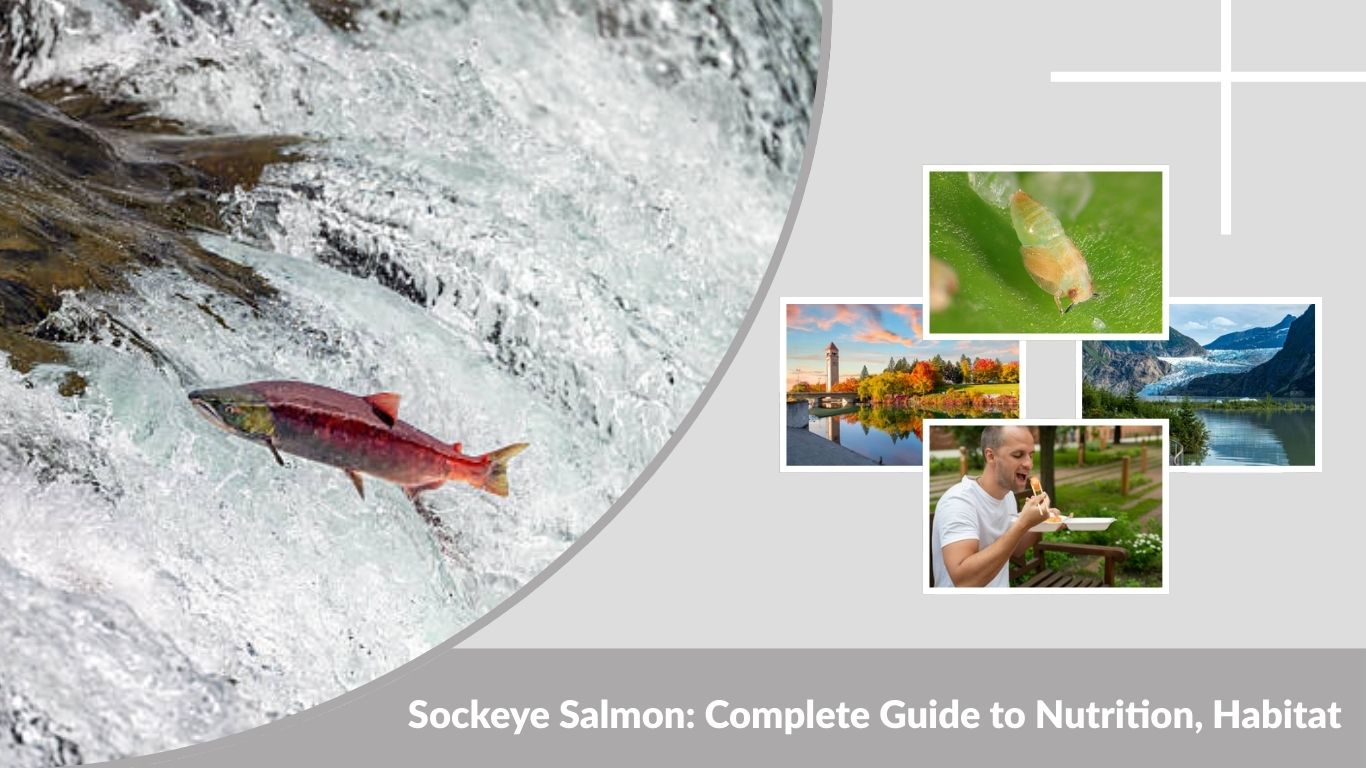
Sockeye salmon is a species of Pacific salmon known for its vibrant color and firm texture. While in the ocean, sockeye salmon typically have a silver body with a bluish-green back. However, during spawning season they undergo a dramatic transformation, turning bright red with a green head.
The bright red color of sockeye salmon meat comes from their diet, which includes large amounts of plankton and small crustaceans rich in natural pigments called carotenoids. These compounds accumulate in the fish’s flesh and give it its distinctive appearance.
Sockeye Salmon Size
Sockeye salmon are medium-sized fish compared to other salmon species. Most adult sockeye salmon measure between 18 and 31 inches long and weigh around 5 to 15 pounds. However, some individuals can grow larger depending on environmental conditions and food availability.
Their streamlined body shape helps them swim long distances during migration. Sockeye salmon are powerful swimmers, capable of traveling thousands of miles between ocean feeding grounds and freshwater spawning rivers.
Sockeye Salmon Habitat and Range
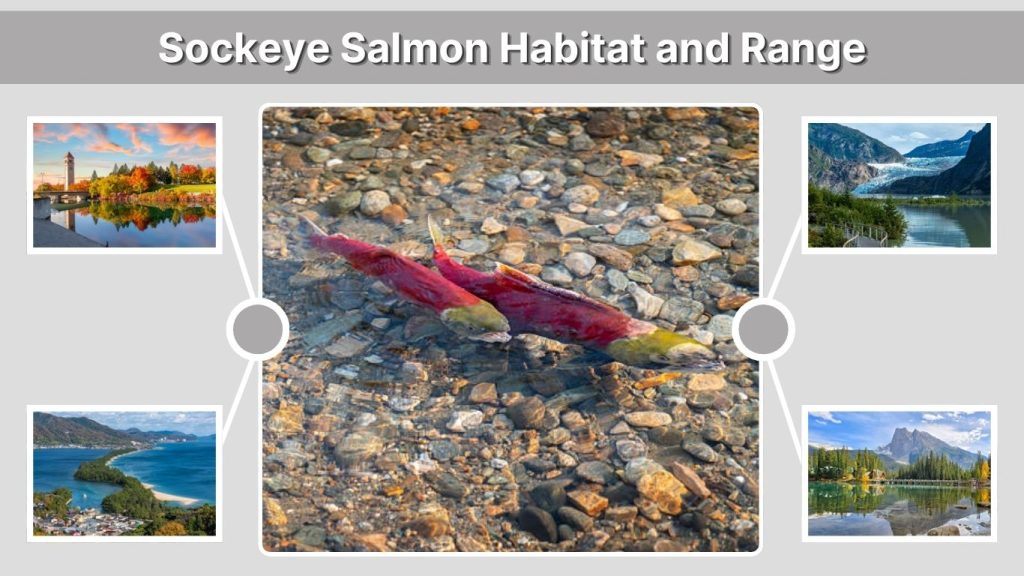
Sockeye Salmon Habitat
Sockeye salmon require both freshwater and saltwater environments to complete their life cycle. They are unique among salmon species because they rely heavily on freshwater lakes during their early development stages.
Young sockeye salmon typically grow in cold, clean, oxygen-rich freshwater lakes and rivers. These environments provide the plankton and nutrients necessary for juvenile fish to grow. After spending one to three years in freshwater, they migrate to the ocean where they continue to mature.
The ocean provides abundant food sources, allowing sockeye salmon to grow rapidly before returning to freshwater to spawn.
Sockeye Salmon Range
Sockeye salmon are found primarily in the North Pacific Ocean and surrounding coastal regions. Their range includes:
- Alaska
- British Columbia
- Washington State
- Russia
- Northern Japan
Alaska is particularly famous for its large sockeye salmon populations, especially in areas like Bristol Bay, which supports one of the largest sockeye fisheries in the world.
Sockeye Salmon Life Cycle
The sockeye salmon life cycle is one of the most fascinating natural processes in the animal kingdom. These fish undergo several stages of development and travel incredible distances throughout their lives.
Spawning Stage
Adult sockeye salmon return to the same rivers and lakes where they were born to reproduce. This process is called spawning migration and is guided by their ability to detect the unique chemical signature of their home waters.
Female salmon build nests in gravel beds called redds, where they deposit thousands of eggs.
Sockeye Salmon Eggs
Sockeye salmon eggs are small, round, and bright orange. After the female lays the eggs, the male fertilizes them. The eggs remain buried in the gravel where they are protected from predators and strong currents.
Depending on water temperature, the eggs usually hatch within six to eight weeks.
Juvenile Development
Once the eggs hatch, the young fish are called alevins. At this stage they still rely on nutrients stored in a small yolk sac attached to their bodies. When the yolk sac is absorbed, the young salmon become fry and begin feeding independently.
Juvenile sockeye salmon typically remain in freshwater lakes for one to three years before migrating to the ocean.
Sockeye Salmon Run
One of the most spectacular events in nature is the sockeye salmon run. Every year, millions of adult salmon leave the ocean and swim upstream through rivers to reach their spawning grounds.
During this migration, sockeye salmon may travel hundreds or even thousands of miles. They often leap over waterfalls and swim against strong currents to reach the exact location where they were born.
This migration is vital not only for the species but also for the ecosystems surrounding rivers and forests, as many animals depend on salmon for food.
Sockeye Salmon Diet
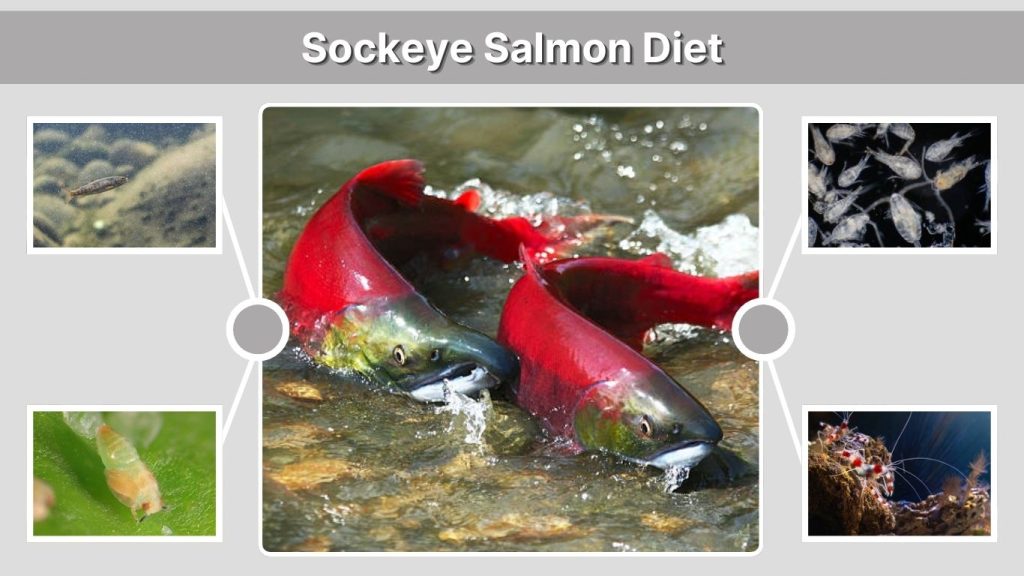
The sockeye salmon diet plays a major role in shaping the fish’s color, flavor, and nutritional value. Unlike some other salmon species that feed heavily on small fish, sockeye salmon consume a large amount of plankton and tiny aquatic organisms.
During their early life in freshwater lakes, juvenile sockeye salmon primarily feed on zooplankton, insect larvae, and microscopic crustaceans. These small organisms provide essential nutrients that support the young fish as they grow.
Once sockeye salmon migrate to the ocean, their diet becomes more varied. In marine environments they eat:
- Zooplankton
- Shrimp-like crustaceans
- Small fish
- Marine insects and larvae
One important component of their diet is krill, a small crustacean rich in natural pigments called carotenoids. These pigments accumulate in the salmon’s muscles and give sockeye salmon their famous deep red flesh.
Because of this natural diet, sockeye salmon are often considered more flavorful and nutrient-dense than many farmed fish species.
Sockeye Salmon Nutrition
Sockeye salmon is widely recognized as one of the most nutritious fish available. It contains a powerful combination of protein, healthy fats, vitamins, and minerals that support overall health.
Sockeye Salmon Nutrition Facts
A typical 100-gram serving of sockeye salmon provides approximately:
- Calories: 200–210
- Protein: 22–25 grams
- Total Fat: 12–13 grams
- Omega-3 Fatty Acids: about 2–3 grams
- Vitamin B12: more than 100% of daily recommended intake
- Vitamin D: about 70–80% of daily needs
- Selenium: about 60% of daily value
- Potassium: around 400 mg
These nutrients make sockeye salmon an excellent choice for people looking to maintain a balanced diet. The fish is especially valued for its high concentration of omega-3 fatty acids, which are essential fats the human body cannot produce on its own.
In addition to omega-3s, sockeye salmon also contains antioxidants such as astaxanthin, which contributes to its vibrant red color and provides additional health benefits.
Health Benefits of Sockeye Salmon
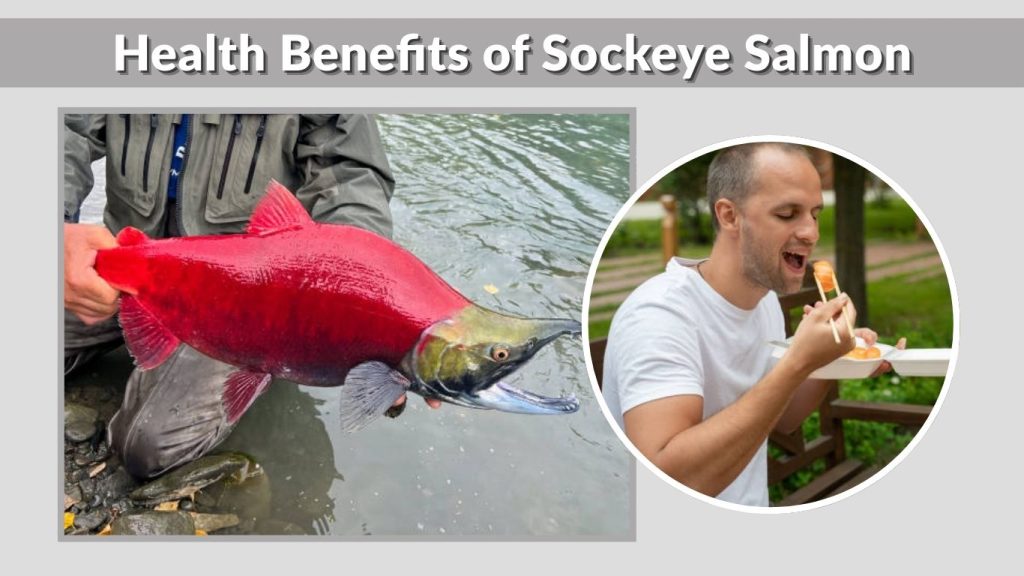
Eating sockeye salmon regularly can provide a wide range of health benefits thanks to its rich nutritional profile.
Supports Heart Health
One of the most important sockeye salmon health benefits is its ability to support cardiovascular health. Omega-3 fatty acids such as EPA and DHA help reduce inflammation, lower triglyceride levels, and improve overall heart function.
Studies suggest that regular consumption of omega-3-rich fish may reduce the risk of heart disease and stroke.
Improves Brain Function
Omega-3 fatty acids also play a crucial role in maintaining healthy brain function. DHA, in particular, supports memory, cognitive performance, and nervous system health.
Including sockeye salmon in your diet may help support long-term brain health and potentially reduce the risk of age-related cognitive decline.
Strengthens the Immune System
Sockeye salmon is rich in vitamins and minerals such as vitamin D, selenium, and vitamin B12, which contribute to a strong immune system. These nutrients help the body fight infections and support healthy cell function.
Supports Muscle Growth
With over 20 grams of high-quality protein per serving, sockeye salmon is an excellent food for muscle development and recovery. Athletes and active individuals often include salmon in their diet because it helps repair tissues and build lean muscle mass.
Sockeye Salmon vs Atlantic Salmon
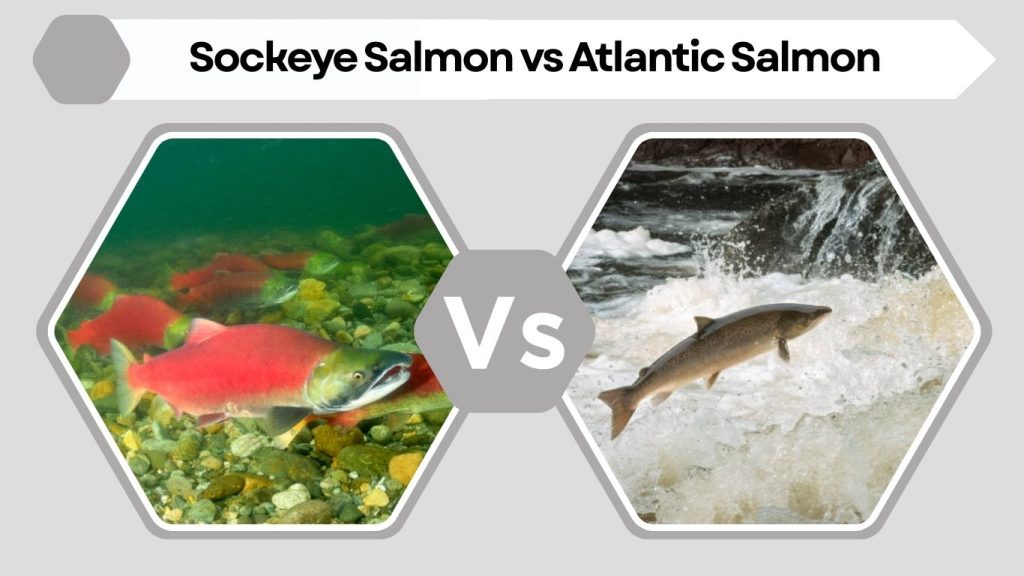
When comparing sockeye salmon vs Atlantic salmon, several key differences stand out. Both types of salmon are nutritious, but they vary in taste, origin, and fat content.
Origin
Sockeye salmon are almost always wild-caught, primarily from the North Pacific Ocean and Alaska. Atlantic salmon, on the other hand, are mostly farmed.
Wild-caught fish typically have a more natural diet and environment, which can influence their flavor and nutrient composition.
Color and Appearance
Sockeye salmon have a deep red flesh, while Atlantic salmon usually have a lighter orange color. The intense color of sockeye salmon comes from their diet of plankton and krill.
Flavor and Texture
Sockeye salmon generally has a stronger, richer flavor and a firmer texture compared to Atlantic salmon. Atlantic salmon tends to be milder and fattier, which some people prefer for certain recipes.
Nutrition Comparison
Both salmon types are rich in protein and omega-3 fatty acids. However, Atlantic salmon usually contains more total fat, while sockeye salmon is slightly leaner but still very nutritious.
Ultimately, both options are healthy, but many seafood lovers prefer sockeye salmon for its wild origin and bold taste.
Interesting Sockeye Salmon Facts
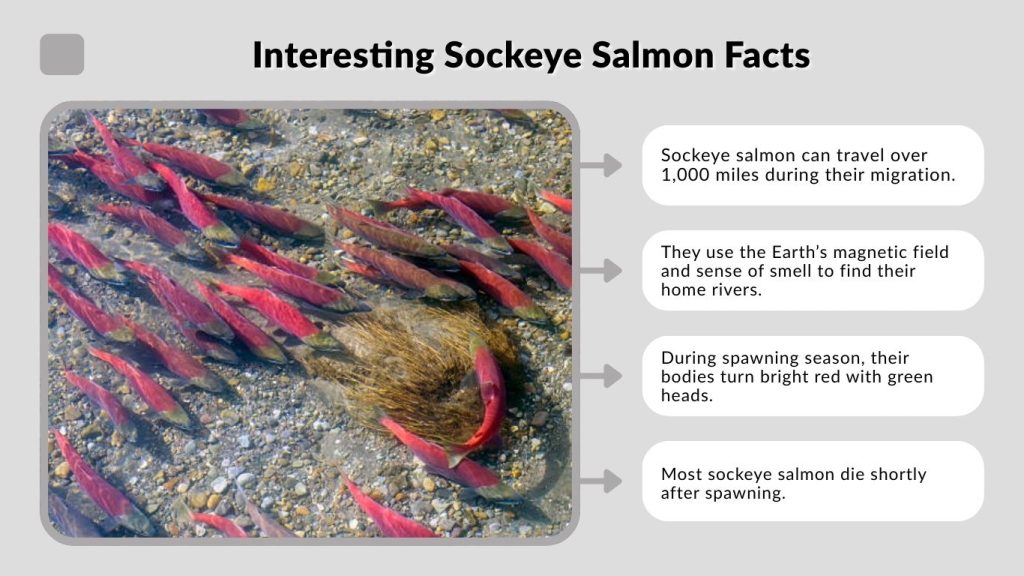
Sockeye salmon are remarkable fish with many fascinating characteristics. Here are some interesting sockeye salmon facts:
- Sockeye salmon can travel over 1,000 miles during their migration.
- They use the Earth’s magnetic field and sense of smell to find their home rivers.
- During spawning season, their bodies turn bright red with green heads.
- Most sockeye salmon die shortly after spawning.
- Sockeye salmon play a critical role in ecosystems by providing nutrients to rivers, forests, and wildlife.
Animals such as bears, eagles, and wolves rely heavily on salmon during spawning seasons.
Sockeye Salmon Pictures and Appearance
If you search for sockeye salmon pictures, you will notice that the fish looks very different depending on the stage of its life cycle.
In the ocean, sockeye salmon typically appear silver with a blue-green back, which helps them blend into marine environments and avoid predators.
However, during spawning migration, their bodies transform dramatically. They develop bright red bodies and dark green heads, making them one of the most visually striking fish species in the world.
These dramatic color changes are part of the fish’s natural reproductive process and signal that they are ready to spawn.
FAQs
What makes sockeye salmon different from other salmon?
Sockeye salmon are known for their deep red flesh, rich flavor, and wild origin. Their diet of plankton and krill gives them a stronger taste and higher levels of certain nutrients compared to many other salmon species.
Is sockeye salmon healthy to eat?
Yes, sockeye salmon is considered one of the healthiest fish you can eat. It is high in protein, omega-3 fatty acids, vitamin D, and vitamin B12, which support heart health, brain function, and overall wellness.
Where do sockeye salmon live?
Sockeye salmon live in the North Pacific Ocean but spend part of their life cycle in freshwater lakes and rivers. They are commonly found in Alaska, Canada, Russia, and parts of the northern United States.
Why are sockeye salmon red?
Sockeye salmon are red because their diet includes krill and plankton rich in carotenoid pigments, particularly astaxanthin. These pigments accumulate in the fish’s flesh and give it its distinctive color.
What do sockeye salmon eat?
Sockeye salmon mainly eat zooplankton, krill, small fish, and crustaceans. Their diet plays a key role in both their nutritional value and the color of their meat.