


The sambar deer is one of the largest and most impressive deer species found in Asia. Known for its strong body, large antlers, and dark coat, this deer is widely distributed across forests in South and Southeast Asia. Sambar deer play an important role in forest ecosystems and are also a major prey species for large predators like tigers and leopards. From their natural habitat and feeding habits to their lifespan and unique behaviors, the sambar deer is a fascinating animal to explore.
What Is a Sambar Deer?
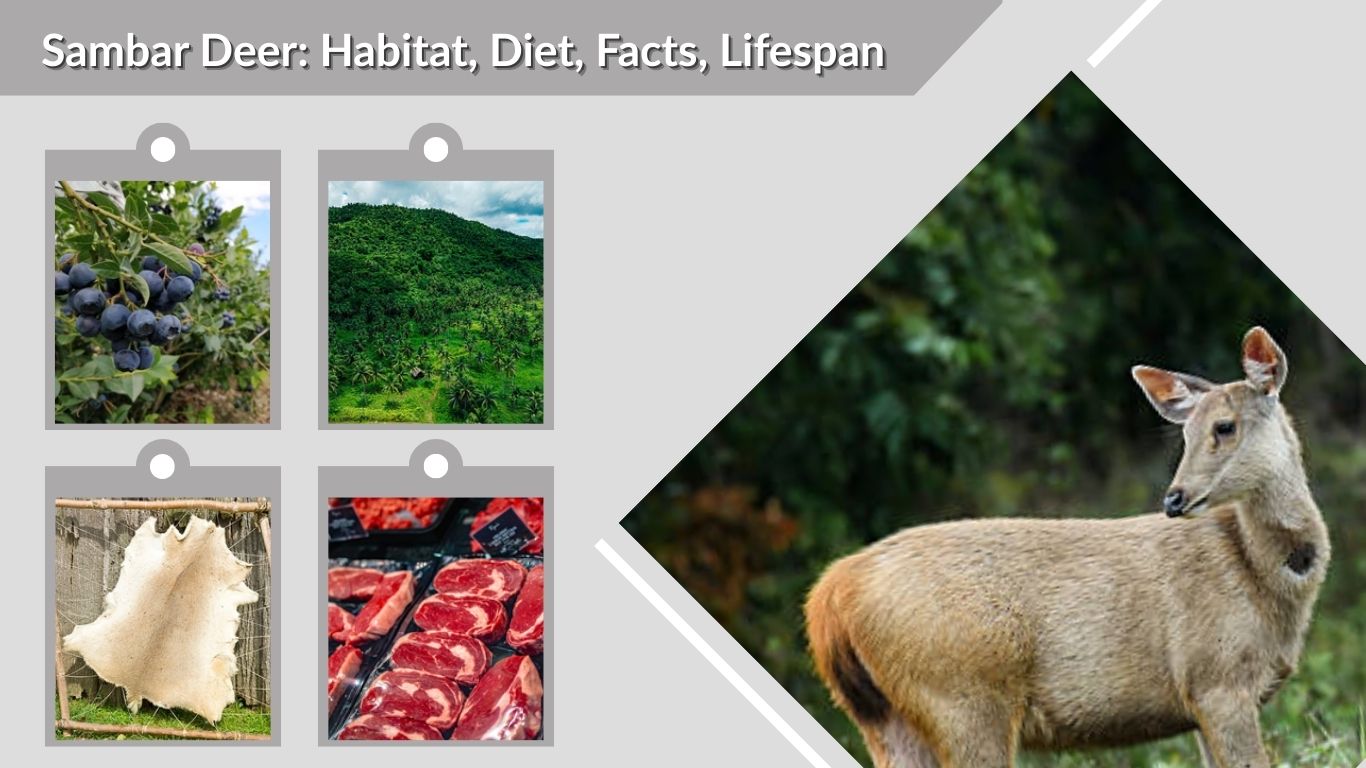
The sambar deer (Rusa unicolor) is a large deer species belonging to the family Cervidae. It is widely distributed across India, Nepal, Sri Lanka, China, and many parts of Southeast Asia. Because of its size and adaptability, the sambar deer is considered one of the most important deer species in Asian forests.
Adult sambar deer are significantly larger than many other deer species. Males can weigh between 180 and 270 kilograms (400–600 pounds) and stand about 1.2 to 1.6 meters (4–5 feet) tall at the shoulder. Females are usually smaller but still robust in build.
Male sambar deer are easily recognized by their large three-tined antlers, which they shed and regrow each year. These antlers are used during mating competitions and territorial battles between males.
The coat of a sambar deer is usually dark brown or grayish-brown, with coarse hair that helps protect the animal in forest environments. Males often have a mane-like patch of longer hair around the neck, giving them a powerful and distinctive appearance.
Sambar deer are strong and adaptable animals that can survive in a variety of habitats, ranging from dense tropical forests to mountainous regions.
Identification of Sambar Deer
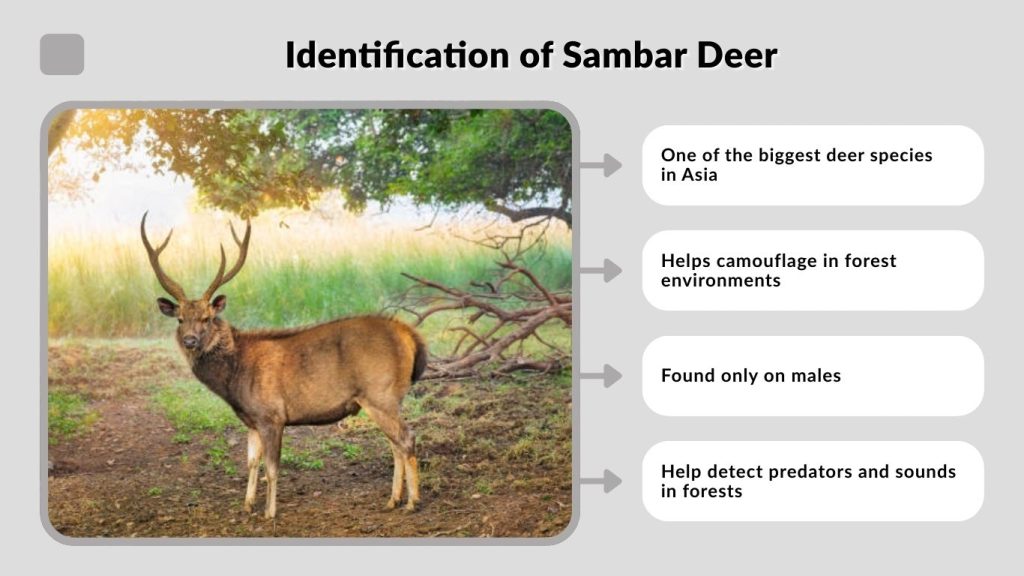
The sambar deer can be identified by its large body size, dark coat, and impressive antlers. Compared to many other deer species, sambar deer appear heavier and more muscular.
They also have long ears and a distinctive bushy tail with a light underside. Male sambar deer are especially easy to identify because of their large antlers and thicker neck mane.
Key Identification Features
- Large body size: One of the biggest deer species in Asia
- Dark brown or gray coat: Helps camouflage in forest environments
- Large three-tined antlers: Found only on males
- Long ears: Help detect predators and sounds in forests
- Bushy tail: Often raised when the deer senses danger
- Neck mane: Males develop longer hair around the neck
These characteristics help wildlife researchers and observers identify sambar deer in their natural habitats.
Sambar Deer Habitat
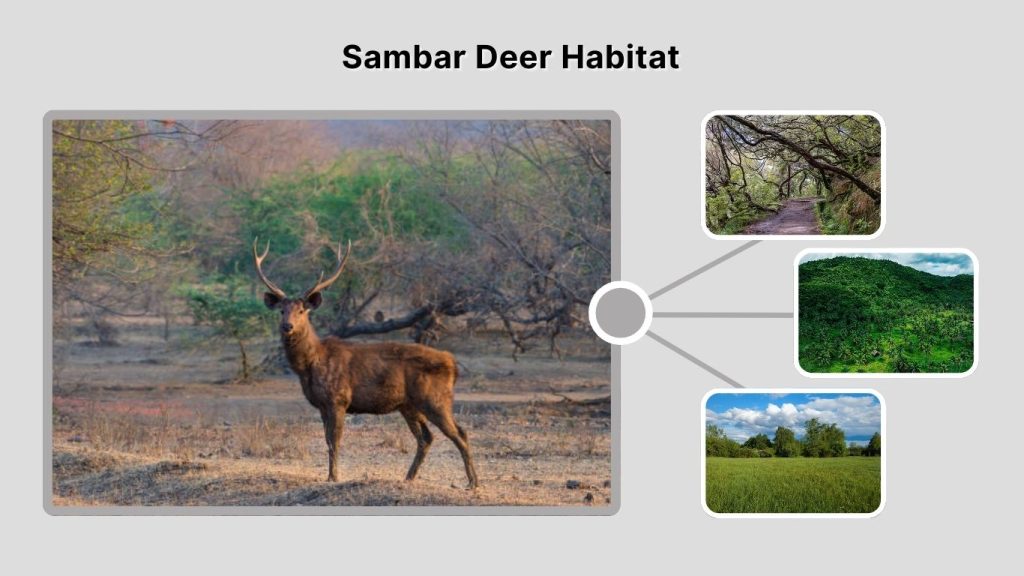
Sambar deer are highly adaptable and can live in many different forest environments. However, they are most commonly found in dense forests with nearby water sources.
Native Range
Sambar deer are native to several countries across Asia, including:
- India
- Nepal
- Sri Lanka
- Bhutan
- China
- Thailand
- Indonesia
- Malaysia
They are widely distributed across these regions and are often found in national parks and protected forests.
Introduced Populations
In addition to their native range, sambar deer have also been introduced to some other countries, such as:
- Australia
- New Zealand
- United States (small populations)
In some of these areas, they have established stable wild populations.
Preferred Environment
Sambar deer usually inhabit environments such as:
- Tropical and subtropical forests
- Mountain forests
- Forest edges and grasslands
- Wetland areas and riverbanks
They often remain close to water sources, as they frequently drink water and sometimes rest in shallow water to avoid insects and predators.
Sambar Deer Diet
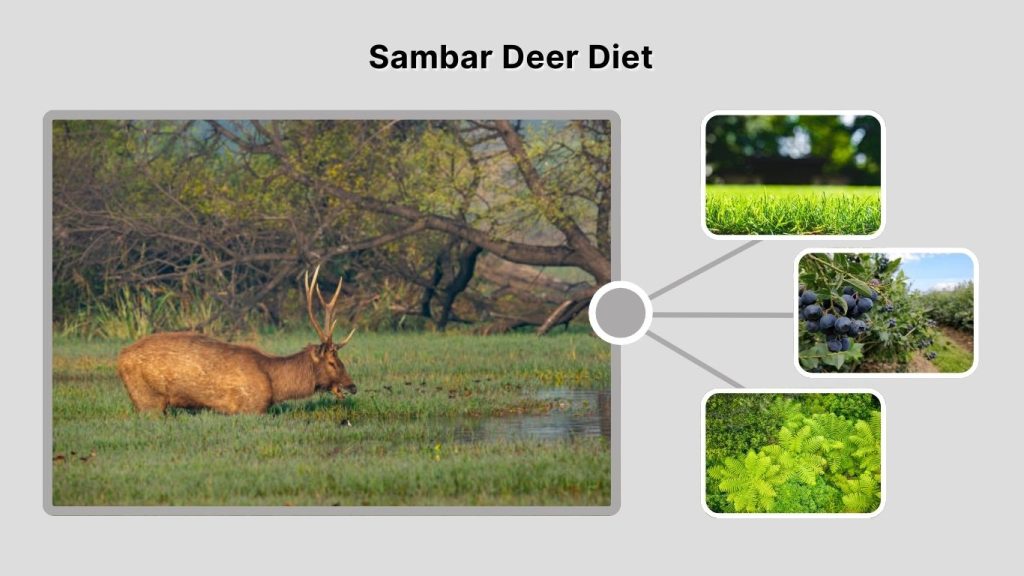
Sambar deer are herbivores, meaning they feed on plant materials. Their diet includes a wide variety of vegetation found in forests and grasslands.
What Do Sambar Deer Eat?
Sambar deer eat many types of plant foods depending on what is available in their environment. Their diet commonly includes:
- Leaves from trees and shrubs
- Fresh grasses
- Fruits and berries
- Young shoots and herbs
- Bark from trees
- Aquatic plants near wetlands
Because they are both grazers and browsers, sambar deer can feed on plants at different heights, allowing them to adapt to changing food availability.
Feeding Behavior
Sambar deer are mostly nocturnal or crepuscular, meaning they are most active during the night, early morning, and late evening. During these cooler periods, they leave forest cover to search for food.
Their feeding patterns can vary depending on the season:
- Spring and summer: Fresh grasses, leaves, and fruits are common foods.
- Autumn: They consume fallen fruits, seeds, and shrubs.
- Winter: They rely more on bark, woody plants, and remaining vegetation.
Because of their flexible feeding habits, sambar deer are able to survive in a wide range of forest ecosystems.
Baby Sambar Deer
Baby sambar deer are called fawns, like the young of most deer species. These fawns are born with natural camouflage that helps them survive in forest environments during their early life.
Appearance of Baby Sambar Deer
Newborn sambar fawns are relatively small and usually weigh around 5–8 kilograms (11–18 pounds) at birth. Their coats are typically light brown with faint spots, which help them blend into forest vegetation and tall grasses.
These spots act as camouflage, protecting the fawn from predators during the first weeks of life. As the fawn grows older, the spots gradually fade and the coat becomes darker like that of adult sambar deer.
Early Life and Development
Female sambar deer usually give birth to one fawn at a time, although twins are rare but possible. After birth, the mother often hides the fawn in thick vegetation while she searches for food.
During the first few weeks:
- The fawn stays hidden most of the time
- The mother returns regularly to nurse it
- The young deer slowly becomes stronger and more active
Within a few months, the fawn begins following its mother and learning to graze on vegetation. Most young sambar deer become independent within 6 to 12 months.
Sambar Deer Lifespan
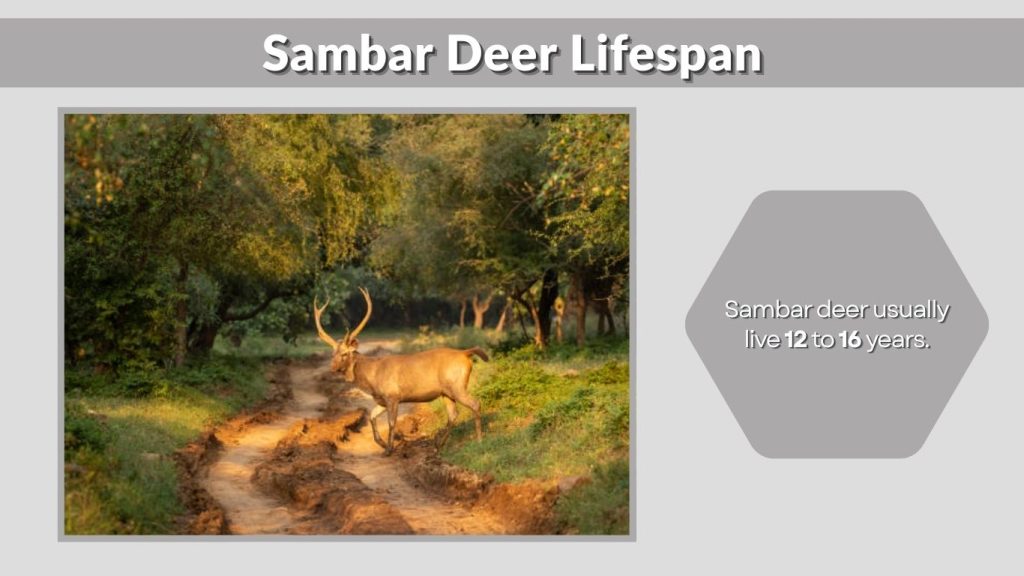
The lifespan of a sambar deer depends on environmental conditions, food availability, and the presence of predators.
In the wild, sambar deer usually live 12 to 16 years. In captivity, where they are protected from predators and receive regular care, they may live up to 20 years or more.
Several factors affect their lifespan.
Predators
Sambar deer are an important prey species for several large predators in Asia, including:
- Tigers
- Leopards
- Dholes (Asian wild dogs)
- Crocodiles near water bodies
Young fawns are especially vulnerable to predators during their early life.
Habitat and Food Availability
Healthy forests with abundant vegetation provide the best conditions for sambar deer survival. Habitat loss due to deforestation and human activities can reduce food availability and affect their lifespan.
Sambar Deer Behavior
Sambar deer show several interesting behaviors that help them survive in forest ecosystems.
Solitary Lifestyle
Unlike some deer species that form large herds, sambar deer are usually solitary animals. They may live alone or in small groups consisting of a female and her young.
Male sambar deer often maintain territories and compete with other males during the breeding season.
Alarm Calls
Sambar deer are known for their loud alarm calls. When they detect a predator, they produce a sharp call that warns other animals nearby. This behavior is especially important in forests where predators like tigers may be present.
Water Behavior
Sambar deer are strong swimmers and often spend time near water sources. They sometimes stand or rest in shallow water to cool down and avoid insects.
Sambar Deer Hunting
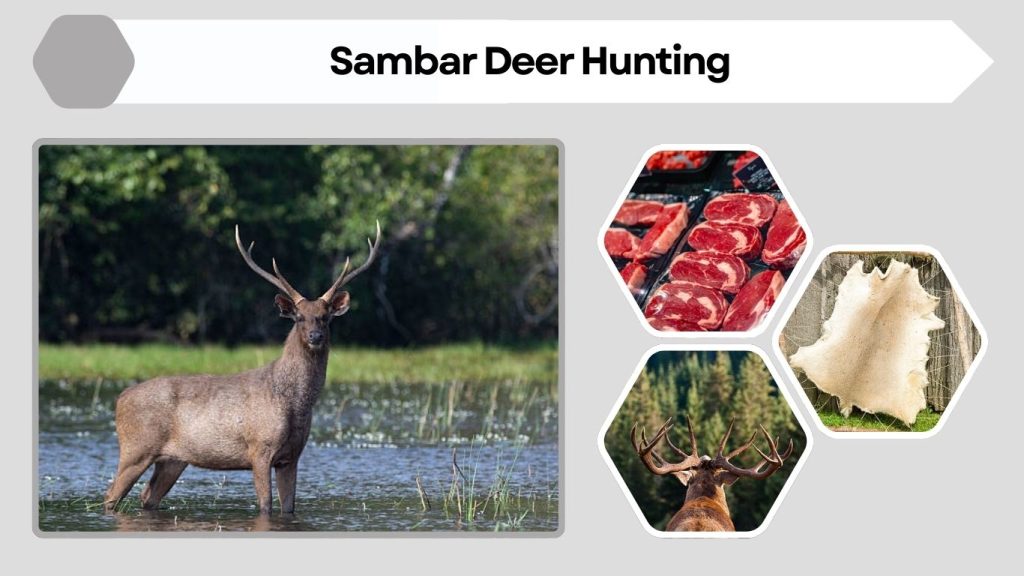
Sambar deer have historically been hunted for their meat, hide, and antlers in several parts of Asia. In some regions, hunting still occurs but is usually regulated by wildlife management authorities.
Hunting Regions
Hunting of sambar deer has occurred in various countries, including:
- India
- Nepal
- Australia
- Some Southeast Asian regions
In places like Australia, sambar deer populations have grown after being introduced, and controlled hunting helps manage their numbers.
Wildlife Management
In many countries, sambar deer are protected within national parks and wildlife reserves. Regulations limit hunting seasons and protect the species from overexploitation.
Conservation programs aim to maintain stable populations while protecting natural habitats.
Interesting Sambar Deer Facts
Sambar deer have several remarkable characteristics that make them unique among deer species.
- They are one of the largest deer species in Asia.
- Male sambar deer grow large three-pointed antlers that shed and regrow each year.
- They are excellent swimmers and often stay close to water sources.
- Sambar deer are a primary prey species for Bengal tigers.
- They can produce loud alarm calls to warn other animals of danger.
Conservation Status
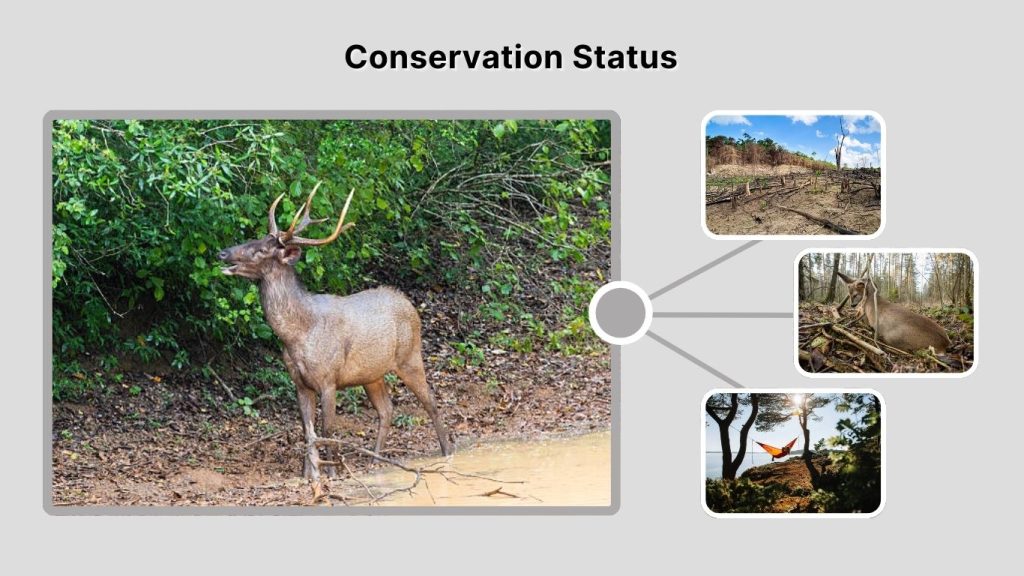
The conservation status of sambar deer varies across different regions. While they remain common in some areas, populations have declined in others due to habitat loss, poaching, and human activity.
Conservation efforts focus on:
- Protecting forest habitats
- Preventing illegal hunting
- Monitoring wildlife populations
- Expanding protected areas
National parks and wildlife reserves play an important role in protecting sambar deer populations.
Conclusion
The sambar deer is a powerful and adaptable species that plays an important role in Asian forest ecosystems. Known for its large size, strong antlers, and distinctive alarm calls, this deer is well adapted to life in dense forests and mountainous regions. From its varied plant-based diet to the development of young fawns and its typical lifespan, the sambar deer remains one of the most fascinating deer species in the wild. Continued conservation efforts are essential to ensure that this remarkable animal survives for future generations.