




The yellow-throated marten is one of the largest and most colorful members of the marten family. Known for its striking yellow or orange throat and agile movements, this carnivorous mammal is widely found across forests in Asia. Unlike many other martens, the yellow-throated marten is often active during the day and is recognized as a fearless and energetic predator. Its ability to hunt both on the ground and in trees makes it an important predator within forest ecosystems.
What Is the Yellow-throated Marten?
The yellow-throated marten (Martes flavigula) is a species of marten belonging to the Mustelidae family, which also includes weasels, otters, and badgers. It is one of the largest marten species and is widely distributed across South Asia, Southeast Asia, and East Asia.
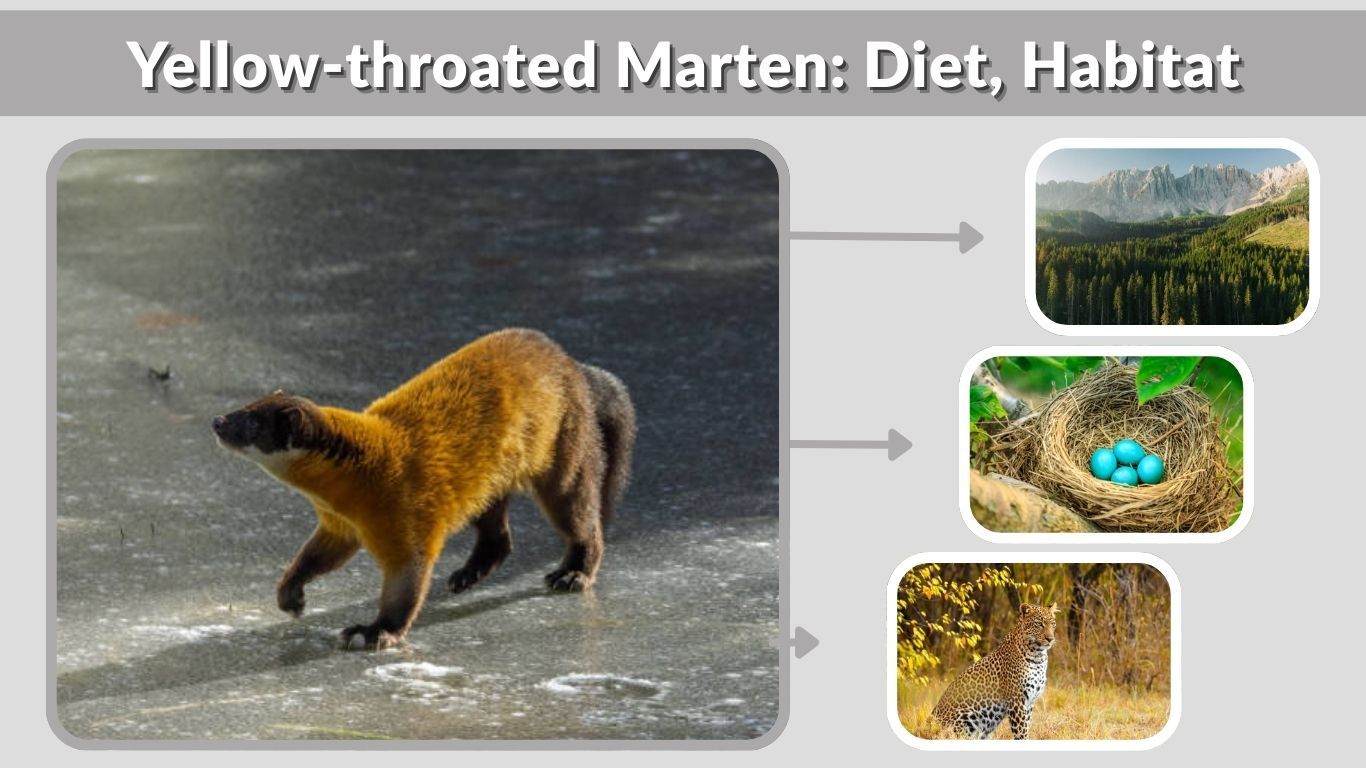
This animal is known for its bold coloration, especially the bright yellow or orange fur on its throat and chest. The rest of its body is usually dark brown or black, creating a strong contrast that makes the species easy to recognize.
Unlike many other carnivores that are mostly nocturnal, the yellow-throated marten is primarily diurnal, meaning it is active during the day. It spends much of its time moving through forest environments, searching for food and exploring its territory.
Yellow-throated martens are highly adaptable and can live in tropical forests, temperate woodlands, and mountainous regions.
Yellow-throated Marten Identification
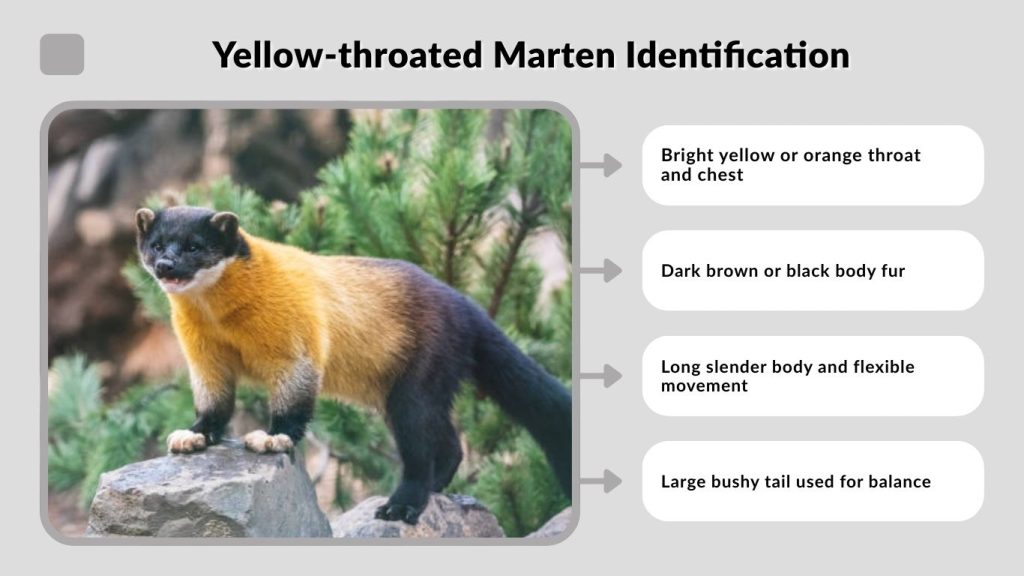
The yellow-throated marten can be easily identified by its distinctive coloration and elongated body. Its appearance differs from many other small carnivores due to its bright throat color and bushy tail.
Key identification features include:
- Bright yellow or orange throat and chest
- Dark brown or black body fur
- Long slender body and flexible movement
- Large bushy tail used for balance
- Rounded ears and sharp facial features
- Strong teeth adapted for hunting
These characteristics help the yellow-throated marten move quickly through forest environments while hunting prey.
Yellow-throated Marten Size
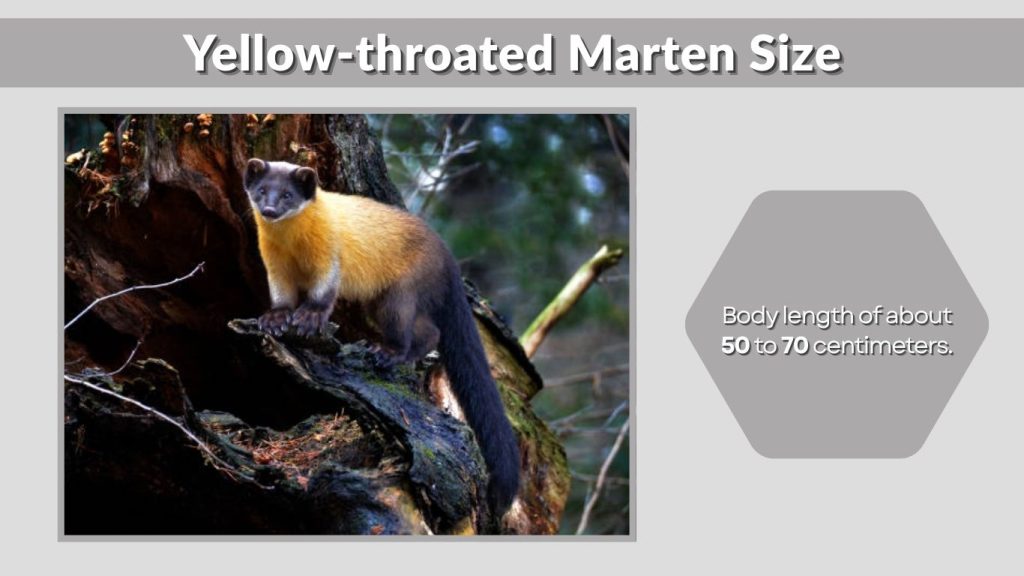
The yellow-throated marten is considered one of the largest species of martens, making it a powerful predator among small carnivorous mammals.
Average Body Length
Adult yellow-throated martens typically have a body length of about 50 to 70 centimeters (20 to 28 inches). Their elongated body shape allows them to move quickly and flexibly through trees and dense vegetation.
Tail Length
The tail is usually 40 to 50 centimeters long and is thick and bushy. It helps the animal maintain balance while climbing trees or running along branches.
Weight
Most yellow-throated martens weigh between 2 and 3 kilograms, although some individuals may be slightly larger depending on their habitat and food availability.
Size Comparison
Compared with other martens, the yellow-throated marten is larger and more muscular, which allows it to hunt a wider range of prey.
Yellow-throated Marten Habitat

The yellow-throated marten inhabits various forest environments, from tropical jungles to mountainous regions.
Natural Habitat
Typical habitats include:
- Dense tropical forests
- Temperate forests
- Mountain forests and woodland areas
These environments provide abundant prey and plenty of trees for climbing and shelter.
Geographic Distribution
The yellow-throated marten has a wide distribution across Asia. It can be found in regions such as:
- India and Nepal
- China and Korea
- Russia’s Far East
- Southeast Asian countries
This wide range shows the species’ ability to adapt to different climates and landscapes.
Living Areas
Yellow-throated martens spend time both on the forest floor and in tree canopies. They are excellent climbers and can easily move through branches when searching for food or escaping predators.
Yellow-throated Marten Diet
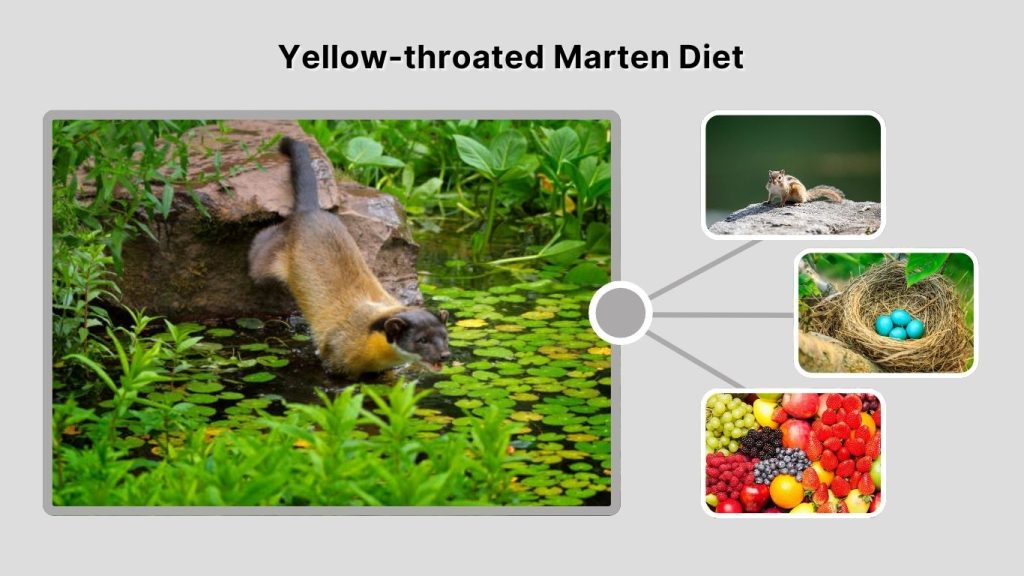
The yellow-throated marten diet is very diverse, making it an opportunistic predator.
Primary Foods
Yellow-throated martens mainly feed on:
- Small mammals such as rodents and squirrels
- Birds and bird eggs
- Young animals found in forest environments
These foods provide the protein needed to support their active hunting lifestyle.
Additional Foods
In addition to animal prey, they may also eat:
- Fruits and berries
- Insects
- Occasionally reptiles or amphibians
This mixed diet allows them to survive in different seasons when certain prey species become less available.
Hunting Behavior
Yellow-throated martens are skilled hunters. They move quickly through forests and may chase prey both on the ground and in trees.
Sometimes they hunt alone, but they have also been observed hunting in pairs or small groups, which can increase their chances of catching larger prey.
Yellow-throated Marten Behavior
The yellow-throated marten is known for its energetic and fearless behavior. Unlike many members of the weasel family that are mainly nocturnal, this species is often active during the daytime. Its agility and speed make it a skilled hunter in forest environments.
Daily Activity
Yellow-throated martens are mostly diurnal, meaning they are active during the day. They spend much of their time exploring forests, searching for food, and patrolling their territory.
These animals are extremely active and may travel long distances while hunting. Their strong limbs and flexible bodies allow them to move quickly across the forest floor and through tree branches.
Climbing and Movement
One of the remarkable abilities of the yellow-throated marten is its excellent climbing skill. It can easily climb trees, jump between branches, and move along narrow limbs while hunting prey.
They are also fast runners on the ground, which helps them chase small mammals or birds.
Social Behavior
Although many martens are solitary, yellow-throated martens are sometimes seen in pairs or small groups, especially when hunting or traveling together. This behavior is somewhat unusual among martens and makes them unique within the Mustelidae family.
Yellow-throated Marten Reproduction
Breeding Season
The breeding season for yellow-throated martens usually occurs during late winter or early spring, although the exact timing may vary depending on the region.
Offspring
Female martens typically give birth to 2 to 4 young per litter. The babies are born blind and helpless, remaining in a sheltered den while their mother cares for them.
Growth and Development
Young martens grow quickly. After several weeks, they begin exploring outside the den and gradually learn hunting and climbing skills from their mother.
Yellow-throated Marten Lifespan
Average Lifespan in the Wild
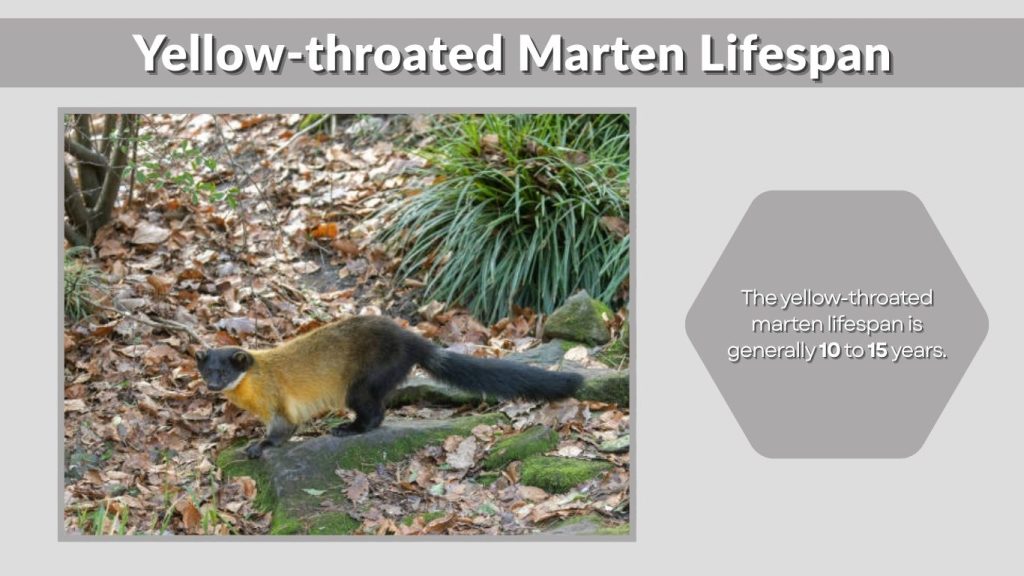
In the wild, the yellow-throated marten lifespan is generally 10 to 15 years, depending on environmental conditions and predator pressure.
Lifespan in Captivity
In captivity, where they receive regular food and veterinary care, yellow-throated martens may live even longer, sometimes exceeding 15 years.
Interesting Facts About Yellow-throated Martens
Fearless Predators
Yellow-throated martens are known for their bold and fearless nature. They have been observed attacking animals larger than themselves, including deer calves in rare cases.
Distinctive Color Pattern
Their bright yellow throat and chest make them one of the most colorful species within the marten group. This striking coloration helps distinguish them from other mustelids.
Highly Adaptable Hunters
These animals are highly adaptable predators. They can hunt on the ground, climb trees to catch birds, and search through vegetation for insects or fruits.
Predators and Threats

Natural Predators
Although they are skilled predators, yellow-throated martens may still face threats from larger carnivores such as:
- Leopards
- Large birds of prey
- Other large forest predators
Their speed and agility help them escape many potential threats.
Environmental Threats
Human activities pose significant risks to their populations. Major threats include:
- Deforestation and habitat loss
- Hunting in some regions
- Expansion of agriculture and urban areas
Protecting forest habitats is essential for maintaining stable populations of this species.
Yellow-throated Marten vs Other Martens
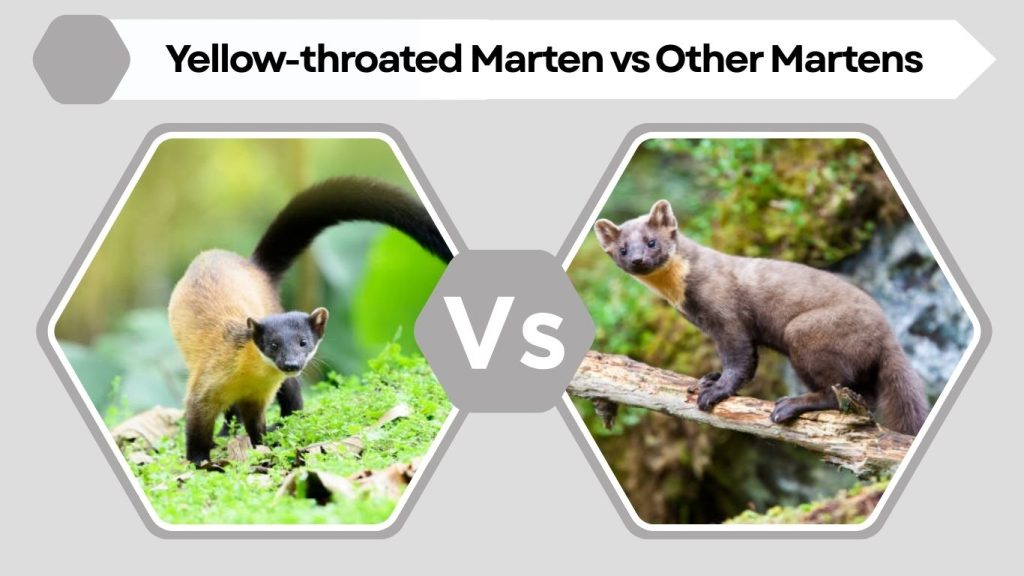
The yellow-throated marten differs from other marten species in several ways.
Appearance Differences
Its bright yellow throat and chest make it more colorful than most other martens, which usually have darker or more uniform fur.
Habitat Differences
While many martens prefer colder northern forests, the yellow-throated marten is found in a wider variety of climates, including tropical and subtropical regions.
Behavioral Differences
Compared with many other martens, this species is more active during the daytime and is sometimes seen traveling in pairs.
Role in the Ecosystem
Yellow-throated martens play an important role in forest ecosystems. As predators, they help control populations of rodents and other small animals, maintaining ecological balance.
Because they also eat fruits, they may contribute to seed dispersal, which supports forest regeneration.
Conclusion
The yellow-throated marten is a fascinating carnivorous mammal known for its striking coloration, agility, and fearless hunting behavior. Found across forests of Asia, this species thrives in a wide range of habitats from tropical jungles to mountainous woodlands.
Through its role as both predator and seed disperser, the yellow-throated marten contributes to the health and balance of forest ecosystems. Protecting natural habitats will help ensure that this remarkable animal continues to thrive in the wild.