

The red fox (Vulpes vulpes) is one of the most recognizable and widespread wild animals in the world. Known for its bright reddish fur, bushy tail, and sharp intelligence, this fox species can adapt to a wide variety of environments. From forests and mountains to urban neighborhoods, the red fox has successfully learned how to survive almost anywhere. Understanding the red fox’s habitat, diet, sounds, and behavior helps reveal why this clever animal thrives across many continents.
What is a Red Fox?
The red fox is a medium-sized mammal belonging to the dog family, Canidae. It is considered the most widely distributed fox species on Earth and can be found in many different climates and landscapes. Because of their adaptability and hunting skills, red foxes have been able to expand their range across much of the Northern Hemisphere.
Red Fox Classification
Red foxes are scientifically classified as follows:
- Kingdom: Animalia
- Phylum: Chordata
- Class: Mammalia
- Order: Carnivora
- Family: Canidae
- Genus: Vulpes
- Species: Vulpes vulpes
Although they are called “red” foxes, their fur color can vary widely depending on location and genetics. Some individuals may appear more orange, brown, or even silver.
Physical Characteristics
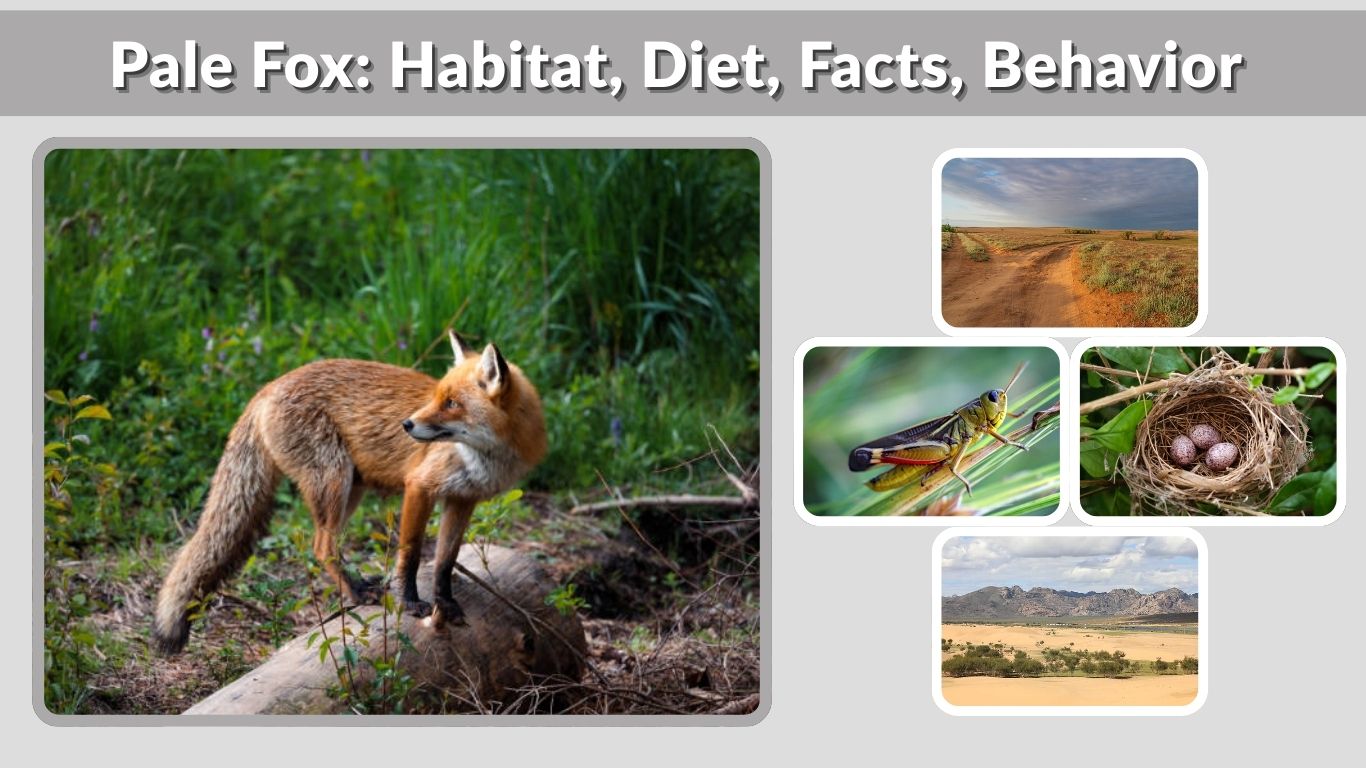
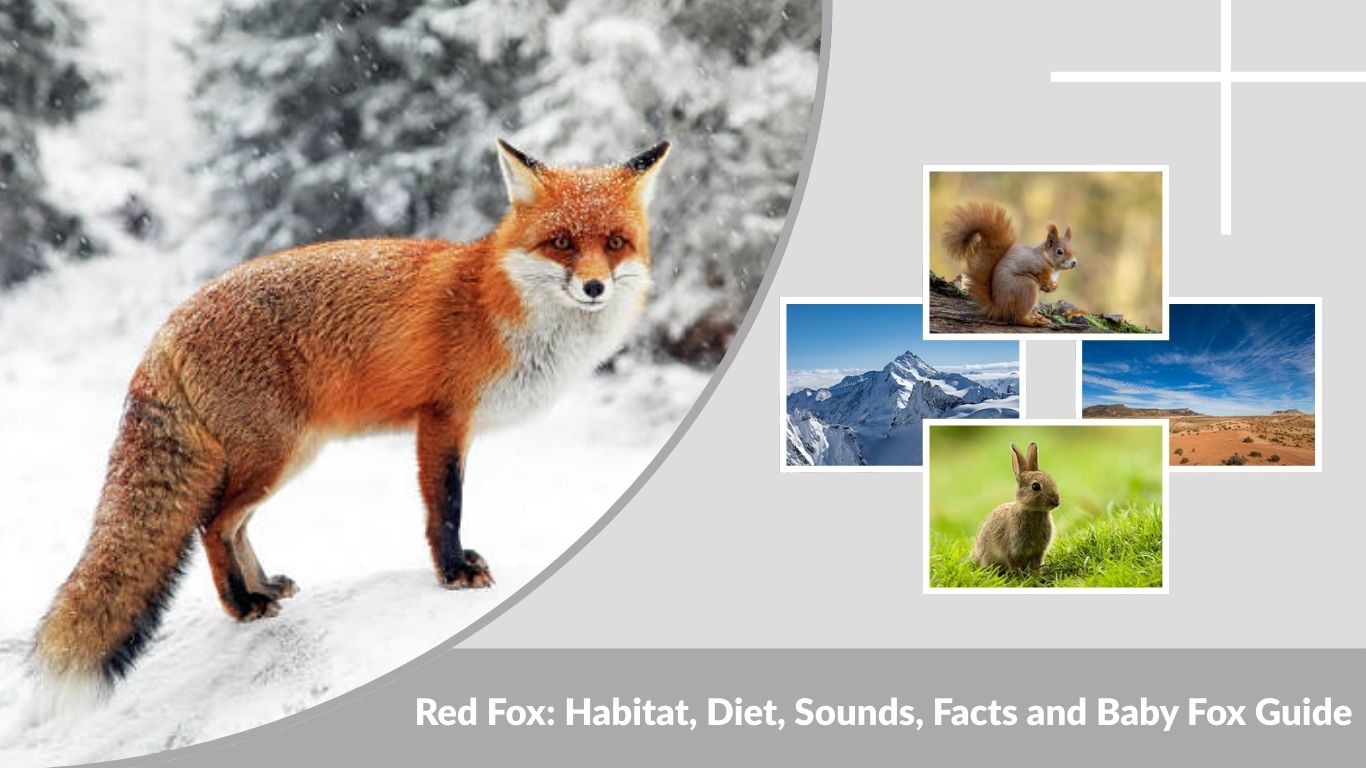
Red foxes are known for their striking appearance. Their bodies are slim and agile, helping them move quickly and quietly while hunting.
Typical features include:
- Reddish-orange fur
- White chest and throat
- Black legs and ear tips
- A long bushy tail with a white tip
Adult red foxes usually measure 90–105 cm (35–41 inches) long including their tail. They generally weigh between 3 and 14 kilograms (6–31 pounds) depending on region and food availability.
Red Fox Lifespan
In the wild, red foxes usually live 3 to 5 years, although some may survive longer if conditions are favorable. In captivity, where they are protected from predators and have consistent food sources, they can live up to 10–12 years.
Identification of a Red Fox
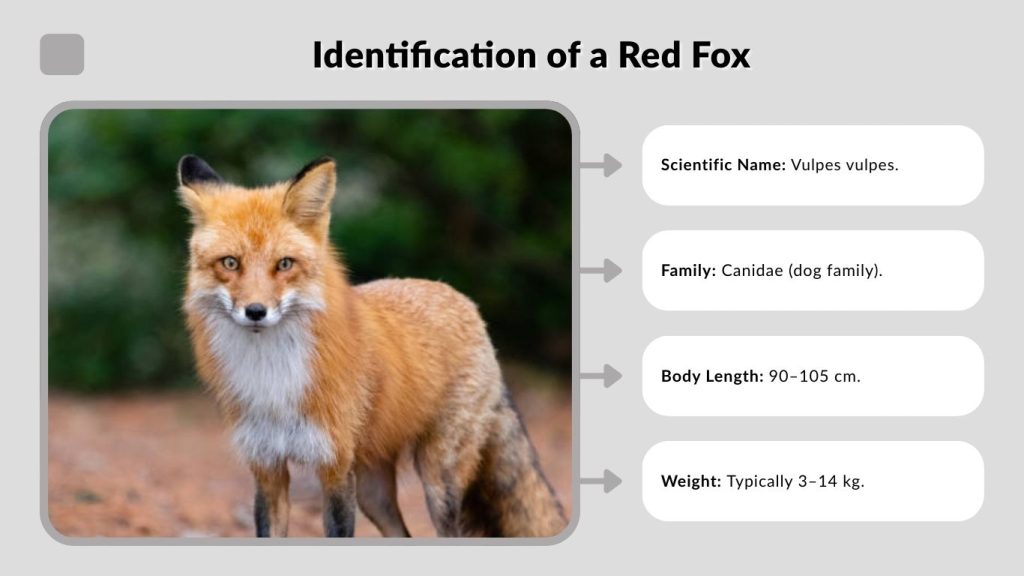
The red fox (Vulpes vulpes) is one of the easiest wild fox species to recognize because of its distinctive color, bushy tail, and slender body. It belongs to the Canidae family, which also includes wolves, coyotes, and domestic dogs. Red foxes are medium-sized mammals known for their agility, sharp senses, and adaptability to different environments. Although their fur is usually reddish-orange, color variations can occur depending on region and genetics.
Key Identification Features
- Scientific Name: Vulpes vulpes
- Family: Canidae (dog family)
- Body Length: About 90–105 cm (35–41 inches) including tail
- Weight: Typically 3–14 kg (6–31 pounds)
- Fur Color: Reddish-orange with white underparts
- Legs & Ears: Black legs and black-tipped ears
- Tail: Long, bushy tail with a white tip
- Snout: Long, narrow muzzle
- Eyes: Yellow or amber-colored eyes with vertical pupils
- Tracks: Small, oval paw prints similar to a small dog
These physical characteristics help wildlife observers and researchers easily identify a red fox in the wild.
Red Fox Habitat
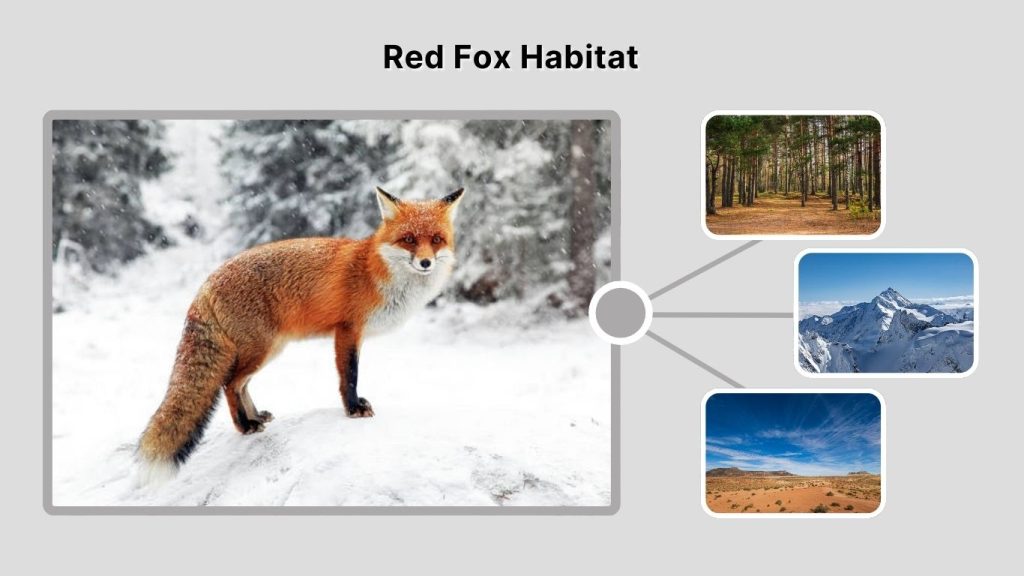
One reason the red fox is so successful is its ability to live in many different environments. Unlike some animals that depend on a specific ecosystem, red foxes are extremely adaptable.
Natural Habitats
Red foxes can be found in several natural habitats, including:
- Forests – providing shelter and prey
- Grasslands – ideal for hunting small mammals
- Mountains – especially in cooler regions
- Deserts – where they adapt to harsh conditions
They usually build underground homes called dens, which are often dug into hillsides or abandoned burrows made by other animals. These dens provide protection for resting, raising young, and escaping predators.
Urban Adaptation
In recent decades, red foxes have become common in many cities and suburban areas. Urban foxes often live in parks, gardens, and abandoned spaces where food is available.
Cities can provide easy meals for foxes such as:
- Small rodents
- Food scraps
- Pet food left outside
- Fallen fruit
Their intelligence and cautious behavior allow them to coexist with humans while remaining mostly unseen.
Global Distribution
The red fox has one of the largest geographic ranges of any land mammal. It naturally occurs in:
- North America
- Europe
- Asia
- North Africa
Humans have also introduced red foxes to places like Australia, where they have become an invasive species that threatens native wildlife.
Red Fox Diet
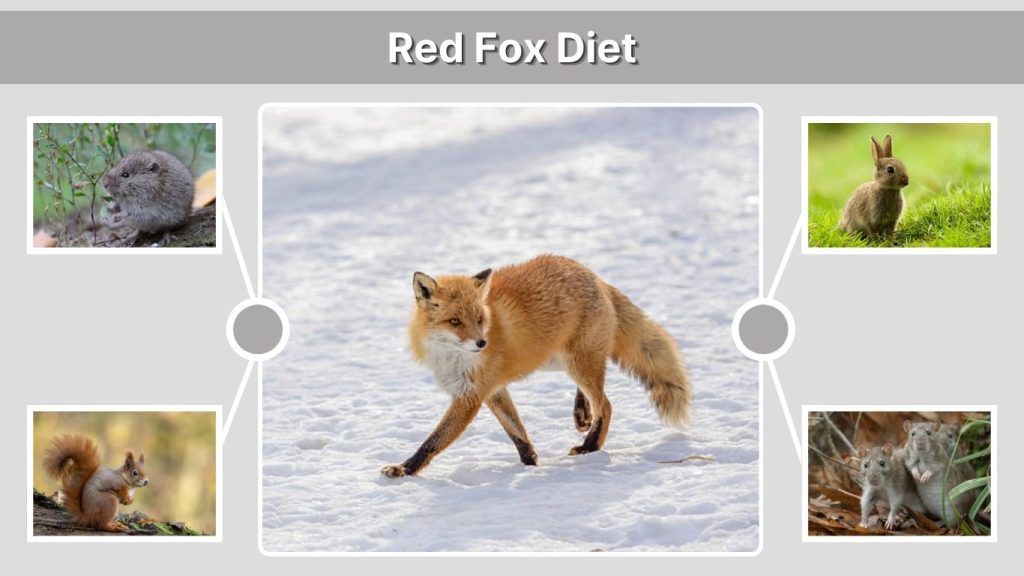
Red foxes are omnivores, meaning they eat both animals and plant-based foods. Their flexible diet allows them to survive in different environments where food availability may change throughout the year.
Primary Foods
Most of the red fox’s diet consists of small animals. These provide the protein and energy needed for survival.
Common prey includes:
- Rabbits
- Mice
- Rats
- Voles
- Squirrels
Their excellent hearing allows them to detect animals moving underground or beneath snow.
Secondary Foods
When small mammals are scarce, red foxes also eat other food sources such as:
- Birds and bird eggs
- Insects
- Frogs
- Fruits and berries
This ability to switch food sources makes them highly adaptable predators.
Hunting Behavior
Red foxes are skilled hunters that rely on stealth and precision. One of their most famous techniques is the “fox pounce.”
Using their sharp hearing, they locate prey hiding under grass or snow. Then they leap high into the air and land directly on the animal.
Red foxes are primarily nocturnal, meaning they are most active at night. However, they may also hunt during dawn or dusk when prey is easier to catch.
Red Fox Sounds
Red foxes are surprisingly vocal animals and use a variety of sounds to communicate with each other. These sounds can sometimes surprise people because they may resemble screams or loud barks heard during the night.
Types of Vocalizations
Red foxes produce several different vocal sounds, including:
- Barks – short warning calls used to alert other foxes.
- Screams – loud, high-pitched sounds often heard during mating season.
- Whines and whimpers – softer sounds used between family members.
Each sound has a different meaning depending on the situation and the fox’s behavior.
Why Red Foxes Make Sounds
Fox vocalizations serve several important purposes in their daily life.
Common reasons include:
- Communication with other foxes
- Calling a mate during breeding season
- Defending territory from other animals
- Contact between parents and young
During the winter breeding season, fox screams become much more common, which is why people often notice them more during colder months.
When You Hear Red Fox Sounds
Most fox vocal activity happens at night since red foxes are primarily nocturnal animals. Their sounds may echo across fields, forests, or even city neighborhoods.
You are most likely to hear foxes:
- Late at night
- Early morning hours
- During winter mating season
Red Fox Facts
Red foxes are fascinating animals with many unique characteristics that help them survive in the wild.
Interesting Red Fox Facts
Here are some notable facts about this clever predator:
- The red fox is the most widely distributed fox species in the world.
- They have exceptional hearing, allowing them to detect prey underground.
- A red fox can leap over 6 feet (about 2 meters) while hunting.
- Their thick fur helps them survive in extremely cold environments.
- Foxes use their bushy tails for balance and warmth.
These traits allow red foxes to thrive in a wide variety of ecosystems.
Intelligence and Behavior
Red foxes are considered highly intelligent animals. They are known for their problem-solving abilities and careful observation of their surroundings.
Examples of intelligent behavior include:
- Memorizing food locations
- Avoiding traps and predators
- Learning to navigate human environments
Their intelligence is one of the main reasons they have successfully adapted to cities and suburbs.
Survival Skills
Red foxes possess several survival strategies that help them avoid danger.
Some key survival skills include:
- Camouflage – their reddish fur blends well with natural landscapes.
- Speed and agility – allowing them to escape predators.
- Stealth hunting – quietly approaching prey before striking.
These abilities make the red fox an effective and efficient hunter.
Red Fox Baby (Kits or Cubs)
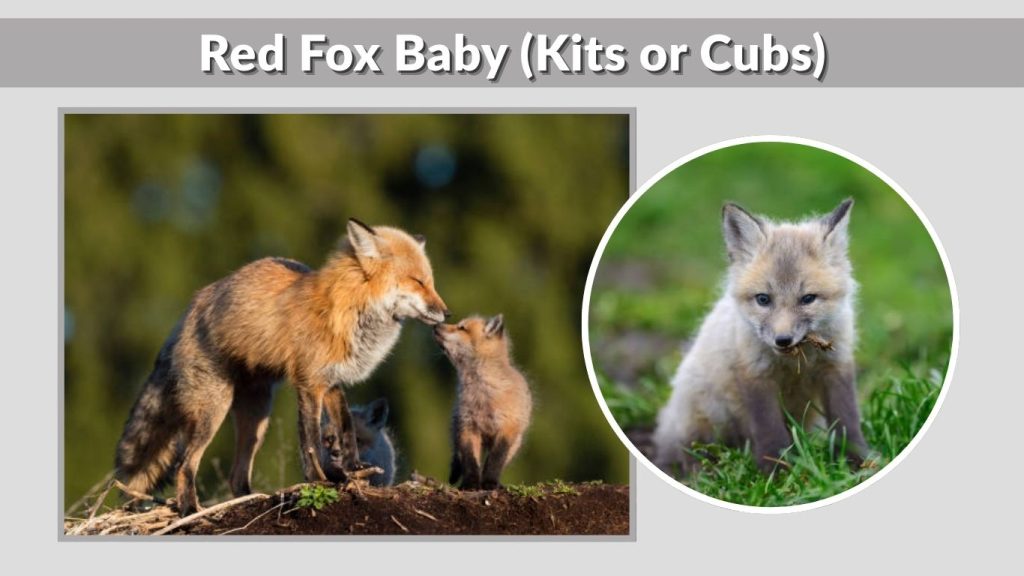
Baby red foxes are commonly called kits, although they may also be referred to as pups or cubs.
What Baby Red Foxes Look Like
Newborn kits look very different from adult foxes. At birth, they typically have:
- Dark brown or grey fur
- Closed eyes
- Very small bodies
Their eyes usually open after about two weeks, and they begin exploring outside the den a few weeks later.
Development Stages
Baby foxes grow quickly during their first few months.
Typical development stages include:
Birth to 2 weeks
- Kits stay inside the den
- Completely dependent on their mother
3–4 weeks
- Eyes open
- Begin walking and playing
5–8 weeks
- Start eating solid food
- Learn basic hunting behaviors
3–4 months
- Explore larger areas
- Practice hunting with siblings
Family Structure
Red fox families usually consist of a mother, father, and their kits.
Parental roles include:
- The mother stays near the den to protect and feed the babies.
- The father hunts and brings food back to the family.
Kits often play together, which helps them develop important survival skills.
Red Fox vs Gray Fox
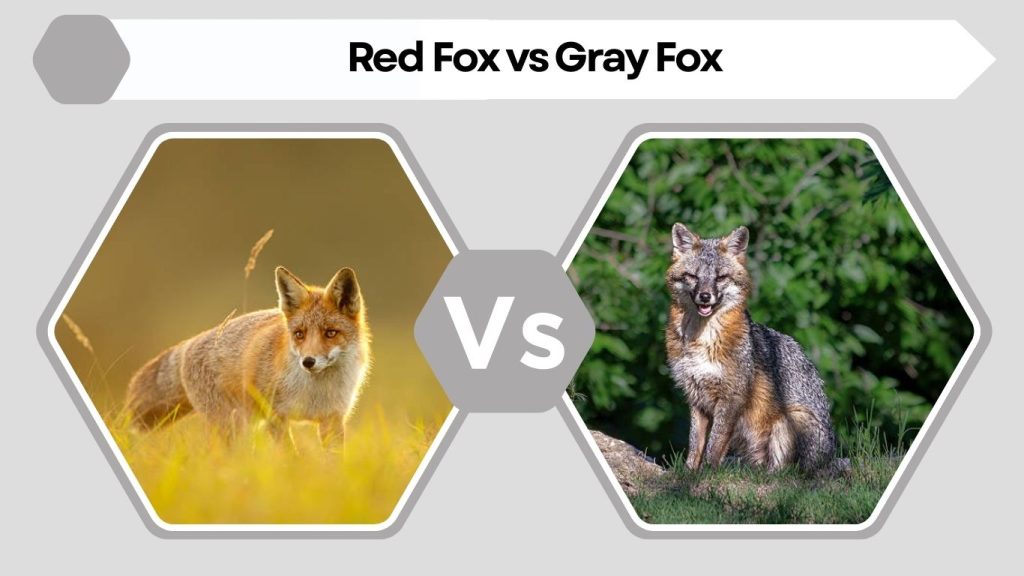
Although they may look similar at first glance, red foxes and gray foxes are different species with several unique traits.
Physical Differences
Red foxes and gray foxes differ in appearance in several ways.
Red Fox
- Reddish-orange fur
- White tail tip
- Longer legs and slimmer body
Gray Fox
- Gray and black fur
- Black tail tip
- Slightly smaller body
Habitat Differences
The two species also prefer different environments.
- Red foxes often live in open areas such as fields, grasslands, and farmland.
- Gray foxes prefer wooded habitats where trees provide shelter.
Behavior Differences
One of the most surprising differences between the two species is climbing ability.
Gray foxes are excellent tree climbers, which helps them escape predators and search for food. Red foxes, however, rely more on their speed and endurance when escaping danger.
Quick Comparison
| Feature | Red Fox | Gray Fox |
| Fur Color | Reddish | Gray |
| Tail Tip | White | Black |
| Habitat | Open landscapes | Forests |
| Special Ability | Fast runner | Tree climber |
Conclusion
The red fox is one of the most adaptable and intelligent mammals in the animal kingdom. With its striking appearance, flexible diet, and ability to thrive in diverse environments, the red fox has successfully spread across much of the world. From forests and grasslands to busy cities, these clever animals continue to survive and flourish. Understanding their habitat, diet, sounds, and family life helps us appreciate the important role red foxes play in maintaining healthy ecosystems.