

The Arctic fox (Vulpes lagopus) is one of the most remarkable animals adapted to life in extreme cold. Native to the Arctic tundra, this small fox is famous for its thick fur, compact body, and ability to survive freezing temperatures that can drop below −50°C. Its coat changes color with the seasons, helping it blend into snowy winter landscapes and rocky summer terrain. The Arctic fox’s habitat, diet, and survival skills make it one of the most resilient mammals on Earth.
What is an Arctic Fox?
The Arctic fox is a small member of the Canidae family, which includes wolves, coyotes, and domestic dogs. It is specially adapted to survive in some of the coldest environments on the planet. Its scientific name, Vulpes lagopus, means “hare-footed fox,” referring to the thick fur covering its paws that helps protect it from icy ground.
Arctic foxes are known for their incredible endurance and ability to thrive in harsh Arctic climates where many other animals struggle to survive.
Arctic Fox Classification
The Arctic fox belongs to the following scientific classification:
- Kingdom: Animalia
- Phylum: Chordata
- Class: Mammalia
- Order: Carnivora
- Family: Canidae
- Genus: Vulpes
- Species: Vulpes lagopus
Although closely related to other fox species such as the red fox, the Arctic fox has developed unique physical traits that allow it to live comfortably in extremely cold regions.
Physical Characteristics
Arctic foxes have several physical features that help them conserve body heat and survive harsh weather conditions.
Common characteristics include:
- Thick insulating fur
- Small rounded ears that reduce heat loss
- Short legs and compact body
- A fluffy bushy tail used for warmth
- Fur-covered paws that act like natural snow boots
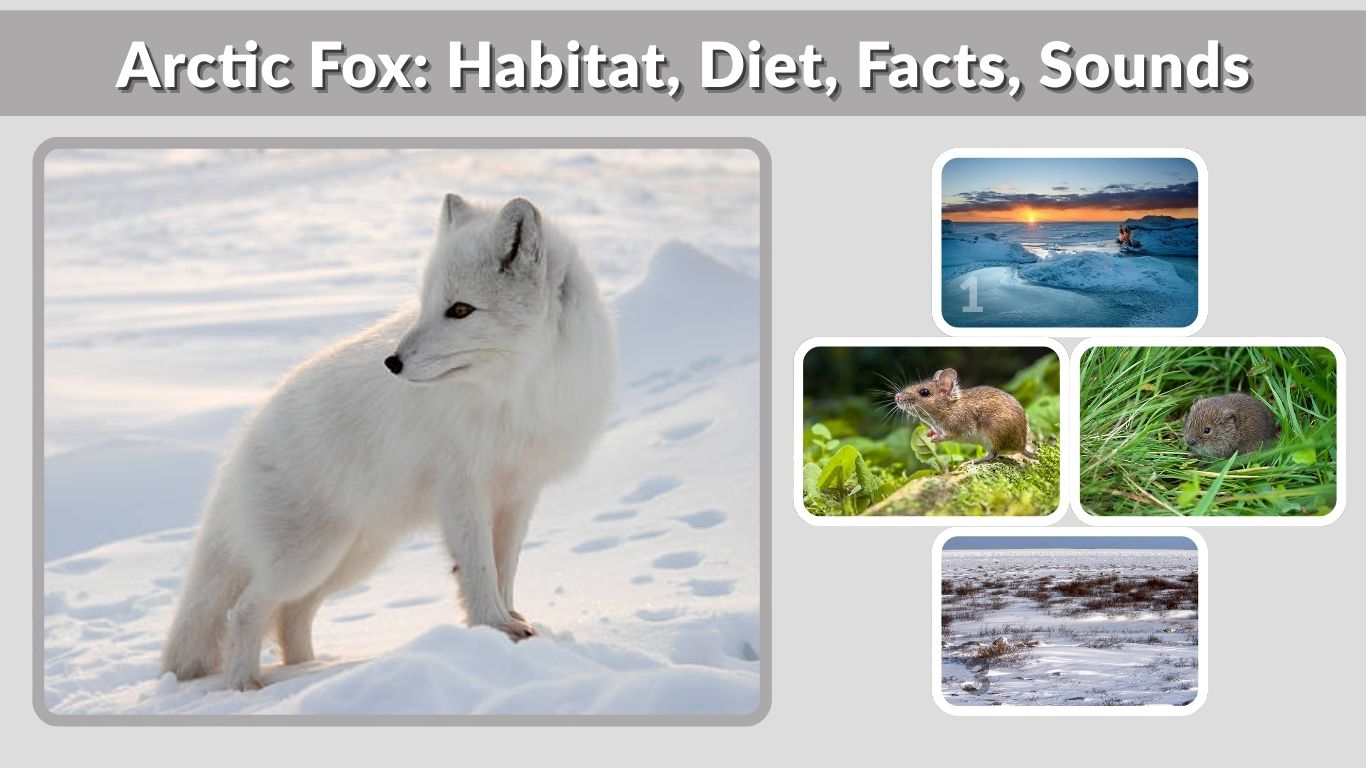
Their fur changes color depending on the season. In winter, Arctic foxes typically have pure white fur that blends with the snow. During summer, their coat becomes brown or gray, helping them camouflage among rocks and tundra vegetation.
Adult Arctic foxes usually measure 45–70 cm (18–27 inches) in body length, with an additional 30 cm (about 12 inches) tail. They generally weigh between 2.5 and 9 kilograms (5.5–20 pounds).
Arctic Fox Lifespan
In the wild, Arctic foxes typically live 3 to 6 years, although some individuals may survive longer if food is plentiful and predators are limited. In captivity, where they are protected from extreme weather and predators, Arctic foxes can live up to 10 years or more.
Predators such as wolves, golden eagles, and polar bears may occasionally threaten Arctic foxes, especially young kits.
Identification of an Arctic Fox
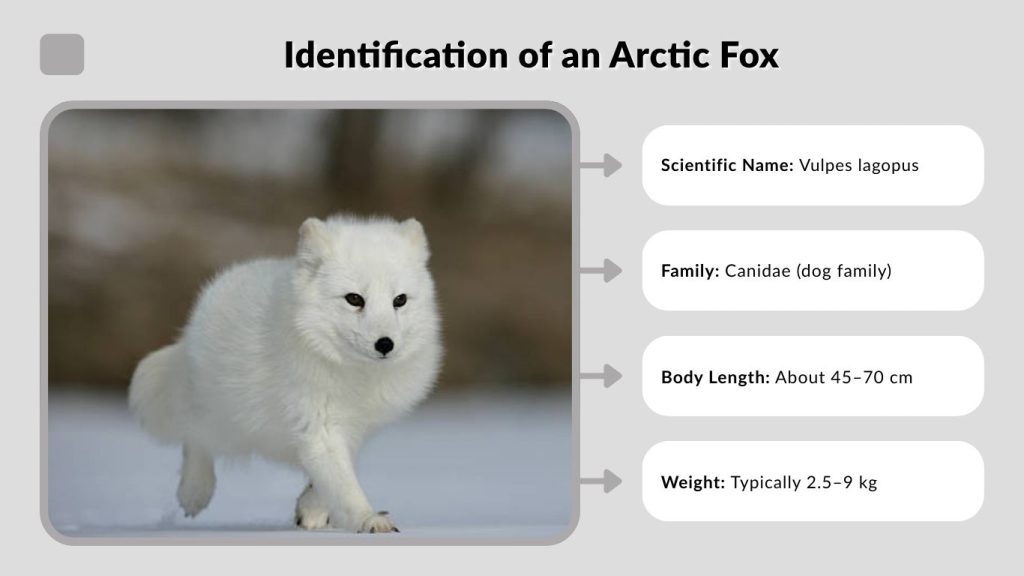
The Arctic fox (Vulpes lagopus) is a small fox species specially adapted to survive in the cold environments of the Arctic tundra. It is well known for its thick insulating fur, compact body, and seasonal coat color changes that help it blend into snowy or rocky landscapes. Compared with other fox species, the Arctic fox has shorter ears, shorter legs, and dense fur covering even its paws, which helps it conserve heat and move easily across snow and ice.
Key Identification Features
- Scientific Name: Vulpes lagopus
- Family: Canidae (dog family)
- Body Length: About 45–70 cm (18–27 inches)
- Weight: Typically 2.5–9 kg (5.5–20 pounds)
- Fur Color: White in winter; brown or gray in summer
- Ears: Small, rounded ears to reduce heat loss
- Tail: Thick, bushy tail used for warmth
- Paws: Fur-covered paws that act like natural snow boots
- Snout: Short, pointed muzzle
- Eyes: Usually dark brown or yellowish
These distinctive features make the Arctic fox easy to identify in the wild, especially in snowy Arctic landscapes where its white winter coat provides excellent camouflage.
Arctic Fox Habitat
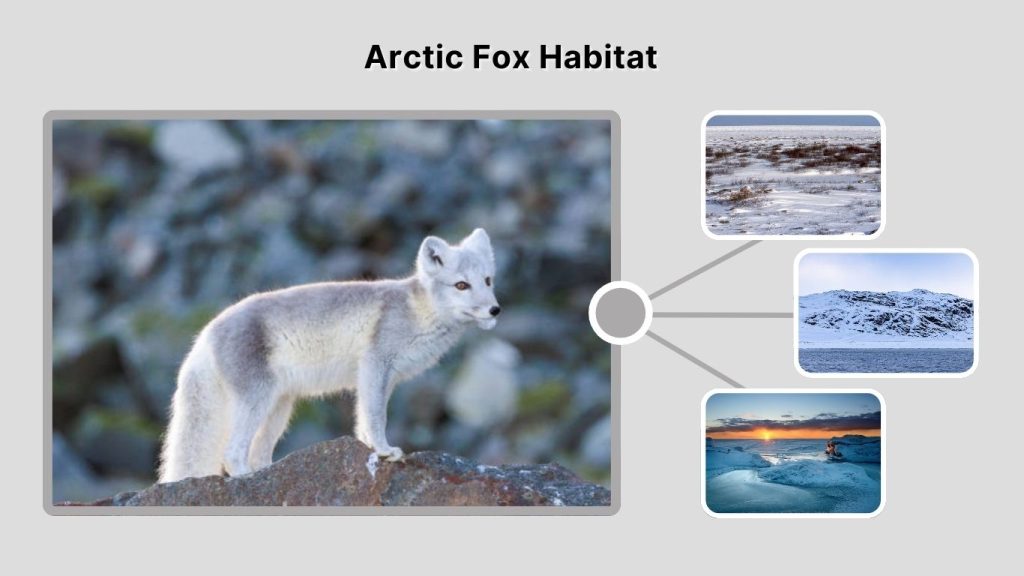
The Arctic fox lives primarily in the Arctic tundra, one of the coldest and harshest ecosystems on Earth. This environment is characterized by long winters, strong winds, frozen ground, and limited vegetation.
Despite these challenges, the Arctic fox has evolved remarkable adaptations that allow it to survive where few other mammals can.
Natural Habitat
Arctic foxes are typically found in the following environments:
- Arctic tundra plains
- Coastal Arctic regions
- Snow-covered fields and hills
- Ice-covered landscapes near the ocean
They often build their dens in raised ground or hillsides where snow melts earlier in the spring. These dens can be very complex and may contain multiple tunnels and entrances.
Some Arctic fox dens are used for many generations, making them important centers for raising young.
Extreme Climate Adaptation
The Arctic fox is one of the best-adapted animals for extreme cold. Its thick fur provides excellent insulation, allowing it to maintain body heat even in freezing conditions.
Key cold-weather adaptations include:
- Dense winter fur that traps body heat
- Fat reserves that provide energy during food shortages
- Fur-covered paws that prevent frostbite
- Short ears that reduce heat loss
Because of these adaptations, the Arctic fox can survive temperatures as low as −50°C (−58°F) while remaining active and hunting for food.
Geographic Distribution
Arctic foxes are found throughout the northern polar regions of the world. Their range includes many countries and Arctic islands.
Major regions where Arctic foxes live include:
- Alaska (United States)
- Northern Canada
- Greenland
- Russia
- Norway and Scandinavia
- Iceland
These animals usually remain within the Arctic region, although some individuals may travel long distances across sea ice while searching for food.
Arctic Fox Diet
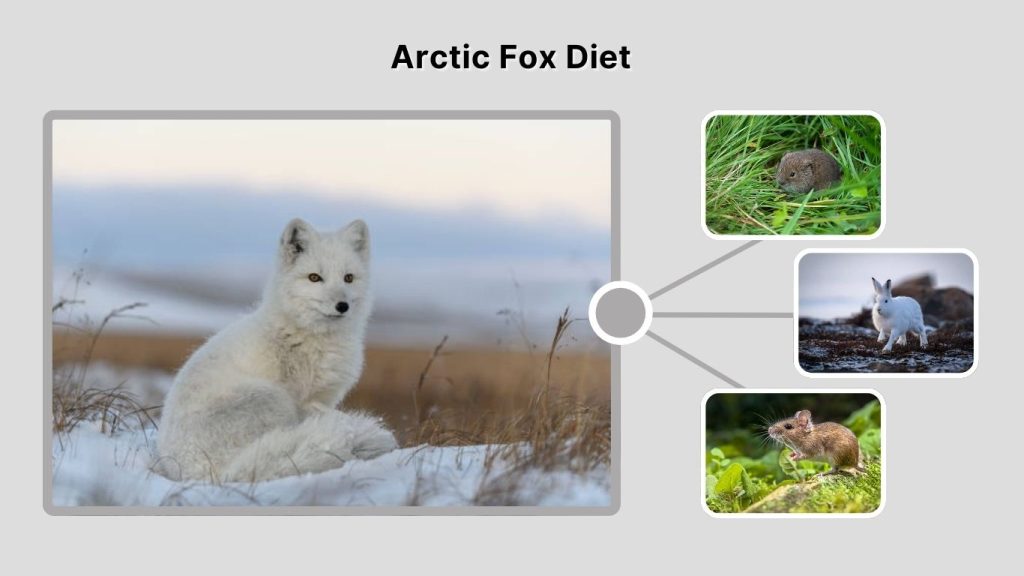
Arctic foxes are omnivores, meaning they eat both animal prey and plant-based foods. Their diet changes depending on the season and what food sources are available in the tundra.
Because food can be scarce in the Arctic, these foxes must be opportunistic hunters and scavengers.
Primary Food Sources
The most important food source for Arctic foxes is small mammals that live in the tundra.
Common prey animals include:
- Lemmings
- Voles
- Arctic hares
- Small rodents
Arctic foxes have excellent hearing and can detect animals moving beneath the snow. They often jump and dive headfirst into the snow to capture hidden prey.
Secondary Food Sources
When small mammals are scarce, Arctic foxes expand their diet to include many other food sources.
These may include:
- Birds
- Bird eggs
- Fish
- Insects
- Berries and plants
Their flexible diet helps them survive in a harsh environment where food availability can change quickly.
Arctic Fox Sounds
Although Arctic foxes are usually quiet animals, they can produce a variety of sounds to communicate with other foxes. These vocalizations help them defend territory, attract mates, and communicate with their young.
Types of Arctic Fox Vocalizations
Arctic foxes make several different sounds depending on the situation.
Common sounds include:
- Barks – short warning calls used to alert other foxes
- Screams – loud calls often heard during the mating season
- Whines – softer sounds used between family members
- Growls – aggressive sounds used during conflicts
Each type of sound serves a specific purpose and helps Arctic foxes interact with others in their environment.
Purpose of Vocal Communication
Arctic foxes use sounds mainly for communication within their species.
Their vocalizations may be used for:
- Defending territory from rival foxes
- Attracting mates during the breeding season
- Communicating with kits near the den
- Warning of potential danger
Because the Arctic tundra is a wide open landscape, sound can travel long distances, making vocal communication effective.
When Arctic Foxes Make Sounds
Arctic fox vocal activity is usually more noticeable during certain times of the year.
You are most likely to hear Arctic fox sounds:
- During the breeding season in late winter
- When defending their territory
- When parents communicate with their young
For most of the year, Arctic foxes remain relatively quiet and rely more on scent marking and body language.
Arctic Fox Facts
Arctic foxes possess several fascinating traits that help them survive in extreme environments.
Interesting Arctic Fox Facts
Here are some amazing facts about this cold-weather specialist:
- Arctic foxes have the warmest fur of any mammal found in the Arctic.
- Their coat changes color with the seasons for camouflage.
- They can hear small animals moving beneath thick snow.
- Arctic foxes sometimes travel hundreds of kilometers in search of food.
- Their thick tail can be wrapped around their body like a blanket for warmth.
These adaptations make them one of the most resilient animals in polar ecosystems.
Adaptation Skills
Arctic foxes have developed unique survival skills to cope with extreme weather.
Key adaptations include:
- Thick multilayer fur for insulation
- Compact body shape that reduces heat loss
- Fur-covered paws that act like natural snowshoes
- Fat storage during warmer seasons
These features allow them to remain active even in severe winter conditions.
Arctic Fox Intelligence
Like many members of the dog family, Arctic foxes are intelligent and resourceful animals.
They demonstrate intelligence by:
- Memorizing hunting locations
- Following larger predators to find food
- Adapting their diet depending on seasonal availability
Their clever behavior helps them survive in a landscape where food can be unpredictable.
Arctic Fox Baby (Kits or Pups)
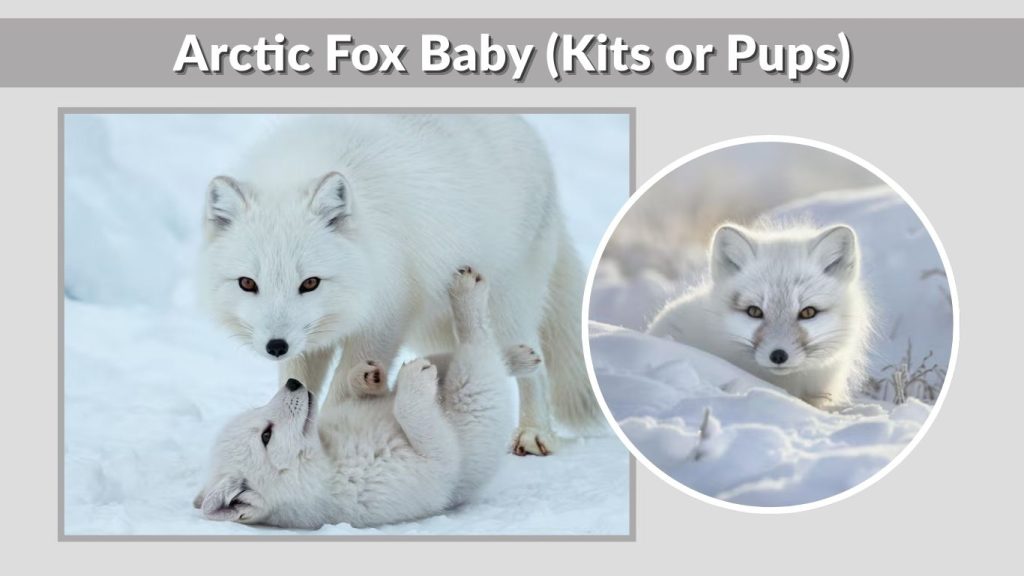
Baby Arctic foxes are called kits, although the terms pups or cubs may also be used.
Appearance of Arctic Fox Babies
Newborn Arctic fox kits look very different from adult foxes.
At birth they usually have:
- Dark brown or gray fur
- Closed eyes
- Small rounded bodies
Their darker fur helps them absorb heat and stay warm inside the den.
Growth and Development
Arctic fox kits grow quickly during their early life.
Typical development stages include:
Birth to 2 weeks
- Kits remain inside the den
- Completely dependent on their mother
3–4 weeks
- Eyes open
- Begin crawling and exploring the den area
5–8 weeks
- Start eating solid food
- Play with siblings and learn hunting behaviors
3–4 months
- Become more independent
- Practice hunting small prey
By autumn, young Arctic foxes are usually capable of surviving on their own.
Arctic Fox Family Life
Arctic foxes usually form monogamous breeding pairs, meaning one male and one female raise the young together.
Family roles include:
- The mother stays near the den to protect and nurse the kits.
- The father hunts and brings food back to the family.
Arctic fox litters can be surprisingly large. In years when food is abundant, a female may give birth to 10 or more kits, one of the largest litters among wild mammals.
Arctic Fox vs Red Fox
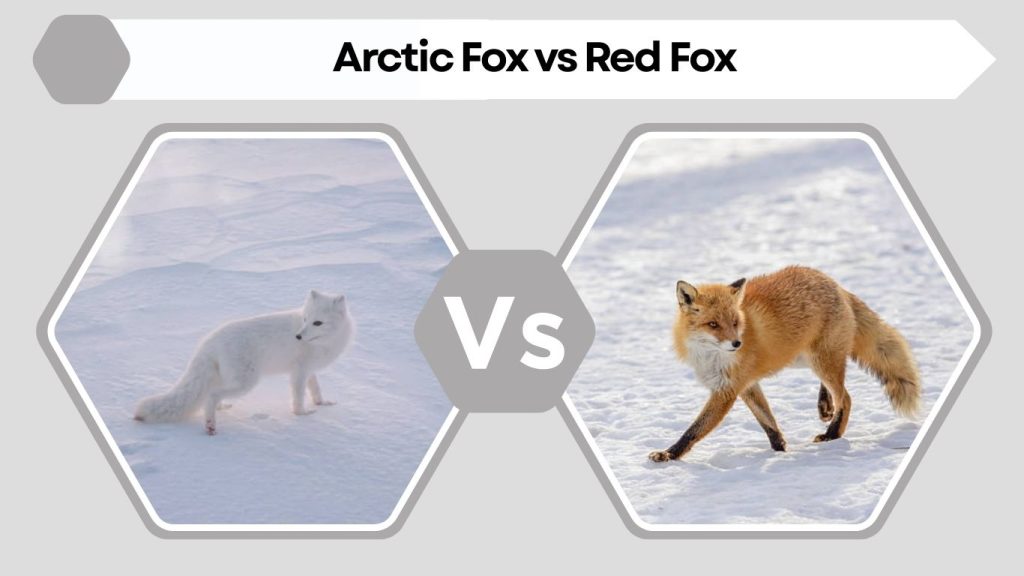
Although both species belong to the same genus (Vulpes), the Arctic fox and red fox have several important differences.
Physical Differences
Arctic foxes and red foxes vary in appearance due to their environments.
Arctic Fox
- Smaller body
- Thick dense fur
- Short ears and legs
- White winter coat
Red Fox
- Larger and taller
- Reddish-orange fur
- Longer legs
- White-tipped bushy tail
These differences reflect their adaptations to different climates.
Habitat Differences
The two fox species live in very different habitats.
- Arctic foxes inhabit the cold tundra regions of the far north.
- Red foxes live in forests, grasslands, mountains, and even urban areas.
As the climate warms, red foxes have begun expanding northward, sometimes competing with Arctic foxes for food and territory.
Survival Adaptations
Each species has developed unique survival strategies.
- Arctic foxes specialize in surviving extreme cold.
- Red foxes are known for their adaptability to many environments.
Quick Comparison
| Feature | Arctic Fox | Red Fox |
| Habitat | Arctic tundra | Forests, fields, cities |
| Fur Color | White in winter, brown/gray in summer | Reddish-orange |
| Size | Smaller | Larger |
| Climate | Extreme cold | Temperate climates |
Conclusion
The Arctic fox is one of the most impressive survivors in the animal kingdom. Its thick insulating fur, seasonal camouflage, and clever hunting strategies allow it to thrive in the extreme conditions of the Arctic tundra. From detecting prey beneath snow to raising large litters of kits, the Arctic fox demonstrates remarkable resilience and adaptability. As climate change alters Arctic ecosystems, understanding and protecting this unique species becomes increasingly important for maintaining the balance of polar wildlife.