




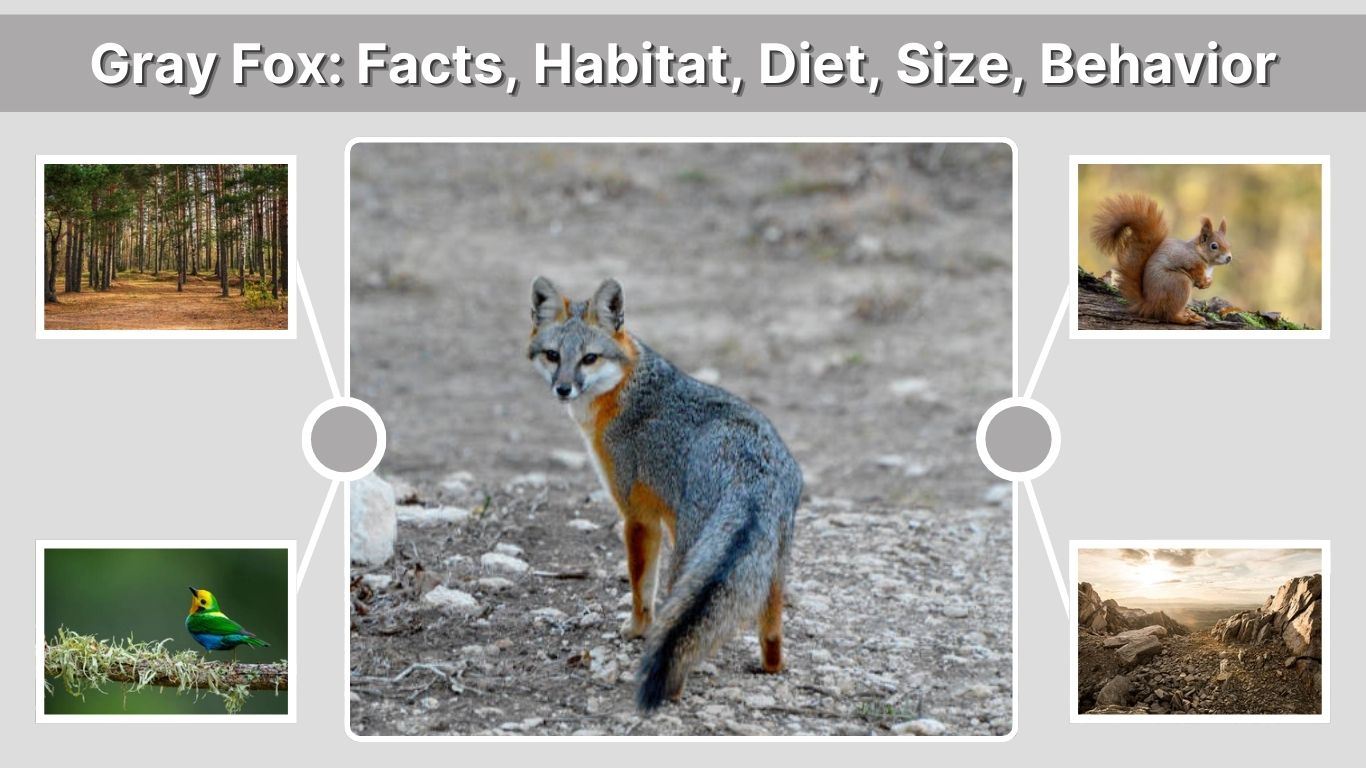
The gray fox is a fascinating and adaptable wild animal found across much of North and Central America. Known for its thick gray fur and bushy tail, this fox species has several unique traits that make it different from other foxes. One of the most remarkable abilities of the gray fox is that it can climb trees, which is rare among members of the dog family. Because of its intelligence and adaptability, the gray fox can survive in a wide variety of environments, including forests, woodlands, and even areas close to human settlements.
What is a Gray Fox?
The gray fox (Urocyon cinereoargenteus) is a medium-sized fox species that belongs to the Canidae family, which also includes wolves, dogs, and coyotes. It is one of the most widespread fox species in North America and can also be found in parts of Central America.
Gray foxes are easily recognized by their salt-and-pepper gray fur, reddish patches on their sides and neck, and a bushy tail with a black stripe along the top. Their bodies are well adapted for living in wooded areas, allowing them to move quietly and efficiently while hunting.
Unlike many other fox species, gray foxes are excellent climbers. They can climb trees to escape predators, rest, or search for food. This unique behavior gives them a survival advantage in forest environments.
Gray Fox Identification
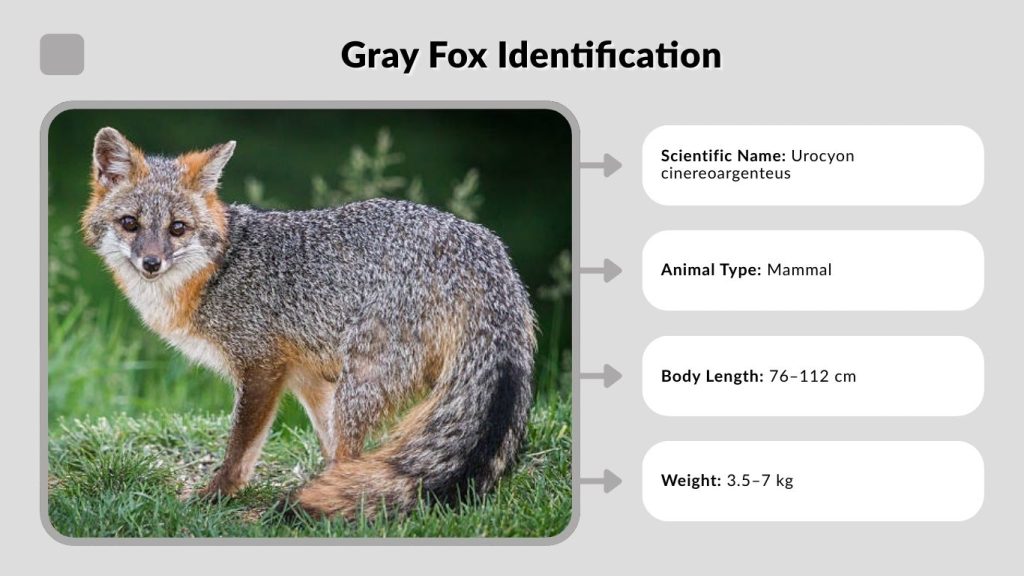
The gray fox (Urocyon cinereoargenteus) is a medium-sized wild fox species native to North and Central America. It is easily recognized by its grayish coat, reddish sides, and bushy tail with a dark stripe. Unlike most members of the dog family, the gray fox has the unique ability to climb trees, which helps it escape predators and find food. Its compact body, sharp ears, and pointed muzzle give it the classic fox appearance while its color pattern provides excellent camouflage in forest environments.
Key Identification Features
- Scientific Name: Urocyon cinereoargenteus
- Common Name: Gray Fox
- Animal Type: Mammal
- Family: Canidae (dog family)
- Body Length: About 76–112 cm (30–44 inches) including the tail
- Weight: Around 3.5–7 kg (8–15 pounds)
- Fur Color: Gray coat with reddish sides and white underside
- Tail: Bushy tail with a black stripe and dark tip
- Ears: Medium-sized, slightly rounded
- Habitat: Woodlands, forests, brushy areas, and rocky regions
- Special Trait: One of the few fox species capable of climbing trees
- Activity Pattern: Mostly nocturnal or active at dusk and dawn
These features help distinguish the gray fox from other fox species, especially the red fox.
Gray Fox Habitat
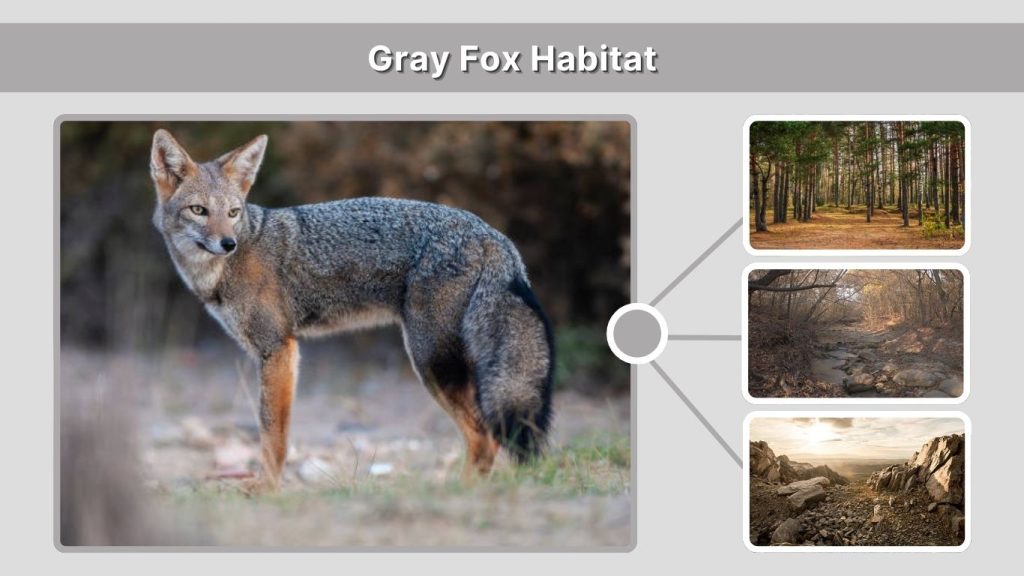
The gray fox is highly adaptable and can live in many different environments. However, it prefers areas with plenty of vegetation that provide both food and shelter.
Where Do Gray Foxes Live?
Gray foxes are widely distributed across North and Central America. Their range extends from southern Canada through the United States and into parts of Mexico and northern South America.
They are commonly found in regions such as:
- The United States
- Mexico
- Southern Canada
- Central American countries
These foxes thrive in regions where forests and brushy landscapes are present.
Preferred Environments
Gray foxes prefer habitats that provide dense vegetation and hiding places. These environments allow them to avoid predators and hunt effectively.
Common habitats include:
- Woodlands
- Forest edges
- Brushy areas
- Rocky hillsides
- Shrublands
Unlike some other fox species, gray foxes are comfortable living near human settlements as long as there is enough cover and food available.
Adaptations to Habitat
The gray fox has several adaptations that help it survive in wooded environments. Its tree-climbing ability is one of the most important. Strong claws and flexible ankles allow the fox to climb tree trunks and move along branches.
Their fur coloration also provides excellent camouflage, helping them blend into shadows and forest surroundings.
Gray Fox Size
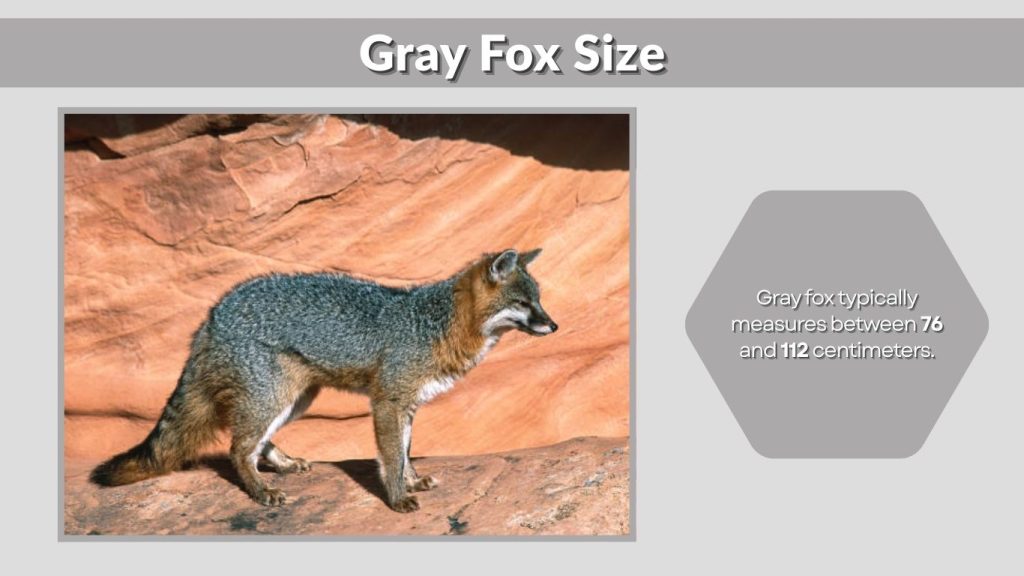
Gray foxes are medium-sized animals, larger than some fox species but smaller than others. Their compact body structure helps them move quickly through dense vegetation.
Average Body Length
An adult gray fox typically measures between 76 and 112 centimeters (30–44 inches) in total length, including the tail.
The body itself is shorter, while the tail accounts for a significant portion of the overall length.
Tail Length
The tail of a gray fox usually measures about 27 to 44 centimeters (11–17 inches). This bushy tail helps the fox maintain balance when climbing trees or moving across uneven terrain.
Weight Range
Most adult gray foxes weigh between 3.5 and 7 kilograms (8–15 pounds). Their relatively light weight allows them to move quickly and climb with ease.
Gray Fox Diet
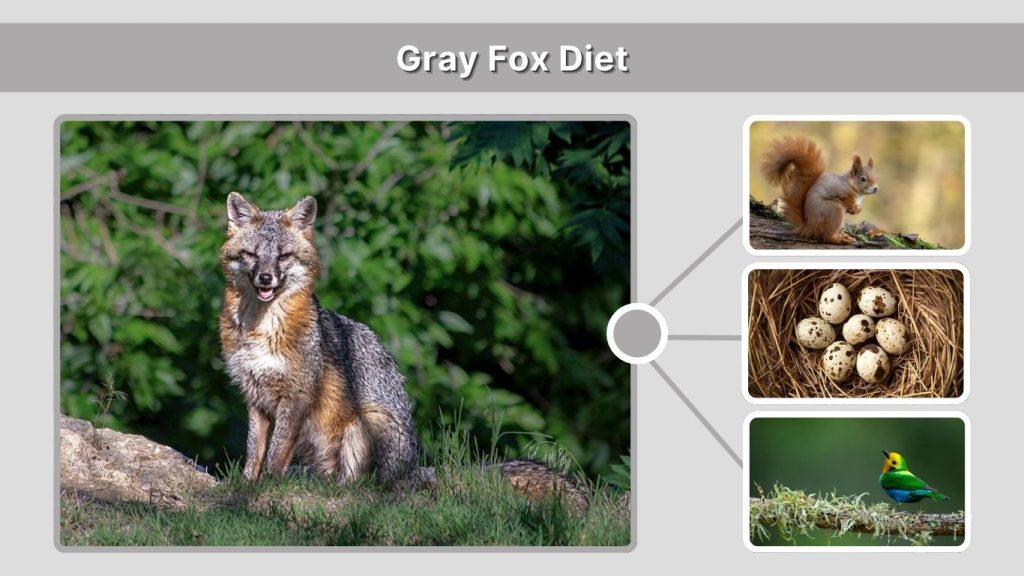
The gray fox diet is varied because these animals are omnivores. This means they eat both animal prey and plant materials. Their flexible diet helps them survive in many different habitats and seasons.
What Do Gray Foxes Eat?
Gray foxes commonly feed on a wide range of foods, including:
- Small mammals such as mice, rabbits, and squirrels
- Birds and bird eggs
- Insects like beetles and grasshoppers
- Fruits such as berries and persimmons
- Nuts and seeds
Because they can eat many different types of food, gray foxes are considered opportunistic feeders.
Hunting Behavior
Gray foxes usually hunt during the night or at dawn and dusk, which makes them nocturnal or crepuscular animals. They rely on their sharp hearing and strong sense of smell to locate prey.
When hunting small animals, the gray fox quietly stalks its target before making a quick pounce. Their agility helps them catch fast-moving prey.
Seasonal Diet Changes
The diet of gray foxes can change depending on the season. During warmer months, they may eat more fruits and insects, while in colder seasons they rely more on small mammals and birds for food.
This adaptability allows gray foxes to survive in environments where food availability changes throughout the year.
Gray Fox Behavior
Gray foxes have interesting behaviors that help them survive in the wild. They are generally shy animals and avoid direct contact with humans whenever possible.
Activity Patterns
Gray foxes are mostly nocturnal, meaning they are active at night. However, they may also be active during the early morning and evening hours.
During the daytime, they usually rest in dens, hollow trees, thick vegetation, or rocky crevices.
Social Behavior
Most gray foxes live alone or in pairs, especially during the breeding season. They establish territories that they defend from other foxes.
Unlike some animals that live in large groups, gray foxes prefer a more solitary lifestyle.
Communication
Gray foxes communicate with each other using several methods:
- Vocal sounds such as barks, yips, and growls
- Scent marking using urine or glands
- Body language, including tail movements and posture
These signals help gray foxes mark territory and interact with other foxes.
Gray Fox Life Cycle
The life cycle of a gray fox includes several stages, from birth to adulthood. Each stage is important for the development and survival of the animal.
Breeding Season
Gray foxes usually breed once each year. The mating season typically occurs between January and March, depending on the region.
During this time, pairs form strong bonds and prepare a safe den for raising their young.
Gestation Period
After mating, the female gray fox carries the pups for about 50 to 60 days. She then gives birth inside a protected den.
Dens may be located in hollow trees, underground burrows, rock crevices, or thick brush.
Birth and Development
A female gray fox usually gives birth to 2–7 pups. At birth, the pups are blind and helpless, relying entirely on their mother for warmth and food.
Their eyes usually open after about 9–12 days, and they begin exploring outside the den a few weeks later.
Growth to Adulthood
As the pups grow, both parents help provide food and protection. Young gray foxes begin learning hunting skills by observing their parents.
By the time they reach 10 months old, most gray foxes are ready to live independently.
Gray Fox Lifespan
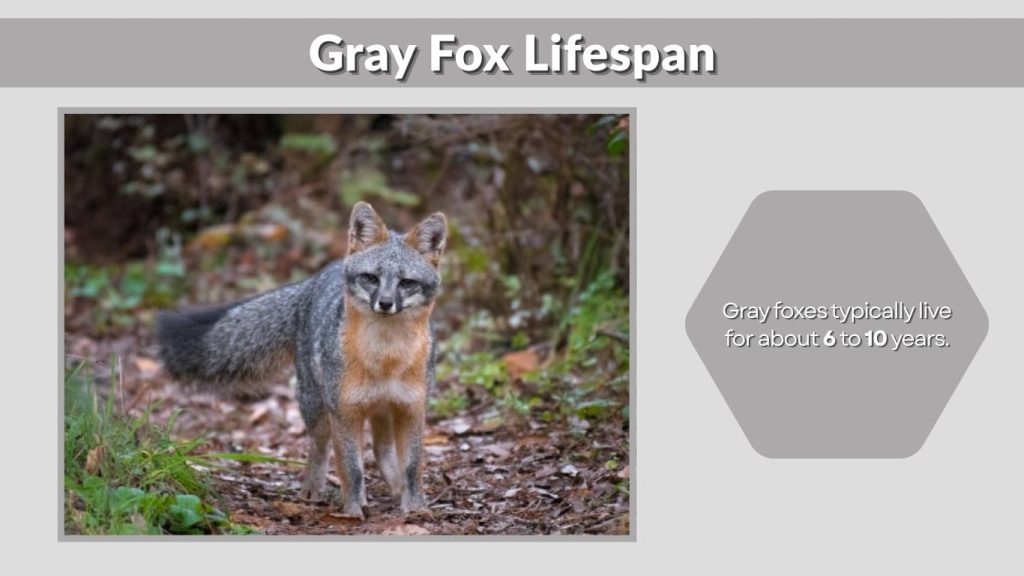
The lifespan of a gray fox can vary depending on environmental conditions and threats in the wild.
Lifespan in the Wild
In natural environments, gray foxes typically live for about 6 to 10 years. However, many may live shorter lives due to predators, disease, or accidents.
Lifespan in Captivity
In zoos or wildlife rehabilitation centers where they receive proper care and protection, gray foxes may live up to 12 to 16 years.
Factors That Affect Lifespan
Several factors can influence the lifespan of gray foxes, including:
- Predators such as coyotes and bobcats
- Diseases and parasites
- Habitat loss and environmental changes
- Human-related threats such as hunting or vehicle collisions
Healthy ecosystems and wildlife conservation efforts can help improve survival rates for gray fox populations.
Predators and Threats
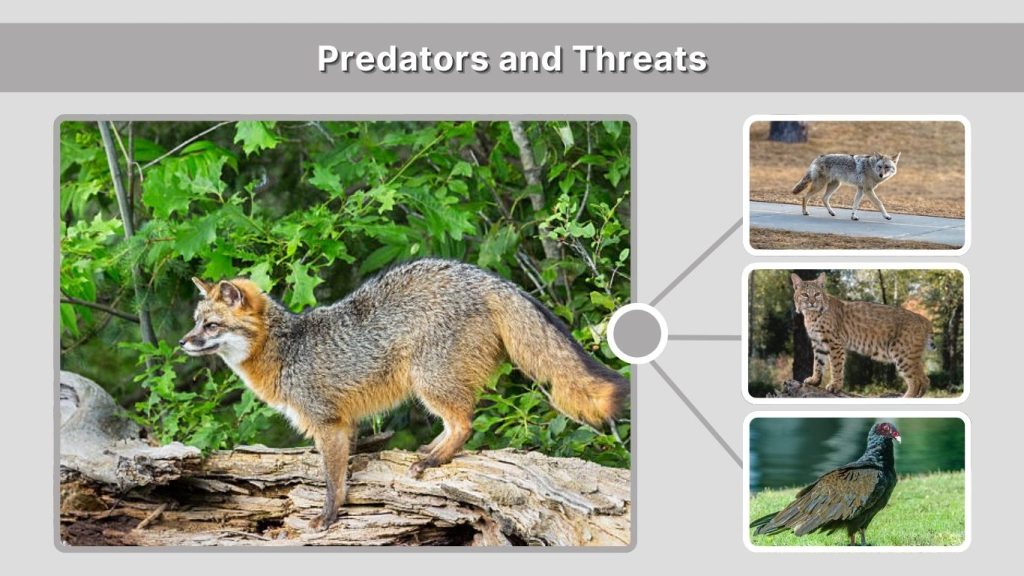
Even though gray foxes are skilled survivors, they still face several threats in the wild.
Natural predators include:
- Coyotes
- Bobcats
- Large birds of prey
- Domestic dogs
Human activities can also pose risks. Habitat destruction, road accidents, and hunting may affect local gray fox populations.
Fortunately, gray foxes are adaptable animals that can survive in many environments when suitable shelter and food are available.
Conservation Status of the Gray Fox
Currently, the gray fox is not considered endangered and has a stable population in many parts of its range. Wildlife management programs and habitat protection help ensure the species continues to thrive.
Maintaining healthy forests and natural habitats is important for protecting gray fox populations.
Interesting Gray Fox Facts
Gray foxes have several fascinating traits that make them unique among wild animals:
- They are one of the only fox species that can climb trees.
- Gray foxes are considered one of the oldest fox lineages in North America.
- Their bushy tail helps them balance while climbing or running.
- They are highly adaptable and can live in many types of environments.
FAQs
Can gray foxes climb trees?
Yes. Gray foxes are excellent climbers and can climb trees to escape predators or search for food.
Are gray foxes dangerous to humans?
No. Gray foxes are generally shy animals and rarely interact with humans.
Where do gray foxes live?
They live throughout North and Central America, especially in wooded and brushy areas.
What do gray foxes eat?
Gray foxes eat small mammals, birds, insects, fruits, and plants.