

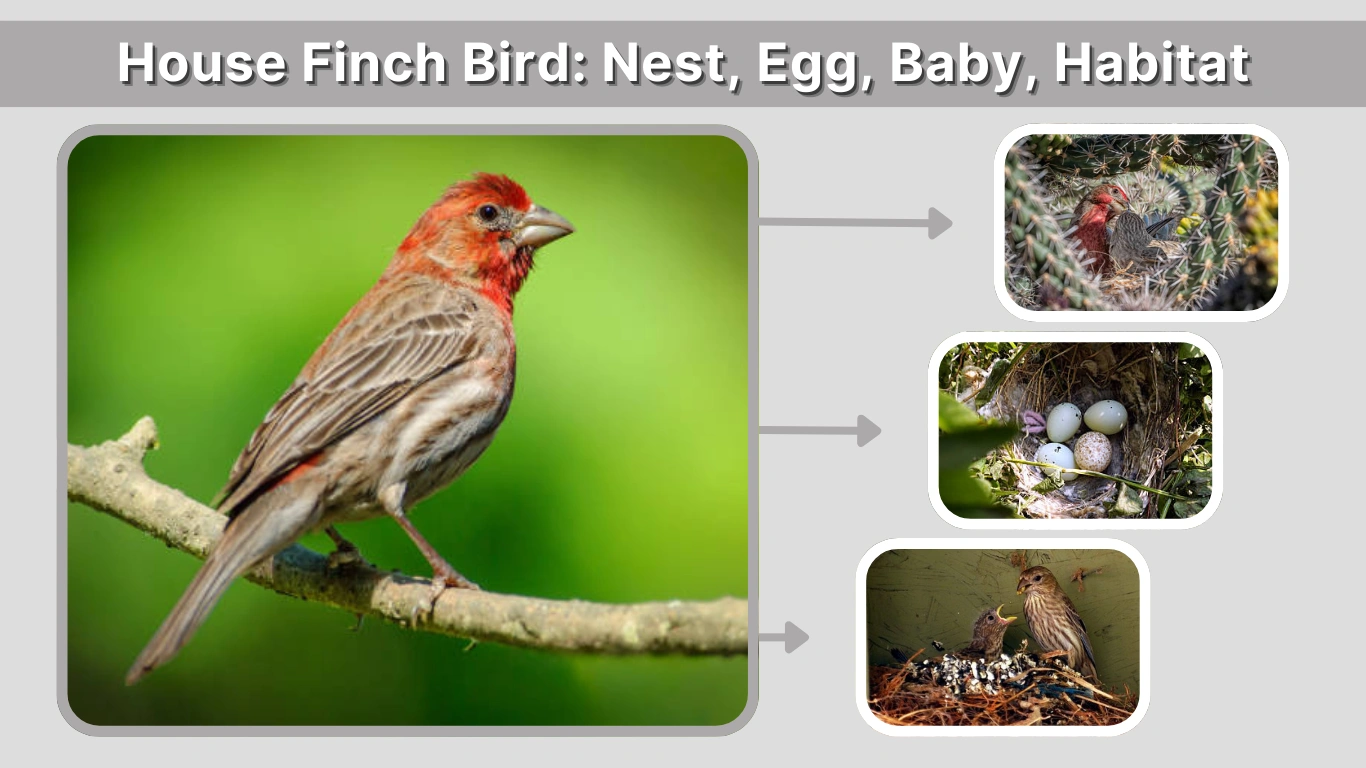
The house finch is one of the most familiar and widespread backyard birds in North America. Recognized for the red coloring of males and the streaked brown appearance of females, this small finch has adapted remarkably well to life around humans. From deserts and open woodlands to busy cities and suburban neighborhoods, the house finch thrives in a wide range of environments. Its frequent visits to feeders, cheerful songs, and visible nesting behavior make it a favorite subject for birdwatchers and nature enthusiasts.
Scientific Classification and Species Overview
The house finch belongs to the finch family Fringillidae, a group known for seed-eating birds with strong, conical beaks. Its scientific name, Haemorhous mexicanus, reflects its original range in the southwestern parts of North America and Mexico.
Historically, the house finch was native mainly to the western United States and Mexico. During the 20th century, small introduced populations in the eastern United States expanded rapidly, eventually spreading across most of the continent. Today, the house finch is one of the most common birds found around human settlements.
Biologically, the house finch is valued by researchers for its adaptability, social behavior, and vocal learning abilities. Its close association with urban environments has also made it an important species for studying wildlife responses to human development.
Identification and Physical Characteristics
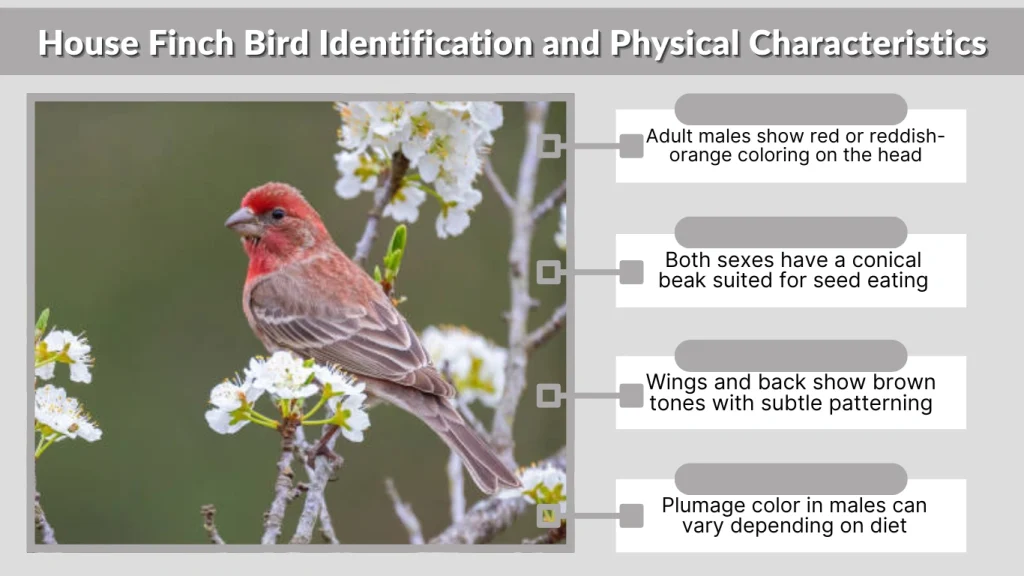
The house finch is a small, slender finch with a gently notched tail and a short, thick beak designed for cracking seeds. Although both sexes share a similar body shape, their coloration is noticeably different.
- Small songbird with a slightly rounded head and medium-length tail
- Adult males show red or reddish-orange coloring on the head, throat, and chest
- Females are brown and gray with heavy streaking on the underparts
- Both sexes have a conical beak suited for seed eating
- Wings and back show brown tones with subtle patterning
- Juveniles closely resemble adult females
- Plumage color in males can vary depending on diet
Geographic Range and Distribution
The house finch is now widespread throughout most of North America. Its natural range once centered in the southwestern United States and Mexico, where it inhabited open woodlands, desert edges, and river valleys.
Following its introduction to eastern regions, the species expanded rapidly. Today, house finches are found from southern Canada through the United States and into Mexico. Their success is closely tied to their ability to use human-modified environments.
House finches are especially abundant in cities, suburbs, farms, and residential areas. Parks, gardens, orchards, and roadsides all provide suitable conditions, offering food sources, nesting sites, and protection from some natural predators.
Habitat and Environmental Preferences
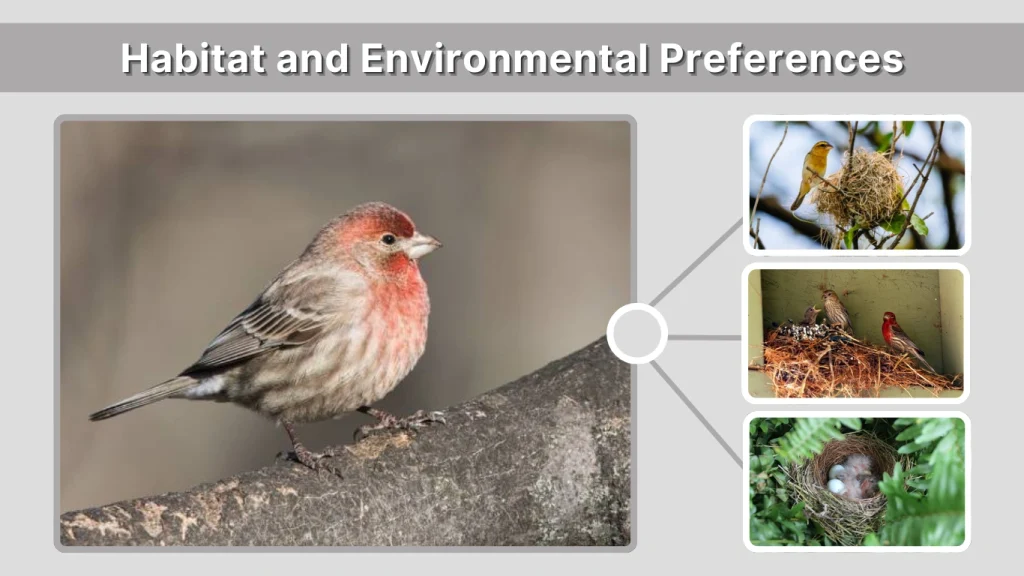
House finches favor open or semi-open habitats rather than dense forests. In natural settings, they occupy deserts, grasslands, woodland edges, and scrubby areas where seeds and insects are readily available.
In human environments, they commonly settle in neighborhoods, towns, and agricultural zones. Buildings, ornamental trees, backyard feeders, and hanging plants create ideal living conditions. Their comfort around people allows them to nest unusually close to homes.
During breeding season, house finches select habitats that provide safe nesting spots and abundant food. In winter, they often gather in areas with reliable seed supplies, such as feeders, weedy fields, and urban green spaces.
Diet and Feeding Behavior
Primary Food Sources
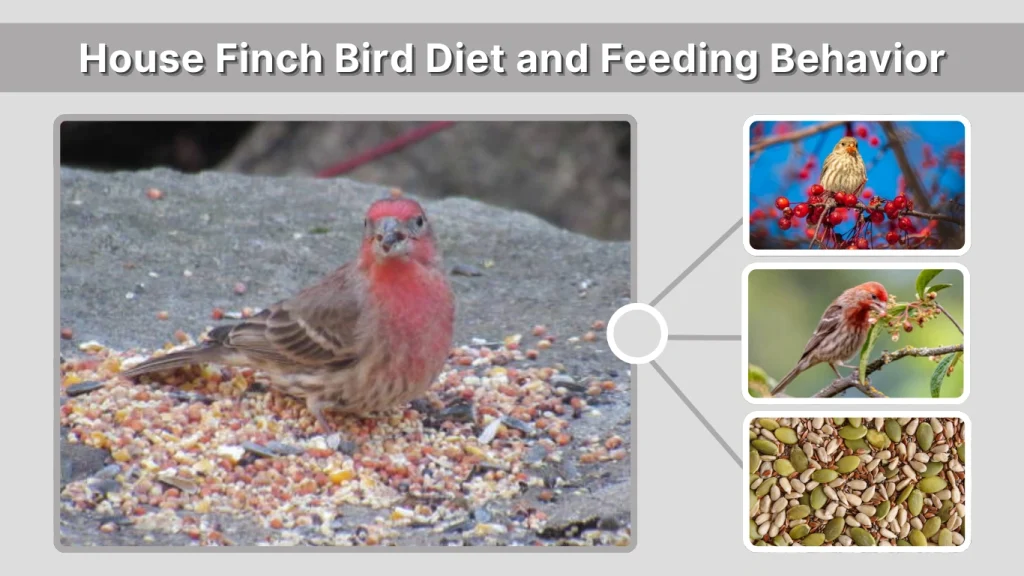
House finches feed mainly on plant material. Seeds from grasses, weeds, and trees make up most of their diet. They also eat buds, fruits, and berries when available. During the breeding season, adults increase their intake of insects, including caterpillars and small invertebrates, which provide essential protein for growing chicks.
Foraging Habits
These birds forage both on the ground and in low vegetation. They are frequent visitors to backyard feeders, especially those offering sunflower seeds, millet, and safflower. House finches often feed in small groups and show little fear around people, which helps them exploit urban food sources. Seasonal flexibility in feeding behavior supports their year-round survival.
Behavior and Social Structure
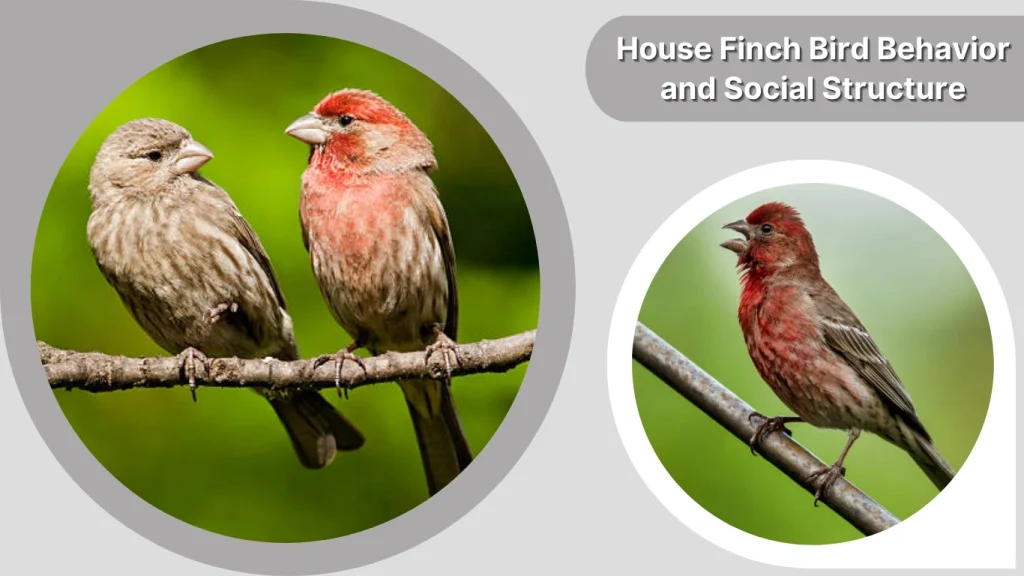
House finches are active, social birds known for their constant movement and vocal communication. Their behavior changes between breeding and non-breeding seasons.
- Most active during daylight hours
- Males sing frequently to attract mates and defend space
- Courtship includes fluttering displays and feeding gestures
- Outside breeding season, they form loose flocks
- Use a wide range of calls and musical songs
- Often feed peacefully with other small bird species
- Show strong tolerance of human presence
Breeding Season and Reproductive Behavior
The breeding season of the house finch usually begins in early spring, although in warmer regions it may start as early as late winter. Males sing persistently to attract females and may perform short fluttering flights and head movements during courtship. Once a pair bond forms, the birds often remain together through the breeding attempt.
House finches may raise multiple broods in a single year if conditions are favorable. This repeated breeding strategy increases reproductive success and contributes to their strong population numbers. During this period, both adults become highly focused on nest building, feeding, and protecting their young.
Although males show some territorial behavior near the nest, house finches are generally less aggressive than many songbirds. They often nest relatively close to other pairs, especially in urban settings where suitable sites are clustered.
House Finch Nest: Structure and Construction
Nest Design and Materials
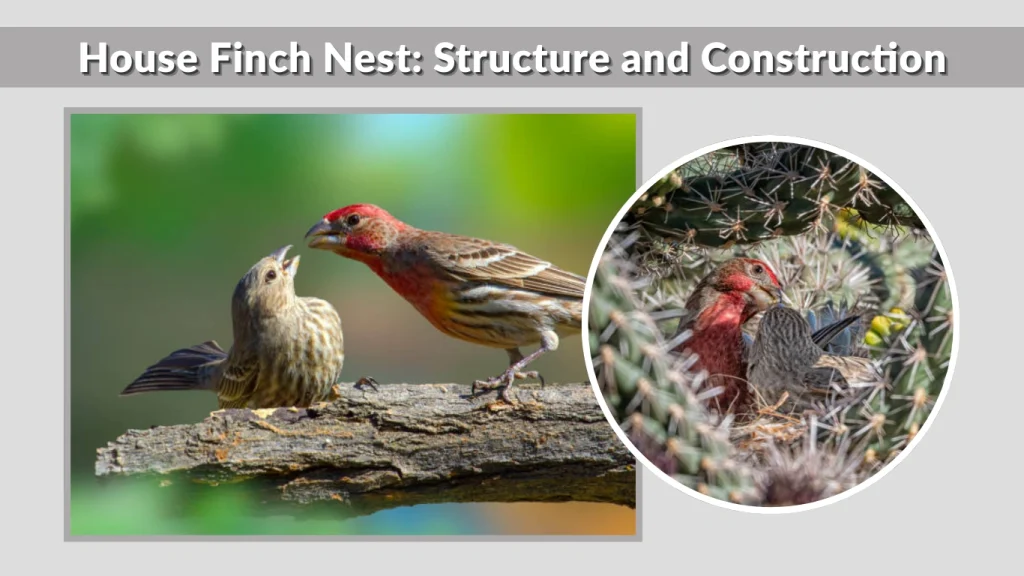
The female house finch builds the nest, forming a shallow cup made of twigs, grasses, leaves, feathers, string, and even human-made materials such as paper or thread. The inside is lined with softer fibers to create a warm surface for eggs and chicks. The finished nest is compact, flexible, and well suited for sheltered locations.
Nest Placement
House finches are highly creative in choosing nest sites. Nests may be placed in trees, shrubs, cactus plants, hanging flower pots, building ledges, vents, light fixtures, and climbing vines. Height varies widely, but sites are usually protected from direct rain and strong winds. Their willingness to use man-made structures is one reason they thrive near humans.
House Finch Eggs: Appearance and Incubation
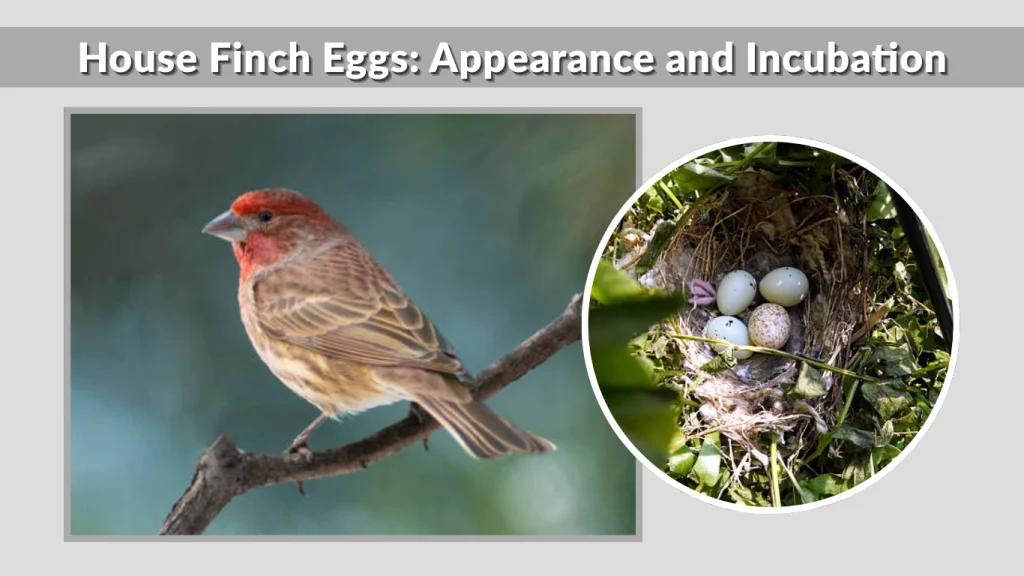
A typical clutch contains two to six eggs. House finch eggs are pale bluish-white to light green, often speckled with fine dark markings near the broader end. The female performs most of the incubation, which lasts about 12 to 14 days.
During incubation, the male regularly brings food to the female. This feeding behavior strengthens pair bonds and ensures the eggs remain warm. Once the eggs hatch, the empty shells are usually removed from the nest to reduce detection by predators.
Hatching is often synchronized, allowing chicks to develop at a similar pace. Newly hatched chicks are blind, nearly featherless, and completely dependent on their parents for warmth and nourishment.
House Finch Babies: Growth and Development
Hatchling Stage
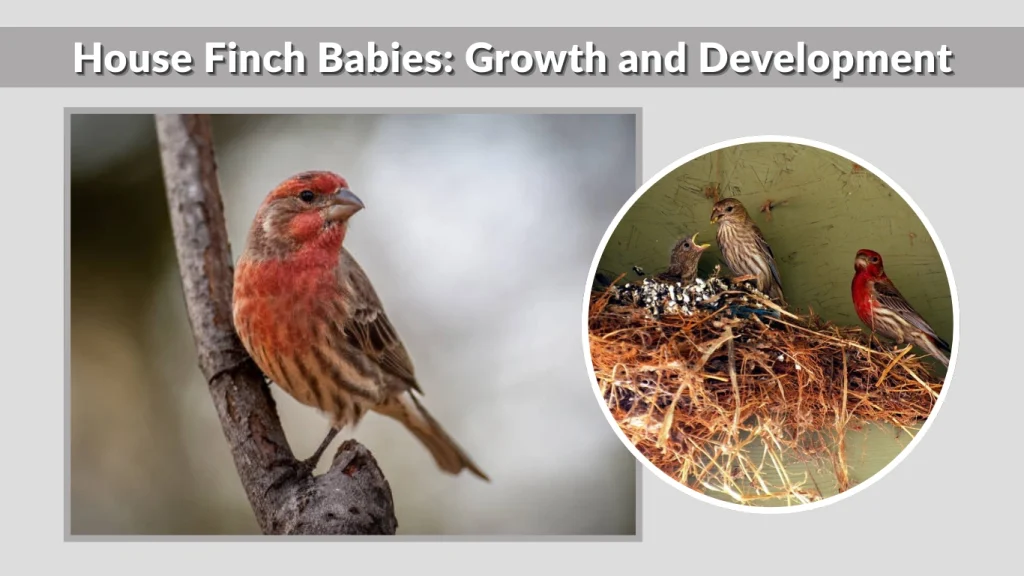
At birth, house finch chicks are small, fragile, and unable to regulate their body temperature. Parents feed them frequently with regurgitated seeds and insects. The female broods the young closely during the first few days to keep them warm and protected.
Nestling to Fledgling Stage
Within a week, pin feathers begin to emerge, and the chicks grow rapidly. Their eyes open, and their begging calls become stronger. After about 12 to 15 days, young finches leave the nest as fledglings. Although capable of short flights, they still rely on their parents for food and guidance while learning to forage independently.
Lifecycle and Development Stages
The house finch undergoes a clear series of life stages from egg to adult, each marked by physical and behavioral changes.
- Egg stage lasting nearly two weeks
- Hatchlings that require constant warmth
- Nestling phase with fast feather growth
- Fledgling stage with short practice flights
- Juvenile period with streaked plumage
- Adult stage with full coloration
- Average lifespan of 3 to 7 years in the wild
Seasonal Behavior and Movement Patterns
House finches are mostly resident birds, meaning many remain in the same general area throughout the year. However, some populations shift locally in response to food availability and weather conditions.
In winter, they often form large flocks that roam between feeding areas. These flocks improve predator detection and help birds locate reliable food sources. During the breeding season, flocks break apart into pairs and small family groups.
Unlike long-distance migrants, house finches usually travel only short distances. Their close association with feeders and urban habitats allows them to survive cold seasons without major migration.
Predators, Threats, and Survival Strategies
House finches face threats from predators such as hawks, owls, snakes, squirrels, raccoons, and domestic cats. Eggs and chicks are especially vulnerable to nest-raiding animals.
Their main defenses include rapid flight, sharp alarm calls, and nesting in sheltered locations. Flocking behavior also improves survival by increasing vigilance. Urban finches often take advantage of human presence, which can deter some natural predators.
Diseases, particularly eye infections, pose a modern threat. Habitat changes and pesticide use may also impact local populations, although overall numbers remain strong.
Ecological Role and Importance
House finches contribute to ecosystem balance through seed consumption and limited insect control. Their feeding helps regulate plant growth and supports seed dispersal across different environments.
They serve as prey for many larger animals, making them an important link in food webs. In urban ecosystems, house finches are among the most visible representatives of wildlife, helping connect people with nature.
Because of their adaptability, house finches are often used in scientific research focused on urban ecology and disease dynamics.
Relationship With Humans
House finches are among the most human-associated wild birds. They frequently visit backyard feeders, nest on buildings, and tolerate close human activity.
Their cheerful songs and approachable nature make them popular with birdwatchers. Many people enjoy observing their nesting behavior, especially when finches choose visible but safe locations near homes.
This close relationship also places responsibility on humans to provide clean feeders, safe environments, and respectful observation practices.
Conservation Status and Population Trends
The house finch is currently listed as Least Concern, with a large and widespread population. It remains one of the most abundant birds in many regions.
Although overall numbers are strong, disease outbreaks and habitat changes can affect local populations. Long-term monitoring programs continue to track trends and health conditions.
Maintaining green spaces, reducing pesticide use, and providing safe nesting environments support the long-term stability of house finch populations.
Interesting Facts About House Finches
The red color of male house finches depends on pigments in their diet, meaning brighter birds often signal better health. House finches can recognize individual neighbors by song and adjust their calls during social interactions.
They are known for nesting in unusual places, including traffic lights and hanging decorations. Their success across cities and countryside highlights their remarkable adaptability.
FAQs
What does a house finch nest look like?
A house finch nest is a small, shallow cup made from twigs, grasses, feathers, and sometimes human-made materials. It is often built on ledges, shrubs, or hanging structures and lined with soft fibers for warmth and comfort.
How many eggs does a house finch lay?
House finches usually lay between two and six eggs per clutch. The eggs are pale bluish-white or light green with fine speckles, and they hatch after about two weeks of incubation.
What do baby house finches eat?
Baby house finches are fed regurgitated seeds and insects by both parents. Insects are especially important early in life because they provide the protein needed for rapid growth and feather development.
Where do house finches usually live?
House finches live in open habitats such as deserts, woodlands, farms, towns, and cities. They are especially common around homes, parks, and gardens where food and nesting sites are easily available.
Are house finches friendly backyard birds?
House finches are generally tolerant and social birds. They often feed peacefully with other species and adapt well to human presence, making them one of the most approachable backyard birds.