



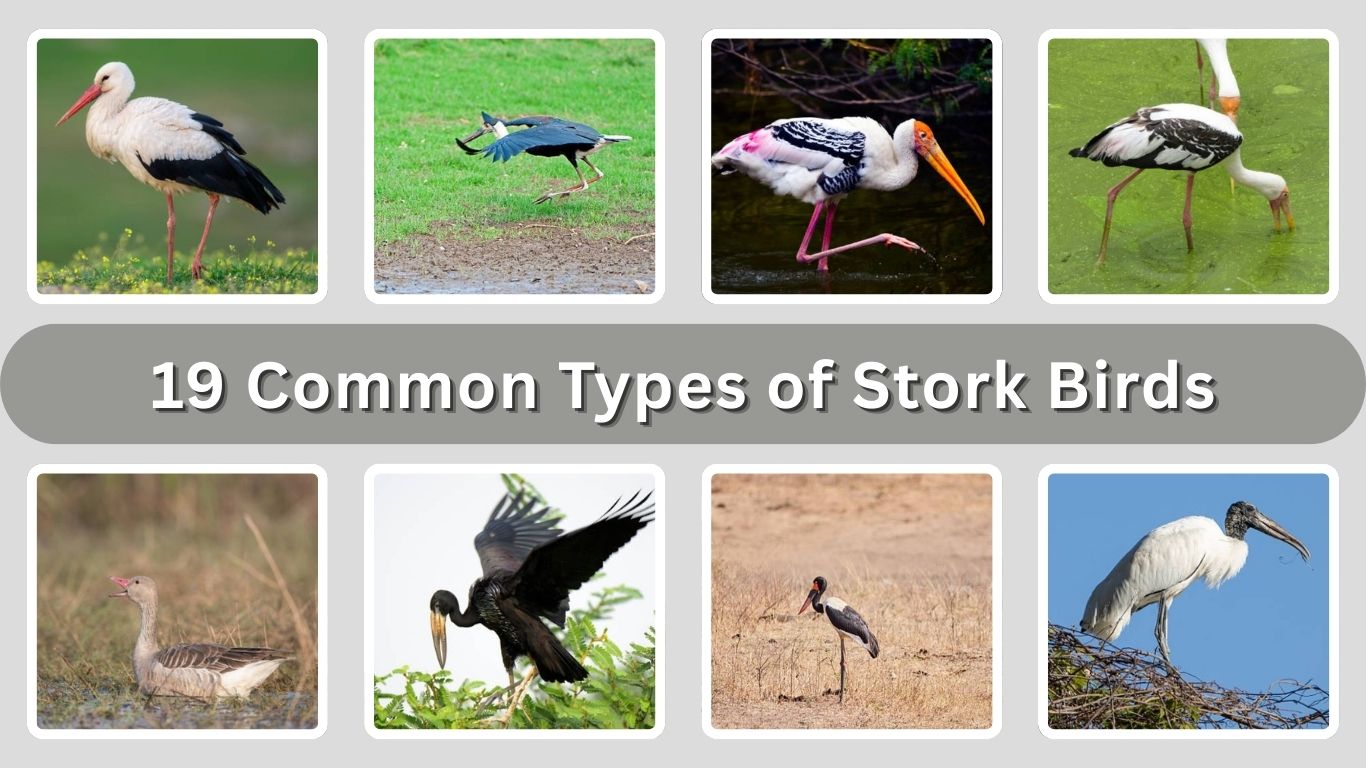
Storks are large, long-legged wading birds best known for their impressive height, broad wings, and strong association with wetlands and open landscapes. Found across Europe, Asia, Africa, Australia, and the Americas, these birds are expert hunters of shallow waters and flooded fields. Many stork species are also famous for their long-distance migrations and distinctive bill-clattering behavior. From massive scavenging storks to elegant fish-hunters, storks represent an important and fascinating group of waterbirds worldwide.
1. White Stork
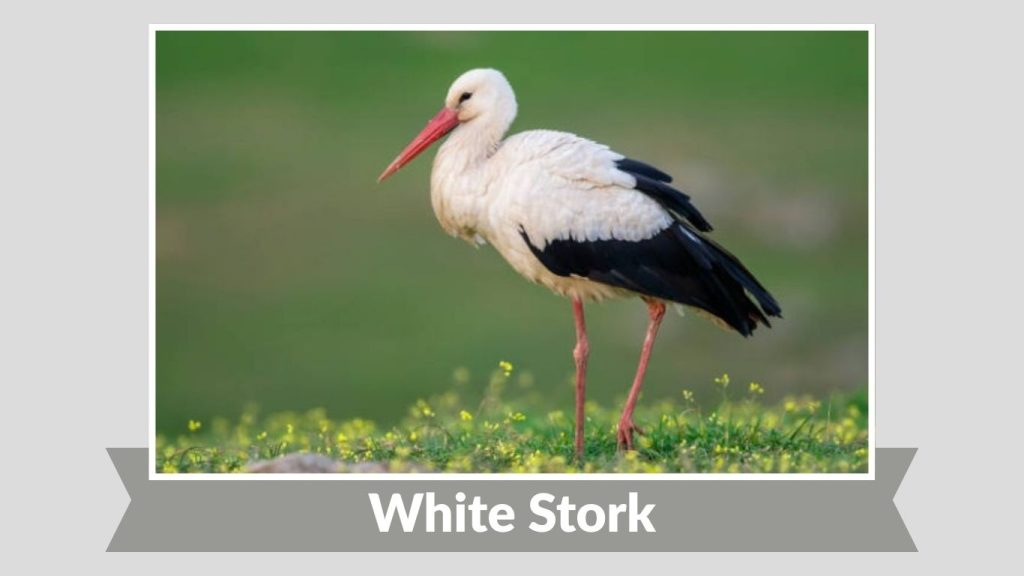
The white stork is one of the most recognizable stork species in the world, widely known for its tall posture, long red bill, and strong cultural symbolism across Europe, Asia, and parts of Africa. It is a large migratory bird that prefers open landscapes and wetlands, often seen nesting on rooftops, chimneys, and tall structures close to human settlements.
Identification
- Large white body with contrasting black flight feathers
- Long, straight red bill adapted for catching prey
- Long red legs designed for wading in shallow water
- Broad wingspan, often gliding with slow, powerful wingbeats
- Adults typically measure about 100–115 cm in height
Habitat
White storks are commonly found in open countryside, wetlands, floodplains, grasslands, and agricultural fields. They prefer areas near rivers, marshes, ponds, and irrigated farmland where food is abundant. During breeding season, they often build large stick nests on trees, cliffs, buildings, and utility poles.
Behaviors
White storks are social and often seen foraging in small groups or large flocks. They are famous for their long-distance migrations between Europe or western Asia and Africa. Instead of singing, they communicate mainly by bill-clattering, especially during courtship and nest defense.
Diet and Lifespan
Their diet mainly includes insects, frogs, fish, small mammals, reptiles, and other small aquatic animals. White storks hunt by slowly walking and picking prey from the ground or shallow water. In the wild, they usually live around 15–20 years, with some individuals surviving even longer.
2. Black Stork
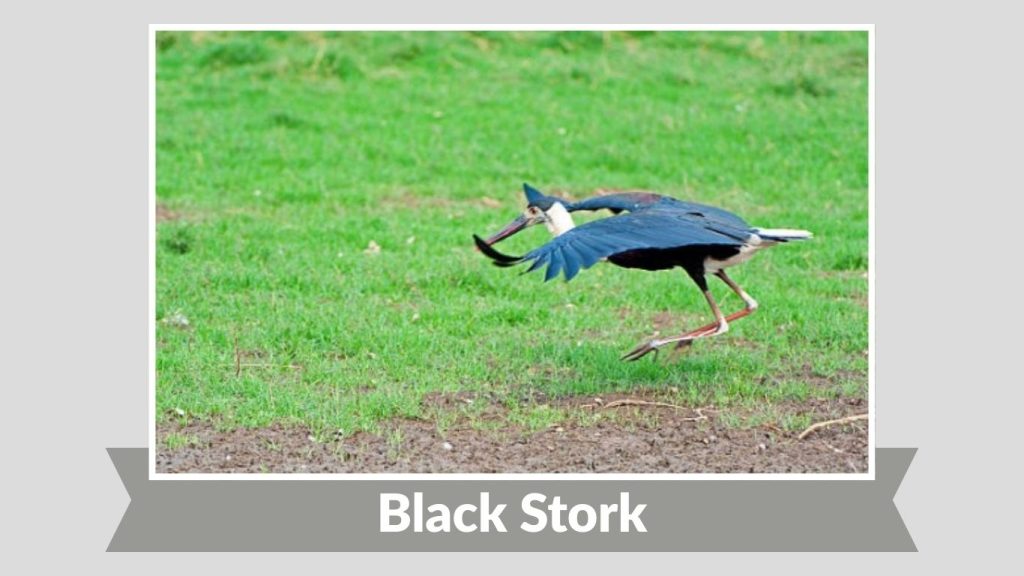
The black stork is a striking and more secretive relative of the white stork, known for its dark, glossy plumage and shy nature. Unlike many storks that live close to people, this species prefers quiet forests and remote wetlands. It is widely distributed across Europe, Asia, and parts of Africa, migrating long distances between breeding and wintering grounds.
Identification
- Mostly black plumage with green and purple metallic sheen
- White belly and undertail feathers
- Long red bill, slightly straighter and slimmer than white stork
- Long red legs adapted for wading
- Wingspan typically ranges from 145–155 cm
Habitat
Black storks mainly inhabit dense forests near rivers, lakes, marshes, and mountain streams. They choose secluded areas for nesting, often building large nests on tall trees or rocky cliffs. During migration and winter, they can also be found in wetlands, flooded grasslands, and quiet river valleys.
Behaviors
This species is solitary and avoids human disturbance. Black storks are powerful soarers, using warm air currents to travel long distances. They are generally silent, communicating with soft hisses or bill movements near the nest. During breeding season, pairs become territorial and defend nesting sites.
Diet and Lifespan
Black storks feed on fish, amphibians, insects, crustaceans, and small reptiles, usually hunting in shallow, slow-moving water. They stalk prey carefully rather than foraging in open fields. In the wild, black storks commonly live 12–18 years, with some individuals reaching over 20 years.
3. Painted Stork
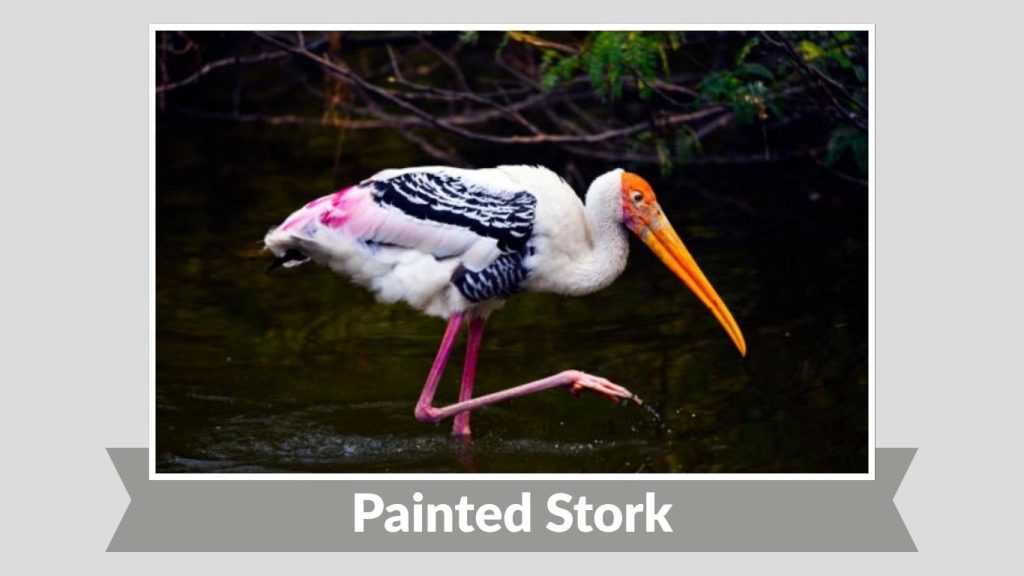
The painted stork is a large, colorful stork species best known for its bright pink wing feathers and striking black-and-white body pattern. It is commonly seen across South and Southeast Asia, especially around wetlands and large water bodies. This species often feeds and nests in colonies, creating impressive scenes when many birds gather together.
Identification
- White body with bold black markings on wings and back
- Bright pink tertial feathers visible in adults
- Long yellowish, slightly down-curved bill
- Long pink to red legs adapted for wading
- Adults usually stand about 93–102 cm tall
Habitat
Painted storks mainly live in freshwater wetlands, lakes, marshes, flooded fields, and riverbanks. They are also frequently found near reservoirs, fish ponds, and coastal lagoons. For nesting, they choose large trees near water, often sharing colonies with other waterbirds.
Behaviors
Painted storks are highly social birds, usually seen in flocks or large breeding colonies. They often feed cooperatively, sweeping their partially open bills through the water to catch fish. During breeding season, they perform bill-clattering and wing-spreading displays.
Diet and Lifespan
Their diet consists mostly of fish, along with frogs, crustaceans, insects, and small reptiles. Painted storks hunt mainly by touch rather than sight, snapping their bills shut when prey is detected. In the wild, they generally live around 12–15 years.
4. Milky Stork
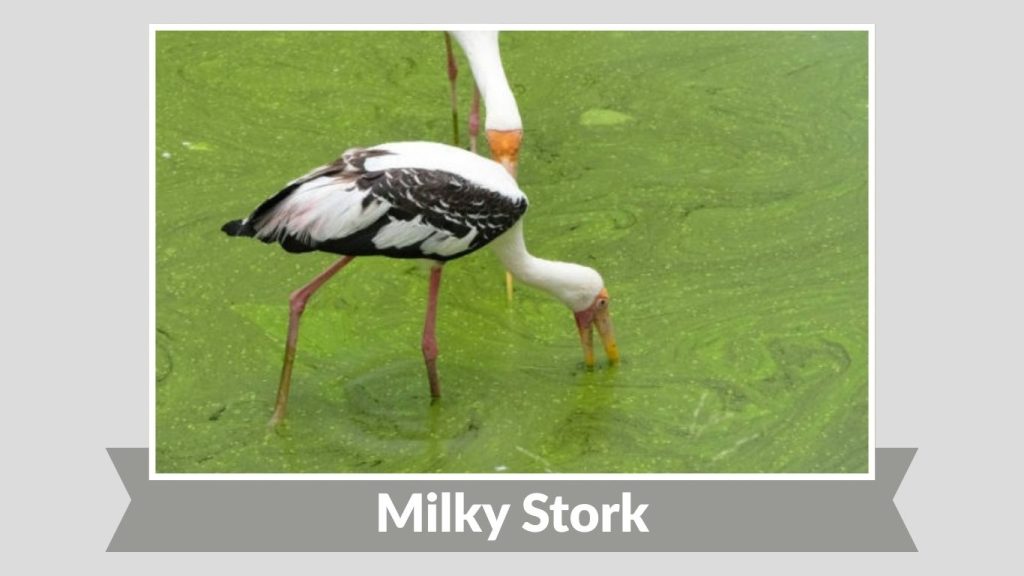
The milky stork is a pale-colored coastal stork species recognized for its creamy white body, contrasting black flight feathers, and brightly colored facial skin. It is native to Southeast Asia and is considered one of the rarer storks due to habitat loss and declining wetland ecosystems.
Identification
- Creamy-white to pale gray body plumage
- Black flight feathers visible in wings
- Bare reddish facial skin around the eyes
- Long yellow to orange bill, slightly down-curved
- Long reddish legs suited for wading
Habitat
Milky storks mainly inhabit coastal wetlands, mangrove forests, tidal mudflats, estuaries, and shallow lagoons. They are also found along sheltered shorelines and river mouths. Nesting usually occurs in mangroves or tall coastal trees, often in small colonies.
Behaviors
Milky storks are generally quiet and somewhat shy birds. They often forage slowly in shallow coastal waters, sometimes in small groups. During the breeding season, they gather in colonies and use bill-clattering displays for communication and pair bonding.
Diet and Lifespan
Their diet mainly includes fish, shrimp, crabs, frogs, and other small aquatic animals. Milky storks feed by wading and snapping up prey from shallow water or mudflats. In the wild, they are believed to live around 10–15 years.
5. Asian Openbill
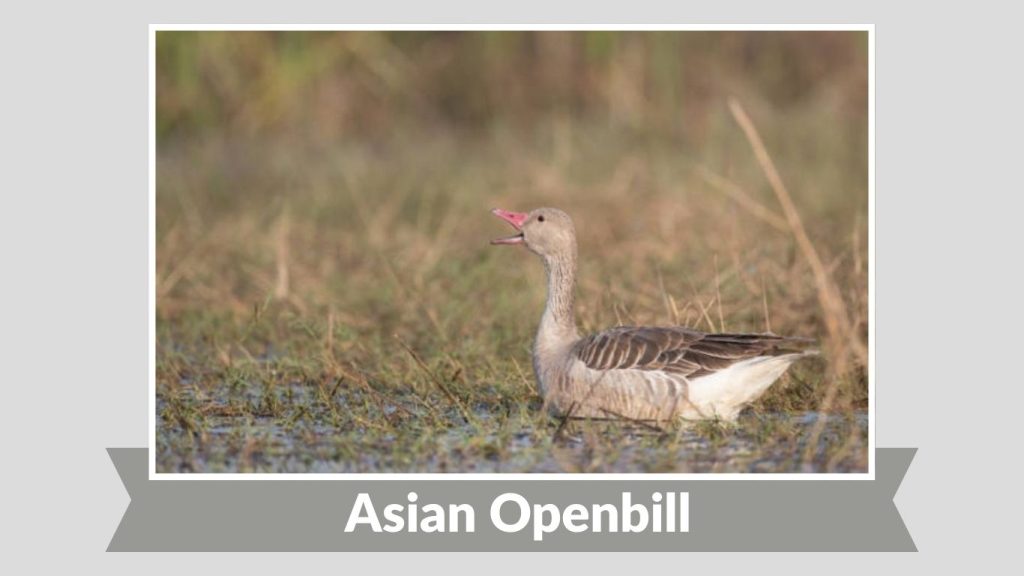
The Asian openbill is a distinctive stork species easily recognized by the gap in its bill, which is specially adapted for feeding on snails. It is widespread across South and Southeast Asia and is often seen in large flocks in wetlands and agricultural landscapes.
Identification
- Grayish-white body with darker flight feathers
- Unique gap between upper and lower mandibles
- Long, thick, slightly curved bill
- Long gray to pinkish legs
- Broad wings suited for soaring
Habitat
Asian openbills inhabit freshwater wetlands, marshes, flooded rice fields, ponds, lakes, and slow-moving rivers. They are highly adaptable and frequently forage in agricultural areas, especially where aquatic snails are abundant. Nesting usually takes place in large trees near water, often in colonies.
Behaviors
This species is very social and commonly forms large flocks while feeding or roosting. Asian openbills soar gracefully on thermals and migrate locally in response to seasonal rains. They are mostly silent, communicating through bill-clattering and body postures during breeding.
Diet and Lifespan
Asian openbills feed primarily on aquatic snails, using their specialized bills to extract soft bodies from shells. They also eat frogs, insects, crabs, and small fish. In the wild, their average lifespan is around 12–18 years.
6. African Openbill
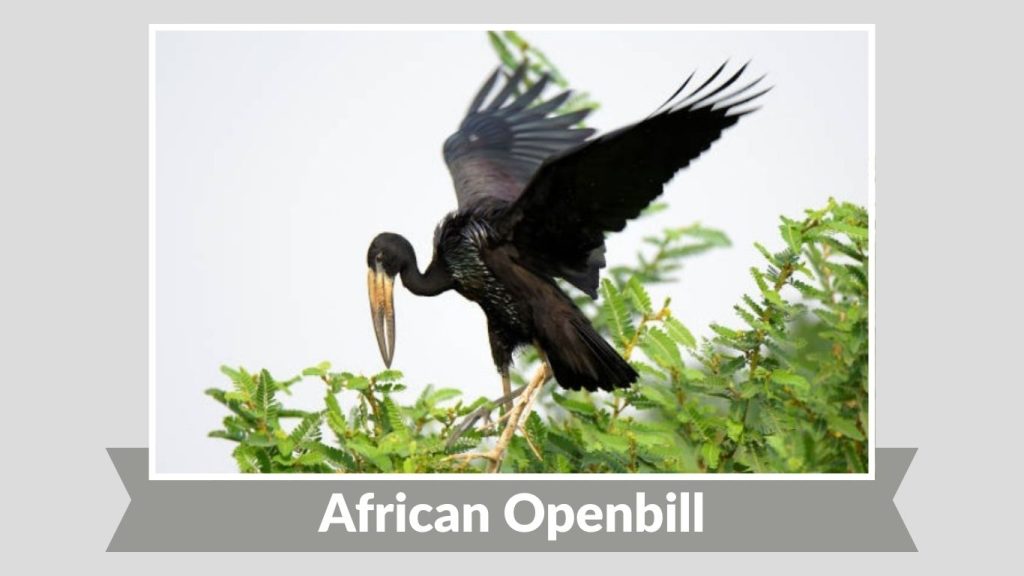
The African openbill is a medium-sized stork species closely related to the Asian openbill, sharing the same distinctive bill gap adapted for snail feeding. It is widespread across sub-Saharan Africa and is commonly associated with wetlands and floodplains.
Identification
- Dark brown to blackish body with greenish sheen
- White belly and undertail feathers
- Distinct open gap in the bill
- Long dark bill designed for extracting snails
- Long dark gray legs for wading
Habitat
African openbills are mainly found in freshwater swamps, floodplains, marshes, lakeshores, and slow-moving rivers. They often gather in large numbers in seasonally flooded grasslands and wet agricultural areas. Nesting usually occurs in trees near wetlands.
Behaviors
These storks are highly social and often seen feeding, flying, or roosting in flocks. They soar efficiently using rising air currents and move widely in response to rainfall and water levels. Communication is mostly silent, with bill-clattering at nesting sites.
Diet and Lifespan
Their diet is dominated by aquatic snails, but they also eat insects, crabs, frogs, and small fish. African openbills forage by walking slowly through shallow water. In the wild, they commonly live about 12–15 years.
7. Jabiru
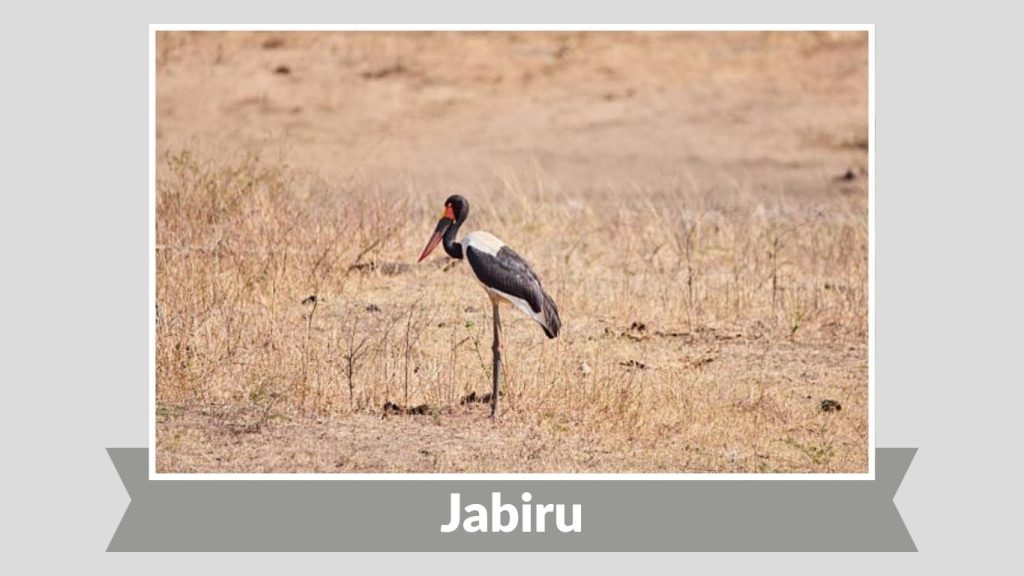
The jabiru is one of the largest storks in the world, famous for its massive black bill and striking red neck band. It is native to Central and South America, where it dominates wetlands and seasonally flooded landscapes. Its powerful appearance and towering height make it one of the most impressive wading birds of the Americas.
Identification
- Mostly white body with black head and upper neck
- Bright red band at the base of the neck
- Very large, thick black bill
- Long black legs and extremely tall stance
- Can reach heights of around 120–140 cm
Habitat
Jabirus live in tropical wetlands, swamps, floodplains, rivers, lakes, and marshes. They are especially common in seasonally flooded savannas such as the Pantanal. Nesting usually occurs high in tall trees near water, where massive stick nests are built.
Behaviors
Jabirus are often seen alone or in pairs, slowly patrolling shallow water for prey. They are strong soarers and may travel long distances between feeding areas. During breeding season, pairs become territorial around nesting sites.
Diet and Lifespan
Their diet mainly consists of fish, amphibians, reptiles, small mammals, and invertebrates. Jabirus are opportunistic hunters, taking advantage of drying pools where prey is concentrated. In the wild, they can live around 15–20 years.
8. Wood Stork
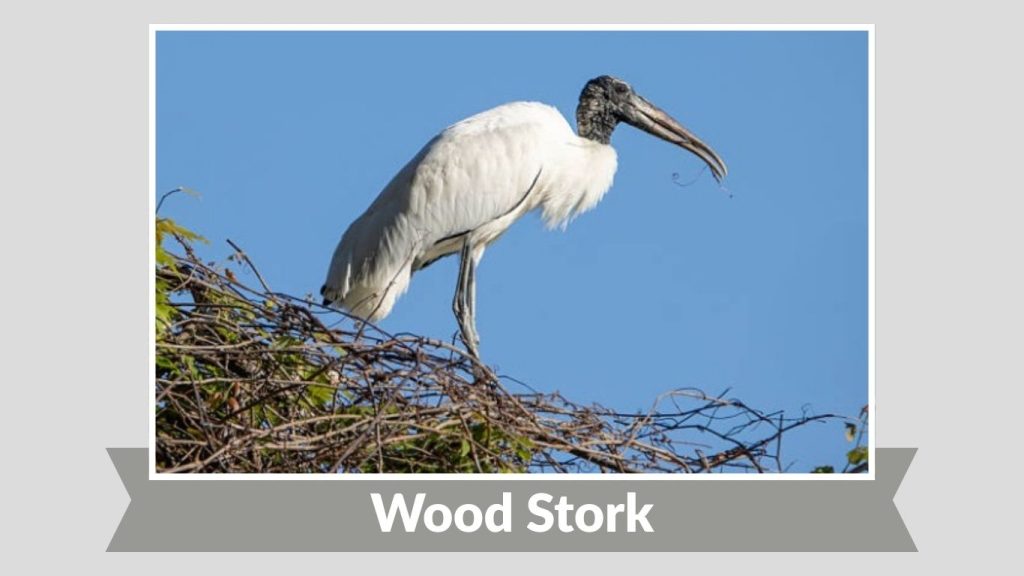
The wood stork is a large wading bird of the Americas, well known for its bald dark head and heavy down-curved bill. It is commonly found in the southeastern United States, Central America, and South America, where it depends heavily on healthy wetland ecosystems.
Identification
- White body with black flight feathers
- Bald, scaly dark gray to black head and neck
- Long, thick, slightly down-curved bill
- Long dark legs adapted for wading
- Broad wings for soaring flight
Habitat
Wood storks inhabit freshwater and coastal wetlands, including marshes, swamps, mangroves, lagoons, and flooded forests. They rely on seasonal water level changes that concentrate fish. Nesting usually occurs in colonies in tall trees standing in or near water.
Behaviors
Wood storks are social birds and often feed and nest in large groups. They use a unique “tactile feeding” method, snapping their bills shut instantly when prey touches them. They frequently soar on thermals and travel long distances between feeding and nesting sites.
Diet and Lifespan
Their diet mainly includes fish, frogs, aquatic insects, and small reptiles. Wood storks forage by slowly sweeping their open bills through shallow water. In the wild, they typically live about 11–15 years.
9. Marabou Stork
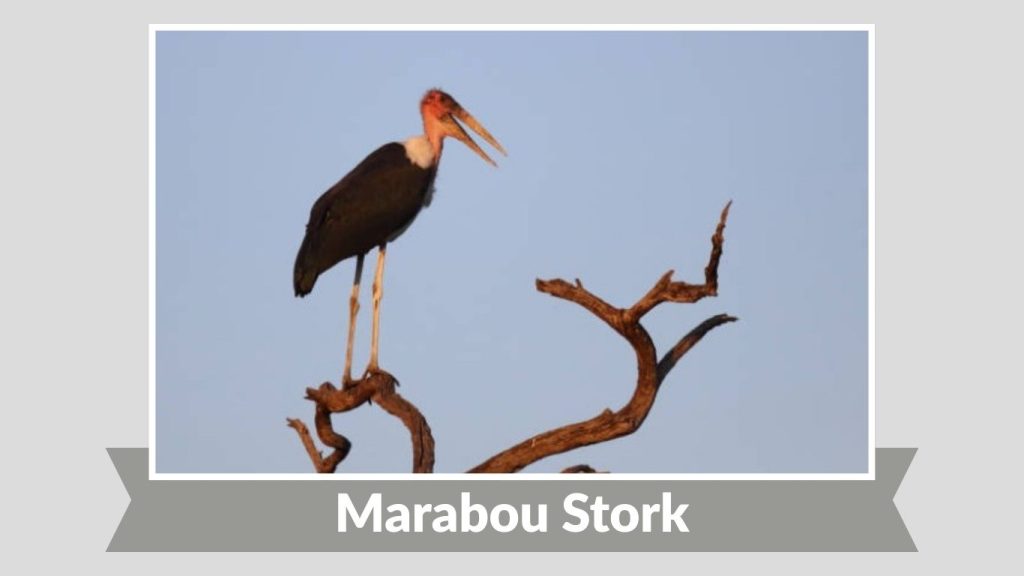
The marabou stork is a massive African stork species easily recognized by its bald head, heavy bill, and loose throat pouch. Often called the “undertaker bird” because of its dark wings and stooped posture, it plays an important role as a scavenger and predator in African ecosystems.
Identification
- Very large body with black wings and white underparts
- Bald pinkish head and neck
- Large, heavy gray bill
- Distinct hanging throat pouch
- Long dark legs built for walking and wading
Habitat
Marabou storks are commonly found in open savannas, wetlands, lake shores, riverbanks, floodplains, and even around garbage dumps and slaughterhouses. They often stay close to water sources but are also comfortable in dry open areas where food is available.
Behaviors
This species is both a scavenger and an active hunter. Marabou storks are often seen soaring high in the sky or standing motionless near carcasses. They are social birds, frequently gathering in large flocks around feeding and nesting sites.
Diet and Lifespan
Marabou storks eat carrion, fish, frogs, insects, reptiles, and small mammals. They are highly opportunistic and will steal food from other birds. In the wild, they usually live around 20–25 years.
10. Greater Adjutant
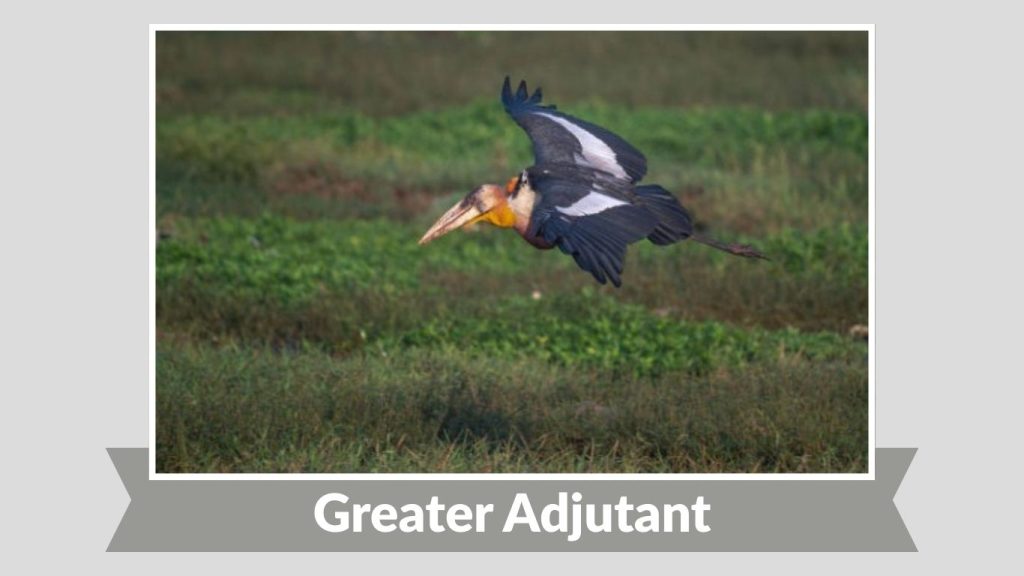
The greater adjutant is a very large and endangered stork species, known for its bare head, massive bill, and prominent throat pouch. It is mainly found in parts of South and Southeast Asia, where it inhabits wetlands as well as areas close to human settlements.
Identification
- Huge stork with black wings and pale underparts
- Bare yellowish to orange head and neck
- Very large, thick bill
- Prominent hanging throat pouch
- Long gray legs and broad wings
Habitat
Greater adjutants live in freshwater wetlands, marshes, lakes, riverbanks, and floodplains. They are also often seen near garbage dumps, fish markets, and urban edges where food is available. Nesting takes place in tall trees, sometimes within colonies.
Behaviors
They are slow-moving but powerful birds, often seen soaring high on thermals. Greater adjutants are both scavengers and hunters, feeding alone or in small groups. During breeding season, they gather in nesting colonies and communicate with bill clattering.
Diet and Lifespan
Their diet includes fish, frogs, reptiles, small mammals, insects, and carrion. They are opportunistic feeders and often exploit human waste sites. In the wild, greater adjutants can live around 20 years.
11. Lesser Adjutant
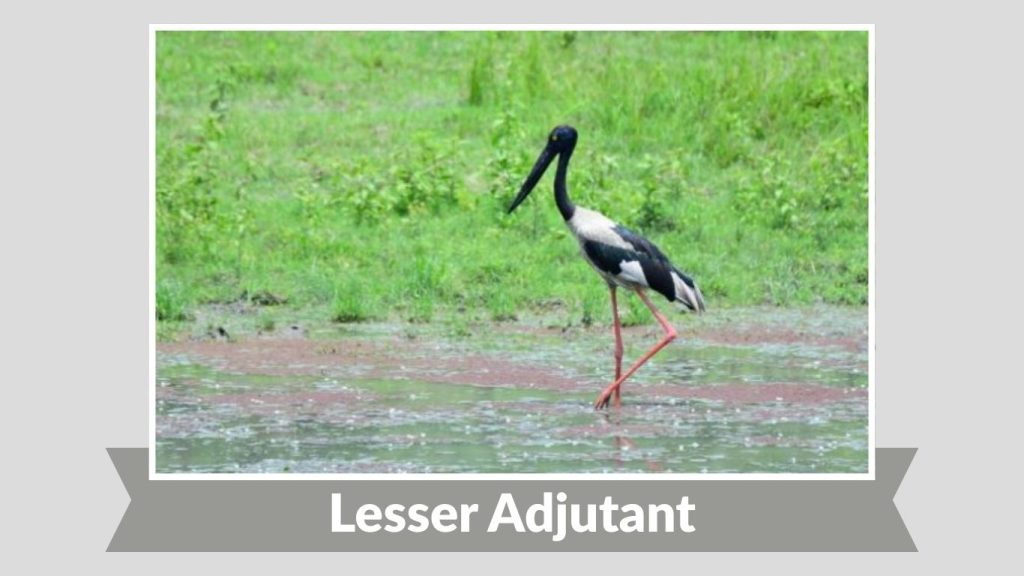
The lesser adjutant is a tall, powerful stork species closely related to the greater adjutant but slightly smaller and more widely distributed. It occurs across South and Southeast Asia and is usually found in wetlands, grasslands, and agricultural landscapes.
Identification
- Large stork with dark wings and paler underparts
- Bare yellowish head and upper neck
- Thick, strong, slightly down-curved bill
- Long gray legs for wading
- Broad wings suited for soaring
Habitat
Lesser adjutants inhabit marshes, swamps, floodplains, lakesides, rice fields, and river valleys. They also forage in open grasslands and farmland. Nesting usually occurs in tall trees, often near wetlands or forest edges.
Behaviors
These storks are often seen alone or in pairs while feeding, but may gather in loose groups where food is plentiful. They soar on thermal currents and travel long distances between feeding sites. At nests, they communicate using bill clattering and body postures.
Diet and Lifespan
Their diet consists of fish, frogs, reptiles, small mammals, insects, and carrion. Lesser adjutants are opportunistic feeders and both hunt live prey and scavenge. In the wild, they generally live about 15–20 years.
12. Saddle-billed Stork
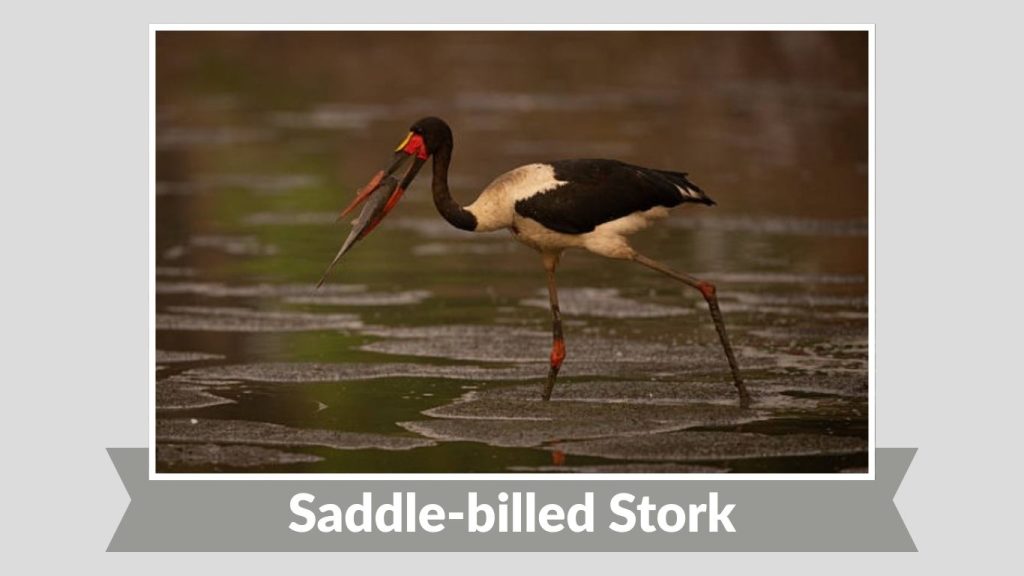
The saddle-billed stork is one of the most striking and colorful storks in Africa, famous for its massive red-and-black bill marked with a bright yellow “saddle.” It is a tall, elegant bird commonly seen standing motionless along rivers and wetlands.
Identification
- Black head, neck, wings, and back with white underparts
- Very large red bill with a bold yellow saddle marking
- Distinct yellow eye with dark facial skin
- Long black legs, extremely tall stance
- One of the tallest storks, reaching up to 150 cm
Habitat
Saddle-billed storks inhabit freshwater wetlands, rivers, floodplains, lakeshores, marshes, and swamps. They prefer shallow water areas where fish are abundant. Nests are built in large trees near water, often in isolated pairs.
Behaviors
This species is usually solitary or found in pairs rather than large flocks. Saddle-billed storks are patient hunters, standing still for long periods before striking prey. They are strong flyers and may defend feeding territories aggressively.
Diet and Lifespan
Their diet mainly includes fish, frogs, crustaceans, and small reptiles. They hunt by stabbing prey with their powerful bill. In the wild, saddle-billed storks often live around 15–20 years.
13. Abdim’s Stork
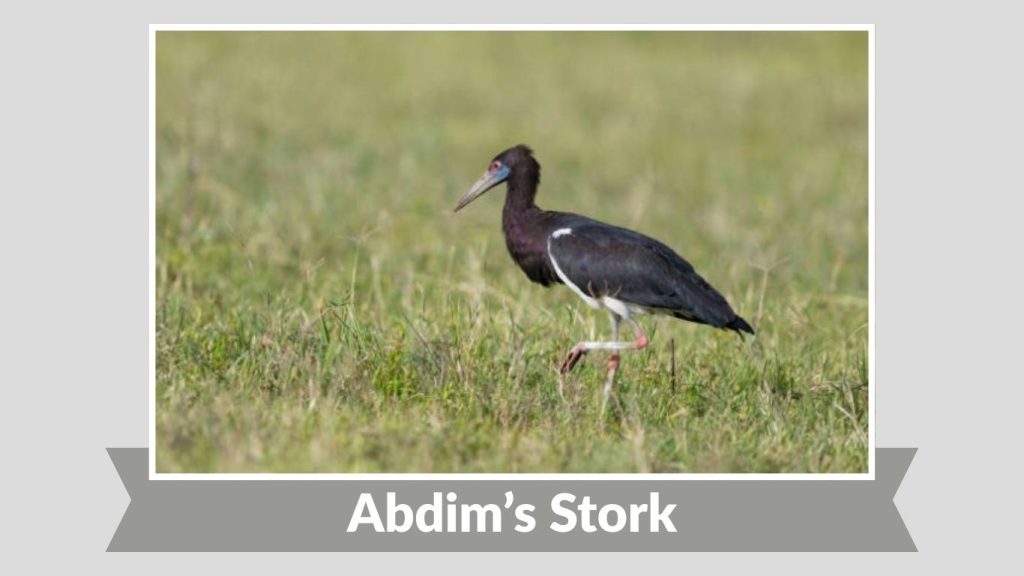
Abdim’s stork is a smaller and more slender stork species, well known for its glossy dark plumage and bright facial colors. It breeds in Africa and migrates long distances to spend the non-breeding season in parts of the Middle East and South Asia.
Identification
- Blackish body with green and purple metallic sheen
- White belly and undertail
- Gray bill with red facial skin near the eyes
- Long gray legs with reddish knees
- Noticeable blue eye ring
Habitat
Abdim’s storks live in open savannas, grasslands, wetlands, river valleys, and agricultural areas. They often forage in freshly burned fields or near livestock where insects are abundant. Nesting usually occurs on cliffs, tall trees, and sometimes on buildings.
Behaviors
They are highly social and often form large flocks, especially during migration and feeding. Abdim’s storks are agile flyers and are frequently seen soaring or gliding in groups. At breeding sites, they use bill clattering and visual displays.
Diet and Lifespan
Their diet mainly consists of insects such as locusts and grasshoppers, along with frogs, small reptiles, rodents, and fish. They actively forage on land more than most storks. In the wild, they generally live about 10–15 years.
14. Woolly-necked Stork
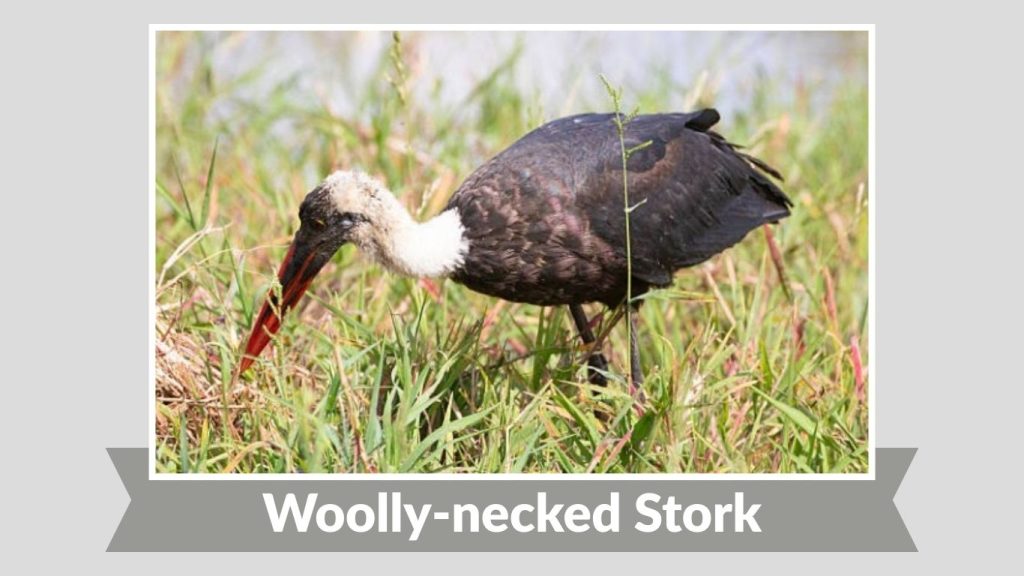
The woolly-necked stork is a medium-to-large stork species recognized by its contrasting dark body and fluffy white neck. It is widely distributed across Asia and parts of Africa, where it occupies a variety of wetland and open habitats.
Identification
- Black head, back, and wings with metallic sheen
- Distinct white, fluffy-looking neck and upper breast
- Long, straight dark bill
- Long reddish to dark legs
- White belly contrasting with dark upperparts
Habitat
Woolly-necked storks are found in freshwater wetlands, marshes, lakes, riversides, flooded fields, and open grasslands. They also forage in agricultural areas such as rice paddies. Nesting usually occurs in tall trees, often near water bodies.
Behaviors
This species is often seen alone, in pairs, or in small family groups. They are strong flyers and frequently soar over open landscapes. Woolly-necked storks are generally quiet but perform bill clattering and wing displays during courtship and nesting.
Diet and Lifespan
Their diet includes fish, frogs, insects, reptiles, crabs, and small mammals. They forage by walking slowly and picking prey from water or land. In the wild, woolly-necked storks typically live about 15–20 years.
15. Storm’s Stork
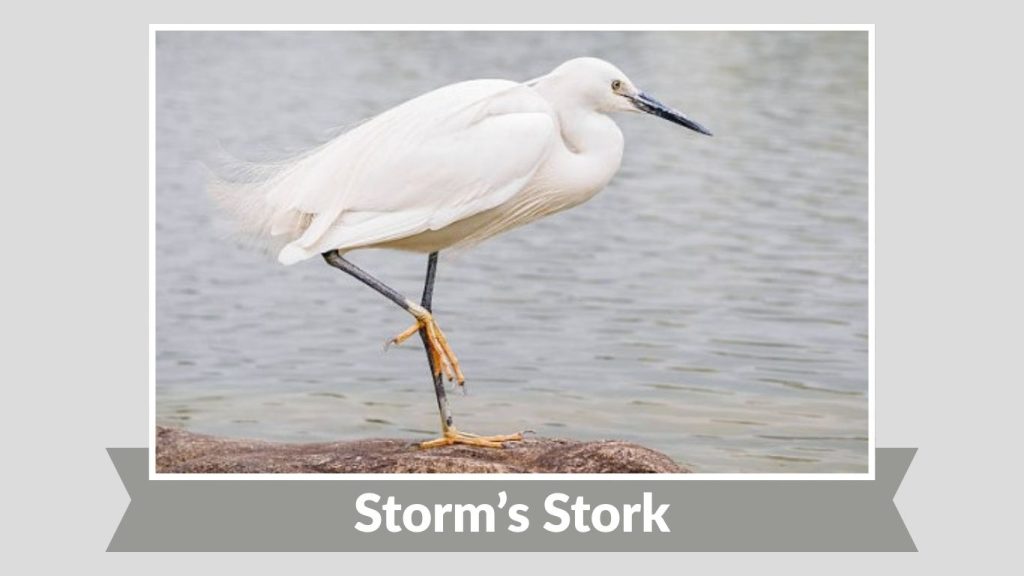
Storm’s stork is a rare and secretive forest stork species native to Southeast Asia. It is considered endangered and is known for its dark plumage, bright facial skin, and strong association with lowland rainforests and quiet wetlands.
Identification
- Dark blackish-brown body with greenish sheen
- White belly and undertail feathers
- Bare reddish facial skin around the eyes
- Long, straight dark bill
- Long reddish legs for wading
Habitat
Storm’s storks inhabit lowland rainforests, peat swamps, forested rivers, and secluded wetlands. They are rarely found far from dense forest cover. Nesting is believed to take place high in large forest trees close to rivers or swampy areas.
Behaviors
They are usually solitary or found in pairs and avoid human disturbance. Storm’s storks move quietly along shaded streams and forest pools while foraging. Very little is known about their breeding behavior due to their remote habitats.
Diet and Lifespan
Their diet likely includes fish, amphibians, crustaceans, and aquatic insects. They hunt in shallow forest waters and muddy pools. In the wild, their lifespan is estimated to be around 10–15 years.
16. Yellow-billed Stork
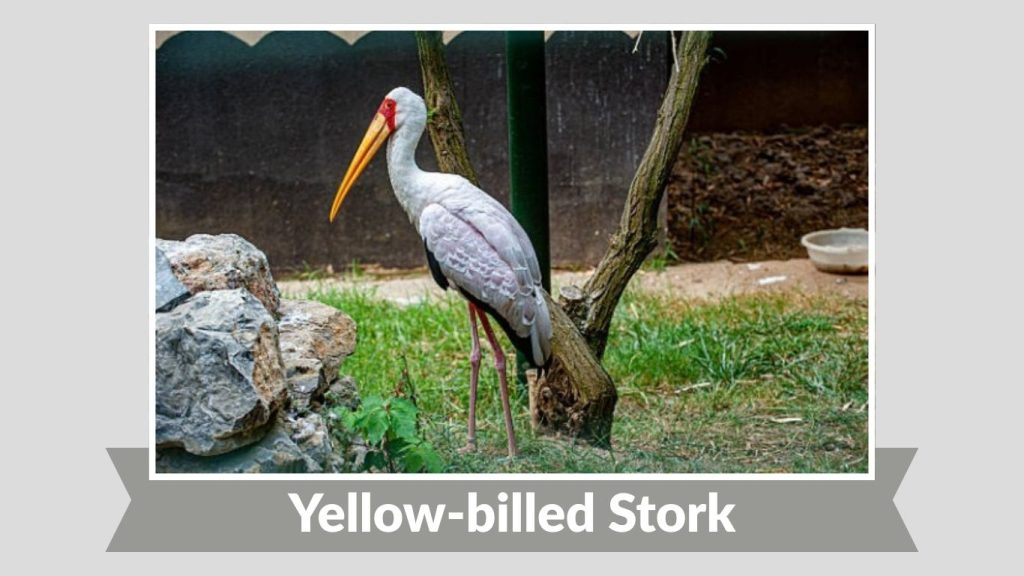
The yellow-billed stork is a graceful African stork species often seen wading through shallow waters with slow, deliberate steps. It is closely related to the painted stork and shares a similar feeding style, using its slightly curved bill to catch fish.
Identification
- White body with black wing feathers
- Long bright yellow, slightly down-curved bill
- Reddish facial skin around the eyes
- Long red to pink legs
- Slim, elegant body shape
Habitat
Yellow-billed storks inhabit rivers, lakes, marshes, floodplains, swamps, and shallow wetlands. They prefer warm lowland areas with abundant fish. Nesting usually occurs in trees near water, sometimes in small colonies.
Behaviors
They are often seen alone or in loose groups while feeding. Yellow-billed storks commonly use a sweeping motion of the bill through water to detect prey. They soar well and may travel seasonally following water availability.
Diet and Lifespan
Their diet mainly consists of fish, frogs, crustaceans, and aquatic insects. They hunt by touch, snapping their bill shut when prey is contacted. In the wild, yellow-billed storks typically live about 15–20 years.
17. Maguari Stork
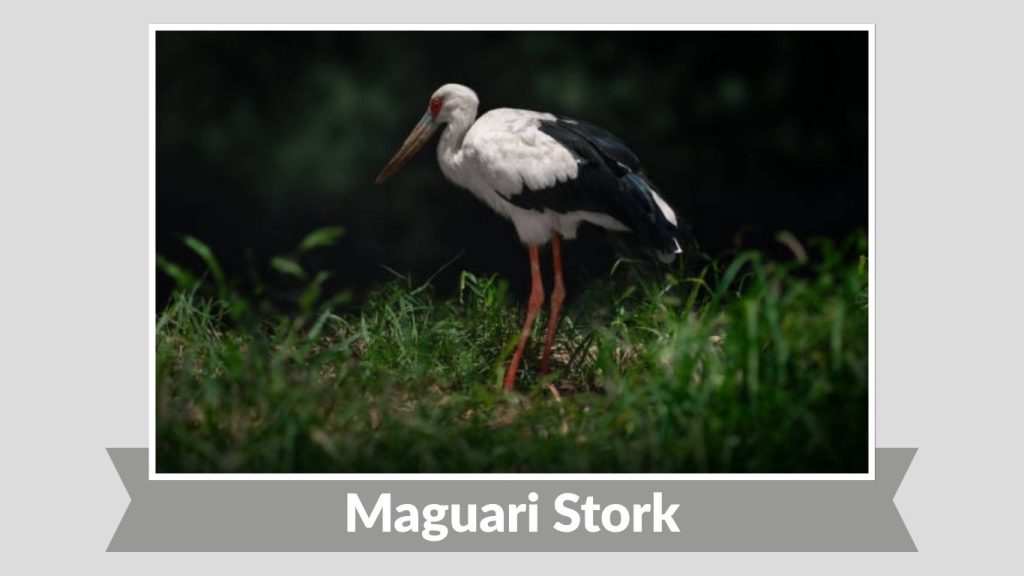
The maguari stork is a large South American stork species often compared to the white stork because of its similar black-and-white appearance. It inhabits open wetlands and grasslands across much of southern South America.
Identification
- White body with black flight feathers
- Bare reddish facial skin around the eyes
- Long straight bluish-gray bill
- Long reddish legs suited for wading
- Tall, upright posture
Habitat
Maguari storks live in marshes, flooded grasslands, swamps, shallow lakes, and river floodplains. They often forage in open, seasonally flooded areas. Nesting takes place on the ground in marshes or on low trees and shrubs near wetlands.
Behaviors
They are usually seen alone, in pairs, or in small groups. Maguari storks walk slowly through shallow water or wet grass while searching for prey. During breeding season, they defend nesting territories and use bill clattering displays.
Diet and Lifespan
Their diet includes insects, fish, frogs, small reptiles, and rodents. They feed both in water and on land. In the wild, maguari storks generally live around 15–20 years.
18. Black-necked Stork
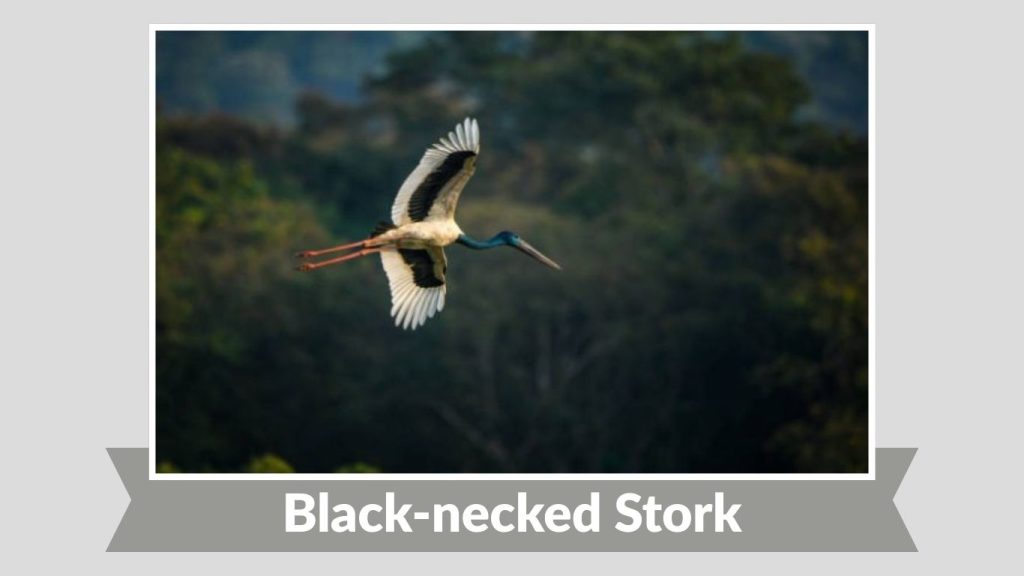
The black-necked stork is a large, striking stork species known for its bold black-and-white coloration and tall, elegant build. It is found across South and Southeast Asia as well as Australia, where it inhabits wetlands and open lowland habitats.
Identification
- Glossy black head, neck, and upperparts
- Bright white underparts and belly
- Very long, straight black bill
- Long red to pink legs
- Extremely tall and upright posture
Habitat
Black-necked storks live in freshwater wetlands, marshes, lakes, rivers, floodplains, swamps, and occasionally coastal lagoons. They prefer open areas with shallow water and scattered trees. Nesting usually occurs on tall trees near wetlands.
Behaviors
This species is mostly solitary or found in pairs. Black-necked storks are slow, deliberate hunters that stand motionless before striking prey. They are powerful flyers and maintain large territories, especially during the breeding season.
Diet and Lifespan
Their diet includes fish, frogs, crabs, reptiles, small mammals, and water birds. They hunt by stalking and stabbing prey. In the wild, black-necked storks often live about 15–20 years.
19. Oriental Stork
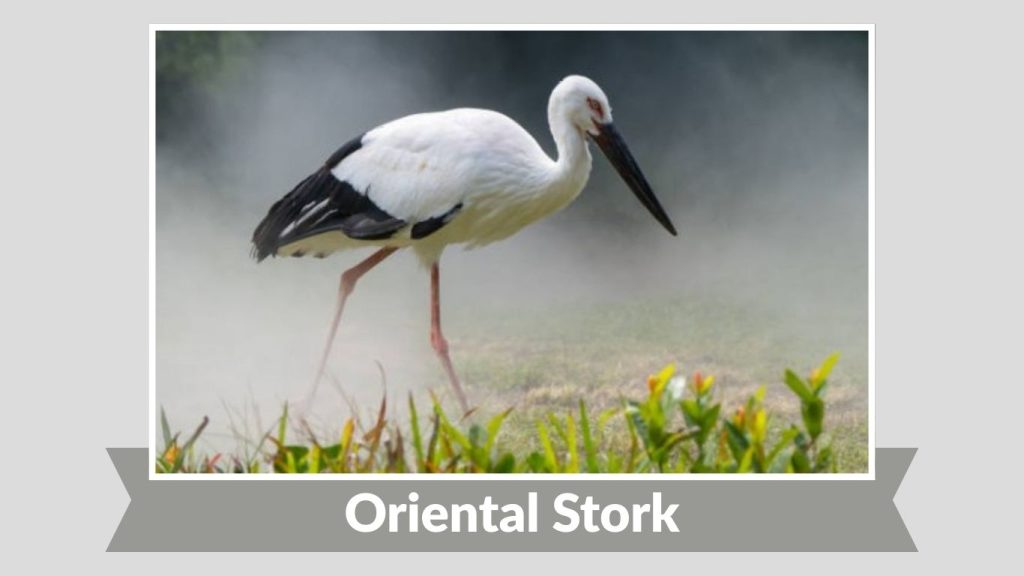
The oriental stork is a large, elegant stork species native to East Asia, often compared to the white stork in appearance but distinguished by its darker bill and facial skin. It is considered endangered and is strongly tied to healthy wetland ecosystems.
Identification
- White body with contrasting black wing feathers
- Long straight black bill
- Bare reddish facial skin around the eyes
- Long red legs adapted for wading
- Broad wings for soaring
Habitat
Oriental storks inhabit river floodplains, marshes, lakes, swamps, rice fields, and coastal wetlands. They depend on shallow freshwater habitats with abundant prey. Nesting usually occurs in tall trees, cliffs, or artificial platforms near wetlands.
Behaviors
They are often seen alone or in pairs outside the breeding season, but may gather in small groups during migration. Oriental storks soar efficiently and travel long distances between seasonal habitats. At nests, they communicate mainly through bill clattering.
Diet and Lifespan
Their diet includes fish, frogs, insects, crustaceans, and small reptiles. They forage by slowly wading and picking prey from shallow water. In the wild, oriental storks are known to live around 15–20 years.
FAQs
What makes storks different from herons and cranes?
Storks are generally heavier-bodied birds with thicker bills and stronger soaring ability than herons, and they lack the elaborate courtship dances typical of cranes. Most storks also rely on bill clattering instead of vocal calls and often nest in large, open stick platforms.
Where are storks commonly found around the world?
Storks are distributed across Europe, Asia, Africa, Australia, and the Americas. They mainly live in wetlands, floodplains, marshes, riversides, lakeshores, and coastal lagoons. Some species also adapt well to farmland and human settlements, especially where shallow water and prey are available.
What do storks usually eat in the wild?
Storks are opportunistic feeders that eat fish, frogs, insects, crustaceans, reptiles, small mammals, and sometimes carrion. Many species hunt by slowly wading and stabbing prey, while others use tactile feeding, snapping their bills shut when prey touches them in murky water.
Are storks migratory birds?
Many stork species are migratory, especially those breeding in Europe and Asia, traveling long distances to Africa or warmer regions during winter. However, some tropical storks are mostly resident and move only locally in response to rainfall, flooding, and seasonal food availability.
How long do storks usually live?
In the wild, most storks live between 10 and 20 years, depending on the species and environmental conditions. Larger storks such as marabou, jabiru, and adjutants often live longer. In protected environments, some individuals have been recorded living over 25 years.