


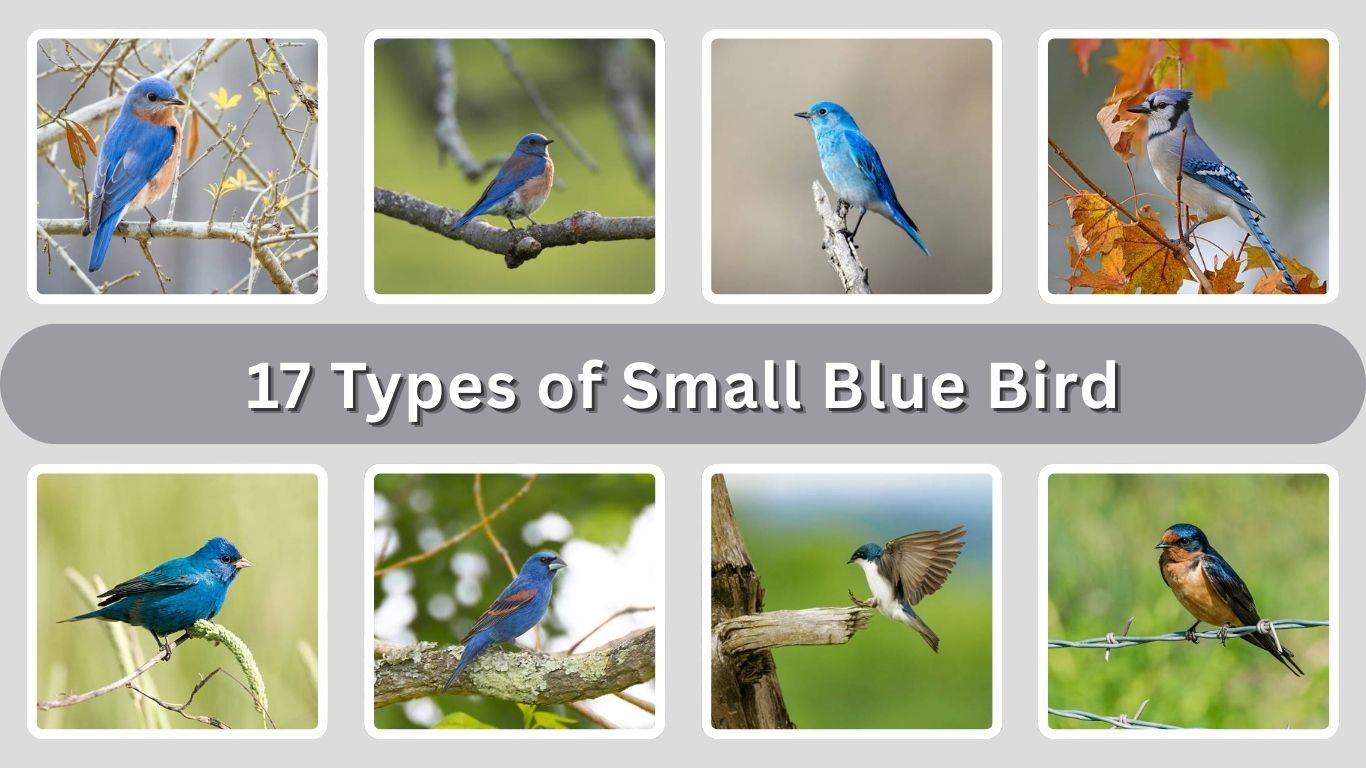
Small blue birds captivate bird lovers with their vibrant colors and lively behavior. Found across different continents, these birds belong to various families and thrive in habitats ranging from forests and grasslands to gardens and wetlands. While many share similar blue tones, each species has its own unique traits, songs, and lifestyles. This guide highlights a diverse selection of small blue birds, helping you understand their identification, habits, diets, and the environments where they are most commonly found.
1. Eastern Bluebird (Sialia sialis)

The Eastern Bluebird is a small, vividly colored songbird widely admired for its calm nature and striking appearance. With brilliant blue upperparts and a warm orange chest, it brings a splash of color to open landscapes. Often associated with happiness and the arrival of spring, this species is a favorite among birdwatchers. Eastern Bluebirds are cavity nesters and have benefited greatly from conservation efforts such as nest box programs, helping their populations recover in many regions of North America.
Identification
- Bright royal-blue head, back, wings, and tail in males
- Rich rusty-orange chest and throat
- Clean white belly and undertail
- Females are duller, with grayish-blue wings and head
- Small, straight bill and rounded body shape
Habitat
Eastern Bluebirds favor open habitats with short grass and scattered trees. They are commonly found in meadows, pastures, farmland, orchards, golf courses, and open woodlands. These environments allow them to hunt insects easily while providing natural cavities or nest boxes for breeding. They readily adapt to suburban areas when suitable nesting sites and open feeding grounds are available.
Behaviors
Eastern Bluebirds are generally peaceful and social birds. Outside the breeding season, they may form small flocks. They often perch quietly before swooping down to the ground to catch prey. During breeding season, males become territorial and defend nesting sites, using soft warbling songs to attract mates and warn rivals.
Diet
Their diet is mainly insect-based during spring and summer, including beetles, grasshoppers, caterpillars, spiders, and ants. In fall and winter, when insects are scarce, they rely heavily on berries and fruits such as dogwood, sumac, and holly.
Lifespan
Eastern Bluebirds typically live 6–10 years in the wild. While many face early mortality due to predators, weather, or competition for nesting sites, individuals that survive their first year often live several productive breeding seasons.
2. Western Bluebird (Sialia mexicana)
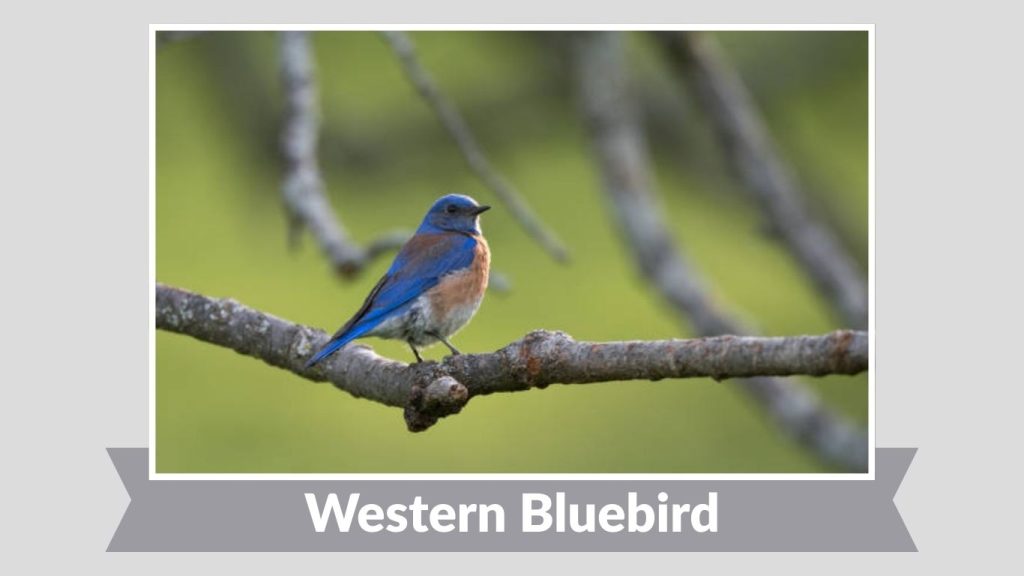
The Western Bluebird is a small, vibrant songbird known for its deep blue plumage and warm orange tones on the chest. Closely related to the Eastern Bluebird, it is a favorite among birdwatchers in western North America. This species is often seen perched on fence posts or low branches, scanning the ground for insects. Western Bluebirds are also cavity nesters and have benefited from conservation programs that provide nest boxes, helping stabilize their populations in many areas.
Identification
- Deep blue head, back, wings, and tail
- Rusty orange chest and sides
- Grayish belly and lower underparts
- Females are duller with more gray-brown tones
- Small straight bill and compact body
Habitat
Western Bluebirds inhabit open woodlands, pine forests, oak savannas, farmlands, and foothills. They prefer areas with scattered trees and open ground for foraging. During winter, some populations move to lower elevations and may be found in open valleys and agricultural lands.
Behaviors
These birds are generally calm and social, often forming small flocks outside the breeding season. They hunt by watching from a perch and dropping down to catch insects. During nesting season, males defend territories and attract females with soft songs and visual displays.
Diet
Their diet mainly consists of insects such as beetles, ants, grasshoppers, and caterpillars during warmer months. In fall and winter, they switch to fruits and berries, including mistletoe and elderberry.
Lifespan
Western Bluebirds usually live 5–8 years in the wild. Survival depends on habitat quality, availability of nesting sites, and protection from predators and harsh weather.
3. Mountain Bluebird (Sialia currucoides)
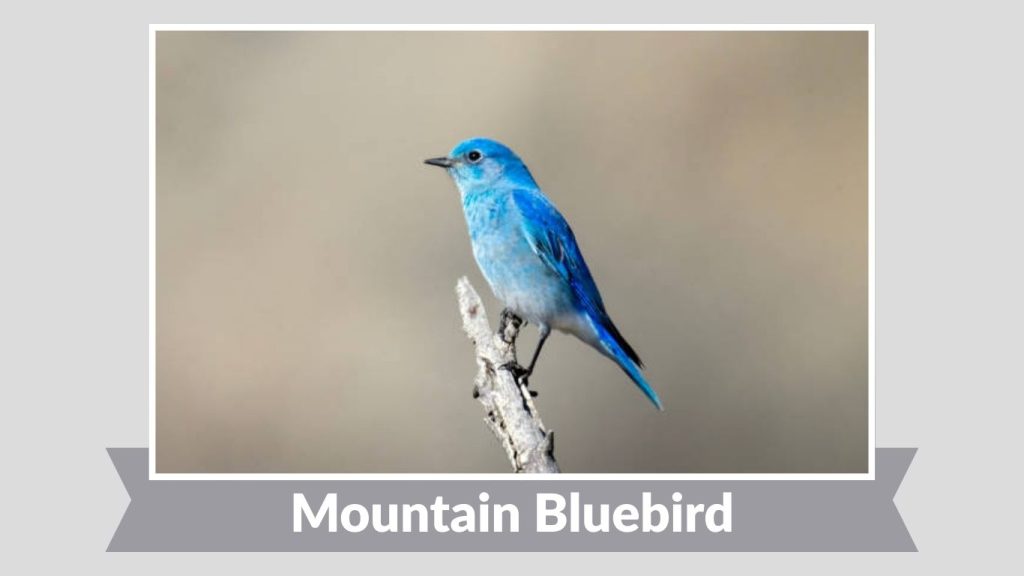
The Mountain Bluebird is a delicate and sky-colored songbird admired for its soft, pale blue plumage and graceful flight. It is one of the palest bluebirds in North America and is often associated with wide open spaces and high elevations. Its gentle appearance and fluttering flight style make it a favorite sight in grasslands and mountain valleys. Like other bluebirds, this species relies on cavities for nesting and benefits from conservation efforts.
Identification
- Male has pale, sky-blue plumage over most of the body
- Wings and tail slightly darker blue
- Female is grayish-brown with blue on wings and tail
- Slim body with a small straight bill
- White belly often faintly visible
Habitat
Mountain Bluebirds prefer open habitats such as alpine meadows, prairies, sagebrush flats, and mountain valleys. They are commonly found at higher elevations during the breeding season but may move to lower open areas in winter. These birds avoid dense forests and favor wide spaces where they can easily spot insects.
Behaviors
This species is gentle and less aggressive than other bluebirds. Mountain Bluebirds often hover briefly in the air before dropping to the ground to catch prey. Outside the breeding season, they may gather in loose flocks, especially during migration and winter.
Diet
Their diet is primarily made up of insects including grasshoppers, beetles, ants, flies, and spiders. In colder months, they supplement their diet with berries and small fruits when insects are scarce.
Lifespan
Mountain Bluebirds typically live 4–7 years in the wild. Harsh weather, limited nesting sites, and predation are the main factors influencing their survival.
4. Blue Jay (Cyanocitta cristata)
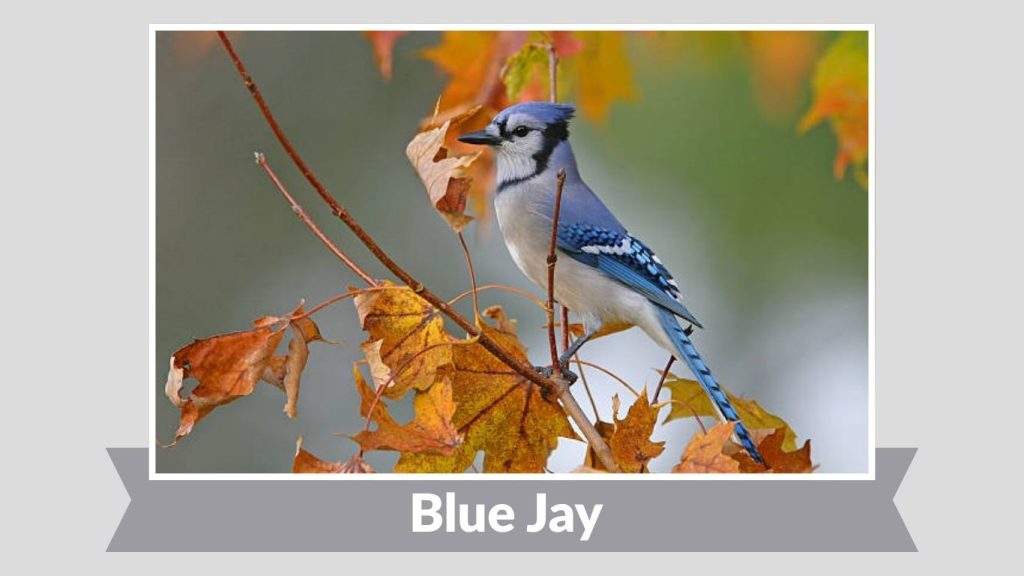
The Blue Jay is a bold and intelligent small blue bird known for its bright blue coloration, striking patterns, and loud calls. Although slightly larger than typical songbirds, it is often included among small blue birds due to its vivid plumage and frequent presence in backyards. Blue Jays are highly adaptable and play an important role in forest ecosystems, especially in seed dispersal.
Identification
- Bright blue upperparts with black barring
- White face and underparts
- Distinct black “necklace” across the chest
- Prominent blue crest on the head
- Strong black bill and long tail
Habitat
Blue Jays are commonly found in deciduous and mixed forests, woodland edges, parks, and suburban neighborhoods. They thrive in areas with oak trees, which provide acorns—an important food source. Their adaptability allows them to live close to human settlements.
Behaviors
These birds are known for their intelligence and complex social behavior. Blue Jays can mimic hawk calls, possibly to warn other birds or scare rivals. They are territorial during breeding season but may form loose groups during migration and winter.
Diet
Blue Jays are omnivorous, feeding on insects, nuts, seeds, fruits, small vertebrates, and eggs. Acorns are a key part of their diet, and they often cache food for later use.
Lifespan
In the wild, Blue Jays typically live 7–10 years, though some individuals have been recorded living longer under favorable conditions.
5. Indigo Bunting (Passerina cyanea)
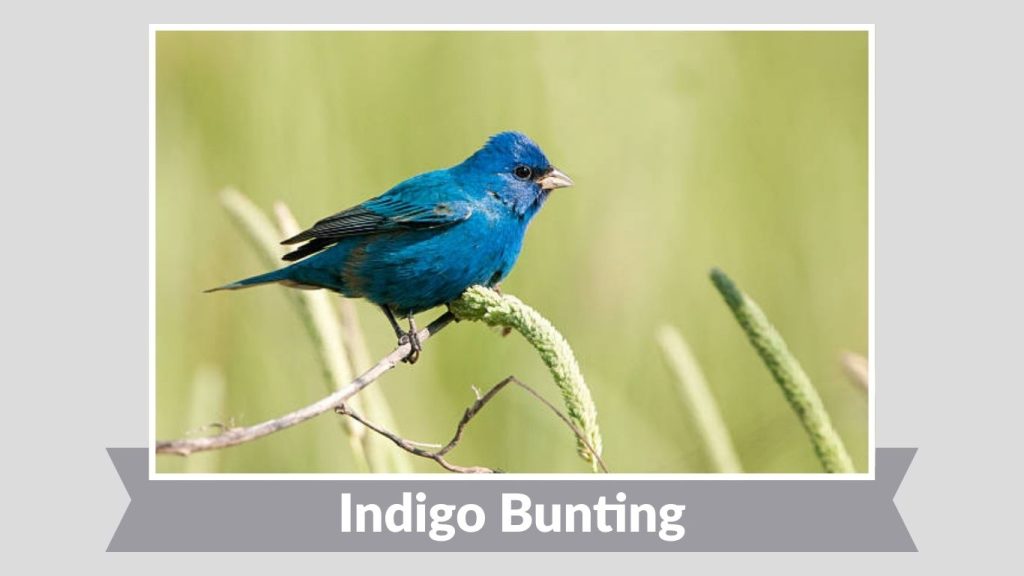
The Indigo Bunting is a small, brilliantly colored songbird famous for the male’s deep, glowing blue plumage. During the breeding season, males appear almost electric blue in sunlight, making them one of the most striking birds in North America. Despite their vivid appearance, Indigo Buntings can be difficult to spot as they often remain hidden in dense vegetation.
Identification
- Adult male is bright indigo blue during breeding season
- Female is brown with faint streaking
- Small, conical bill suited for seeds
- Compact body with short tail
- Males appear duller outside breeding season
Habitat
Indigo Buntings prefer open woodlands, forest edges, brushy fields, roadsides, and overgrown pastures. They thrive in habitats with a mix of shrubs and open areas, which provide both nesting cover and feeding opportunities.
Behaviors
These birds are mostly solitary or found in pairs during breeding season. Males sing persistently from high perches to defend territory and attract mates. Indigo Buntings are also known for using the stars to navigate during nighttime migration.
Diet
Their diet includes seeds, berries, buds, and insects. During summer, insects make up a large portion of their food, while seeds become more important in fall and winter.
Lifespan
Indigo Buntings typically live 4–6 years in the wild, though many face early mortality due to predation and environmental challenges.
6. Blue Grosbeak (Passerina caerulea)
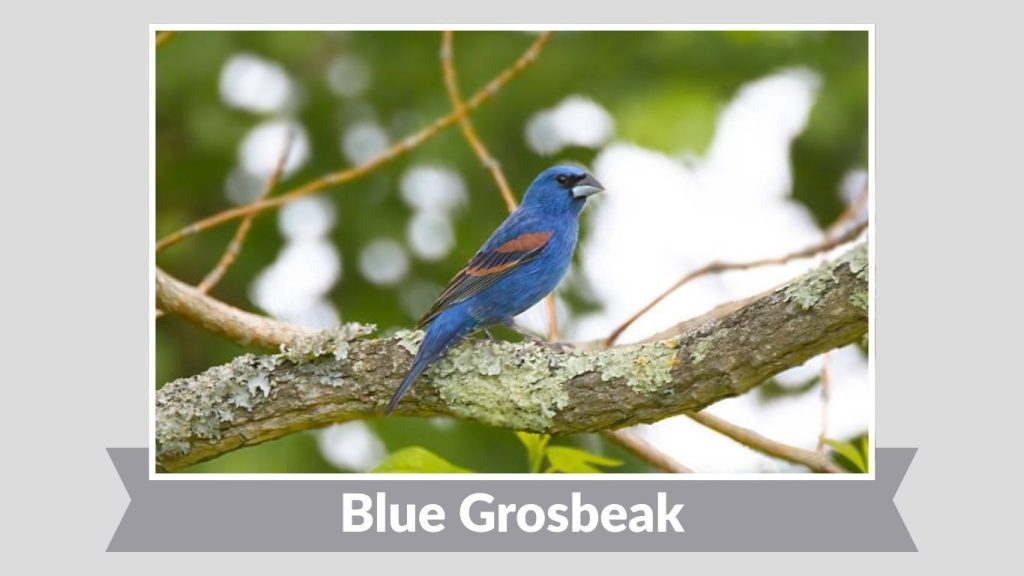
The Blue Grosbeak is a stocky, medium-small songbird admired for its deep blue coloration and large, powerful bill. Males display rich cobalt-blue plumage that stands out vividly against open landscapes, while females are more subdued in color. Though not always easy to spot, this bird’s beauty and strong presence make it a favorite among birdwatchers in its range.
Identification
- Male has deep blue plumage with black facial markings
- Two chestnut wing bars visible in flight and at rest
- Female is warm brown with bluish tones on wings and tail
- Thick, conical bill adapted for cracking seeds
- Compact body with relatively short tail
Habitat
Blue Grosbeaks are typically found in shrubby fields, woodland edges, hedgerows, riverbanks, and open countryside. They favor areas with dense low vegetation for nesting and nearby open spaces for foraging. During migration, they may also appear in gardens and agricultural areas.
Behaviors
These birds are usually seen alone or in pairs. Males are territorial during the breeding season and sing from exposed perches to attract mates. They are generally quiet and unobtrusive compared to other colorful songbirds.
Diet
Their diet includes insects such as grasshoppers, beetles, and caterpillars, along with seeds and grains. The strong bill allows them to easily crack hard seeds that many smaller birds cannot manage.
Lifespan
Blue Grosbeaks typically live 5–7 years in the wild. Survival rates depend on habitat quality, nesting success, and protection from predators.
7. Tree Swallow (Tachycineta bicolor)
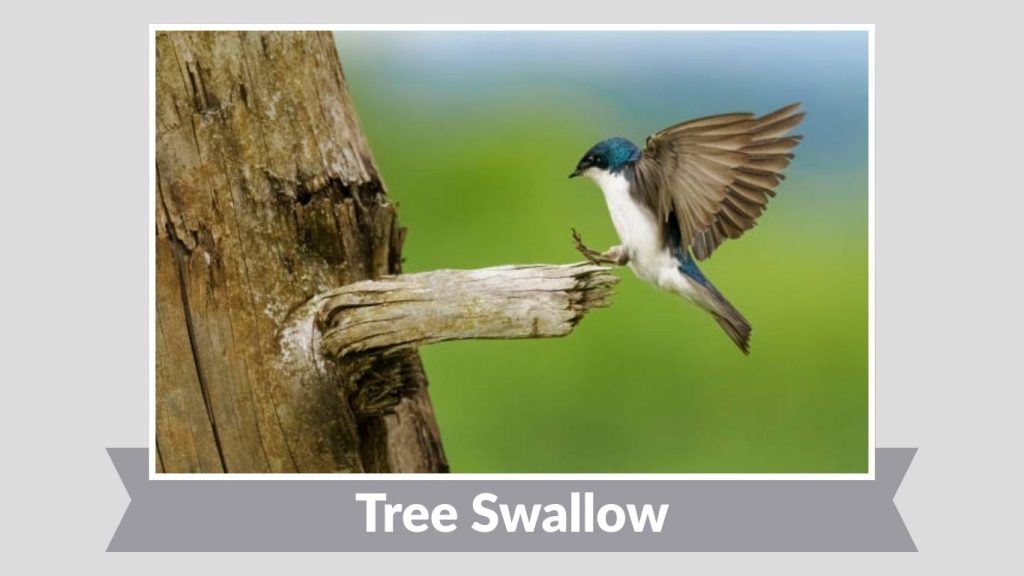
The Tree Swallow is a sleek, agile small blue bird best known for its shimmering blue-green upperparts and graceful aerial flight. Often seen darting and gliding over open fields and water, it is one of the most acrobatic insect-eating birds in North America. Tree Swallows are highly social and frequently nest in colonies, readily using nest boxes provided by humans.
Identification
- Iridescent blue-green upperparts
- Clean white underparts from throat to belly
- Slender, pointed wings adapted for fast flight
- Small, flat bill with a wide gape
- Streamlined body shape
Habitat
Tree Swallows are commonly found near open areas such as wetlands, lakes, rivers, meadows, and farmlands. They require open airspace for hunting insects and nearby cavities or nest boxes for breeding. During migration, they may gather in large flocks near water.
Behaviors
These birds are highly active and spend much of their time flying. They often skim low over water or fields to catch insects in midair. Tree Swallows are social, forming large communal roosts outside the breeding season.
Diet
Their diet consists almost entirely of flying insects, including flies, mosquitoes, beetles, and ants. When insects are scarce, they may also consume small berries.
Lifespan
Tree Swallows typically live 7–11 years in the wild, with some individuals reaching even greater ages under favorable conditions.
8. Barn Swallow (Hirundo rustica)
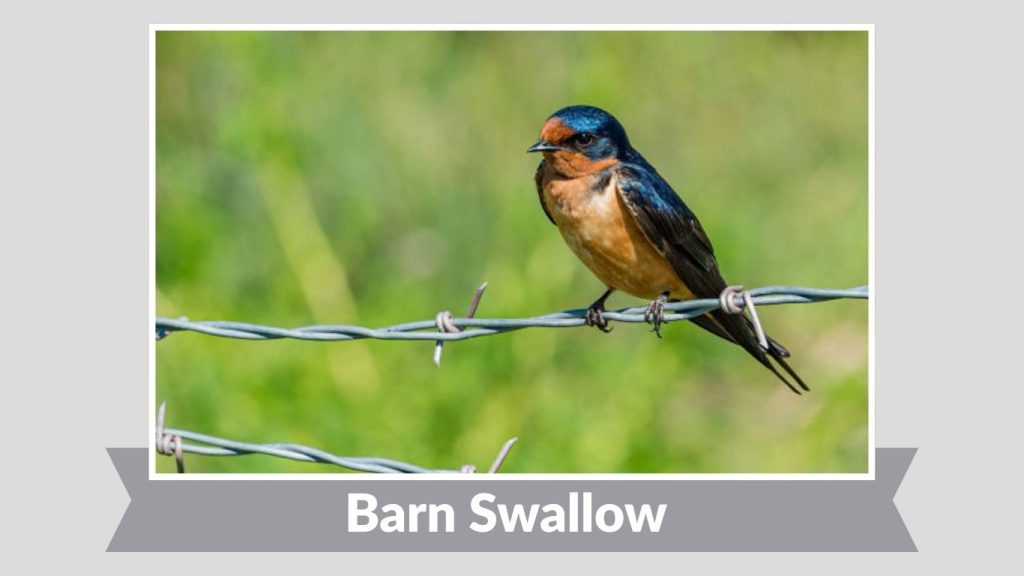
The Barn Swallow is a graceful small blue bird recognized for its deep blue upperparts, long forked tail, and close association with human structures. It is one of the most widespread swallows in the world and is often seen flying low over fields, roads, and water while catching insects.
Identification
- Glossy blue upperparts
- Reddish throat and forehead
- Pale underparts
- Long, deeply forked tail with streamers
- Slender body and pointed wings
Habitat
Barn Swallows inhabit open countryside, farmland, grasslands, wetlands, and towns. They frequently nest on buildings, bridges, and barns, using mud to construct their cup-shaped nests on ledges and beams.
Behaviors
These birds are highly aerial and spend much of their time in flight. They are social, often nesting in loose colonies and gathering in large flocks during migration. Barn Swallows are known for their swift, agile flight and cheerful chattering calls.
Diet
Their diet consists almost entirely of flying insects such as flies, beetles, moths, and mosquitoes, which they capture in midair.
Lifespan
Barn Swallows typically live 4–8 years in the wild, though some individuals may live longer under favorable conditions.
9. Fairy Bluebird (Irena puella)
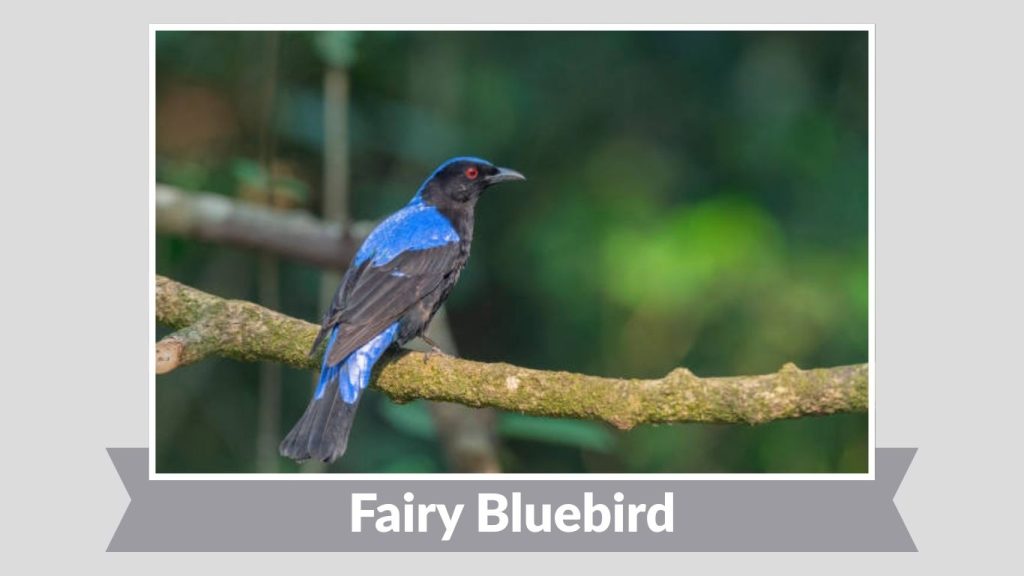
The Fairy Bluebird is a striking tropical species admired for its vivid blue and black plumage. Males display brilliant electric-blue coloration that contrasts sharply with deep black wings and underparts, making them one of the most eye-catching small blue birds in forest canopies. Despite their bright appearance, Fairy Bluebirds are often elusive due to their preference for dense foliage.
Identification
- Male has bright electric-blue head and back
- Black wings, tail, and underparts
- Female is duller blue-green with darker wings
- Medium-length tail and strong bill
- Sleek, smooth body shape
Habitat
Fairy Bluebirds inhabit tropical and subtropical forests, forest edges, and wooded gardens across South and Southeast Asia. They prefer tall trees and are most often seen high in the canopy, especially near fruiting trees.
Behaviors
These birds are usually seen alone or in pairs. They move quietly through treetops, hopping between branches. Fairy Bluebirds are not very vocal but produce soft, musical calls during the breeding season.
Diet
Their diet mainly consists of fruits and berries, supplemented with insects and nectar. They play an important role in seed dispersal within forest ecosystems.
Lifespan
Fairy Bluebirds typically live around 10–15 years in the wild, depending on habitat stability and food availability.
10. Asian Fairy-bluebird (Irena cyanogastra)
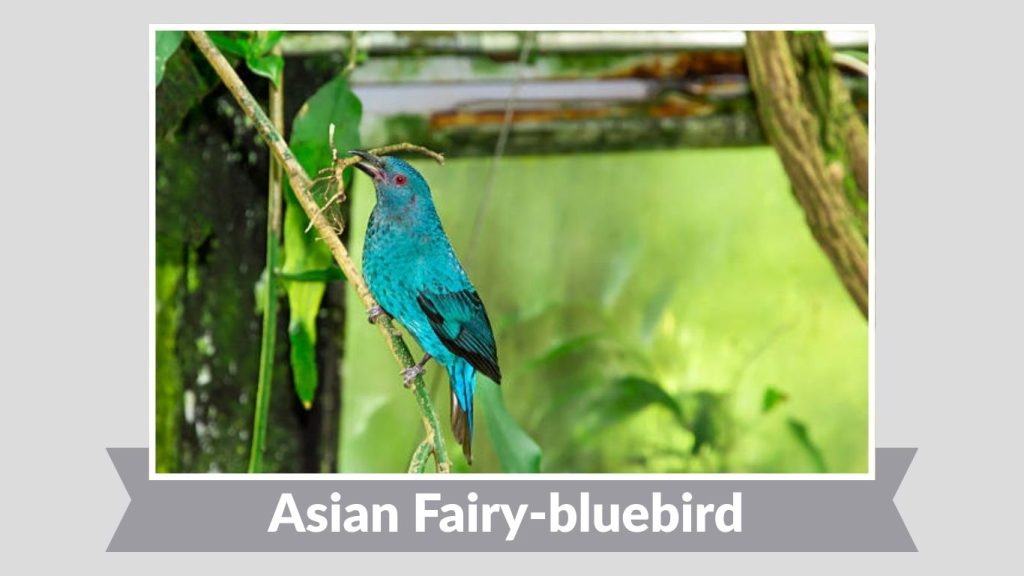
The Asian Fairy-bluebird is a vividly colored forest bird known for its intense blue plumage and elegant appearance. Closely related to the Fairy Bluebird, this species stands out in tropical canopies with its brilliant coloration and calm, graceful movements. It is often more easily heard than seen, as it prefers the upper levels of dense forests.
Identification
- Male has bright cobalt-blue head, back, and chest
- Black wings, tail, and belly
- Female is turquoise-blue with darker wings
- Strong, slightly curved bill
- Medium-length tail
Habitat
Asian Fairy-bluebirds live in tropical evergreen forests, forest edges, and well-wooded gardens across Southeast Asia. They favor mature forests with tall trees and abundant fruiting plants.
Behaviors
These birds are typically solitary or found in pairs. They move deliberately through the canopy and rarely descend to the ground. Their calls are soft and melodic, often given from hidden perches.
Diet
Their diet is largely frugivorous, consisting of berries, figs, and other fruits. They also consume insects and nectar when available.
Lifespan
Asian Fairy-bluebirds are believed to live 10–15 years in the wild, though exact lifespan data is limited.
11. Blue Dacnis (Dacnis cayana)
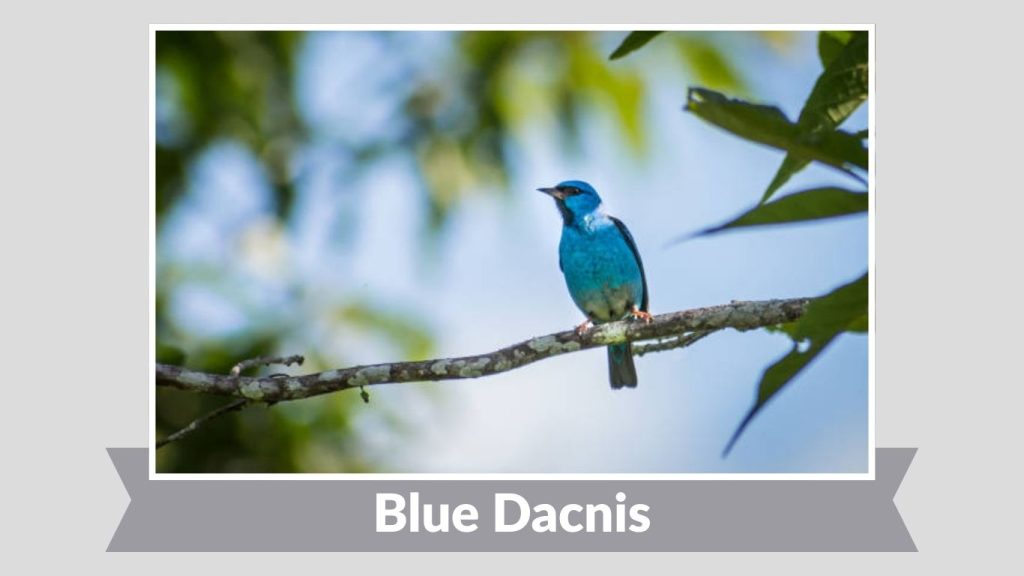
The Blue Dacnis is a tiny, brilliantly colored bird of the tropical Americas, admired for its vibrant blue body and contrasting black markings. Despite its small size, it is highly active and often seen flitting through treetops in search of food. Its striking colors make it a favorite among birdwatchers in rainforests and forest edges.
Identification
- Male has bright turquoise-blue body
- Black face mask, wings, and tail
- Female is greenish with bluish tones
- Small, slender bill
- Compact, lightweight body
Habitat
Blue Dacnis inhabit tropical rainforests, forest edges, secondary growth, and wooded gardens throughout Central and South America. They prefer warm, humid environments with abundant flowering and fruiting plants.
Behaviors
These birds are very active and usually seen in pairs or small groups. They often join mixed-species feeding flocks and move quickly through branches, rarely staying still for long.
Diet
Their diet includes fruits, berries, nectar, and small insects. Blue Dacnis play an important role in pollination and seed dispersal in tropical ecosystems.
Lifespan
Blue Dacnis typically live around 5–8 years in the wild, depending on habitat quality and predation pressure.
12. Cerulean Warbler (Setophaga cerulea)
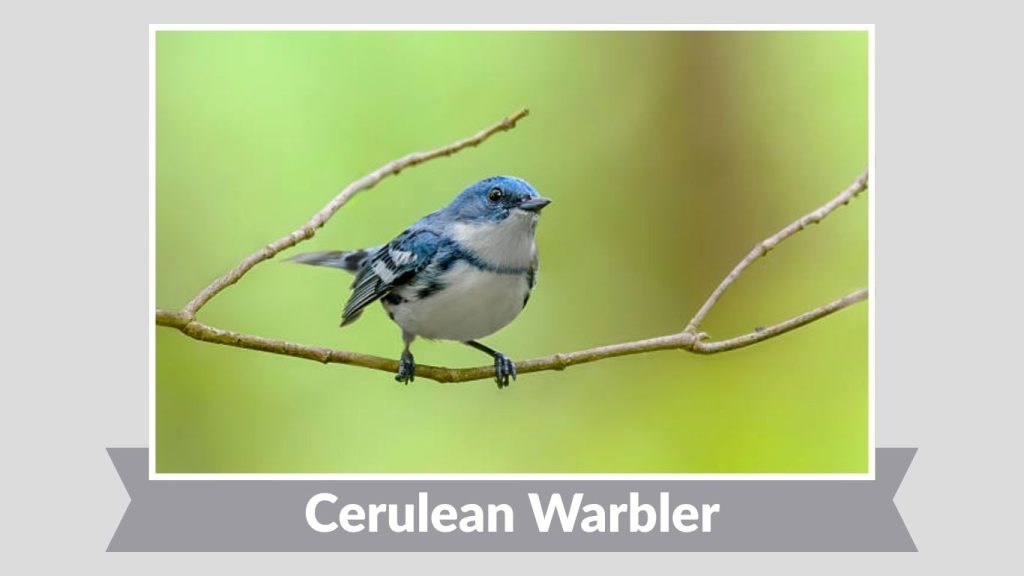
The Cerulean Warbler is a small, delicate blue songbird prized for its soft sky-blue coloration and rapid, buzzy song. It is considered one of North America’s most beautiful warblers but is also one of the hardest to spot due to its preference for high forest canopies. This species is of conservation concern because of habitat loss.
Identification
- Male has sky-blue upperparts with white underparts
- Thin black neck band and streaking on sides
- Female is bluish-green with pale underparts
- Very small body with a thin, pointed bill
- Short tail and quick movements
Habitat
Cerulean Warblers breed in mature deciduous forests with tall trees and a layered canopy. During migration and winter, they inhabit tropical forests in Central and South America. They strongly prefer undisturbed forest habitats.
Behaviors
These birds are active and agile, constantly moving through the upper canopy while foraging. Males sing persistently during the breeding season to establish territories and attract mates.
Diet
Their diet consists almost entirely of insects and other arthropods, including caterpillars, beetles, and spiders, which they glean from leaves and branches.
Lifespan
Cerulean Warblers typically live 3–6 years in the wild, though population survival is closely tied to habitat conservation.
13. Blue Tit (Cyanistes caeruleus)
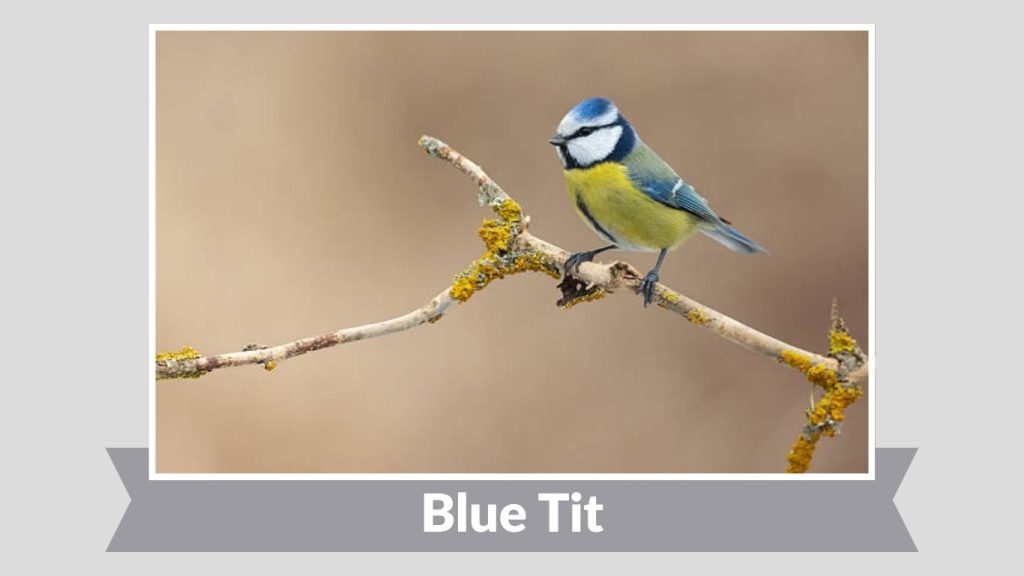
The Blue Tit is a tiny, energetic blue bird known for its bright colors and bold personality. With its blue crown and wings contrasted by a yellow belly, it is one of the most familiar garden birds across Europe. Despite its small size, the Blue Tit is highly adaptable and intelligent.
Identification
- Bright blue cap, wings, and tail
- Yellow underparts with a dark central stripe
- White face with dark eye stripe
- Short, pointed bill
- Small, rounded body
Habitat
Blue Tits inhabit deciduous and mixed woodlands, parks, gardens, hedgerows, and orchards. They readily adapt to urban environments and frequently use nest boxes for breeding.
Behaviors
These birds are very active and curious, often seen hanging upside down while searching for food. They are social outside the breeding season and may join mixed-species feeding flocks.
Diet
Their diet includes insects, caterpillars, spiders, seeds, and nuts. During winter, they commonly visit bird feeders for suet and seeds.
Lifespan
Blue Tits typically live 2–5 years in the wild, though some individuals may survive longer under favorable conditions.
14. Verditer Flycatcher (Eumyias thalassinus)
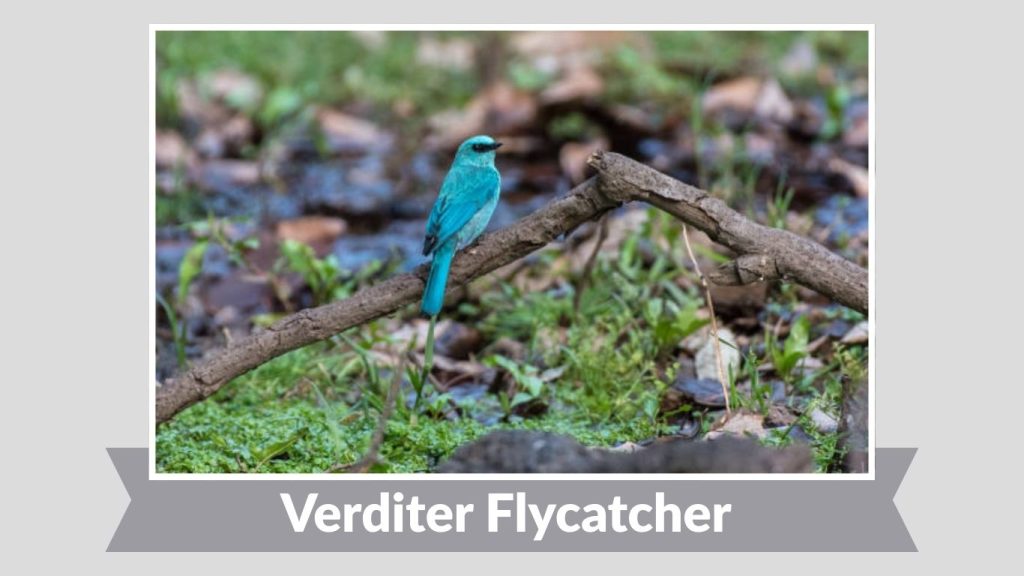
The Verditer Flycatcher is a small, eye-catching blue bird known for its soft turquoise-blue plumage and elegant posture. It is commonly seen perched quietly in shaded forests, where its calm behavior contrasts with its vivid coloration. This species is popular among birdwatchers in Asia due to its gentle appearance and soothing presence.
Identification
- Bright turquoise-blue head and body
- Slightly darker wings and tail
- Slim body with a short neck
- Thin, straight bill adapted for catching insects
- Dark eyes that contrast with blue plumage
Habitat
Verditer Flycatchers inhabit broadleaf forests, forest edges, hillsides, and wooded gardens. They are commonly found in mountainous regions and prefer cool, shaded environments with plenty of perches for hunting insects.
Behaviors
These birds are usually solitary or seen in pairs. They sit quietly on exposed branches before making short flights to catch insects in midair, then return to the same perch.
Diet
Their diet consists mainly of flying insects such as flies, beetles, moths, and mosquitoes, which they catch using short, agile flights.
Lifespan
Verditer Flycatchers typically live 5–8 years in the wild, depending on habitat quality and environmental conditions.
15. Blue Rock Thrush (Monticola solitarius)
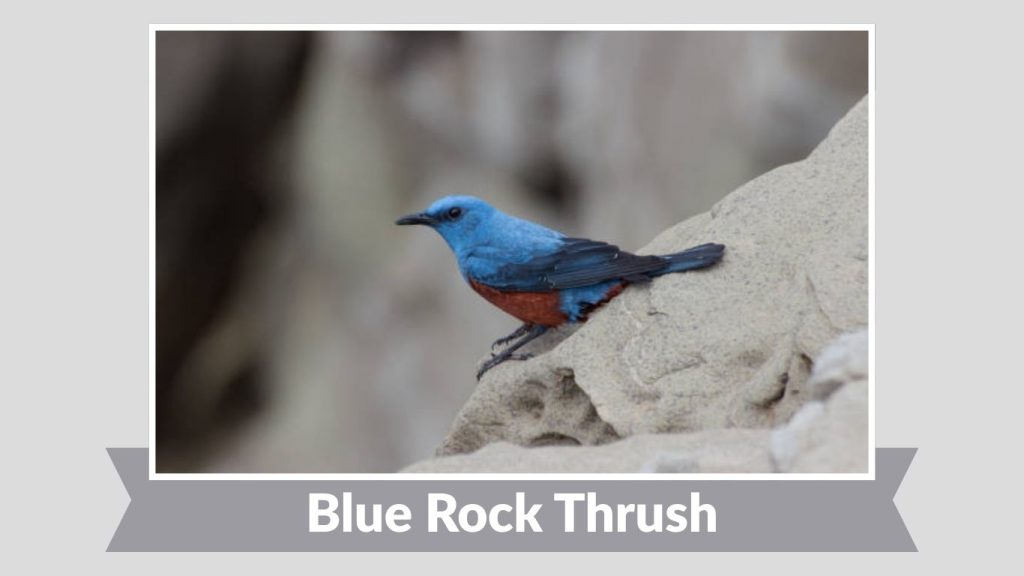
The Blue Rock Thrush is a striking small blue bird known for the male’s deep blue body and contrasting darker wings. Often seen alone on rocky outcrops or buildings, it has a calm, watchful presence and a beautiful, fluting song. This species is widely admired for its elegant appearance and adaptability to rugged landscapes.
Identification
- Male has deep blue head and body
- Darker blue to blackish wings and tail
- Female is brownish with scaled patterning
- Slim body with long wings
- Medium-length straight bill
Habitat
Blue Rock Thrushes prefer rocky hillsides, cliffs, coastal areas, ruins, and mountainous regions. They are also known to adapt to urban settings, nesting on buildings and stone structures that resemble natural cliffs.
Behaviors
These birds are mostly solitary and territorial. They often perch on high, exposed spots to watch for prey and sing, especially during the breeding season. Their flight is strong and direct.
Diet
Their diet includes insects, spiders, small reptiles, berries, and fruits. They forage mainly on the ground, dropping down from perches to capture prey.
Lifespan
Blue Rock Thrushes typically live 5–10 years in the wild, depending on habitat conditions and food availability.
16. Splendid Fairywren (Malurus splendens)
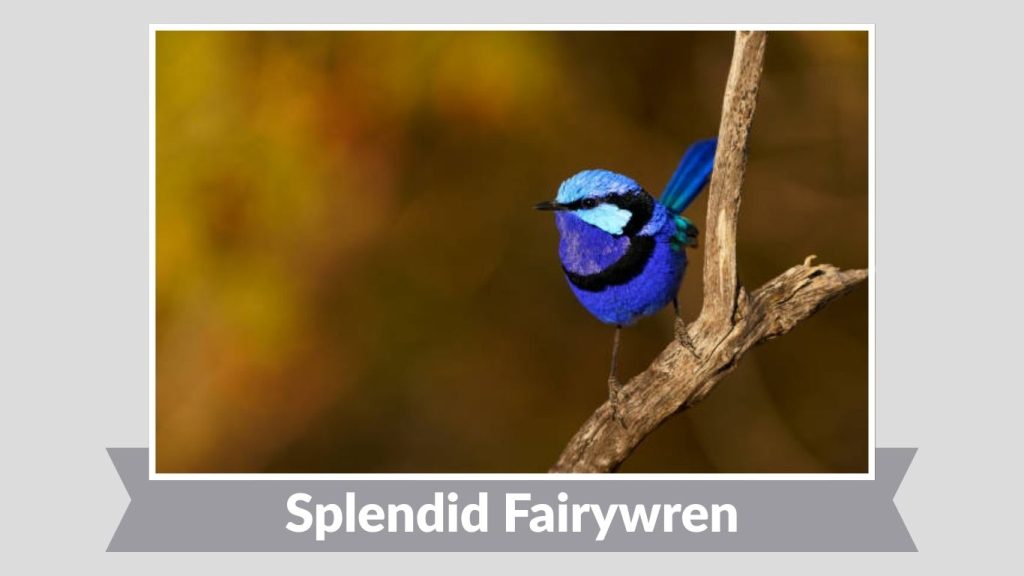
The Splendid Fairywren is a tiny, dazzling blue bird celebrated for the male’s brilliant electric-blue and black breeding plumage. Native to Australia, it is often seen flitting through low shrubs and grass, bringing flashes of color to the landscape. Despite its delicate appearance, this species is active, social, and full of personality.
Identification
- Breeding male has bright electric-blue crown, cheeks, and tail
- Black face, throat, and upper body
- Female and non-breeding males are brown with bluish tails
- Very small body with short, rounded wings
- Thin, pointed bill
Habitat
Splendid Fairywrens inhabit open woodlands, shrublands, grasslands, and gardens. They prefer areas with dense low vegetation for cover and nesting, often near open spaces for foraging.
Behaviors
These birds are highly social and usually live in family groups. They move quickly through vegetation with short, rapid flights and tail-flicking movements. Cooperative breeding is common in this species.
Diet
Their diet consists mainly of insects and small invertebrates such as ants, beetles, and spiders, which they forage from leaves and the ground.
Lifespan
Splendid Fairywrens typically live 5–7 years in the wild, though some individuals may live longer in protected habitats.
17. Azure Tit (Cyanistes cyanus)
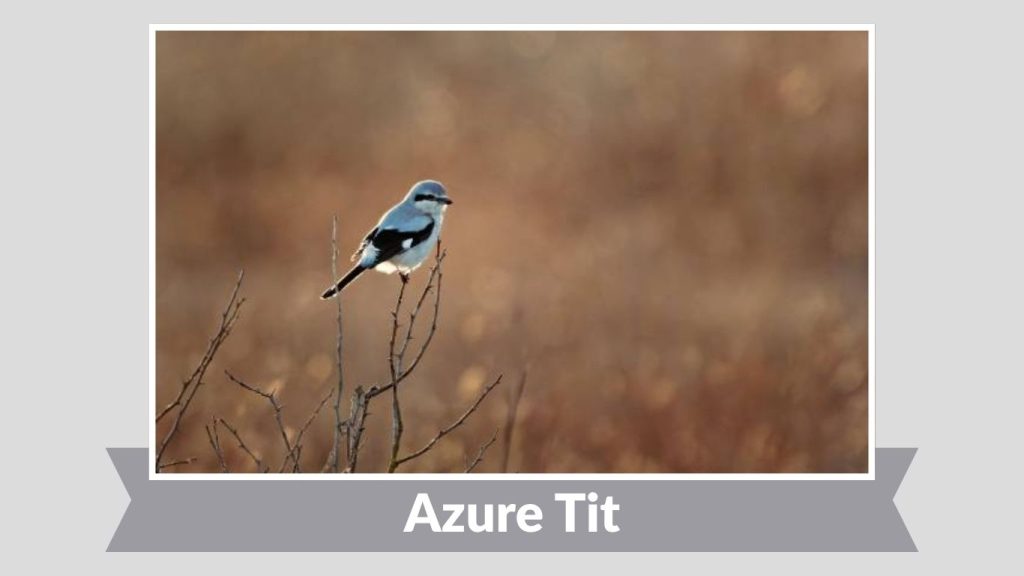
The Azure Tit is a small, striking blue bird admired for its soft sky-blue plumage and delicate appearance. Closely related to the Blue Tit, it stands out with its paler coloring and elegant pattern. This species is often overlooked due to its limited range but is highly valued by bird enthusiasts where it occurs.
Identification
- Pale blue crown, wings, and tail
- White face and underparts
- Thin dark eye line
- Small, rounded body
- Short, pointed bill
Habitat
Azure Tits inhabit mixed and deciduous forests, woodland edges, river valleys, and gardens. They prefer areas with mature trees and are often found near water sources.
Behaviors
These birds are active and agile, frequently moving through tree branches in search of food. Outside the breeding season, they may join mixed-species flocks with other tit species.
Diet
Their diet includes insects, caterpillars, spiders, seeds, and berries. In winter, they readily visit feeders for seeds and fat-based foods.
Lifespan
Azure Tits typically live 3–6 years in the wild, depending on environmental conditions and food availability.
FAQs
What are small blue birds?
Small blue birds are bird species that display blue feathers on part or most of their bodies. They belong to different families and can be found in many regions of the world, including North America, Europe, Asia, Australia, and tropical areas.
Why do some birds appear blue?
Blue coloration in birds is usually not caused by blue pigment but by microscopic feather structures that reflect and scatter light, making the feathers appear blue to the human eye.
Where do small blue birds usually live?
Small blue birds live in a wide range of habitats such as forests, woodlands, grasslands, wetlands, gardens, and shrublands. The exact habitat depends on the species.
What do small blue birds eat?
Most small blue birds feed on insects, spiders, seeds, fruits, or nectar. Many species change their diet seasonally, eating more insects in summer and more seeds or berries in winter.
Are small blue birds rare?
Some small blue birds are common and widespread, while others have limited ranges or are declining due to habitat loss and environmental changes. Conservation efforts help protect vulnerable species.