

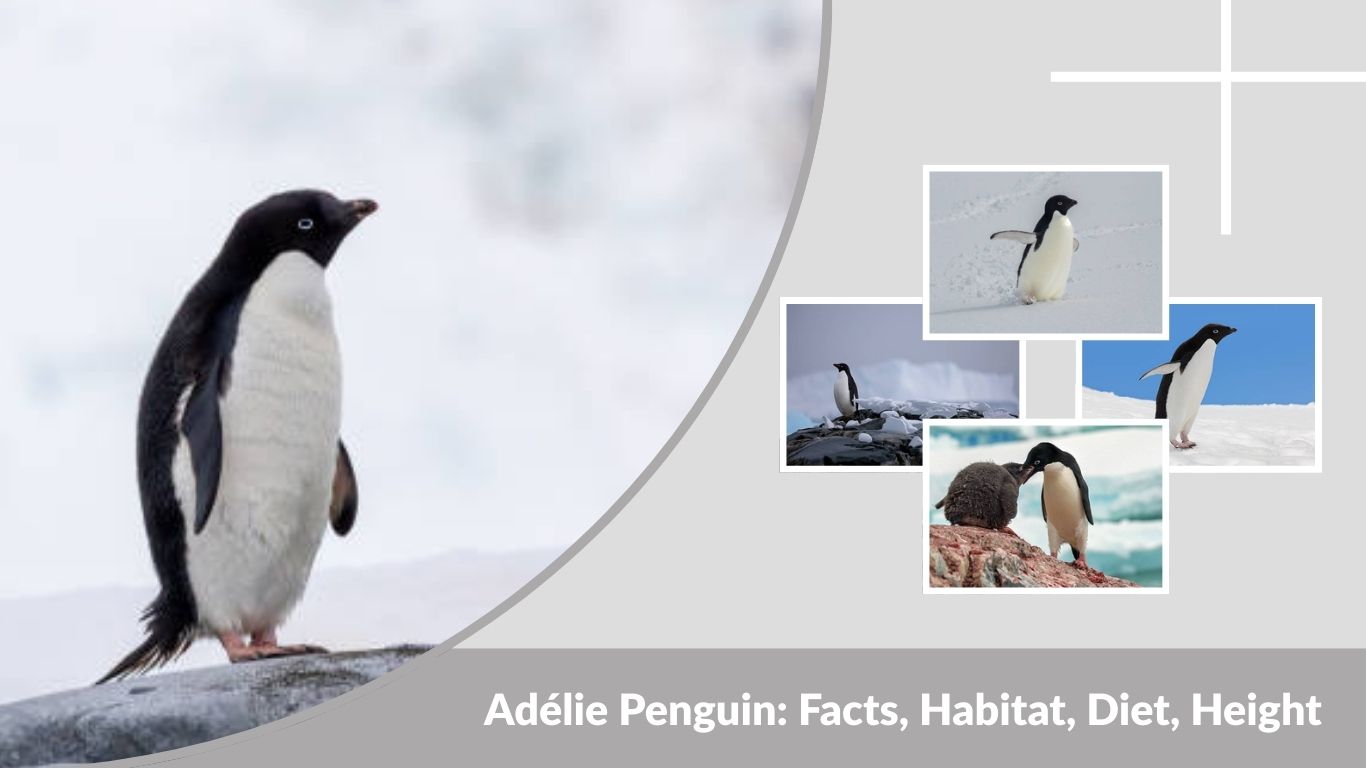
The Adélie penguin is one of the most recognizable birds of Antarctica. Known for its bold black-and-white coloring and distinctive white eye ring, this small but hardy penguin thrives in some of the coldest environments on Earth. Despite the extreme conditions, Adélie penguins are energetic, social, and remarkably resilient. In this guide, we’ll explore key Adélie penguin facts, their habitat, diet, height, and the early stages of their life cycle.
What Is an Adélie Penguin?
The Adélie penguin (Pygoscelis adeliae) is a medium-sized penguin species native to Antarctica. It was named after Adèle Dumont d’Urville, the wife of a French explorer who discovered the species in the 1840s.
Adélie penguins are among the most widespread penguin species in Antarctica. They play an important role in the Antarctic ecosystem, serving as both predators of small marine animals and prey for larger marine mammals.
Physical Appearance and Identification
Adélie penguins are easy to identify due to their classic tuxedo-like appearance. They have:
- A black head and back
- A bright white belly
- A distinctive white ring around each eye
- A short, stiff tail that sticks out behind them
Their flippers are strong and narrow, built for swimming rather than flying. Like all penguins, they are flightless birds but extremely agile in the water.
Adélie Penguin Height and Weight
Adélie penguins are smaller than emperor and king penguins but still sturdy and compact. On average, they stand about 18 to 28 inches (45–70 cm) tall.
Their weight typically ranges from 8 to 13 pounds (3.5–6 kg), though this can vary depending on the season. During breeding season, adults may lose weight as they fast while incubating eggs or guarding chicks.
Compared to emperor penguins, which can reach over 3 feet tall, Adélies are noticeably shorter and lighter. However, their smaller size allows them to move quickly both on land and in the water.
Where Do Adélie Penguins Live?
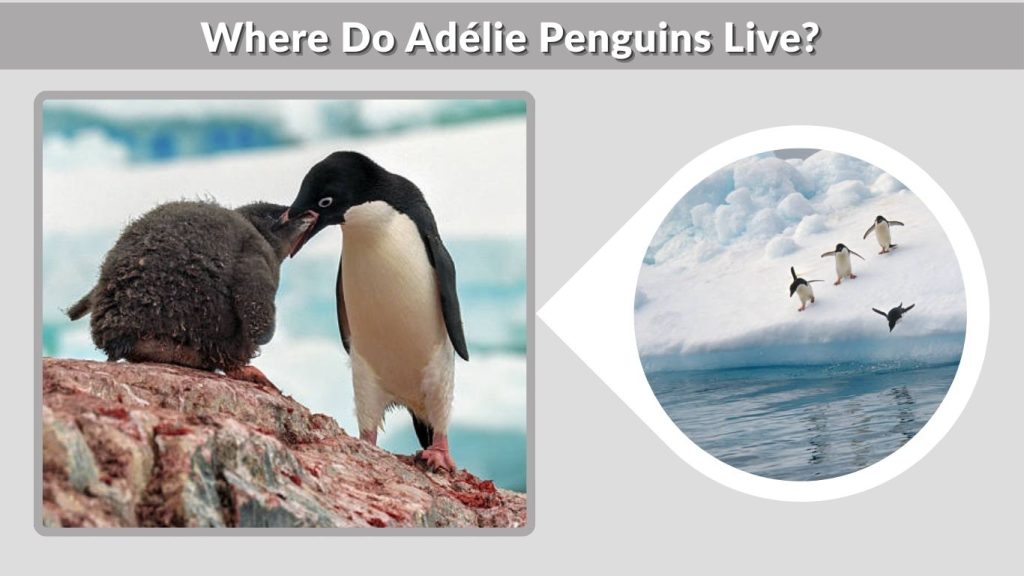
Adélie penguins live exclusively in Antarctica and the surrounding Southern Ocean. They are considered one of the southernmost bird species in the world.
Adélie Penguin Habitat
These penguins prefer ice-free rocky coastal areas for breeding. During the Antarctic summer, they gather in large colonies along the coastline where the snow has melted enough to expose stones for nesting.
Sea ice is crucial to their survival. While they nest on land, they depend heavily on nearby sea ice for access to feeding grounds. The presence of pack ice helps maintain the ecosystem that supports their primary food source—krill.
Seasonal Movements
Adélie penguins follow a seasonal pattern. During the Antarctic summer (October to February), they remain on land to breed and raise their chicks.
In winter, when temperatures drop dramatically and breeding season ends, they migrate northward toward pack ice. There, they spend most of their time at sea, hunting and conserving energy until the next breeding cycle begins.
Fascinating Adélie Penguin Facts
Adélie penguins are known for their lively personalities and fascinating behaviors.
One interesting fact is that they are incredibly social birds. Colonies can include thousands—even hundreds of thousands—of individuals. These dense gatherings are noisy, active, and full of movement.
They are also excellent swimmers. In the water, Adélies can reach speeds of up to 9 miles per hour (15 km/h). Their streamlined bodies and strong flippers make them agile hunters.
Another well-known behavior is their “stone-stealing” habit. Adélie penguins build nests out of small pebbles to keep their eggs elevated above melting snow. Because stones are valuable, penguins sometimes steal pebbles from neighboring nests, leading to frequent squabbles within the colony.
Their strong homing instincts are equally impressive. After spending months at sea, they can return to the same breeding colony—and often the same nesting site—year after year.
Adélie Penguin Diet and Feeding Habits
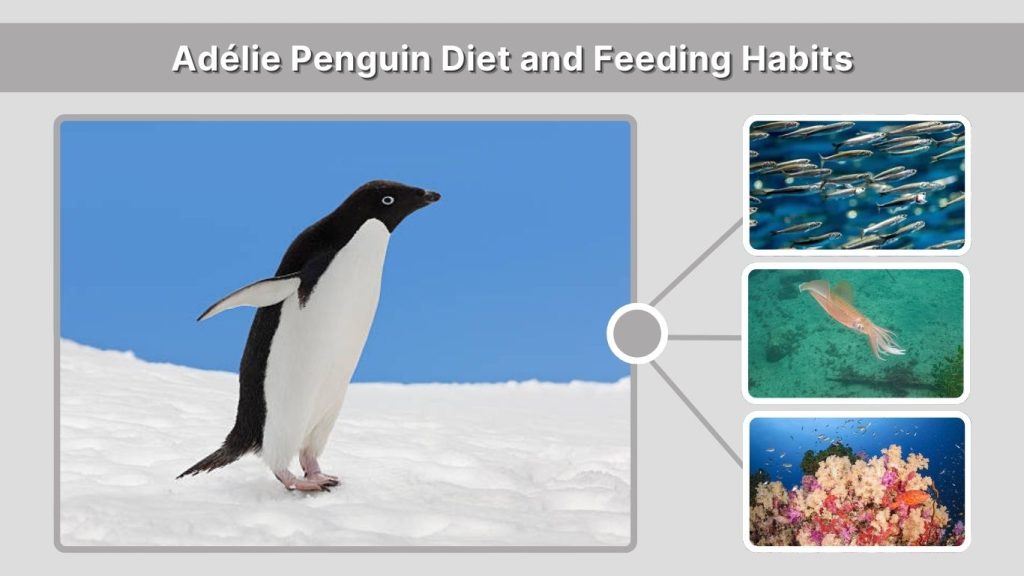
Adélie penguins are carnivorous and depend entirely on marine life for survival. Their diet reflects the rich biodiversity of the Southern Ocean.
What Do Adélie Penguins Eat?
The primary food source for Adélie penguins is Antarctic krill, a small shrimp-like crustacean that forms the foundation of the Antarctic food web.
In addition to krill, they also eat:
- Small fish
- Squid
- Other tiny marine invertebrates
Krill makes up the largest portion of their diet because it is abundant and energy-rich.
Hunting Techniques
Adélie penguins are skilled divers and hunters. They dive beneath sea ice to search for schools of krill and fish. Most dives are relatively shallow compared to larger penguin species, but they can still reach impressive depths when necessary.
They often hunt in groups, which may improve their chances of locating dense krill swarms. Using their sharp beaks and strong swimming ability, they capture prey underwater and swallow it whole.
During breeding season, adults make repeated foraging trips to bring food back to their chicks. Timing is critical, as chicks depend entirely on their parents for nourishment in their early weeks.
Reproduction and Egg Development
Adélie penguins breed during the Antarctic summer, typically between October and February. This short window provides slightly warmer temperatures and more accessible food sources, which are essential for raising chicks successfully.
When they return to land, males usually arrive first to claim nesting territories. They begin collecting small stones to build simple nests on exposed rocky ground.
Nest Building with Stones
Unlike some penguin species that incubate eggs on their feet, Adélie penguins build nests using pebbles. These stones serve an important purpose: they keep the eggs elevated above melting snow and water, reducing the risk of freezing.
Because stones are limited, competition can be intense. It is common to see Adélie penguins stealing pebbles from their neighbors’ nests. These small disputes are a regular part of colony life.
Egg Laying and Incubation
Female Adélie penguins typically lay two eggs per breeding season. Both parents share incubation duties, taking turns keeping the eggs warm while the other travels to sea to feed.
Incubation lasts about 32 to 34 days. During this time, the eggs are carefully balanced on the parents’ feet and covered with a brood patch—a featherless area of skin that transfers body heat efficiently.
Once the chicks hatch, they are covered in soft gray down feathers. In the early days, at least one parent remains with them at all times to provide warmth and protection.
Adélie Penguin Life Cycle
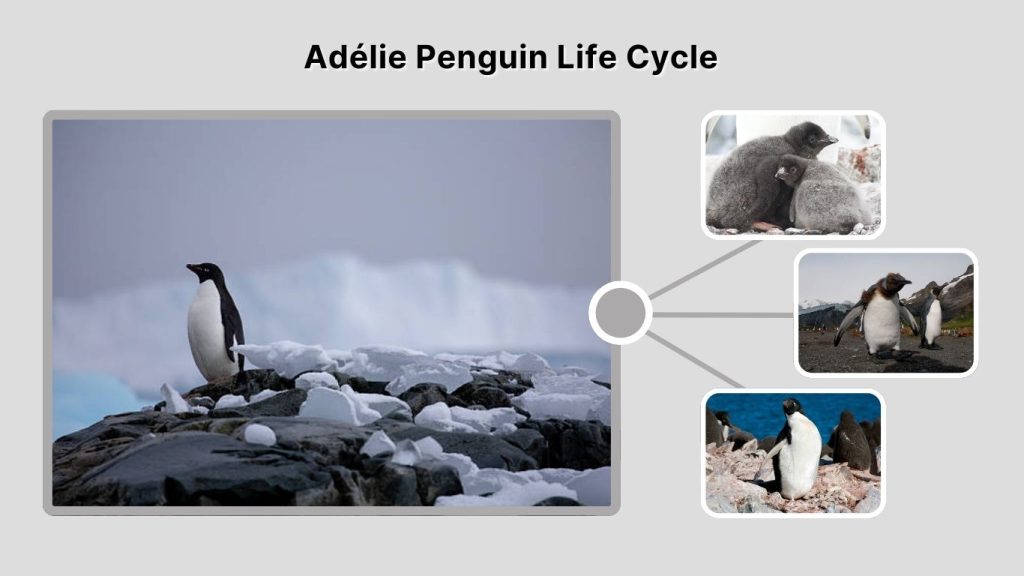
The life cycle of an Adélie penguin follows a clear pattern from egg to adulthood, shaped by the extreme Antarctic environment.
Chick Stage
Newly hatched chicks are small, fluffy, and completely dependent on their parents. Adults feed them by regurgitating partially digested food brought back from the sea.
As chicks grow stronger, they begin forming groups called crèches. These nursery groups help protect them from predators such as skuas and provide warmth while both parents forage for food.
Over several weeks, chicks gain weight rapidly in preparation for fledging.
Juvenile Stage
After about two months, young penguins begin molting their down feathers and growing waterproof juvenile plumage. This change is essential because it allows them to enter the ocean and start swimming.
Once they fledge, juvenile Adélie penguins head to sea for the first time. They may spend several years in the ocean before returning to breeding colonies as adults.
Adulthood and Breeding Age
Adélie penguins typically reach sexual maturity between 3 and 5 years of age. Many return to the same colony where they were born, often choosing nesting sites close to their original location.
Adults repeat the seasonal breeding cycle each year, depending on environmental conditions and food availability.
Adélie Penguin Lifespan and Survival
In the wild, Adélie penguins generally live 10 to 15 years, though some individuals may survive longer under favorable conditions.
Their survival depends heavily on food supply, sea ice stability, and protection from predators.
Natural Predators
Adélie penguins face threats both in the water and on land.
In the ocean, their main predators include:
- Leopard seals
- Orcas (killer whales)
On land, eggs and chicks are vulnerable to seabirds such as skuas, which prey on unattended nests.
Living in large colonies offers some protection, as there is safety in numbers. However, young and inexperienced penguins remain at higher risk.
Environmental Threats
Climate change presents one of the biggest long-term challenges for Adélie penguins. Because they rely heavily on sea ice and krill populations, shifts in ocean temperatures can directly affect their food supply.
Shrinking sea ice can disrupt breeding patterns and reduce access to feeding grounds. Additionally, changes in krill abundance may force penguins to travel farther to find food, increasing energy demands.
Despite these challenges, Adélie penguins remain one of the most studied Antarctic species. Scientists closely monitor their populations as indicators of ecosystem health in the Southern Ocean.
Conclusion
The Adélie penguin is a remarkable symbol of Antarctic wildlife. From its distinctive white eye ring to its energetic colony life, this resilient bird has adapted perfectly to one of the harshest climates on Earth.
Living along icy coastlines and depending on sea ice for survival, Adélie penguins demonstrate impressive teamwork, strong parental care, and exceptional swimming ability. However, their future is closely tied to the health of the Antarctic environment.
Understanding their habitat, diet, height, and lifespan not only highlights their uniqueness but also emphasizes the importance of protecting the fragile ecosystems they call home.