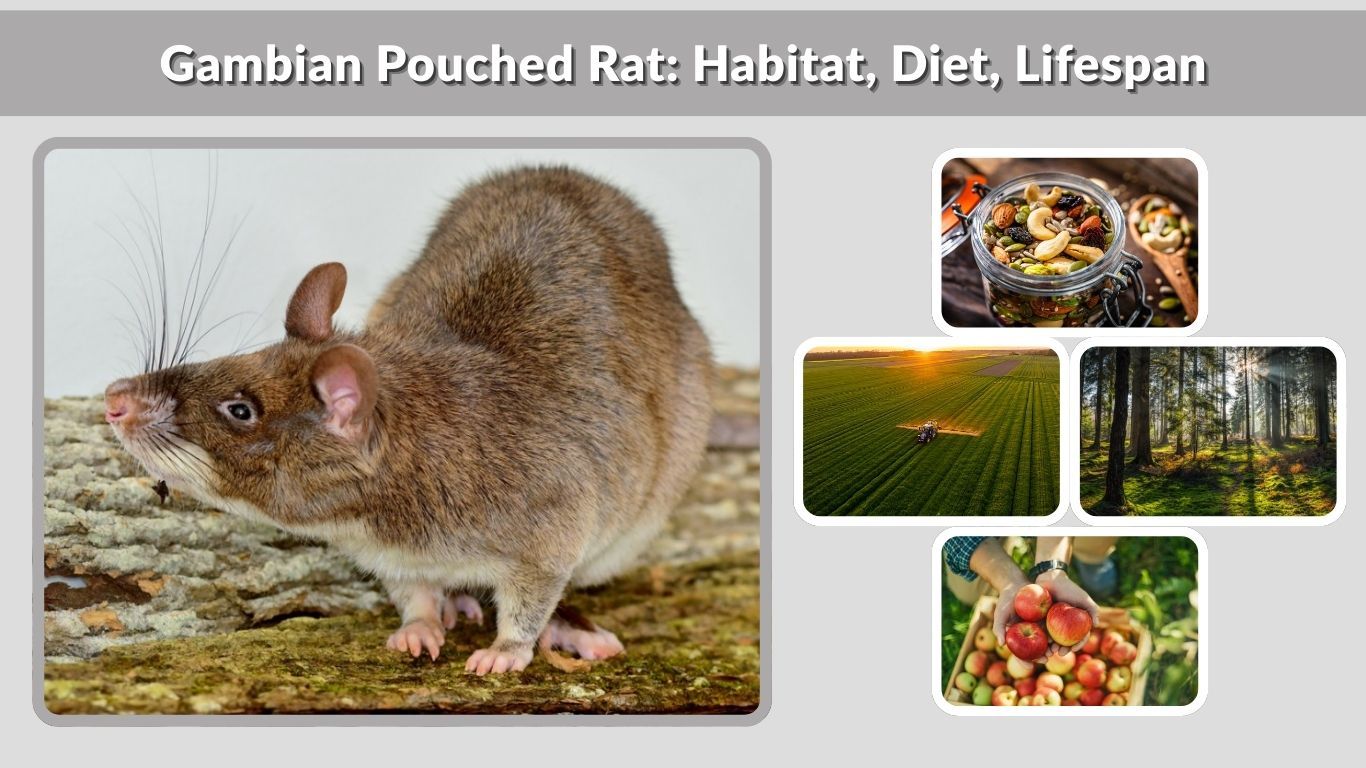




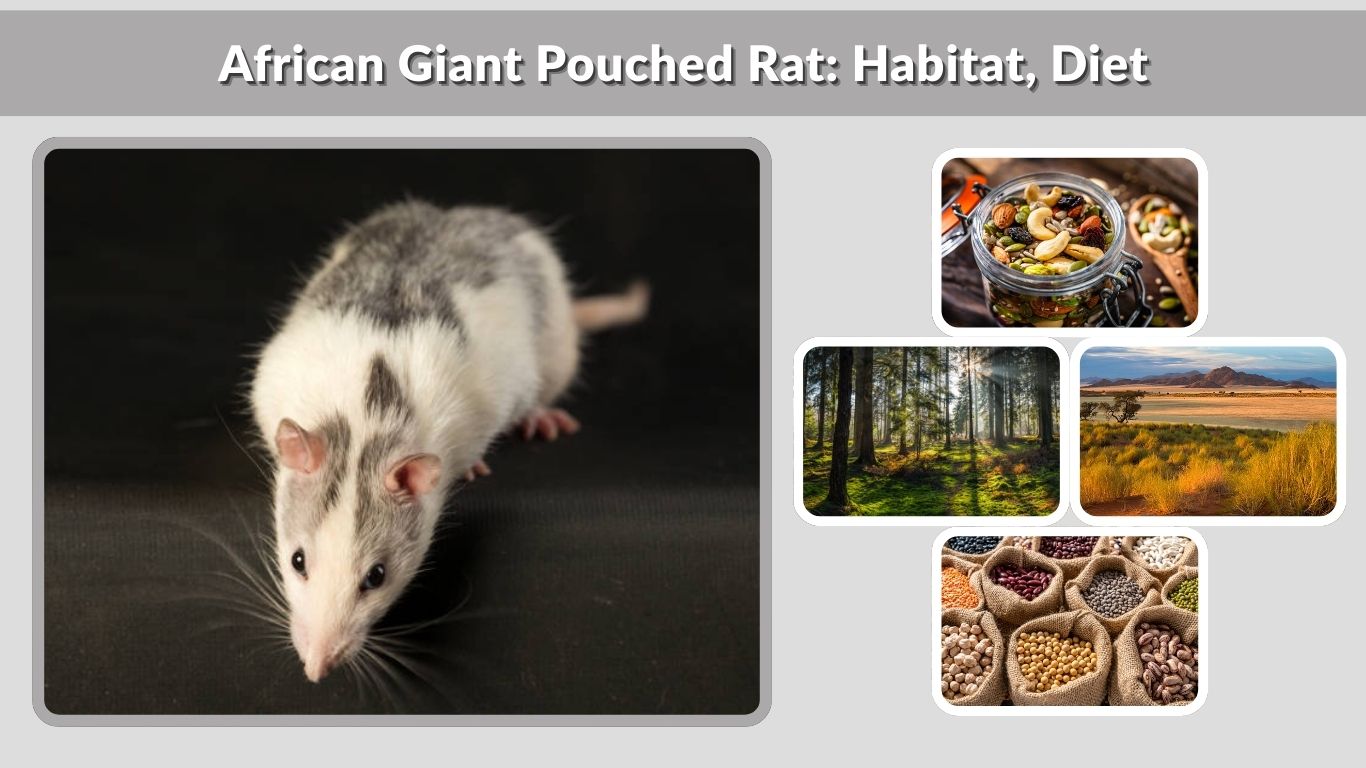
The African Giant Pouched Rat is one of the largest rodents in the world and is native to sub-Saharan Africa. Known for its intelligence and impressive sense of smell, this unique animal has attracted global attention not only for its size but also for its remarkable abilities. Unlike ordinary rats, it has expandable cheek pouches used to store food. Even more fascinating, these rats are trained by scientists to detect landmines and tuberculosis, making them incredibly valuable in humanitarian and medical work.
What Is the African Giant Pouched Rat
Scientific Classification
The African Giant Pouched Rat, scientifically known as Cricetomys gambianus, belongs to the family Nesomyidae. Despite its common name, it is not closely related to the typical rats found in cities. Instead, it belongs to a group of African rodents adapted to different environments across the continent.
These rodents are often confused with giant rats because of their large size, but they are a distinct species with unique characteristics. Researchers have studied them extensively because of their intelligence, strong sense of smell, and ability to be trained for specialized tasks.
Physical Appearance
The African Giant Pouched Rat is much larger than most common rodents. Adults typically measure between 25 and 45 centimeters in body length, with a tail that can grow nearly as long as the body itself. In terms of weight, they can reach up to 1.5 kilograms, making them significantly larger than ordinary rats.
Their fur is usually brown or grayish with a lighter underside. One of their most distinctive features is their large cheek pouches, which allow them to store and carry food back to their burrows. These cheek pouches can expand significantly, helping the rats transport large quantities of food efficiently.
Another notable feature is their long, scaly tail, which helps them maintain balance while climbing or moving through rough terrain.
Habitat and Distribution
Where African Giant Pouched Rats Live
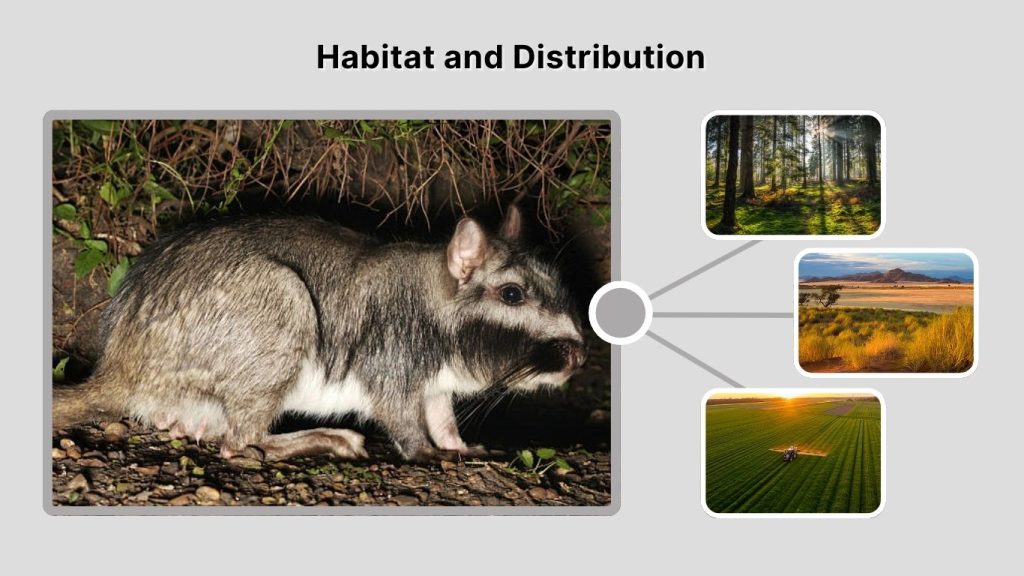
African Giant Pouched Rats are widely distributed throughout sub-Saharan Africa. They can be found in many countries including Tanzania, Mozambique, Ghana, Kenya, and Angola. Their ability to adapt to different environments allows them to survive in a variety of landscapes across the continent.
Because of their adaptability, they often live close to human settlements as well as in natural habitats. This flexibility helps them find food sources and suitable shelter in different conditions.
Natural Habitat
These rodents thrive in a range of natural environments. They commonly inhabit forests, savannas, and agricultural areas. In forest regions, they often live among dense vegetation where they can easily hide from predators.
Savannas also provide ideal conditions because of the availability of food such as seeds and fruits. In some areas, African Giant Pouched Rats even live near farmland, where crops and stored food provide additional resources.
Burrowing and Shelter
African Giant Pouched Rats are excellent diggers. They build complex underground burrows that serve as shelters from predators and harsh weather conditions. These burrows often include multiple chambers used for sleeping, storing food, and raising young.
The burrow systems can be quite extensive and may include several entrances. This design allows the rats to escape quickly if a predator approaches. Their strong claws and powerful limbs make digging and maintaining these burrows relatively easy.
Diet and Feeding Habits
What African Giant Pouched Rats Eat
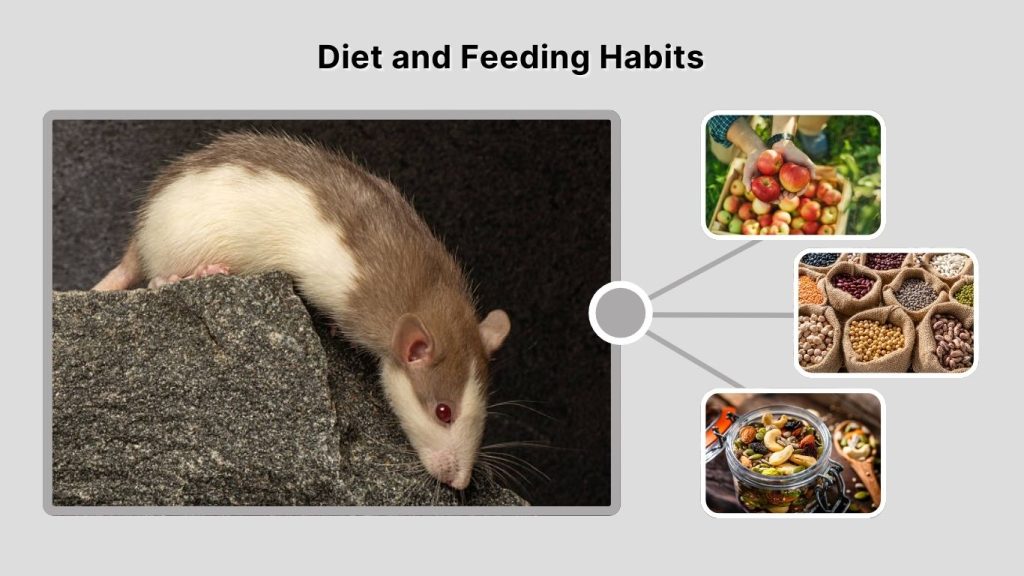
The African Giant Pouched Rat is an omnivore, meaning it eats a wide variety of foods. Its diet mainly includes fruits, seeds, nuts, roots, and vegetables. These foods provide the energy and nutrients needed for their active lifestyle.
In addition to plant-based foods, they sometimes eat insects and other small invertebrates. This diverse diet allows them to survive in many different environments where food availability may change throughout the year.
Their feeding behavior is opportunistic. When they find a food source, they gather as much as possible and store it in their burrows for later use.
Use of Cheek Pouches
One of the most fascinating features of the African Giant Pouched Rat is its cheek pouches. These expandable pockets inside the mouth allow the rat to collect and carry large amounts of food at once.
Instead of eating immediately, the rat often fills its cheek pouches and transports the food back to its burrow. This behavior helps them store supplies and reduces the risk of being exposed to predators while feeding in open areas.
The cheek pouches also make them efficient foragers, allowing them to gather food quickly before returning to safety.
Behavior and Intelligence
Nocturnal Lifestyle
African Giant Pouched Rats are primarily nocturnal animals. This means they are most active during the night when temperatures are cooler and predators are less active. During the day, they usually remain inside their burrows to rest and avoid danger.
At night, they leave their shelters to search for food. Their strong sense of smell and sharp hearing help them locate food sources and detect threats in the dark.
Social Behavior
These rats are generally solitary animals, meaning they prefer to live alone rather than in large groups. Each rat typically maintains its own territory, especially when it comes to food resources and nesting areas.
However, they may interact with other rats during the breeding season. Young rats stay with their mother for a short period before becoming independent and establishing their own burrows.
High Intelligence and Learning Ability
One of the most remarkable traits of the African Giant Pouched Rat is its high level of intelligence. These rodents are capable of learning complex tasks and remembering them for long periods. Their strong memory and excellent sense of smell make them ideal candidates for specialized training programs.
Researchers have discovered that African Giant Pouched Rats can be trained using reward-based methods. When they successfully complete a task, such as identifying a scent, they receive a food reward. Over time, this positive reinforcement helps them learn to perform specific detection tasks with impressive accuracy.
Because they are calm, easy to handle, and quick learners, these rats are often preferred for certain detection jobs that require patience and precision.
African Giant Pouched Rats in Detection Work
Landmine Detection
One of the most extraordinary roles of the African Giant Pouched Rat is its use in landmine detection. Organizations such as APOPO train these rats to locate buried landmines in former war zones. Their incredible sense of smell allows them to detect the chemical compounds found in explosives.
The rats are trained to walk across designated areas while attached to a lightweight harness. When they detect the scent of explosives, they scratch the ground to signal the presence of a landmine. Because they are lightweight, they do not trigger the mines while searching, making them safe and highly effective detection animals.
This method has helped clear thousands of landmines from dangerous areas, saving countless lives and allowing communities to safely use their land again.
Tuberculosis Detection
In addition to detecting landmines, African Giant Pouched Rats are also trained to detect tuberculosis (TB). Their powerful sense of smell enables them to identify TB bacteria in human sputum samples.
During testing, the rats sniff multiple samples in a short period of time. If a sample contains the bacteria associated with tuberculosis, the rat indicates it to researchers. This process allows scientists to screen large numbers of samples much faster than traditional laboratory methods.
As a result, these rats have helped improve TB detection in several African countries, allowing patients to receive treatment sooner.
Advantages Over Other Detection Animals
African Giant Pouched Rats offer several advantages compared to other detection animals such as dogs. They are easier and less expensive to train, require less food, and can work efficiently in hot climates.
Their lightweight bodies also make them particularly useful for landmine detection since they do not exert enough pressure to trigger explosive devices. Additionally, they can search large areas quickly, which makes them valuable in humanitarian and medical projects.
Lifespan and Reproduction
Average Lifespan
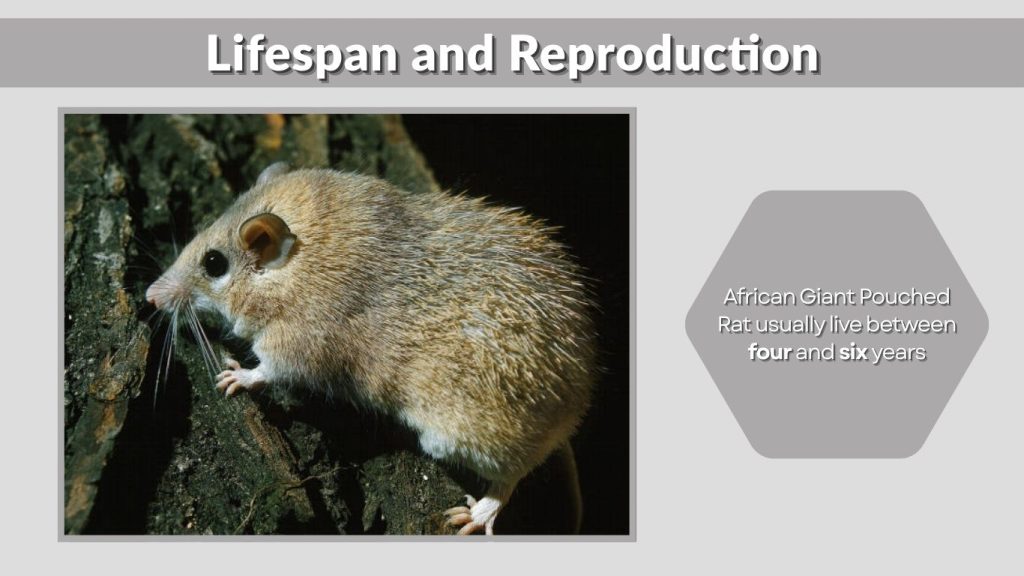
The lifespan of the African Giant Pouched Rat varies depending on its environment. In the wild, these rodents usually live between four and six years. However, when kept in controlled environments such as research facilities or training programs, they may live longer due to better care and protection from predators.
Proper nutrition, medical care, and safe living conditions can significantly extend their lifespan.
Breeding and Offspring
African Giant Pouched Rats reproduce several times throughout their lives. The gestation period lasts about 27 to 36 days, after which the female gives birth to a litter of pups.
A typical litter may contain two to five young rats. The newborn pups are small and helpless at first, relying entirely on their mother for warmth and nourishment. As they grow, they gradually become more independent and begin learning important survival skills.
Within a few months, the young rats are capable of finding food and building their own burrows.
African Giant Pouched Rat as a Pet
Legal Status
Although African Giant Pouched Rats are intelligent and trainable, they are not legal to keep as pets in all countries. In some regions, strict regulations exist because of concerns about invasive species and potential disease transmission.
For example, certain countries have banned their import or ownership after outbreaks of diseases linked to exotic animals. Anyone interested in keeping one as a pet must carefully check local laws and regulations.
Care Requirements
Caring for an African Giant Pouched Rat requires significant responsibility. They need a large enclosure that allows them to move freely and engage in natural behaviors such as digging and climbing.
Their diet should include fruits, vegetables, seeds, and specially prepared rodent food to ensure balanced nutrition. Regular cleaning of their living space and access to fresh water are also essential for maintaining their health.
Because they are intelligent animals, they also benefit from mental stimulation, including toys, tunnels, and interaction with their caretakers.
Pros and Cons of Keeping Them
Some people are attracted to these rats as pets because of their intelligence and trainability. They can learn simple commands and often form bonds with their caretakers.
However, they require more space and care than typical pet rodents. Their large size, strong teeth, and specific dietary needs make them more challenging to manage for inexperienced owners.
Threats and Conservation Status
Natural Predators
In the wild, African Giant Pouched Rats face several natural predators. These include snakes, birds of prey, and wild cats. Their nocturnal habits and burrowing behavior help reduce the risk of predation.
By staying hidden during the day and emerging at night to search for food, they increase their chances of survival.
Human Impact
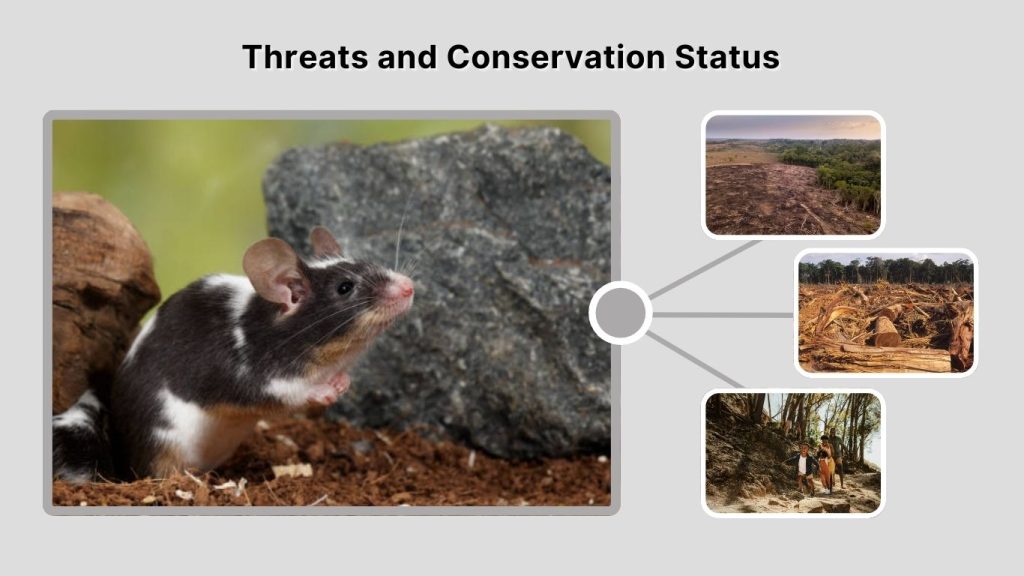
Human activities also affect their populations. Habitat destruction caused by agriculture, urban development, and deforestation can reduce the areas where these rats live.
In some regions, they are hunted for food or killed as pests when they enter farms or storage areas. These factors can place pressure on local populations.
Conservation Efforts
Despite these challenges, African Giant Pouched Rats are not currently considered endangered. Their adaptability and wide distribution help maintain stable populations in many parts of Africa.
Conservation efforts focus mainly on protecting natural habitats and promoting responsible wildlife management. In addition, the positive role these rats play in humanitarian work has increased global awareness of their importance.
Interesting Facts About African Giant Pouched Rats
The African Giant Pouched Rat holds several fascinating records and characteristics. It is one of the largest rat species in the world and can weigh more than many small domestic animals.
These rats are capable of detecting explosives and diseases with remarkable accuracy. Some trained rats can screen hundreds of tuberculosis samples in a single day, dramatically speeding up the diagnostic process.
Their cheek pouches allow them to carry large amounts of food, and their strong sense of smell is far more sensitive than that of many other rodents.
Conclusion
The African Giant Pouched Rat is far more than just a large rodent. Its intelligence, adaptability, and extraordinary sense of smell make it one of the most useful animals in scientific and humanitarian work. From detecting landmines to helping diagnose tuberculosis, these rats have proven to be valuable partners in solving real-world problems. As awareness of their abilities grows, the African Giant Pouched Rat continues to gain recognition as a remarkable species with an important role in both nature and human society.