


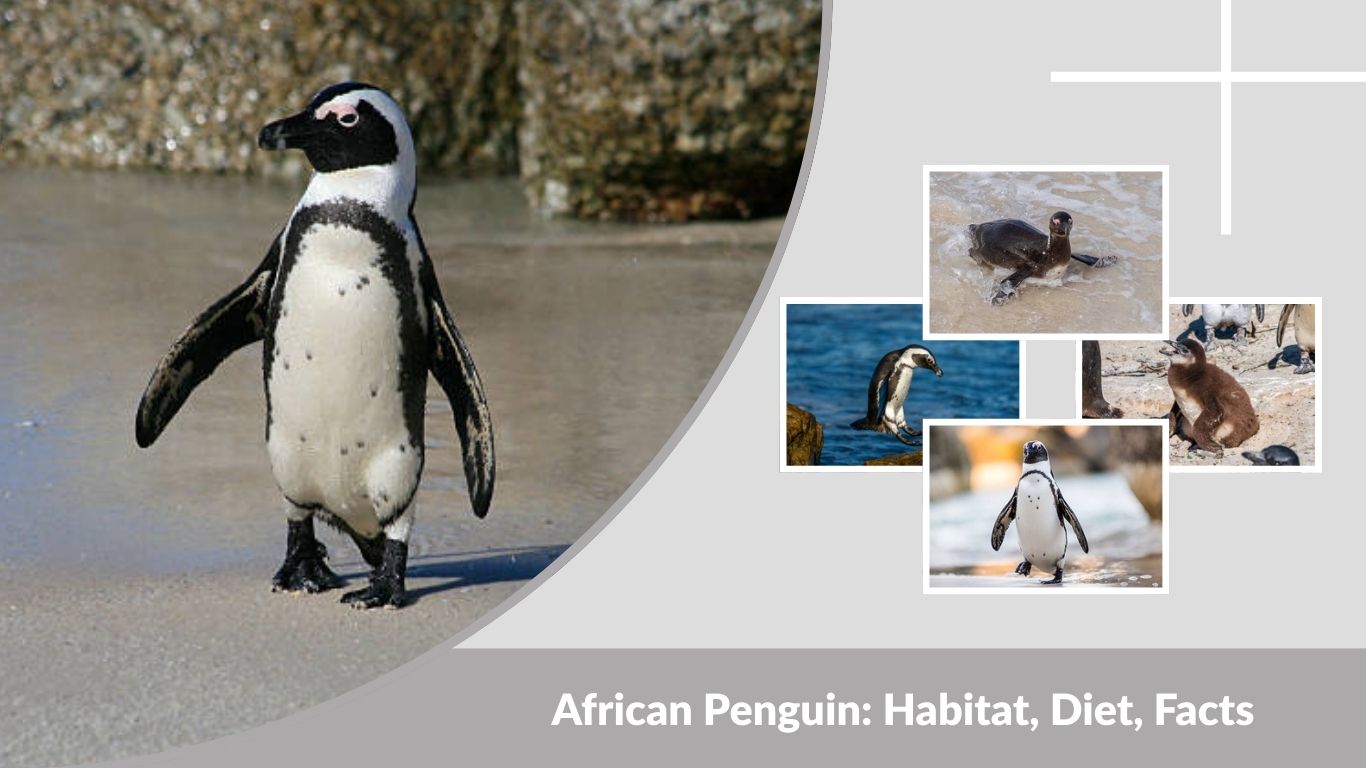
The African penguin is one of the most fascinating seabirds in the world and the only penguin species native to Africa. Known for its distinctive black-and-white coloring and donkey-like braying call, this species lives along the southwestern coasts of South Africa and Namibia. Once found in vast numbers, the African penguin is now classified as endangered due to declining fish populations, habitat disruption, and environmental threats. Understanding where African penguins live, what they eat, and how they survive helps explain why protecting their habitat is more important than ever.
What Is an African Penguin?
The African penguin (Spheniscus demersus) belongs to a group of banded penguins that also includes species from South America. It is sometimes called the black-footed penguin because of its dark feet, or the jackass penguin due to its loud, braying call that sounds similar to a donkey.
Scientific Classification and Names
- Scientific name: Spheniscus demersus
- Family: Spheniscidae
- Other common names: Black-footed penguin, jackass penguin
Unlike Antarctic penguins, African penguins live in a temperate climate. They are specially adapted to survive in warmer conditions while still depending heavily on cold ocean currents for food.
Physical Characteristics
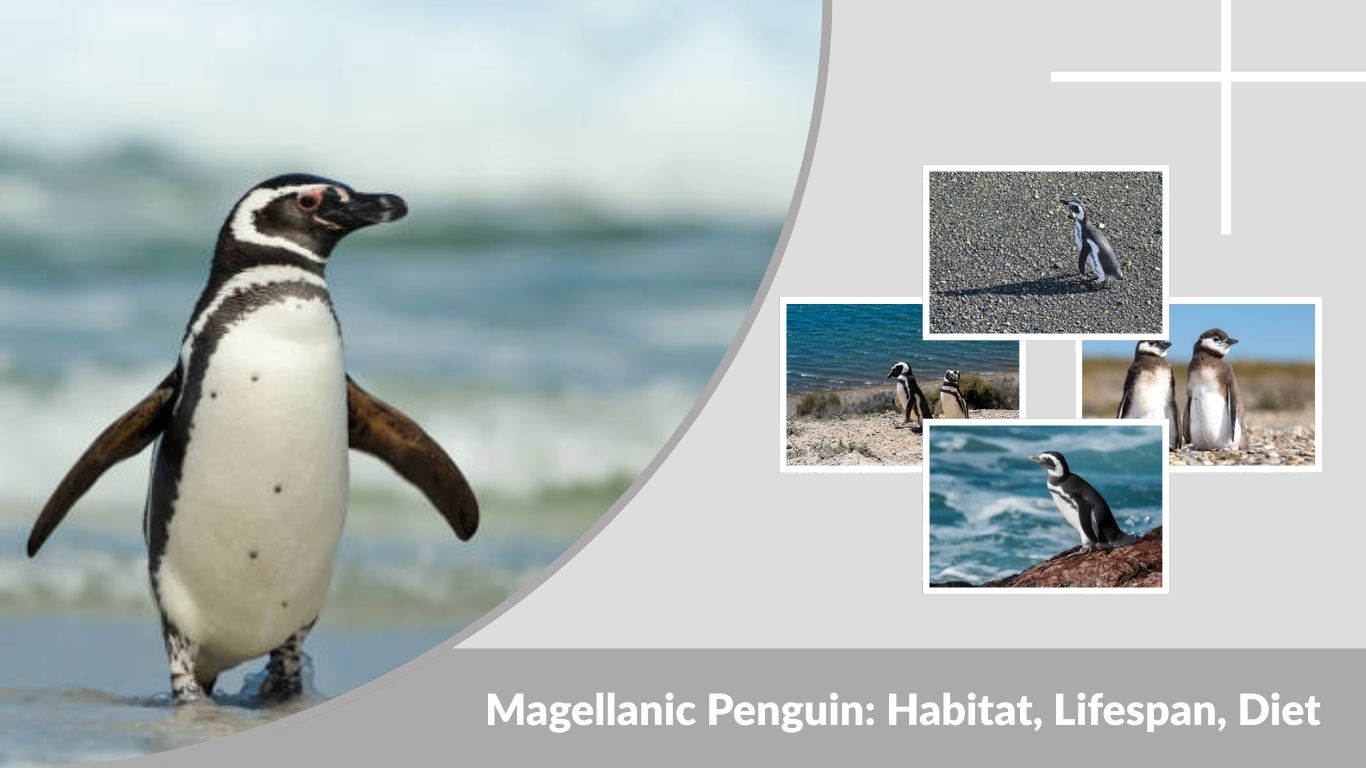
African penguins are medium-sized penguins, standing about 60–70 cm (24–28 inches) tall and weighing between 2–5 kilograms (4–11 pounds). Their black-and-white coloring acts as camouflage in the water. The white belly blends with sunlight from above, while the dark back helps them hide from predators below.
Each African penguin has a unique pattern of black spots on its chest, much like a human fingerprint. These markings help researchers identify individual birds in the wild. They also have pink glands above their eyes that help regulate body temperature. When temperatures rise, more blood flows to these glands, causing them to appear brighter pink.
Where Do African Penguins Live?
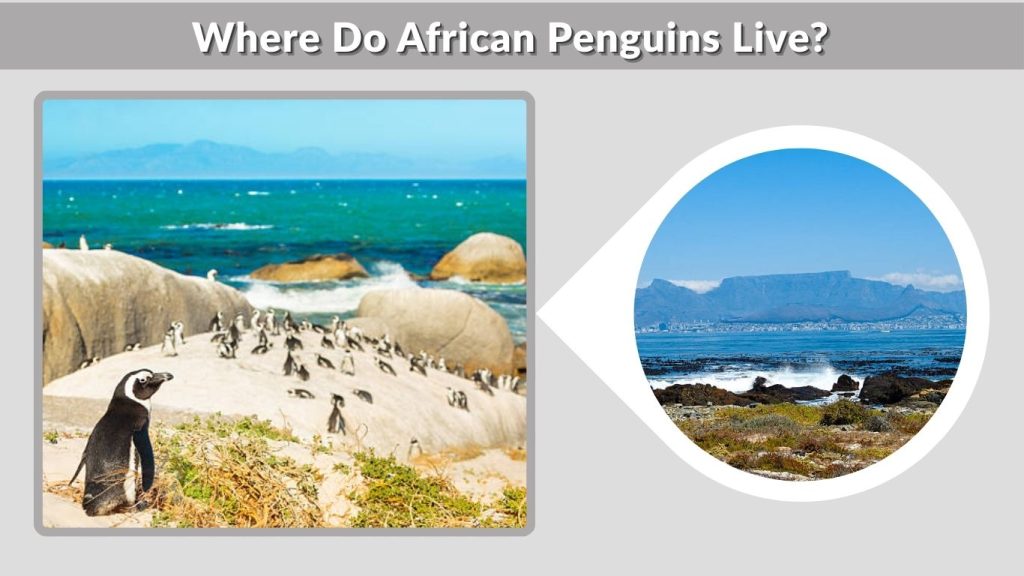
A common question is: where do African penguins live? Unlike most penguin species that inhabit icy regions, African penguins are found along the southwestern coast of Africa.
Geographic Distribution
African penguins live primarily in:
- South Africa
- Namibia
They breed in around 20–25 colonies scattered across offshore islands and a few mainland coastal areas. Some of the most well-known colonies include:
- Boulders Beach (South Africa)
- Robben Island
- Dassen Island
- St. Croix Island
These colonies provide safe nesting grounds away from many land predators.
African Penguin Habitat
The African penguin habitat consists mainly of:
- Rocky offshore islands
- Sandy beaches
- Coastal scrubland
- Areas near cold ocean currents
A key feature of their habitat is the Benguela Current, a cold ocean current that flows northward along the southwestern coast of Africa. This current brings nutrient-rich waters that support large populations of sardines and anchovies, the penguins’ primary food sources.
Unlike Antarctic penguins that build nests on ice, African penguins often dig burrows in sand or nest under bushes and rocks. These burrows help protect eggs and chicks from extreme heat and predators.
Why Their Habitat Is Unique
African penguins are unique because they are the only penguin species that breeds in Africa’s warm-temperate climate. Summer temperatures can become very high, so they rely on shade, burrows, and ocean breezes to stay cool.
Their ability to adapt to warmer conditions sets them apart from other penguins, but it also makes them vulnerable to environmental changes such as habitat destruction and climate shifts.
African Penguin Diet and Hunting Behavior
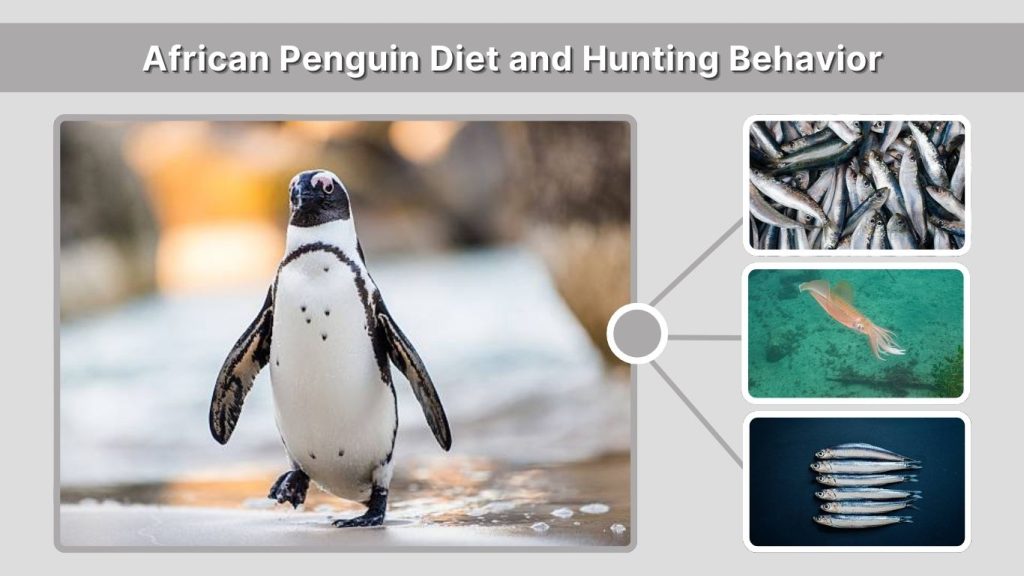
The African penguin diet mainly consists of small schooling fish. Their survival depends heavily on the availability of these fish in nearby waters.
What Do African Penguins Eat?
African penguins primarily eat:
- Sardines
- Anchovies
- Small fish
- Squid and crustaceans (occasionally)
Sardines and anchovies make up the majority of their diet because these fish are rich in nutrients and commonly found in the Benguela Current system.
During certain seasons, their diet may shift depending on fish availability. If sardine populations decline, penguins may travel farther to find alternative prey.
How They Hunt
African penguins are powerful swimmers and skilled hunters. They use their flippers like wings to propel themselves underwater, reaching impressive speeds. They can dive to depths of about 100 meters (330 feet) when chasing prey.
They often hunt in groups, working together to herd fish into tight clusters. This cooperative behavior increases their chances of catching food efficiently. A single feeding trip can last several hours, especially during breeding season when adults must gather enough food for their chicks.
However, increasing competition from commercial fishing has made it harder for African penguins to find sufficient food close to their colonies.
African Penguin Life Cycle
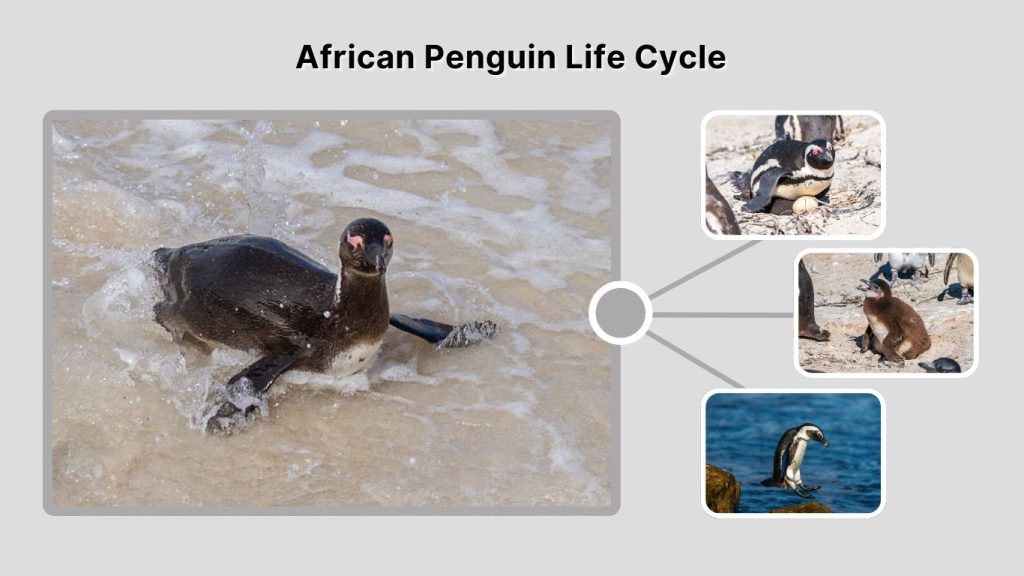
The African penguin life cycle includes several important stages, from egg to fully independent adult.
African Penguin Eggs and Breeding
African penguins usually form long-term pair bonds. Breeding can occur at different times of the year depending on the colony location.
Females typically lay two eggs per breeding season. Both parents share incubation duties, which last about 38–42 days. While one parent stays to protect the eggs, the other goes to sea to hunt for food.
The use of burrows is especially important during this stage, as it keeps the eggs cool and protected from predators such as gulls and mongooses.
Chick Development
When the eggs hatch, the chicks are covered in soft gray or brown down feathers. Both parents feed the chicks by regurgitating partially digested fish.
After several weeks, the chicks grow rapidly. Eventually, they gather in small groups called crèches, which offer safety in numbers while both parents forage at sea.
At around 2–4 months old, young penguins develop waterproof feathers and leave the nest. This stage is called fledging, and it marks the beginning of their independent life at sea.
Juvenile to Adult Stage
After fledging, juvenile African penguins spend several years at sea before returning to land to breed. During this time, they learn to hunt efficiently and avoid predators such as seals and sharks. Young penguins gradually develop the bold black-and-white adult plumage, replacing their dull juvenile feathers.
African penguins typically reach sexual maturity between 4 and 5 years of age. Many return to the same colony where they were born, often choosing nesting sites close to their birthplace. Once they form a pair bond, they may breed with the same partner for multiple seasons, strengthening their chances of reproductive success.
African Penguin Lifespan
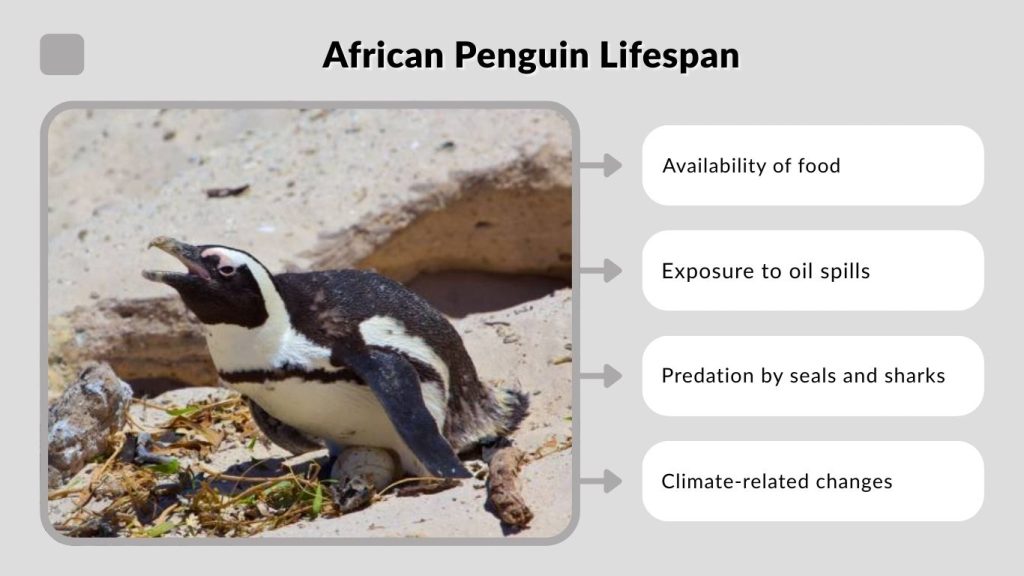
The African penguin lifespan varies depending on environmental conditions and threats. In the wild, they generally live between 10 and 15 years, although some individuals may survive longer under favorable conditions.
In captivity, where food is consistent and predators are absent, African penguins can live 20 years or more.
Several factors influence lifespan, including:
- Availability of food
- Exposure to oil spills
- Predation by seals and sharks
- Climate-related changes
- Human disturbance
Young chicks and juveniles face the highest mortality rates, especially when food is scarce. Adults that successfully breed and maintain access to reliable feeding grounds tend to live longer.
Is the African Penguin Endangered?
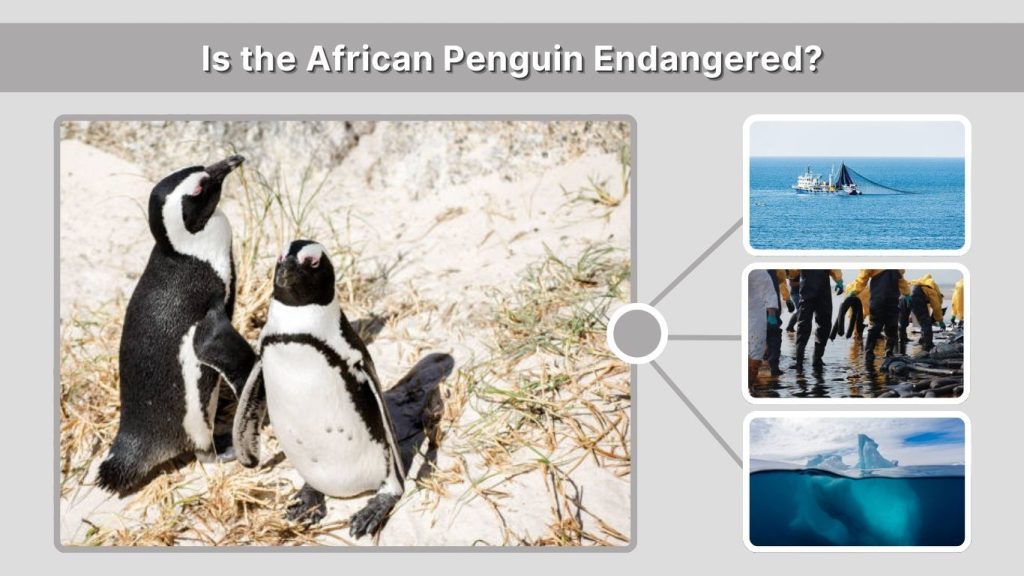
Yes, the African penguin is officially classified as Endangered on the IUCN Red List. Over the past century, their population has declined dramatically.
Conservation Status and Population Decline
Historically, millions of African penguins lived along the southwestern African coast. Today, only a small fraction of that population remains. In some areas, colony sizes have dropped sharply due to environmental pressures and human activity.
The rapid decline has raised serious concerns among conservationists, making the African penguin one of the most threatened penguin species in the world.
Why Are African Penguins Endangered?
Several major threats have contributed to their endangered status:
1. Overfishing
Commercial fishing operations compete directly with penguins for sardines and anchovies. When fish stocks decline, penguins must travel farther to find food, which reduces breeding success.
2. Oil Spills
Oil pollution can coat penguins’ feathers, destroying their waterproofing and insulation. This can lead to hypothermia, poisoning, and death. Large oil spills in the past have killed thousands of birds.
3. Climate Change
Changes in sea temperature can shift fish populations away from traditional feeding areas. Warmer waters may also affect breeding conditions.
4. Habitat Destruction
Urban development, tourism, and historical guano harvesting have reduced suitable nesting habitats. Without proper burrows, eggs and chicks are more exposed to heat and predators.
5. Predation
Natural predators such as Cape fur seals, sharks, gulls, and mongooses also impact penguin populations, especially when environmental conditions are already stressful.
Conservation Efforts
Despite the challenges, conservation programs are working to protect the African penguin.
Key efforts include:
- Establishing marine protected areas
- Regulating fishing zones near breeding colonies
- Building artificial nesting boxes
- Rescuing and rehabilitating oiled penguins
- Monitoring breeding colonies
Organizations in South Africa and Namibia actively rescue injured birds and release rehabilitated penguins back into the wild. Public awareness campaigns also encourage responsible tourism and sustainable seafood choices.
While recovery will take time, continued conservation action offers hope for stabilizing their population.
Interesting African Penguin Facts
African penguins have several unique traits that make them especially fascinating:
- They produce a loud braying sound that resembles a donkey, earning them the nickname “jackass penguin.”
- The pink gland above their eyes helps regulate body temperature.
- They can drink saltwater thanks to specialized salt glands that filter excess salt from their bloodstream.
- Each penguin’s chest spot pattern is unique.
- They can swim at speeds of up to 20 km/h (12 mph).
These adaptations help them survive in a challenging coastal environment.
FAQs
Where does the African penguin live?
African penguins live along the southwestern coast of Africa, primarily in South Africa and Namibia. They breed in colonies on rocky islands and a few mainland beaches, often near the cold Benguela Current, which provides the fish they depend on for survival.
What do African penguins eat?
African penguins mainly eat sardines and anchovies. They may also consume small fish, squid, and crustaceans when available. Their diet depends heavily on local fish populations, which are influenced by ocean currents and commercial fishing activity.
How long do African penguins live?
In the wild, African penguins typically live between 10 and 15 years. In captivity, where they receive consistent care and protection from predators, they can live 20 years or more.
How many eggs do African penguins lay?
African penguins usually lay two eggs per breeding season. Both parents share incubation duties for about 38–42 days and work together to feed and protect their chicks after hatching.
Why are African penguins endangered?
African penguins are endangered due to overfishing, oil spills, climate change, habitat destruction, and predation. These combined threats have significantly reduced their population over the past century.