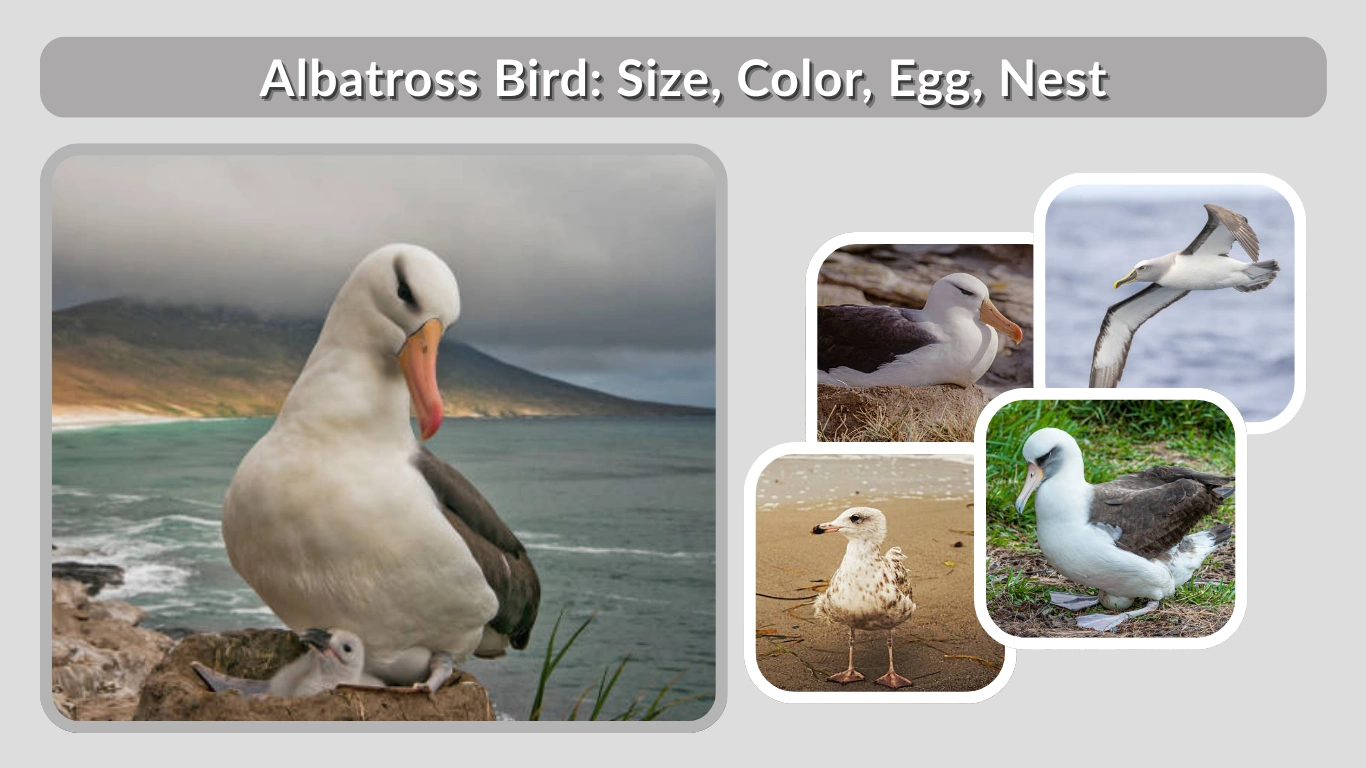
The albatross is one of the most impressive seabirds in the world, famous for its massive wingspan, effortless ocean flight, and lifelong pair bonds. These birds spend most of their lives gliding over open seas, often traveling thousands of kilometers without landing. Only during breeding season do albatrosses return to remote islands to nest and raise a single chick. In this guide, you will explore albatross size, color patterns, eggs, nests, baby development, habitat, and many other fascinating facts.
What Is an Albatross Bird?
An albatross is a large ocean-going bird belonging to the family Diomedeidae. It is specially adapted for long-distance flight and marine living. Unlike most birds, albatrosses can remain at sea for months or even years without touching land, using wind power to glide above waves with very little effort.
Albatrosses are best known for their extraordinary wings, which are long, narrow, and stiff. These wings allow them to use a technique called dynamic soaring, where they harvest energy from wind currents close to the ocean surface. This makes them some of the most energy-efficient flyers on Earth.
Although they appear slow and clumsy on land, albatrosses become graceful masters of the air once airborne. Their entire life cycle revolves around the ocean, from feeding and traveling to resting on the water’s surface between long journeys.
Scientific Classification and Major Species
Albatrosses belong to the order Procellariiformes, a group that also includes petrels and shearwaters. Within this order, albatrosses form the family Diomedeidae. Scientists currently recognize more than 20 living species of albatross, divided into four main genera: Diomedea, Thalassarche, Phoebastria, and Phoebetria.
Some of the most famous species include the wandering albatross, which holds the record for the longest wingspan of any living bird, the black-browed albatross, known for its bold facial markings, and the Laysan albatross, commonly found in the North Pacific.
Different species vary in size, coloration, and geographic range, but all albatrosses share key traits: long wings, webbed feet, and distinctive tube-shaped nostrils on their beaks that help them excrete excess salt from seawater.
Albatross Size, Weight, and Wingspan
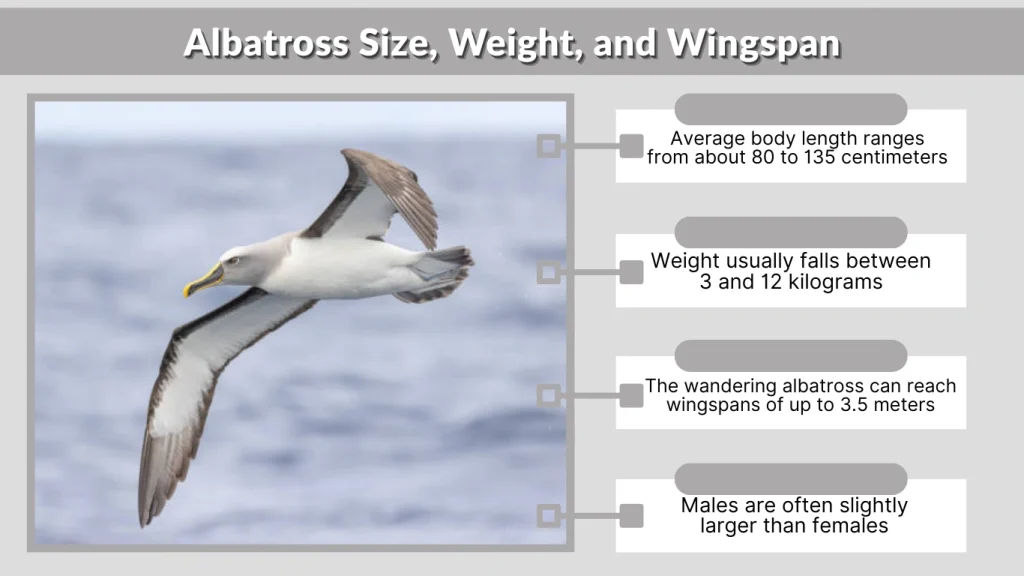
Albatrosses are among the largest flying birds in the world, built more like gliders than typical flapping birds.
- Average body length ranges from about 80 to 135 centimeters
- Weight usually falls between 3 and 12 kilograms, depending on species
- The wandering albatross can reach wingspans of up to 3.5 meters
- Males are often slightly larger than females
- Chicks hatch small but grow rapidly over several months
Their huge wings allow them to stay airborne for hours without flapping, conserving energy while covering enormous distances across the ocean.
Albatross Color Patterns and Feather Features
Common Plumage Colors
Most albatross species display a mix of white, black, gray, and brown feathers. Large species such as the wandering and royal albatross are mostly white with dark wing edges, while smaller species, like the sooty albatross, are darker overall. These color patterns help with species recognition within large breeding colonies.
Juvenile vs Adult Coloring
Young albatrosses often appear darker than adults. Many species slowly gain whiter feathers as they age, sometimes taking several years to reach full adult plumage. This gradual change helps researchers estimate a bird’s maturity and breeding readiness.
Beak, Eye, and Facial Markings
The albatross beak is long, strong, and hooked at the tip, perfect for gripping slippery prey. One of its most distinctive features is the pair of tubular nostrils along the top or sides of the bill. These structures aid their sense of smell and help remove excess salt from seawater. Eye rings, brow lines, and bill color often differ between species.
Habitat and Global Distribution

Albatrosses are true ocean birds. Most species are found across the Southern Ocean, circling Antarctica and traveling between South America, Africa, Australia, and New Zealand. A few species, such as the Laysan and black-footed albatross, inhabit the North Pacific Ocean.
They spend nearly their entire lives over open water, resting on the sea surface between feeding flights. Land is visited mainly for breeding, where they return to the same remote islands and coastal sites year after year.
These breeding grounds are typically windy, isolated, and relatively free from land predators. Such locations provide the open space and airflow large albatrosses need to take off and land safely.
Diet and Feeding Behavior
Albatrosses are carnivorous seabirds that feed mainly at or near the ocean surface.
- Squid form the core of their diet
- Small fish are commonly eaten
- Krill and other crustaceans supplement meals
- They scavenge dead marine animals
- They sometimes follow fishing vessels for food
Albatrosses have an exceptional sense of smell, allowing them to locate food over vast distances. They often travel hundreds of kilometers between meals, gliding low over waves in search of productive feeding zones.
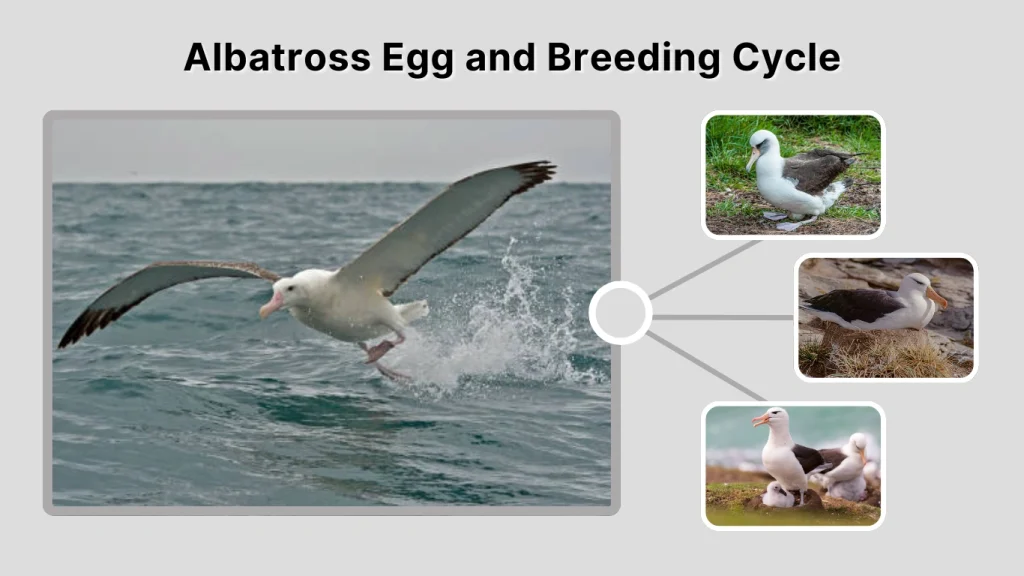
Albatross Egg and Breeding Cycle
Mating and Courtship Displays
Albatrosses are famous for their elaborate courtship rituals. These displays include bill clacking, sky-pointing, wing spreading, and a variety of calls. Each species has its own unique “dance,” which helps individuals recognize suitable mates. Many albatross pairs form long-term bonds that can last for decades, returning to the same breeding sites year after year.
Egg Laying and Incubation
Unlike most birds, albatrosses lay only one egg per breeding season. This single egg represents a huge investment of time and energy. Both parents take turns incubating it, often for 65 to 80 days. During this period, one adult remains on the nest while the other may travel hundreds or even thousands of kilometers across the ocean in search of food.
Hatching and Early Chick Care
When the egg finally hatches, the chick is covered in soft down and is completely dependent on its parents. Adults feed the chick regurgitated squid and nutrient-rich stomach oil. For the first few weeks, one parent usually stays near the chick to protect it from cold, rain, and predators.
Albatross Nest Structure and Nesting Colonies
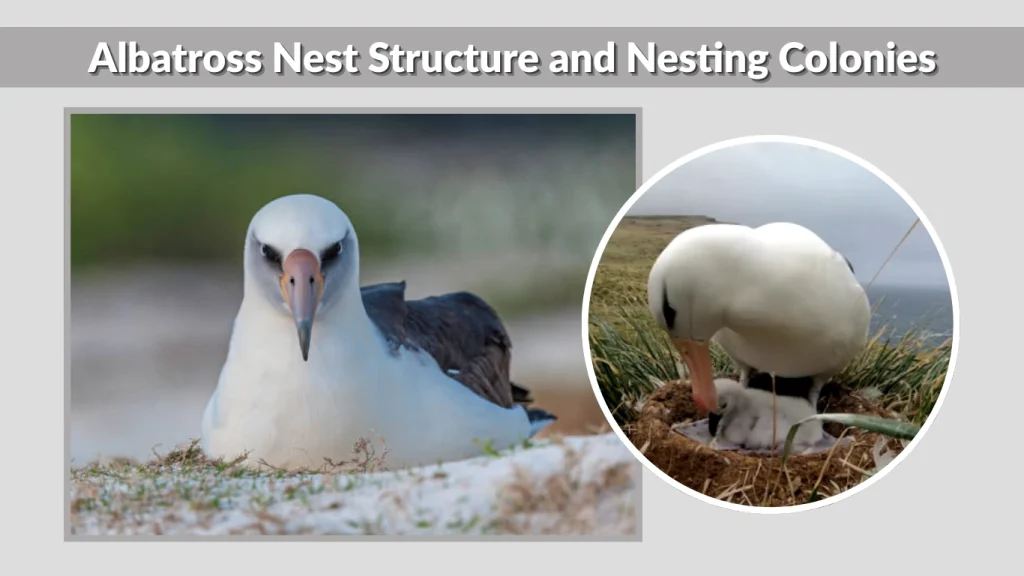
Albatross nests are typically simple but sturdy. They are often built on open ground, grassy slopes, sandy flats, or rocky cliffs. The nest itself is usually a raised mound made from mud, soil, grass, moss, feathers, and small stones. This elevated structure helps protect the egg and chick from flooding and cold ground.
Breeding colonies can range from small groups to massive gatherings of thousands of birds. Despite living close together, each pair defends a small nesting space. Vocal calls and bill gestures are used to warn neighbors away and maintain order within the crowded colony.
Albatross Baby (Chick) Development
Albatross chicks grow slowly compared to many other birds, but they reach an impressive size before leaving the nest.
- Hatch covered in thick gray or white down
- Fed regurgitated food and energy-rich oil
- Grow rapidly over several months
- Remain in the nest for four to nine months
- Fledge only when nearly adult-sized
Parents may travel extraordinary distances to feed a single chick. Once the chick is ready, it launches itself toward the sea, often without any practice flights, beginning a long life almost entirely spent over the ocean.
Flight Style and Ocean Adaptations
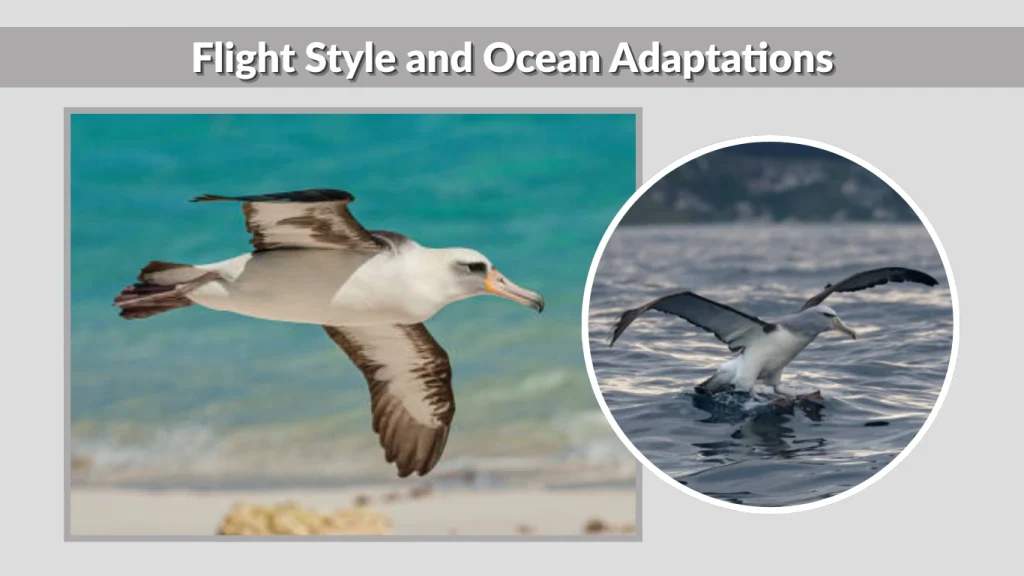
Albatrosses are masters of flight. Their long, narrow wings are perfectly shaped for dynamic soaring, a technique that uses wind gradients above ocean waves to gain energy. By repeatedly rising into stronger winds and then gliding down toward the surface, albatrosses can travel enormous distances with almost no wing flapping.
Special shoulder joints allow their wings to lock in an extended position, reducing muscle fatigue. This adaptation enables albatrosses to glide for hours, sometimes covering more than 800 kilometers in a single day.
Behavior, Communication, and Social Life
On land, albatrosses are surprisingly social birds. They communicate using a combination of vocal calls, bill clattering, head movements, and wing gestures. These behaviors play an important role in courtship, mate recognition, and nest defense.
At sea, however, their lifestyle changes dramatically. Outside the breeding season, albatrosses become mostly solitary travelers, roaming vast ocean areas alone. Even then, they may gather loosely where food is abundant, such as over productive fishing grounds.
Lifespan and Survival Challenges
Albatrosses are among the longest-living birds in the world. Many species regularly live 40 to 60 years, and some known individuals have exceeded 70 years. They mature slowly, often not returning to land to breed until they are five to ten years old.
Eggs and chicks are vulnerable to natural predators like skuas and large gulls, as well as introduced animals such as rats and cats. Severe storms and food shortages also threaten breeding success. Because albatrosses raise only one chick at a time, population recovery is very slow.
Conservation Status and Human Impact
Today, many albatross species are listed as Vulnerable, Endangered, or Critically Endangered. One of the greatest threats is longline fishing, where birds become accidentally hooked and drown. Plastic pollution is another major danger, as adults may feed plastic fragments to their chicks.
Climate change is also altering ocean currents and food availability, forcing albatrosses to travel farther to find prey. Conservation programs now focus on protecting breeding islands, controlling invasive predators, and promoting bird-safe fishing methods.
Albatross Bird With Pictures (Image Placement Guide)
This article works well with supporting images, including flying albatrosses over the ocean, nesting colonies on remote islands, close-ups of eggs and chicks, and wingspan comparison photos. These visuals help readers understand the scale, beauty, and life cycle of these remarkable seabirds.
FAQs
How big is an albatross compared to other birds?
Albatrosses are among the largest flying birds on Earth. The wandering albatross has the longest wingspan of any living bird, reaching up to 3.5 meters. While some birds may weigh more, few can match the albatross for wingspan and gliding ability.
How many eggs does an albatross lay?
An albatross lays only one egg per breeding season. Both parents share the responsibility of incubating the egg and raising the chick. Because they invest so much time and energy into a single offspring, successful breeding is critical for population survival.
How long do baby albatrosses stay in the nest?
Baby albatrosses usually remain in the nest between four and nine months, depending on the species. During this time, they are fed by both parents and grow to nearly adult size before making their first flight out to sea.
Where do albatrosses build their nests?
Albatrosses build their nests on remote oceanic islands, coastal slopes, and windy cliffs. These isolated locations help protect eggs and chicks from predators and provide open space for large birds to take off and land safely.
Why are albatross birds important to the ecosystem?
Albatrosses play an important role in marine ecosystems by helping regulate populations of squid and fish. They are also valuable indicators of ocean health, as changes in albatross populations often reflect larger environmental problems.