






The Allegheny woodrat (Neotoma magister) is a unique rodent species native to the eastern United States, particularly the Appalachian Mountain region. Unlike common city rats, this animal prefers remote rocky forests and mountain habitats. The Allegheny woodrat plays an important role in its ecosystem by spreading seeds and maintaining forest balance. However, its population has declined in recent decades, and in several areas it is considered endangered or threatened. Understanding its habitat, diet, and conservation status helps highlight the importance of protecting this rare species.
What Is the Allegheny Woodrat?
The Allegheny woodrat is a medium-sized rodent belonging to the family Cricetidae, which includes hamsters, voles, and other New World rodents. Its scientific name is Neotoma magister. This species is part of the woodrat group, commonly known as pack rats because of their unusual habit of collecting and storing objects.
Unlike the common brown rat or black rat often found in cities, the Allegheny woodrat lives in forested and mountainous environments. It is typically found in areas with rocky cliffs, caves, and steep slopes where it can build safe nests.
Woodrats are known for their interesting behavior of gathering items such as twigs, leaves, seeds, and sometimes even shiny human-made objects. They carry these items back to their nests, creating large piles of collected materials.
Physical Characteristics
The Allegheny woodrat has several features that distinguish it from other rat species. It has a stocky body, large eyes, and prominent ears, which help it detect predators and navigate its environment.
Adult Allegheny woodrats usually measure 15 to 17 inches (38–43 cm) in total length, including the tail. Their body length alone is typically around 8 to 10 inches. They generally weigh between 350 and 500 grams.
One of the most noticeable features of this species is its long, furry tail, which is different from the scaly tails seen in many other rats. Its fur is usually brownish-gray on the back and white or pale on the underside.
These physical adaptations help the woodrat survive in rocky mountain environments where climbing and agility are important.
Allegheny Woodrat Habitat
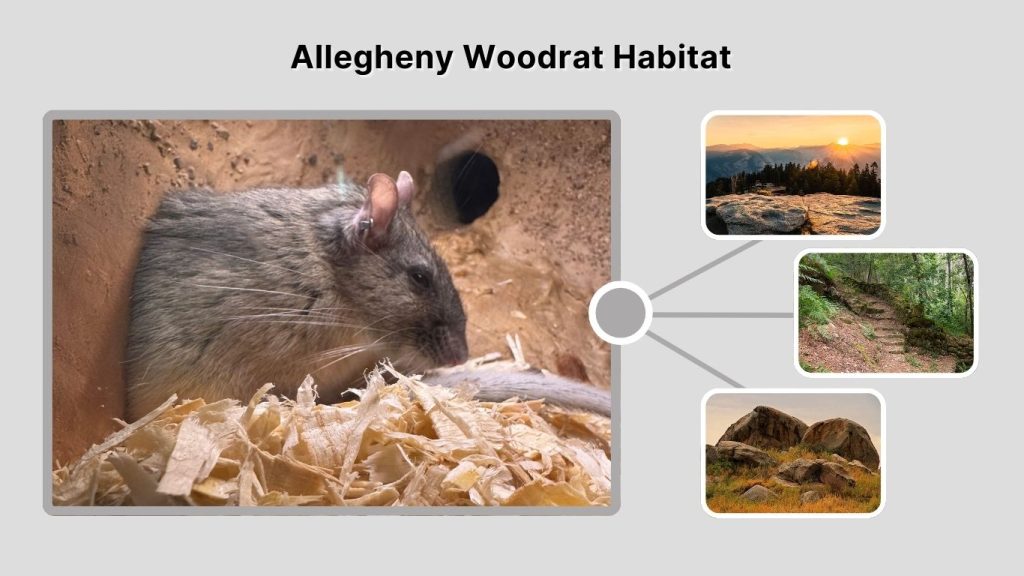
The Allegheny woodrat lives in very specific habitats, mainly within mountainous regions of the eastern United States. These habitats provide the shelter and food sources necessary for the species to survive.
Natural Habitat
Allegheny woodrats are most commonly found in rocky cliffs, forested mountain slopes, and areas with large rock outcrops. These environments provide natural crevices and caves that offer protection from predators and harsh weather.
Rock formations are particularly important for this species because they create safe nesting areas. Woodrats often build their nests inside rock crevices, caves, or gaps between boulders.
The surrounding forests also play a key role in their survival. Forest vegetation provides important food sources such as nuts, fruits, and leaves. In addition, dense forests offer cover from predators like owls, foxes, and snakes.
Because they rely heavily on these rocky forest habitats, the Allegheny woodrat is considered a habitat specialist, meaning it depends on very specific environmental conditions.
Geographic Distribution
The Allegheny woodrat is native to the Appalachian Mountains, a large mountain range that stretches across the eastern United States. Historically, this species was found across a wider range, but its population has declined in many areas.
Today, the Allegheny woodrat is mainly found in parts of:
- Pennsylvania
- West Virginia
- Virginia
- Maryland
- Kentucky
- Tennessee
- North Carolina
- Ohio
- New Jersey
Within these states, the woodrat is usually located in remote mountainous areas with rocky terrain. Populations are often scattered and isolated, which can make conservation efforts more challenging.
Habitat Requirements
For the Allegheny woodrat to survive, several important habitat conditions must be present.
First, the area must contain rocky shelters, such as cliffs, caves, or rock piles. These locations provide nesting sites and protection from predators.
Second, the surrounding forest must supply adequate food sources, including nuts, seeds, berries, and vegetation.
Finally, the habitat must remain relatively undisturbed by human activity. Excessive development, logging, or habitat fragmentation can disrupt woodrat populations and make it harder for them to find food and shelter.
Because the species depends on such specific habitats, protecting these environments is essential for its survival.
Allegheny Woodrat Diet
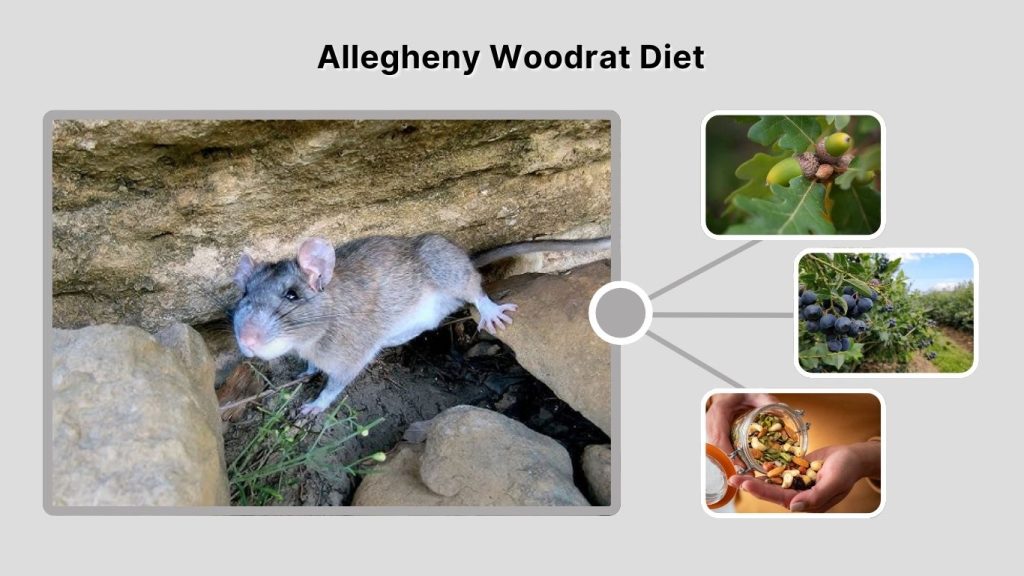
The Allegheny woodrat diet consists mainly of plant-based foods, although the species occasionally eats small animals or insects. Like many rodents, woodrats are omnivores, meaning they can eat a variety of foods depending on availability.
Omnivorous Feeding Habits
The diet of the Allegheny woodrat changes depending on the season and the types of food available in its environment. During different times of the year, woodrats may rely more heavily on certain foods.
For example, in autumn they often collect large amounts of nuts and seeds to store for the winter months. These stored food supplies help them survive when fresh food is scarce.
Woodrats are mostly nocturnal feeders, meaning they search for food at night. This behavior helps them avoid predators and remain hidden during the day.
Common Foods They Eat
The Allegheny woodrat eats a wide variety of foods found in forest environments. Some of their most common foods include:
- Acorns and nuts
- Fruits and berries
- Seeds and plant materials
- Leaves and fungi
- Insects and small invertebrates
Nuts and acorns are especially important because they provide high energy and nutrients. Historically, the American chestnut was also an important food source before the chestnut blight drastically reduced chestnut trees in eastern forests.
Food Collection Behavior
One of the most interesting behaviors of woodrats is their habit of collecting and storing objects. This behavior is the reason they are often called pack rats.
Woodrats gather food and other items from their surroundings and carry them back to their nests. These collected materials may include twigs, leaves, seeds, bones, and sometimes even shiny objects left behind by humans.
They often create large food caches, which help them survive during winter when food becomes harder to find.
Why the Allegheny Woodrat Is Endangered
In many parts of its range, the Allegheny woodrat is considered endangered or threatened. Over the past several decades, scientists have observed a significant decline in its population. While the species once lived throughout large areas of the Appalachian Mountains, today its populations are smaller and more isolated.
Population Decline
Historically, Allegheny woodrats were more widely distributed across the Appalachian region. However, modern studies show that many populations have disappeared or become fragmented. In some states, only a few small colonies remain.
Isolated populations can face additional challenges because limited movement between groups reduces genetic diversity. This can make it harder for the species to adapt to environmental changes or recover from population losses.
Major Threats
Several factors have contributed to the decline of the Allegheny woodrat population.
One major threat is habitat loss and habitat fragmentation. Human activities such as logging, road construction, and land development can damage or divide the rocky forest habitats that woodrats depend on. When habitats become fragmented, it becomes difficult for woodrats to travel between safe nesting areas and food sources.
Another important threat comes from disease caused by parasites. In particular, raccoons carry a parasite known as the raccoon roundworm (Baylisascaris procyonis). Woodrats can become infected when they accidentally consume parasite eggs found in raccoon droppings. This infection can be fatal and has contributed to declining populations.
Changes in forest ecosystems have also affected the species. In the past, American chestnut trees were an important food source for woodrats. However, the chestnut blight that spread across eastern forests in the early 1900s destroyed most chestnut trees, reducing a major source of food.
Conservation Status
Because of these threats, the Allegheny woodrat is now classified as endangered or threatened in several states. Wildlife agencies and conservation organizations monitor populations closely to help protect the species.
Protecting suitable habitats and reducing disease risks are key steps in ensuring the survival of this unique rodent.
Behavior and Lifestyle
The Allegheny woodrat has several behaviors that help it survive in its rocky mountain environment.
Woodrats are mostly nocturnal, meaning they are active during the night. They leave their nests after sunset to search for food and explore their surroundings. Being active at night helps them avoid predators and extreme daytime temperatures.
During the day, woodrats usually remain hidden in rock crevices, caves, or sheltered areas among boulders. These locations provide protection from predators such as owls, hawks, foxes, and snakes.
Although woodrats may live near one another in suitable habitats, they are generally territorial animals. Each individual usually maintains its own nesting area and food storage sites.
Communication between woodrats occurs through scent markings, body movements, and vocal sounds. These signals help them recognize territory boundaries and avoid conflicts with other individuals.
Reproduction and Life Cycle

The breeding season for the Allegheny woodrat typically occurs during the spring and summer months. During this time, males and females seek out mates, and females prepare nests where they will raise their young.
After a gestation period of about one month, a female usually gives birth to a litter of one to four pups. The newborn woodrats are born blind and helpless but grow quickly with the care of their mother.
Young woodrats remain in the nest for several weeks before they begin exploring their surroundings. As they grow, they learn to search for food and collect materials for their own nests.
The average lifespan of an Allegheny woodrat in the wild is typically two to three years, although many individuals may not survive that long due to predators and environmental challenges.
Interesting Allegheny Woodrat Facts
The Allegheny woodrat has several unique characteristics that make it an interesting species.
One well-known fact is its habit of collecting and storing objects. Woodrats gather items from their surroundings and carry them back to their nests, sometimes replacing them with other objects they find interesting. This behavior is why they are commonly called pack rats.
Another interesting feature is their excellent climbing ability. Their strong feet and flexible bodies allow them to move easily across steep rocky surfaces.
Allegheny woodrats also play an important role in forest ecosystems. By collecting and storing seeds and nuts, they help spread plant species and contribute to forest regeneration.
Because of their close connection to Appalachian habitats, the presence of Allegheny woodrats can also serve as an indicator of healthy forest ecosystems.
Conservation Efforts

Many conservation programs are working to protect the Allegheny woodrat and its habitat. Scientists and wildlife organizations monitor woodrat populations to better understand their numbers and distribution.
One important conservation strategy involves protecting rocky forest habitats where woodrats live. Preserving these environments helps ensure that the species continues to have access to safe nesting areas and food sources.
Researchers have also developed programs to reduce the spread of raccoon roundworm, which threatens woodrat populations. In some areas, wildlife managers distribute medicated bait to raccoons to lower parasite levels.
Public awareness and habitat restoration projects are also helping improve conditions for the Allegheny woodrat. These efforts aim to support stable populations and prevent further declines.
Conclusion
The Allegheny woodrat is a unique rodent species that lives in the rocky forests of the Appalachian Mountains. Known for its pack-rat behavior and strong connection to mountain habitats, this animal plays an important role in forest ecosystems. However, habitat loss, disease, and environmental changes have caused its population to decline in many areas. Protecting its habitat and supporting conservation programs are essential steps in ensuring that the Allegheny woodrat continues to survive in the wild for future generations.