




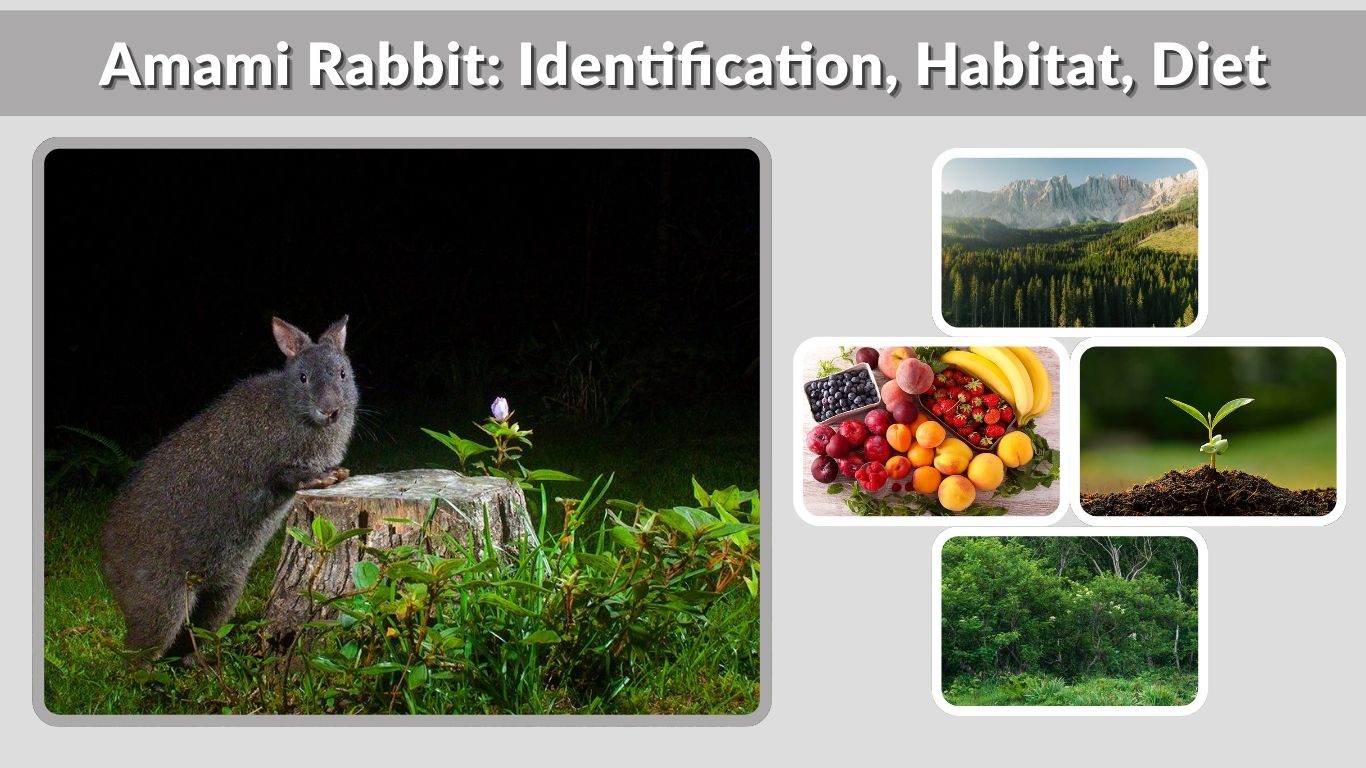
The Amami rabbit (Pentalagus furnessi) is one of the rarest and most unusual rabbit species in the world. Native only to the Japanese islands of Amami Ōshima and Tokunoshima, this rabbit is often referred to as a “living fossil.” Its primitive features and unique behavior make it very different from most modern rabbit species. The Amami rabbit lives in dense subtropical forests and is mostly active at night. Because of habitat loss and introduced predators, this species is now endangered, making conservation efforts extremely important.
What Is an Amami Rabbit?
The Amami rabbit is a rare species belonging to the Leporidae family, which includes rabbits and hares. However, unlike most rabbits, it has several primitive traits that make it appear similar to ancient rabbit ancestors. Because of this, scientists often describe it as a living fossil.
This rabbit lives in forest environments and spends much of its time hiding in vegetation or burrows during the day. At night, it becomes active and searches for food on the forest floor.
Scientific Classification
- Scientific name: Pentalagus furnessi
- Family: Leporidae
- Order: Lagomorpha
- Common name: Amami rabbit
Physical Characteristics
The Amami rabbit has several unique physical features that distinguish it from other rabbit species.
- Dark brown or black fur that blends into forest environments
- Short, rounded ears compared to other rabbits
- Strong claws used for digging and moving through soil
- A compact body with short legs
- Thick fur that provides protection in forest habitats
These characteristics help the Amami rabbit survive in dense forests where camouflage and shelter are important for avoiding predators.
Size and Appearance
The Amami rabbit is considered a medium-sized rabbit species. Adults usually measure about 40–50 centimeters in length and weigh around 2–3 kilograms.
Its fur is typically dark brown or black, which helps it blend into the forest floor covered with leaves and soil. The rabbit’s ears are shorter than those of most rabbits, giving it a somewhat unusual appearance compared to other members of the rabbit family.
Because of these features, the Amami rabbit looks quite different from common rabbits found in grasslands or open areas.
Amami Rabbit Identification
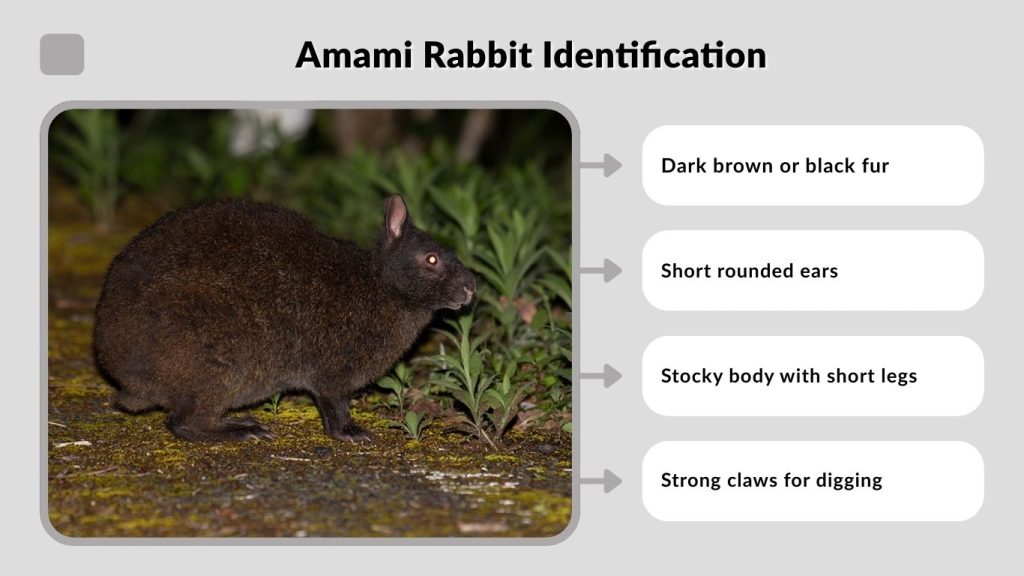
Identifying an Amami rabbit in the wild can be easier when you know its unique physical features and habitat preferences.
Key Identification Features
Some of the most noticeable features of the Amami rabbit include:
- Dark brown or black fur
- Short rounded ears
- Stocky body with short legs
- Strong claws for digging
- Relatively slow movement compared with other rabbits
These traits help the rabbit move through dense forest vegetation and dig shallow burrows or shelters.
Differences from Other Rabbits
The Amami rabbit differs from most other rabbit species in several important ways.
Compared with cottontail rabbits, the Amami rabbit has shorter ears and a more compact body. Cottontails also tend to live in open habitats such as fields and forests, while Amami rabbits prefer dense subtropical forests.
Compared with European rabbits, the Amami rabbit also shows several primitive characteristics, including a more robust body structure and slower movement. These features reflect its ancient evolutionary history.
Because of these unique traits, the Amami rabbit is considered one of the most primitive rabbit species still living today.
Amami Rabbit Habitat
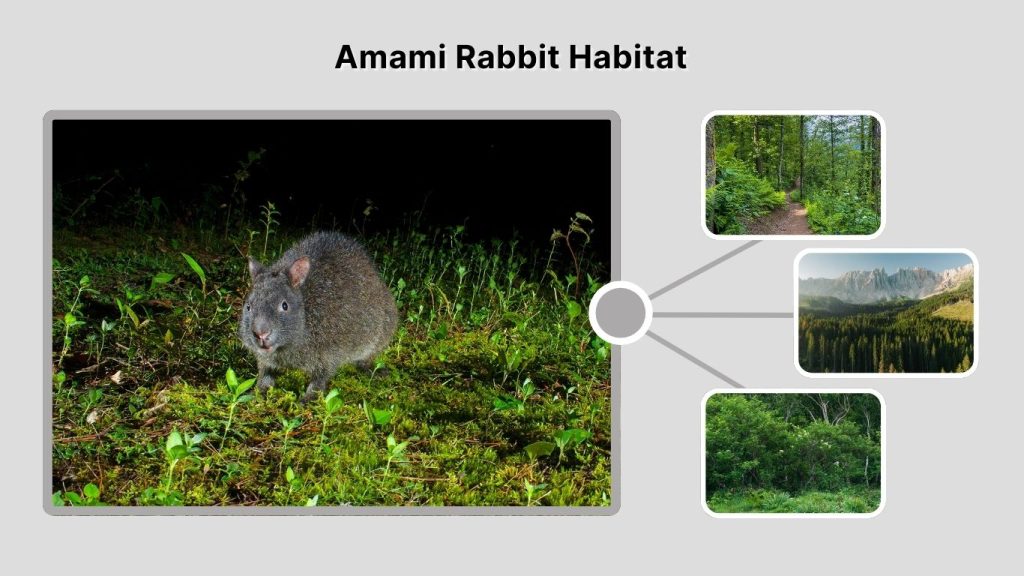
The Amami rabbit habitat is limited to only two islands in southern Japan. This restricted range makes the species particularly vulnerable to environmental changes.
Geographic Range
Amami rabbits are found only on the following islands:
- Amami Ōshima Island
- Tokunoshima Island
Both islands are located in Kagoshima Prefecture in southern Japan. Because the species exists only in these areas, its population is relatively small.
Preferred Habitats
Amami rabbits live mainly in dense subtropical forests where thick vegetation provides shelter and food. Their most common habitats include:
- Subtropical evergreen forests
- Mountain forest areas
- Regions with dense shrubs and undergrowth
These environments provide plenty of plant material for food as well as protection from predators.
Shelter and Living Behavior
Amami rabbits rely on burrows and dense vegetation for protection. During the day, they usually remain hidden in forest cover or underground shelters.
Unlike many rabbits that are active during the day, the Amami rabbit is mostly nocturnal, meaning it is active at night. This behavior helps it avoid predators and human activity.
At night, the rabbit leaves its shelter to search for food on the forest floor. Its dark fur helps it remain hidden in the shadows of the forest.
Amami Rabbit Diet
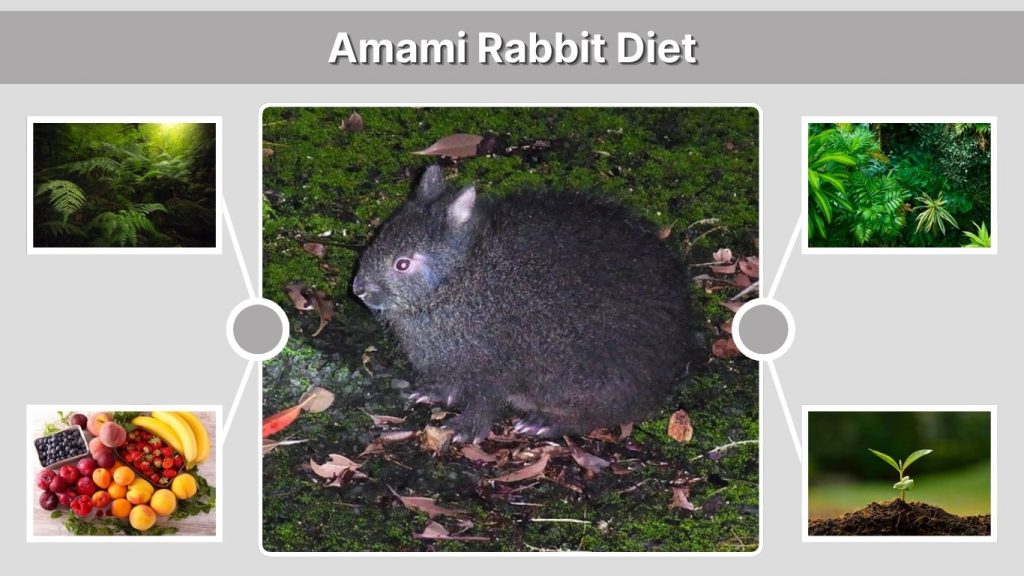
The Amami rabbit diet consists entirely of plant material found in forest habitats. Like all rabbits, it is an herbivore that feeds on a variety of vegetation.
What Do Amami Rabbits Eat?
Common foods eaten by Amami rabbits include:
- Leaves
- Young plant shoots
- Ferns
- Fruits
- Bark from small trees
These foods provide the nutrients needed for growth and survival in forest environments.
Seasonal Diet Changes
The diet of the Amami rabbit can change depending on the season and plant availability.
During spring and summer, the rabbit mainly eats fresh vegetation such as leaves, shoots, and herbs.
In fall and winter, when fresh plants are less available, it may eat more bark and woody plants.
Feeding Behavior
Amami rabbits usually feed at night, when the forest is quieter and predators are less active.
They tend to search for food close to dense vegetation so they can quickly hide if danger appears.
Amami Rabbit Lifespan
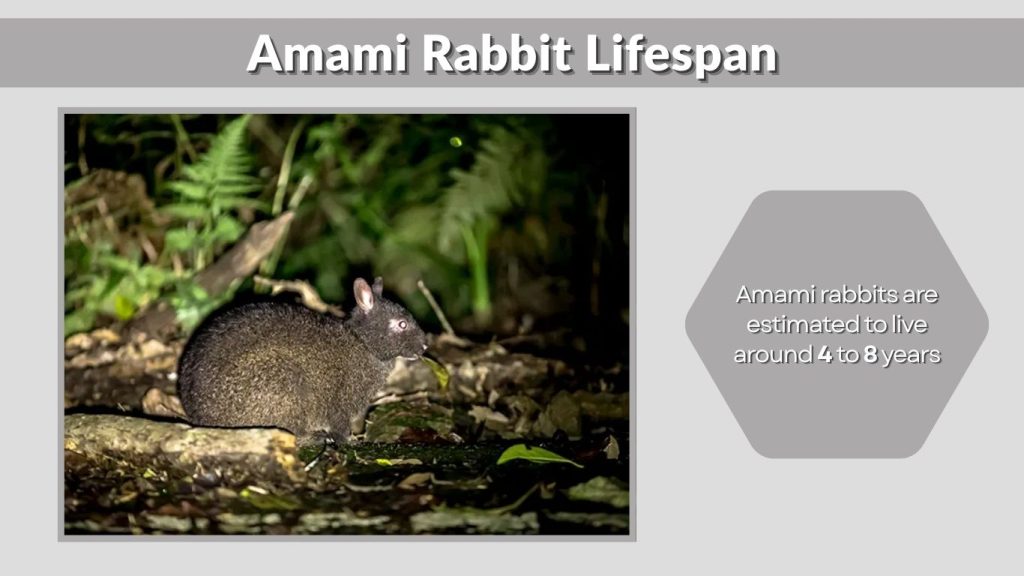
The Amami rabbit lifespan depends on environmental conditions, food availability, and threats from predators. Because this species has a very limited geographic range, its survival is closely linked to the health of its forest habitat.
Lifespan in the Wild
In the wild, Amami rabbits are estimated to live around 4 to 8 years. However, many individuals may not reach this age due to predation and habitat disturbances.
Young rabbits are especially vulnerable during their early life stages when they are still learning to find food and avoid predators.
Lifespan in Captivity
Very little information is available about Amami rabbits in captivity because they are rarely kept outside their natural habitat. However, when protected from predators and provided with proper care, they may live slightly longer than in the wild.
Factors Affecting Lifespan
Several factors influence the lifespan of Amami rabbits:
- Predators: Introduced animals such as mongooses and wild cats pose serious threats.
- Habitat loss: Forest clearing and development reduce available habitat.
- Human activity: Roads and construction can disturb rabbit populations.
- Disease and environmental changes: These factors can also impact survival.
Protecting forest habitats is essential for improving the survival chances of this endangered species.
Amami Rabbit Life Cycle
The Amami rabbit life cycle follows the typical reproductive pattern of many rabbits, but with some unique adaptations to forest environments.
Breeding Season
Amami rabbits generally breed during spring and early summer, when food is more abundant and environmental conditions are favorable.
During this period, females may give birth to one or two litters each year.
Gestation Period
The gestation period of Amami rabbits lasts around 30 to 40 days. After this time, the female gives birth to a small litter of babies called kits.
Unlike some rabbit species that produce large litters, Amami rabbits usually have only one or two young at a time.
Birth and Early Development
Newborn kits are very small and vulnerable. They are born:
- Blind
- Hairless or nearly hairless
- Completely dependent on their mother
The mother prepares a burrow or nest lined with grass and fur to keep the babies warm and safe.
She visits the nest briefly to feed the kits but spends most of her time away to avoid attracting predators.
Growth Stages
Amami rabbits grow quickly and pass through several stages of development:
- Newborn kits – Completely dependent on their mother.
- Juvenile stage – Begin eating vegetation and exploring the surrounding area.
- Subadult stage – Continue growing and learning survival behaviors.
- Adult stage – Fully mature and capable of reproduction.
Young rabbits usually leave the nest after a few weeks and begin living independently.
Reproductive Maturity
Amami rabbits reach sexual maturity at around 6 to 8 months of age. Once mature, they can reproduce during the next breeding season.
Because litter sizes are small, population growth for this species is relatively slow compared with many other rabbits.
Predators of the Amami Rabbit
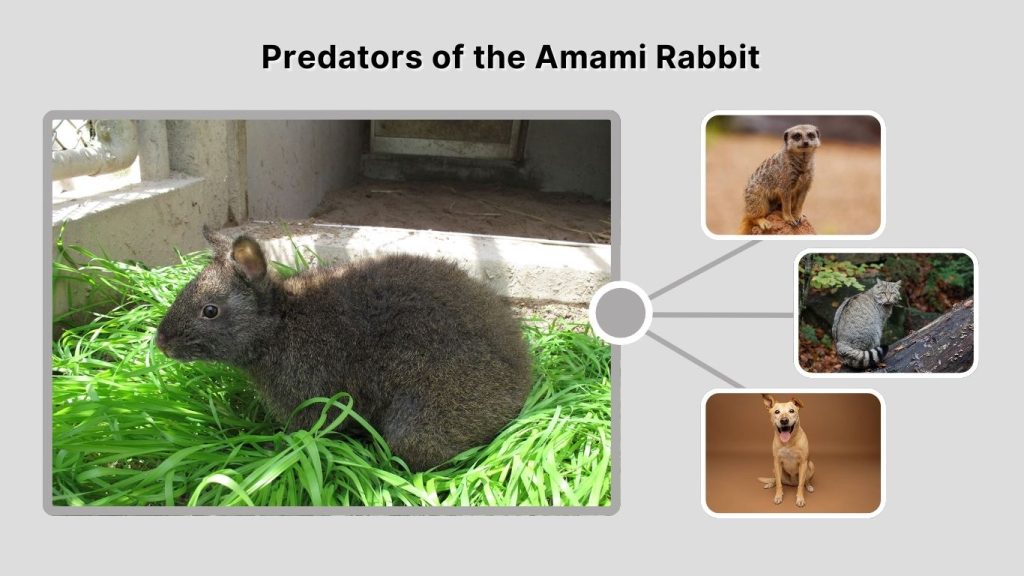
The Amami rabbit faces several natural and introduced predators that threaten its survival.
Common predators include:
- Mongooses (introduced to the islands)
- Wild cats
- Domestic dogs
The introduction of mongooses in particular has caused serious declines in Amami rabbit populations.
To survive, Amami rabbits rely on dense forest vegetation and burrows for protection. Their dark fur also provides camouflage on the forest floor.
When threatened, they usually hide quickly in vegetation or retreat to their burrows.
Interesting Amami Rabbit Facts
There are several fascinating facts about the Amami rabbit that highlight its unique place in the animal kingdom.
- The Amami rabbit is often called a “living fossil” because it retains many ancient rabbit traits.
- It is one of the rarest rabbit species in the world.
- The species exists only on two islands in Japan.
- Amami rabbits are mostly nocturnal, meaning they are active at night.
- They have short ears and a stocky body, which differ from most modern rabbits.
These features make the Amami rabbit one of the most unusual members of the rabbit family.
Conservation Status
The Amami rabbit is considered endangered due to its limited distribution and declining population.
Population Threats
Several threats have contributed to the decline of Amami rabbit populations:
- Habitat destruction from human development
- Introduced predators, especially mongooses
- Road construction and traffic
- Environmental changes
Because the species exists in such a small geographic area, these threats can have a major impact.
Conservation Efforts
Several conservation programs aim to protect the Amami rabbit and its habitat. These efforts include:
- Predator control programs to reduce mongoose populations
- Protection of forest habitats
- Wildlife monitoring and research
- Environmental education for local communities
These actions help improve the chances of survival for this rare species.
Amami Rabbit vs Other Rabbit Species
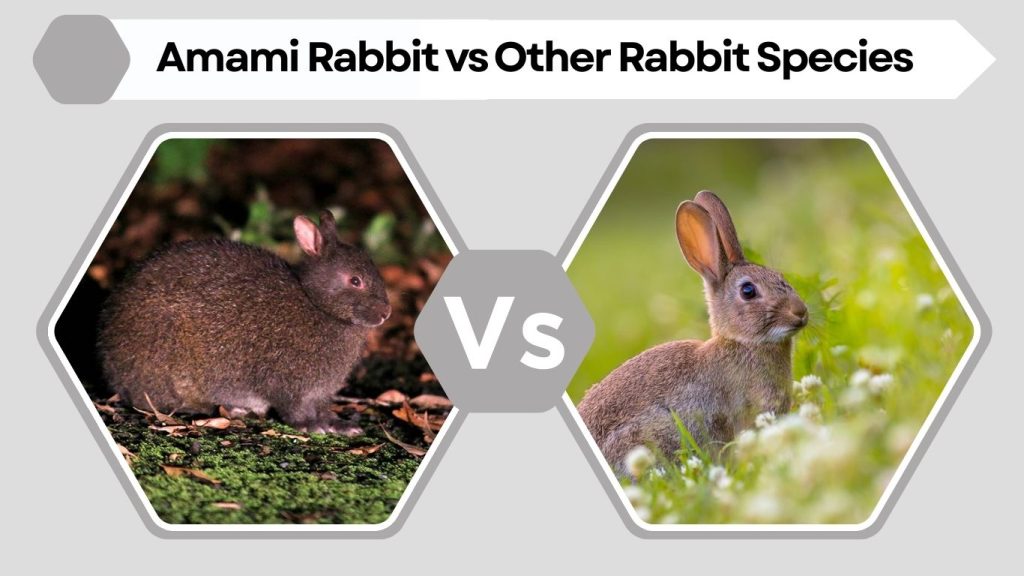
The Amami rabbit differs from most other rabbit species in several important ways.
Amami Rabbit
- Primitive rabbit species
- Short ears and stocky body
- Lives in dense subtropical forests
- Limited to two islands in Japan
Typical Rabbits (Cottontails or European Rabbits)
- Longer ears and lighter bodies
- Found in grasslands, forests, or open areas
- Wider geographic distribution
- Larger population sizes
These differences highlight the unique evolutionary history of the Amami rabbit.
Conclusion
The Amami rabbit is one of the most unique and endangered rabbit species in the world. Its ancient features, limited habitat, and nocturnal behavior make it very different from most modern rabbits. Living only on two islands in Japan, this species depends heavily on dense forest ecosystems for survival. By understanding the Amami rabbit’s habitat, diet, lifespan, and life cycle, we can better appreciate its importance and support efforts to protect this rare “living fossil” for future generations.