
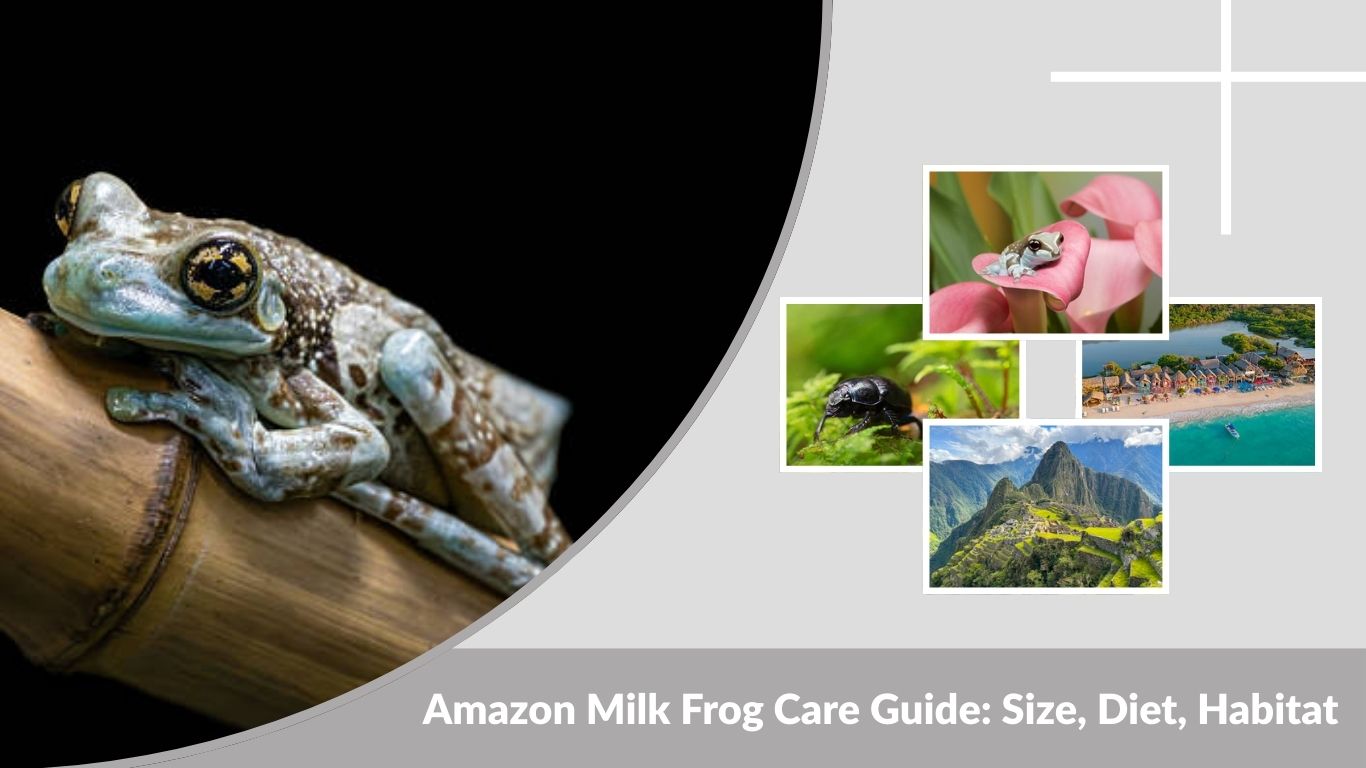
The Amazon Milk Frog (Trachycephalus resinifictrix) is one of the most visually striking and popular tree frog species in the world. Native to the lush Amazon Rainforest of South America, this large, blue-gray amphibian is admired for its bold banded patterns, copper-colored eyes, and calm temperament. Despite its exotic appearance, it has become a favorite among amphibian enthusiasts due to its hardy nature and relatively manageable care requirements.
Often called the “milk frog” because of the milky white secretion it produces when stressed, this species plays an important role in its natural ecosystem as both predator and prey. Whether encountered high in the rainforest canopy or inside a carefully maintained terrarium, the Amazon Milk Frog is a fascinating example of adaptation, resilience, and rainforest biodiversity.
Scientific Classification & Taxonomy
The Amazon Milk Frog belongs to the family Hylidae, commonly known as tree frogs. Its scientific name, Trachycephalus resinifictrix, reflects its placement within a genus known for larger, often robust tree frogs native to Central and South America.
Here is its full classification:
- Kingdom: Animalia
- Phylum: Chordata
- Class: Amphibia
- Order: Anura
- Family: Hylidae
- Genus: Trachycephalus
- Species: T. resinifictrix
The genus name Trachycephalus means “rough head,” referring to the slightly textured skin found on members of this group. The species name resinifictrix loosely relates to its historical association with tree resin, as early observers sometimes found these frogs inhabiting resin-filled tree cavities.
It is sometimes also called the Mission Golden-Eyed Tree Frog, a name inspired by its striking bronze or copper eye coloration.
Physical Description
The Amazon Milk Frog is considered one of the larger tree frog species, with adults typically measuring between 2.5 and 4 inches in length. Females are generally larger and more robust than males, a common trait among amphibians.
Coloration & Pattern
One of the frog’s most distinctive features is its bold coloration. Its base color ranges from light blue to pale gray, often contrasted with dark brown or black bands that wrap around the body and limbs. These high-contrast markings provide camouflage among dappled light and shadow in the rainforest canopy.
Their eyes are particularly striking—usually copper, bronze, or golden in color with horizontal pupils. This vivid eye coloration gives the frog a distinctive and almost expressive appearance.
Juveniles often display brighter contrast and smoother skin, while adults may develop slightly thicker, more textured skin as they mature.
Skin Texture & Structure
Unlike many delicate amphibians, the Amazon Milk Frog has relatively thick skin. This adaptation helps reduce moisture loss in the humid but occasionally variable rainforest environment. The skin is slightly bumpy rather than smooth, which contributes to its rugged appearance.
Like other tree frogs, it has large adhesive toe pads that allow it to grip branches, leaves, and even smooth surfaces. These toe pads make it an excellent climber and well suited to its arboreal lifestyle.
Why Is It Called the “Milk Frog”?
The name “Amazon Milk Frog” comes from a unique defensive adaptation. When stressed or threatened, the frog secretes a white, milky substance from its skin. This secretion contains mild toxins that help deter predators such as birds and snakes.
While the secretion is not dangerous to humans, it can cause mild skin or eye irritation. For this reason, handling should be minimal, and hands should always be washed after contact. In captivity, excessive handling can stress the frog and trigger this defensive response.
This milky secretion is a natural survival tool in the wild, where amphibians must rely on camouflage, toxins, and escape behaviors to avoid predation.
Natural Habitat & Geographic Distribution
Native Range
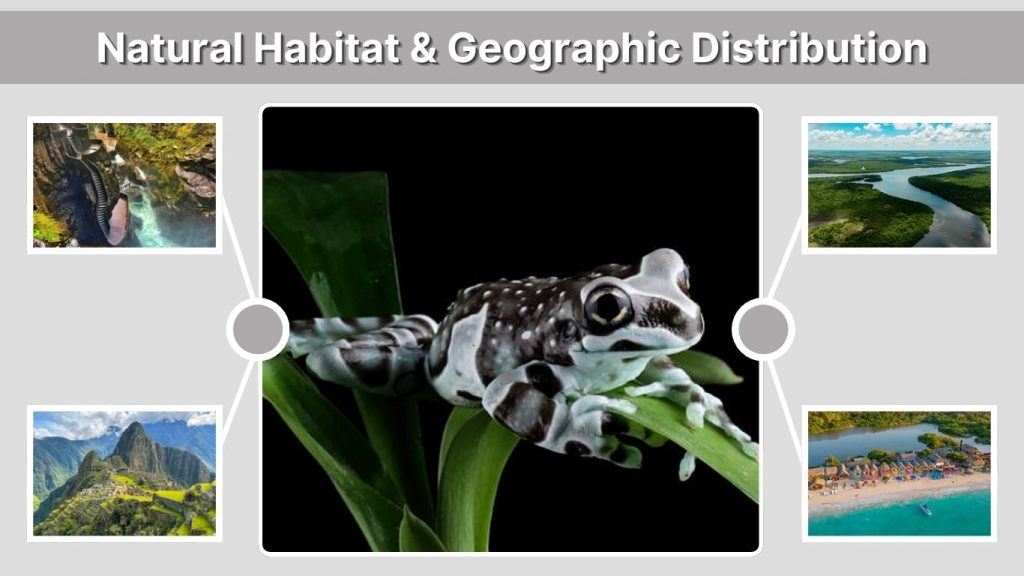
The Amazon Milk Frog is native to the Amazon Basin, one of the most biodiverse regions on Earth. Its range includes parts of:
- Brazil
- Colombia
- Ecuador
- Peru
- Bolivia
- Venezuela
Within this vast tropical rainforest system, the species thrives in warm, humid conditions year-round.
Habitat Preferences
Amazon Milk Frogs are primarily arboreal, meaning they live in trees. They inhabit tropical rainforests, particularly areas with dense vegetation and consistent access to water. Rather than living near large ponds or rivers, they often rely on smaller, temporary water sources.
A fascinating aspect of their habitat use is their reliance on water-filled tree cavities. Rainwater collects in natural holes in tree trunks, forming small pools known as phytotelmata. These tiny water reservoirs serve as safe breeding sites away from larger aquatic predators.
Their arboreal lifestyle keeps them high above the forest floor for much of their lives. During the day, they rest in shaded tree holes or among leaves, becoming more active at night when they hunt for food.
Behavior & Temperament
Amazon Milk Frogs are primarily nocturnal, meaning they are most active after sunset. At night, they emerge to hunt insects and explore their surroundings. During daylight hours, they typically remain still and conserve energy in secure hiding spots.
Compared to many other frog species, they are known for their relatively calm and slow-moving nature. This calm demeanor is one reason they are popular in captivity. However, in the wild, they remain alert and will quickly retreat or secrete their defensive milky substance if threatened.
Their strong climbing ability allows them to navigate branches and vertical surfaces with ease. Even in captivity, they prefer tall enclosures that mimic their natural vertical habitat.
Diet & Feeding Habits
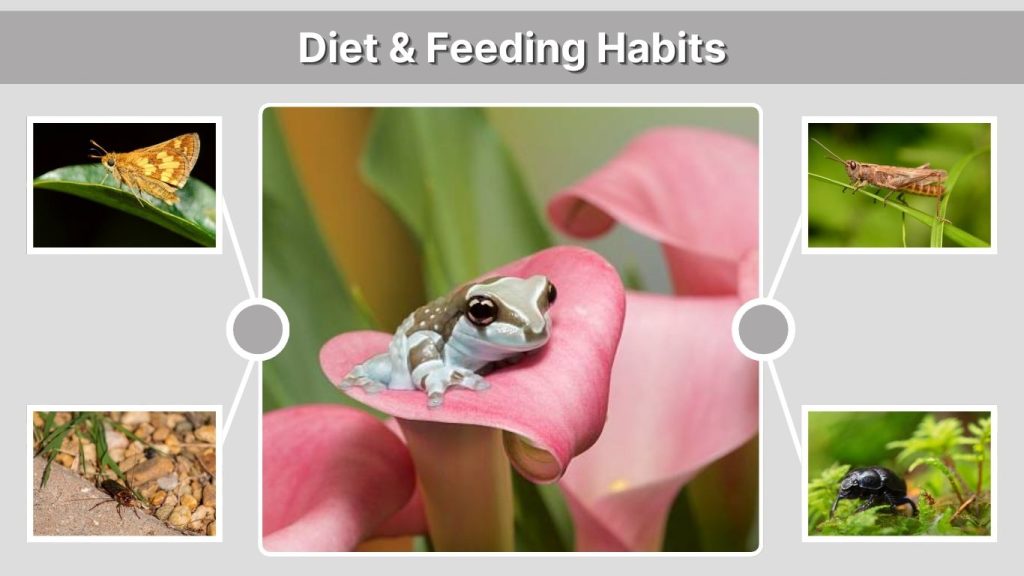
The Amazon Milk Frog is a carnivorous insectivore, meaning it feeds primarily on insects and other small invertebrates. In the wild, its diet includes crickets, beetles, moths, flies, cockroaches, and spiders. Because it lives high in the rainforest canopy, it hunts prey that also inhabit trees and vegetation.
This species is considered an ambush predator. Rather than actively chasing prey over long distances, it waits patiently and strikes quickly when food comes within reach. Its sticky tongue allows it to capture insects with impressive speed and accuracy.
Occasionally, larger individuals may consume small vertebrates such as tiny lizards or other frogs, though insects remain the main component of their diet.
In captivity, Amazon Milk Frogs are typically fed crickets, dubia roaches, mealworms, and waxworms. Proper supplementation with calcium and vitamins is essential to maintain bone health. Overfeeding should be avoided, as captive frogs can become overweight if given excessive food.
Reproduction & Life Cycle
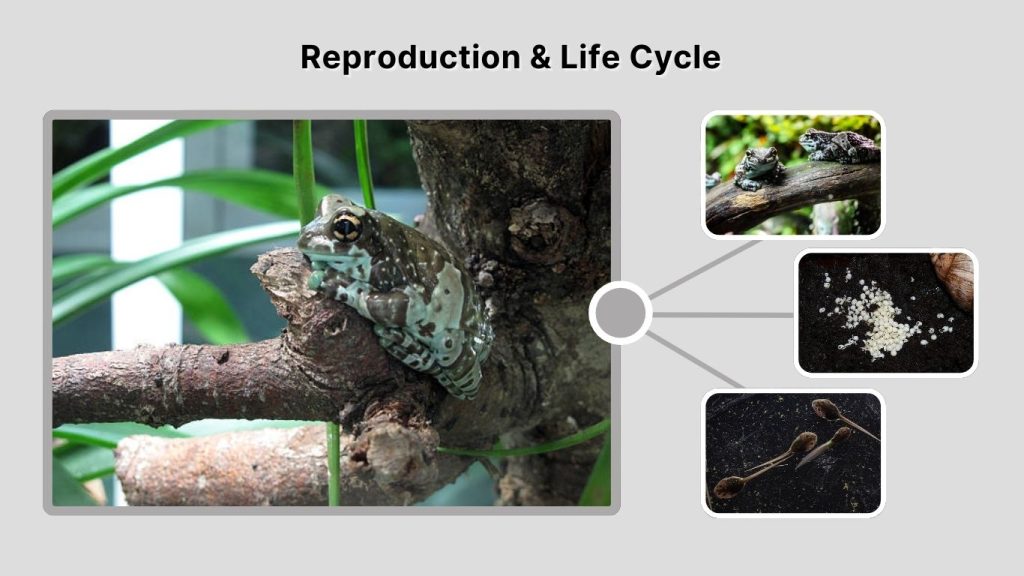
Breeding Behavior
In the wild, breeding is closely linked to the rainy season. Increased rainfall creates temporary pools of water in tree cavities, providing ideal conditions for reproduction. Males produce a distinctive, somewhat quacking or chuckling call to attract females.
Once a female selects a mate, breeding occurs near a suitable water-filled tree hole.
Egg Laying
Unlike many frogs that lay eggs in large ponds, Amazon Milk Frogs use small pools of rainwater trapped inside tree cavities. The female lays her eggs in these protected water pockets. Sometimes, a foam nest forms on the surface of the water, which helps protect eggs from drying out and predators.
These elevated nursery sites offer safety from fish and other aquatic predators found in larger bodies of water.
Tadpole Development
The eggs hatch into tadpoles within a few days. Because tree-hole pools are small and limited in resources, tadpoles must grow quickly. They feed on algae, organic debris, and sometimes smaller tadpoles if resources become scarce.
Development is relatively rapid compared to many amphibian species. Within several weeks, the tadpoles undergo metamorphosis, developing legs and lungs before leaving the water as small froglets.
Growth to Adulthood
After metamorphosis, young frogs disperse into the surrounding vegetation. They continue growing over several months and typically reach sexual maturity within a year or two, depending on environmental conditions.
In captivity, with proper care, they can live between 8 and 15 years, which is relatively long for a frog species.
Amazon Milk Frog in the Pet Trade
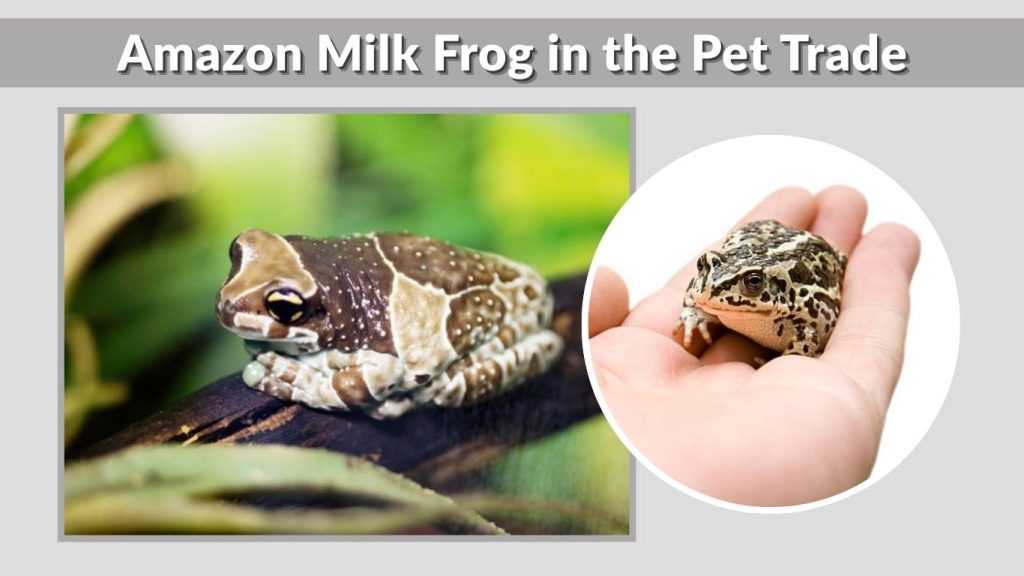
The Amazon Milk Frog is one of the most popular tree frog species kept in captivity. Its popularity stems from its attractive coloration, hardy nature, and generally calm temperament.
Popularity as a Pet
Compared to more delicate amphibians, this species adapts well to life in a properly maintained enclosure. It tolerates moderate handling better than many frogs, though frequent handling is still discouraged to prevent stress and skin damage.
Its bold patterning and golden eyes make it especially appealing to reptile and amphibian hobbyists.
Basic Care Requirements
Because it is arboreal, the Amazon Milk Frog requires a tall terrarium with plenty of vertical climbing space. Key care conditions include:
- Temperature: 75–85°F (24–29°C)
- Humidity: 60–80%
- Lighting: Low-level UVB lighting can be beneficial
- Substrate: Moisture-retaining substrate such as coconut fiber
- Enrichment: Branches, cork bark, and live or artificial plants
Fresh, dechlorinated water should always be available in a shallow dish. Regular misting helps maintain humidity levels.
Ethical Considerations
Prospective owners should always choose captive-bred frogs rather than wild-caught individuals. This helps reduce pressure on wild populations and ensures healthier pets that are already adapted to captive conditions.
Responsible ownership includes proper habitat setup, long-term commitment, and understanding the frog’s specific environmental needs.
Conservation Status & Threats
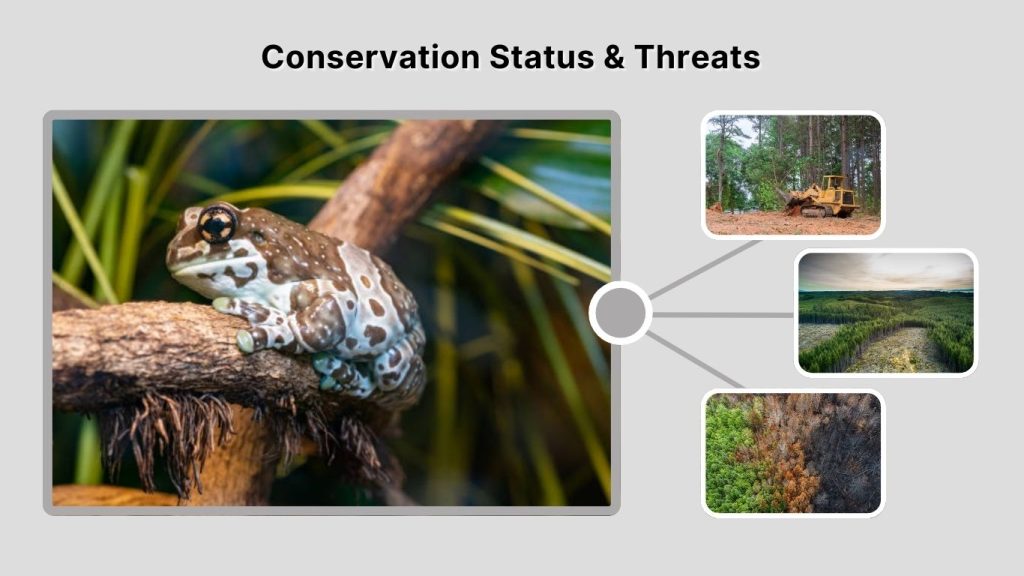
Currently, the Amazon Milk Frog is classified as Least Concern on the global conservation scale. Its wide distribution across the Amazon Basin provides some level of population stability.
However, it still faces significant environmental threats, including:
- Deforestation
- Habitat destruction from agriculture and logging
- Climate change
- Illegal wildlife trade
The destruction of rainforest habitats poses the greatest long-term risk. Because this species relies on mature trees with natural cavities for breeding, widespread deforestation can reduce suitable nesting sites.
Protecting the Amazon Rainforest is essential not only for this frog but for countless other species that depend on this complex ecosystem.
Fun Facts About the Amazon Milk Frog
- It is also known as the Mission Golden-Eyed Tree Frog.
- Its call is often described as a soft quack or chuckle.
- It can slightly adjust its coloration depending on mood and environment.
- It uses rain-filled tree holes as natural nurseries.
- Despite its bold appearance, it relies heavily on camouflage in dappled forest light.
FAQs
Are Amazon Milk Frogs poisonous?
Amazon Milk Frogs produce a milky white skin secretion when stressed, which contains mild toxins to deter predators. While they are not dangerous to humans, the secretion can cause skin or eye irritation. It’s best to avoid excessive handling and wash your hands after contact.
How big do Amazon Milk Frogs get?
Adult Amazon Milk Frogs typically grow between 2.5 and 4 inches in length. Females are usually larger and more robust than males. Their relatively large size makes them one of the bigger tree frog species kept in captivity.
What do Amazon Milk Frogs eat?
In the wild, they primarily eat insects such as crickets, moths, beetles, flies, and roaches. In captivity, they are commonly fed crickets, dubia roaches, mealworms, and other appropriately sized insects that are dusted with calcium and vitamin supplements.
Are Amazon Milk Frogs good pets for beginners?
Yes, they are often considered suitable for beginners because they are hardy, relatively calm, and adaptable to captivity. However, they still require proper humidity, temperature control, and vertical space to thrive. Research and proper setup are essential before bringing one home.
How long do Amazon Milk Frogs live?
With proper care in captivity, Amazon Milk Frogs can live 8 to 15 years. A well-maintained habitat, proper diet, and minimal stress all contribute to a longer lifespan.