

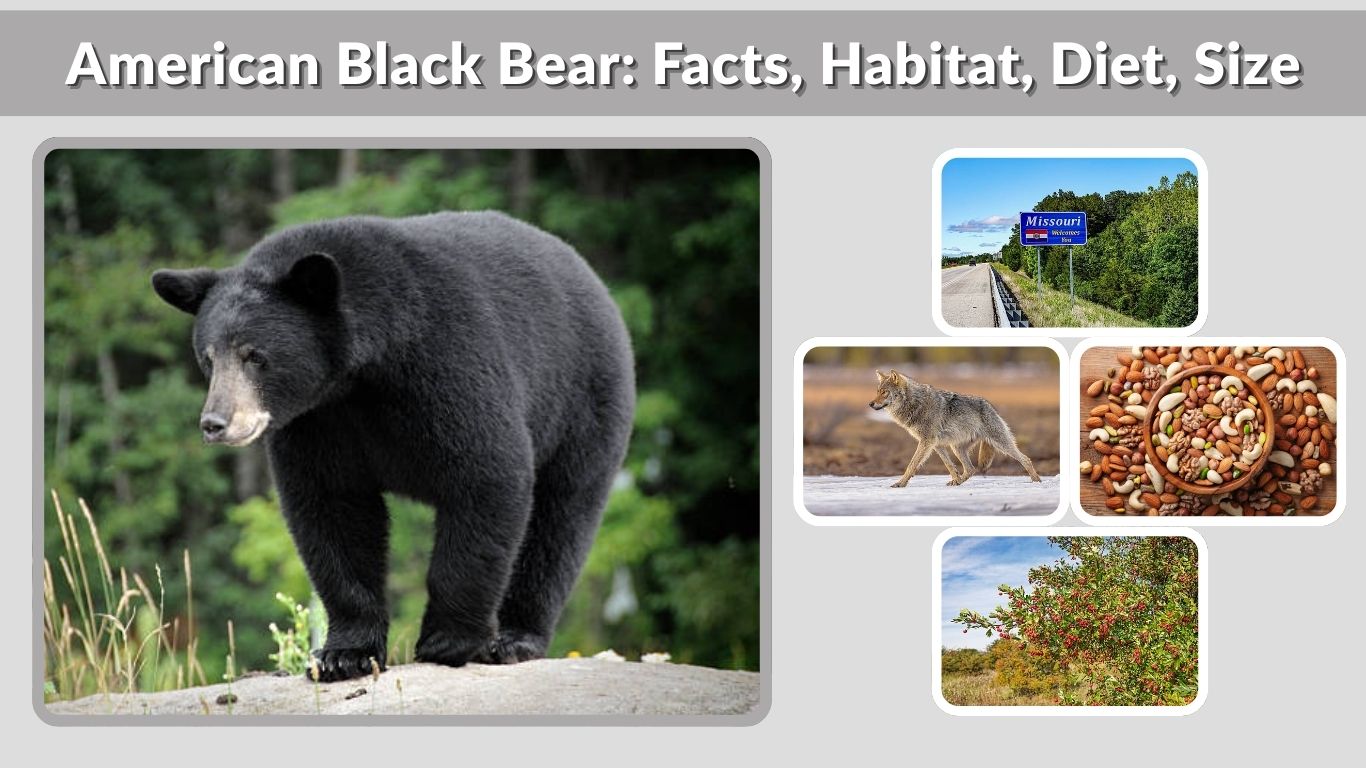
The American black bear is one of North America’s most recognizable wild animals. Known scientifically as Ursus americanus, this adaptable mammal thrives in forests, mountains, and even near suburban areas. Although called “black,” its fur can range from deep black to brown or cinnamon. From impressive size and weight to fascinating behavior and survival adaptations, the American black bear is a powerful yet often misunderstood species that plays a vital role in its ecosystem.
American Black Bear Overview
What Is the American Black Bear?
The American black bear is a medium-to-large mammal native to North America. It is the smallest of the three bear species found on the continent, alongside the grizzly bear and polar bear, yet it remains the most widely distributed. This bear species is highly adaptable and can live in a variety of environments, from dense forests to mountainous regions.
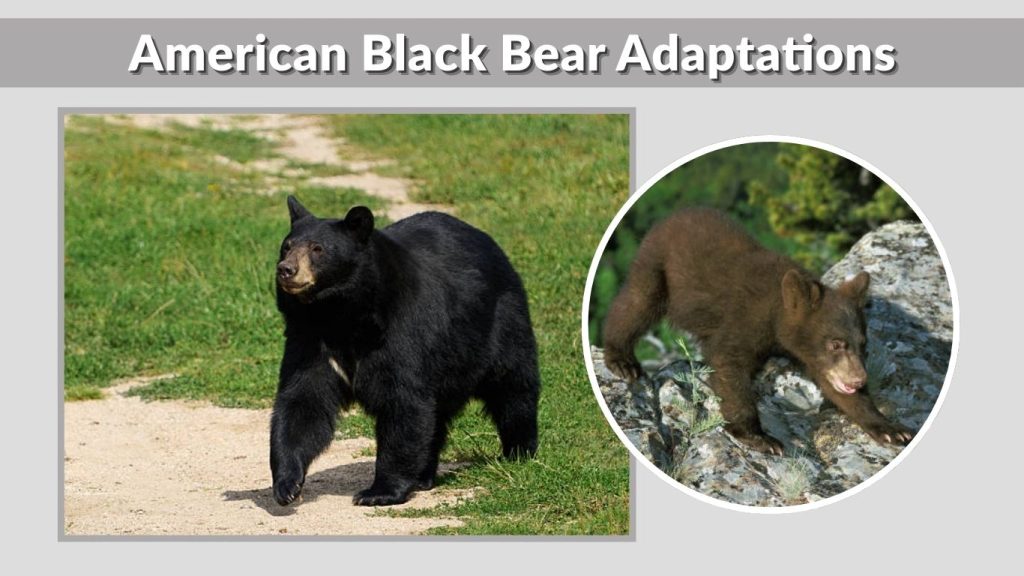
Despite its name, the American black bear is not always black. Some individuals have brown, cinnamon, blonde, or even bluish-gray fur. This color variation depends on genetics and geographic location.
American Black Bear Scientific Name and Classification
The scientific name of the American black bear is Ursus americanus. It belongs to:
- Kingdom: Animalia
- Phylum: Chordata
- Class: Mammalia
- Order: Carnivora
- Family: Ursidae
- Genus: Ursus
- Species: Ursus americanus
There are several recognized subspecies across North America, each adapted to its specific region. Over thousands of years, this species has evolved strong climbing skills, seasonal hibernation habits, and a flexible diet that allows it to survive in diverse habitats.
American Black Bear Size and Physical Characteristics
American Black Bear Size
The American black bear varies significantly in size depending on age, sex, and location. Adult males (boars) are much larger than females (sows). On average, an adult black bear measures about 4 to 6 feet (1.2 to 1.8 meters) long from nose to tail.
When standing on all fours, they are about 2 to 3 feet tall at the shoulder. However, when standing upright on their hind legs, they can reach heights of 5 to 7 feet. Standing up does not mean aggression—it is often done to get a better view or smell of their surroundings.
American Black Bear Weight and Average Weight
American black bear weight also varies widely. Adult males typically weigh between 130 and 660 pounds (60 to 300 kilograms), while females generally weigh between 90 and 300 pounds (40 to 140 kilograms).
The American black bear average weight depends heavily on region and food availability. Bears living in areas with abundant food sources often grow larger than those in harsher environments. Additionally, weight fluctuates seasonally. Before winter hibernation, black bears enter a phase called hyperphagia, during which they eat constantly and can gain significant fat reserves to survive the winter months.
Physical Features and Fur Colors
The American black bear has a strong, muscular body with short, curved claws that are ideal for climbing trees. Unlike grizzly bears, black bears do not have a noticeable shoulder hump. Their ears are relatively large and rounded, and they have a straight facial profile.
Their thick fur provides insulation during cold weather. Although black is the most common color, some populations—especially in western regions—may display brown or cinnamon fur. A rare white variant, known as the “spirit bear” or Kermode bear, is found in parts of British Columbia.
Black bears also possess an exceptional sense of smell, which is far stronger than that of humans and even more sensitive than many dogs. This powerful nose helps them locate food from miles away.
American Black Bear Habitat and Locations
American Black Bear Habitat
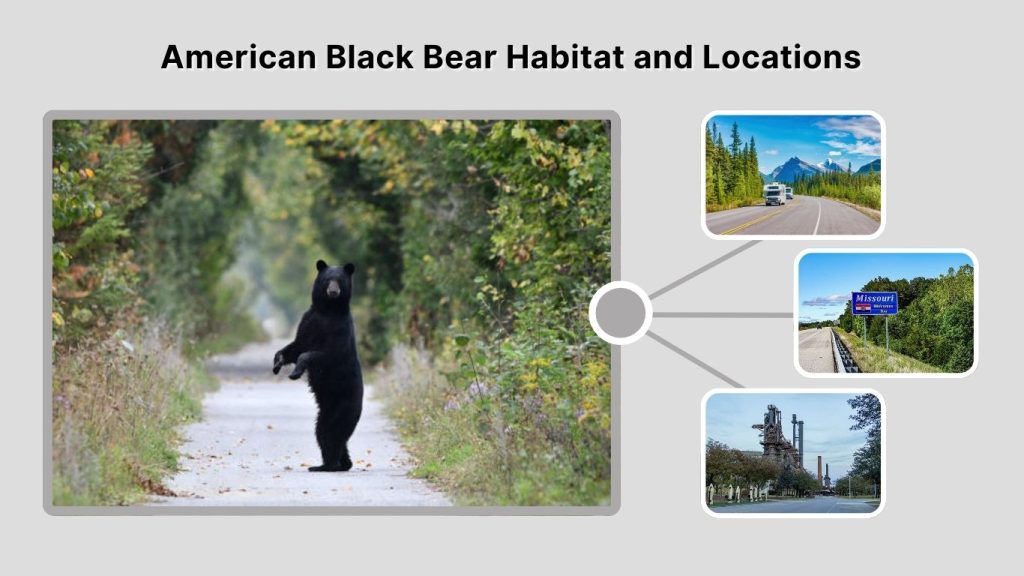
The American black bear habitat is primarily forested areas. These bears prefer deciduous forests, coniferous forests, and mixed woodlands where food sources such as berries, nuts, and insects are abundant.
They also inhabit mountainous regions, swamps, and wetlands. Dense vegetation provides cover and protection, while hollow trees, rock crevices, and dug-out ground dens serve as winter shelters.
Although typically associated with wilderness, black bears have increasingly adapted to areas near human settlements. Suburban expansion into forested land has led to more frequent encounters between bears and people.
American Black Bear Locations in North America
American black bear locations span much of North America. They are found throughout Canada, in most U.S. states, and in parts of northern Mexico.
In the United States, large populations exist in Alaska, California, Colorado, Montana, and the Appalachian region, including states such as North Carolina and Pennsylvania. Canada holds one of the largest overall populations due to its vast forest landscapes.
Their wide distribution is largely due to their adaptability and varied diet, which allows them to survive in different climates and terrains.
How Habitat Influences Behavior
Habitat strongly influences American black bear behavior. In areas with abundant natural food, bears tend to stay within well-defined home ranges. In regions where food is scarce, they may travel long distances to forage.
Seasonal changes also affect movement patterns. During spring and summer, bears actively search for fresh vegetation and insects. In fall, they intensify feeding to prepare for winter hibernation. In areas near human communities, bears may be attracted to garbage, crops, or pet food, which can lead to conflicts.
American Black Bear Diet
What Do American Black Bears Eat?
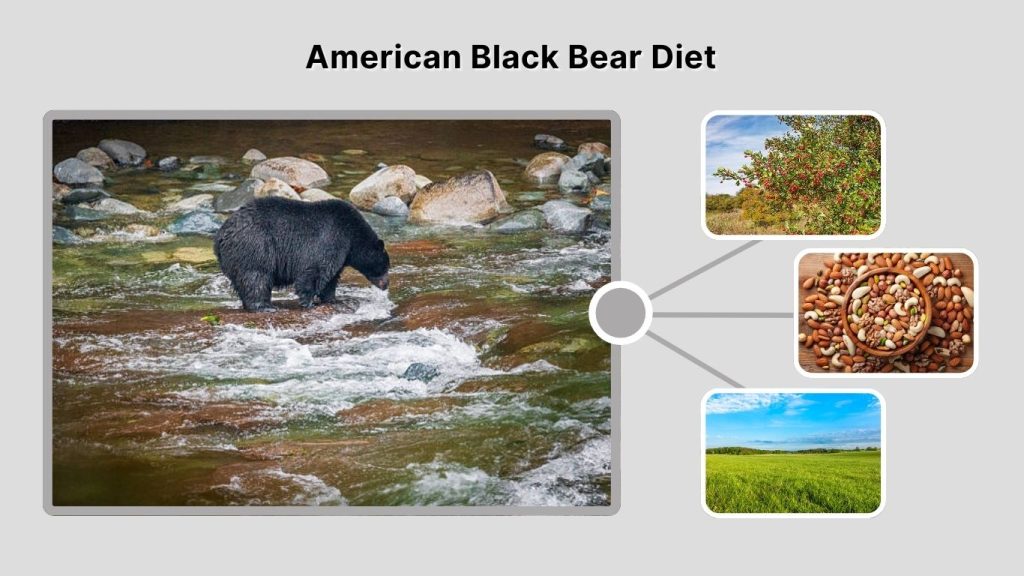
The American black bear diet is omnivorous, meaning they eat both plants and animals. In fact, most of their diet—often around 75 percent or more—consists of plant material.
Common foods include berries, nuts, acorns, grasses, roots, and leaves. They also consume insects such as ants and termites, which provide valuable protein. When available, black bears may eat fish, small mammals, bird eggs, and carrion.
Their strong jaws and teeth allow them to crush nuts and tear apart logs in search of insects. This flexible diet is one of the main reasons the American black bear has survived so successfully across a wide geographic range.
Seasonal Diet Changes
Season plays a major role in shaping the American black bear diet. In spring, they feed on fresh shoots, grasses, and leftover carcasses from winter. During summer, berries become a primary food source. In fall, they focus heavily on calorie-rich foods such as nuts and acorns.
This intense fall feeding period helps them build fat reserves necessary for surviving months of winter dormancy. During hibernation, black bears do not eat, drink, urinate, or defecate, relying entirely on stored body fat.
American Black Bear Behavior
Daily and Seasonal Behavior
American black bear behavior is generally solitary. Unlike some other large mammals, black bears prefer to live and forage alone, except during mating season or when mothers are raising cubs. Each bear maintains a home range that may overlap with others, but direct interactions are usually limited.
These bears are most active during early morning and late evening hours. However, in areas with little human activity, they may also be active during the day. Their behavior shifts significantly with the seasons. In spring and summer, they focus on rebuilding energy after winter. In fall, they enter hyperphagia, eating almost constantly to prepare for hibernation.
During winter, American black bears enter a state of dormancy commonly referred to as hibernation. Their heart rate and metabolism slow dramatically, allowing them to survive for months without food.
Communication and Social Behavior
Although solitary, black bears do communicate in several ways. They use body language, vocal sounds, and scent marking to express intentions or establish territory. Huffing, jaw popping, and swatting the ground are warning signals used when a bear feels threatened.
Cubs communicate with their mothers through soft grunts and cries. Scent marking—such as rubbing against trees or clawing bark—helps bears leave information about their presence, size, and reproductive status.
Interaction with Humans
American black bears are generally shy and avoid human contact. Most encounters occur when bears are attracted to easily accessible food sources such as garbage, bird feeders, or pet food.
Attacks on humans are rare. In most cases, bears will retreat if given space. However, food-conditioned bears may lose their natural fear of people. Wildlife agencies often emphasize proper food storage and waste management in bear habitats to reduce conflicts.
American Black Bear Adaptations
Physical Adaptations
The American black bear has several physical adaptations that help it survive across diverse environments. Its strong, curved claws make it an excellent tree climber. Cubs quickly learn to climb for safety, and even adults may climb to escape danger or reach food.
Their thick fur provides insulation in cold climates, while a dense layer of body fat supports survival during winter dormancy. Black bears also have powerful limbs and flexible paws, allowing them to swim efficiently and travel long distances.
Behavioral Adaptations
One of the most important American black bear adaptations is hibernation. Although not true deep hibernators like some small mammals, black bears significantly reduce activity and metabolic rate during winter. This allows them to survive in regions where food becomes scarce.
They also adapt behaviorally by adjusting their diet to seasonal availability. If berries are scarce one year, they may rely more on insects or other plant material. Their intelligence and strong memory help them remember productive feeding areas year after year.
Survival Skills
A black bear’s sense of smell is among its greatest survival tools. It can detect food from miles away. This keen sense allows them to locate carrion, ripe fruit, or human food sources.
Their diet flexibility, climbing ability, and capacity to store large fat reserves make the American black bear one of the most adaptable large mammals in North America.
American Black Bear Life Cycle
Reproduction and Cubs
The American black bear life cycle begins with mating season in late spring or early summer. Interestingly, black bears experience delayed implantation. This means that although mating occurs earlier in the year, the fertilized egg does not implant in the uterus until fall. If the mother has not gained enough weight, pregnancy may not continue.
Cubs are born during winter hibernation, usually in January or February. A typical litter consists of one to three cubs. At birth, cubs are tiny—often weighing less than one pound—and are blind and helpless.
The mother cares for her cubs inside the den until spring, when they emerge together.
Growth and Development
Cubs stay with their mother for about 16 to 18 months. During this time, they learn essential survival skills, including climbing, foraging, and recognizing danger. The mother is highly protective and teaches her young how to navigate their environment.
After separating from their mother, young bears establish their own home ranges. Males typically disperse farther than females.
Lifespan of the American Black Bear
The average lifespan of an American black bear in the wild is around 20 years, although many do not reach that age due to human-related threats. In captivity, they may live longer, sometimes exceeding 25 years.
Lifespan depends on factors such as habitat quality, food availability, disease, and human impact.
American Black Bear Threats
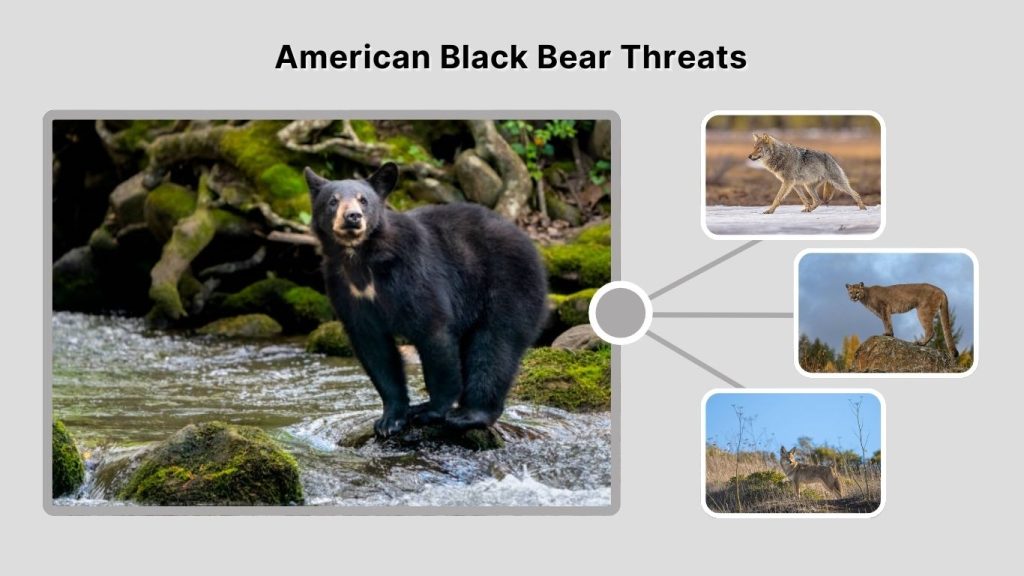
Natural Threats
Adult American black bears have few natural predators. However, cubs may be vulnerable to wolves, coyotes, mountain lions, or even large male bears. Disease and harsh environmental conditions can also impact survival rates.
Human-Related Threats
The greatest threats to American black bears come from human activities. Habitat loss due to urban expansion reduces natural food sources and increases encounters with people. Vehicle collisions are a significant cause of mortality in some regions.
Legal hunting is permitted in many areas and is carefully regulated to maintain stable populations. However, illegal poaching and improper waste management can also create problems for bear populations.
Conservation Status
The American black bear is currently classified as a species of Least Concern in most regions, thanks to stable and even growing populations in parts of North America. Conservation efforts focus on habitat protection, wildlife corridors, and public education to reduce human-bear conflicts.
American Black Bear Facts and Information
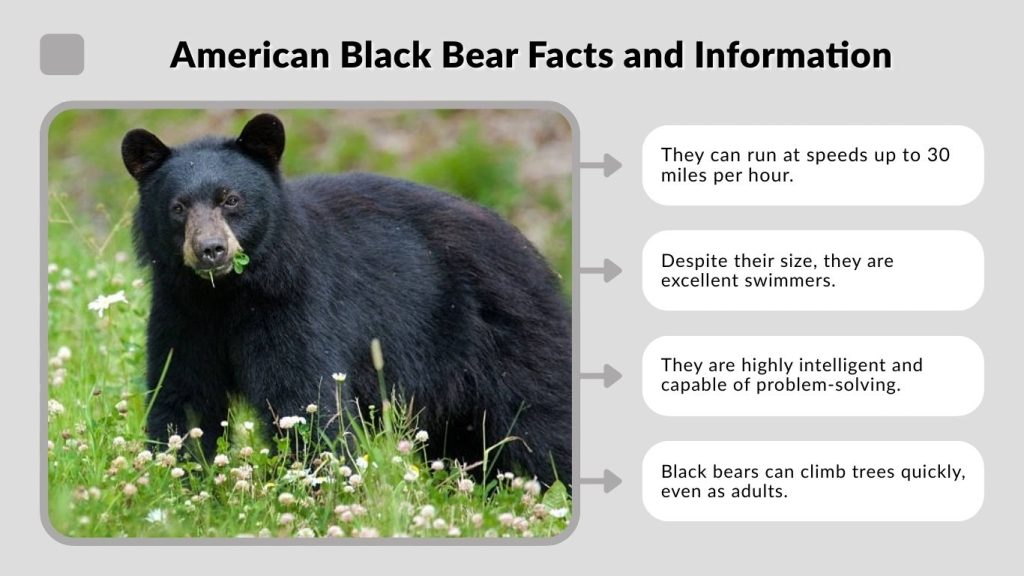
Here are some quick American black bear facts and information:
- They can run at speeds up to 30 miles per hour.
- Despite their size, they are excellent swimmers.
- They are highly intelligent and capable of problem-solving.
- Black bears can climb trees quickly, even as adults.
- Their sense of smell is estimated to be seven times stronger than that of a bloodhound.
These traits make them one of the most versatile large mammals in North America.
American Black Bear Fun Facts
- Not all American black bears are black—some are brown, cinnamon, or even white.
- Cubs can climb trees before they are fully comfortable walking long distances.
- Black bears can remember feeding locations for years.
- They can consume up to 20,000 calories per day during fall hyperphagia.
- They communicate through facial expressions and subtle body movements.
FAQs
How big is an American black bear?
An American black bear typically measures 4 to 6 feet long and stands about 2 to 3 feet tall at the shoulder. When standing upright, it can reach up to 7 feet tall. Males are generally much larger than females.
What is the average weight of an American black bear?
The American black bear average weight ranges from 130 to 660 pounds for males and 90 to 300 pounds for females. Weight varies by region, food availability, and season, especially before winter hibernation.
Where do American black bears live?
American black bears live throughout North America, including Canada, the United States, and parts of Mexico. They prefer forested habitats but can also be found in mountains, swamps, and near suburban areas.
What do American black bears eat?
American black bears are omnivores. Their diet includes berries, nuts, grasses, insects, fish, small mammals, and carrion. Most of their diet is plant-based, and it changes depending on seasonal food availability.
Are American black bears dangerous to humans?
American black bears are generally shy and avoid people. Attacks are rare and usually occur when a bear feels threatened or becomes accustomed to human food. Proper food storage helps prevent conflicts.
How long do American black bears live?
In the wild, American black bears typically live around 20 years. In captivity, they may live longer, sometimes reaching 25 years or more depending on health and care.