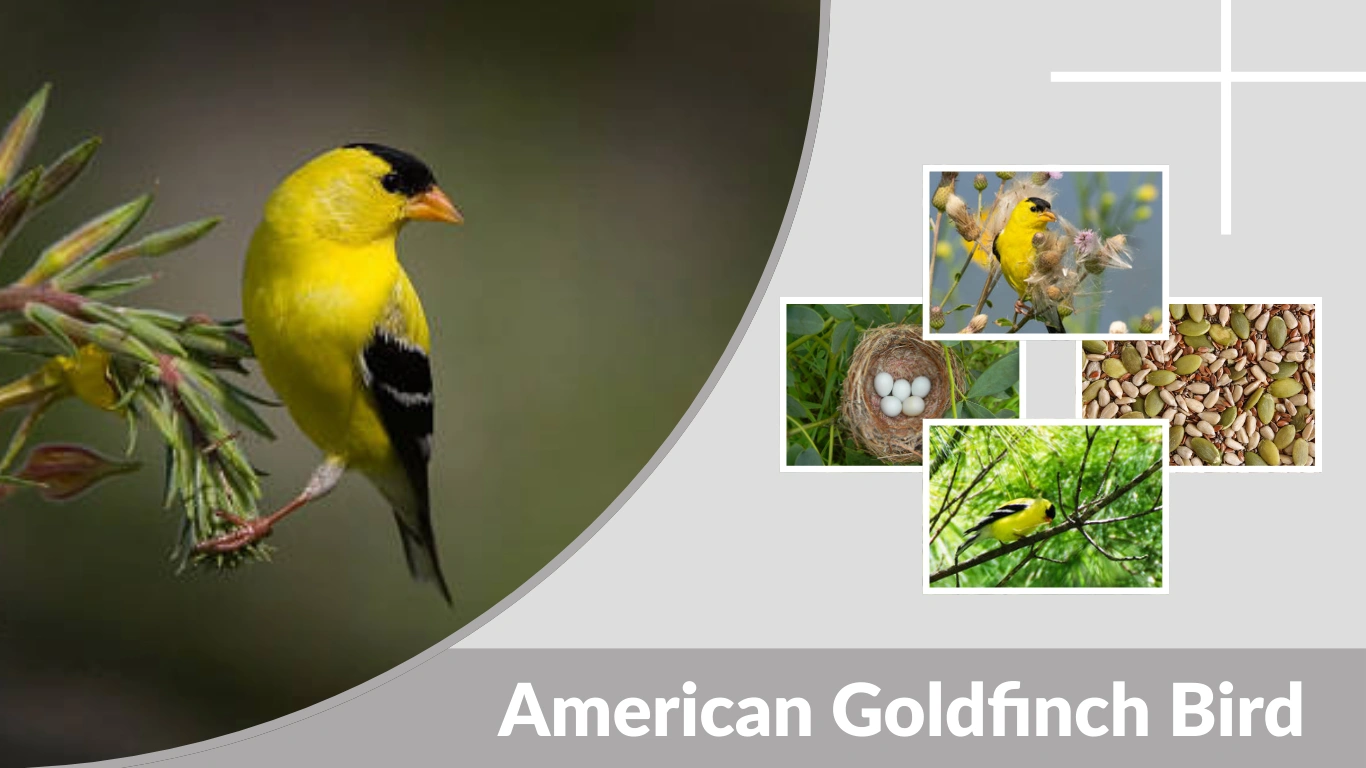
The American Goldfinch (Spinus tristis) is one of the most recognizable and beloved songbirds in North America. Known for its bright yellow breeding plumage, cheerful flight song, and energetic movements, this small finch is a favorite among birdwatchers and backyard bird feeders alike. Unlike many songbirds, it changes color with the seasons and breeds later in the year. This guide explores how to identify the American Goldfinch, where it lives, and what makes it unique.
Overview of the American Goldfinch
The American Goldfinch belongs to the finch family (Fringillidae) and is a small, seed-loving bird widely distributed across North America. It is often seen fluttering through open fields, perching on seed heads, or visiting backyard feeders in active, noisy groups. Its bouncy, undulating flight and musical calls make it easy to recognize even from a distance.
One of the most distinctive traits of the American Goldfinch is its seasonal molt. Unlike most birds that molt once a year, goldfinches molt twice. This gives them a bright yellow appearance in summer and a much duller, brownish tone in winter. This dramatic transformation often surprises new birdwatchers who don’t realize they are seeing the same species.
American Goldfinches are also unique because they are strict vegetarians for most of the year. Their strong, pointed bills are perfectly adapted for extracting seeds, especially from plants like thistles and sunflowers. Their lifestyle is closely tied to seed availability, which influences where they live and even when they choose to breed.
Identification Features
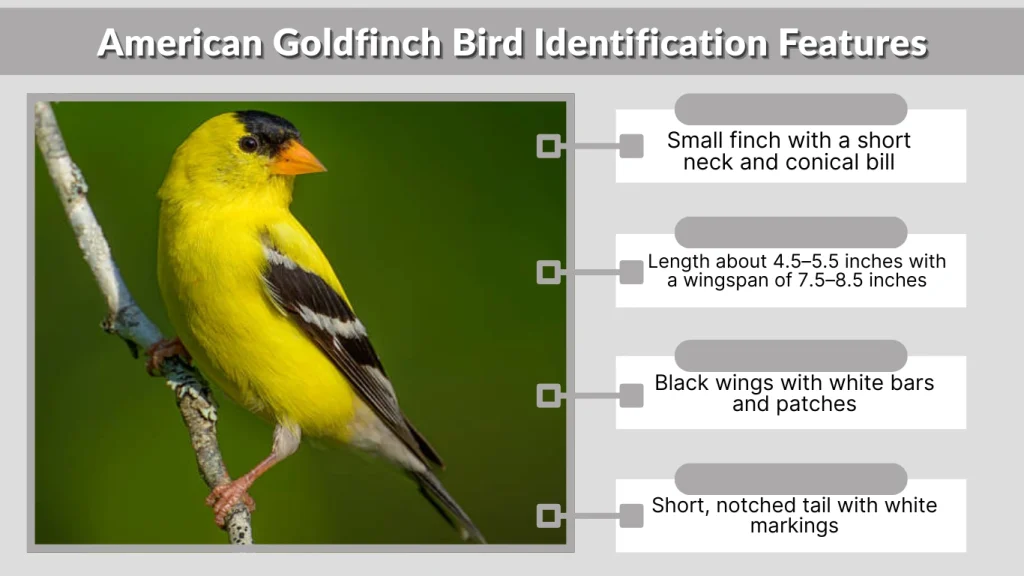
The American Goldfinch is small but striking, especially during the breeding season. Several physical and behavioral traits make identification easier.
- Small finch with a short neck and conical bill
- Length about 4.5–5.5 inches with a wingspan of 7.5–8.5 inches
- Males are bright yellow with a black cap in summer
- Females are duller yellow-olive without a strong black cap
- Black wings with white bars and patches
- Short, notched tail with white markings
- Distinctive up-and-down, bouncing flight pattern
- Flight call often sounds like “per-chick-o-ree”
Physical Appearance and Seasonal Changes
Breeding Season Plumage
During spring and summer, male American Goldfinches transform into brilliant yellow birds with jet-black caps and sharply contrasting black-and-white wings. This bright coloration plays a role in courtship and territorial signaling. Females remain more subdued, showing soft yellow underparts and olive backs, which provide better camouflage while nesting.
Winter Plumage
As summer ends, both males and females molt into a duller winter coat. Bright yellow feathers are replaced with brownish-olive tones, and the black cap on males disappears. This winter plumage helps them blend into dry grasses, bare trees, and snowy landscapes, offering better protection from predators.
Juvenile Appearance
Young goldfinches look similar to winter adults. They are pale brown or grayish-olive with faint wing markings and lack the bold black and yellow of breeding males. Their softer coloration provides camouflage while they learn to forage and fly with adult flocks.
Habitat and Preferred Environment
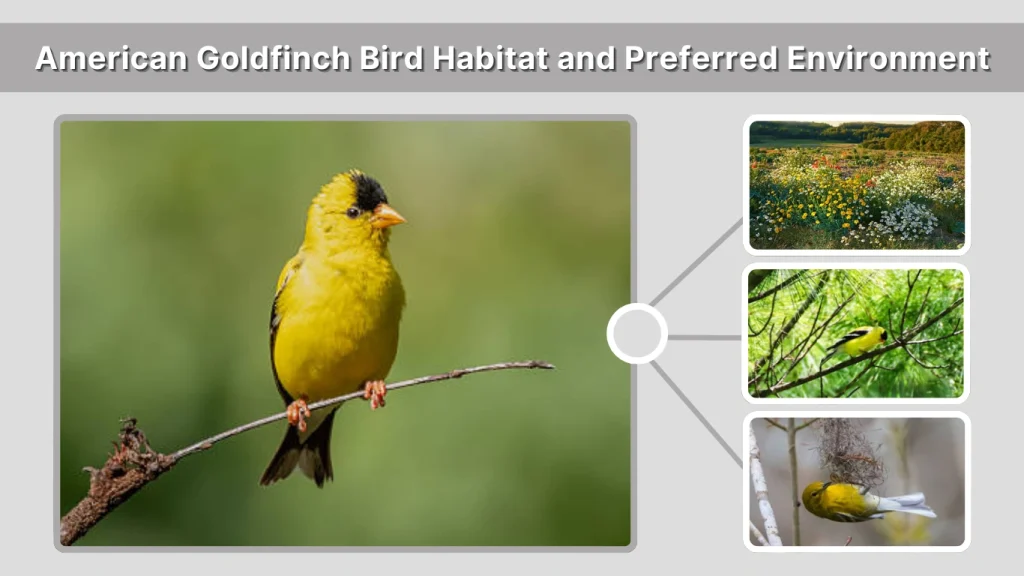
American Goldfinches favor open, sunny environments where seed-producing plants are abundant. They are commonly found in meadows, grasslands, prairies, roadsides, overgrown fields, orchards, and woodland edges. These habitats provide the weedy plants they depend on for food throughout most of the year.
They also adapt well to human-altered landscapes. Suburban gardens, city parks, and farmland edges often support healthy goldfinch populations, especially where native flowers and seed plants are allowed to grow. Bird feeders stocked with nyjer or sunflower seeds can attract them year-round in many regions.
Water sources and scattered shrubs or small trees are important additions to their habitat. These features provide drinking spots, nesting sites, and quick cover from predators. Their flexibility is one reason American Goldfinches remain widespread and common across much of their range.
Geographic Range and Distribution
The American Goldfinch is native exclusively to North America. Its range extends from southern Canada through most of the United States and into parts of northern Mexico. Some populations are year-round residents, while others migrate short distances depending on food availability and winter severity.
Northern goldfinches often move south in winter when snow covers seed sources. Southern populations may shift locally rather than migrating long distances. Because they follow food rather than temperature alone, their movements can vary widely from year to year.
They are most abundant in regions with extensive open habitats, including the Midwest, Great Plains, and eastern United States. Their adaptability also allows them to thrive in suburban and semi-urban environments where suitable vegetation exists.
Diet and Feeding Habits
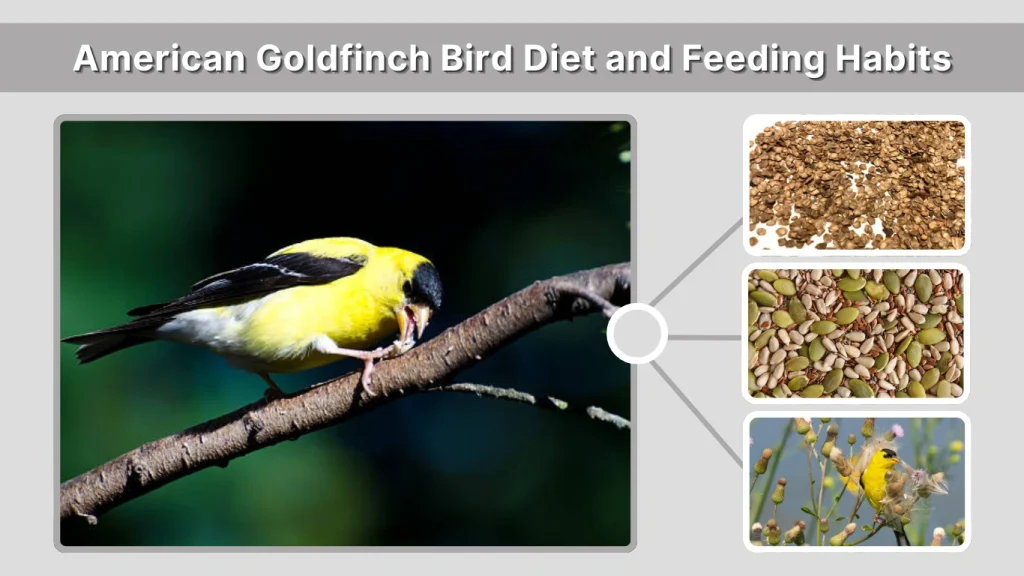
American Goldfinches are primarily seed eaters, and their diet shapes nearly every aspect of their behavior.
- Thistle (nyjer), sunflower, dandelion, and ragweed seeds
- Tree seeds such as alder, birch, and elm
- Buds and plant fibers during scarce seasons
- Small insects and aphids, mainly during breeding
- Regular visitors to tube and mesh feeders
- Change diet slightly by season based on availability
Behavior and Social Life
Daily Activity and Flight Style
American Goldfinches are highly active birds, spending much of the day flying between feeding sites, perching on seed heads, and socializing in loose flocks. Their flight is easy to recognize. They rise and fall in a rolling, wave-like pattern while calling out continuously, which helps keep flock members together. This undulating flight also makes them easier to identify even when their colors are dull in winter.
Goldfinches are most active during daylight hours, especially in the morning and late afternoon. They often move in small groups rather than defending strict territories. Outside the breeding season, large flocks may gather wherever food is plentiful, creating lively scenes at feeders and open fields.
Vocalizations and Communication
The American Goldfinch is a very vocal bird. Its song is a lively series of warbles, trills, and musical phrases that males use mainly during the breeding season. Songs help attract mates and signal presence to other goldfinches.
Their calls are different from songs and are used year-round. The familiar flight call, often interpreted as “per-chick-o-ree,” is given while flying and helps maintain contact between flock members. Softer calls are used when feeding or interacting at close range.
Interaction With Other Birds
Goldfinches are generally peaceful and non-aggressive. They often feed alongside other finches, sparrows, and small songbirds. During winter, mixed flocks are common, and goldfinches rarely show strong territorial behavior unless directly competing for nesting sites in summer.
Breeding Season and Nesting Habits
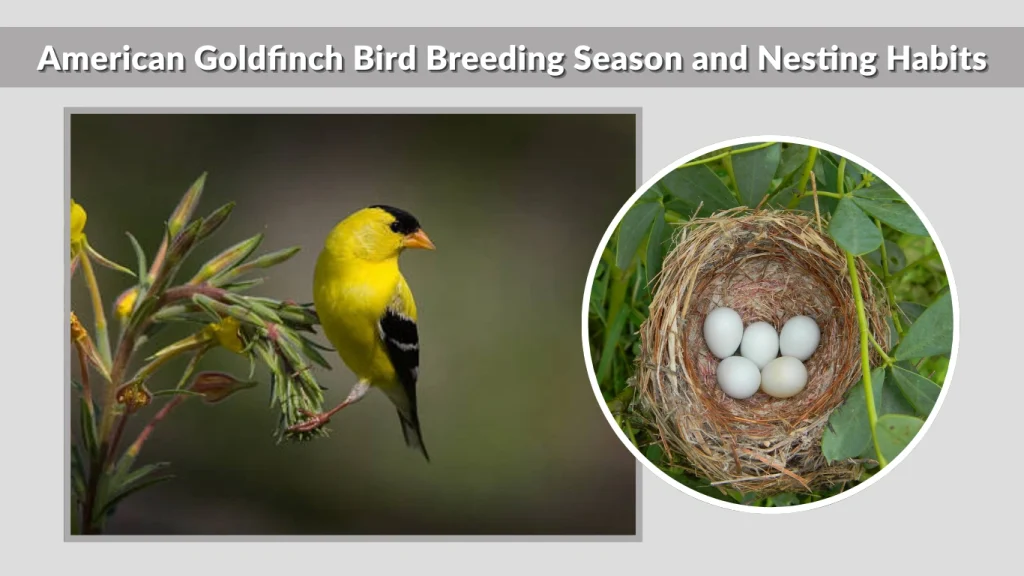
American Goldfinches breed later than most North American songbirds. While many birds nest in spring, goldfinches often wait until mid-summer. This timing matches the peak availability of seeds such as thistle, which they use both to feed their young and to line their nests.
Courtship involves flight displays and song. Males chase females through the air, sing persistently, and offer food as part of pair bonding. Once a pair forms, the female selects a nesting site, usually in shrubs, small trees, or dense vegetation.
The nest is a tightly woven cup made of plant fibers, grasses, spider silk, and thistle down. It is built so firmly that it can hold water. Females typically lay four to six pale blue eggs. Incubation lasts about two weeks and is handled almost entirely by the female, while the male brings food. Both parents feed the chicks regurgitated seeds and insects until they fledge.
Life Cycle and Development
The American Goldfinch passes through several clear life stages from egg to adult.
- Eggs hatch after about 12–14 days of incubation
- Nestlings remain in the nest around 11–17 days
- Fledglings leave the nest but stay near parents
- Juveniles molt into their first winter plumage
- Sexual maturity is usually reached within one year
Young goldfinches form small groups with other juveniles after leaving the nest. As autumn approaches, these groups merge into larger flocks. In the wild, American Goldfinches typically live 3 to 6 years, though some individuals have been recorded living much longer.
Predators and Survival Challenges
American Goldfinches face many natural threats. Predatory birds such as hawks, falcons, and owls hunt adults, while snakes, raccoons, and squirrels may raid nests. Domestic cats also pose a serious danger, especially in suburban areas.
Environmental challenges include severe weather, loss of weedy habitats, pesticide use, and window collisions. Despite these threats, goldfinches remain widespread because of their adaptability, flexible movements, and high reproductive success.
They rely on alert flock behavior, rapid flight, and camouflage plumage to avoid predators. Their habit of nesting later in summer may also reduce competition and some early-season risks.
Role in the Ecosystem
American Goldfinches play an important role in seed control and dispersal. By feeding heavily on thistles, dandelions, and other plants, they influence plant populations and help spread seeds to new locations.
They also serve as prey for many predators, making them a key link in local food webs. Because they depend on healthy open habitats, their presence often reflects good ecological balance in grasslands, meadows, and suburban green spaces.
American Goldfinches in Backyards
How to Attract Them
Goldfinches are among the easiest wild birds to attract. Tube feeders filled with nyjer seed and platform feeders with sunflower chips are especially effective. Fresh water, shallow birdbaths, and nearby shrubs increase their visits.
Best Plants for Goldfinches
Planting native seed-producing flowers such as coneflower, sunflower, cosmos, and thistle creates a natural food supply. Leaving seed heads standing through fall and winter provides both nutrition and perching spots.
Interesting Facts About the American Goldfinch
The American Goldfinch is the state bird of New Jersey, Iowa, and Washington. It is the only finch in North America that molts twice each year. Its late breeding season is closely tied to seed availability. Even in winter, flocks remain active and social, making this species one of the most consistently visible songbirds across much of the continent.
FAQs
What does an American Goldfinch eat?
American Goldfinches mainly eat seeds from plants such as thistle, sunflower, dandelion, and ragweed. During the breeding season, they also consume small insects like aphids to provide extra protein for growing chicks.
Why do American Goldfinches change color?
They change color because they molt twice a year. Bright yellow breeding feathers are replaced with duller winter plumage after summer. This seasonal change improves camouflage in colder months and supports breeding displays in spring.
Are American Goldfinches migratory?
Some populations migrate short distances, while others remain year-round residents. Northern birds often move south in winter when food becomes scarce, but goldfinches mainly follow seed availability rather than strict migration routes.
How long do American Goldfinches live?
In the wild, most American Goldfinches live between three and six years. However, some individuals have been recorded surviving much longer under favorable conditions with good food availability and limited predation.
How can I attract American Goldfinches to my garden?
Use tube feeders filled with nyjer seed, plant native flowers that produce seeds, provide clean water, and avoid heavy pesticide use. Leaving seed heads standing through winter also encourages regular visits.