




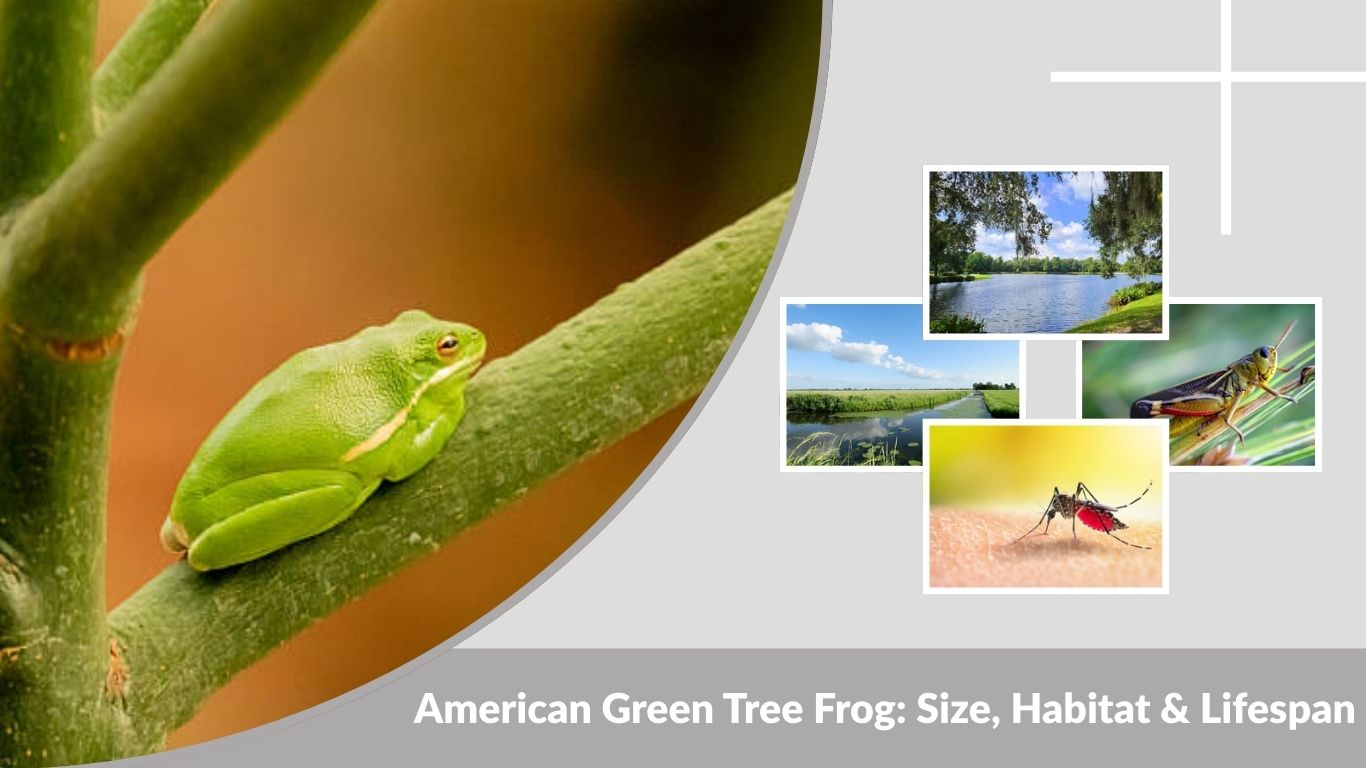
The American green tree frog (Hyla cinerea) is one of the most recognizable amphibians in the southeastern United States. Known for its bright green color and distinctive nighttime call, this small tree frog thrives in warm, humid environments near freshwater. It is also the official state amphibian of Georgia and Louisiana. In this guide, we’ll explore its size, color, habitat, behavior, diet, and lifespan to give you a complete understanding of this fascinating species.
American Green Tree Frog Overview
The American green tree frog belongs to the Hylidae family, a group commonly known as “true tree frogs.” Its scientific name, Hyla cinerea, reflects its smooth texture and subtle coloration. This species is native primarily to the southeastern United States, including Florida, Georgia, Alabama, Mississippi, Louisiana, and parts of Texas and the Carolinas.
It is currently listed as Least Concern in terms of conservation status, meaning populations are generally stable. However, local declines can occur due to wetland destruction and pollution.
Quick Facts:
- Scientific name: Hyla cinerea
- Average size: 1.25–2.25 inches
- Lifespan: 2–6 years (wild), up to 10 years (captivity)
- Habitat: Wetlands, ponds, marshes
- Diet: Insects and small invertebrates
Physical Characteristics
Size
The American green tree frog is relatively small compared to many other frog species. Adults typically measure between 1.25 and 2.25 inches (3–6 cm) in length. Females are usually slightly larger than males, especially during breeding season when they carry eggs.
Despite their small size, these frogs are excellent jumpers thanks to their long, muscular hind legs. They are also lightweight, weighing only a few grams, which makes climbing vegetation easy.
Color
One of the most striking features of this species is its bright green coloration. Most individuals display a vivid leaf-green shade that helps them blend into grasses and shrubs. However, their color can vary slightly depending on temperature, mood, and surroundings. Some may appear olive green, yellow-green, or even slightly brownish.
A distinctive white or cream-colored stripe typically runs along each side of the body, extending from the upper lip down to the groin. This stripe is one of the easiest ways to identify the species. The underside is usually pale white or light cream.
Although they are sometimes believed to “change color” dramatically like chameleons, their color shifts are subtle and mainly related to camouflage and environmental factors.
Body Structure
The American green tree frog has a slender body with smooth skin. Unlike toads, its skin is not bumpy or warty. Its large, round eyes have horizontal pupils, giving it good night vision.
Perhaps its most important physical feature is its adhesive toe pads. These sticky pads allow the frog to climb vertical surfaces such as plant stems, tree bark, and even glass windows. This adaptation makes it highly suited to arboreal (tree-dwelling) life.
Natural Habitat
Geographic Range
The American green tree frog is native to the southeastern United States. It is especially common in Florida and along the Gulf Coast. Its range extends west into eastern Texas and north into parts of the Carolinas. In warmer months, it may occasionally be spotted slightly outside its typical range.
Preferred Environment
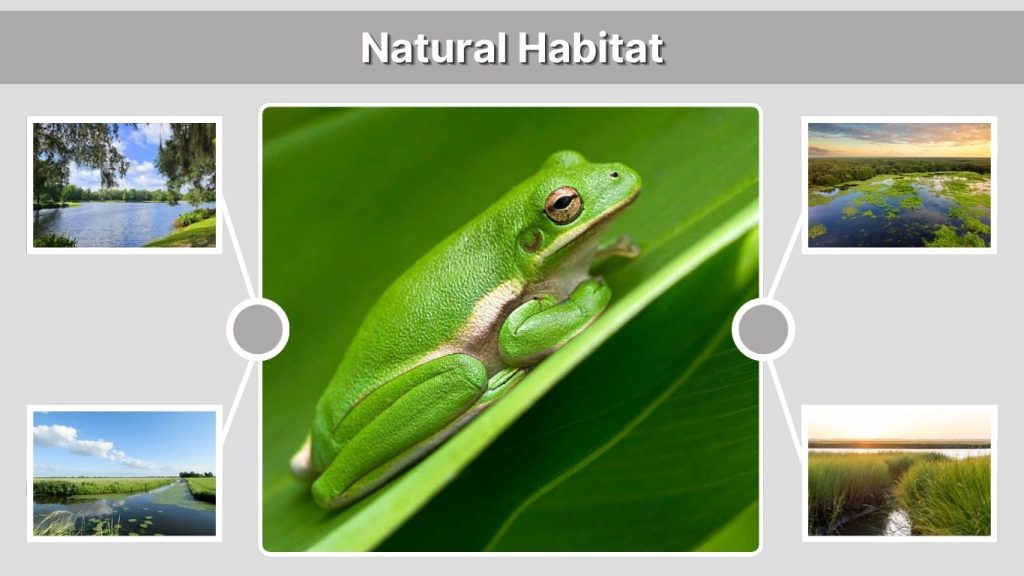
This species thrives in warm, humid environments near freshwater. Common habitats include:
- Swamps
- Marshes
- Lakes and ponds
- Ditches and canals
- Wet meadows
- Backyard garden ponds
They are frequently found resting on reeds, grasses, and low tree branches close to water. Because of their adaptability, they also do well in suburban areas where suitable vegetation and water sources are available.
These frogs are strongly associated with wetlands. Areas with dense vegetation provide shelter from predators and ideal hunting grounds for insects.
Climate Conditions
American green tree frogs prefer warm temperatures and high humidity. They are most active during late spring and summer when conditions are ideal for feeding and breeding.
In cooler months, especially in the northern parts of their range, they may become less active. During cold spells, they seek shelter under bark, logs, or leaf litter to protect themselves.
Behavior and Temperament
Nocturnal Activity
The American green tree frog is primarily nocturnal, meaning it is most active at night. During the day, it typically rests quietly on vegetation, blending into its surroundings.
At night, it becomes more active, climbing plants and searching for food. Porch lights and outdoor lamps often attract insects, which in turn attract these frogs. It’s common to see them clinging to windows or siding near light sources.
Vocalizations
One of the most recognizable traits of this frog is its call. Males produce a nasal, repetitive sound often described as a “quonk” or “queenk.” This call is most common during breeding season and after rainfall.
Males use a vocal sac, which inflates like a balloon under the throat, to amplify the sound. Calling helps attract females and establish territory among other males.
Diet and Feeding Habits
What Do American Green Tree Frogs Eat?
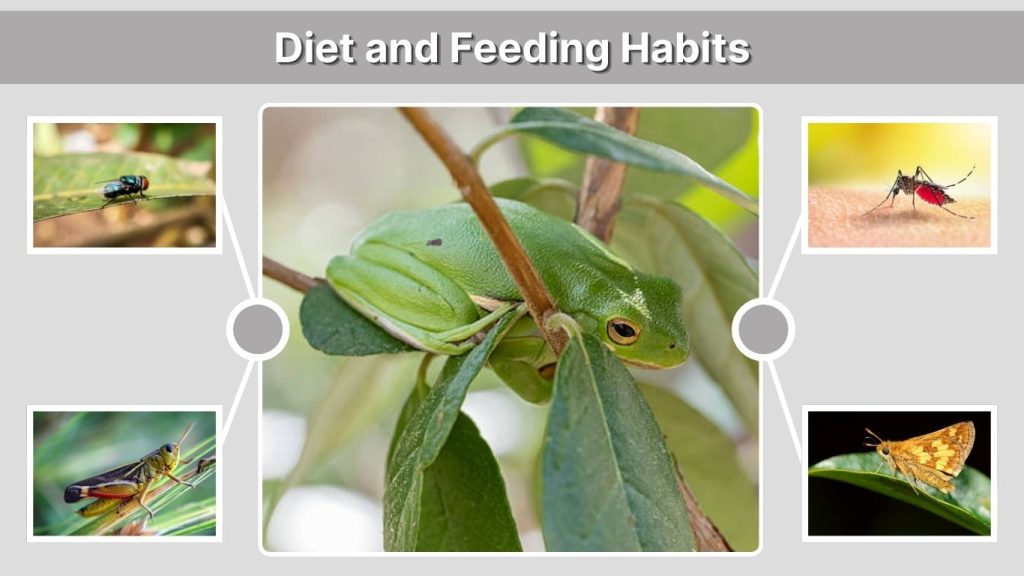
The American green tree frog is an insectivore, meaning it feeds primarily on insects and other small invertebrates. In the wild, its diet commonly includes:
- Crickets
- Flies
- Mosquitoes
- Moths
- Beetles
- Small spiders
Because they live near water and vegetation, they have access to a wide variety of flying and crawling insects. Their feeding habits make them beneficial to humans, as they help control mosquito and pest populations.
Hunting Method
These frogs are “sit-and-wait” predators. Rather than actively chasing prey, they remain still and watch for movement. When an insect comes within range, the frog quickly extends its long, sticky tongue to capture it.
Their excellent night vision and quick reflexes make them highly efficient hunters. Once caught, prey is swallowed whole.
Lifespan
Lifespan in the Wild
In natural environments, the American green tree frog typically lives between 2 and 6 years. Survival depends on factors such as food availability, predation, weather conditions, and habitat quality.
Young frogs and tadpoles face the highest mortality rates. Fish, larger amphibians, birds, and aquatic insects often prey on them before they reach adulthood.
Lifespan in Captivity
With proper care, these frogs can live significantly longer in captivity—often 6 to 10 years. A controlled environment with consistent food, clean water, and protection from predators greatly improves survival rates.
Good husbandry, proper humidity levels, and a nutritious diet are key factors in extending their lifespan.
Reproduction and Life Cycle
Breeding Season
Breeding usually occurs from late spring through summer, especially after heavy rainfall. Warm temperatures and increased humidity trigger reproductive behavior.
During this time, males gather near ponds, marshes, and other freshwater bodies. They call repeatedly to attract females.
Egg Laying
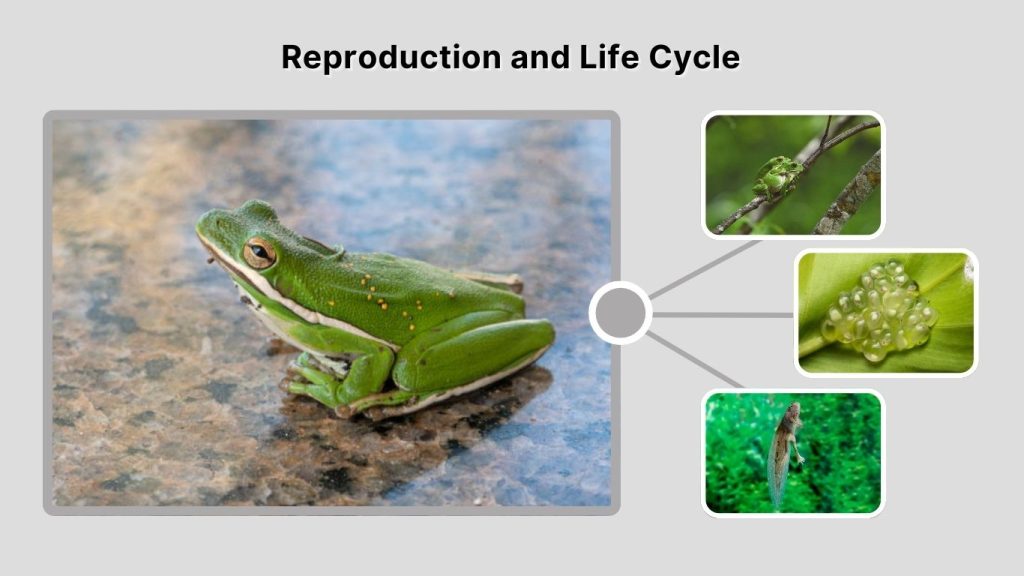
After mating, females lay clusters of eggs in shallow water, often attached to floating vegetation. A single female can lay several hundred eggs in one breeding season.
The eggs typically hatch within a few days, depending on water temperature.
Tadpole Stage
Once hatched, the young enter the tadpole stage, which is fully aquatic. Tadpoles feed primarily on algae and organic matter in the water.
This stage usually lasts 4 to 6 weeks, though it may vary based on environmental conditions. During this time, they gradually develop legs and lungs.
Metamorphosis
As metamorphosis occurs, the tadpole transforms into a small froglet. Its tail shrinks and is absorbed into the body, and lungs replace gills for breathing air.
After leaving the water, the young frog begins life on land and in vegetation near water sources.
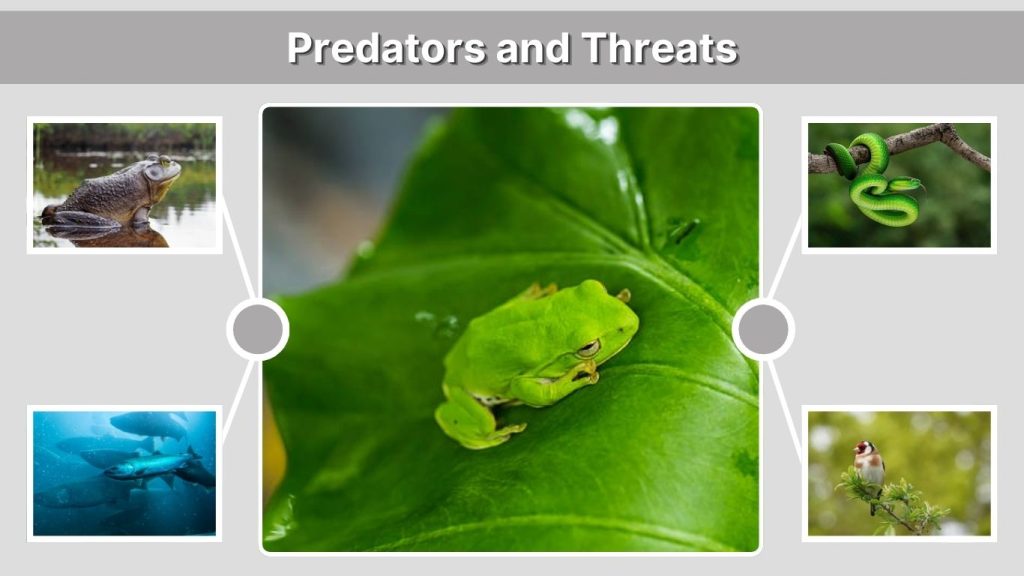
Predators and Threats
Natural Predators
American green tree frogs are preyed upon by a variety of animals, including:
- Snakes
- Birds
- Larger frogs
- Fish (especially tadpoles)
- Small mammals
Their green coloration helps them blend into plants, reducing visibility to predators.
Environmental Threats
Although currently listed as Least Concern, they still face challenges such as:
- Wetland destruction
- Water pollution
- Pesticide exposure
- Climate change
Loss of wetland habitats is one of the biggest long-term threats to their populations.
American Green Tree Frog as a Pet
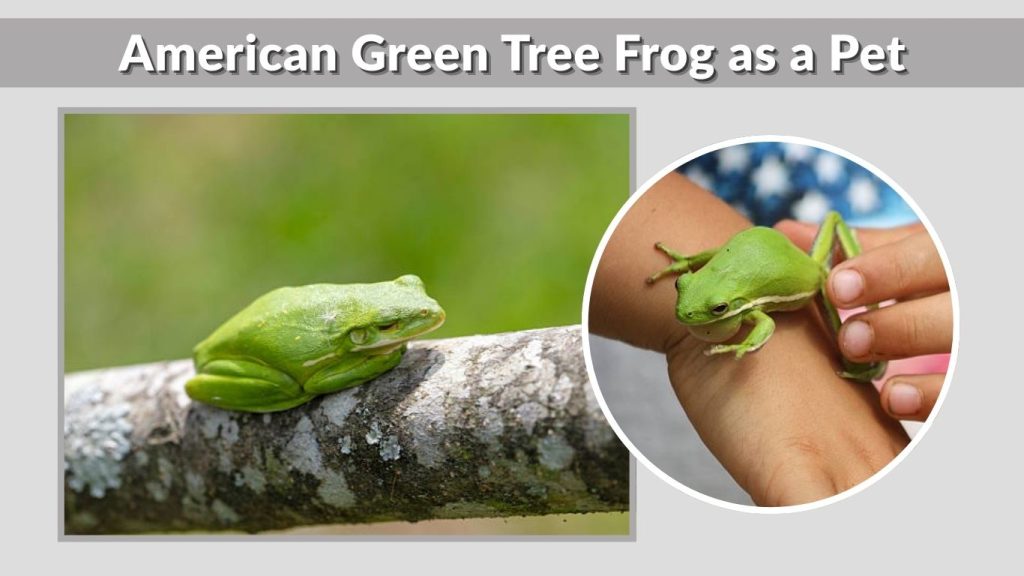
Is It a Good Pet?
The American green tree frog is considered a good beginner amphibian pet. It is relatively low maintenance, small in size, and generally hardy when properly cared for.
However, they are better suited for observation rather than frequent handling.
Tank Setup
A vertical terrarium of 10–20 gallons is typically sufficient for one or two frogs. Key enclosure elements include:
- Climbing branches
- Live or artificial plants
- A shallow water dish
- Proper ventilation
Temperature should remain between 70–85°F, with humidity levels around 50–70%.
Feeding in Captivity
In captivity, their diet usually consists of:
- Gut-loaded crickets
- Small mealworms (occasionally)
- Other small feeder insects
Calcium and vitamin supplements should be dusted onto feeder insects to prevent nutritional deficiencies.
Handling Considerations
Handling should be minimal. Their skin is delicate and can absorb oils or chemicals from human hands. If handling is necessary, hands should be clean and free of lotions or soaps.
Interesting Facts
- The American green tree frog is the state amphibian of Georgia and Louisiana.
- It is often seen clinging to windows near outdoor lights at night.
- Its sticky toe pads allow it to climb smooth surfaces, including glass.
- Despite common fears, it is non-toxic and harmless to humans.
- Its call is one of the classic nighttime sounds of southern wetlands.
FAQs
How big do American green tree frogs get?
American green tree frogs typically grow between 1.25 and 2.25 inches long. Females are usually slightly larger than males, especially during breeding season. Despite their small size, they have long hind legs and strong toe pads that make them excellent climbers and jumpers.
Are American green tree frogs poisonous?
No, American green tree frogs are not poisonous or toxic to humans. They do not produce harmful skin toxins like some tropical frog species. However, it’s still important to wash your hands before and after handling them to protect both you and the frog.
How long do American green tree frogs live?
In the wild, they usually live between 2 and 6 years, depending on environmental conditions and predation. In captivity, with proper care, diet, and enclosure setup, they can live up to 10 years.
What do American green tree frogs eat?
They primarily eat insects such as crickets, flies, mosquitoes, moths, and small spiders. In captivity, they are usually fed gut-loaded crickets and occasionally mealworms, along with calcium and vitamin supplements to maintain good health.
Can American green tree frogs change color?
Yes, they can slightly adjust their shade of green depending on temperature, lighting, and stress levels. While they do not dramatically change colors like chameleons, they may shift between bright green, olive, or brownish tones for camouflage.