





Turtles and tortoises have walked the Earth for more than 200 million years—long before the age of dinosaurs ended. But despite their ancient resilience, many turtle species today face a harsh reality: extinction. Due to human activities, habitat destruction, pollution, and illegal wildlife trade, over half of all turtle and tortoise species are now threatened or endangered.
In this article, we’ll explore whether turtles are endangered species, which ones are most at risk, why they are becoming extinct, and what we can do to help save them.
Are Turtles Endangered Species?
Yes, many turtle species are endangered. According to the IUCN Red List, over 60% of all known turtle and tortoise species are classified as endangered, vulnerable, or critically endangered. This includes both land-dwelling tortoises and aquatic turtles (freshwater and marine).
While some species have stable populations, others are on the verge of extinction. Habitat loss, poaching, and climate change are the main contributors to their decline.
Are Sea Turtles Endangered?

Sea turtles are among the most iconic and widely studied marine reptiles—and unfortunately, nearly all of them are under threat. Of the seven recognized species of sea turtles, six are listed as vulnerable, endangered, or critically endangered.
The biggest threats to sea turtles include:
- Bycatch in fishing gear (such as trawling nets and longlines)
- Plastic pollution, often mistaken for jellyfish
- Coastal development, which destroys nesting beaches
- Climate change, which skews hatchling sex ratios and alters migration routes
- Illegal poaching for meat, eggs, and shells
These threats affect their ability to reproduce and survive, especially in regions without conservation laws or enforcement.
Why Are Green Sea Turtles Endangered?
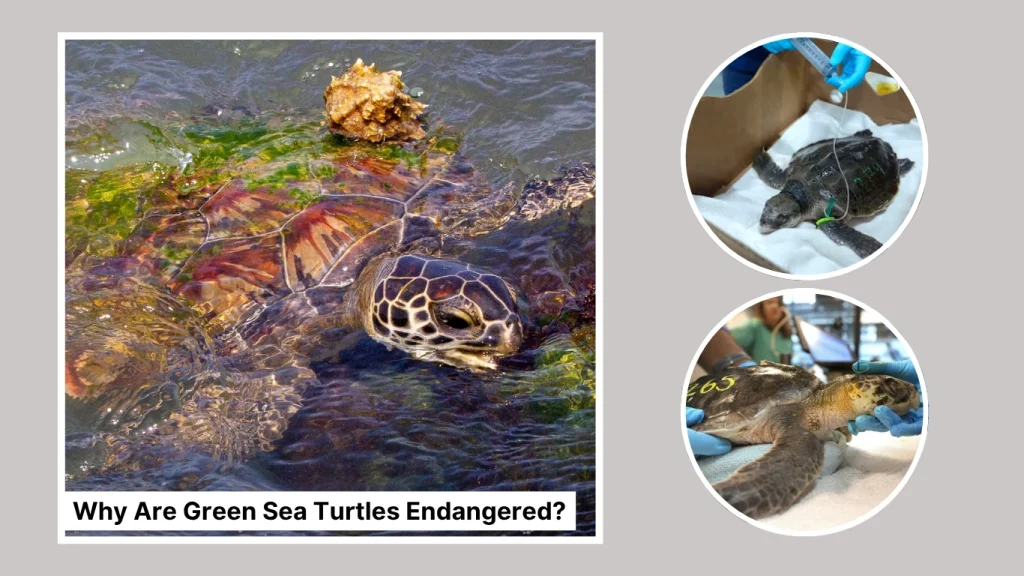
Green sea turtles, once abundant worldwide, are now considered endangered. They are hunted illegally for their meat, skin, and decorative shells. Their eggs are also collected from nesting beaches for consumption in some cultures.
In addition, green turtles are prone to fibropapillomatosis, a disease that causes tumors and can affect their eyes, lungs, and flippers. Urban development near nesting sites has also made their hatchlings more vulnerable to light pollution and predators.
Are All Species of Sea Turtles Endangered?
Here’s a quick look at the seven species of sea turtles and their current conservation status:
| Species | IUCN Status |
| Green Turtle | Endangered |
| Loggerhead Turtle | Vulnerable |
| Leatherback Turtle | Vulnerable |
| Hawksbill Turtle | Critically Endangered |
| Kemp’s Ridley Turtle | Critically Endangered |
| Olive Ridley Turtle | Vulnerable |
| Flatback Turtle | Data Deficient |
Note: The Flatback turtle, native to Australia, has limited distribution and insufficient data for a global assessment.
Are Tortoises Endangered Too?
Yes, many tortoise species are endangered, with some among the most at-risk reptiles on the planet. Unlike sea turtles, tortoises live on land and are often targeted for the exotic pet trade or bushmeat.
One example is the Ploughshare tortoise of Madagascar, which is critically endangered with fewer than 200 individuals remaining in the wild. Similarly, the Burmese Star tortoise and Egyptian tortoise are also critically endangered due to illegal collection and habitat destruction.
Why Are Turtles Becoming Extinct?
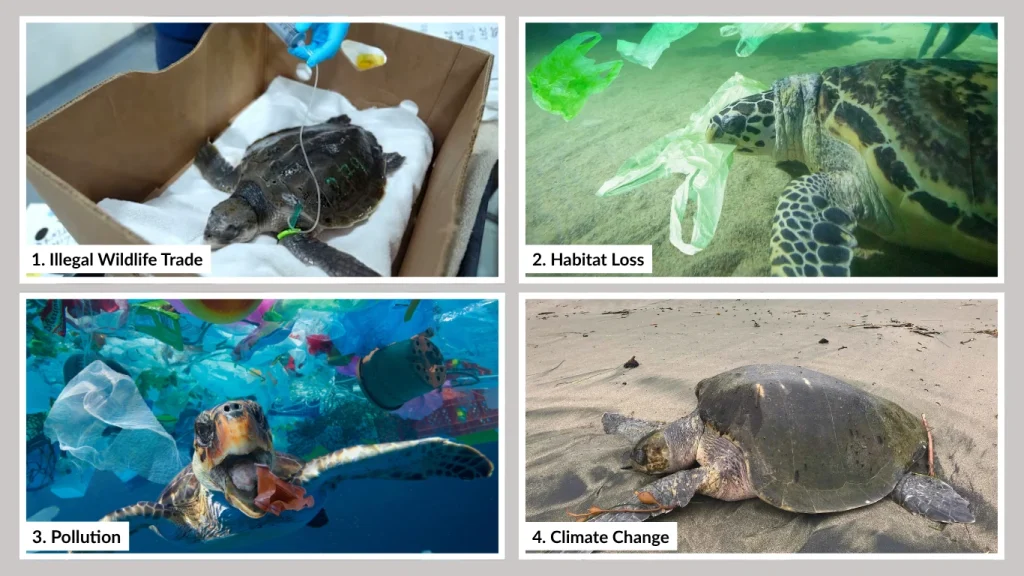
There are several reasons why turtles and tortoises are disappearing:
1. Illegal Wildlife Trade
Turtles are collected for pets, souvenirs, traditional medicine, and food. Despite international protections like CITES, black market demand remains strong.
2. Habitat Loss
Wetlands, rivers, forests, and beaches are being cleared for agriculture, cities, and tourism. Many turtle species rely on these habitats to nest, feed, and survive.
3. Pollution
Plastic, chemicals, and oil spills poison their food sources or directly harm turtles that ingest or get entangled in waste.
4. Climate Change
Sea turtles have temperature-dependent sex determination: warmer sand produces more females. Rising temperatures are skewing sex ratios, threatening long-term survival.
5. Predators and Invasive Species
Dogs, pigs, rats, and other introduced predators eat turtle eggs and hatchlings, especially on islands and beaches with no natural defenses.
List of Critically Endangered Turtles and Tortoises
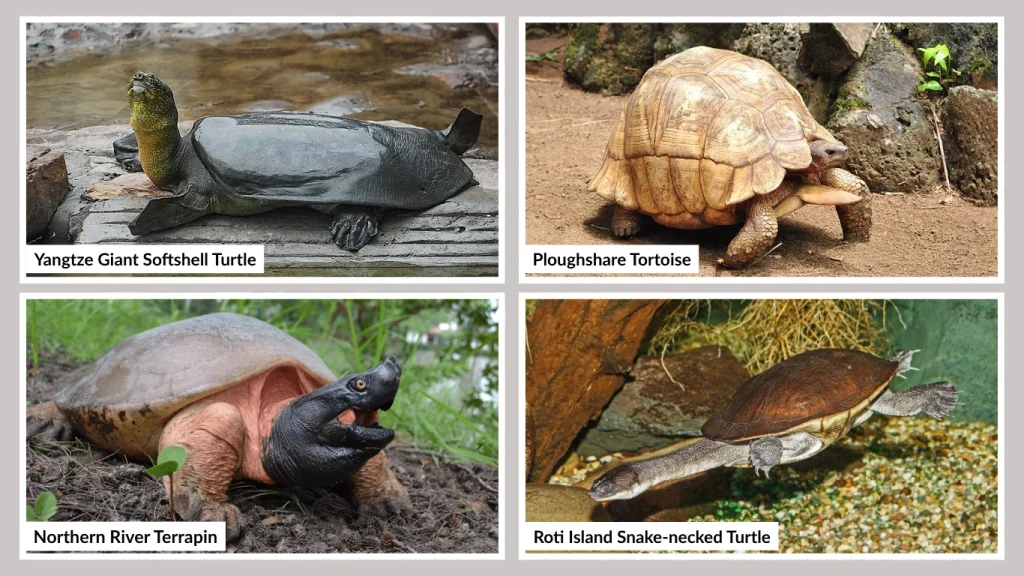
Here are some of the most endangered turtle species:
- Yangtze Giant Softshell Turtle – Fewer than 5 known individuals left globally
- Ploughshare Tortoise (Astrochelys yniphora) – Native to Madagascar, hunted for its golden shell
- Northern River Terrapin – One of the rarest freshwater turtles in South and Southeast Asia
- Roti Island Snake-necked Turtle – Critically endangered due to illegal pet trade
- Burmese Roofed Turtle – Re-discovered after being thought extinct, now protected in Myanmar
These species are just a few examples of the broader crisis facing turtles and tortoises around the world.
How Many Turtles Are Endangered?
Out of the approximately 360 known species of turtles and tortoises, more than 200 are threatened with extinction according to the IUCN and the Turtle Taxonomy Working Group. That’s nearly 60% of all known species, making turtles one of the most endangered groups of vertebrates on Earth.
Sea Turtles in Danger: Real-World Examples
- In India, mass nesting beaches are being lost to tourism and construction.
- In Costa Rica, poachers harvest turtle eggs despite legal protections.
- In the Pacific Ocean, floating plastic bags are often eaten by leatherback turtles, mistaking them for jellyfish.
- In the Gulf of Mexico, oil spills have directly affected nesting and feeding habitats.
These examples show how local and global factors combine to put sea turtles at risk.
Facts About Endangered Sea Turtles
- A single sea turtle may travel over 10,000 miles a year between feeding and nesting sites.
- Only 1 in 1,000 sea turtle hatchlings survive to adulthood.
- Sea turtles can hold their breath for hours when resting underwater.
- The leatherback turtle is the largest sea turtle and can dive deeper than 1,200 meters.
- Sea turtles return to the same beach where they were born to lay eggs.
Conservation Efforts to Protect Turtles
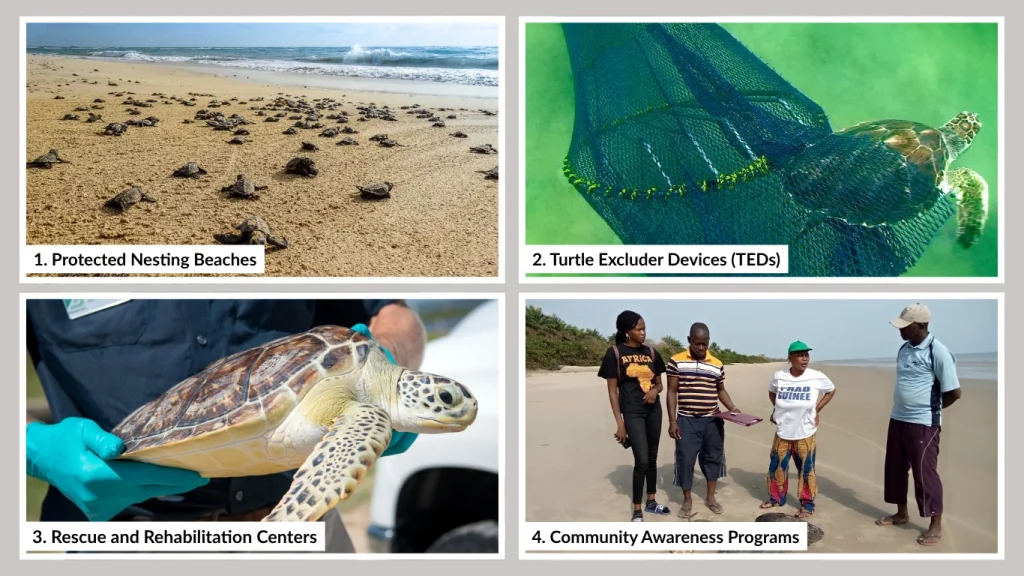
There are many international and local efforts working to save turtles:
1. Protected Nesting Beaches
Organizations work with local communities to protect turtle nests and relocate them if threatened by predators or erosion.
2. Turtle Excluder Devices (TEDs)
Fishing nets equipped with TEDs allow turtles to escape, reducing accidental deaths in the fishing industry.
3. Rescue and Rehabilitation Centers
Injured turtles are rescued, treated, and released back into the wild.
4. Community Awareness Programs
Educating local people about the ecological role of turtles reduces poaching and egg collection.
5. Global Treaties and Laws
Sea turtles are protected under CITES, the Convention on Migratory Species, and various national laws worldwide.
FAQs
1. Why are turtles endangered today more than ever?
Because human activities like pollution, poaching, habitat loss, and climate change have intensified, reducing their numbers drastically in recent decades.
2. What’s the most endangered turtle in the world?
The Yangtze Giant Softshell Turtle is considered the most endangered, with fewer than five known individuals alive.
3. Are sea turtles protected by law?
Yes, all sea turtles are protected under international treaties like CITES and national laws in many countries. However, enforcement remains a challenge in some areas.
4. How can I help save endangered turtles?
Avoid buying turtle products, reduce plastic use, support conservation organizations, and spread awareness about turtle protection.
5. What organizations work to protect turtles globally?
Groups like Sea Turtle Conservancy, WWF, IUCN SSC Tortoise and Freshwater Turtle Specialist Group, and Turtle Survival Alliance are leading the charge in turtle conservation.
Conclusion
Turtles and tortoises have survived mass extinctions, ice ages, and millions of years of environmental change—but they now face their greatest threat: us. With over half of the world’s turtle species on the brink of extinction, it’s time to take action.
By understanding their plight, supporting conservation, and reducing our ecological impact, we can ensure that these ancient reptiles continue gliding through our oceans and walking across our lands for generations to come.