

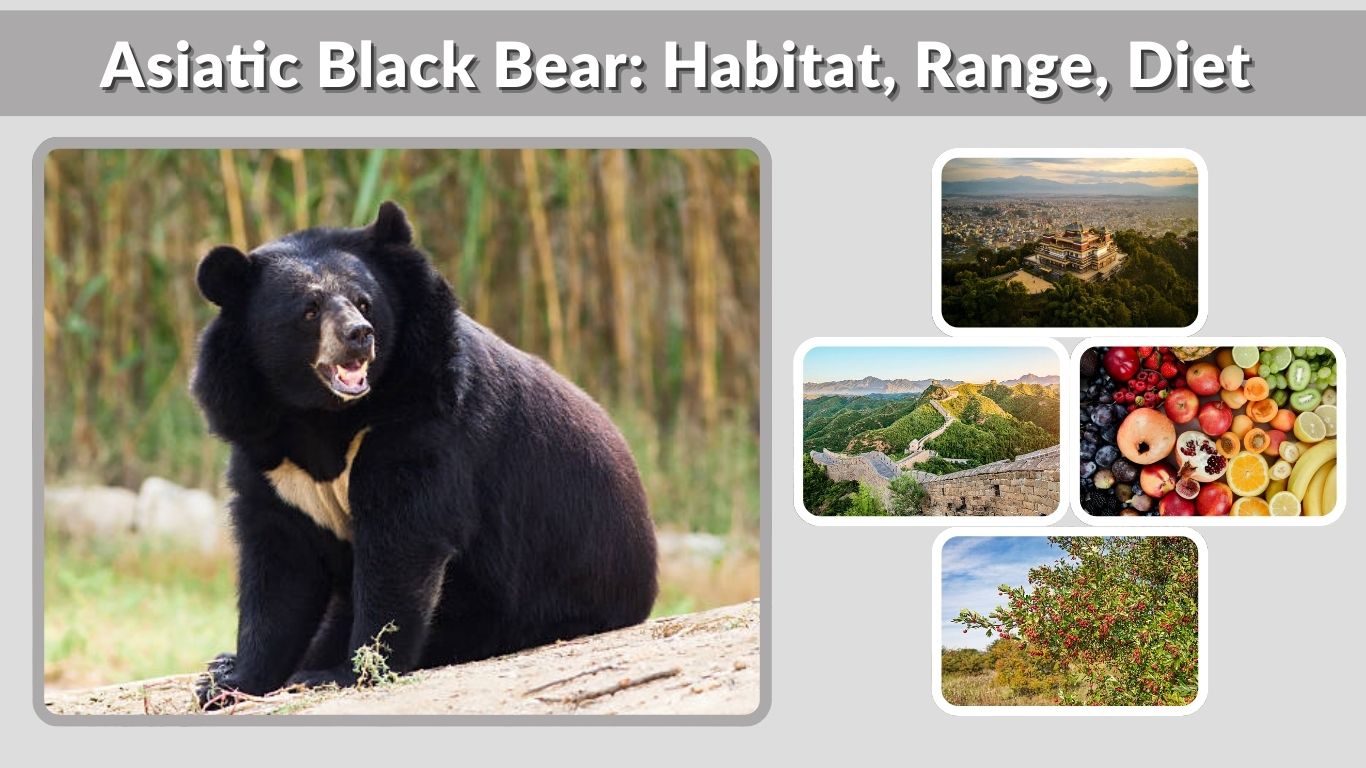
The Asiatic black bear (Ursus thibetanus), also known as the Asian black bear or “moon bear,” is a medium-sized bear species native to Asia. Recognized by the distinctive white crescent-shaped marking on its chest, this bear inhabits forests and mountain regions across eastern and southern Asia. Although it shares similarities with the American black bear, the Asiatic black bear has unique behaviors, habitat preferences, and conservation challenges. From its size and diet to its geographic range—including Japan—this fascinating species plays an important ecological role.
What Is the Asiatic Black Bear?
Scientific Name and Classification
The scientific name of the Asiatic black bear is Ursus thibetanus. It belongs to the family Ursidae, which includes other bear species such as the brown bear, polar bear, and American black bear. Despite its similar name, the Asiatic black bear is a distinct species with its own evolutionary history and regional adaptations.
There are several recognized subspecies, including the Japanese black bear (Ursus thibetanus japonicus), which lives in Japan. Over thousands of years, Asiatic black bears have adapted to diverse climates ranging from temperate forests to subtropical regions.
Why It’s Called the “Moon Bear”
The Asiatic black bear is often called the “moon bear” because of the pale crescent-shaped marking on its chest. This white or cream-colored patch contrasts sharply with its dark fur and is one of its most recognizable features.
In many parts of Asia, the moon bear has cultural significance and appears in folklore and traditional stories. Its unique chest marking makes it easy to distinguish from other bear species within its range.
Asiatic Black Bear Size and Physical Characteristics
Asiatic Black Bear Size
The Asiatic black bear is considered medium-sized compared to other bear species. Adults typically measure between 4 and 6 feet (1.2 to 1.8 meters) in length. When standing on all fours, they are about 2 to 3 feet tall at the shoulder.
Like many bear species, males are significantly larger than females. When standing upright on their hind legs, they can appear much taller—sometimes reaching 6 to 7 feet in height. This upright stance is usually a sign of curiosity or alertness rather than aggression.
Asiatic Black Bear Weight
Asiatic black bear weight varies depending on age, sex, and region. Adult males generally weigh between 220 and 440 pounds (100 to 200 kilograms), while females are smaller, typically weighing between 110 and 275 pounds (50 to 125 kilograms).
In colder regions, bears may grow larger due to the need for greater fat reserves to survive winter dormancy. Seasonal changes also affect weight, especially in autumn when bears increase food intake before winter.
Distinctive Physical Features
The Asiatic black bear has thick, shaggy black fur that provides insulation in mountainous and colder habitats. Its large, rounded ears are more prominent than those of many other bear species, giving it a somewhat distinctive appearance.
Strong, curved claws make this bear an excellent climber. Unlike some larger bear species that spend most of their time on the ground, Asiatic black bears frequently climb trees to forage for food or escape danger. Their powerful limbs and flexible paws allow them to move confidently both on the ground and in trees.
Like other bears, they possess an exceptional sense of smell, which helps them locate food across vast forested landscapes.
Asiatic Black Bear Habitat
Preferred Habitat Types
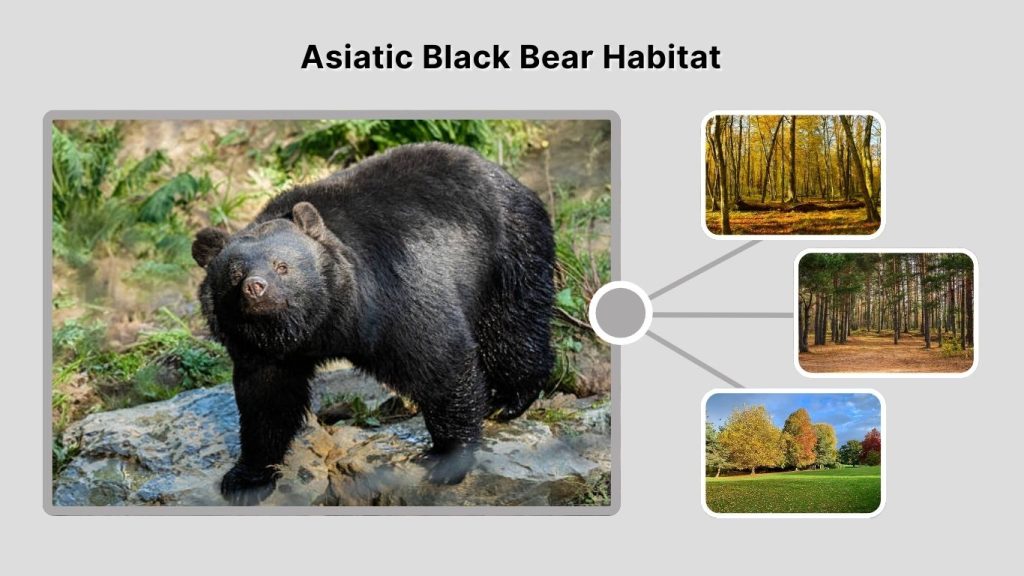
The Asiatic black bear primarily inhabits forested regions. It is commonly found in temperate broadleaf forests, coniferous forests, and mixed woodlands. In some parts of its range, it also occupies subtropical forests and mountainous areas at elevations of up to 13,000 feet (4,000 meters).
Dense vegetation provides both food and shelter. Forest environments offer access to fruits, nuts, insects, and small animals, all of which form part of the bear’s diet.
In mountainous regions, the Asiatic black bear often migrates seasonally between elevations, moving to lower altitudes during colder months and higher elevations in warmer seasons.
Denning Behavior
In colder climates, Asiatic black bears prepare dens for winter. These dens may be located in hollow trees, rock crevices, caves, or ground cavities lined with leaves and vegetation. In northern parts of their range, they undergo winter dormancy similar to hibernation.
However, in warmer regions where food remains available year-round, some Asiatic black bears may not hibernate at all. This flexibility allows them to adapt to various environmental conditions across Asia.
Asiatic Black Bear Range
Geographic Range Across Asia
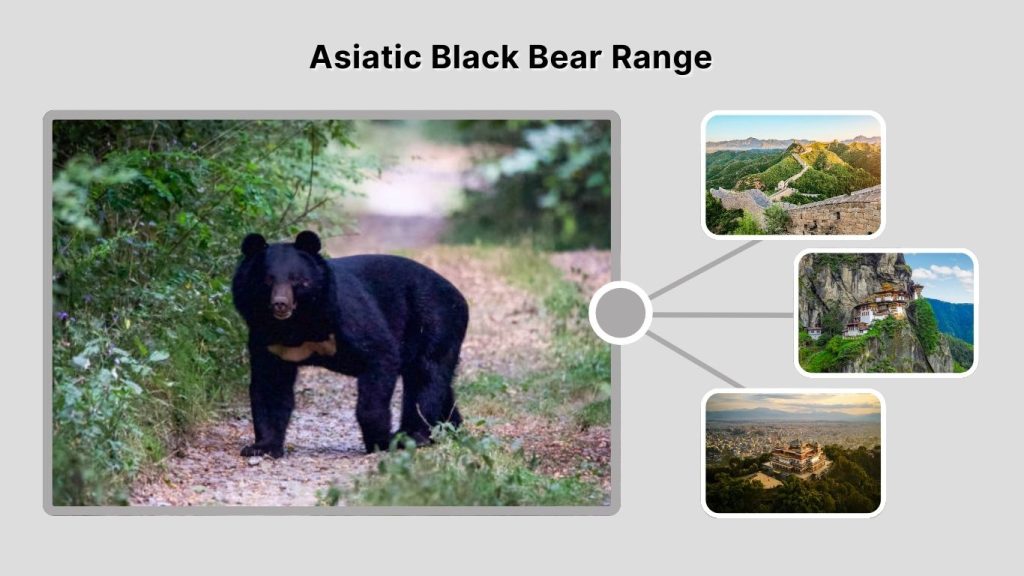
The Asiatic black bear range extends across a wide area of Asia. It is found in countries such as Russia (Far East), China, North and South Korea, India, Nepal, Bhutan, and parts of Southeast Asia.
This wide distribution reflects the species’ ability to survive in different climates, from cold northern forests to subtropical mountain regions. However, habitat fragmentation has reduced populations in some areas.
Asiatic Black Bear in Japan
The Asiatic black bear in Japan is represented by the Japanese subspecies (Ursus thibetanus japonicus). These bears are mainly found on the islands of Honshu and Shikoku. They inhabit forested mountain regions where food sources such as acorns and nuts are abundant.
In recent years, increased human development and shrinking forest habitats have led to more frequent encounters between bears and rural communities in Japan. As a result, conservation and management efforts are important to maintain balanced coexistence.
Asiatic Black Bear Diet
What Do Asiatic Black Bears Eat?
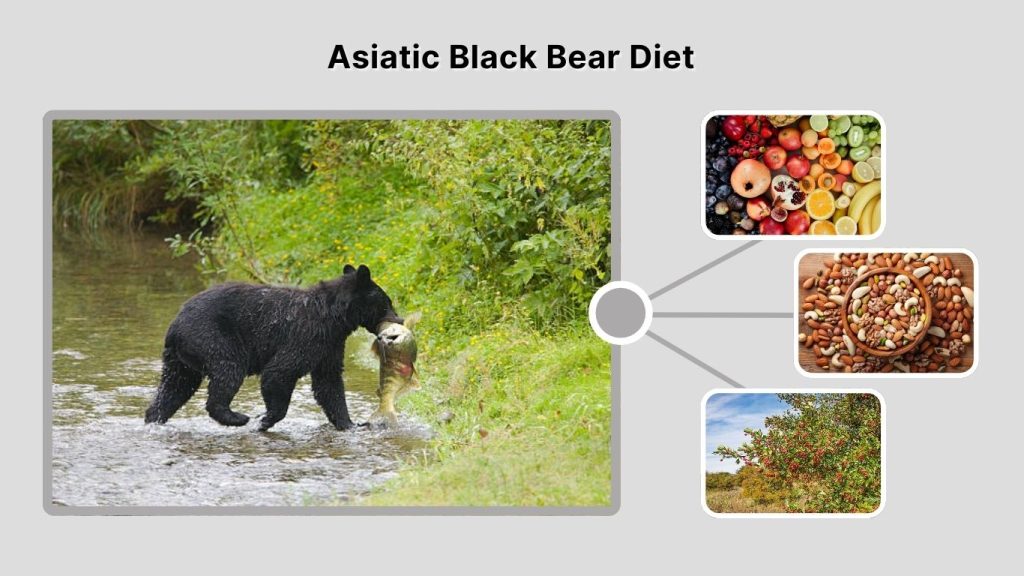
The Asiatic black bear diet is primarily omnivorous, though much of its food comes from plant sources. In many regions, up to 70–80 percent of its diet consists of fruits, berries, nuts, seeds, and vegetation. Acorns and other tree nuts are especially important during autumn when bears prepare for winter.
In addition to plant material, Asiatic black bears eat insects such as ants, termites, and beetle larvae. They may also consume small mammals, birds, eggs, and carrion. In some rural areas, they occasionally raid crops or attack livestock, which can lead to human-wildlife conflict.
In forested mountain habitats, their ability to climb trees allows them to access fruit high in the canopy, giving them an advantage over many other large mammals.
Seasonal Diet Changes
Season plays a major role in shaping the Asiatic black bear’s feeding habits. In spring, they consume young shoots, grasses, and emerging vegetation. Summer brings an abundance of fruits and berries, which become staple foods.
During autumn, bears focus heavily on calorie-rich foods like nuts and acorns. This period of increased feeding helps them build fat reserves needed for winter dormancy in colder regions.
In northern parts of their range, bears enter winter dens and survive on stored body fat. However, in warmer southern regions where food remains available, some individuals may stay active year-round.
Behavior and Adaptations
Daily Behavior
Asiatic black bears are generally solitary animals. Adults prefer to live and forage alone, except during mating season or when mothers are raising cubs. Each bear maintains a home range, which may overlap with others but usually involves limited direct interaction.
They are primarily active during early morning and evening hours. In areas with high human activity, they may shift to more nocturnal behavior to avoid people. Their strong climbing skills allow them to escape danger quickly or rest safely in trees.
Climbing and Survival Skills
One of the most notable adaptations of Asiatic black bears is their climbing ability. They frequently climb trees not only to access fruit but also to build temporary resting platforms known as tree nests. These nests are made by bending and breaking branches to create a stable resting area.
Their sharp claws and strong forelimbs make them agile climbers compared to larger bear species. Combined with a powerful sense of smell and good memory, these traits help them locate and remember reliable food sources.
Hibernation Patterns
In colder regions such as northern China, Russia, and parts of Japan, Asiatic black bears enter winter dormancy. Their heart rate and metabolism slow significantly, allowing them to conserve energy for several months.
However, in tropical or subtropical areas where temperatures remain mild and food is available, hibernation may be shorter or absent. This flexibility is a key survival adaptation that allows the species to thrive across a wide geographic range.
Threats and Conservation Status
Major Threats
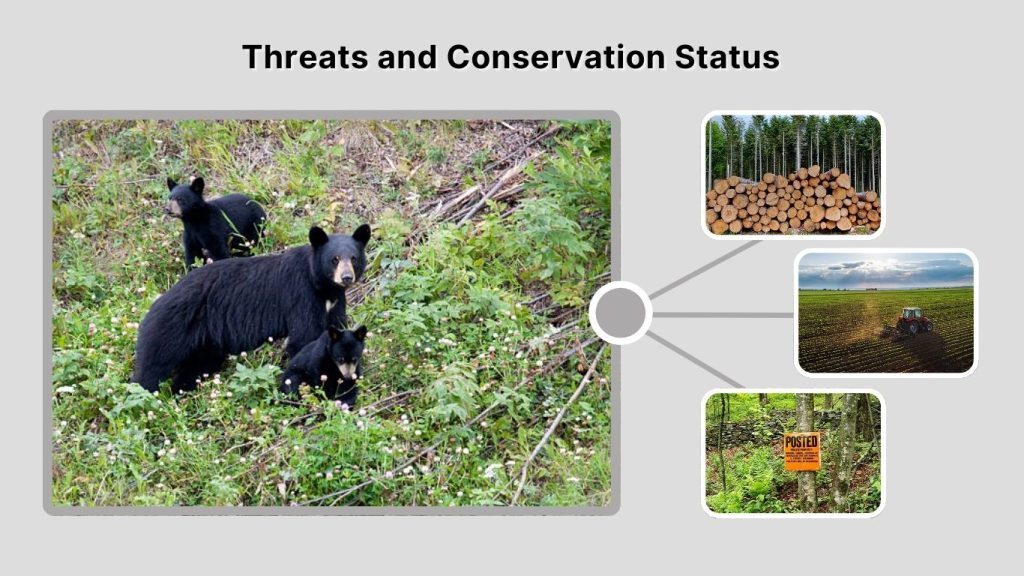
The Asiatic black bear faces several serious threats throughout its range. Habitat loss due to deforestation and agricultural expansion is one of the primary challenges. As forests shrink and fragment, bears lose access to food and safe denning areas.
Poaching and illegal hunting also impact populations. In some regions, bears are targeted for their body parts, which are used in traditional medicine or sold on illegal wildlife markets.
Bear Bile Farming
One of the most controversial issues affecting Asiatic black bears is bear bile farming. In certain countries, bears are kept in captivity to extract bile used in traditional medicine. This practice has raised major animal welfare and conservation concerns internationally.
Conservation organizations continue working to reduce demand for bear bile products and promote alternative solutions.
Conservation Status
The Asiatic black bear is currently listed as Vulnerable by the International Union for Conservation of Nature (IUCN). This status reflects declining populations in many areas due to habitat loss and illegal trade.
Protected areas, wildlife laws, and conservation programs aim to stabilize populations. Public education and improved habitat management are essential for the long-term survival of Asiatic black bears.
Asiatic Black Bear Facts
Here are some interesting Asiatic black bear facts:
- They are often called “moon bears” because of the crescent marking on their chest.
- They are excellent climbers and spend more time in trees than many other bear species.
- Cubs learn to climb at a very young age.
- They have a highly developed sense of smell.
- Some populations migrate seasonally between mountain elevations.
Asiatic Black Bear Fun Facts
- Asiatic black bears sometimes build tree platforms to rest in the canopy.
- Their large rounded ears make them easy to recognize.
- They can run quickly despite their stocky build.
- In Japan, they are an important part of local folklore and wildlife culture.
- Their white chest marking varies in size and shape between individuals.
Conclusion
The Asiatic black bear is a remarkable species adapted to life across diverse Asian landscapes. From temperate forests in Russia to mountainous regions of Japan, these bears demonstrate impressive climbing skills, dietary flexibility, and seasonal survival strategies. However, habitat loss and illegal wildlife trade continue to threaten their future. Understanding the Asiatic black bear’s habitat, range, diet, and behavior highlights the importance of conservation efforts to protect this iconic “moon bear” for generations to come.