



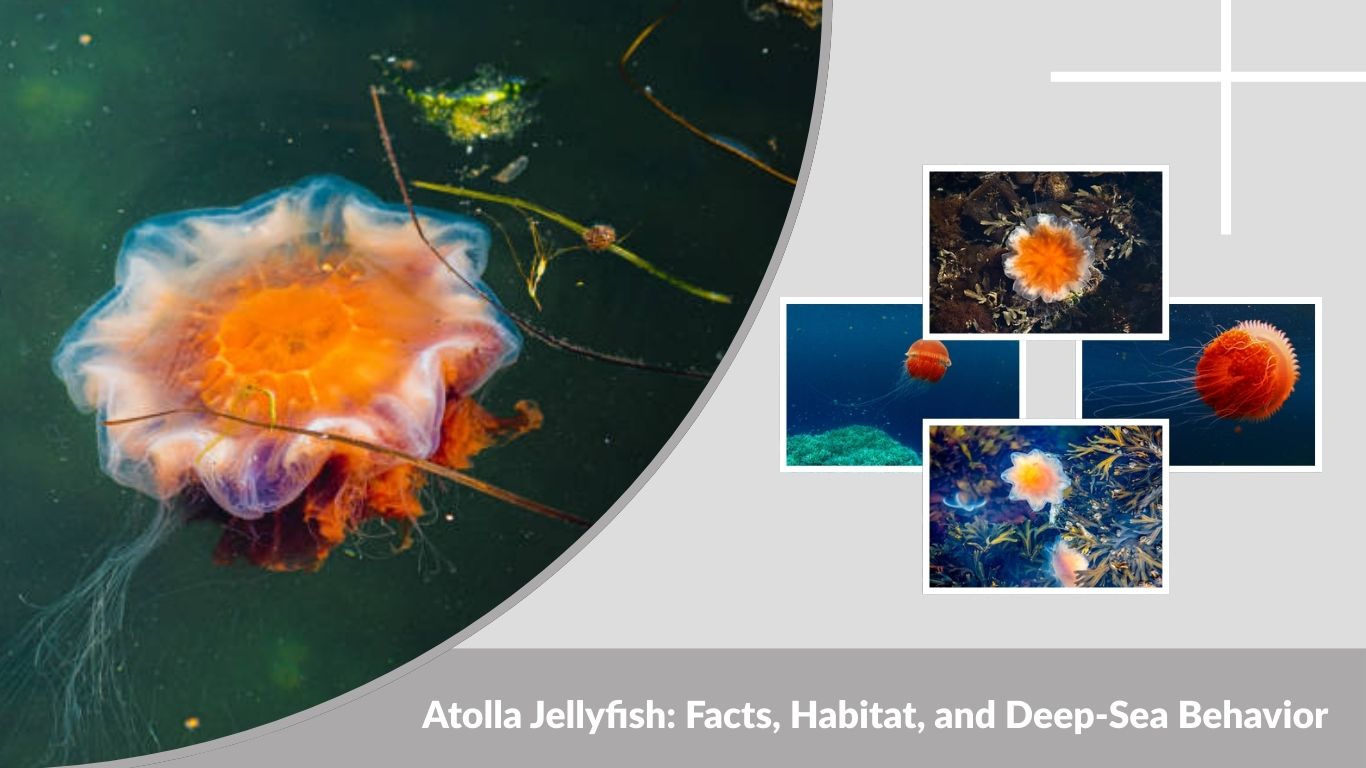
Deep beneath the ocean’s surface, where sunlight cannot reach and pressure is extreme, lives one of the most fascinating jellyfish ever discovered—the Atolla jellyfish. Often referred to as the “crown jellyfish” because of its regal, ridged bell, this deep-sea creature has captured the attention of marine scientists and ocean explorers alike. Its ability to produce brilliant flashes of light in total darkness makes it one of the most striking examples of bioluminescence in the ocean.
Unlike coastal jellyfish that are occasionally encountered by swimmers, the Atolla jellyfish remains hidden in the deep sea, rarely seen without the help of submersibles or remotely operated vehicles. This article explores what makes the Atolla jellyfish unique, including its identification, habitat, and extraordinary adaptations to life in the deep ocean.
What Is an Atolla Jellyfish?
Scientific Background
The Atolla jellyfish is scientifically known as Atolla wyvillei and belongs to the class Scyphozoa, which includes true jellyfish. It was first described in the late 19th century during early deep-sea expeditions. Since then, it has become one of the most recognizable deep-sea jellyfish species due to its distinct body shape and glowing defense mechanism.
Atolla wyvillei is not a single isolated species but part of a genus that includes several closely related deep-sea jellyfish. However, A. wyvillei remains the most well-known and widely studied.
Why It’s Called the Crown Jellyfish
The nickname “crown jellyfish” comes from the scalloped ridges that circle the edge of its bell. When viewed from above, these ridges resemble the points of a crown. This unique structure not only gives the jellyfish its name but also helps distinguish it from other deep-sea jellyfish species.
Identification and Physical Characteristics
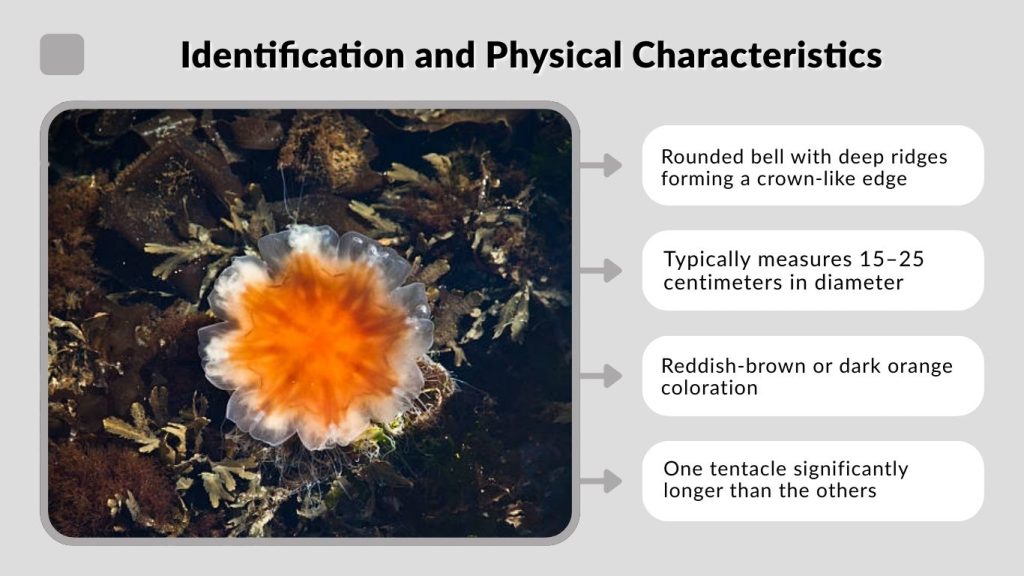
- Rounded bell with deep ridges forming a crown-like edge
- Typically measures 15–25 centimeters in diameter
- Reddish-brown or dark orange coloration
- One tentacle significantly longer than the others
- Numerous short tentacles arranged evenly around the bell
- Soft, gelatinous body adapted to high pressure
- Symmetrical structure common to true jellyfish
Natural Habitat and Distribution
Deep-Sea Environment
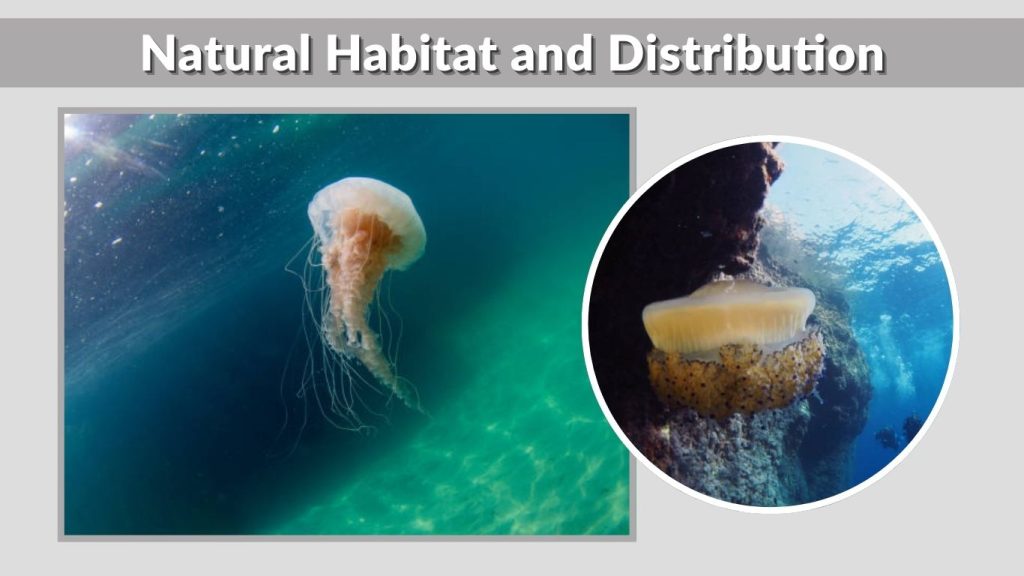
The Atolla jellyfish inhabits the deep ocean, usually found at depths ranging from 1,000 to over 4,000 meters. These zones are characterized by complete darkness, cold temperatures, and immense water pressure. In such conditions, most organisms rely on specialized adaptations to survive, and the Atolla jellyfish is no exception.
Because sunlight does not reach these depths, the jellyfish cannot rely on visual cues for feeding or defense. Instead, it has evolved alternative survival strategies, including bioluminescence and highly sensitive tentacles.
Global Distribution
Atolla jellyfish have been recorded in oceans around the world, including the Atlantic, Pacific, and Indian Oceans. Despite this wide distribution, sightings remain rare due to the difficulty of exploring deep-sea environments. Most observations come from scientific expeditions using deep-diving equipment.
Bioluminescence and Defense Mechanism
How Atolla Jellyfish Produce Light
One of the most remarkable features of the Atolla jellyfish is its ability to emit bright blue-green light. This bioluminescence is produced through a chemical reaction within specialized cells in the jellyfish’s body. When disturbed or threatened, the jellyfish releases rapid flashes of light that can illuminate the surrounding water.
This glowing display is especially dramatic in the pitch-black deep sea, where even a brief flash can be seen from a considerable distance.
The “Burglar Alarm” Strategy
Rather than using light to hide, the Atolla jellyfish uses bioluminescence as a defense mechanism known as the “burglar alarm.” When attacked by a predator, the jellyfish flashes intensely, drawing attention to the attacker. This sudden display may attract larger predators, increasing the chances that the original threat will retreat.
This strategy is highly effective in the deep ocean, where survival often depends on avoiding unnecessary energy loss or injury.
Behavior and Movement
The Atolla jellyfish moves slowly and deliberately through the deep ocean, conserving energy in an environment where food is scarce. It swims by gently contracting and relaxing its bell, creating a pulsing motion that allows it to hover or drift with deep-sea currents. This method of movement is highly efficient and well suited to the low-energy demands of the deep ocean.
When threatened, the Atolla jellyfish may suddenly increase its swimming speed for short periods. This response is often paired with its bioluminescent display, helping it escape predators while simultaneously drawing attention to the attacker.
Diet and Feeding Habits
What Atolla Jellyfish Eat
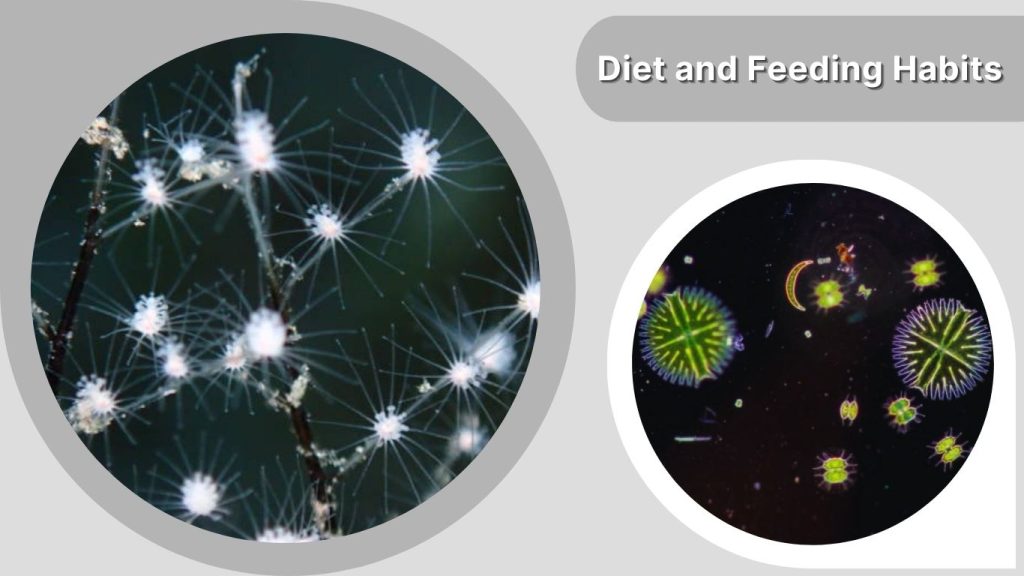
Atolla jellyfish primarily feed on small marine organisms found in deep waters. Their diet includes plankton, tiny crustaceans, and other drifting invertebrates. Because food availability is limited in the deep sea, the jellyfish must take advantage of any prey that comes within reach.
The long trailing tentacle seen on many Atolla jellyfish may play a role in detecting or capturing prey, increasing feeding efficiency in dark environments.
Feeding Strategy
Rather than actively hunting, the Atolla jellyfish relies on passive feeding. Its tentacles are equipped with stinging cells that immobilize prey on contact. Once captured, the prey is transferred toward the mouth using coordinated tentacle movements.
This feeding method allows the jellyfish to consume food without expending unnecessary energy, a critical adaptation for survival in deep-sea conditions.
Life Cycle and Reproduction
Stages of the Life Cycle
Like other true jellyfish, the Atolla jellyfish undergoes several life stages. It begins as a fertilized egg that develops into a free-swimming larva. This larva eventually settles onto a surface and becomes a polyp, which can remain attached for extended periods.
When conditions are favorable, the polyp produces juvenile jellyfish that grow into adult medusae. Each stage of this cycle is influenced by environmental factors such as temperature and food availability.
Reproductive Process
Atolla jellyfish reproduce sexually by releasing eggs and sperm into the surrounding water. Fertilization occurs externally, and the resulting larvae begin the life cycle anew. Due to the challenges of studying deep-sea organisms, many details of their reproduction remain under investigation.
Is the Atolla Jellyfish Dangerous?
Sting and Toxicity
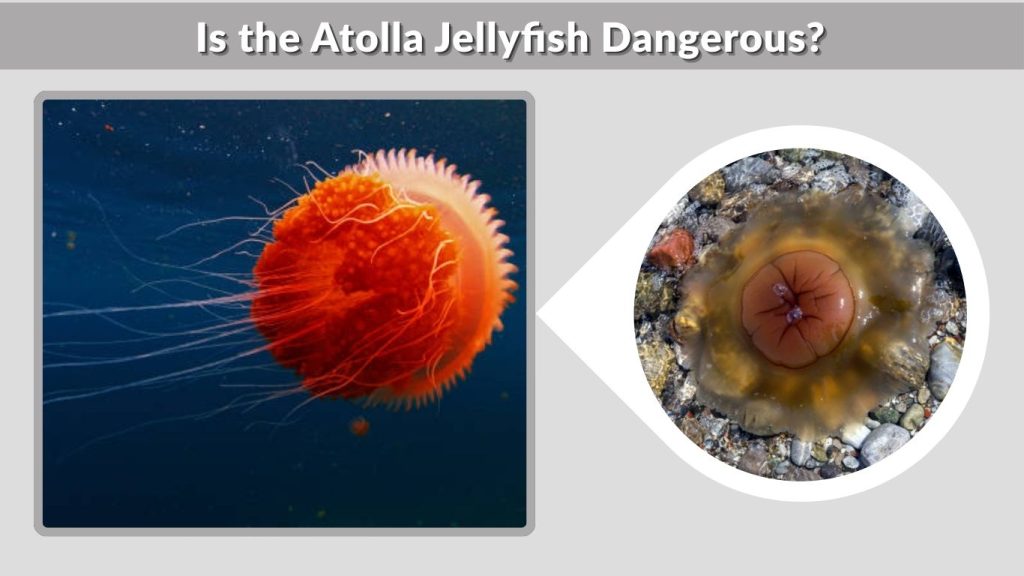
Although the Atolla jellyfish possesses stinging cells, it is not considered dangerous to humans. Its sting is primarily adapted for capturing small prey rather than defending against large animals. Human encounters are extremely rare, and there are no known serious injuries caused by this species.
Human Encounters
Most sightings of Atolla jellyfish occur through deep-sea exploration vehicles rather than direct human interaction. This distance from human activity further reduces any potential risk.
Ecological Importance
Role in the Deep-Sea Food Web
The Atolla jellyfish plays an important role in deep-sea ecosystems by helping regulate populations of small marine organisms. As both predator and prey, it contributes to energy transfer within the food web and supports the balance of deep-ocean life.
Importance to Marine Research
Scientists study Atolla jellyfish to better understand bioluminescence, deep-sea adaptations, and ocean biodiversity. Its unique defense strategy offers valuable insight into survival mechanisms used by deep-sea organisms.
Atolla Jellyfish vs Other Deep-Sea Jellyfish
Key Differences
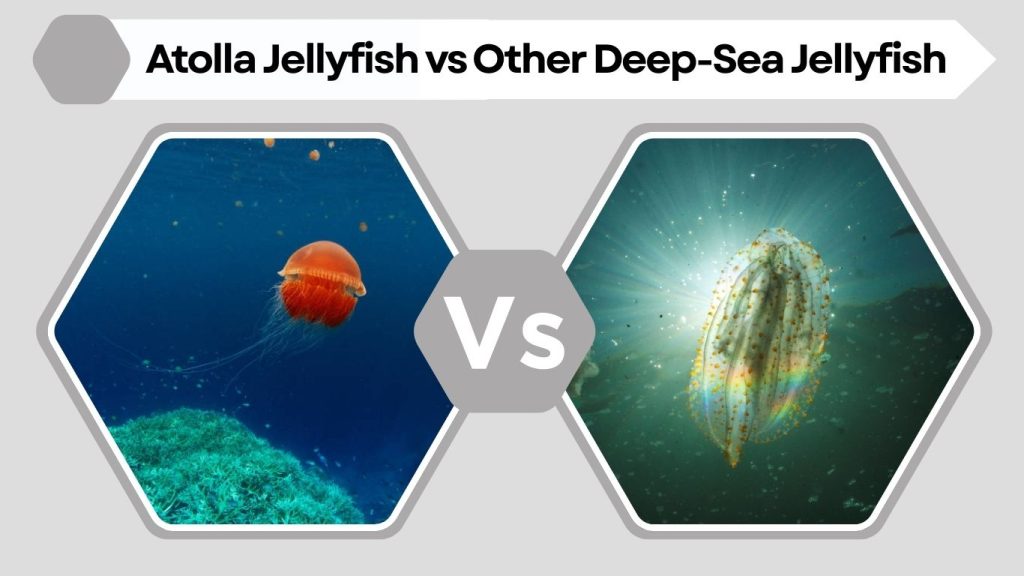
Compared to other deep-sea jellyfish, the Atolla jellyfish stands out because of its crown-shaped bell and intense bioluminescent flashes. Many other species glow faintly or continuously, while Atolla produces rapid, eye-catching bursts of light.
Similar Species
While several deep-sea jellyfish share similar habitats, few exhibit the same combination of physical structure and defensive behavior found in Atolla jellyfish.
Interesting Facts About the Atolla Jellyfish
The Atolla jellyfish is often featured in deep-sea documentaries due to its dramatic light displays. Its unusual long tentacle remains a topic of scientific interest, and its ability to survive extreme pressure continues to inspire research into deep-ocean life.
Conservation and Deep-Sea Protection
Although Atolla jellyfish are not currently considered endangered, deep-sea ecosystems face increasing threats from climate change, pollution, and deep-sea mining. Protecting these environments is essential for preserving the biodiversity of species that remain largely unexplored.
Conclusion
The Atolla jellyfish is a remarkable example of life’s adaptability in one of Earth’s most extreme environments. With its crown-like form, bioluminescent defense, and vital ecological role, it offers a glimpse into the hidden wonders of the deep ocean. Continued research and conservation efforts will help ensure that this extraordinary species remains part of our planet’s rich marine heritage.