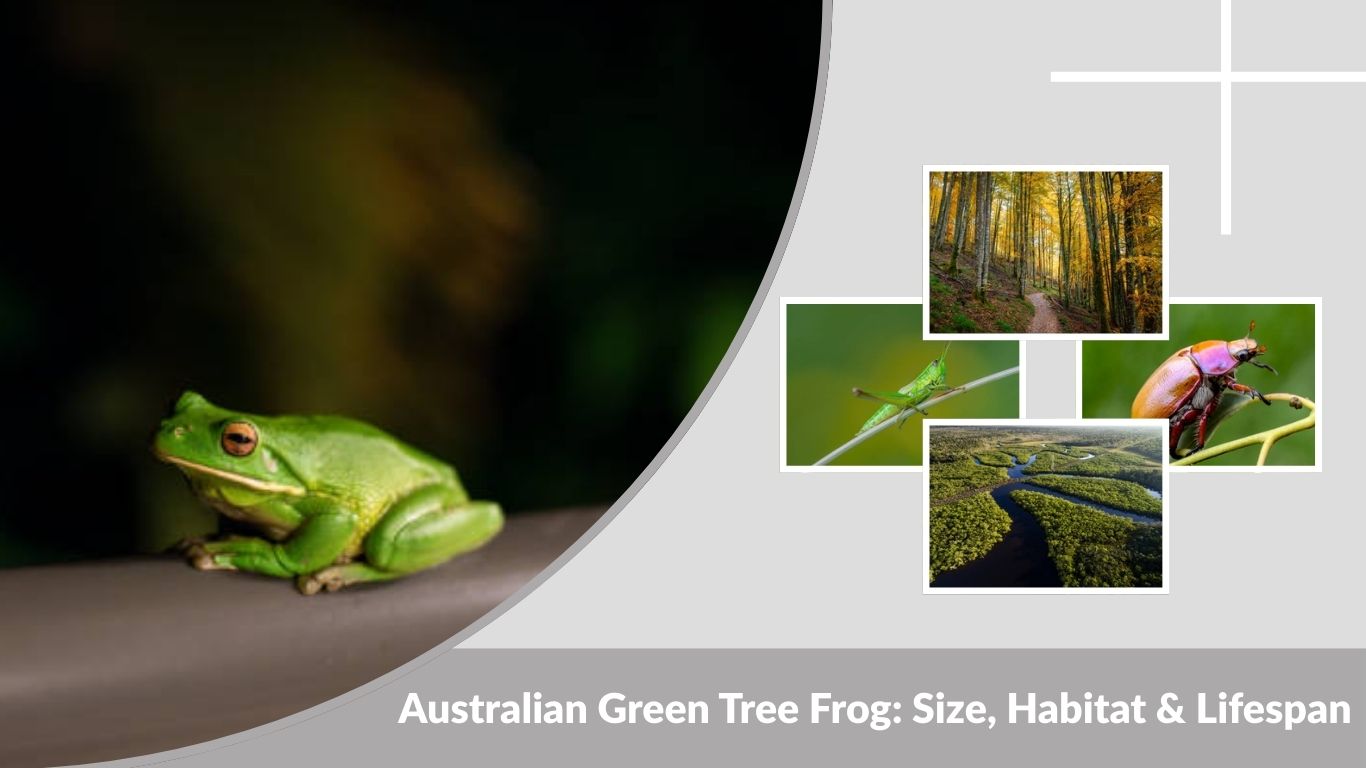
The Australian green tree frog (Litoria caerulea), also known as the White’s tree frog or dumpy tree frog, is one of the most popular amphibians in the world. Native to Australia and New Guinea, this large, calm tree frog is admired for its bright green color, gentle temperament, and long lifespan. Unlike many delicate frog species, it adapts well to captivity. In this guide, we’ll explore its size, appearance, habitat, behavior, and lifespan.
Australian Green Tree Frog Overview
The Australian green tree frog belongs to the family Hylidae, commonly known as tree frogs. Its scientific name, Litoria caerulea, reflects its distinctive bluish-green coloration. It is sometimes called the “dumpy tree frog” because of its chunky body shape.
This species is native to northern and eastern Australia and parts of New Guinea. It has also been introduced into small areas outside its native range. In the wild, it thrives in warm, humid climates but is also known for adapting to urban environments.
Quick Facts:
- Scientific name: Litoria caerulea
- Common names: White’s tree frog, dumpy tree frog
- Average size: 3–4.5 inches
- Lifespan: 7–10 years (wild), 15–20+ years (captivity)
- Habitat: Rainforests, woodlands, swamps
- Diet: Insects and small prey
Physical Characteristics
Size
The Australian green tree frog is significantly larger than many other tree frog species. Adults typically grow between 3 and 4.5 inches (7.5–11.5 cm) in length. Females are generally larger than males.
They also have a heavier, more solid build compared to slimmer tree frogs. A healthy adult may appear plump, and well-fed individuals often develop visible fat deposits above the eyes, giving them a slightly “sleepy” expression.
Color
This species is known for its vibrant coloration. Most individuals display a bright emerald or bluish-green shade. However, their color can vary depending on mood, temperature, and environment. Some may appear turquoise, dull green, or slightly brownish.
The underside is usually white or cream-colored. A faint white ridge or line often runs along the lower jaw. Their eyes are typically gold or copper with horizontal pupils, giving them excellent night vision.
Although they can adjust their shade slightly, they do not dramatically change colors like chameleons. Their color shifts are subtle and primarily related to camouflage and environmental conditions.
Body Structure
The Australian green tree frog has a stocky, rounded body with smooth, slightly waxy skin. This waxy coating helps reduce water loss, an important adaptation for surviving in both humid and occasionally dry conditions.
Like other tree frogs, they have large adhesive toe pads. These pads allow them to climb branches, leaves, and even smooth surfaces such as glass. Despite their climbing ability, they are not as agile or fast as smaller tree frog species.
Natural Habitat
Geographic Range
The Australian green tree frog is native to:
- Northern Australia
- Eastern Australia
- Parts of New Guinea
It is especially common in Queensland and the Northern Territory. Because of its adaptability, it has also been found living near human settlements.
Preferred Environment
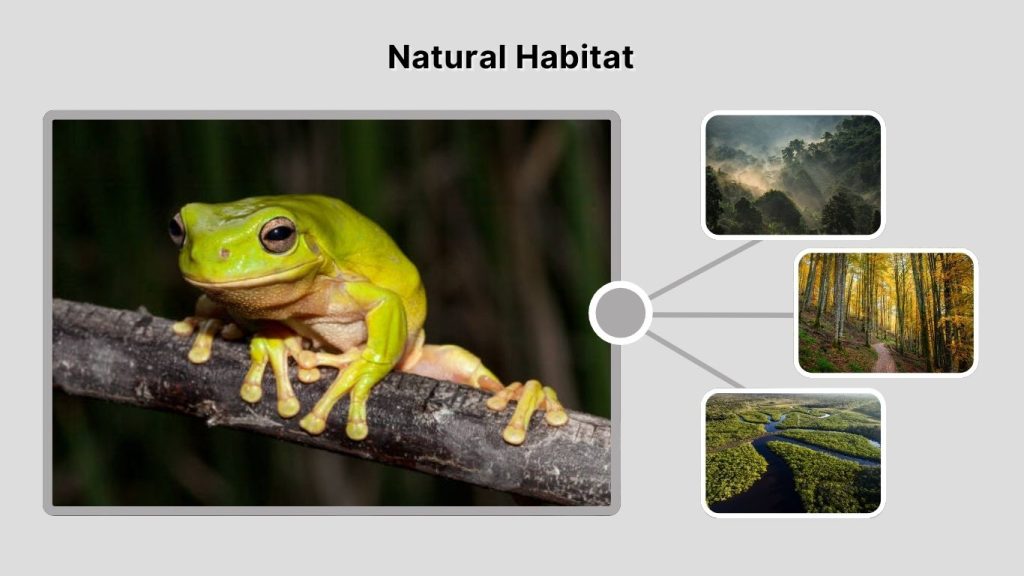
In the wild, this frog prefers warm environments with access to freshwater. Common habitats include:
- Rainforests
- Woodlands
- Swamps
- Streams and ponds
- Tropical wetlands
Unlike many amphibians, Australian green tree frogs often venture into urban areas. They may hide in water tanks, gutters, bathrooms, and even inside homes. Their ability to tolerate human presence has helped them thrive in developed areas.
Climate Conditions
This species prefers tropical and subtropical climates with warm temperatures year-round. High humidity is ideal, especially during breeding season.
During dry periods, they may seek shelter in cool, damp places to conserve moisture. Their waxy skin helps prevent dehydration, allowing them to survive short dry spells better than many other frogs.
Behavior and Temperament
Nocturnal Lifestyle
The Australian green tree frog is primarily nocturnal. During the day, it rests on branches, leaves, or sheltered surfaces. At night, it becomes active, searching for food and exploring its surroundings.
Because they are attracted to insects, they are often seen near outdoor lights where prey gathers.
Temperament
One reason this species is so popular in captivity is its calm and docile nature. Compared to many frogs, it tolerates limited handling relatively well. It is generally slow-moving and less prone to stress than smaller, more delicate tree frogs. However, handling should still be minimal to protect their sensitive skin.
Diet and Feeding
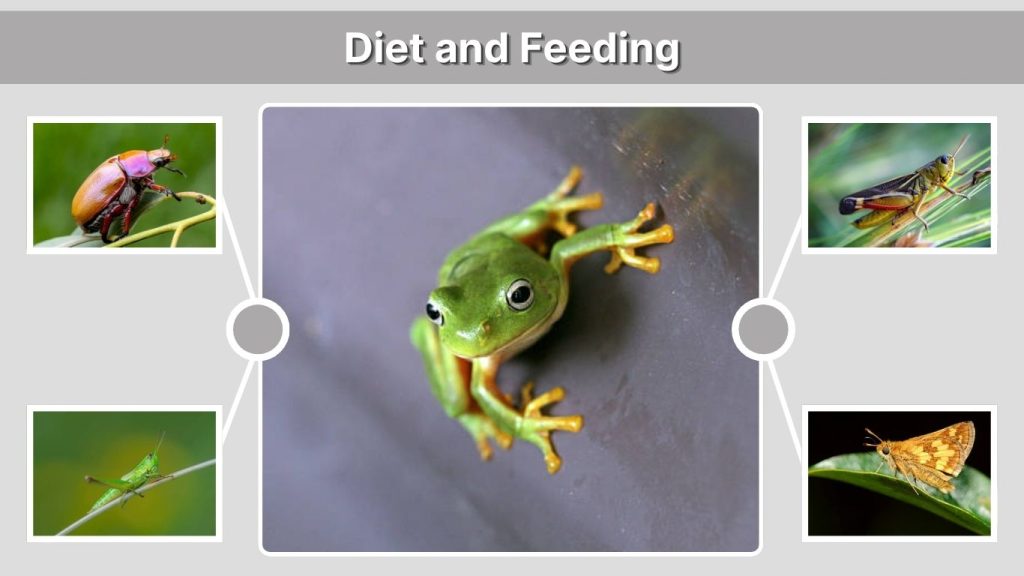
What Do Australian Green Tree Frogs Eat?
The Australian green tree frog is an opportunistic carnivore. In the wild, it feeds primarily on insects and other small animals it can overpower. Its diet commonly includes:
- Crickets
- Moths
- Beetles
- Grasshoppers
- Spiders
- Roaches
Larger adults may occasionally eat small vertebrates, such as tiny frogs or even small mice. They are not picky eaters and will consume almost any moving prey that fits into their mouths.
Hunting Behavior
These frogs are ambush predators. They typically remain still and wait for prey to approach. Once an insect comes within range, they strike quickly with their sticky tongue and powerful jaws.
Although they are capable climbers, they are not particularly fast. Instead, they rely on patience and quick reflexes to capture food.
Feeding in Captivity
In captivity, their diet usually consists of:
- Gut-loaded crickets
- Dubia roaches
- Mealworms (occasionally)
- Waxworms (as treats only)
Some keepers offer pinky mice occasionally, but this should be done sparingly to prevent obesity. Calcium and vitamin supplements should be dusted on feeder insects to ensure proper bone development and long-term health.
Overfeeding is a common issue in captivity, as this species has a strong appetite and can easily become overweight.
Lifespan
Lifespan in the Wild
In their natural habitat, Australian green tree frogs typically live 7 to 10 years. Survival depends on environmental conditions, food availability, and avoiding predators.
Juveniles face greater risks from predators and environmental stress before reaching adulthood.
Lifespan in Captivity
One of the most impressive traits of this species is its longevity in captivity. With proper care, they commonly live 15 to 20 years, and some individuals have been recorded living even longer.
A clean enclosure, balanced diet, correct humidity, and stable temperatures are key factors that contribute to their extended lifespan.
Reproduction and Life Cycle
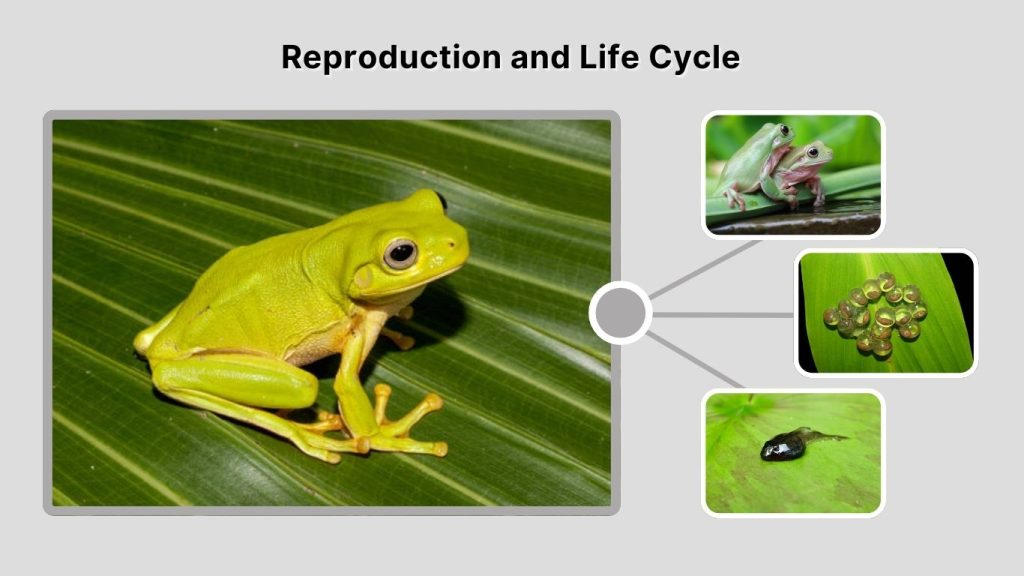
Breeding Season
Breeding usually occurs during the warmer, rainy months. In Australia, this typically happens after heavy rainfall, which creates ideal breeding conditions.
Males gather near water sources and produce a deep, croaking call to attract females. Their call is louder and deeper than many smaller tree frog species.
Egg Laying
After mating, females lay large clusters of eggs in freshwater. The eggs float or attach to vegetation in ponds or slow-moving water.
A single female can lay hundreds to thousands of eggs in one breeding season.
Tadpole Stage
The eggs hatch into tadpoles, which are fully aquatic. Tadpoles feed on algae and organic matter in the water.
The length of the tadpole stage can vary depending on temperature and food availability, but it often lasts several weeks to a few months.
Metamorphosis
As the tadpoles mature, they develop legs and lungs. Their tails gradually shrink as they transition into froglets.
Once metamorphosis is complete, the young frogs leave the water and begin life on land, though they remain close to moist environments.
Predators and Threats
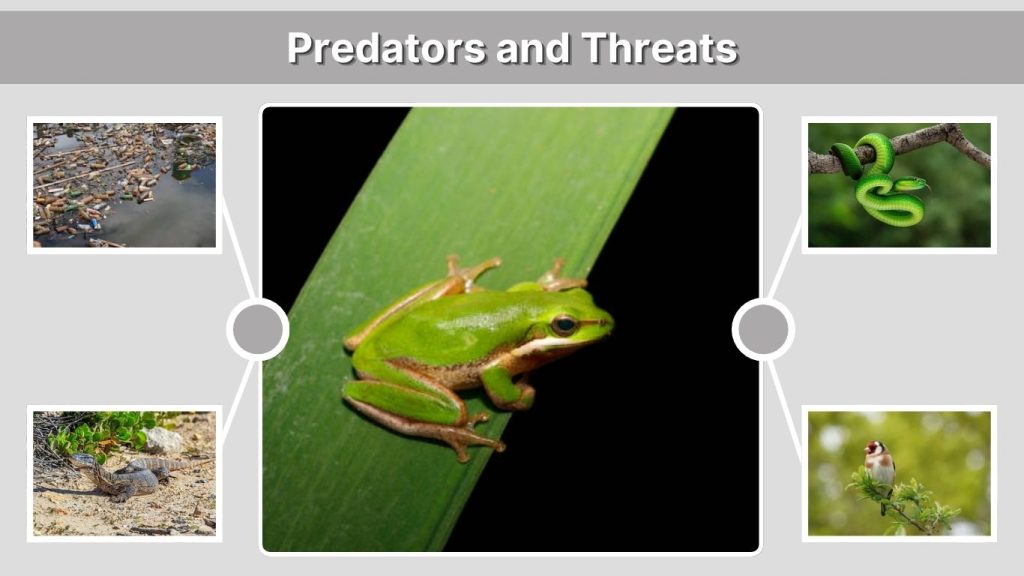
Natural Predators
In the wild, Australian green tree frogs face predators such as:
- Snakes
- Birds
- Large lizards
- Small mammals
Tadpoles are also vulnerable to fish and aquatic predators.
Environmental Threats
Although relatively widespread, this species faces certain environmental challenges, including:
- Habitat destruction
- Water pollution
- Climate change
- Chytrid fungus (a serious amphibian disease)
Urban development can reduce suitable breeding habitats, though the species’ adaptability has helped maintain stable populations in many areas.
Australian Green Tree Frog as a Pet
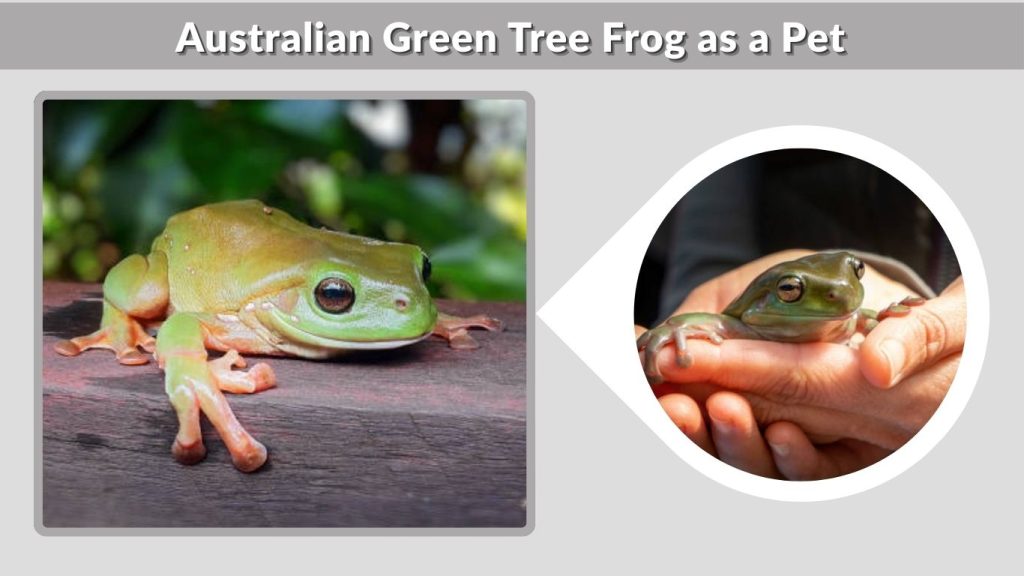
Why They’re Popular
The Australian green tree frog is considered one of the best beginner amphibians. Its popularity comes from:
- Calm temperament
- Hardy nature
- Large size
- Long lifespan
- Simple care requirements
Enclosure Setup
A vertical terrarium of at least 20 gallons is recommended for one adult. Important enclosure features include:
- Climbing branches
- Live or artificial plants
- A shallow water dish
- Hiding spots
Ideal temperatures range from 75–85°F, with humidity levels around 50–70%. Proper ventilation is important to prevent bacterial growth.
Common Health Issues
The most common health problem in captivity is obesity, caused by overfeeding and lack of activity. Other potential issues include bacterial infections and improper shedding due to low humidity.
Maintaining clean conditions and proper environmental parameters greatly reduces health risks.
FAQs
How big do Australian green tree frogs get?
Australian green tree frogs typically grow between 3 and 4.5 inches long, with females usually being larger than males. They are considered large for a tree frog species and have a stocky, rounded body that gives them their “dumpy” appearance.
How long do Australian green tree frogs live?
In the wild, they generally live 7 to 10 years. In captivity, with proper care, they commonly live 15 to 20 years, and some individuals have been known to live even longer.
Are Australian green tree frogs good pets?
Yes, they are considered excellent beginner amphibian pets. They are hardy, relatively low maintenance, and have a calm temperament. However, they should not be handled frequently due to their sensitive skin.
Do Australian green tree frogs need UVB light?
UVB lighting is not strictly required but is beneficial. Low-level UVB can support overall health and help with vitamin D3 synthesis, especially if the frog is not receiving adequate dietary supplementation.
What do Australian green tree frogs eat?
They mainly eat insects such as crickets, roaches, moths, and worms. Larger adults may occasionally eat small vertebrates. In captivity, feeder insects should be gut-loaded and dusted with calcium and vitamin supplements to maintain proper nutrition.