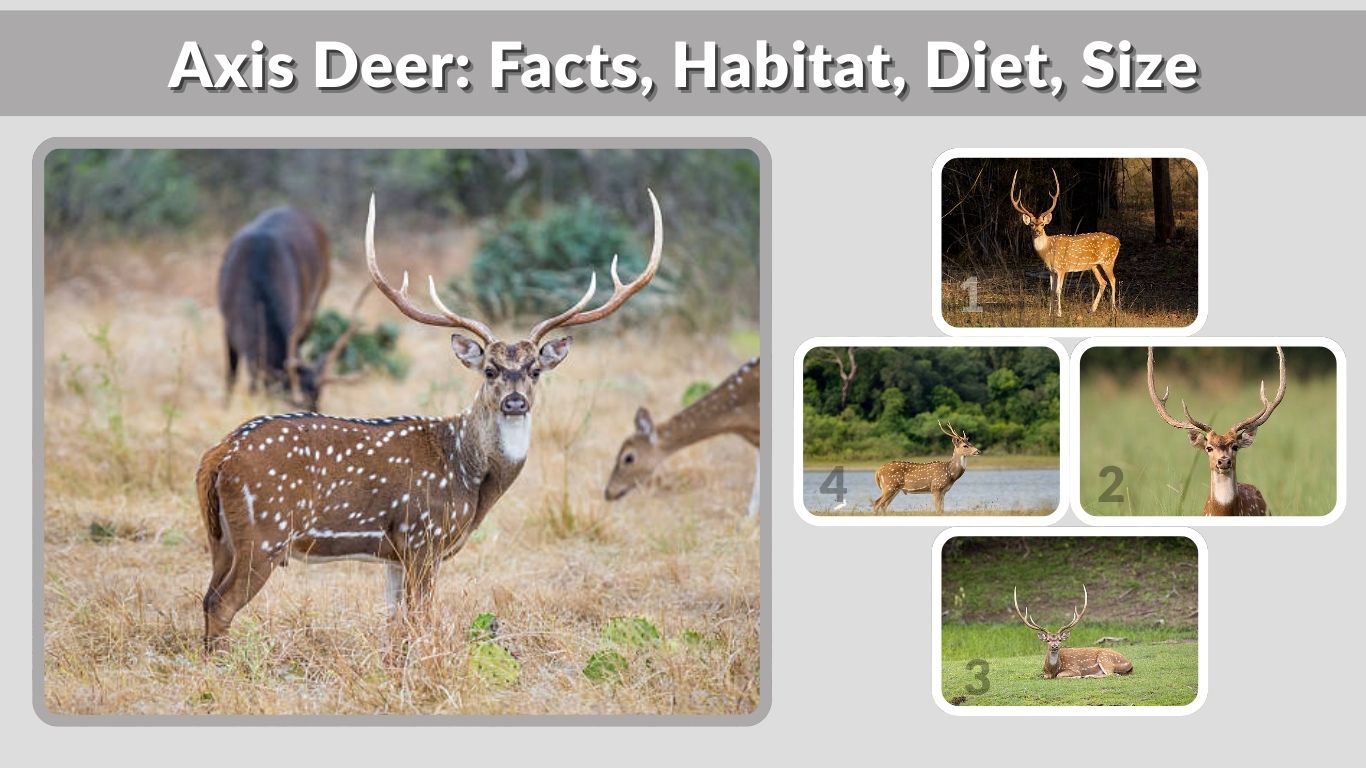
The axis deer, also known as the chital (Axis axis), is one of the most visually striking deer species in the world. Famous for its permanent white-spotted coat and graceful build, the axis deer is native to the Indian subcontinent but has been introduced to several other regions. Highly social and adaptable, this species thrives in forests, grasslands, and human-managed landscapes. Understanding axis deer facts, habitat, size, and distribution provides insight into why this deer has been so successful both in its native and introduced ranges.
What Is an Axis Deer?
An axis deer is a medium-sized deer species best known for the white spots that remain visible throughout its life. Unlike many deer species that lose their spots as adults, axis deer retain this feature year-round, making them easy to identify.
Axis deer are highly social animals and are commonly found in herds that may include females, fawns, and young males. Adult males often form bachelor groups outside the breeding season. These deer are alert, fast-moving, and rely on keen senses to detect predators.
Axis Deer Scientific Name and Classification
The axis deer scientific name is Axis axis. This species belongs to the deer family Cervidae and is part of the genus Axis, which includes several spotted deer species native to Asia.
Taxonomic classification:
- Kingdom: Animalia
- Phylum: Chordata
- Class: Mammalia
- Order: Artiodactyla
- Family: Cervidae
- Genus: Axis
- Species: Axis axis
Axis deer are closely related to sika deer and fallow deer, sharing similarities in coat pattern and body structure.
Axis Deer Physical Characteristics
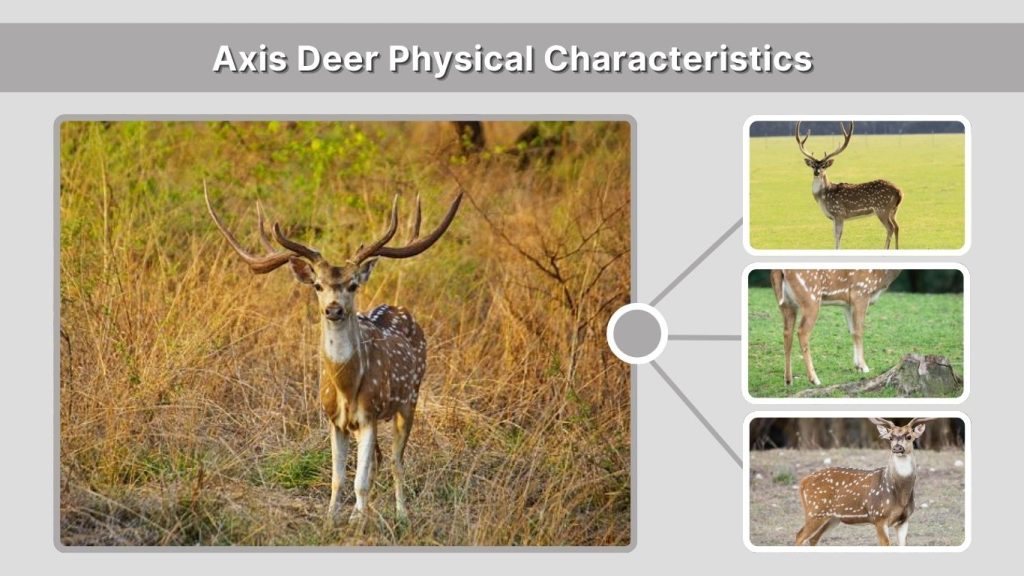
Axis deer are admired for their elegant appearance and distinctive markings. One of the most notable axis deer characteristics is their reddish-brown coat covered with white spots arranged in rows along the body.
Males, known as stags, grow long, slender antlers with three tines on each side. These antlers are shed and regrown annually. Females, called hinds, do not grow antlers and are generally smaller and lighter than males.
Other physical traits include:
- A slim, athletic body
- Long legs adapted for running
- A white underside and throat
- A dark stripe along the spine
These features allow axis deer to move quickly through open and wooded habitats.
Axis Deer Size and Weight
Axis deer size places them among medium-sized deer species. Their proportions are well balanced, contributing to both speed and endurance.
On average:
- Axis deer stand about 2.8 to 3.3 feet tall at the shoulder
- Body length ranges from 4.5 to 5.5 feet
In terms of weight:
- Adult females typically weigh between 90 and 150 pounds
- Adult males usually weigh 150 to 240 pounds
Males are noticeably larger, especially during the breeding season when body mass and neck size increase.
Axis Deer Habitat
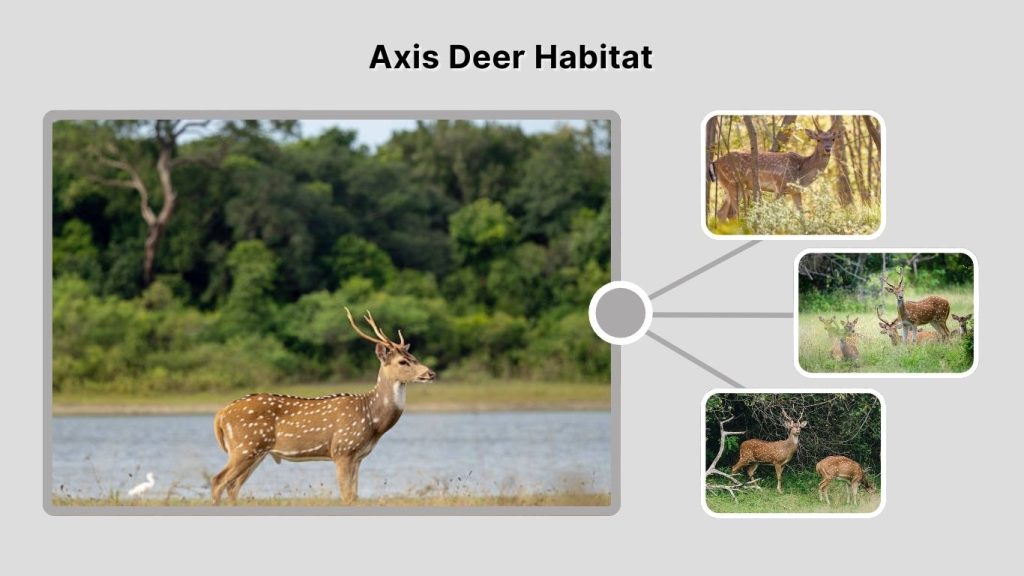
The axis deer habitat includes a variety of environments, though they show a strong preference for areas that provide both cover and open grazing land. In their native range, axis deer are commonly found in dry deciduous forests and grasslands.
Typical habitats include:
- Open woodlands
- Grasslands and savannas
- Forest edges
- Areas near water sources
Axis deer are often closely associated with water and tend to remain within reach of rivers, streams, or seasonal waterholes.
Axis Deer Range and Distribution
The axis deer range originally covered much of the Indian subcontinent, including India, Sri Lanka, Nepal, and parts of Bhutan. Over time, axis deer were introduced to other regions, where they adapted quickly.
Established introduced populations are found in:
- Texas, where axis deer thrive on ranchlands
- Hawaii, particularly on certain islands
- Australia and other regions
In some introduced areas, axis deer populations have grown rapidly, leading to ecological and management challenges due to competition with native wildlife.
Axis Deer Diet and Feeding Behavior
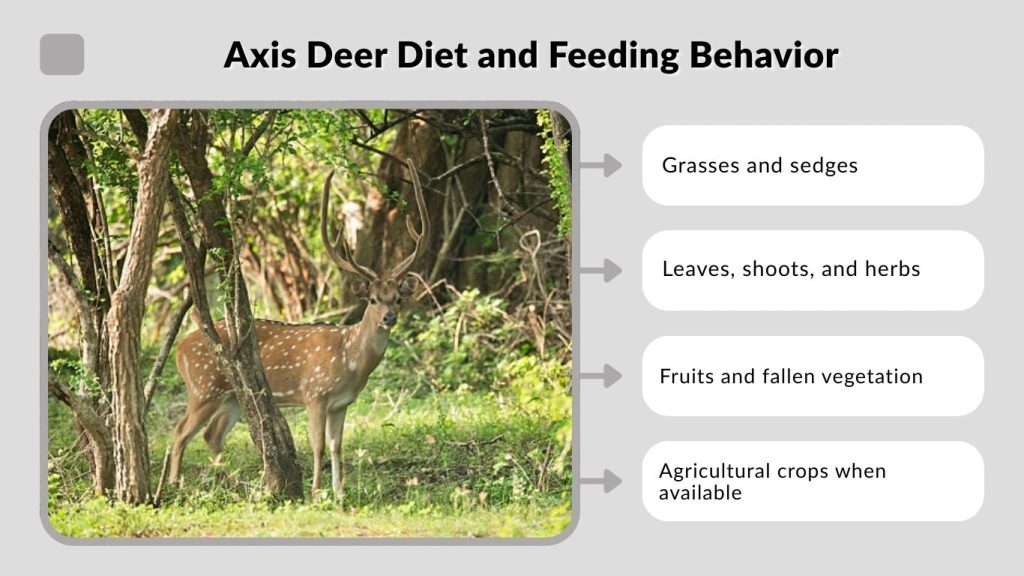
Axis deer are herbivores with a highly adaptable feeding strategy. Their ability to graze and browse allows them to thrive in a variety of habitats, from forests to open grasslands.
The typical axis deer diet includes:
- Grasses and sedges
- Leaves, shoots, and herbs
- Fruits and fallen vegetation
- Agricultural crops when available
Unlike many deer species that struggle during harsh winters, axis deer feed year-round in warmer climates. Seasonal rainfall patterns influence food availability more than temperature, especially in tropical and subtropical regions.
Axis Deer Life Cycle
The axis deer life cycle differs slightly from that of temperate deer species because axis deer are not strictly seasonal breeders. In many regions, breeding can occur year-round, though peak periods often follow monsoon rains when food is abundant.
The life stages include:
- Fawn – Born after a gestation period of about 230 days
- Juvenile – Rapid growth during the first year
- Adult – Sexual maturity reached at around 12 to 14 months
- Older adult – Gradual decline with age
In the wild, axis deer typically live between 9 and 14 years, depending on environmental conditions and predation pressure.
Axis Deer Reproduction and Rutting Behavior
Axis deer reproduction is less synchronized than in many other deer species. Males do not follow a strict rutting season and may breed at various times of the year. During breeding periods, males become more territorial and may engage in sparring with rivals.
Females usually give birth to a single fawn, although twins are possible. Fawns are born with a spotted coat that provides camouflage in tall grass and forest undergrowth. Mothers hide their fawns for the first few weeks and return regularly to nurse them.
Axis Deer vs Other Deer Species
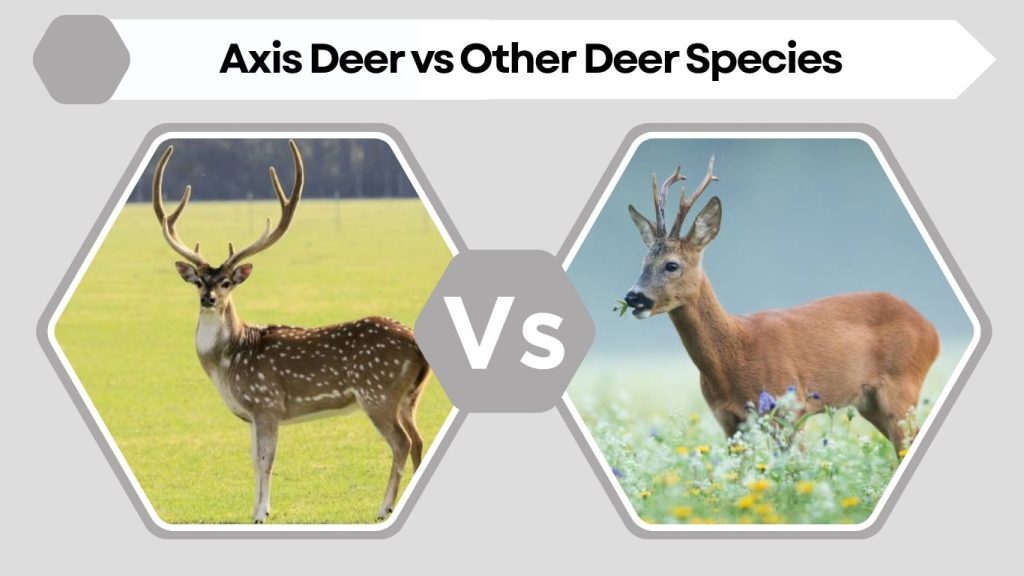
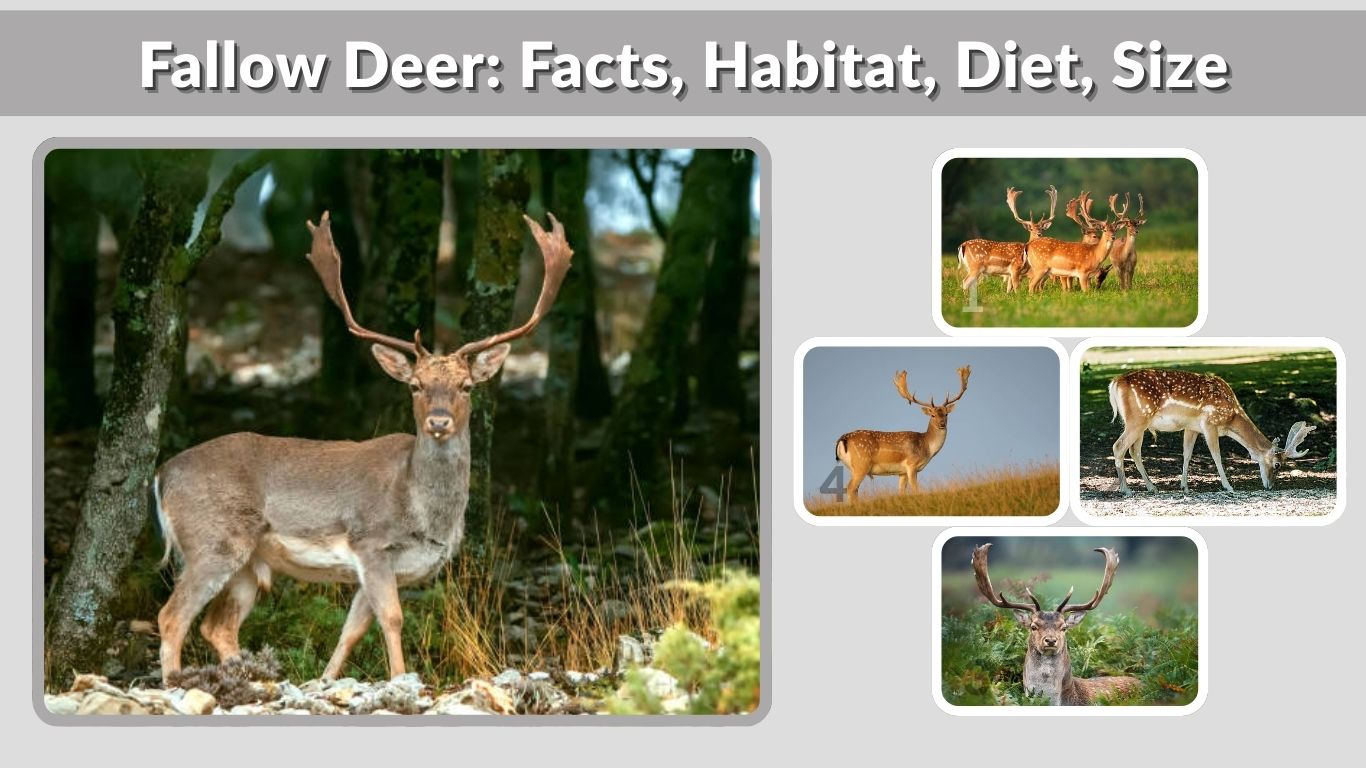
Comparing axis deer to other deer species highlights their unique traits. When looking at axis deer vs fallow deer, both species retain spots into adulthood, but axis deer are generally slimmer and have longer legs.
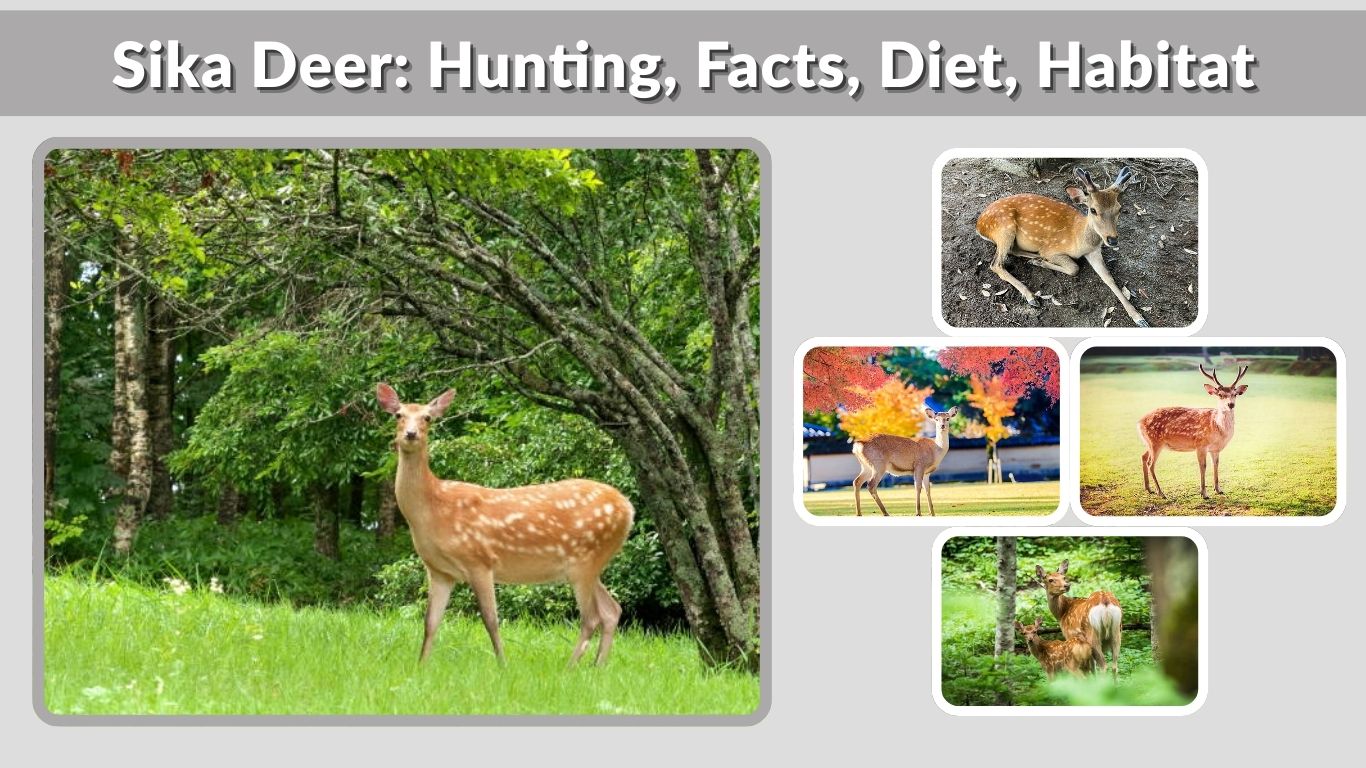
Compared to sika deer, axis deer are larger and less vocal. Axis deer also tend to be more social, often forming larger herds than sika deer.
These differences make axis deer easier to identify, particularly in regions where multiple deer species coexist.
Axis Deer and Humans
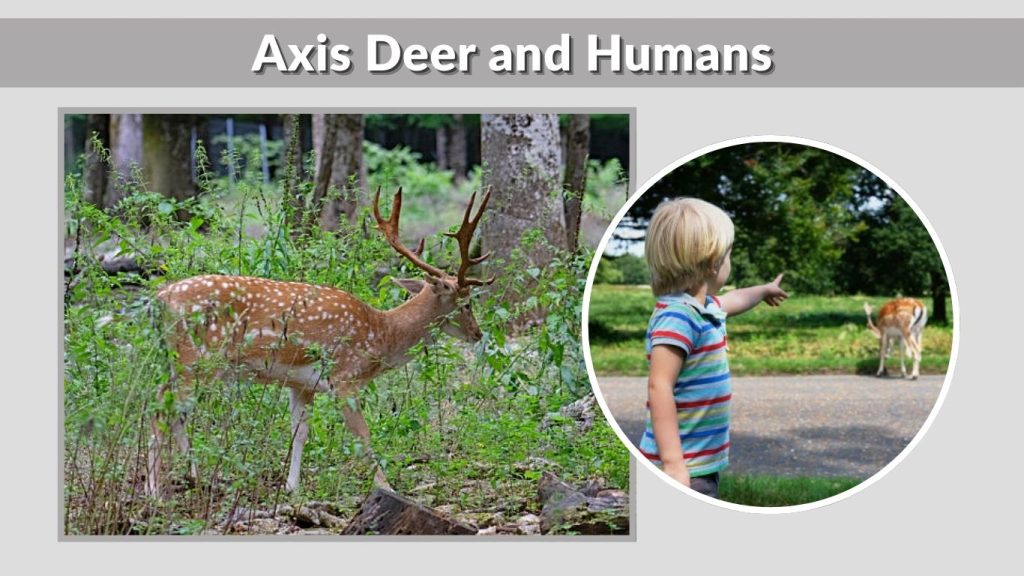
Axis deer have a long history of interaction with humans. In their native range, they are culturally significant and often appear in art and folklore. In introduced regions, axis deer are popular for wildlife viewing and hunting.
However, large populations can cause:
- Overgrazing of vegetation
- Competition with native species
- Damage to crops and fencing
As a result, population management through regulated hunting and habitat control is commonly practiced.
Conservation and Population Management
Globally, axis deer are considered a species of least concern. Their adaptability and high reproductive rate have allowed populations to remain stable or increase in many areas.
Management efforts focus on:
- Monitoring population growth
- Protecting native ecosystems
- Controlling numbers in introduced regions
- Preventing habitat degradation
Balanced management ensures axis deer remain a sustainable part of both natural and human-influenced landscapes.
FAQs
What is an axis deer?
An axis deer, also known as a chital, is a medium-sized deer species native to the Indian subcontinent. It is easily recognized by its permanent white-spotted coat, slender body, and social behavior. Axis deer belong to the deer family Cervidae and are highly adaptable.
Where do axis deer live?
Axis deer live in forests, grasslands, and woodland edges, usually close to water sources. They are native to India, Sri Lanka, Nepal, and Bhutan and have been introduced to regions such as Texas, Hawaii, and Australia, where stable populations now exist.
What do axis deer eat?
Axis deer are herbivores that feed on grasses, leaves, shoots, fruits, and agricultural crops. Their diet depends more on rainfall and food availability than on seasonal temperature changes, allowing them to feed year-round in warmer climates.
How big do axis deer get?
Axis deer typically stand 2.8 to 3.3 feet tall at the shoulder. Adult females weigh between 90 and 150 pounds, while adult males usually weigh 150 to 240 pounds. Males are larger and heavier, especially during the breeding season.
Are axis deer invasive?
Axis deer are considered invasive in some introduced regions. Their growing populations can lead to overgrazing, competition with native wildlife, and habitat damage. For this reason, population control and regulated hunting are often used to manage their numbers.