
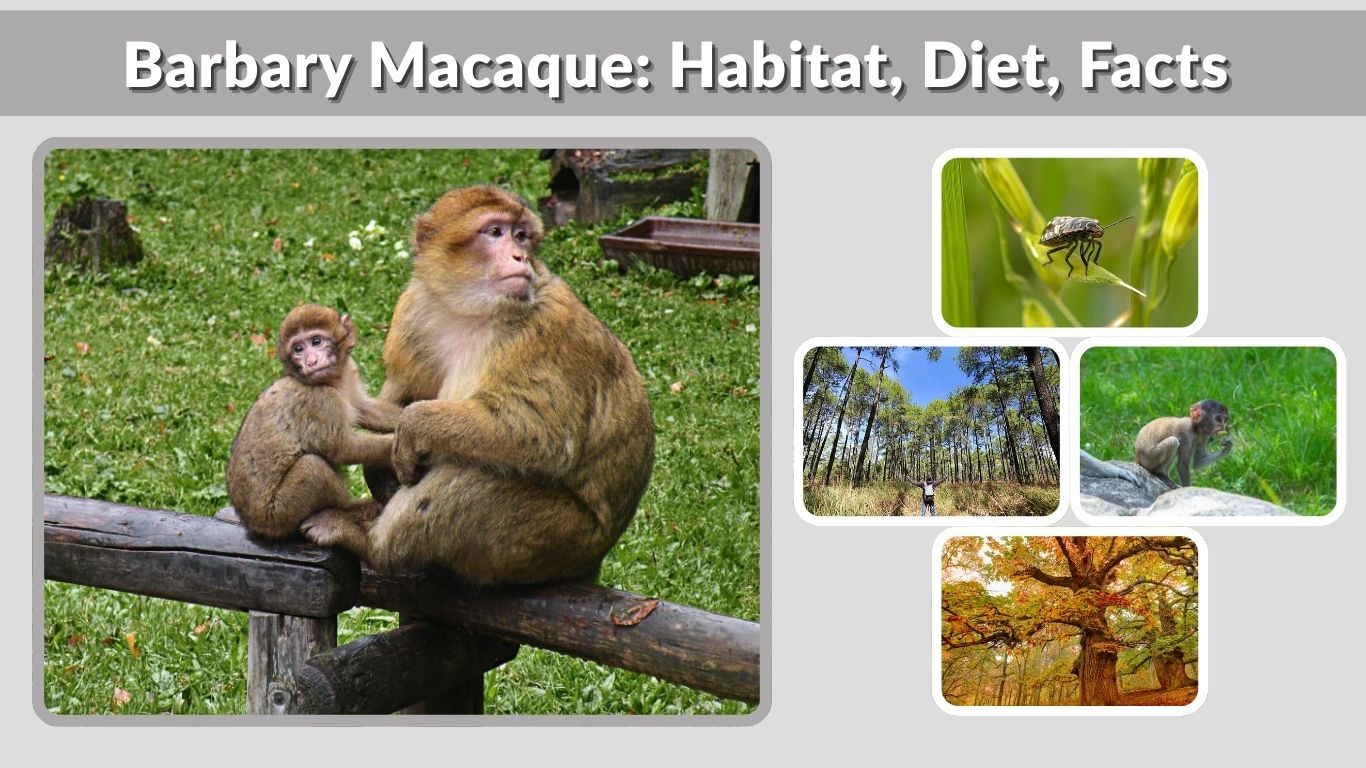
The Barbary macaque is one of the most fascinating primate species in the world. Known for its social behavior and unique appearance, this monkey is famous for being the only wild monkey species found in Europe. Most Barbary macaques live in the mountainous forests of North Africa, while a well-known population lives on the Rock of Gibraltar. In this article, we explore Barbary macaque identification, habitat, diet, baby development, and interesting facts about this remarkable primate.
What Is a Barbary Macaque?
The Barbary macaque is a medium-sized monkey species belonging to the Old World monkey family. Its scientific name is Macaca sylvanus, and it is one of the best-known macaque species due to its presence in both Africa and Europe.
Scientific Classification
- Scientific name: Macaca sylvanus
- Family: Cercopithecidae
- Order: Primates
- Genus: Macaca
Unlike most macaques that live in Asia, the Barbary macaque is native to North Africa and has a small population in Gibraltar, making it unique among primates.
Overview of the Species
Barbary macaques are highly social animals that live in groups called troops. These groups may contain several adult males, females, and young monkeys. They spend much of their time grooming each other, searching for food, and interacting socially.
The species is known for its intelligence and strong social bonds. Their behavior and communication patterns have made them an important subject of study for scientists who research primate societies.
Barbary Macaque Identification
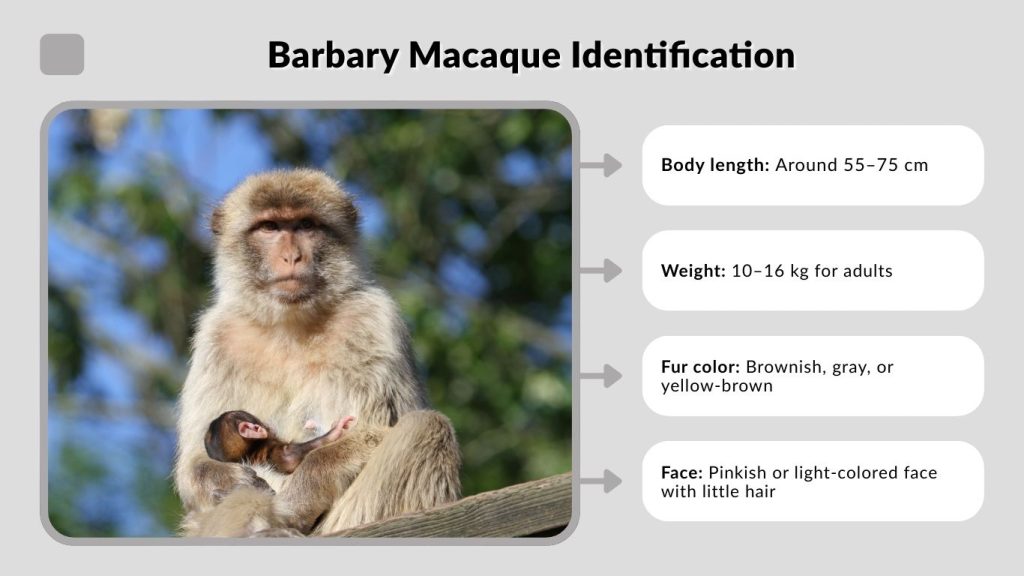
Barbary macaques have several distinctive physical features that make them easy to recognize.
Physical Characteristics
These monkeys have a sturdy body and thick fur that helps them survive in cooler mountain climates.
Typical characteristics include:
- Body length: Around 55–75 cm
- Weight: 10–16 kg for adults
- Fur color: Brownish, gray, or yellow-brown
- Face: Pinkish or light-colored face with little hair
Their thick coat protects them from cold temperatures in mountainous regions.
Unique Features
One of the most noticeable features of the Barbary macaque is its very short tail, which is almost invisible. Because of this, people sometimes mistake them for small apes.
Other distinctive traits include:
- Strong muscular body
- Expressive facial features
- Thick fur adapted for mountain climates
Size and Weight
Adult males are usually larger than females.
Typical measurements include:
- Male weight: 12–16 kg
- Female weight: 8–11 kg
Their strong build helps them climb rocky terrain and trees in their natural habitats.
Barbary Macaque Habitat
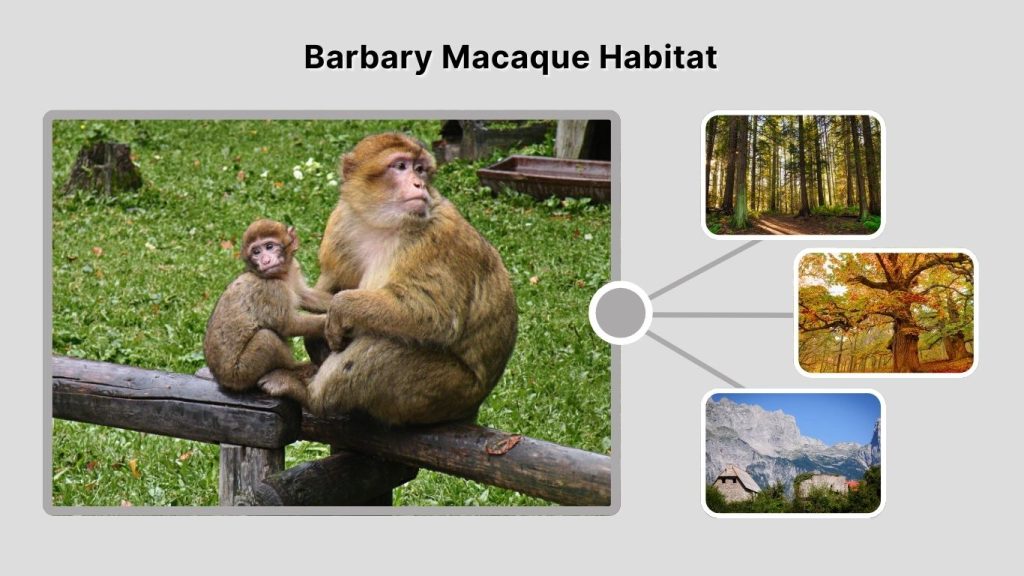
Barbary macaques live in forested mountain regions and rocky landscapes where food and shelter are available.
Where Do Barbary Macaques Live?
Most Barbary macaques live in North Africa, particularly in:
- Morocco
- Algeria
A famous population also lives in Gibraltar, a British territory located at the southern tip of Spain. These monkeys are the only wild monkeys living in Europe.
Natural Habitat Types
Barbary macaques inhabit several types of environments, including:
- Cedar forests
- Oak forests
- Mountain forests
- Rocky hillsides
These habitats provide trees for climbing and shelter as well as a variety of foods.
Adaptations to Their Environment
Barbary macaques have several adaptations that help them survive in mountain environments.
Key adaptations include:
- Thick fur that protects them from cold weather
- Strong limbs for climbing trees and rocks
- Flexible diet that allows them to eat many different foods
These traits allow them to live in regions where temperatures can drop significantly during winter.
Barbary Macaque Diet
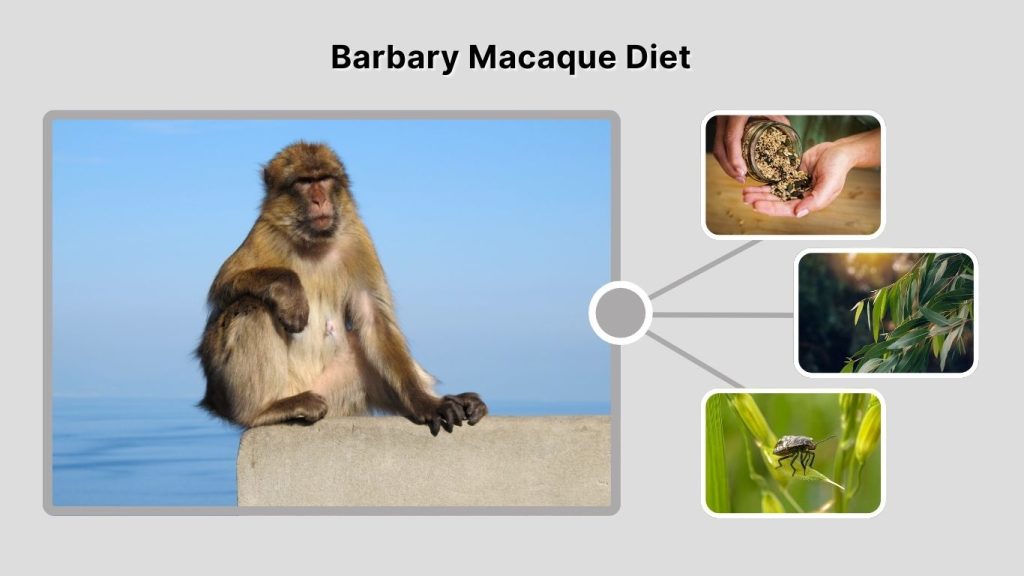
Barbary macaques are omnivores, meaning they eat both plant and animal foods. Their diet changes depending on the season and available resources.
What Do Barbary Macaques Eat?
In the wild, Barbary macaques eat a variety of foods such as:
- Fruits
- Leaves
- Seeds
- Roots
- Tree bark
- Insects
This wide-ranging diet helps them survive in different environments throughout the year.
Seasonal Diet Changes
Food availability varies with the seasons, so Barbary macaques adjust their diet accordingly.
Summer diet
- Fresh fruits
- Leaves
- Seeds
Winter diet
- Tree bark
- Roots
- Tough plant materials
During colder months, when fresh fruits are scarce, they rely more on bark and roots.
Feeding Behavior
Barbary macaques often search for food together in groups. Foraging as a troop helps them find food more efficiently and provides protection from potential threats.
Typical feeding behaviors include:
- Climbing trees to collect fruits and leaves
- Digging for roots or insects
- Carrying food using their hands
Young macaques learn feeding habits by watching older members of the group.
Barbary Macaque Baby
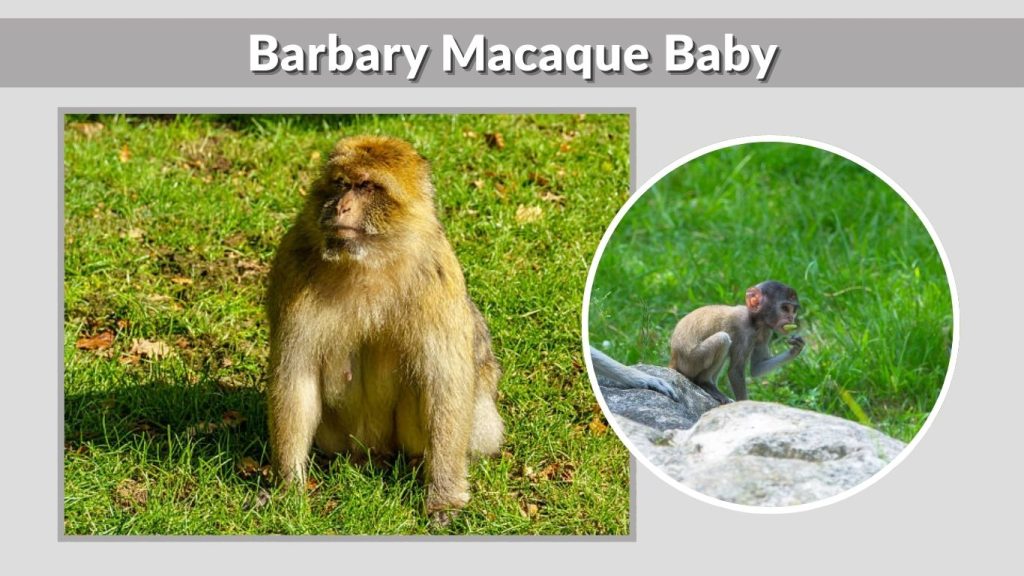
Baby Barbary macaques play an important role in the social life of the troop.
Birth and Infant Care
Female Barbary macaques usually give birth to one infant at a time after a gestation period of about 165 days.
After birth:
- Infants cling closely to their mothers
- Mothers provide protection and nourishment
- Other troop members may show interest in the newborn
One unique feature of Barbary macaque societies is that adult males often help care for infants, which is uncommon in many other monkey species.
Appearance of Baby Barbary Macaques
Baby Barbary macaques look slightly different from adults.
Typical features include:
- Darker fur
- Small pink face
- Tiny body size
As they grow, their fur becomes thicker and lighter in color, gradually resembling the appearance of adult macaques.
Barbary Macaque Social Structure
Barbary macaques are highly social animals that live in organized groups called troops. These troops form the center of their daily life, providing protection, cooperation, and opportunities for social interaction.
Troop Organization
A typical Barbary macaque troop contains 10 to 60 individuals, including adult males, females, juveniles, and infants. Within the group, monkeys develop strong relationships and work together to find food and protect one another.
Some important aspects of troop organization include:
- Multiple adult males and females living together
- Young monkeys learning social behavior through play
- Group cooperation during feeding and resting
Females usually remain in the troop they were born in, while males may move to other groups when they reach maturity.
Communication and Grooming
Communication is essential for maintaining harmony within the troop. Barbary macaques use several methods to communicate, such as:
- Facial expressions
- Vocal calls
- Body posture
- Physical contact
Grooming is one of the most important social behaviors. Monkeys groom each other by cleaning fur and removing dirt or parasites. This behavior helps strengthen friendships and reduce tension within the group.
Another interesting feature of Barbary macaque society is that males often interact with and care for infants, which helps build social bonds within the troop.
Barbary Macaque Lifespan
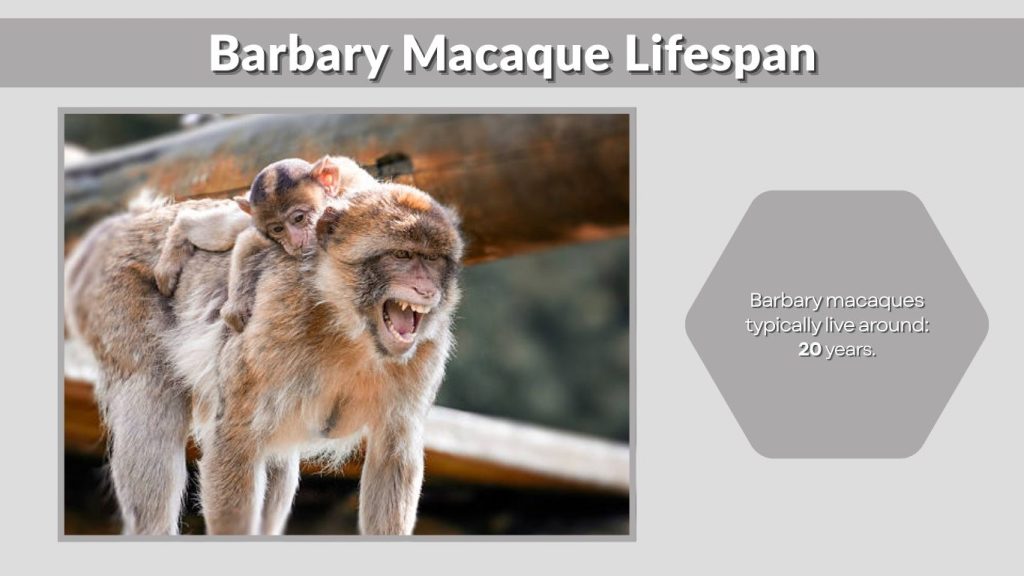
The lifespan of a Barbary macaque depends on factors such as environment, food availability, and health conditions.
Lifespan in the Wild
In natural habitats, Barbary macaques typically live around:
20 years
Their survival may be affected by harsh weather, disease, or human activity.
Lifespan in Captivity
In zoos and protected environments where food and medical care are available, Barbary macaques can live longer.
Their lifespan in captivity may reach:
25–30 years
Factors Affecting Lifespan
Several factors influence how long Barbary macaques live, including:
- Quality of their habitat
- Availability of food resources
- Predators and disease
- Human interference
Healthy forest environments and stable troop structures often contribute to longer lifespans.
Barbary Macaque Facts
Barbary macaques are remarkable animals with many unique characteristics that make them stand out among primates.
Interesting Facts About Barbary Macaques
Here are some fascinating facts about this species:
- They are the only wild monkey species living in Europe.
- Most populations live in Morocco and Algeria, with a small group in Gibraltar.
- Barbary macaques have almost no tail, which sometimes causes confusion with apes.
- Males often help care for infants, which is unusual among monkey species.
- They live in complex social groups with strong relationships.
These characteristics make Barbary macaques one of the most interesting macaque species in the world.
Cultural and Historical Significance
Barbary macaques are closely connected with the history of Gibraltar. According to local legend, as long as the monkeys remain on the Rock of Gibraltar, the territory will continue to remain under British rule.
Because of this belief, the monkeys have been protected for many years and have become a popular attraction for visitors.
Conservation Status
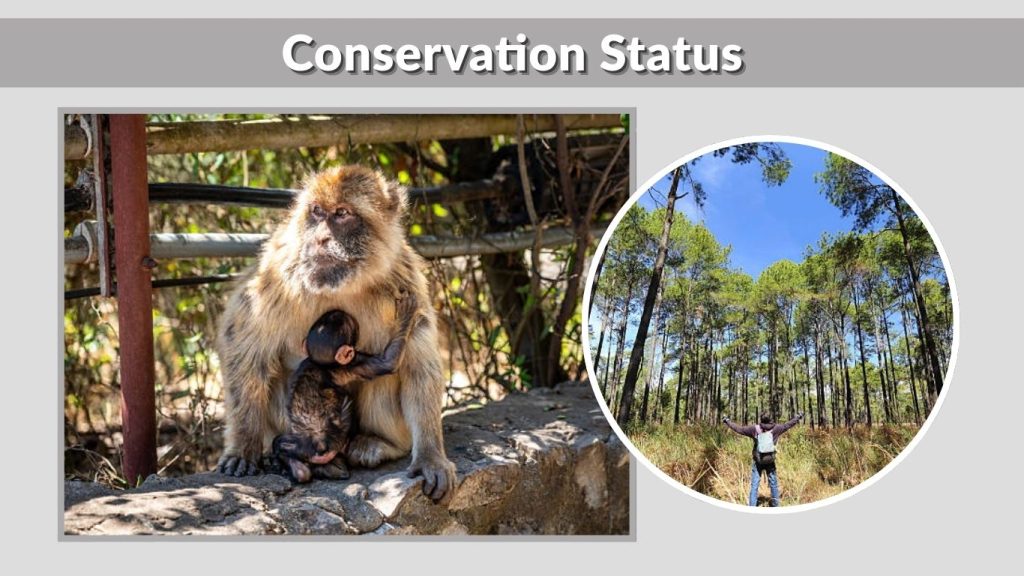
Although Barbary macaques are well known, their populations in the wild have declined in recent decades.
Population Trends
The Barbary macaque is currently classified as Endangered due to decreasing population numbers, particularly in North Africa.
Major Threats
Several threats affect the survival of Barbary macaques:
- Habitat destruction due to deforestation
- Illegal capture for the pet trade
- Human disturbance and tourism pressure
Loss of forest habitats has been one of the most serious challenges for the species.
Conservation Efforts
Various conservation programs are working to protect Barbary macaques. These efforts include:
- Protecting forest habitats in Morocco and Algeria
- Preventing illegal wildlife trade
- Raising public awareness about wildlife conservation
National parks and protected areas play an important role in preserving the remaining populations.
FAQs
Are Barbary macaques really monkeys without tails?
Yes. Barbary macaques have extremely short tails that are almost invisible, which sometimes causes people to mistake them for apes.
Why are Barbary macaques famous in Gibraltar?
They are famous because they are the only wild monkeys in Europe and have become an important cultural symbol of Gibraltar.
Are Barbary macaques endangered?
Yes. The species is currently classified as Endangered, mainly due to habitat loss and illegal wildlife trade.
Conclusion
The Barbary macaque is a unique and fascinating primate known for its social behavior, distinctive appearance, and unusual geographic distribution. Living mainly in the forests of North Africa and the famous Rock of Gibraltar, these monkeys play an important role in their ecosystems. From their flexible diet and strong social bonds to their cultural significance in Gibraltar, Barbary macaques remain one of the most remarkable primate species. Protecting their habitats and supporting conservation efforts will help ensure their survival for future generations.