


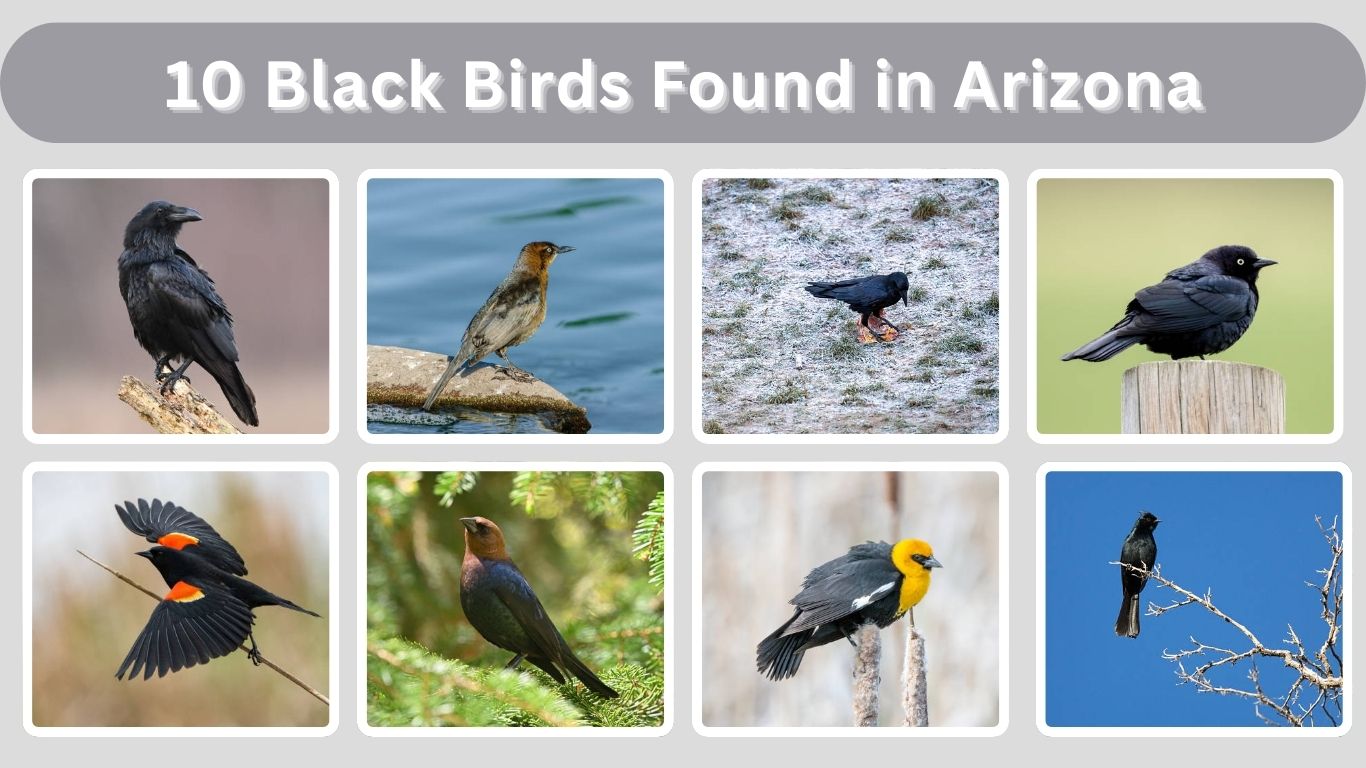
Arizona is home to a diverse range of black birds, from intelligent corvids to sleek desert specialists and wetland dwellers. These birds can be seen across deserts, cities, wetlands, and mountain regions throughout the state. Some are year-round residents, while others appear seasonally or during migration. With bold colors, unique behaviors, and important ecological roles, black birds are among the most noticeable and fascinating birds you can observe in Arizona’s varied landscapes.
1. Common Raven
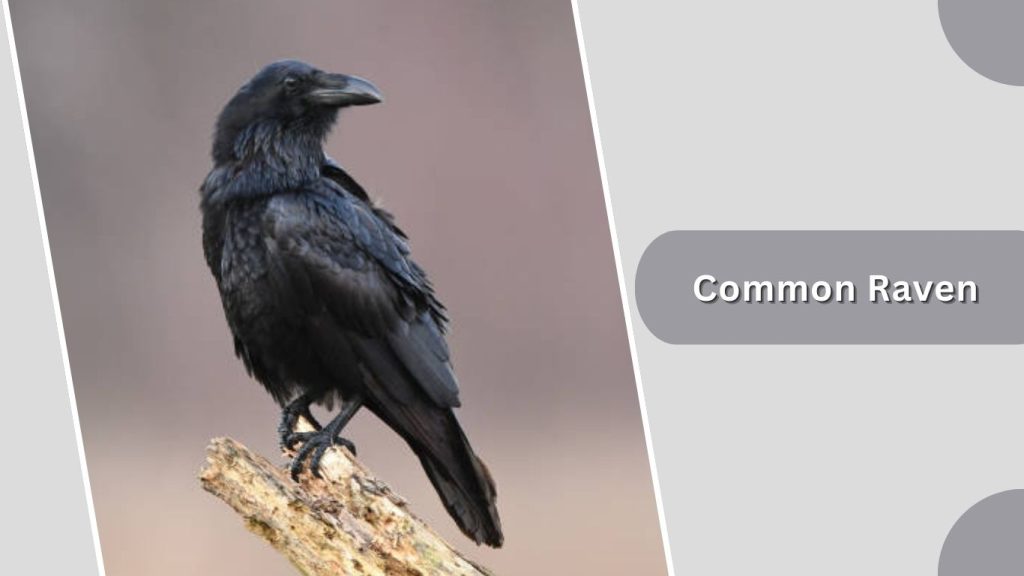
The Common Raven (Corvus corax) is one of the most widespread and recognizable black birds in Arizona. Known for its deep croaking call and impressive intelligence, this large bird thrives in deserts, mountains, and urban areas alike. Ravens are highly adaptable and often seen soaring high in the sky or walking confidently on the ground near roads and open areas.
Identification
- Large, all-black bird with a heavy, curved bill
- Wedge-shaped tail, especially noticeable in flight
- Shaggy throat feathers when calling
- Powerful, steady wingbeats while flying
Color
The Common Raven is entirely black, but its feathers often show a glossy blue, purple, or green sheen in bright sunlight. The bill, legs, and eyes are also black, giving the bird a bold, uniform appearance.
Habitat
In Arizona, Common Ravens are found in deserts, canyons, mountain forests, grasslands, and cities. They are especially common in open landscapes and along highways, where food is easily available.
Diet
Ravens are omnivorous scavengers. Their diet includes carrion, insects, small animals, eggs, fruits, grains, and human food scraps. Their intelligence allows them to locate food quickly and even store extra food for later use.
2. American Crow
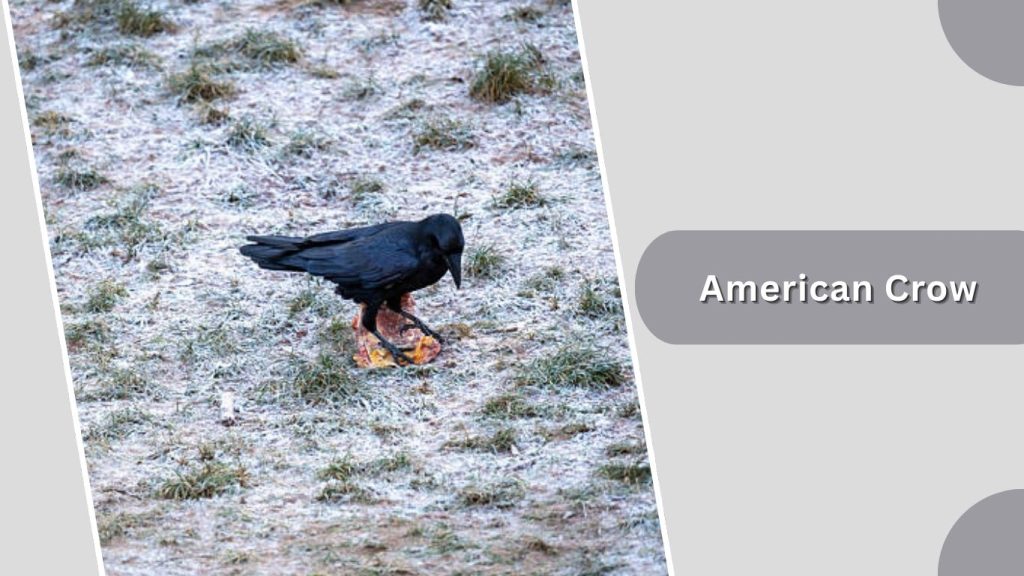
The American Crow (Corvus brachyrhynchos) is a familiar black bird in northern and central parts of Arizona, especially near towns, farms, and open woodlands. Slightly smaller than a raven, it is highly social and intelligent, often seen in family groups or larger flocks. Its loud calls and confident behavior make it easy to notice.
Identification
- Medium-large black bird with a straight, sturdy bill
- Fan-shaped tail visible in flight
- Smooth throat (lacks shaggy feathers like a raven)
- Loud, clear “caw” calls
Color
The American Crow is solid black overall, but in strong sunlight its feathers may show a subtle purple or blue sheen. The bill, legs, and eyes are also black.
Habitat
In Arizona, American Crows are most common in urban areas, agricultural land, open woodlands, and riparian zones. They are less frequent in deep deserts compared to ravens.
Diet
American Crows are omnivores, eating insects, small animals, eggs, seeds, fruits, carrion, and human food waste. They are known for problem-solving skills and cooperative feeding.
3. Great-tailed Grackle
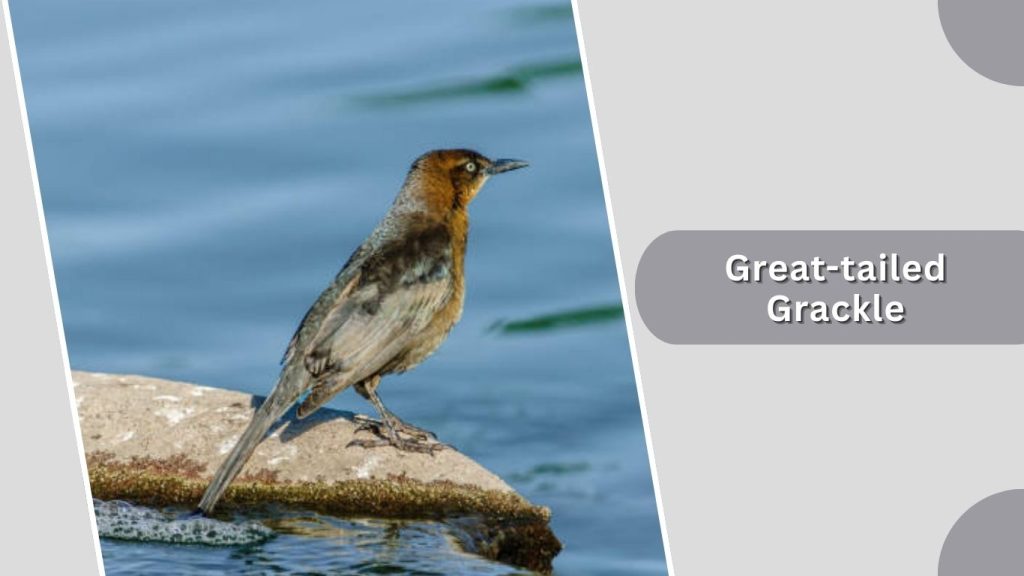
The Great-tailed Grackle (Quiscalus mexicanus) is a striking black bird commonly seen across much of Arizona, especially near cities and water sources. Known for its long tail and noisy behavior, it often gathers in large flocks and dominates feeders and open areas with bold confidence.
Identification
- Medium-large bird with a long, keel-shaped tail
- Slender body and long legs
- Bright yellow eyes
- Males much larger than females
Color
Adult males are glossy black with a strong blue, purple, or green iridescent sheen. Females are dark brown rather than pure black, with paler underparts and dark eyes.
Habitat
Great-tailed Grackles thrive in urban areas, parks, agricultural fields, wetlands, and parking lots throughout Arizona, especially near water and human activity.
Diet
They are opportunistic feeders, eating insects, grains, seeds, small fish, frogs, eggs, and food scraps. Their adaptability has helped them expand rapidly across the Southwest.
4. Brewer’s Blackbird
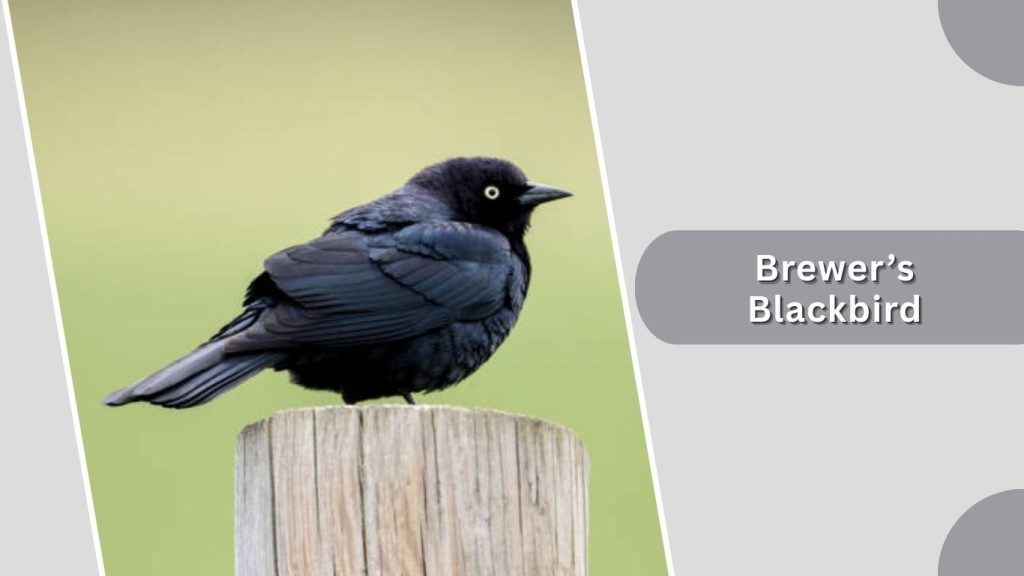
The Brewer’s Blackbird (Euphagus cyanocephalus) is a sleek, medium-sized blackbird commonly found in Arizona, especially during cooler months. It is often seen walking on the ground in open areas, lawns, and parking lots. Though quieter than grackles, it is highly adaptable and frequently mixes with other blackbird species.
Identification
- Medium-sized bird with a slender body
- Straight, pointed bill
- Long legs and upright posture
- Often seen in flocks on the ground
Color
Adult males are glossy black with a purple head and greenish body sheen. Females are dark brown to gray-brown with a paler throat and dark eyes.
Habitat
In Arizona, Brewer’s Blackbirds occur in grasslands, agricultural fields, wetlands, urban areas, and desert edges, particularly near water and open ground.
Diet
They feed on insects, seeds, grains, berries, and human food scraps, foraging mostly on the ground.
5. Red-winged Blackbird
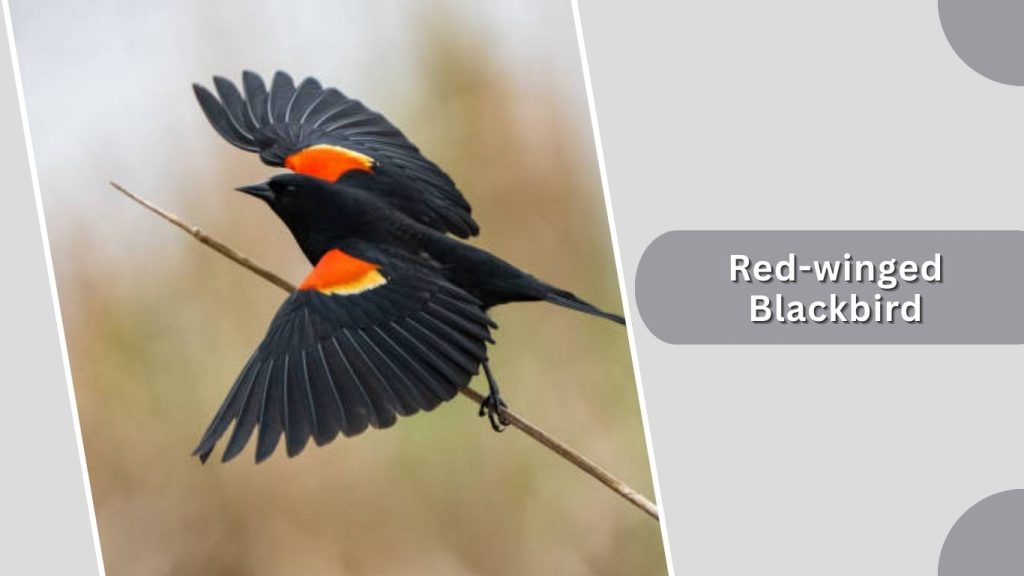
The Red-winged Blackbird (Agelaius phoeniceus) is a common and easily recognized black bird in Arizona, especially near wetlands. Males are famous for their bright shoulder patches and loud, ringing calls, often heard before the bird is seen.
Identification
- Medium-sized blackbird with a conical bill
- Males show bold shoulder patches
- Females are streaked brown and sparrow-like
- Often perch on reeds or cattails
Color
Adult males are jet black with bright red shoulder patches bordered by yellow. Females are brown with heavy streaking and a pale eyebrow, lacking the black coloration of males.
Habitat
This species is most common in marshes, wetlands, ponds, agricultural fields, and roadside ditches across Arizona.
Diet
Red-winged Blackbirds eat insects, seeds, grains, and plant matter, with insects forming a large part of their diet during the breeding season.
6. Brown-headed Cowbird
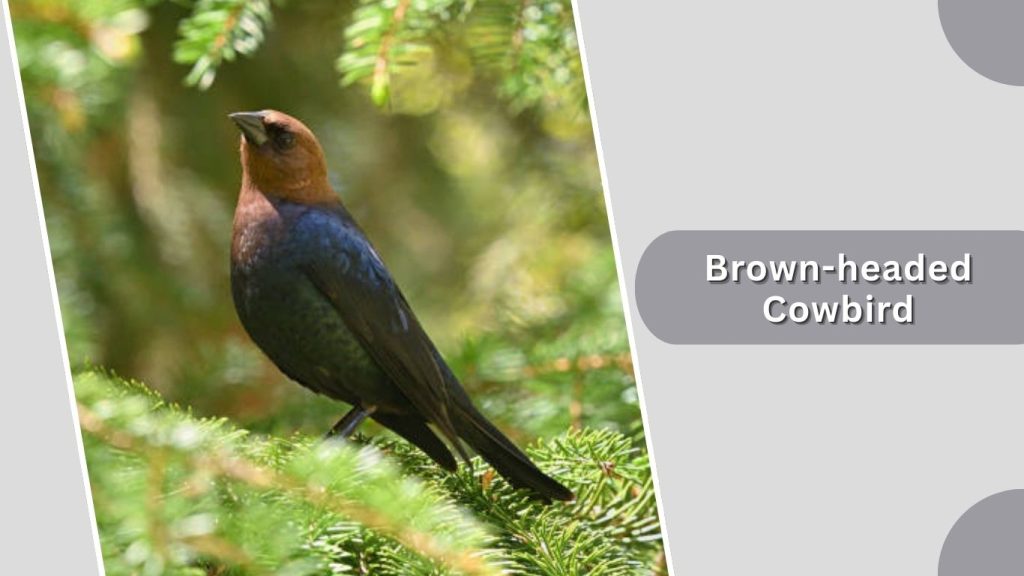
The Brown-headed Cowbird (Molothrus ater) is a widespread black bird in Arizona, often seen in open areas and near livestock. Unlike most birds, it does not build its own nest, instead laying eggs in the nests of other species. This unusual behavior makes it one of the most interesting blackbirds in the state.
Identification
- Stocky body with a short, thick bill
- Short tail and compact shape
- Often seen in mixed flocks
- Males noticeably darker than females
Color
Adult males have a glossy black body with a rich brown head. Females are gray-brown overall with a slightly paler throat and fine streaking.
Habitat
In Arizona, Brown-headed Cowbirds inhabit grasslands, agricultural areas, open woodlands, and urban edges, especially where grazing animals are present.
Diet
They feed mainly on seeds and insects, often foraging on the ground or following livestock to catch disturbed insects.
7. Yellow-headed Blackbird
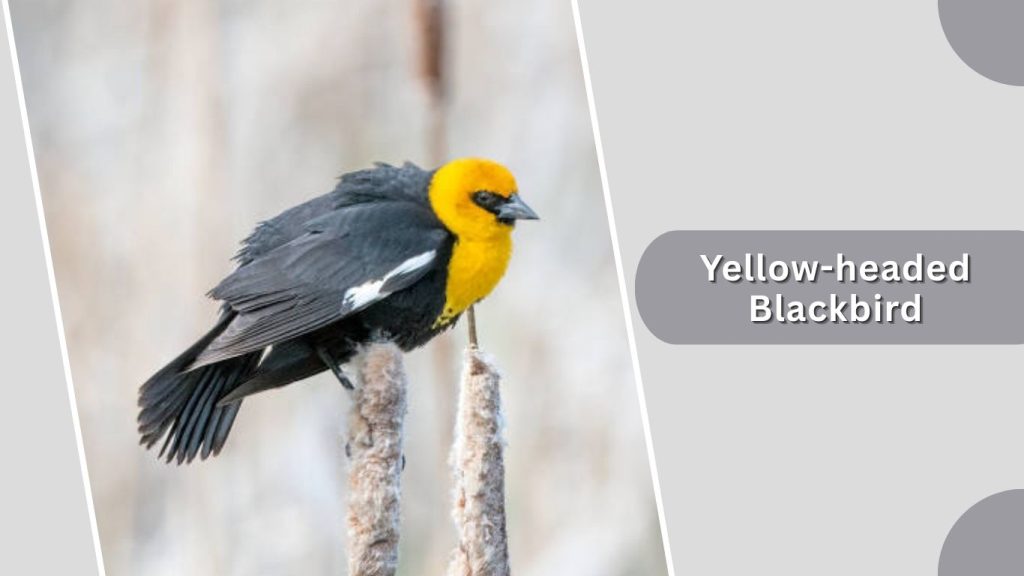
The Yellow-headed Blackbird (Xanthocephalus xanthocephalus) is a bold and striking blackbird found in parts of Arizona, especially around large wetlands. Its loud, harsh calls and dramatic color contrast make it easy to identify, even from a distance.
Identification
- Medium-large blackbird with a strong bill
- Males have a thick neck and broad body
- Females are smaller and browner
- Often seen in flocks during migration
Color
Adult males are black with a bright yellow head and chest, along with white wing patches visible in flight. Females are brown with a dull yellow throat and chest.
Habitat
This species prefers marshes, wetlands, wet fields, and lakeshores in Arizona, particularly during breeding and migration seasons.
Diet
Yellow-headed Blackbirds eat insects, seeds, and grains, often foraging in shallow water or on the ground near wetlands.
8. Phainopepla
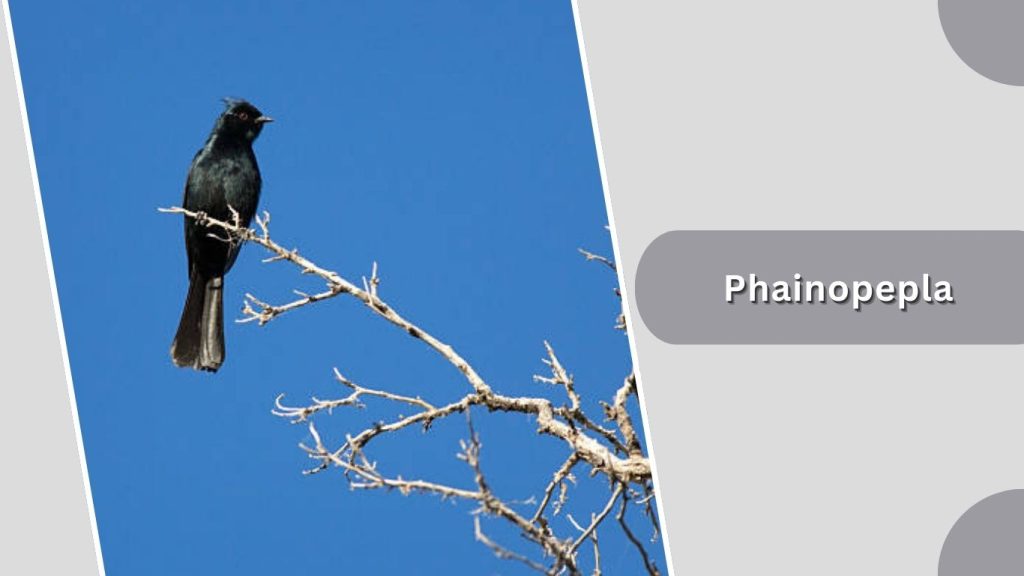
The Phainopepla (Phainopepla nitens) is a sleek, elegant black bird commonly found in Arizona’s deserts and desert woodlands. It is especially associated with mistletoe, which makes up a major part of its diet. Quiet and graceful, it is often seen perched high in trees rather than on the ground.
Identification
- Slim body with a long tail
- Slight crest on the head
- Thin, straight bill
- Smooth, fluttering flight
Color
Adult males are glossy jet black with bright red eyes and a white wing patch visible in flight. Females are soft gray with darker wings and tail and also have red eyes.
Habitat
In Arizona, Phainopeplas are found in deserts, desert washes, mesquite bosques, riparian areas, and open woodlands, especially where mistletoe is abundant.
Diet
Their diet consists mainly of mistletoe berries, along with insects caught in midair. They play an important role in spreading mistletoe seeds.
9. Turkey Vulture
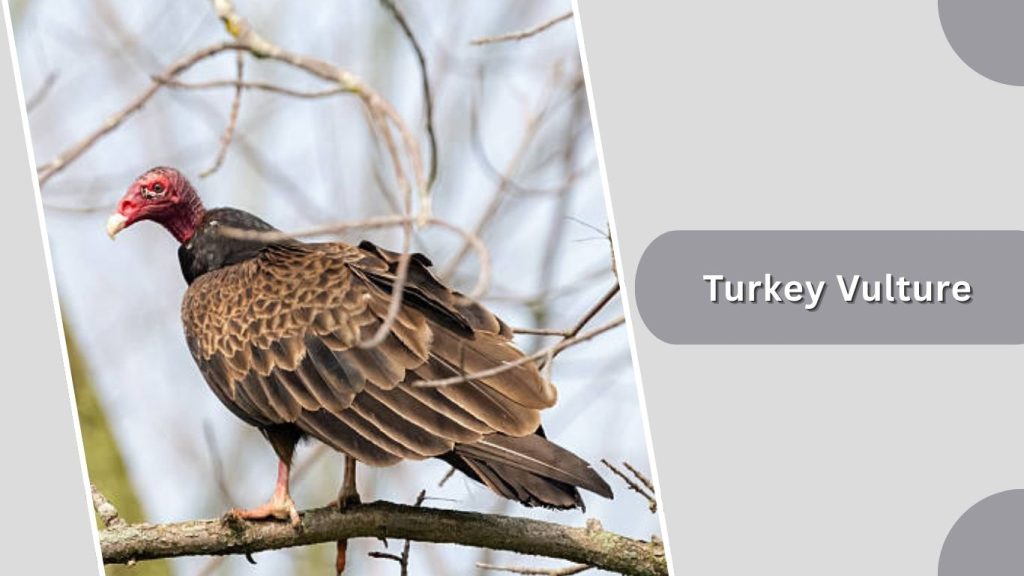
The Turkey Vulture (Cathartes aura) is a large black bird frequently seen soaring over Arizona landscapes. With its long wings and effortless gliding flight, it is one of the most recognizable birds in the state. Though often misunderstood, it is harmless and vital for ecosystem health.
Identification
- Very large body with long, broad wings
- Small, bare head
- Long tail and narrow wings
- Distinctive V-shaped glide while soaring
Color
The body is dark brown to black, while adults have a red, featherless head. The undersides of the wings appear two-toned, with lighter flight feathers contrasting against darker edges.
Habitat
Turkey Vultures are found across Arizona in deserts, grasslands, mountains, canyons, and open countryside, often near roads or open areas.
Diet
They feed almost entirely on carrion, using their exceptional sense of smell to locate dead animals, helping keep the environment clean and disease-free.
10. Black Phoebe
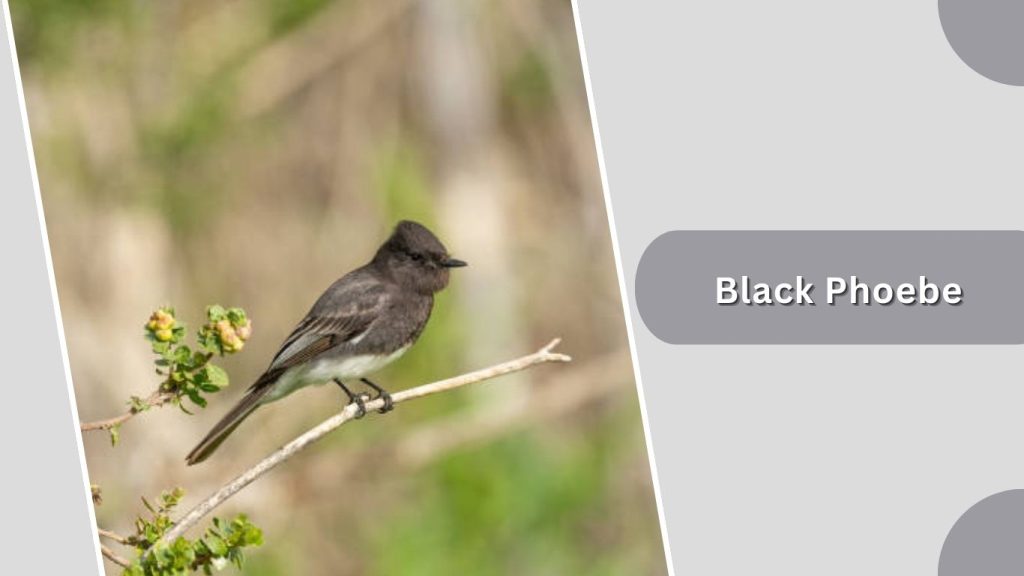
The Black Phoebe (Sayornis nigricans) is a small but striking black-and-white bird commonly found near water in Arizona. Unlike many black birds, it is often seen alone or in pairs, frequently wagging its tail while perched. Its calm behavior and repetitive calls make it easy to recognize.
Identification
- Small flycatcher with a compact body
- Black head, chest, and upperparts
- White belly and undertail
- Often seen perched near water
Color
The Black Phoebe has a black head, chest, back, and wings, sharply contrasting with its bright white belly and undertail coverts. The bill and legs are black, giving it a clean, bold appearance.
Habitat
In Arizona, Black Phoebes are found near streams, rivers, ponds, irrigation canals, and lakes, often around bridges and human structures.
Diet
They feed mainly on flying insects, which they catch by sallying out from low perches and returning to the same spot repeatedly.