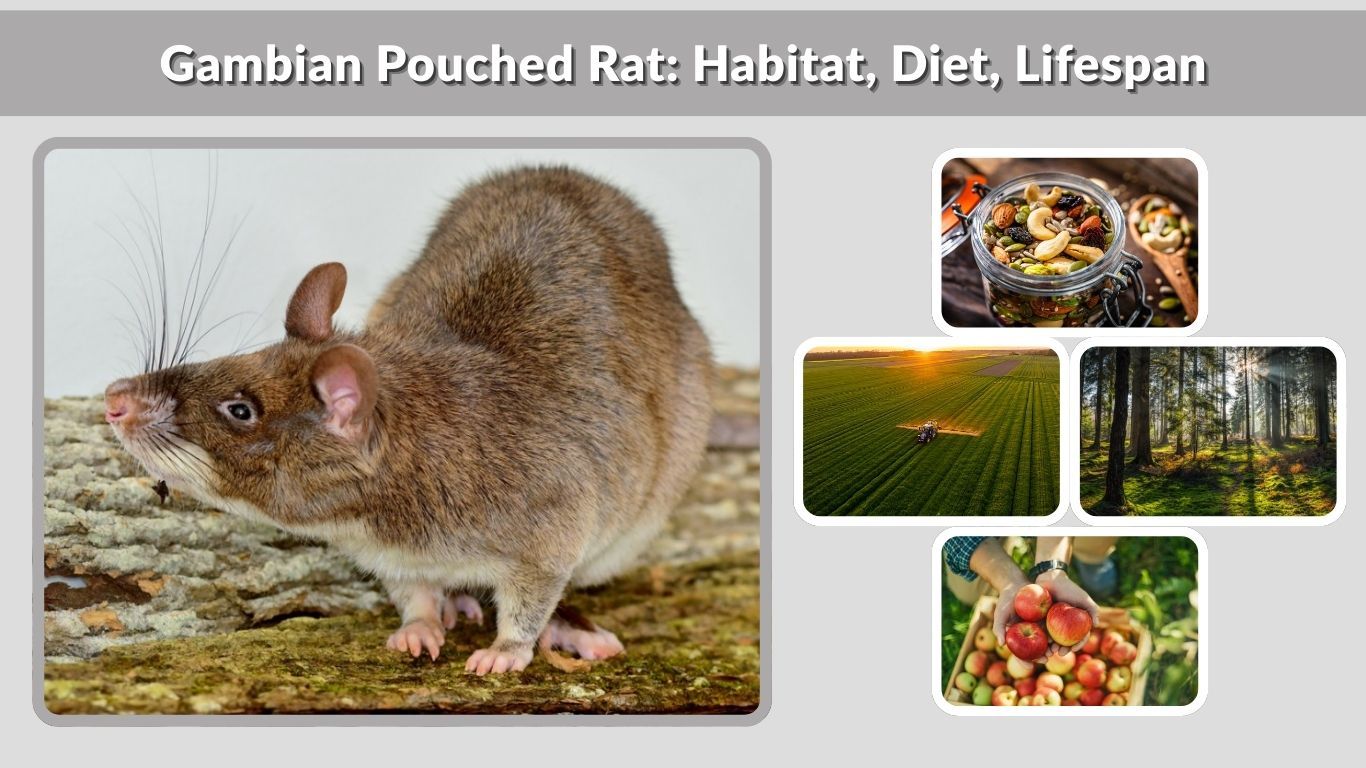





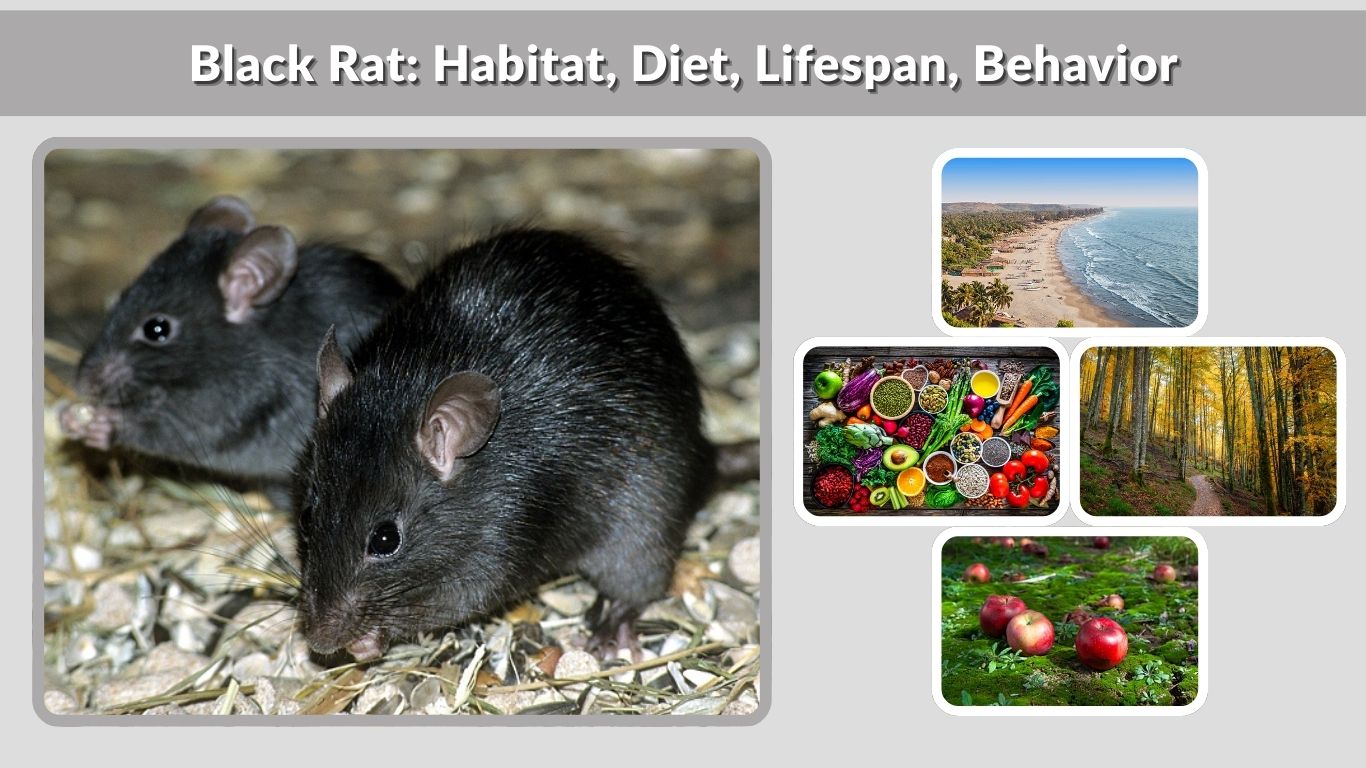
The black rat (Rattus rattus) is one of the most well-known rodent species in the world. Often called the roof rat, ship rat, or house rat, this species has spread across many continents through trade and human travel. Black rats are highly adaptable animals that thrive in both natural environments and human settlements. They are known for their climbing ability, intelligence, and strong survival skills. Learning about the black rat’s habitat, diet, lifespan, and behavior helps explain why this rodent has successfully spread throughout much of the world.
What Is a Black Rat?
The black rat, scientifically known as Rattus rattus, belongs to the Muridae family, which includes mice, rats, and other small rodents. This species is believed to have originally come from South Asia, but it spread to many parts of the world centuries ago through ships involved in international trade.
Because black rats frequently traveled on ships carrying goods, they became known as ship rats. They are also commonly called roof rats because they prefer living in high places such as rooftops, attics, and trees.
Black rats have a slender body shape and are usually smaller than brown rats. Their fur color can vary from black to dark brown or gray. They have a pointed nose, large ears, and a long thin tail that is typically longer than their body.
Adult black rats usually measure 6 to 8 inches (15–20 cm) in body length, while their tails may grow even longer. They generally weigh between 150 and 250 grams, making them lighter and more agile than many other rat species.
Physical Characteristics
Several physical traits make black rats easy to recognize.
First, they have a slender and flexible body, which allows them to move quickly and climb easily. Their long tail helps them balance while moving along branches, wires, or narrow surfaces.
Second, black rats have large ears and a pointed snout, which distinguish them from brown rats that have smaller ears and a blunt nose.
Their fur is typically dark in color, ranging from black to dark gray or brown. The underside of their body is often lighter in color. These features make the black rat well adapted for climbing and living in elevated areas.
Black Rat Habitat
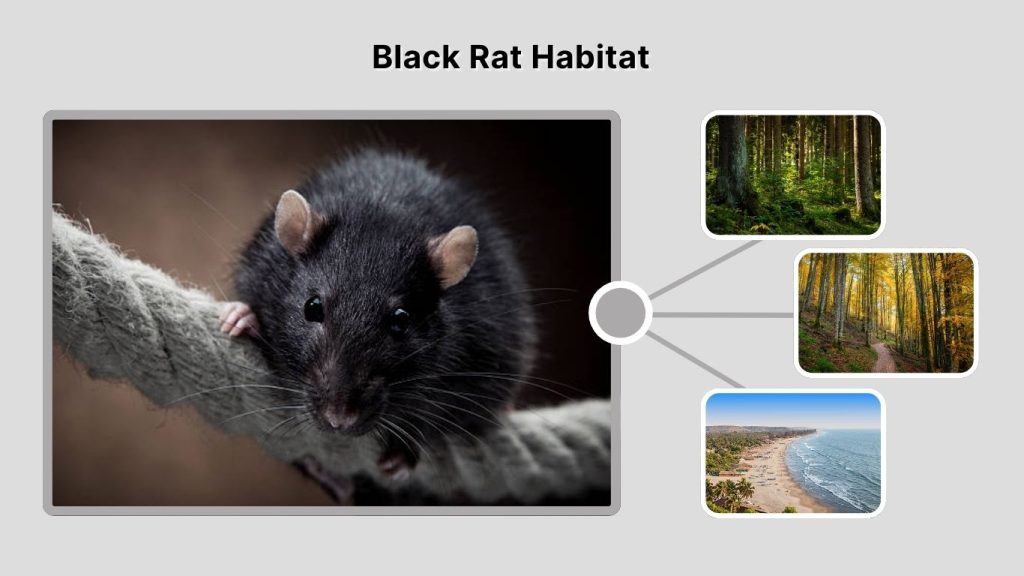
Black rats can survive in many different environments, but they usually prefer warm climates and locations with easy access to food and shelter. Their strong climbing ability allows them to live in places that many other rodents cannot easily reach.
Natural Habitat
In the wild, black rats are commonly found in forests, woodlands, coastal areas, and tropical regions. They often live in trees, where they build nests using leaves, grass, and other materials.
Because they are excellent climbers, black rats prefer habitats that allow them to stay above ground. Tree branches, vines, and dense vegetation provide safe places for them to rest and hide from predators.
Black rats may also build nests in rocky areas or hollow logs if suitable tree habitats are not available. Their natural habitats usually include nearby food sources such as fruits, seeds, and insects.
Urban Habitat
Black rats are well known for living close to human settlements. In cities and towns, they often inhabit roofs, attics, warehouses, barns, and abandoned buildings.
Their preference for high places is the reason they are often called roof rats. Unlike brown rats, which typically live underground or near the ground, black rats prefer elevated nesting areas.
Urban environments provide black rats with many advantages. Buildings offer shelter from predators and harsh weather, while human food waste provides a reliable food supply.
These rodents often enter buildings through small openings, roof gaps, vents, or utility lines. Once inside, they create nests in hidden areas such as ceilings, wall spaces, or storage rooms.
Global Distribution
Today, black rats are found in many parts of the world, especially in tropical and subtropical regions. They are commonly present in Asia, Africa, Europe, Australia, and the Americas.
Historically, black rats spread widely through maritime trade. Ships carrying goods from one port to another also transported rats hidden among cargo. Over time, these rodents established populations in new regions.
Although black rats once dominated many urban areas, in some places they have been replaced by the brown rat, which is larger and more aggressive.
Black Rat Diet
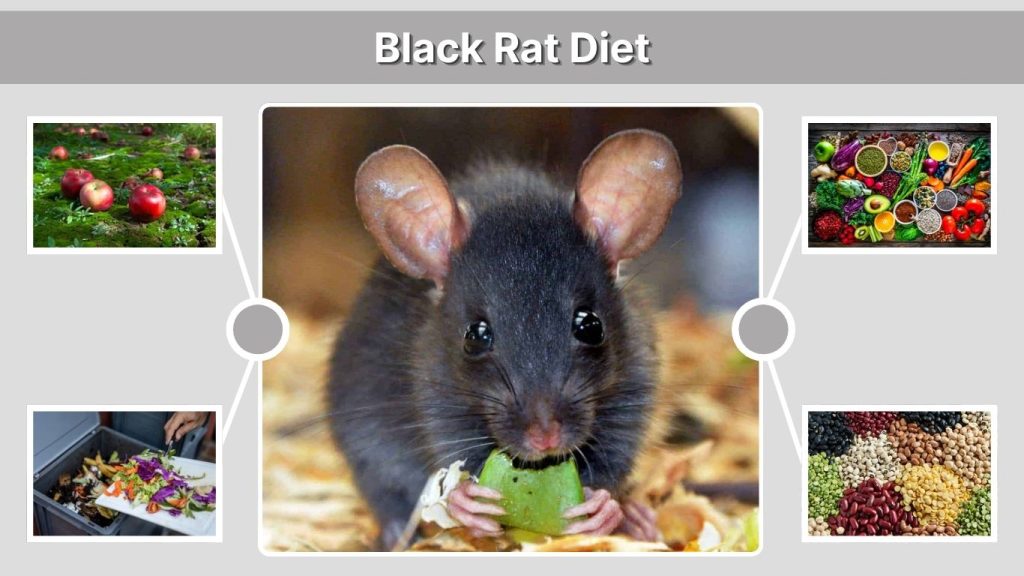
Black rats are omnivores, meaning they eat both plant-based and animal-based foods. Their flexible diet helps them survive in many different environments.
Omnivorous Feeding Habits
Black rats are opportunistic feeders and will eat whatever food is available. However, compared to brown rats, they tend to prefer plant-based foods such as fruits, seeds, and grains.
Their ability to adapt their diet allows them to survive in forests, farms, cities, and coastal regions. Black rats typically eat small amounts of food from multiple sources rather than relying on one specific type of food.
Because they are cautious animals, they often test new foods in small amounts before eating larger quantities. This behavior helps them avoid potentially dangerous or poisoned food.
Common Foods Black Rats Eat
The diet of black rats can vary depending on their environment. Some common foods they consume include:
- Fruits, such as berries and tropical fruits
- Seeds and grains, especially in agricultural areas
- Nuts and vegetables found in gardens or farms
- Insects and small animals, including eggs and small birds
- Human food waste, such as leftovers and garbage
In urban areas, black rats frequently search for food in trash bins, food storage areas, and kitchens. Their sharp teeth allow them to chew through packaging, wood, and plastic to reach food sources.
Feeding Behavior
Black rats are primarily nocturnal, which means they are most active at night. They leave their nests after dark to search for food while avoiding predators and human activity.
One of their most useful abilities is their strong sense of smell, which helps them locate food even from a distance. They also have an excellent memory and can remember the locations of reliable food sources.
Because black rats are cautious animals, they often follow the same feeding routes repeatedly. This predictable behavior sometimes makes it easier for pest control efforts to track and manage them.
Black Rat Lifespan
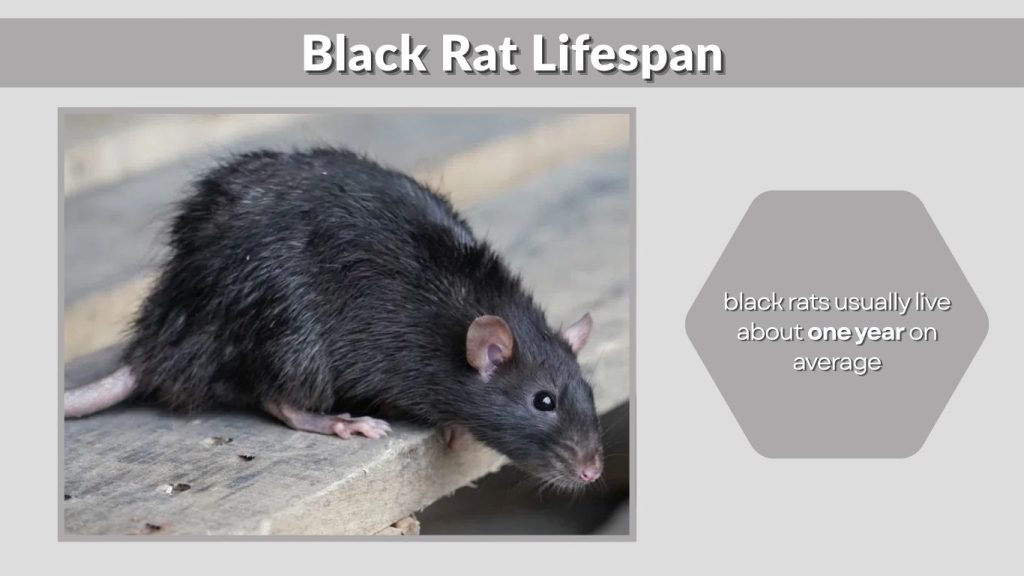
The lifespan of a black rat depends largely on its living conditions and environment. Factors such as predators, food availability, disease, and habitat safety can all influence how long these rodents survive.
Lifespan in the Wild
In natural environments, black rats usually live about one year on average. Life in the wild can be difficult because they face many dangers that reduce their chances of survival.
Predators such as owls, snakes, foxes, and domestic cats often hunt black rats. In addition, they must compete with other animals for food and shelter. Harsh weather conditions and disease can also shorten their lifespan.
Because of these threats, many black rats do not survive beyond their first year in the wild.
Lifespan in Captivity
Black rats that live in captivity generally survive longer than those in the wild. In controlled environments, such as research facilities or when kept as pets, they can live between two and three years.
Captive rats benefit from stable food supplies, protection from predators, and proper medical care. These factors greatly increase their chances of living longer than wild rats.
Factors Affecting Lifespan
Several factors influence the lifespan of black rats, including:
- Predators that hunt them in natural habitats
- Diseases and parasites that spread among rat populations
- Food availability and access to safe food sources
- Environmental conditions, such as extreme temperatures or habitat destruction
Despite their relatively short lifespan, black rats reproduce quickly, which allows their populations to grow rapidly.
Black Rat Facts
Black rats possess several interesting characteristics that make them unique among rodents.
Physical and Behavioral Facts
One of the most notable features of black rats is their excellent climbing ability. Their slender bodies, strong legs, and long tails allow them to move easily along tree branches, wires, and rooftops.
Black rats are also highly intelligent animals. They are capable of learning from experience and remembering locations of food sources and shelter. This intelligence helps them avoid traps and survive in environments where humans attempt to control their populations.
Another interesting fact is that black rats have sharp teeth that grow continuously throughout their lives. They must constantly chew on materials such as wood or plastic to keep their teeth from becoming too long.
Reproduction Facts
Black rats reproduce quickly, which helps maintain their populations even when many individuals do not survive long.
Female black rats can produce several litters each year. A typical litter contains 5 to 10 baby rats, known as pups. Under favorable conditions, a female may give birth multiple times in a year.
Young rats grow rapidly and usually reach maturity in two to three months. This fast development allows them to begin reproducing at a young age, contributing to the rapid growth of rat populations.
Survival Abilities
Black rats have several survival skills that help them thrive in many environments.
They can squeeze through very small openings, sometimes only a few centimeters wide. Their flexible bodies make it easy for them to enter buildings through cracks, vents, or gaps in walls.
Black rats are also extremely cautious animals. They often avoid new objects in their environment until they feel safe approaching them. This cautious behavior can make them difficult to trap or control.
Their adaptability allows them to survive in forests, farms, and cities around the world.
Behavior and Social Structure
Black rats are social animals that usually live in small groups or colonies. These groups may share nesting areas and work together to find food and shelter.
Within a colony, there is often a social hierarchy. Dominant rats may control the best food sources and mating opportunities, while weaker individuals occupy lower positions within the group.
Black rats communicate with each other using sounds, body movements, and scent markings. They also produce ultrasonic vocalizations that humans cannot hear.
Most black rats are nocturnal, meaning they are most active at night. During the day, they usually remain hidden in nests located in trees, roofs, or wall spaces.
Black Rat vs Brown Rat
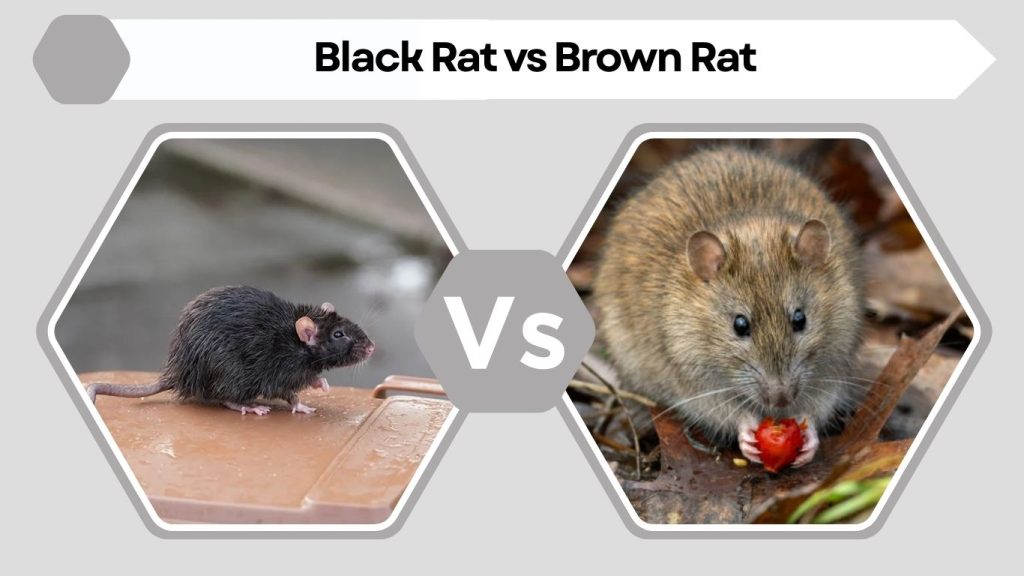
Black rats and brown rats are often confused, but there are several important differences between the two species.
Black rats are smaller and more slender, while brown rats are larger and heavier. Black rats also have longer tails and larger ears compared to brown rats.
Another major difference is their preferred habitat. Black rats usually live in higher locations, such as trees, roofs, and attics. Brown rats, on the other hand, tend to live closer to the ground in burrows, sewers, or basements.
In some areas, brown rats have replaced black rats because they are more aggressive and better competitors for food and territory.
Are Black Rats Dangerous?
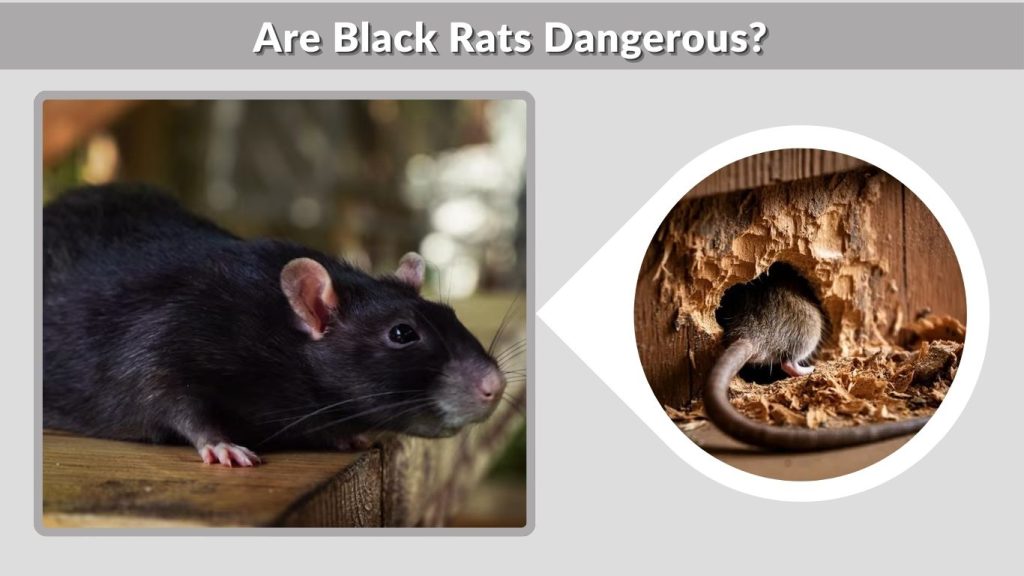
Black rats are often considered pests because they can cause damage to homes, farms, and food storage areas. They frequently chew through materials such as wood, plastic, and electrical wires while searching for food or creating nests.
These rodents may also contaminate food supplies with their droppings or urine. In some cases, rats can carry diseases that may spread to humans through contaminated food, water, or surfaces.
In addition to health concerns, black rats can cause economic damage by destroying crops, stored grains, and household items.
Because of these risks, many communities use pest control methods to reduce black rat populations.
Conclusion
The black rat is a highly adaptable rodent that has successfully spread across much of the world. Its climbing ability, flexible diet, and strong survival skills allow it to thrive in both natural habitats and human environments. Although black rats can create problems for people by damaging property and contaminating food supplies, understanding their diet, habitat, lifespan, and behavior helps explain why they are such successful survivors. Learning more about these rodents also helps improve methods for managing and controlling their populations.