



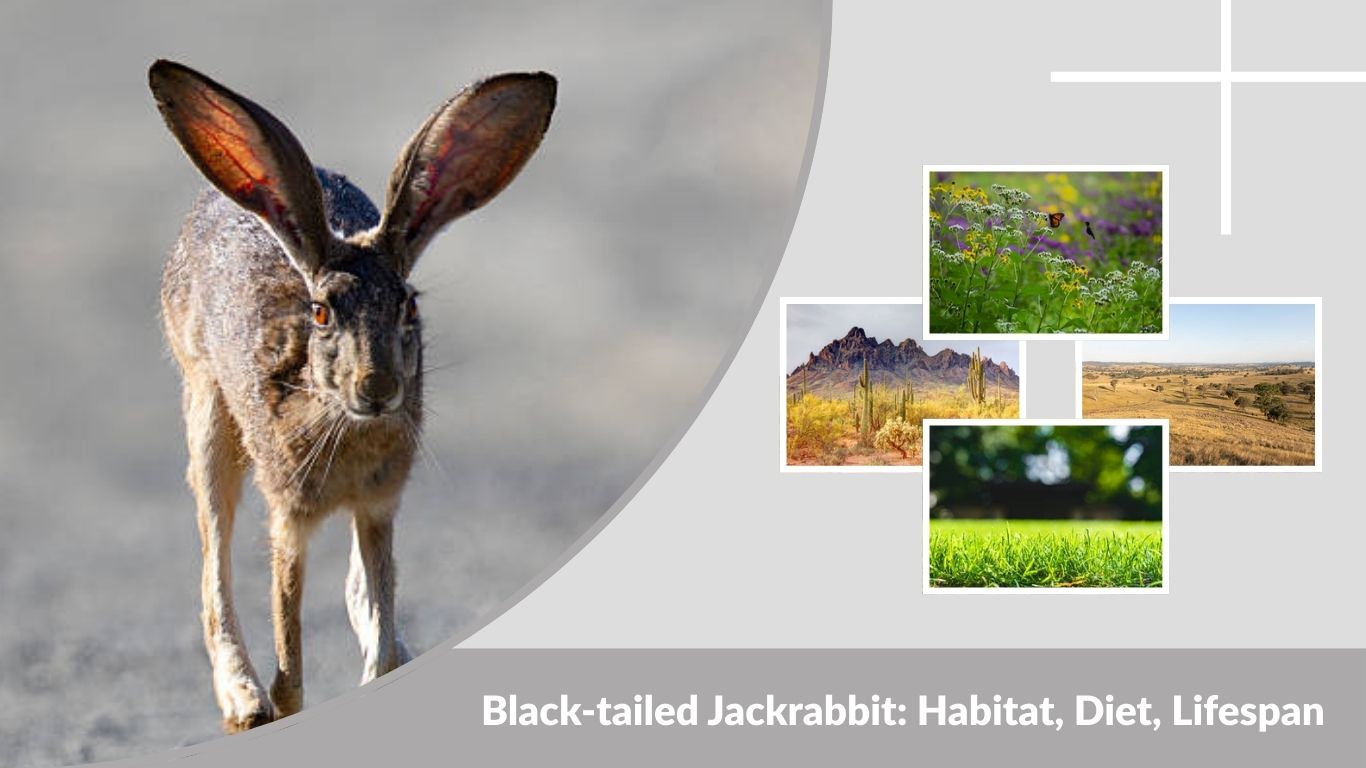
The black-tailed jackrabbit (Lepus californicus) is a fast-running hare found across western North America. Despite its name, it is not a true rabbit but a member of the hare group, which has several unique characteristics. This animal is known for its long ears, powerful hind legs, and distinctive black-tipped tail. Black-tailed jackrabbits are well adapted to deserts, grasslands, and open plains where speed and sharp senses help them escape predators. Understanding their identification, habitat, and diet reveals how these animals survive in challenging environments.
What Is a Black-tailed Jackrabbit?
The black-tailed jackrabbit is one of the most recognizable hares in North America. It belongs to the Leporidae family, which includes both rabbits and hares. Unlike many rabbit species, jackrabbits do not dig burrows. Instead, they rely on their speed and camouflage to avoid predators.
These animals are highly adapted to open landscapes where they can quickly detect danger and escape. Their large ears help them hear approaching predators and also play a role in regulating body temperature, which is especially important in hot desert climates.
Scientific Classification
- Scientific name: Lepus californicus
- Family: Leporidae
- Order: Lagomorpha
- Common name: Black-tailed jackrabbit
Physical Characteristics
The black-tailed jackrabbit has several distinctive physical features that make it easy to identify.
- Long upright ears with dark tips
- Slender body built for speed
- Powerful hind legs for long jumps
- Brownish or gray fur that blends with dry landscapes
- A black stripe on the upper side of the tail
These characteristics help the jackrabbit remain hidden in its natural environment and quickly escape predators.
Size and Appearance
Black-tailed jackrabbits are larger than most rabbit species. Adults typically measure 45–63 centimeters in length and weigh between 1.5 and 3 kilograms.
Their fur color varies depending on the environment but usually appears grayish-brown or sandy brown, which helps them blend into desert soil and dry vegetation. The large ears, which can reach up to 13 centimeters in length, help release excess body heat and keep the animal cool in hot climates.
Black-tailed Jackrabbit Identification
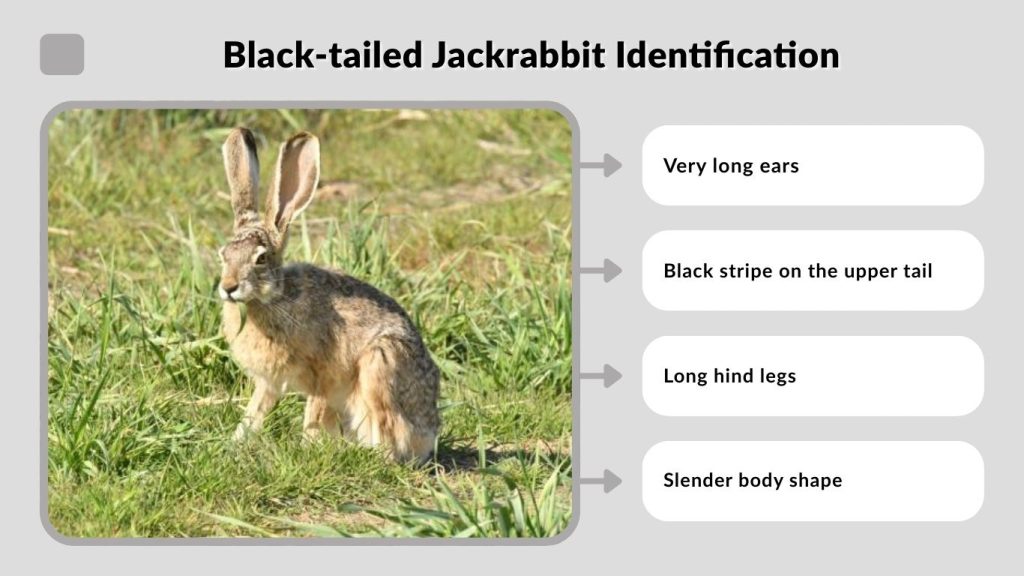
Identifying a black-tailed jackrabbit in the wild is usually easy because of its large size and long ears. Several key characteristics distinguish this species from other rabbits and hares.
Key Identification Features
Some of the most noticeable identification traits include:
- Very long ears with dark tips
- Black stripe on the upper tail
- Long hind legs built for powerful running and jumping
- Slender body shape compared to typical rabbits
- Large eyes positioned on the sides of the head
These physical features allow the jackrabbit to detect danger quickly and escape efficiently.
Differences Between Jackrabbits and Rabbits
Although their name includes the word “rabbit,” jackrabbits are actually hares, and there are important differences between hares and rabbits.
Jackrabbits generally have longer ears and legs than rabbits. They also live above ground rather than digging underground burrows. Instead of building warrens, jackrabbits rest in shallow ground depressions.
Another major difference is how their young are born. Baby jackrabbits, called leverets, are born with fur and open eyes, allowing them to move shortly after birth. In contrast, rabbit babies are usually born blind and hairless.
Black-tailed Jackrabbit Habitat
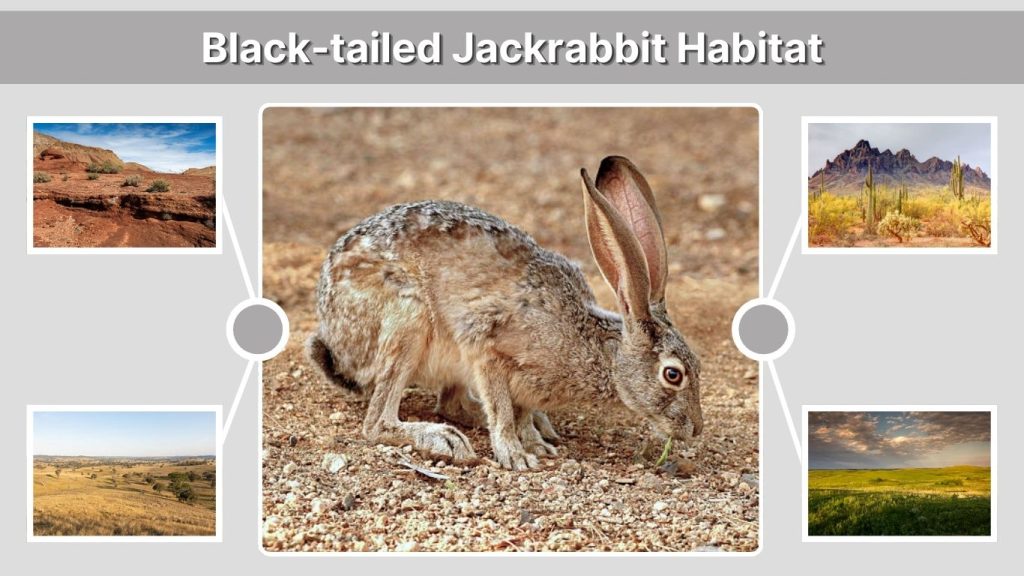
The black-tailed jackrabbit is well adapted to open and dry environments. Its habitat usually includes wide landscapes where it can run quickly and find vegetation for food.
Geographic Range
The black-tailed jackrabbit is widely distributed throughout western North America. Its range includes:
- The western United States
- Mexico
- Parts of the southwestern U.S. deserts
In these regions, the species thrives in areas with open terrain and scattered vegetation.
Preferred Habitats
Black-tailed jackrabbits can live in several types of environments, but they generally prefer open landscapes with good visibility. Their common habitats include:
- Deserts
- Grasslands
- Shrublands
- Open plains
- Agricultural fields
These areas provide enough vegetation for feeding while also allowing the jackrabbit to spot predators from a distance.
Shelter and Resting Areas
Unlike rabbits that dig burrows, black-tailed jackrabbits use natural cover for protection. During the day, they often rest in shallow depressions in the ground called forms.
These forms are usually located under shrubs, grasses, or other vegetation that provides shade and camouflage. The jackrabbit relies on its fur color to blend into the environment while resting.
Black-tailed Jackrabbit Diet
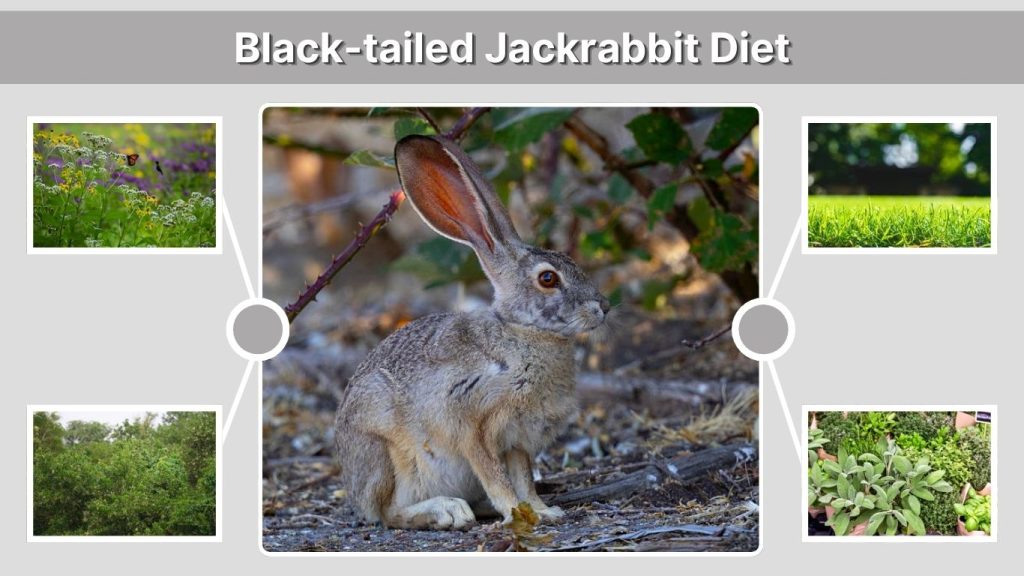
The black-tailed jackrabbit diet consists entirely of plant material. As herbivores, these animals feed on a variety of grasses and desert plants that grow in their habitat.
What Do Black-tailed Jackrabbits Eat?
Common foods in their diet include:
- Grasses
- Herbs
- Wildflowers
- Shrubs
- Bark and twigs
Jackrabbits are capable of surviving in dry environments where plant availability changes throughout the year.
Seasonal Diet Changes
Their diet often varies depending on the season.
During spring and summer, jackrabbits mainly eat fresh grasses and leafy plants. These foods provide water and nutrients that help them stay hydrated in warm climates.
During fall and winter, when green vegetation becomes scarce, they may rely more on woody plants, shrubs, and tree bark.
Feeding Behavior
Black-tailed jackrabbits are most active during evening, night, and early morning hours. This behavior helps them avoid the intense daytime heat found in desert environments.
They usually feed in open areas but remain close to vegetation that can provide quick cover if predators appear.
Black-tailed Jackrabbit Lifespan
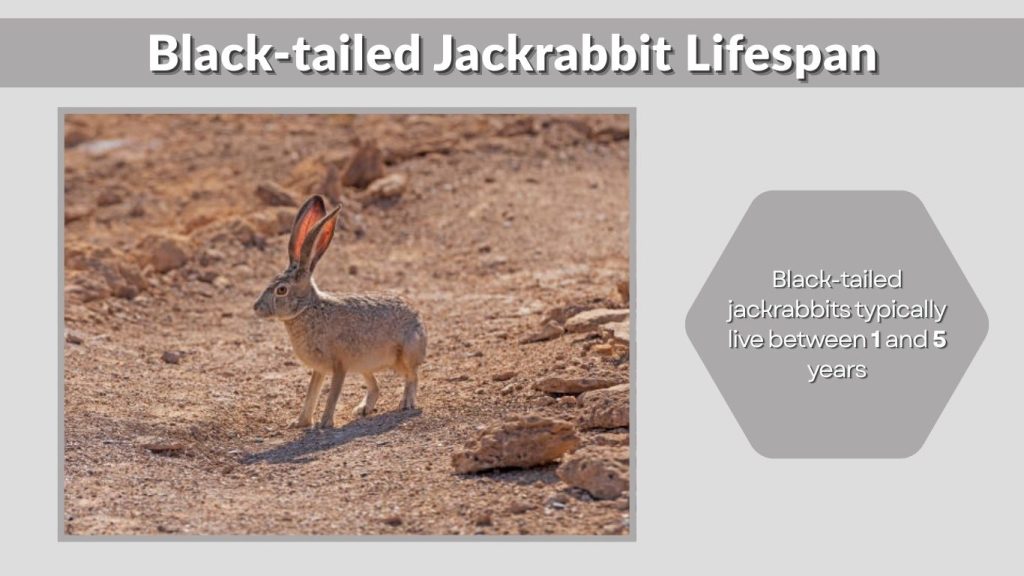
The black-tailed jackrabbit lifespan varies depending on environmental conditions and predation. Like many small mammals living in open habitats, these animals face numerous dangers that affect their survival.
Lifespan in the Wild
In the wild, black-tailed jackrabbits typically live between 1 and 5 years. Many individuals do not reach the maximum lifespan because they are frequently hunted by predators.
Young jackrabbits are especially vulnerable during their early months when they are still learning survival skills.
Lifespan in Captivity
In protected environments such as wildlife reserves or captivity, black-tailed jackrabbits may live up to 8 years. Access to regular food, shelter, and medical care can increase their life expectancy.
Factors Affecting Lifespan
Several factors influence how long black-tailed jackrabbits live:
- Predators: Coyotes, foxes, and birds of prey frequently hunt them.
- Food availability: Drought or poor vegetation can reduce survival.
- Disease: Illness can spread quickly among wildlife populations.
- Climate conditions: Extreme heat or harsh winters may affect health.
Because of these risks, jackrabbits rely on their speed and alert senses to avoid danger.
Black-tailed Jackrabbit Life Cycle
The black-tailed jackrabbit life cycle is adapted for survival in open landscapes where predators are common. Their reproductive strategy helps maintain stable populations despite many threats.
Breeding Season
Black-tailed jackrabbits usually breed from late winter through summer, although the exact timing can vary depending on climate and food availability.
During this period, females may produce multiple litters.
Gestation Period
The gestation period lasts about 41–47 days, which is slightly longer than that of many rabbit species.
After pregnancy, the female gives birth to a small group of babies known as leverets.
Birth and Early Development
Unlike rabbit babies, leverets are born fully furred and with open eyes. This advanced development allows them to move shortly after birth.
The young usually remain hidden in vegetation while the mother visits them occasionally to nurse.
Growth Stages
Black-tailed jackrabbits pass through several development stages:
- Leveret stage – Newborn young with fur and open eyes.
- Juvenile stage – Begin moving and feeding on plants.
- Subadult stage – Continue growing and developing survival skills.
- Adult stage – Fully mature and capable of reproduction.
Reproductive Maturity
Young jackrabbits reach sexual maturity at about 6–8 months of age. Once mature, they can reproduce during the next breeding season.
Predators of the Black-tailed Jackrabbit
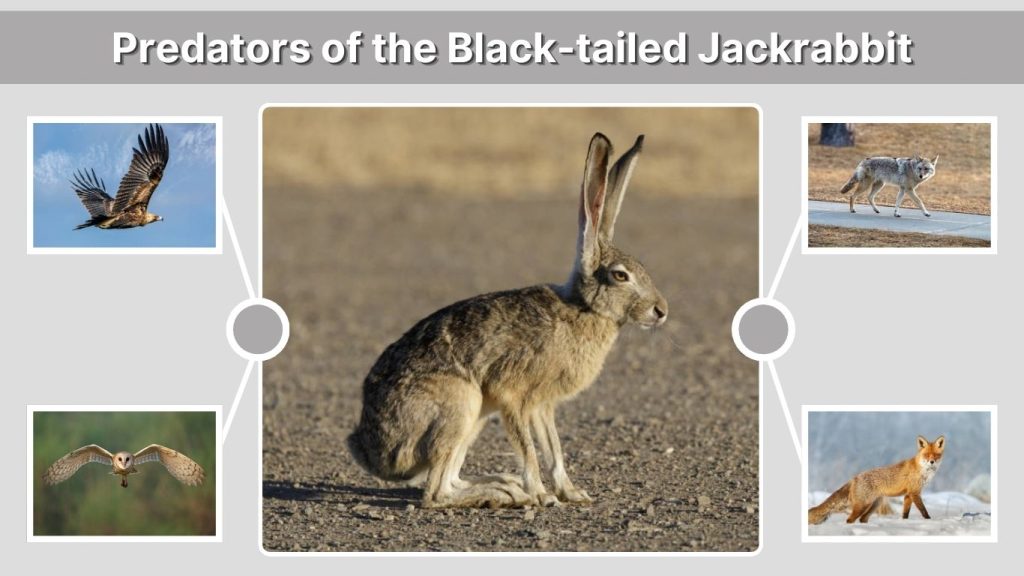
Black-tailed jackrabbits are an important food source for many predators in desert and grassland ecosystems.
Common predators include:
- Coyotes
- Foxes
- Hawks and eagles
- Owls
- Bobcats
To avoid these predators, jackrabbits rely on their excellent hearing, sharp eyesight, and remarkable speed.
When threatened, they can run extremely fast and often escape by moving in zigzag patterns.
Black-tailed Jackrabbit Behavior
Black-tailed jackrabbits have several behavioral traits that help them survive in harsh environments.
These animals are mostly nocturnal or crepuscular, meaning they are most active during the evening, night, and early morning. This schedule helps them avoid the intense heat of desert climates.
They are generally solitary animals, although several individuals may feed in the same area when food is abundant.
Their large ears serve two important purposes: detecting distant sounds and releasing body heat to keep the animal cool.
Interesting Black-tailed Jackrabbit Facts
There are many fascinating facts about the black-tailed jackrabbit.
- Despite its name, it is actually a hare, not a rabbit.
- It can run up to 60 km/h (37 mph) when escaping predators.
- Jackrabbits can leap several meters in a single jump.
- Their ears help regulate body temperature in hot climates.
- They are an important prey species in desert ecosystems.
These unique traits allow the black-tailed jackrabbit to survive in some of the most challenging environments in North America.
Role in the Ecosystem
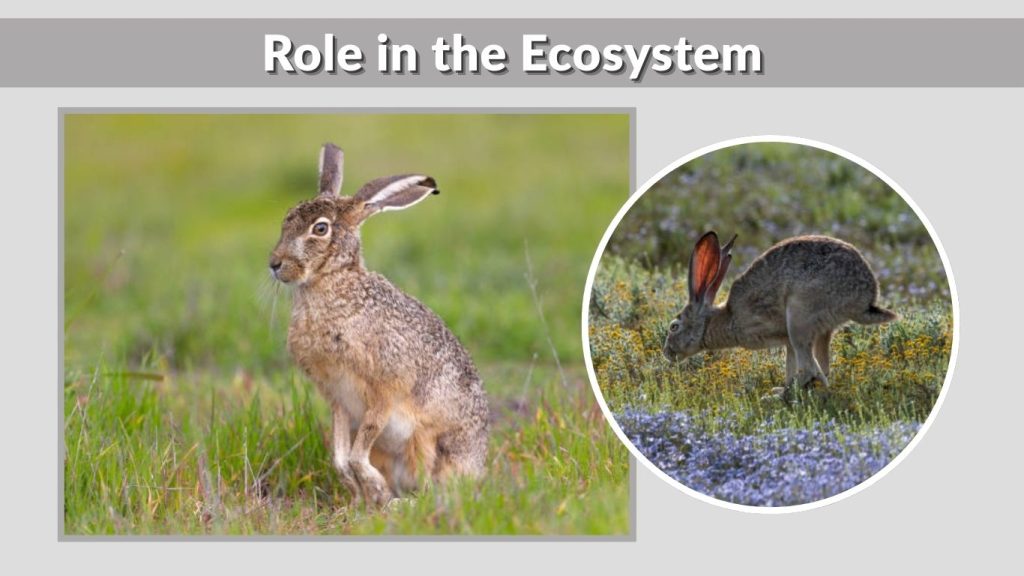
Black-tailed jackrabbits play an important ecological role in grassland and desert habitats.
As herbivores, they feed on grasses, shrubs, and other vegetation, helping control plant growth. Their grazing can influence plant distribution and ecosystem balance.
They are also a key prey species for many predators, including coyotes, hawks, and bobcats. Because many animals depend on jackrabbits as a food source, their populations are important for maintaining healthy ecosystems.
Conclusion
The black-tailed jackrabbit is a remarkable animal known for its speed, adaptability, and survival skills. Found across deserts and open landscapes of western North America, it thrives in environments where quick reflexes and strong senses are essential. From its plant-based diet and unique life cycle to its impressive running ability, the black-tailed jackrabbit demonstrates how wildlife can adapt to challenging habitats. Understanding this species helps highlight its important role in desert and grassland ecosystems.