
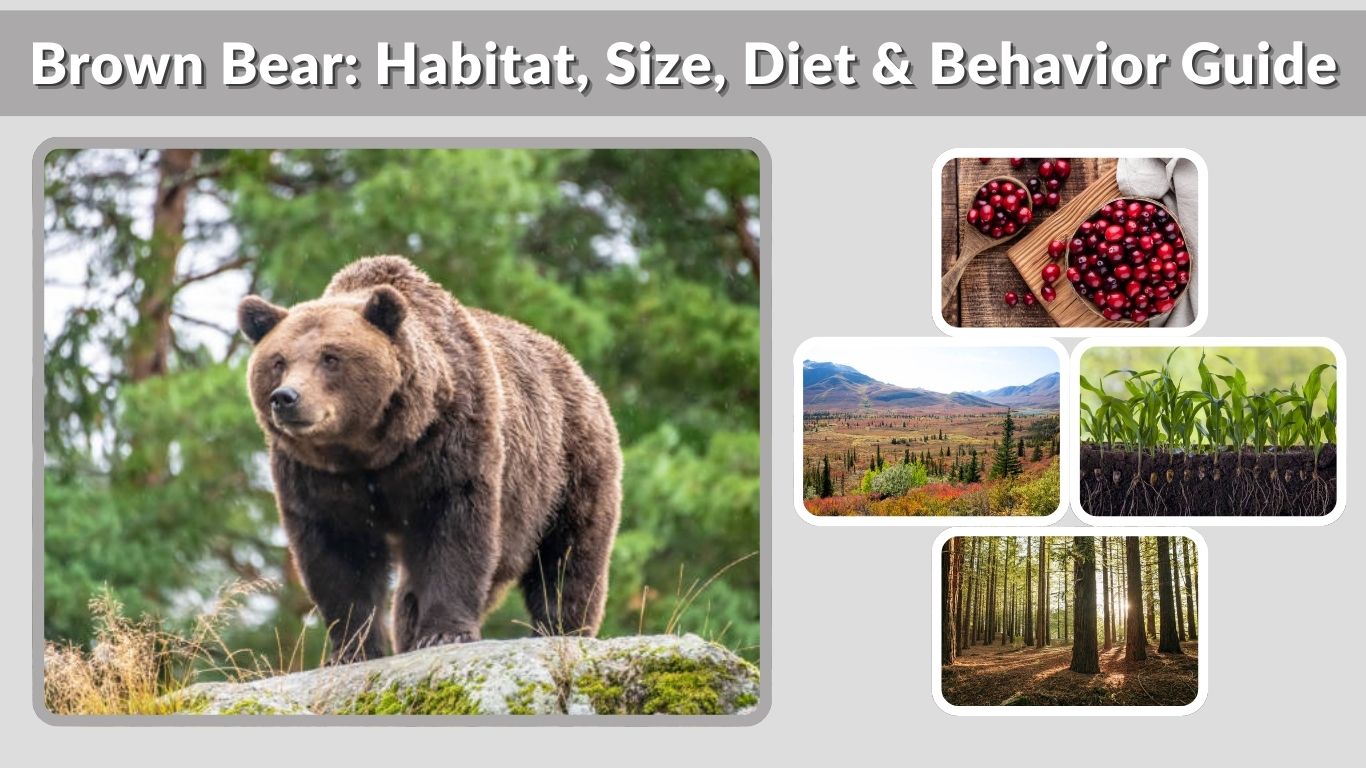
The brown bear (Ursus arctos) is one of the largest and most powerful land mammals in the world. Found across North America, Europe, and Asia, this impressive species is known for its strength, adaptability, and wide geographic range. From coastal regions rich in salmon to rugged mountain forests, brown bears thrive in diverse environments. With their massive size, varied diet, and fascinating behavior, brown bears play an important ecological role in the ecosystems they inhabit.
What Is a Brown Bear?
Scientific Name and Classification
The scientific name of the brown bear is Ursus arctos. It belongs to the family Ursidae and the order Carnivora. Despite being classified as carnivores, brown bears are omnivorous and consume a wide range of plant and animal foods.
Brown bears have existed for hundreds of thousands of years and have evolved into several regional populations and subspecies. Their ability to adapt to different climates—from Arctic tundra to temperate forests—has helped them survive across three continents.
Brown Bear vs Grizzly Bear
Many people wonder about the difference between a brown bear and a grizzly bear. In fact, the grizzly bear is a subspecies of the brown bear (Ursus arctos horribilis). Grizzlies are typically found in inland areas of North America, while coastal brown bears—such as the Kodiak bear—often grow larger due to richer food sources.
Coastal brown bears tend to have access to abundant salmon, allowing them to reach impressive sizes. Inland grizzlies are generally smaller but share similar physical traits, including the distinctive shoulder hump.
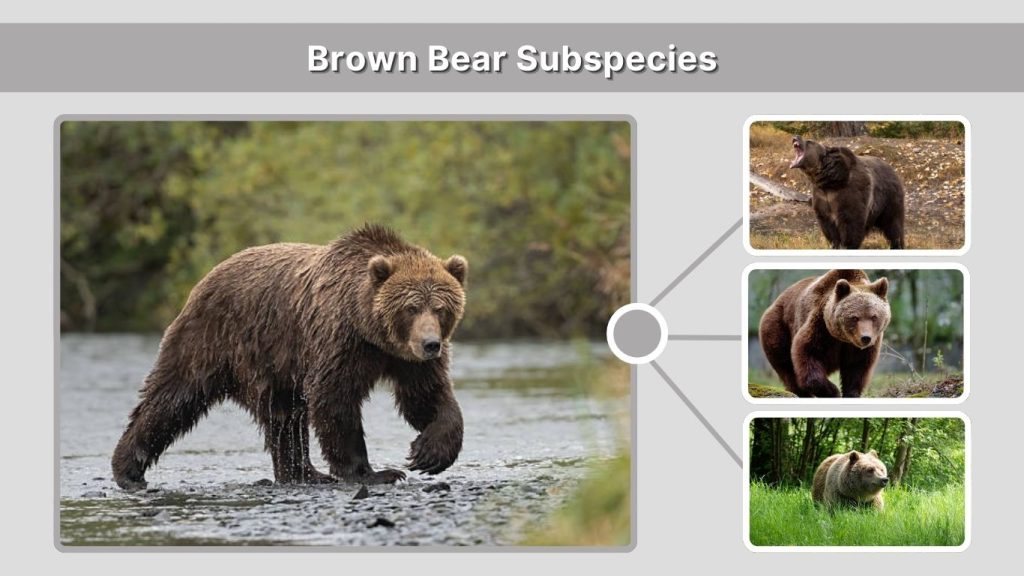
Brown Bear Subspecies
Grizzly Bear
The grizzly bear is one of the most well-known brown bear subspecies. It inhabits parts of Alaska, western Canada, and the northwestern United States. Grizzlies are recognized by their slightly silver-tipped fur and prominent shoulder hump, which consists of strong muscles used for digging and hunting.
Kodiak Bear
The Kodiak bear lives primarily on the Kodiak Archipelago in Alaska. It is one of the largest brown bear subspecies and can rival the polar bear in size. Isolation on the islands allowed this population to develop into a distinct and massive form of brown bear.
Eurasian Brown Bear
The Eurasian brown bear is widely distributed across Europe and northern Asia. Populations exist in countries such as Russia, Finland, Sweden, Romania, and parts of the Middle East. These bears vary in size depending on region and food availability.
Brown Bear Size and Physical Characteristics
Brown Bear Size
Brown bears are among the largest terrestrial carnivores. Adult males typically measure between 6 and 9 feet (1.8 to 2.7 meters) in length. When standing on all fours, they reach about 3 to 5 feet at the shoulder.
When standing upright on their hind legs, brown bears can reach heights of 7 to 10 feet. This impressive stature often makes them appear even larger than they already are. Standing upright is usually a sign of curiosity, as the bear tries to detect scents or observe its surroundings.
Brown Bear Weight
Brown bear weight varies widely depending on subspecies, sex, and location. Adult males can weigh between 300 and 1,500 pounds (135 to 680 kilograms), while females are generally smaller, weighing between 200 and 800 pounds (90 to 360 kilograms).
Coastal brown bears with access to high-protein diets—especially salmon—often grow much larger than inland populations. Seasonal changes also affect weight. During late summer and fall, brown bears enter a period called hyperphagia, consuming large amounts of food to build fat reserves for winter hibernation.
Distinctive Features
One of the most recognizable features of a brown bear is the muscular shoulder hump. This hump is made of powerful muscles that support digging and powerful forelimb movements. Brown bears also have a slightly concave, or dish-shaped, facial profile.
Their fur ranges in color from light brown and golden shades to dark brown or nearly black. Long, curved claws—especially on the front paws—help them dig for roots, excavate dens, and catch prey.
In addition to strength, brown bears possess an exceptional sense of smell, estimated to be several times stronger than that of a bloodhound. This powerful sense allows them to locate food from miles away.
Brown Bear Habitat
Preferred Habitat Types
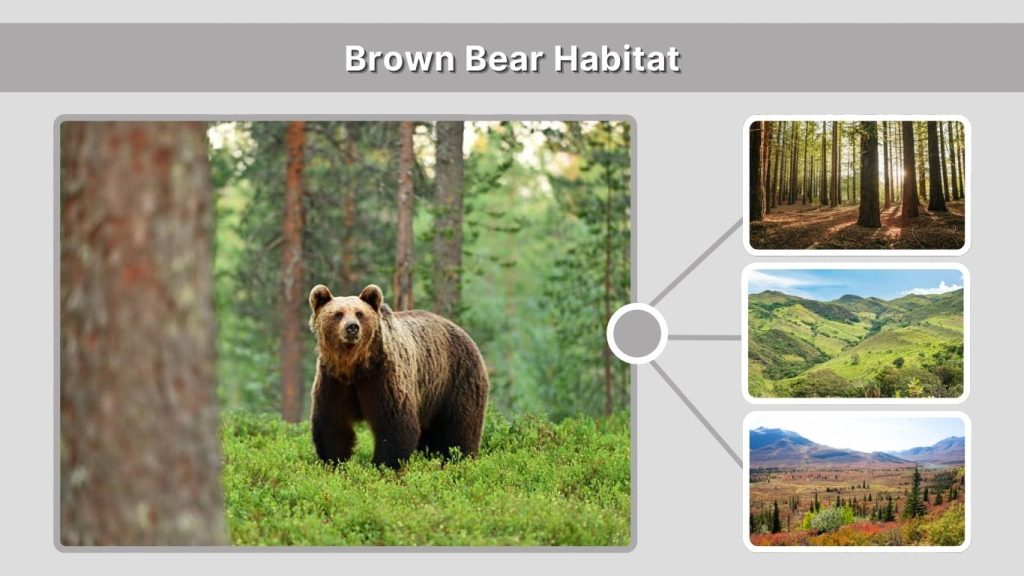
Brown bears are highly adaptable and occupy a variety of habitats. They are commonly found in forests, mountain regions, tundra, and coastal areas. In North America, they thrive in Alaska’s wilderness and parts of western Canada. In Europe and Asia, they inhabit dense forests and remote mountain landscapes.
Access to food and shelter is the primary factor influencing habitat selection. Areas with abundant vegetation, fish, and wildlife provide the best living conditions.
Denning and Hibernation Sites
As winter approaches, brown bears prepare dens for hibernation. These dens are often dug into hillsides or created in sheltered areas such as under tree roots or in caves. Snow cover provides additional insulation during cold months.
During hibernation, their heart rate and metabolism slow dramatically. They survive entirely on stored body fat, losing significant weight by the time they emerge in spring.
Brown Bear Diet
What Do Brown Bears Eat?
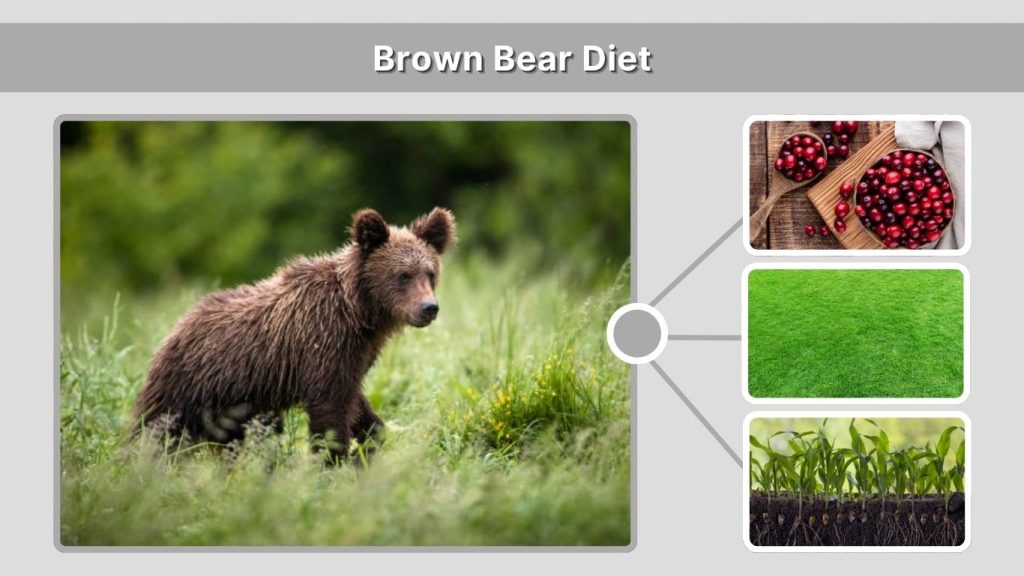
Brown bears are omnivores with one of the most varied diets of any large mammal. Although classified under the order Carnivora, much of their diet consists of plant material. In many regions, up to 70–80 percent of their food intake comes from vegetation.
They commonly eat berries, grasses, roots, nuts, and seeds. During summer and fall, berries can become a primary food source. Brown bears also dig for roots and bulbs using their powerful claws.
In addition to plants, they consume fish, insects, and mammals. In coastal regions—especially Alaska—salmon plays a crucial role in their diet. Inland populations may hunt elk, moose calves, deer, or feed on carrion. Their diet depends largely on seasonal availability and geographic location.
Seasonal Feeding Patterns
Seasonal change strongly influences brown bear feeding behavior. In spring, bears often feed on emerging vegetation and carcasses left from winter. During summer, fish runs and berry growth provide abundant food.
In fall, brown bears enter hyperphagia, a period of intense eating. They may consume up to 90 pounds of food per day to build fat reserves. These reserves are essential for surviving months of winter hibernation when they do not eat or drink.
Brown Bear Behavior
Daily Activity Patterns
Brown bears are generally solitary animals. Adult males and females usually live and forage alone, except during mating season or when mothers are raising cubs. Each bear maintains a home range that may overlap with others but is typically defended against direct competition.
They are most active during dawn and dusk, though activity patterns can vary depending on human presence and food availability. In remote wilderness areas, they may be active during the day.
Communication and Intelligence
Brown bears communicate through body language, scent marking, and vocalizations. They rub against trees, leave claw marks, and deposit scent to signal territory or reproductive status.
When threatened, they may huff, growl, or stand upright to assess a situation. Despite their size and strength, brown bears are intelligent animals with strong memory and problem-solving abilities. They can remember food locations and return to productive feeding areas year after year.
Hibernation Behavior
As winter approaches, brown bears retreat to their dens. During hibernation, their heart rate slows dramatically, and their metabolism decreases. They rely entirely on stored body fat for energy.
Pregnant females give birth during hibernation, usually in January or February. Cubs are born small, blind, and dependent on their mother’s milk for nourishment.
Brown Bear Life Cycle
Mating Season
Brown bear mating season typically occurs in late spring or early summer. Like several other bear species, they experience delayed implantation. This means that although fertilization occurs earlier, the embryo does not implant in the uterus until fall.
If a female has not gained sufficient fat reserves, pregnancy may not continue. This adaptation ensures cubs are born only when the mother is physically prepared to support them.
Cubs and Maternal Care
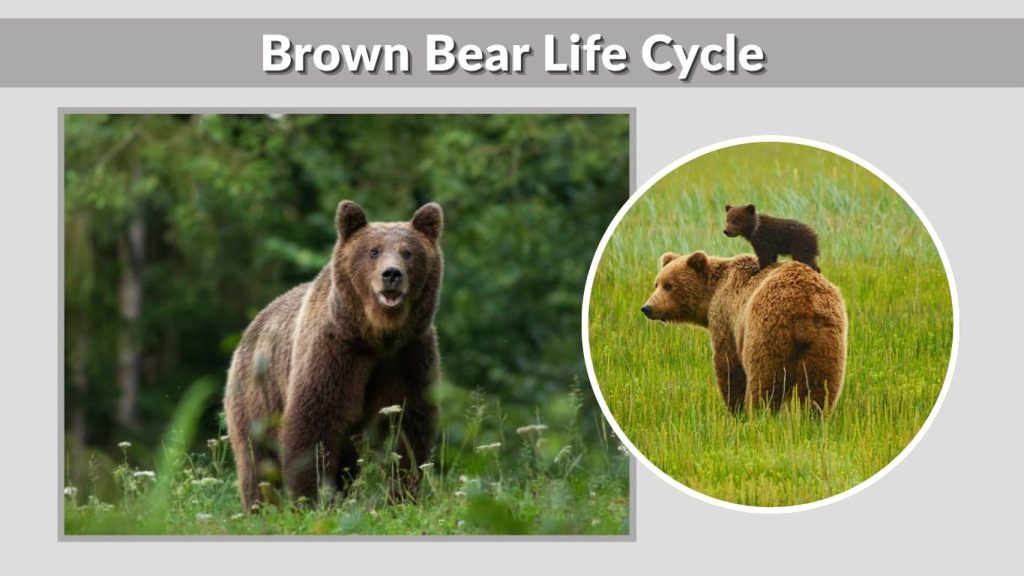
Brown bear litters usually consist of one to three cubs. Cubs are born during winter hibernation and remain in the den until spring. When they emerge, they follow their mother closely and depend on her for protection and guidance.
Cubs typically stay with their mother for about two to three years. During this time, they learn how to forage, hunt, and avoid danger. The mother is extremely protective and will defend her cubs fiercely if threatened.
Lifespan
In the wild, brown bears typically live between 20 and 25 years. In protected environments or captivity, they may live longer. Lifespan depends on habitat quality, food availability, and human-related risks.
Brown Bear Adaptations
Brown bears possess several remarkable adaptations that support their survival across diverse habitats. Their muscular shoulder hump provides strength for digging dens, uncovering roots, and hunting prey.
Long, curved claws assist in fishing, digging, and defense. Thick fur provides insulation in cold climates, while a dense layer of body fat helps them endure winter hibernation.
One of their most impressive adaptations is their powerful sense of smell, which allows them to detect food sources from miles away. This ability is critical for locating carrion, fish runs, or berry patches in vast wilderness areas.
Threats and Conservation
Natural Threats
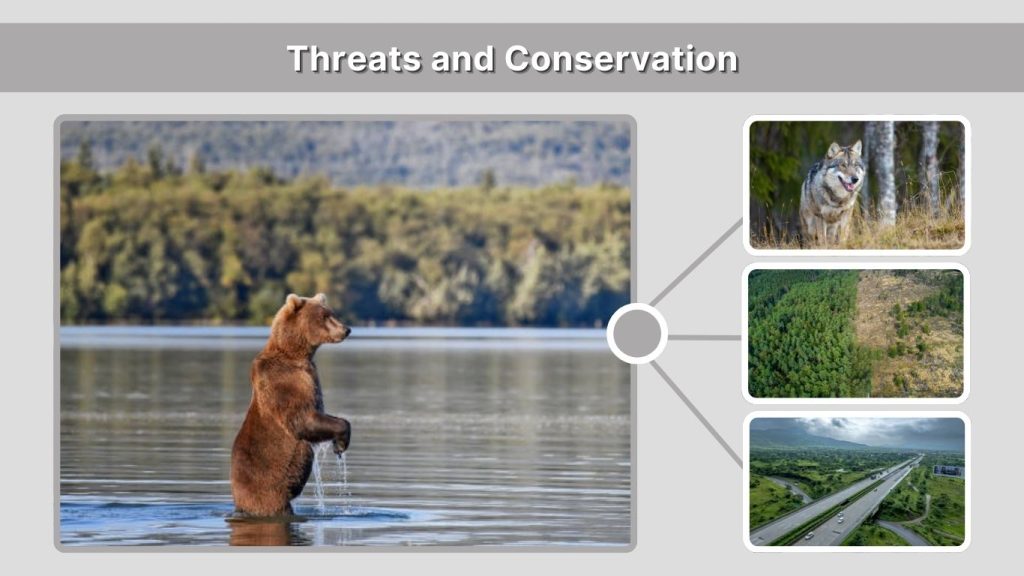
Adult brown bears have few natural predators due to their size and strength. However, cubs may be vulnerable to wolves, other bears, or harsh environmental conditions.
Human-Related Threats
Human activity poses the greatest threat to brown bear populations. Habitat loss, road development, and expanding settlements reduce available territory. In some regions, hunting and poaching also impact populations.
Conflicts between humans and brown bears often arise when bears access livestock, crops, or garbage. Wildlife management strategies focus on reducing these encounters through education and habitat protection.
Conservation Status
Globally, the brown bear is classified as a species of Least Concern by the IUCN. However, some regional populations are considered threatened or endangered due to habitat fragmentation and human pressure.
Protected areas, wildlife corridors, and regulated hunting programs help maintain stable populations in many parts of their range.
Brown Bear Facts
- Brown bears are among the largest land carnivores in the world.
- They can run up to 35 miles per hour despite their size.
- Their bite force is powerful enough to crush bone.
- Cubs sometimes ride on their mother’s back when crossing rivers.
- They play an important ecological role by spreading seeds and nutrients.
FAQs
How big is a brown bear?
Brown bears typically measure between 6 and 9 feet in length and stand about 3 to 5 feet tall at the shoulder. When upright, they can reach 7 to 10 feet tall. Adult males are much larger than females and can weigh over 1,000 pounds in coastal regions.
What is the difference between a brown bear and a grizzly bear?
A grizzly bear is a subspecies of the brown bear. Grizzlies usually live inland and tend to be slightly smaller, while coastal brown bears—such as Kodiak bears—grow larger due to richer food sources like salmon. Both belong to the species Ursus arctos.
Where do brown bears live?
Brown bears live across North America, Europe, and Asia. They are commonly found in Alaska, western Canada, parts of the northwestern United States, Scandinavia, Russia, and mountainous regions of Asia. Their habitats include forests, tundra, mountains, and coastal areas.
What do brown bears eat?
Brown bears are omnivores. Their diet includes berries, grasses, roots, nuts, insects, fish (especially salmon), and large mammals such as elk or moose calves. Most of their diet is plant-based, but they take advantage of high-protein food sources when available.
Are brown bears dangerous to humans?
Brown bears can be dangerous if they feel threatened, especially mothers protecting cubs. However, attacks are rare. Most bears avoid human contact. Proper food storage, maintaining distance, and respecting wildlife guidelines greatly reduce the risk of conflicts.