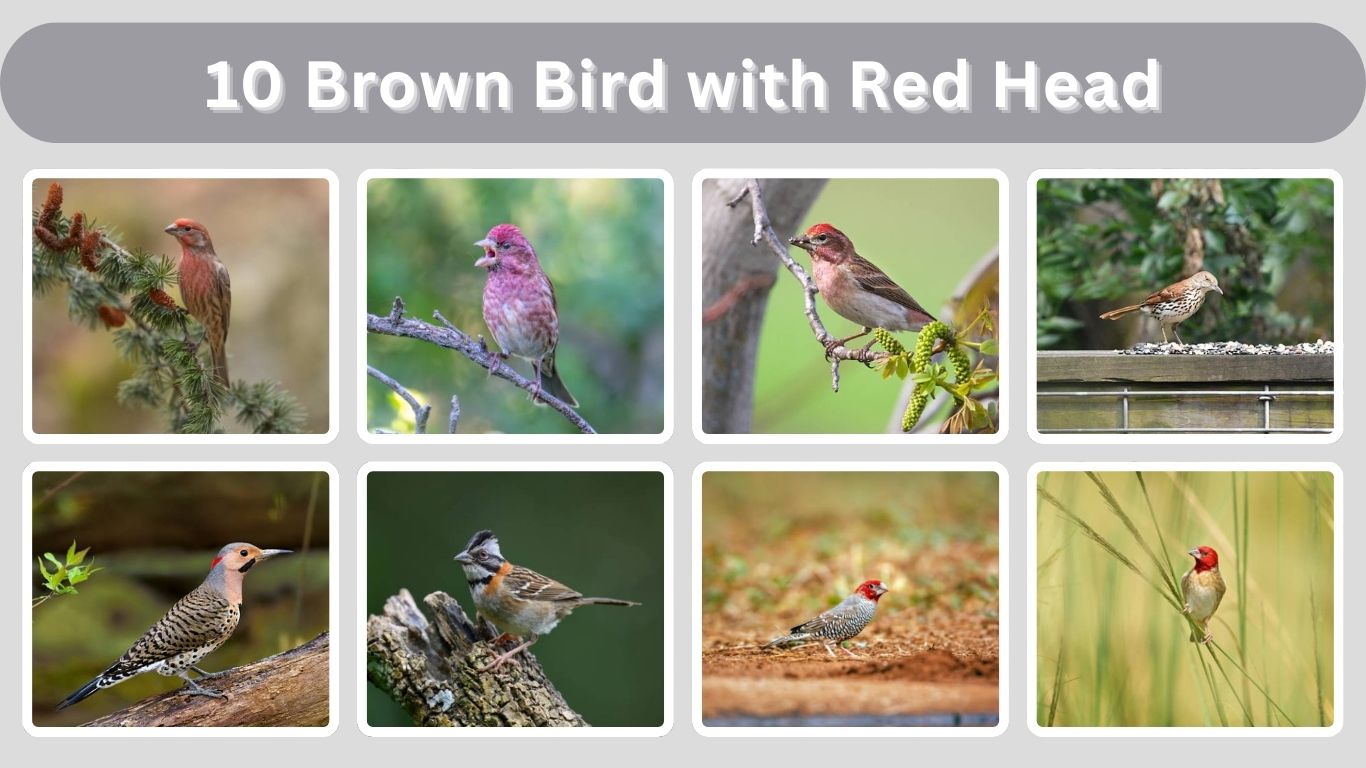
Brown birds with red heads are eye-catching songbirds found in many parts of the world, from backyard gardens to open woodlands and grasslands. The warm brown body paired with a bright red or reddish head makes these birds easy to notice and popular among birdwatchers. In many species, the red color is strongest in males and plays an important role in communication and mating. Below are some well-known examples along with helpful identification details.
1. House Finch (Haemorhous mexicanus)
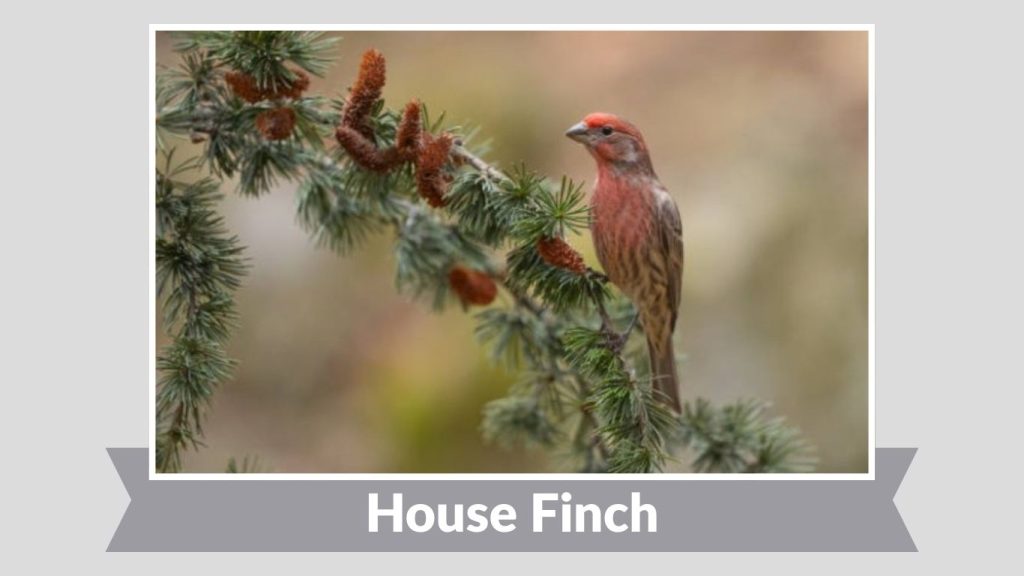
The house finch is one of the most common brown birds with a red head in North America. Males are easily recognized by their red forehead, face, and upper chest, which contrast with their brown-streaked body. They are highly adaptable birds, often seen around homes, gardens, city parks, and farmlands.
Identification
- Small to medium-sized songbird (about 12.5–15 cm long)
- Brown, heavily streaked back and belly
- Males have a red head, face, and upper chest (females lack red)
- Short, slightly notched tail
- Thick, conical bill adapted for seeds
Habitat
House finches live in a wide range of environments, including urban areas, suburban neighborhoods, open woodlands, deserts, and agricultural fields. They are especially common around buildings, backyards, and bird feeders, where food is easily available.
Diet
Their diet mainly consists of seeds, grains, buds, and fruits. House finches frequently visit feeders for sunflower seeds and millet. During warmer months, they also eat berries and occasionally small insects, especially when feeding young chicks.
Behavior
House finches are social birds often seen in small flocks. Males are known for their cheerful, warbling songs, which they use to attract females and defend territory. They are active, curious, and comfortable living close to humans.
Lifespan
In the wild, house finches usually live 3 to 7 years, though some individuals survive longer under favorable conditions. Their lifespan depends on food availability, predators, climate, and disease exposure.
2. Purple Finch (Haemorhous purpureus)
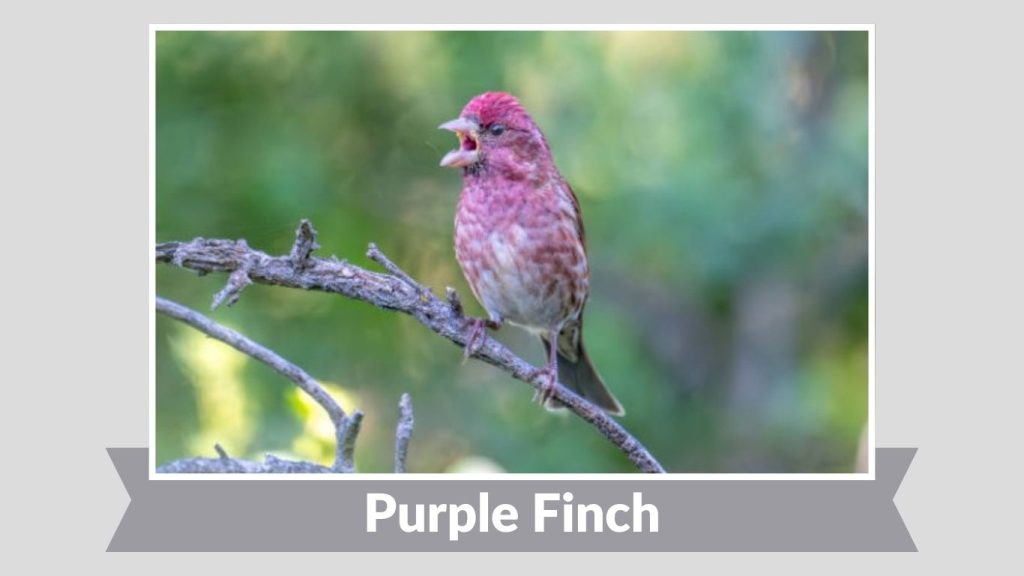
The purple finch is a stocky brown bird with a rich red head and upper body, often described as looking “dipped in raspberry juice.” Males show deep red coloring on the head, face, and chest over a brown-streaked body. These birds are commonly found in forests and backyard feeders across North America.
Identification
- Medium-sized finch with a thick, conical bill
- Brown back and wings with dark streaks
- Males have a red head, face, and chest washed over brown
- Slightly forked tail
- Females are brown and white with bold facial markings
Habitat
Purple finches prefer coniferous and mixed forests, forest edges, and wooded suburbs. In winter, they often move south and are regularly seen at backyard feeders, especially near evergreen trees.
Diet
They mainly eat seeds, buds, fruits, and berries. At feeders, they favor sunflower seeds. During the breeding season, they also consume insects and caterpillars to provide extra protein for their young.
Behavior
Purple finches are active, agile birds that forage in trees and shrubs. Males sing a rich, musical warble from treetops. They are generally peaceful but may compete with house finches at feeding stations.
Lifespan
In the wild, purple finches typically live around 3 to 6 years. Survival depends on habitat quality, winter food supply, predation, and disease.
3. Cassin’s Finch (Haemorhous cassinii)
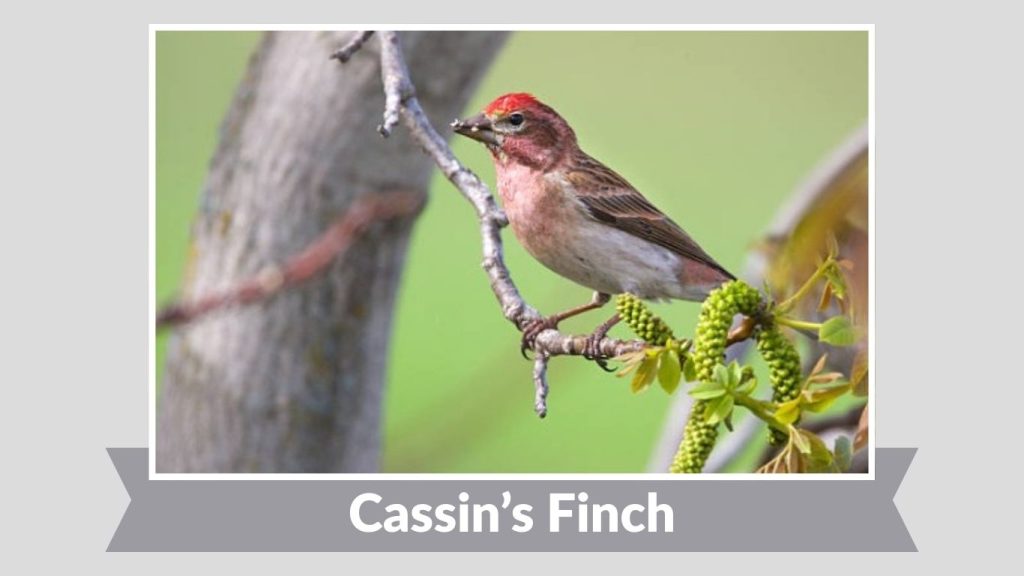
Cassin’s finch is a brown finch with a bright red crown and head, giving it a distinctive “red-capped” look. Males show rosy red coloring on the head and upper chest over a streaked brown body. This species is most often found in mountain forests of western North America.
Identification
- Medium-sized finch with a long, slightly notched tail
- Brown, streaked back and underparts
- Males have a bright red crown, head, and upper chest
- Thick, conical bill suited for cracking seeds
- Females are brown and white with heavy streaking and a bold facial pattern
Habitat
Cassin’s finches prefer high-elevation coniferous forests, especially pine, fir, and spruce woods. Outside the breeding season, they may move to lower elevations and are sometimes seen in foothills, forest edges, and mountain towns.
Diet
Their diet includes seeds, buds, berries, and tree cones. They commonly feed on pine and spruce seeds. During spring and summer, they also eat insects and larvae, especially when raising chicks.
Behavior
These finches often forage high in treetops, sometimes hanging upside down to reach seeds. Males sing a clear, musical song from tall conifers. They are generally calm birds, seen alone or in small flocks.
Lifespan
Cassin’s finches usually live around 3 to 7 years in the wild. Survival varies with harsh mountain winters, food availability, and predation.
4. Brown Thrasher (Toxostoma rufum)
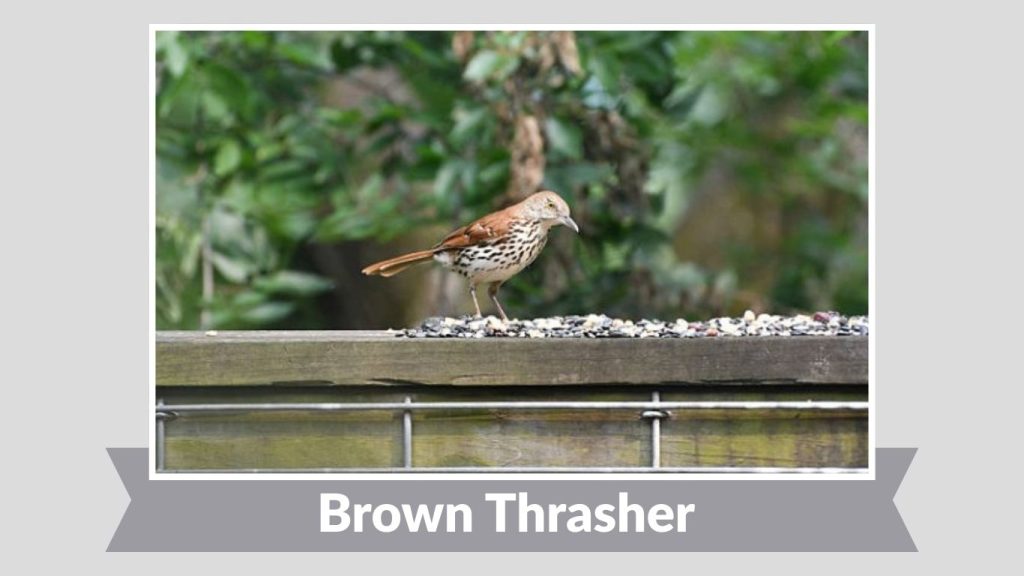
The brown thrasher is a large brown songbird with a rusty-red head and long tail. Unlike finches, it has a slender, slightly curved bill and a bold, expressive look. It is well known for its loud, complex songs and secretive behavior in dense shrubs.
Identification
- Large, slim songbird with a very long tail
- Rich reddish-brown head and back
- Pale underparts with dark streaks
- Bright yellow eyes
- Slightly curved, pointed bill
Habitat
Brown thrashers prefer dense thickets, woodland edges, hedgerows, and overgrown fields. They are often found in brushy areas where they can hide and forage near the ground.
Diet
They eat a mixed diet of insects, earthworms, spiders, fruits, berries, and seeds. Much of their feeding is done on the ground, where they sweep leaves aside with their bills to uncover prey.
Behavior
Brown thrashers are famous for their powerful, varied songs, sometimes mimicking other birds. They are usually shy and skulk in dense cover but can become bold and defensive near their nests.
Lifespan
In the wild, brown thrashers commonly live 4 to 8 years, though some individuals have been recorded living longer under favorable conditions.
5. Northern Flicker (Colaptes auratus) – Red-shafted form
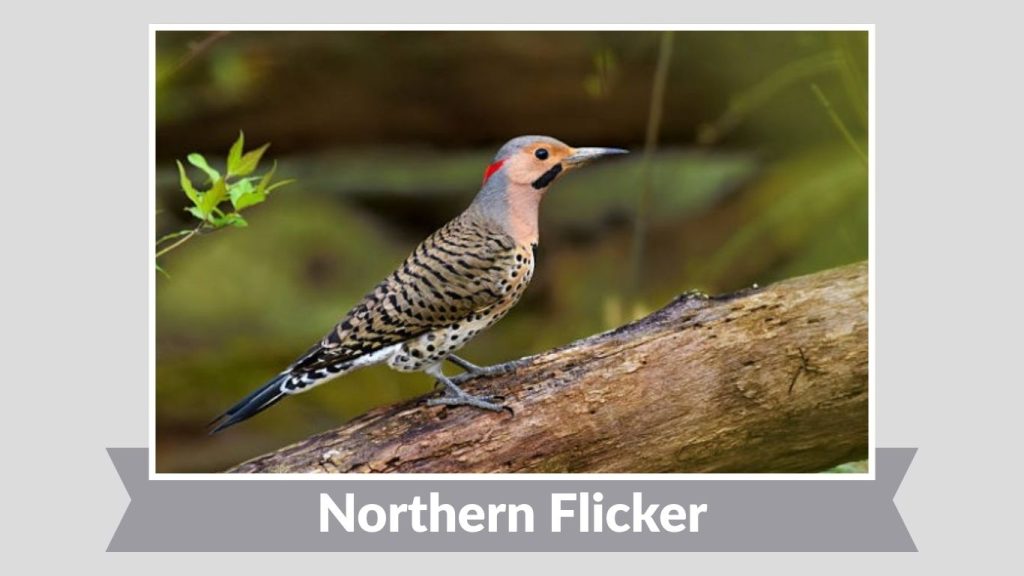
The northern flicker is a brown, spotted woodpecker with a gray-brown body and, in the red-shafted form, a noticeable red patch on the head along with red coloring under the wings. Although not fully red-headed, it is often included among brown birds with red on the head and face.
Identification
- Medium to large woodpecker with a slim body
- Brownish body with black spots and bars
- Red patch on the nape (red-shafted form)
- Black crescent on the chest
- Long, slightly curved bill
Habitat
Northern flickers live in open woodlands, forest edges, parks, gardens, and suburban areas. Unlike many woodpeckers, they often feed on the ground, especially in grassy or lightly wooded spaces.
Diet
Their diet is dominated by ants and beetles, along with other insects. They also eat fruits, berries, seeds, and nuts, particularly in fall and winter when insects are scarce.
Behavior
Flickers are often seen hopping on the ground or clinging to tree trunks. They communicate with loud calls and rapid drumming. During courtship and territorial displays, they perform head-bobbing and wing-spreading behaviors.
Lifespan
Northern flickers typically live about 5 to 9 years in the wild, depending on habitat conditions and predation.
6. Rufous-collared Sparrow (Zonotrichia capensis)
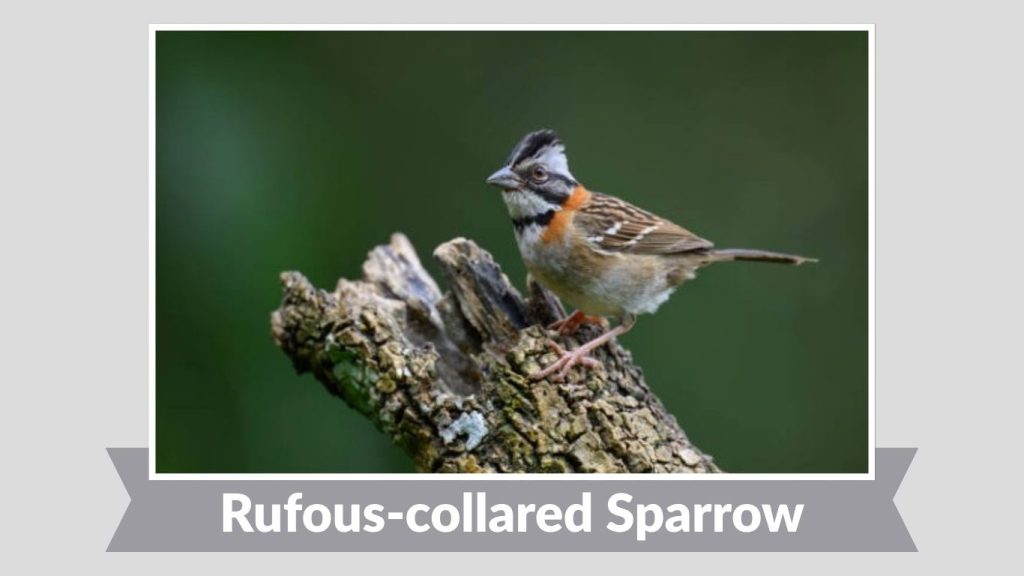
The rufous-collared sparrow is a brown, streaked bird with a reddish head and a distinctive rusty collar on the neck. It is one of the most widespread sparrows in the Americas and is commonly seen hopping on the ground in open areas.
Identification
- Medium-sized sparrow with a rounded head
- Brown, gray, and black streaked body
- Reddish crown and rufous collar on the neck
- Pale gray face with dark striping
- Short, thick conical bill
Habitat
This species lives in grasslands, farmland, open woodland, city parks, and suburban gardens. It adapts well to human environments and is often found around roadsides and cultivated fields.
Diet
Rufous-collared sparrows feed mainly on seeds and grains, along with small insects and larvae, especially during the breeding season. They commonly forage on the ground in pairs or small groups.
Behavior
They are active ground feeders, frequently flicking their tails and giving sharp calls. Males sing a clear, whistling song from fences, bushes, or low trees to mark territory.
Lifespan
In the wild, these sparrows usually live about 3 to 6 years, depending on climate, predators, and food supply.
7. Red-headed Weaver (Anaplectes rubriceps)
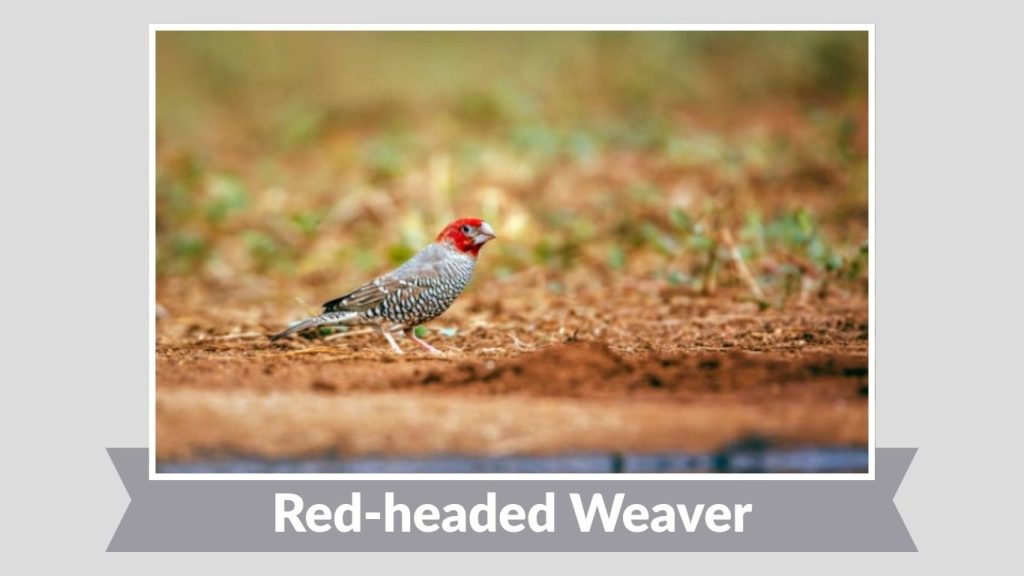
The red-headed weaver is a small brown bird with a striking bright red head, making it one of the most visually distinctive brown birds with red on the head. Males are especially colorful during the breeding season, when the red head contrasts strongly with their darker brown body.
Identification
- Small, compact songbird with a short tail
- Brown to dark brown body and wings
- Bright red head and face (males, especially in breeding season)
- Strong, conical bill adapted for seeds
- Females are duller, mostly brown with little or no red
Habitat
Red-headed weavers are found mainly in sub-Saharan Africa. They inhabit open woodlands, savannas, forest edges, and areas near rivers or wetlands. They are often seen in small groups or mixed-species flocks.
Diet
Their diet consists mostly of seeds, grains, and small fruits. During the breeding season, they also eat insects, which provide important protein for growing chicks.
Behavior
These birds are active and social. Males build woven nests suspended from branches and perform display flights to attract females. They are often noisy, with sharp calls and constant movement among shrubs and trees.
Lifespan
In the wild, red-headed weavers generally live around 3 to 5 years, though exact lifespan varies depending on habitat quality and predation.
8. Red-headed Quelea (Quelea erythrops)
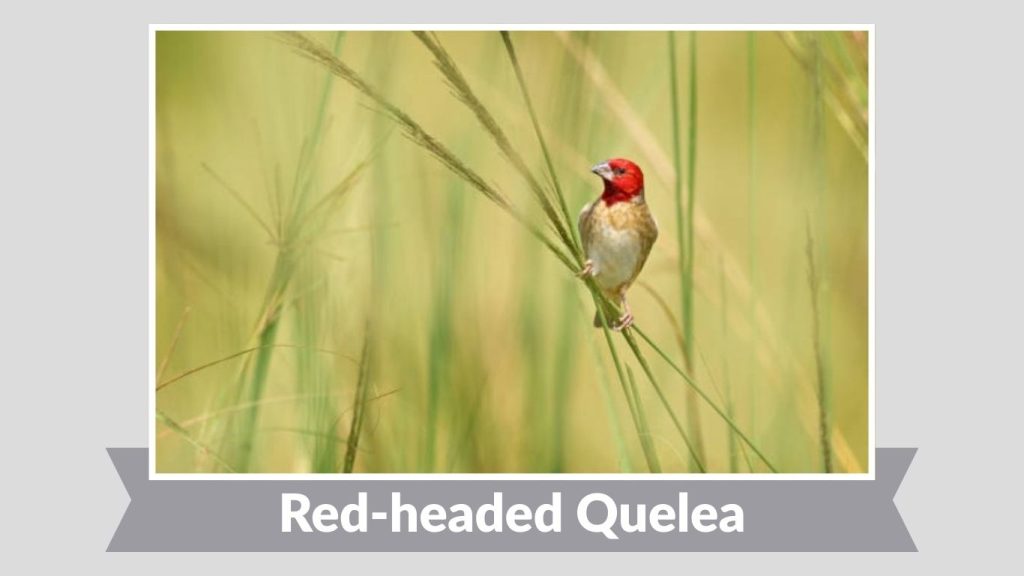
The red-headed quelea is a small brown bird with a vivid red head, especially noticeable in breeding males. It belongs to the weaver family and is closely related to the famous red-billed quelea. This species is common in many parts of sub-Saharan Africa.
Identification
- Small, sparrow-sized bird
- Brown body with darker streaking
- Bright red head and face in breeding males
- Short, thick conical bill
- Females and non-breeding males are mostly brown with minimal red
Habitat
Red-headed queleas live in grasslands, savannas, farmlands, and open woodlands. They are often found near water sources and cultivated areas, sometimes forming large flocks.
Diet
They mainly feed on grass seeds, grains, and small seeds from wild plants. In the breeding season, they also eat insects, especially termites and small beetles.
Behavior
These birds are highly social and usually seen in flocks. During breeding season, males display their red heads while singing and defending small nesting areas within colonies.
Lifespan
Red-headed queleas typically live around 2 to 4 years in the wild, though many do not survive their first year due to heavy predation.
9. Red-headed Finch (Amadina erythrocephala)
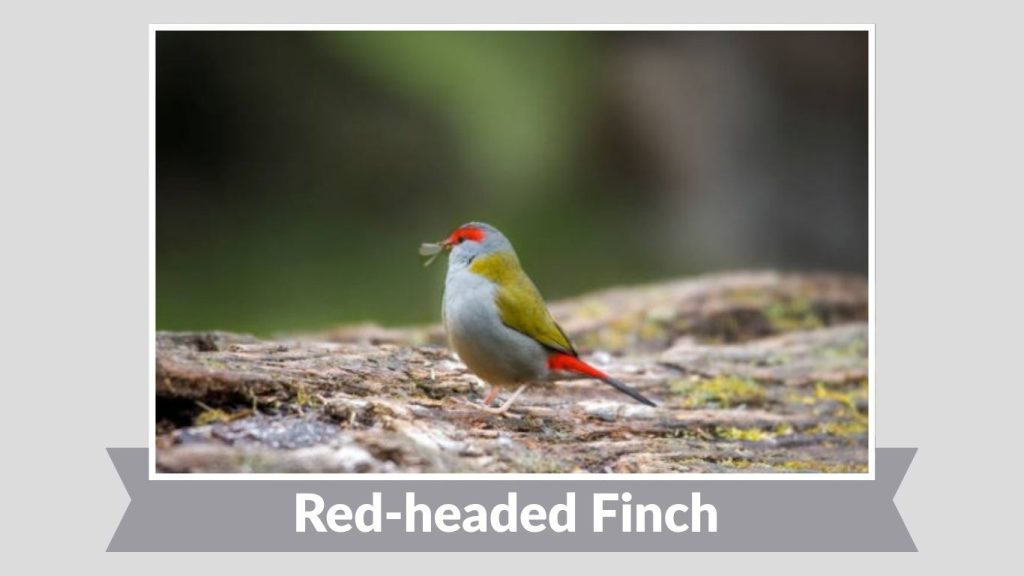
The red-headed finch is a small brown finch with a bright crimson-red head, creating a strong contrast with its softer brown body. It is native to southern Africa and is often seen in dry, open habitats.
Identification
- Small finch with a short, thick bill
- Light brown to gray-brown body
- Bright red head and face (males more vivid)
- Slightly darker wings and tail
- Females are duller with less intense red
Habitat
This finch inhabits dry savannas, scrublands, open woodlands, and agricultural areas. It prefers open country with scattered bushes and access to water.
Diet
Red-headed finches feed mostly on grass seeds and small grains. They also eat insects, particularly during breeding season, to provide extra nutrition for their young.
Behavior
They are social birds, usually seen in pairs or small flocks. They forage on the ground and low vegetation and communicate with soft chirps and whistles.
Lifespan
In the wild, red-headed finches typically live about 3 to 5 years, depending on environmental conditions and predators.
10. Red-headed Bunting (Emberiza bruniceps)
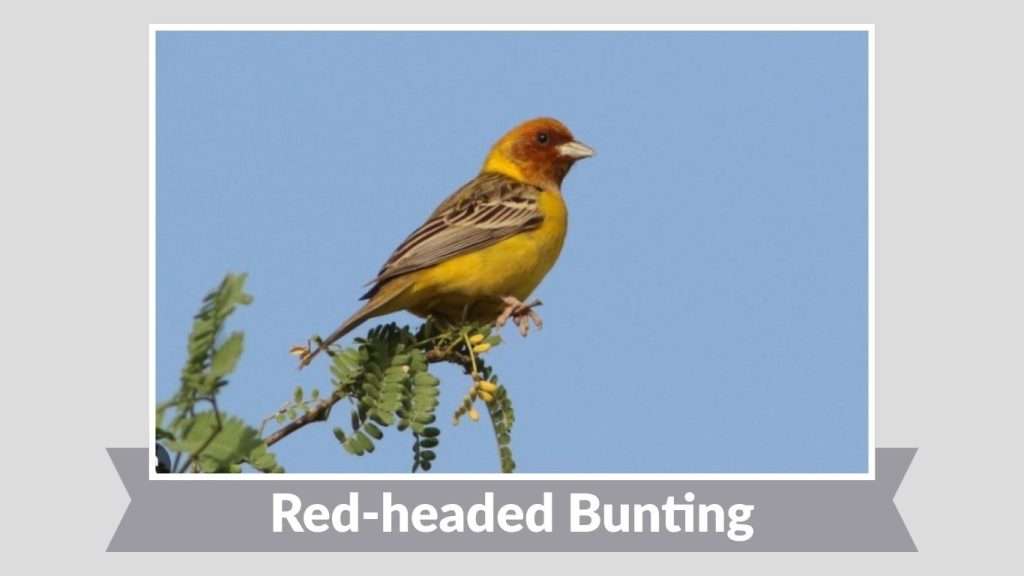
The red-headed bunting is a small brownish bird with a rich chestnut-red head, especially striking in breeding males. It is found across parts of Eastern Europe and Central to South Asia and is often seen in open countryside.
Identification
- Small bunting with a short, conical bill
- Brown to yellowish-brown body with subtle streaking
- Bright chestnut-red head in breeding males
- Darker wings with pale edges
- Females are duller, mostly brown with weak head color
Habitat
Red-headed buntings prefer open farmlands, grasslands, scrubby areas, and lightly wooded regions. During migration, they may also appear in gardens and agricultural fields.
Diet
They feed mainly on seeds and grains, along with insects during the breeding season. Foraging is usually done on the ground or low vegetation.
Behavior
These buntings are active but not aggressive birds. Males sing clear, pleasant songs from low bushes or wires. Outside the breeding season, they gather in small flocks.
Lifespan
In the wild, red-headed buntings usually live about 3 to 6 years, depending on habitat quality and predation.
FAQs
What are common brown birds with red heads?
Brown birds with red heads are often finches, sparrows, and weaver-type birds. Well-known examples include the house finch, purple finch, Cassin’s finch, and red-headed bunting. In most species, the red color is brighter in males and may fade outside the breeding season.
Why do some brown birds have red heads?
Red head coloration is usually linked to mating and communication. Bright red feathers help males attract females and signal health and genetic fitness. The color often comes from pigments in their diet, especially carotenoids found in seeds, fruits, and insects.
Do female brown birds also have red heads?
In many species, females have little or no red on the head. They are usually more brown or gray, which helps with camouflage while nesting. However, in some species, females may show faint reddish tones, especially during breeding season.
Are brown birds with red heads dangerous to humans?
No, these birds are not dangerous to humans. They are small songbirds that feed mainly on seeds and insects. They may defend nests if threatened, but they do not pose any real risk and are generally peaceful around people.
Where can I usually see brown birds with red heads?
These birds are commonly found in open woodlands, gardens, farms, grasslands, and forest edges. Some species are frequent backyard visitors, especially where bird feeders are available, while others are more common in wild or semi-open habitats.