




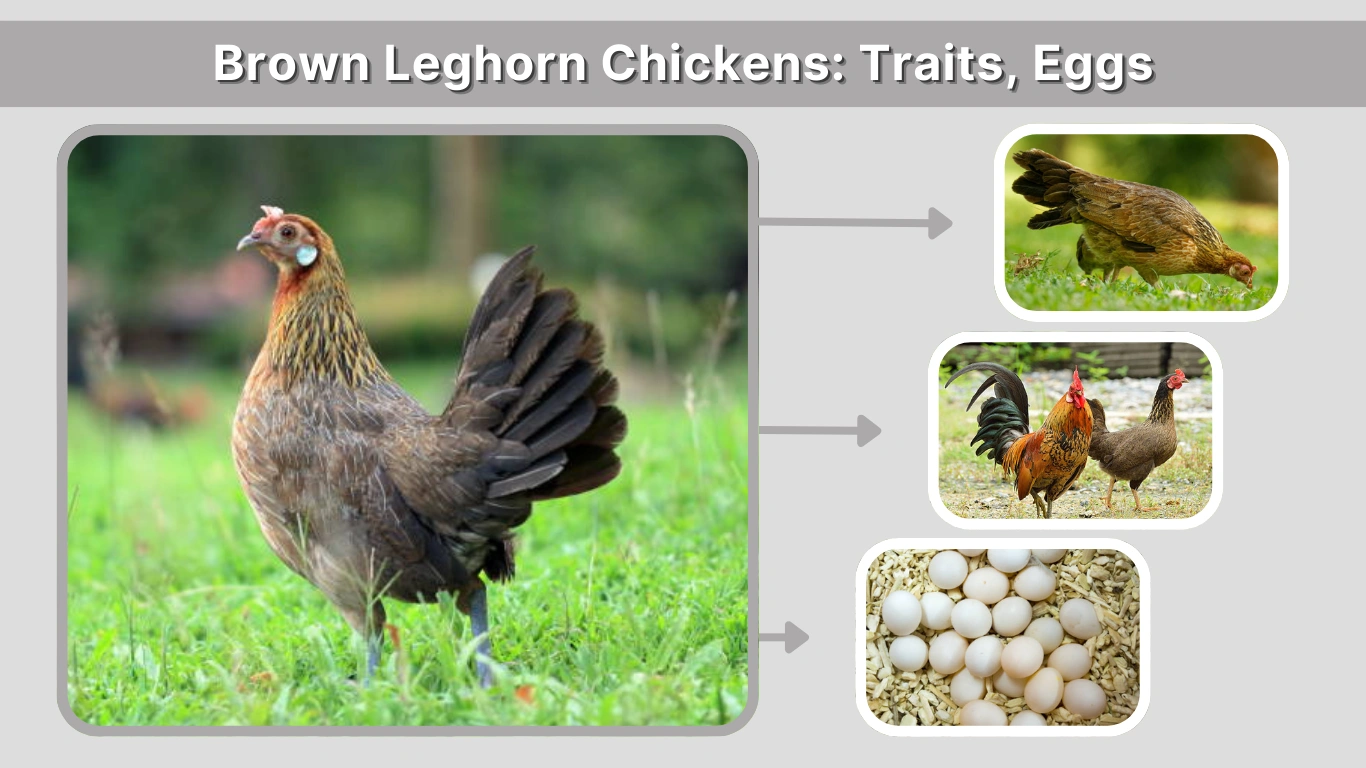
Brown Leghorn chickens are one of the most active and visually striking egg-laying breeds in the world. Famous for their wild-type feather patterns, strong flight ability, and excellent foraging skills, Brown Leghorns are often chosen for free-range and low-input poultry systems. Many people searching “brown leghorn chickens” want to know how this variety differs from white leghorns, how productive they are, and whether they are suitable for backyard flocks. Understanding their background, physical traits, and natural behavior helps poultry keepers decide if this energetic breed is right for them.
What Are Brown Leghorn Chickens?
Brown Leghorn chickens are a Mediterranean chicken variety that originated in Italy, descending from ancient village fowl around the port city of Livorno. They were later developed in Europe and America into a standardized breed valued for egg production, alertness, and adaptability. The Brown Leghorn represents the closest modern form to the original Leghorns before intensive commercial breeding focused almost entirely on white-feathered strains.
Unlike White Leghorns, which dominate industrial egg farming, Brown Leghorns are more often kept in heritage flocks, small farms, and free-range systems. They are prized not only for their white eggs but also for their beautiful natural plumage and exceptional survival instincts.
Brown Leghorns are light-bodied, fast-moving, and highly intelligent. They rely strongly on their ability to forage, fly short distances, and avoid predators. These instincts make them less suitable for confinement but highly efficient in open or semi-open environments.
Brown Leghorn Identification
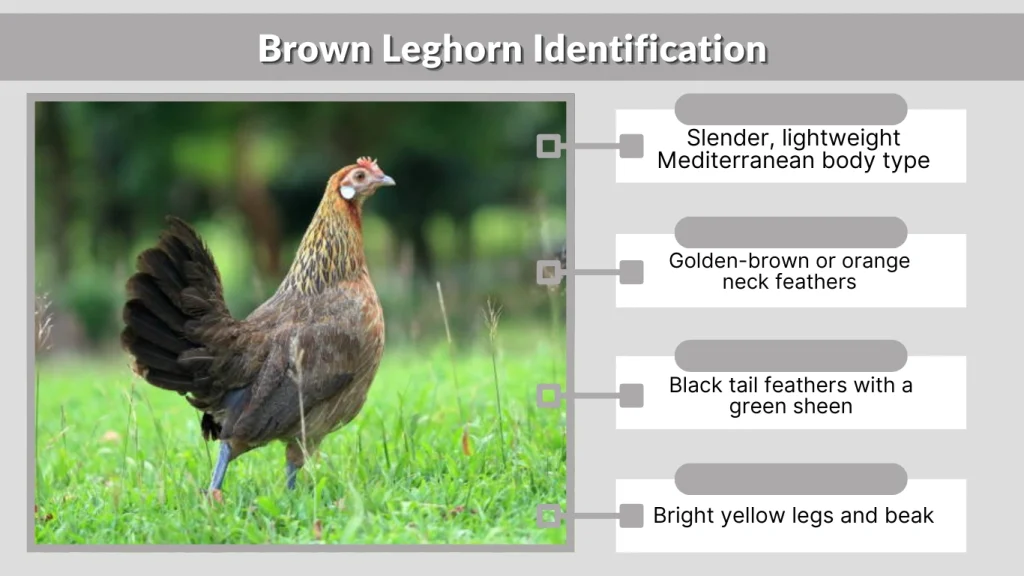
- Slender, lightweight Mediterranean body type
- Golden-brown or orange neck feathers
- Black tail feathers with a green sheen
- Creamy white earlobes
- Bright yellow legs and beak
- Large upright single comb
- Strong wings and very alert posture
These traits make Brown Leghorns easy to distinguish from heavier egg breeds and from the solid-colored White Leghorn.
Brown Leghorn Rooster vs Hen

Brown Leghorn Rooster
Brown Leghorn roosters are especially striking birds. They display rich golden or orange hackle feathers around the neck, deep reddish saddle feathers, and glossy black tails that curve dramatically upward. Their long sickle feathers and large upright comb give them a proud, elegant appearance.
Roosters are extremely alert and vocal, often acting as effective early warning systems against predators. They tend to be more flighty than heavy breeds and will often choose high roosting spots. While not aggressive by nature, they are protective of their flock and very aware of environmental changes.
Brown Leghorn Hen
Brown Leghorn hens have more subtle coloring designed for camouflage. Their feathers are patterned in shades of brown, tan, and black, helping them blend into natural surroundings. This natural coloration reflects their strong survival instincts and free-range suitability.
Hens are smaller than roosters, with slightly smaller combs and lighter tails. They are excellent layers, early to mature, and extremely active throughout the day. While not typically affectionate, they are intelligent birds that learn routines quickly and become confident in stable environments.
Brown Leghorn Chicken Size, Weight, and Appearance
Brown Leghorns are classified as a light breed. Adult hens usually weigh between 1.8 and 2.3 kilograms, while roosters average 2.3 to 2.7 kilograms. Their lean build, long legs, and tight feathering give them a streamlined look that supports their speed and agility.
Their wedge-shaped bodies, upright combs, and long tails create a very different silhouette compared to rounder dual-purpose chickens. Brown Leghorns are also known for their expressive eyes and sharp facial features, which enhance their alert appearance.
Their large combs help regulate body temperature, making them highly tolerant of heat. However, this same trait can be a disadvantage in cold regions, where frostbite can occur without proper winter protection.
Brown Leghorn Temperament and Behavior

Brown Leghorns are among the most active chicken breeds. They are fast, intelligent, and constantly in motion. Rather than staying near the coop, they prefer to roam widely in search of insects, seeds, and greens.
They are not aggressive, but they are not docile. Brown Leghorns usually avoid handling and may become stressed in tight confinement. They are best suited to poultry keepers who value independence and natural behavior rather than pet-style interaction.
Within a flock, they generally coexist peacefully with other active breeds. Because of their flight ability, secure fencing or covered runs are often necessary. Their sharp awareness makes them excellent at avoiding predators, which is one reason they thrive in free-range systems.
Brown Leghorn Egg Production

Brown Leghorn chickens are excellent egg layers and are especially valued in free-range systems. Although they are not always as intensely productive as commercial White Leghorn strains, they still lay a high number of eggs each year with very good feed efficiency.
- Egg color: White
- Egg size: Medium to large
- Eggs per year: Around 220–280 eggs
- Age they start laying: About 16–18 weeks
- Broodiness: Very low
- Seasonal laying: Strong in warm months
- Foraging impact: Often reduces feed costs
Because Brown Leghorns rarely go broody, they continue laying steadily rather than stopping to sit on nests. Their natural activity helps maintain egg output even in less intensive systems.
Brown Leghorn Housing and Habitat Needs
Brown Leghorns perform best when given space. They can live in coops and runs, but their health and behavior improve significantly with access to free-range or large outdoor areas.
The coop should be dry, well-ventilated, and predator-proof. Roosts should be placed higher than those used for heavier breeds, since Brown Leghorns naturally seek elevated sleeping spots. Nest boxes should be clean, shaded, and quiet to encourage consistent laying.
Because they are strong flyers, fencing should be taller than average or fully enclosed. In open environments, trees, shrubs, and covered shelters help them feel secure and reduce stress.
Brown Leghorn Diet and Feeding
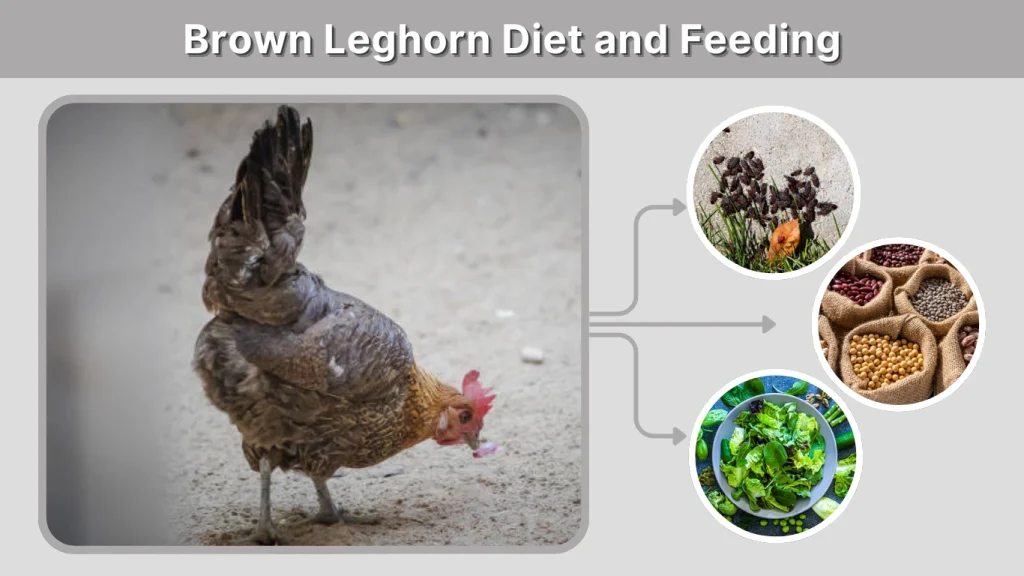
A high-quality commercial layer feed should be the primary food source for Brown Leghorns. This provides the protein, vitamins, and minerals needed to support continuous egg production.
Brown Leghorns thrive when allowed to forage. Insects, seeds, and greens naturally supplement their diet and contribute to richer yolk color. Calcium sources such as crushed oyster shells are important for strong eggshells.
Treats like vegetables, fruits, and grains can be offered in moderation. Clean, fresh water must always be available, especially in hot climates, where dehydration can quickly affect egg production.
Brown Leghorn Health, Lifespan, and Common Problems
- Average lifespan: 5–8 years, sometimes longer with good care
- Heat tolerance: Excellent
- Cold sensitivity: Comb frostbite risk in winter
- Common concerns: External parasites, respiratory infections, nutritional stress
- Disease resistance: Generally strong in well-managed flocks
- Stress signs: Sudden drop in egg laying, nervous movement, feather wear
- Preventive care: Dry housing, parasite control, balanced nutrition
Brown Leghorns are hardy birds, especially in warm regions. In cold climates, their large combs should be protected with proper housing and winter management.
Are Brown Leghorn Chickens Good Backyard Birds?
Brown Leghorns are excellent backyard chickens for people who want high egg production, strong foraging ability, and low feed costs. They are not ideal for those seeking calm, easily handled pets, but they are outstanding for natural, free-range setups.
They are suitable for beginners who can provide space, secure fencing, and realistic expectations. Brown Leghorns reward good management with consistent egg output, excellent insect control, and strong overall health.
They are especially well suited to rural, homestead, and warm-climate poultry systems.
FAQs
Are Brown Leghorns good egg layers?
Brown Leghorns are very good egg layers, producing around 220 to 280 white eggs per year. They start laying early and continue steadily, especially in warm climates. Their strong foraging instincts often reduce feed costs while maintaining consistent production.
What color eggs do Brown Leghorns lay?
Brown Leghorn hens lay bright white eggs. Despite their brown feather color, egg shell color is determined by breed genetics, not feather color. Their eggs are usually medium to large and have strong, clean shells.
Are Brown Leghorn chickens friendly?
Brown Leghorns are not aggressive, but they are independent and cautious. They usually avoid handling and are less affectionate than heavier backyard breeds. They are intelligent, alert birds that thrive when given space and minimal confinement.
Can Brown Leghorns free-range?
Yes. Brown Leghorns are among the best free-range chicken breeds. They are excellent foragers, strong flyers, and highly alert. These traits help them avoid predators and find much of their own food in open environments.
How long do Brown Leghorn chickens live?
Brown Leghorns typically live five to eight years, though some live longer with excellent care. Their strongest egg production occurs in the first two to three years, after which laying gradually decreases.