





The brown rat (Rattus norvegicus) is one of the most widespread and adaptable rodents in the world. Commonly known as the Norway rat or sewer rat, this species has successfully spread across many continents and thrives in both natural and urban environments. Brown rats are highly intelligent animals known for their survival skills and ability to live close to humans. Understanding the brown rat’s diet, habitat, lifespan, and behavior helps explain why this species has become one of the most successful mammals on Earth.
What Is a Brown Rat?
The brown rat, scientifically known as Rattus norvegicus, is a large rodent belonging to the Muridae family. Despite its name, the brown rat did not originally come from Norway; researchers believe it originated in northern China and Mongolia before spreading worldwide through trade and travel.
Brown rats are often called Norway rats, sewer rats, or street rats because they are commonly found in urban areas such as sewers, buildings, and garbage sites. They have a strong and sturdy body, making them well-suited for survival in many environments.
Physically, brown rats usually have coarse brown or gray fur, a blunt nose, small ears, and a thick tail that is shorter than their body length. Adult brown rats typically grow between 9 and 11 inches (23–28 cm) long, not including the tail, and can weigh between 300 and 500 grams.
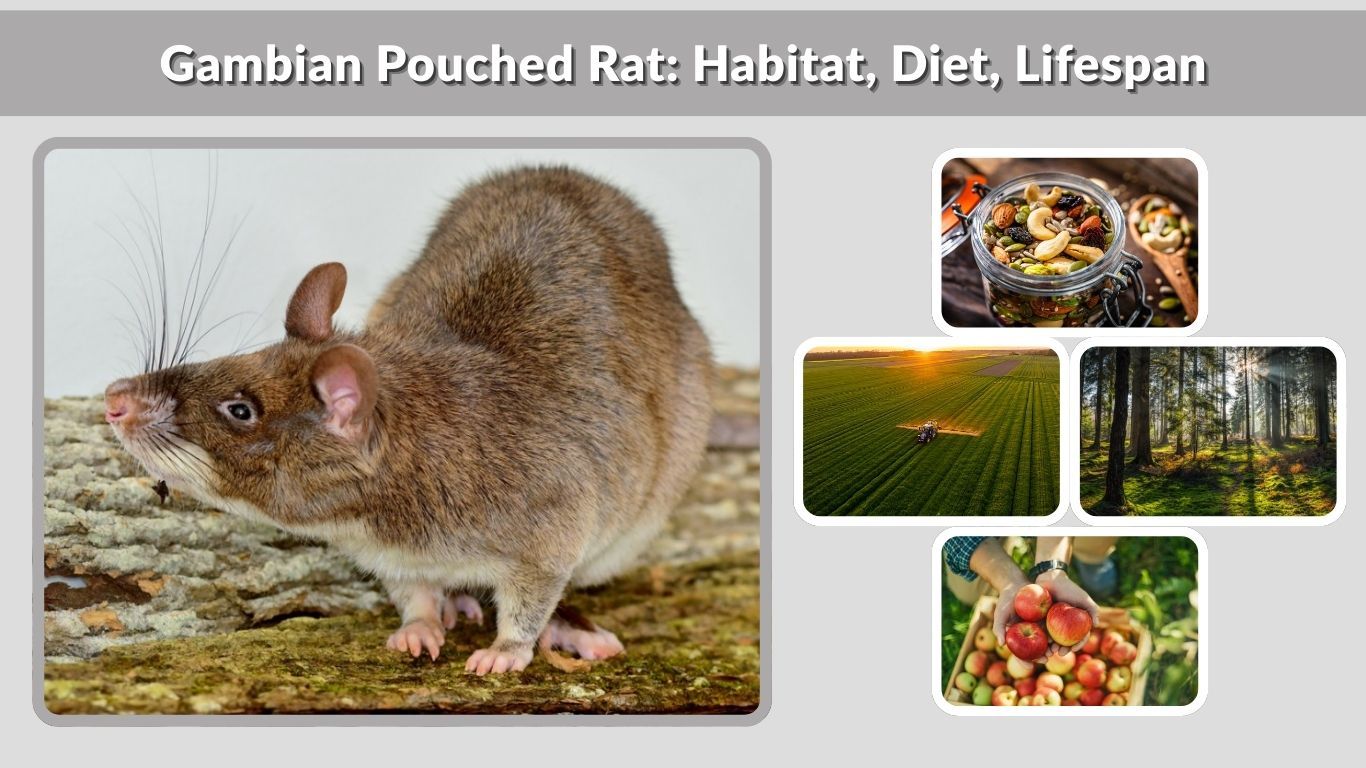
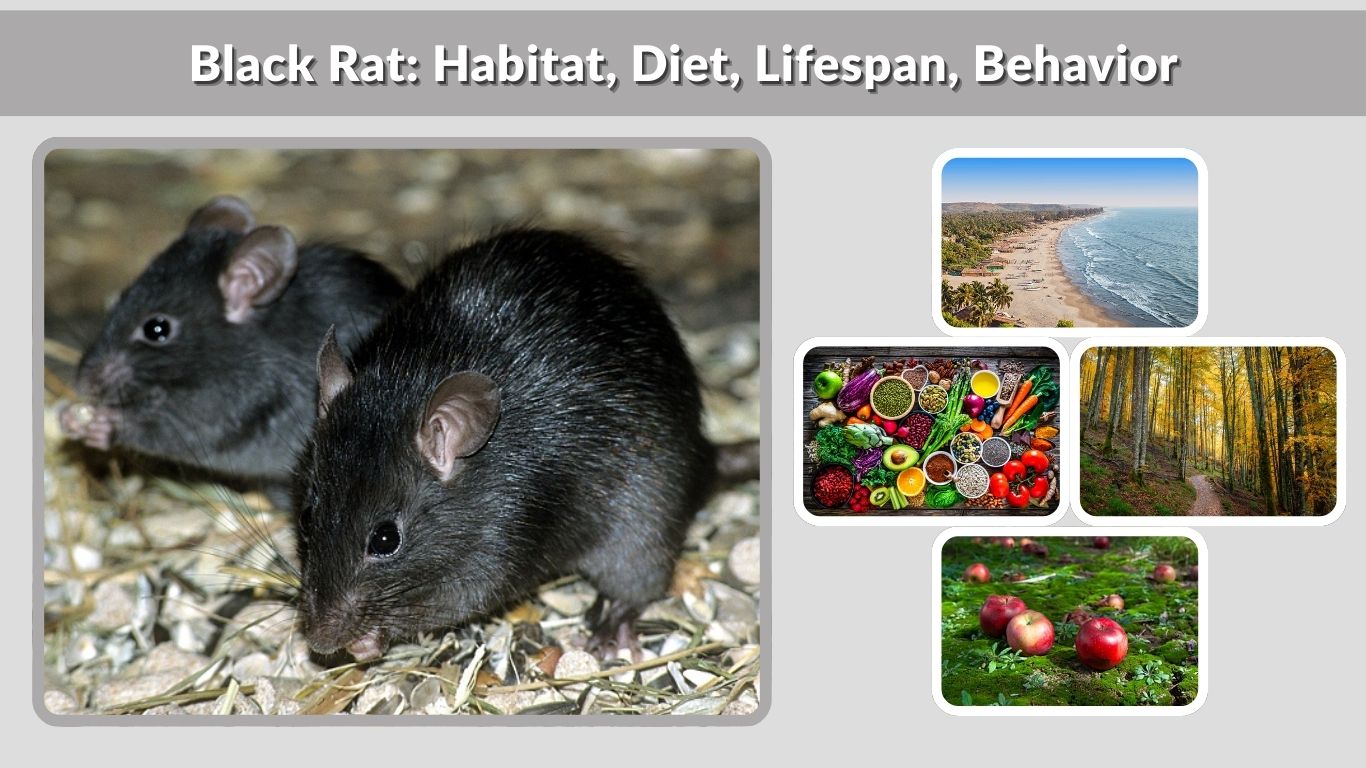
Brown rats are often confused with black rats (Rattus rattus), but there are clear differences. Brown rats tend to be larger and heavier, with smaller ears and a thicker body. They also prefer ground-level habitats, while black rats are more likely to climb and live in higher places such as roofs or trees.
Brown Rat Habitat
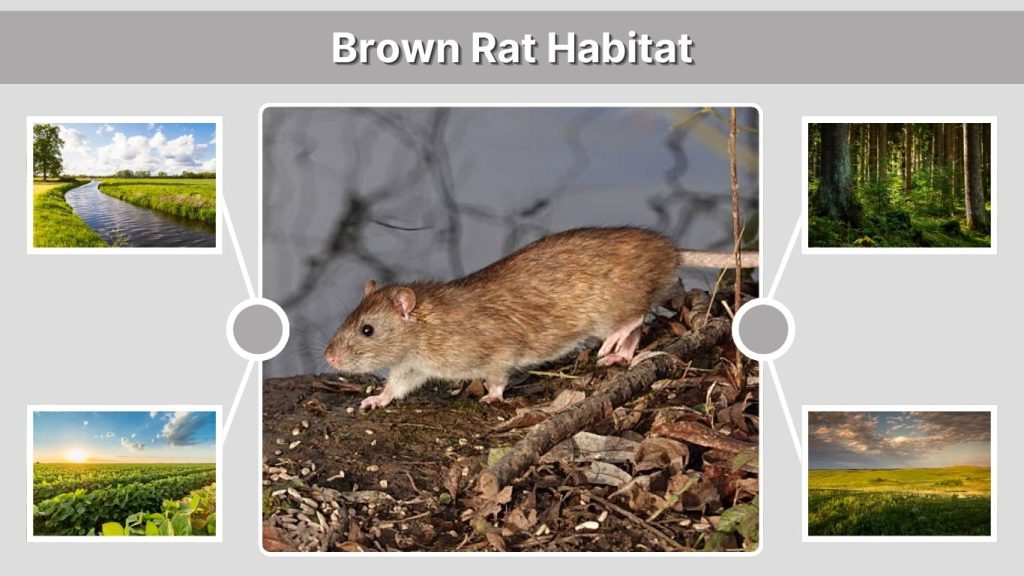
Brown rats are extremely adaptable animals and can survive in a wide range of habitats. Their ability to live in different environments has helped them spread across much of the world.
Natural Habitat
In the wild, brown rats typically live in forests, grasslands, riverbanks, and agricultural fields. They often build underground burrows in soil near water sources. These burrows can be quite complex and may contain multiple tunnels, nesting chambers, and food storage areas.
Brown rats prefer environments where food and water are easily available. Riverbanks, lakesides, and marshy areas are common natural habitats because they provide both shelter and resources for survival.
Their burrowing behavior allows them to stay protected from predators and harsh weather conditions. These underground shelters also provide safe places for raising their young.
Urban Habitat
Brown rats are especially well known for living in cities and towns. In urban environments, they are commonly found in sewers, basements, warehouses, farms, garbage dumps, and abandoned buildings.
Cities provide an ideal environment for brown rats because they offer plenty of food and shelter. Human food waste, poorly stored grains, and garbage provide a steady supply of nutrition. Additionally, buildings and underground systems such as sewer pipes give rats safe places to hide and nest.
Brown rats are highly adaptable, which allows them to survive even in crowded urban areas. They often create nests in walls, under floors, or inside piles of debris.
Global Distribution
Today, brown rats can be found on almost every continent except Antarctica. They spread widely during the 18th and 19th centuries through ships involved in global trade.
Because of their remarkable adaptability, brown rats are now present in North America, Europe, Asia, Africa, and Australia. They thrive in both rural and urban environments, making them one of the most successful invasive mammal species in the world.
Brown Rat Diet
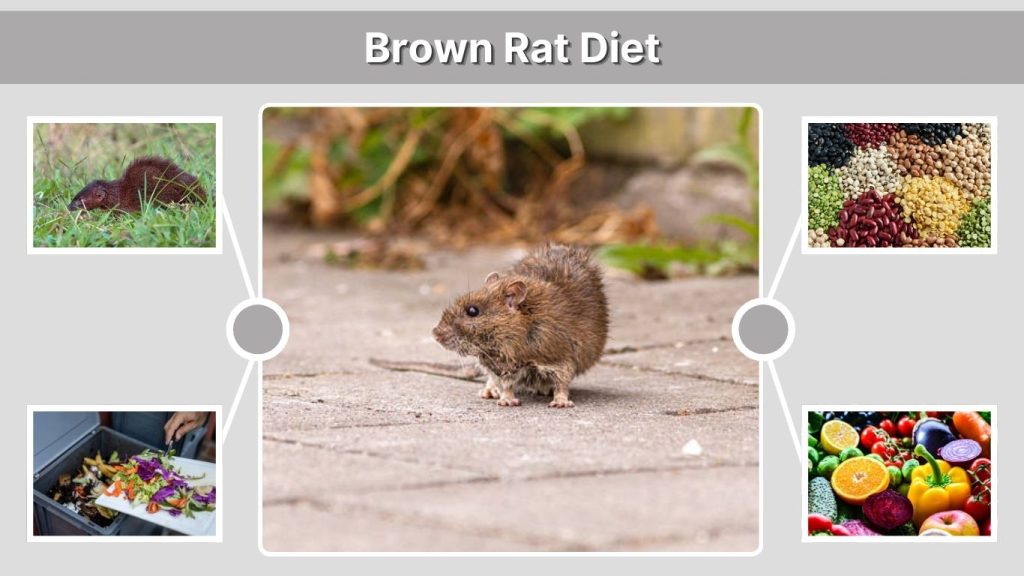
Brown rats are omnivores, meaning they eat both plant and animal foods. Their flexible diet is one of the key reasons they can survive in so many different environments.
Omnivorous Feeding Habits
Brown rats are opportunistic feeders and will eat almost anything that is available. In the wild, they consume a variety of natural foods, while in urban areas they often rely on human food waste.
Their digestive system allows them to process many different types of food, which helps them adapt quickly to new environments. This flexibility in diet is an important survival advantage.
Brown rats usually eat small amounts of food from different sources rather than relying on a single type of food. This behavior reduces the risk of starvation if one food source becomes unavailable.
Common Foods Brown Rats Eat
Brown rats consume a wide variety of foods depending on their environment. Some of the most common foods include:
- Grains and seeds, especially in farms and agricultural areas
- Fruits and vegetables found in gardens or food storage areas
- Meat, insects, and small animals, including eggs and fish
- Human food waste, such as leftover meals and discarded snacks
In urban environments, brown rats frequently search through garbage containers and dumpsters for food. Their strong teeth allow them to chew through packaging, wood, and even soft metal to access food sources.
Feeding Behavior
Brown rats are mostly nocturnal, meaning they are most active at night. They leave their nests after dark to search for food while avoiding predators and human activity.
One of their strongest senses is their sense of smell, which helps them locate food even from a distance. Rats also have an excellent memory and can remember the locations of reliable food sources.
Brown rats sometimes hoard food, storing small amounts inside their nests or burrows. This behavior helps them survive during times when food is scarce.
Brown Rat Lifespan
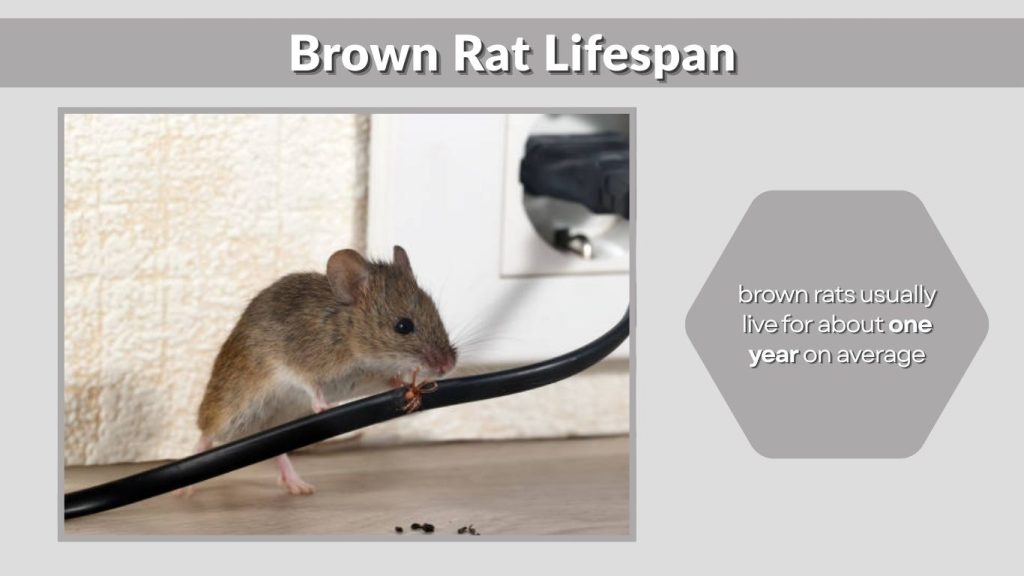
The lifespan of a brown rat can vary depending on its environment and living conditions. Factors such as predators, food availability, disease, and habitat quality all play important roles in determining how long a rat survives.
Lifespan in the Wild
In natural environments, brown rats usually live for about one year on average. Life in the wild can be dangerous for these rodents, as they face many threats that reduce their lifespan.
Common predators of brown rats include owls, hawks, snakes, foxes, and domestic cats. In addition to predators, rats must also compete with other animals for food and shelter. Diseases and harsh weather conditions can further shorten their lifespan.
Because of these challenges, many brown rats do not survive long enough to reach their full potential lifespan.
Lifespan in Captivity
Brown rats that live in controlled environments, such as laboratories or as pets, often live longer than those in the wild. In captivity, they can live between two and three years.
This longer lifespan is mainly due to consistent food supplies, protection from predators, and access to veterinary care. Stable living conditions allow them to avoid many of the dangers found in natural environments.
Factors Affecting Lifespan
Several factors can influence how long a brown rat lives, including:
- Predators that hunt rats in natural environments
- Diseases and parasites that spread within rat populations
- Food availability and nutritional quality
- Environmental conditions, such as extreme weather or habitat destruction
Despite their relatively short lives, brown rats reproduce quickly, which helps maintain large populations.
Brown Rat Facts
Brown rats are fascinating animals with many unique traits that help them survive in a variety of environments.
Physical and Behavioral Facts
Brown rats are known for their strong physical abilities and intelligence. They are excellent swimmers and can travel through water for long distances. In fact, they are commonly found living in sewer systems because they can easily navigate water-filled tunnels.
These rodents are also skilled climbers and diggers. Their sharp teeth allow them to chew through wood, plastic, and even some metals.
Brown rats are considered highly intelligent animals. They can learn from experience, remember food locations, and even solve simple problems. This intelligence helps them avoid traps and survive in challenging environments.
Reproduction Facts
One reason brown rat populations grow quickly is their rapid reproduction rate. Female brown rats can reproduce several times each year.
A single litter typically contains 6 to 12 baby rats, known as pups. Under ideal conditions, a female can give birth every few weeks. Because of this high reproductive rate, rat populations can increase rapidly if food and shelter are abundant.
Young rats grow quickly and reach maturity in just a few months, allowing them to reproduce at an early age.
Survival Abilities
Brown rats have several survival skills that make them extremely adaptable animals. They can squeeze through very small openings, sometimes as small as a coin.
Their flexible bodies and strong bones allow them to move through tight spaces in buildings or underground tunnels. Brown rats are also very cautious animals and often avoid unfamiliar objects in their environment, which helps them evade traps.
Another impressive survival ability is their adaptability. Brown rats can adjust to different climates, food sources, and habitats, which is why they are found in so many parts of the world.
Behavior and Social Structure
Brown rats are social animals that typically live in groups called colonies. These colonies can contain several rats that work together to find food, build nests, and protect their territory.
Within a colony, there is usually a social hierarchy. Dominant rats have priority access to food and mating opportunities, while weaker members follow lower positions in the group.
Communication among brown rats occurs through a combination of sounds, body language, and scent markings. They produce high-frequency ultrasonic sounds that humans cannot hear, which helps them communicate with each other.
Most brown rats are nocturnal, meaning they are most active during the night. This behavior helps them avoid predators and reduces the chances of encountering humans.
During the day, they usually remain hidden in burrows, walls, or underground tunnels.
Are Brown Rats Dangerous?
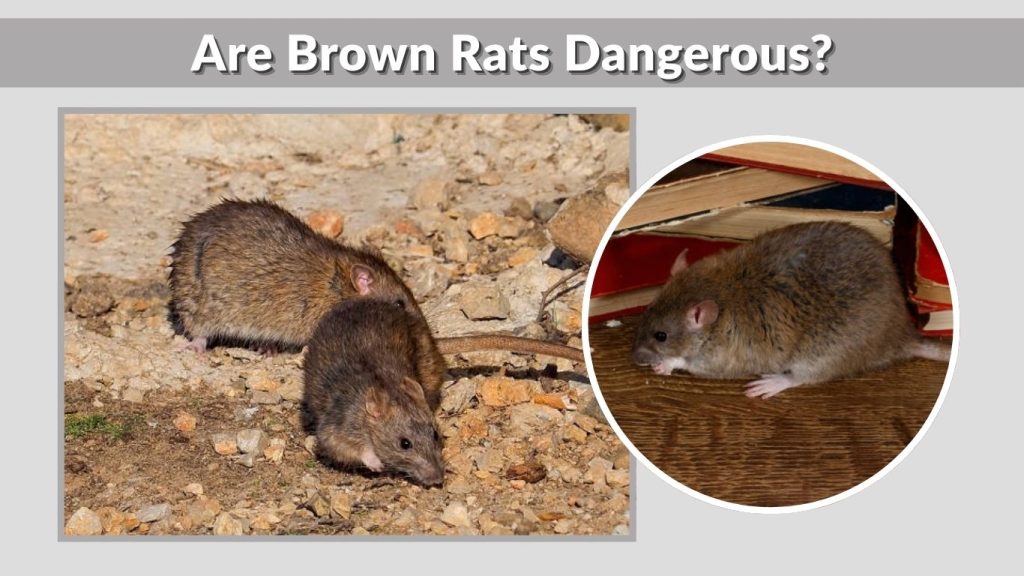
Brown rats are often considered pests because they can cause damage to property and spread certain diseases. When rats invade homes, farms, or food storage areas, they may contaminate food supplies and chew through materials such as wood, wires, and insulation.
Some diseases associated with rats include leptospirosis, salmonella, and hantavirus. These diseases can spread through rat urine, droppings, or contaminated food.
In addition to health risks, brown rats can also damage buildings by chewing through electrical wires and structural materials. This behavior can sometimes create fire hazards or costly repairs.
Because of these risks, many communities use pest control methods to manage rat populations.
Conclusion
The brown rat is one of the most adaptable and widespread rodents in the world. Its ability to survive in many different environments, from natural habitats to crowded cities, has made it a highly successful species. Brown rats have flexible diets, strong survival skills, and rapid reproduction rates that help them thrive. Although they can cause problems for humans, studying their behavior, diet, habitat, and lifespan provides valuable insight into how these intelligent animals continue to survive and spread across the globe.