

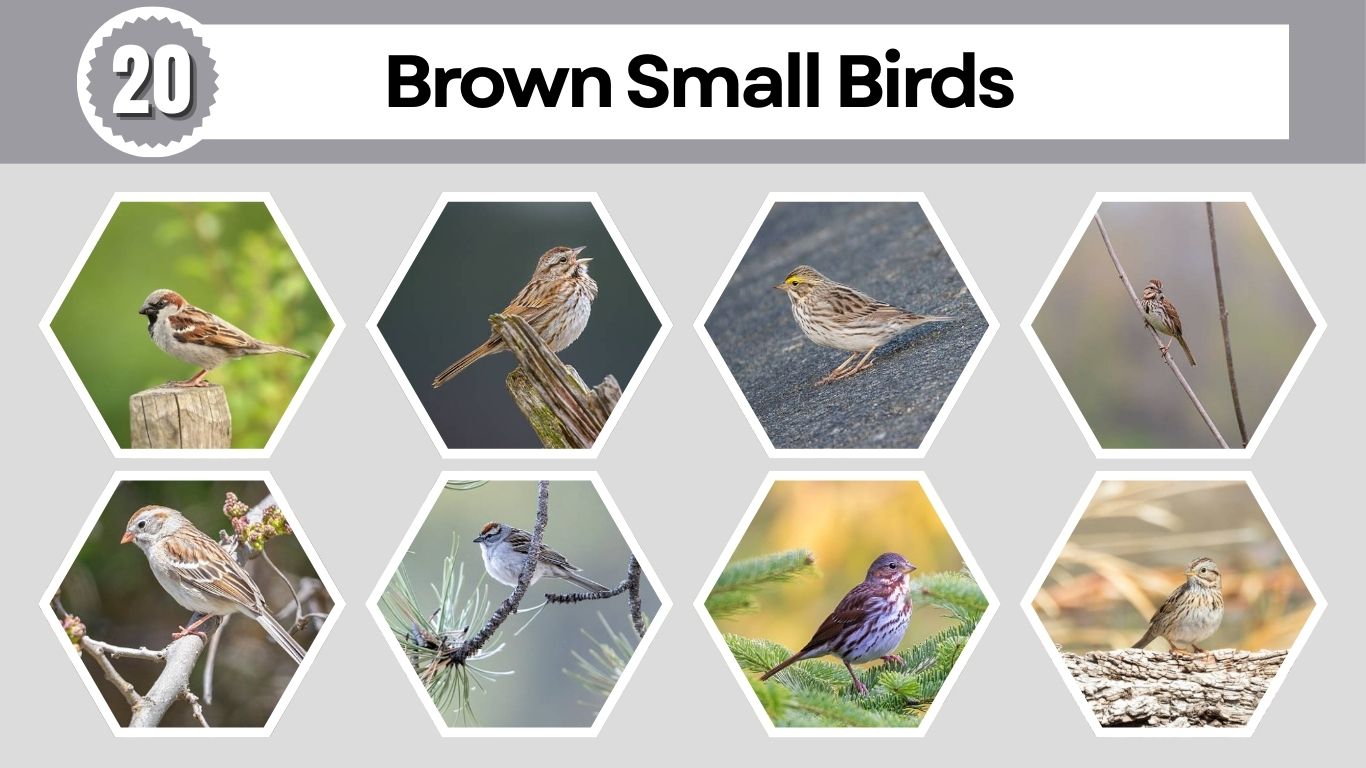
Small brown birds are among the most familiar yet most overlooked birds in the world. They appear in gardens, fields, forests, wetlands, and even busy cities, quietly blending into their surroundings. Although many of them look similar at first glance, each species has its own unique patterns, songs, and behaviors. From sparrows and wrens to creepers and larks, these birds play an important role in nature by controlling insects, spreading seeds, and adding constant life and movement to everyday landscapes.
1. House Sparrow (Passer domesticus)

The house sparrow is one of the most common small brown birds in the world. It is closely associated with human settlements and is often seen around homes, gardens, markets, and farms. Although small in size, this bird is highly adaptable and social, making it easy to spot in towns and cities.
Identification
- Small, stocky brown bird with a short tail and thick, cone-shaped beak
- Males have a gray crown, black throat (bib), and chestnut-brown sides
- Females are mostly light brown with darker streaks and a pale eyebrow line
- Length usually around 14–16 cm
- Quick, hopping movement on the ground
Habitat & Distribution
House sparrows are found on every continent except Antarctica. They thrive in urban and suburban areas, villages, farmland, and around buildings. Instead of forests, they prefer places where humans live, using roofs, vents, and small gaps for shelter and nesting.
Diet & Feeding Habits
House sparrows are omnivorous birds. They mainly eat seeds, grains, and crumbs from human food, but they also feed on insects, especially during the breeding season. Chicks are often raised on a diet rich in soft insects for healthy growth.
Behavior & Nesting
These birds are very social and usually seen in noisy groups. They build messy nests from grass, feathers, and paper inside roof spaces, wall holes, and street structures. House sparrows are active year-round and do not migrate, often staying close to the same area their entire lives.
2. Song Sparrow (Melospiza melodia)
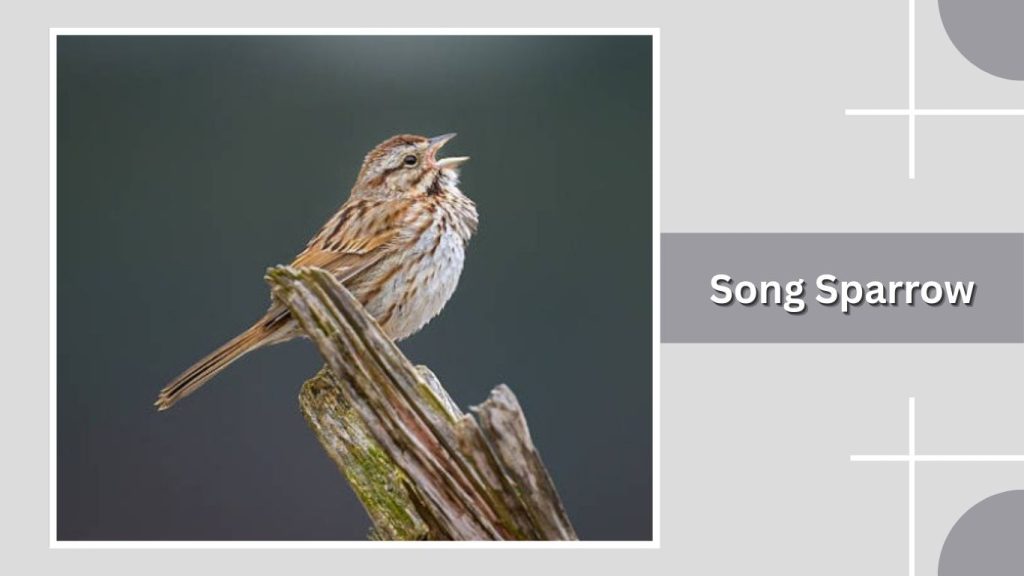
The song sparrow is a small brown bird known for its rich, musical singing and heavily streaked body. It is one of the most widespread sparrows in North America and can be found in many different environments, from backyard gardens to wetlands. Its varied song and subtle color patterns make it a favorite among birdwatchers.
Identification
- Small, brown bird with thick brown streaks on a pale chest
- Central dark spot often visible on the chest
- Rounded head with a short, thick beak
- Long, rounded tail usually pumped while perched
- Size ranges about 12–17 cm in length
Habitat & Distribution
Song sparrows are widely distributed across North America. They live in gardens, bushes, forest edges, marshes, fields, and along streams. Some populations migrate short distances, while others stay in the same region throughout the year, especially in milder climates.
Diet & Feeding Habits
Their diet mainly includes seeds, grasses, and small fruits. During warmer months, they also eat insects and spiders, which provide important protein. Song sparrows often forage on the ground or low vegetation, scratching softly to uncover food.
Behavior & Nesting
Song sparrows are usually seen alone or in pairs during breeding season. Males sing loudly from shrubs or fence posts to defend territory. Nests are built low in bushes or grasses and made from dry grass, leaves, and soft plant fibers, where the female lays several small eggs.
3. Savannah Sparrow (Passerculus sandwichensis)

The savannah sparrow is a small, slim brown bird commonly found in open landscapes. It is best recognized by its streaked body and subtle yellow markings near the eyes. Quiet and ground-loving, this sparrow blends easily into grasslands, where it often goes unnoticed despite being widespread.
Identification
- Small brown bird with fine dark streaks across the chest and sides
- Pale stripe over the eye with a faint yellow patch near the lores
- Short, notched tail and small, pointed bill
- Overall gray-brown appearance with lighter underparts
- Length typically around 11–14 cm
Habitat & Distribution
Savannah sparrows inhabit grasslands, meadows, coastal marshes, farmland, and open fields. They are widely distributed across North America and migrate seasonally, breeding in cooler regions and moving south during winter.
Diet & Feeding Habits
They mainly feed on seeds and grasses, but insects make up a large part of their diet in spring and summer. Savannah sparrows forage mostly on the ground, walking or hopping through low vegetation to pick up food.
Behavior & Nesting
These birds are often solitary or seen in small groups. They build well-hidden nests on the ground, woven from grass and lined with fine material. Males sing soft, high-pitched songs from low perches to attract mates and defend territory.
4. Swamp Sparrow (Melospiza georgiana)
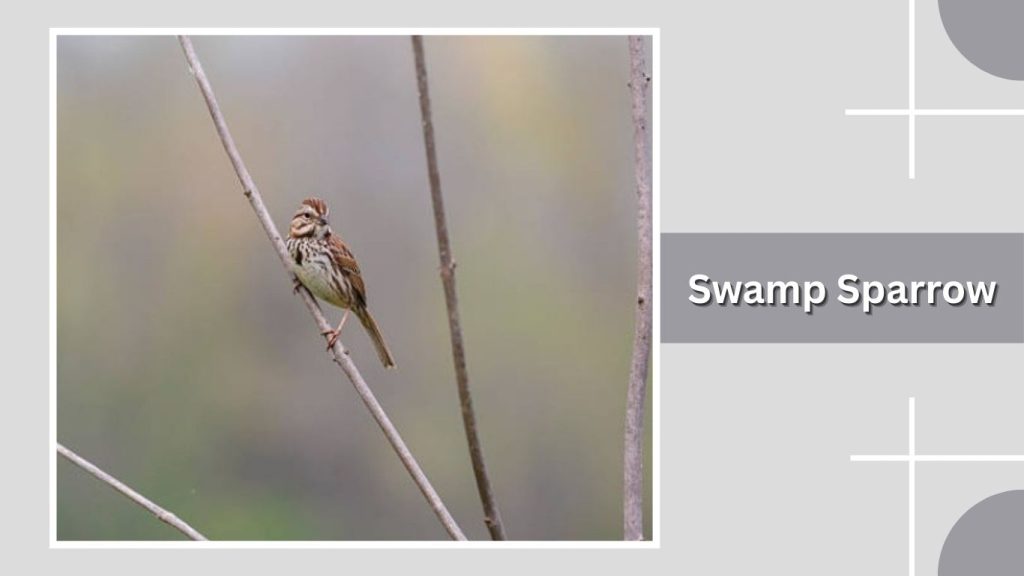
The swamp sparrow is a small brown bird closely tied to wet environments. With its rich brown tones, gray face, and reddish wings, it blends well into marsh vegetation. Although quieter and more secretive than many sparrows, it is often heard before it is seen.
Identification
- Small brown sparrow with a gray face and clean, pale throat
- Warm reddish-brown wings and back
- Dark streaking along the sides of the chest
- Short, thick bill and rounded tail
- Body length usually about 12–14 cm
Habitat & Distribution
Swamp sparrows are commonly found in freshwater marshes, wet meadows, bogs, and dense reeds. They breed in northern wetlands and migrate southward in winter, living in marshy areas across much of eastern and southern North America.
Diet & Feeding Habits
Their diet consists of seeds, aquatic plants, and insects. During breeding season, they rely more on insects such as beetles, caterpillars, and spiders. They often forage low in vegetation or near shallow water.
Behavior & Nesting
Swamp sparrows are shy and usually stay hidden among reeds and grasses. Nests are built close to the ground or just above shallow water, made from grass and sedges. Males sing slow, clear trills to mark territory during spring.
5. Field Sparrow (Spizella pusilla)
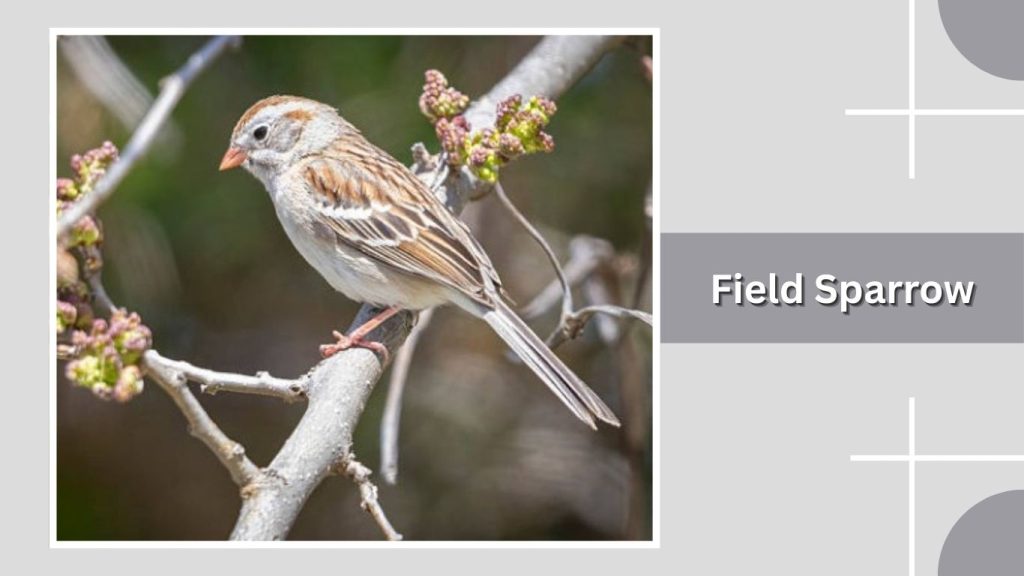
The field sparrow is a gentle-looking small brown bird with soft colors and a sweet, simple song. It is known for its pink bill, pale face, and warm brown back. Often seen in quiet fields and overgrown areas, this sparrow prefers open spaces with scattered shrubs.
Identification
- Small, slim sparrow with a pale gray face and warm brown crown
- Distinct pink, cone-shaped bill
- Clean, unstreaked chest and belly
- Long tail often flicked while perched
- Length usually around 12–15 cm
Habitat & Distribution
Field sparrows live in open fields, brushy meadows, woodland edges, and abandoned farmland. They are mainly found in eastern and central North America. Northern populations migrate south in winter, while southern birds may remain year-round.
Diet & Feeding Habits
They feed mostly on grass seeds, weed seeds, and small berries. During spring and summer, insects such as ants, beetles, and caterpillars become an important part of their diet, especially for feeding young.
Behavior & Nesting
Field sparrows are usually seen alone or in pairs. They build cup-shaped nests low in shrubs or grasses using fine stems and hair-like fibers. Their song starts slow and speeds up, sounding like a bouncing ball.
6. Chipping Sparrow (Spizella passerina)
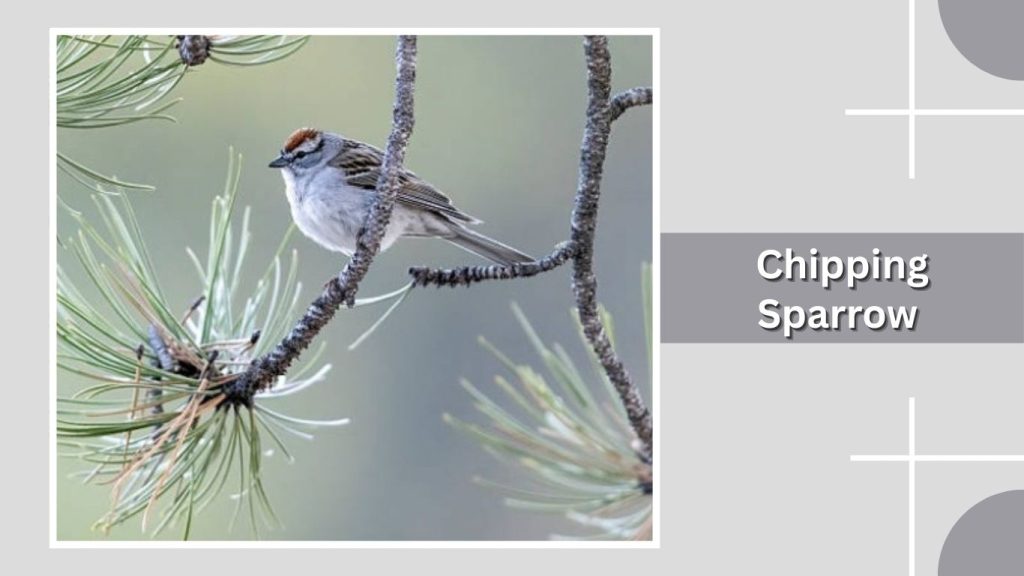
The chipping sparrow is a small, neat-looking brown bird often seen around gardens and open woodland edges. It is easily recognized by its crisp facial pattern and lively behavior. During warmer months, it is one of the most familiar sparrows around homes and parks.
Identification
- Small, slender sparrow with a rusty crown and bright eye line
- Pale gray chest with little to no streaking
- Thin, black bill during breeding season
- Long, narrow tail
- Body length about 12–14 cm
Habitat & Distribution
Chipping sparrows are widely distributed across North America. They live in open woods, forest edges, parks, gardens, and suburban areas. Many migrate south for winter, though some remain year-round in milder regions.
Diet & Feeding Habits
Their diet consists mainly of seeds and grains. In spring and summer, they eat many insects, including caterpillars and beetles. They often forage on the ground in open spaces, hopping quickly and picking up small food items.
Behavior & Nesting
Chipping sparrows are active and alert birds. They build neat, shallow nests in trees or shrubs using grass, rootlets, and animal hair. Males produce a fast, mechanical trill from treetops to attract mates and defend territory.
7. Fox Sparrow (Passerella iliaca)
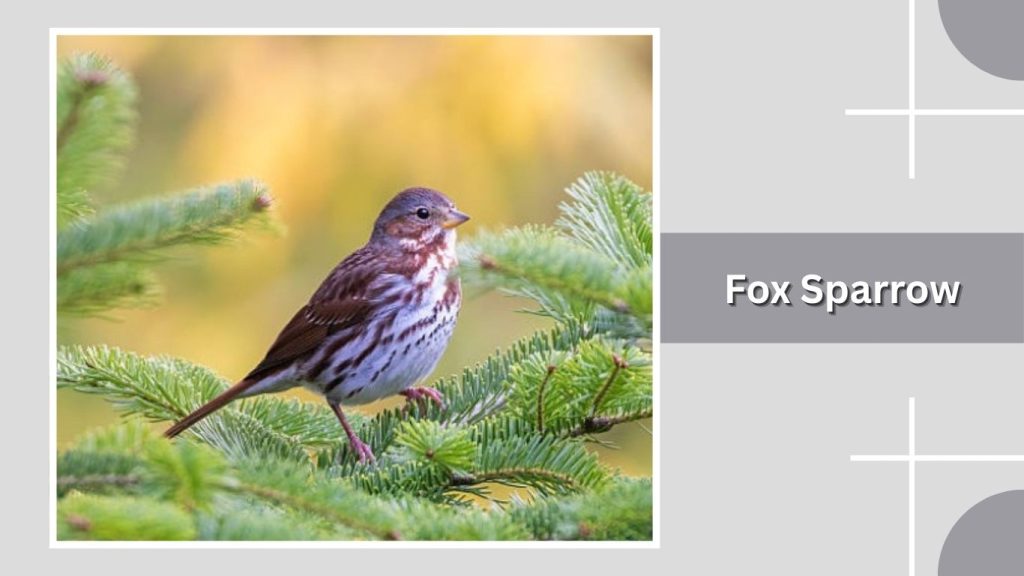
The fox sparrow is one of the largest and most richly colored brown sparrows. It is known for its bold reddish-brown tones and heavy spotting on the chest. Although not as commonly seen as smaller sparrows, it stands out when it appears, especially during migration seasons.
Identification
- Large, chunky sparrow with a thick bill
- Heavy dark spots forming a central blotch on the chest
- Rich reddish-brown back, tail, and wings
- Gray face with darker head markings
- Length usually around 16–19 cm
Habitat & Distribution
Fox sparrows breed mainly in northern forests and mountainous regions. During migration and winter, they are found in brushy areas, woodland edges, gardens, and thickets across much of North America.
Diet & Feeding Habits
They feed on seeds, berries, and insects. Fox sparrows are famous for their energetic “double-scratch” feeding style, where they hop backward to uncover food hidden under leaves and soil.
Behavior & Nesting
Fox sparrows are often shy and prefer dense cover. They build nests on or near the ground in shrubs or low trees. Males sing rich, melodious songs from hidden perches during the breeding season.
8. Lincoln’s Sparrow (Melospiza lincolnii)
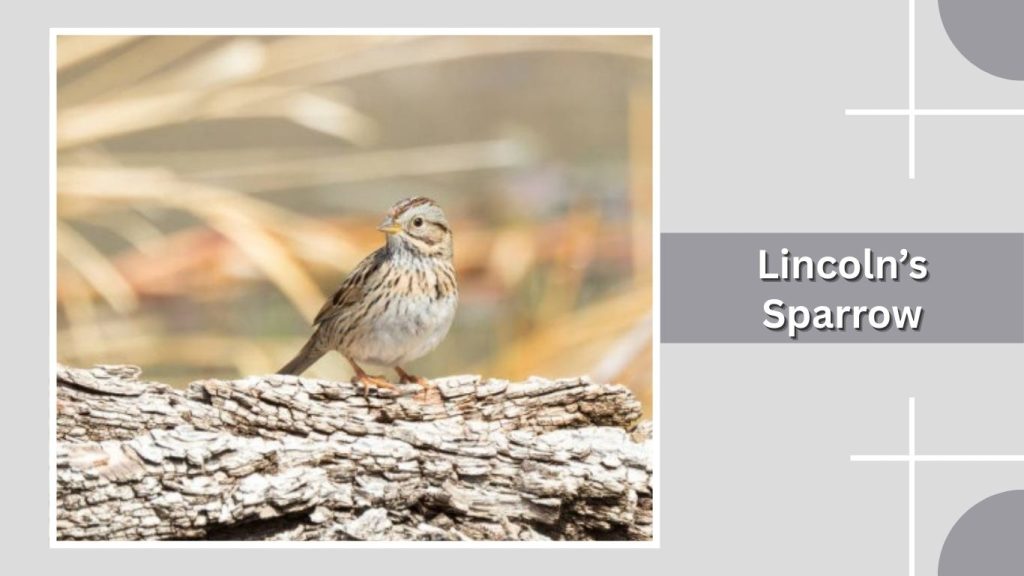
Lincoln’s sparrow is a small, finely patterned brown bird that is often overlooked because of its quiet nature and preference for dense cover. It has a buffy chest with delicate streaking and a neat, well-defined face pattern, giving it a gentle appearance.
Identification
- Small brown sparrow with fine, narrow streaks on the chest
- Buff-colored band across the upper chest
- Gray face with thin brown crown stripes
- Slender bill and relatively long tail
- Length about 13–15 cm
Habitat & Distribution
Lincoln’s sparrows breed in northern bogs, wet meadows, and shrubby tundra. During migration and winter, they move to brushy fields, gardens, and woodland edges across much of North America, often staying hidden in low vegetation.
Diet & Feeding Habits
They mainly eat seeds and small insects. In warmer months, insects such as beetles, flies, and caterpillars become an important food source. They forage mostly on the ground or low plants, picking carefully at food.
Behavior & Nesting
Lincoln’s sparrows are shy and secretive. They build well-hidden nests close to the ground using grasses and moss. Males sing a soft, musical song from concealed perches, usually early in the morning.
9. Grasshopper Sparrow (Ammodramus savannarum)
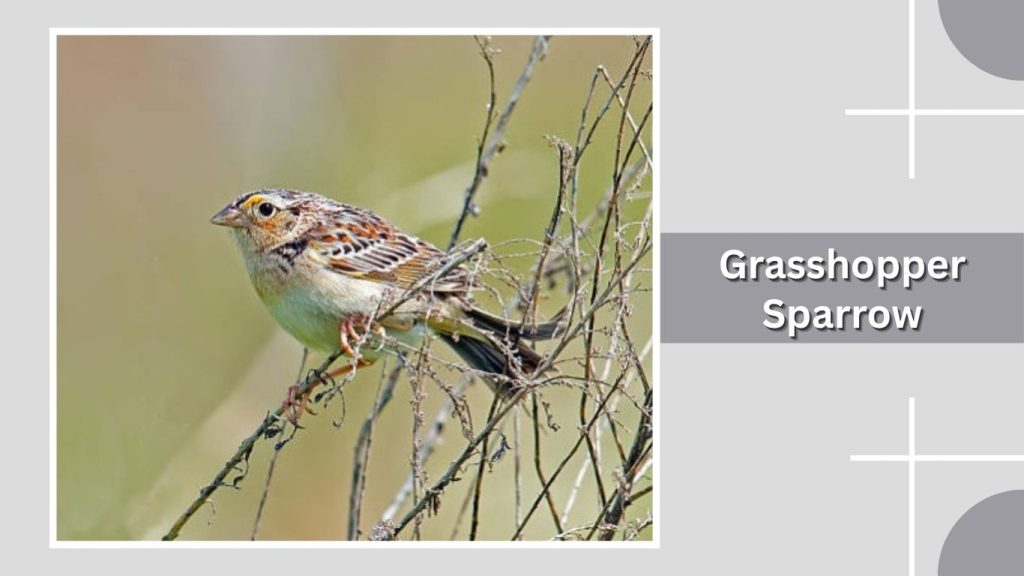
The grasshopper sparrow is a small, flat-headed brown bird best known for its insect-like buzzing song. It blends perfectly into dry grasslands and is more often heard than seen. Its subtle colors and secretive habits make it a challenge for many birdwatchers.
Identification
- Small, stocky sparrow with a flat head and short tail
- Pale buff chest with little to no streaking
- Fine brown and black streaks on the back
- Short, thick bill and pale eyebrow stripe
- Length usually around 10–13 cm
Habitat & Distribution
Grasshopper sparrows live in open grasslands, prairies, hayfields, and lightly grazed pastures. They breed across much of North America and migrate south to warmer regions during winter.
Diet & Feeding Habits
Their diet includes grass seeds, beetles, grasshoppers, and caterpillars. During breeding season, insects form a major part of their food. They forage quietly on the ground, moving through dense grasses.
Behavior & Nesting
Grasshopper sparrows are very secretive and rarely perch in the open. They build dome-shaped nests on the ground, hidden under thick grass. Males produce a short, buzzing song from low perches to defend territory.
10. Vesper Sparrow (Pooecetes gramineus)
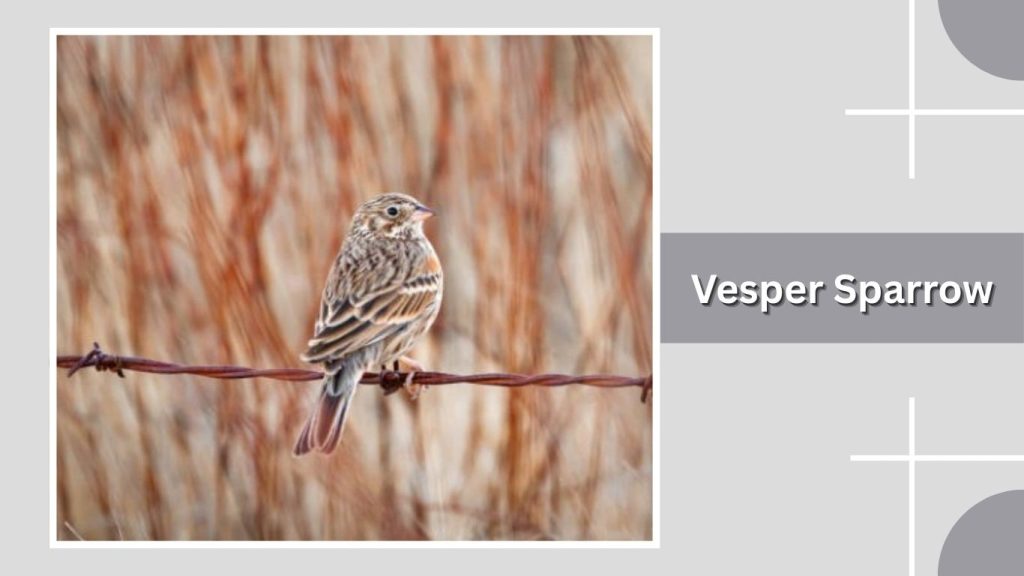
The vesper sparrow is a medium-small brown bird known for its soft evening songs and subtle white outer tail feathers. It is often seen walking on the ground in open country, where its streaked body blends easily with dry grasses and soil.
Identification
- Brown sparrow with heavy streaking on the chest and sides
- Thin white eye ring and white outer tail feathers
- Long tail and fairly large body for a sparrow
- Short, thick conical bill
- Length usually around 14–16 cm
Habitat & Distribution
Vesper sparrows prefer open habitats such as grasslands, fields, farmland, prairies, and dry open hillsides. They breed across much of North America and migrate south during winter, especially from northern regions.
Diet & Feeding Habits
They feed mainly on seeds and grains, including grasses and weeds. Insects such as beetles and grasshoppers become important during warmer months. They often forage on bare ground or short grass, walking rather than hopping.
Behavior & Nesting
Vesper sparrows are usually seen alone or in pairs. They nest on the ground in shallow grass cups hidden among vegetation. Males sing clear, musical songs, often at dusk, which is how the bird got its name.
11. Canyon Wren (Catherpes mexicanus)
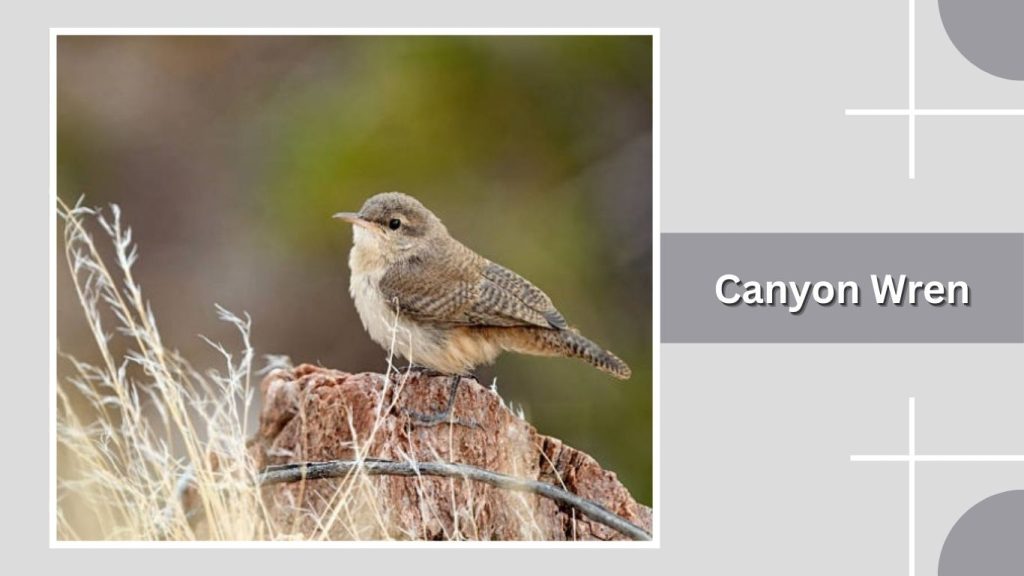
The canyon wren is a small brown bird famous for its loud, beautiful song that echoes through rocky landscapes. It has a slender body, long curved bill, and rich brown upperparts. Unlike many sparrows, it is more often seen clinging to rocks and cliff faces.
Identification
- Small, slim brown bird with a long, slightly curved bill
- Rich rusty-brown upperparts and lighter underparts
- White throat with fine spotting
- Short, rounded wings and medium-length tail
- Length usually around 12–15 cm
Habitat & Distribution
Canyon wrens live in rocky canyons, cliffs, deserts, and steep hillsides. They are mostly found in the southwestern United States, Mexico, and parts of Central America, where rock formations provide shelter and nesting sites.
Diet & Feeding Habits
They feed mainly on insects and spiders, picking prey from rock crevices. Ants, beetles, and small larvae make up much of their diet. Canyon wrens often probe cracks with their curved bills to reach hidden insects.
Behavior & Nesting
Canyon wrens are agile climbers, hopping and creeping along rock walls. They build cup-shaped nests in rock crevices, caves, or ledges. Males sing long, descending songs that echo dramatically through canyons.
12. Carolina Wren (Thryothorus ludovicianus)
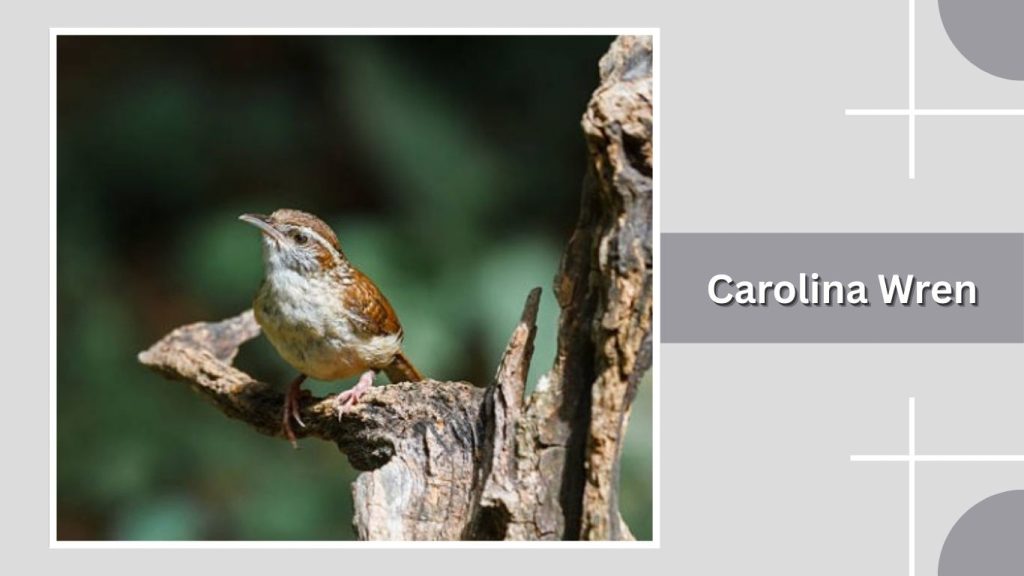
The Carolina wren is a small brown bird with a big voice. It is well known for its loud, rolling song and bold personality. Despite its small size, this wren is very active and often seen hopping through shrubs, gardens, and woodpiles.
Identification
- Small, compact brown bird with a long, slightly curved bill
- Bright white eyebrow stripe over a dark eye line
- Rich reddish-brown upperparts and buff underparts
- Short, rounded wings and fairly long tail
- Length about 12–14 cm
Habitat & Distribution
Carolina wrens live in forests, woodland edges, gardens, parks, and suburban areas. They are mainly found in the eastern and southeastern United States and usually stay in the same area year-round.
Diet & Feeding Habits
Their diet is mostly insects and spiders, including beetles, caterpillars, and ants. They also eat some seeds and berries, especially in colder months. They forage low to the ground, probing bark and leaf litter.
Behavior & Nesting
Carolina wrens are curious and energetic. They build nests in sheltered places such as tree cavities, hanging pots, mailboxes, and woodpiles. Both males and females sing, often performing loud duets.
13. Bewick’s Wren (Thryomanes bewickii)
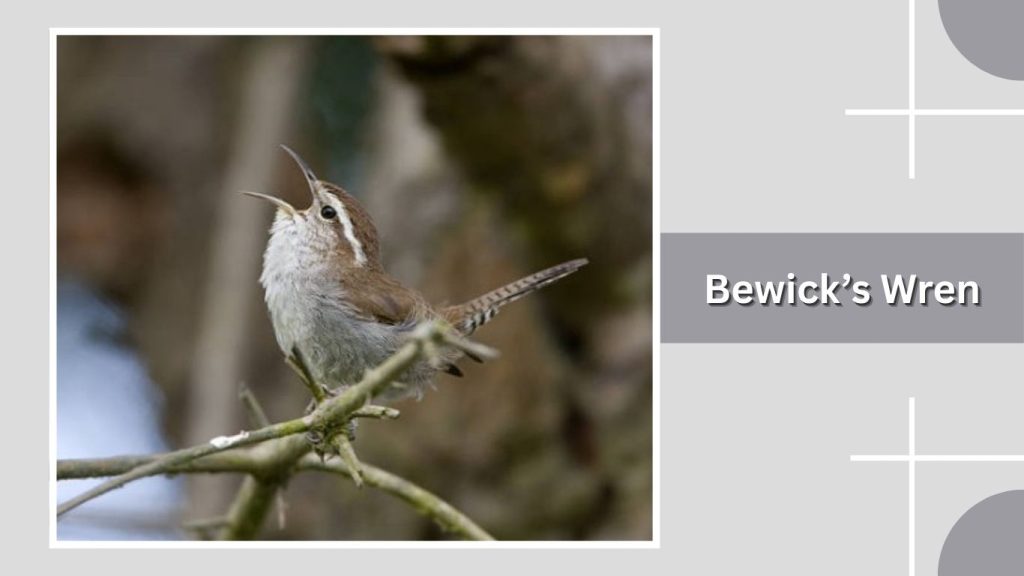
Bewick’s wren is a slim, small brown bird known for its long tail and expressive white eyebrow. It is lively and often seen flicking its tail while moving through bushes. Its clear, musical song makes it easier to notice than to see.
Identification
- Small brown bird with a thin, slightly curved bill
- Bold white eyebrow stripe
- Grayish-brown upperparts with pale underparts
- Long tail with white corners, often flicked
- Length usually around 12–14 cm
Habitat & Distribution
Bewick’s wrens inhabit open woodlands, brushy areas, farmlands, and suburban gardens. They are mainly found in the western and southern parts of North America, often near shrubs and low trees.
Diet & Feeding Habits
They feed mostly on insects and spiders, including beetles, caterpillars, and flies. In colder seasons, they also eat some seeds and small fruits. They search for food in bushes, bark crevices, and ground litter.
Behavior & Nesting
Bewick’s wrens are active and alert. They build nests in cavities such as tree holes, fence posts, and building gaps. Males sing complex, varied songs from exposed perches to defend territory.
14. Marsh Wren (Cistothorus palustris)
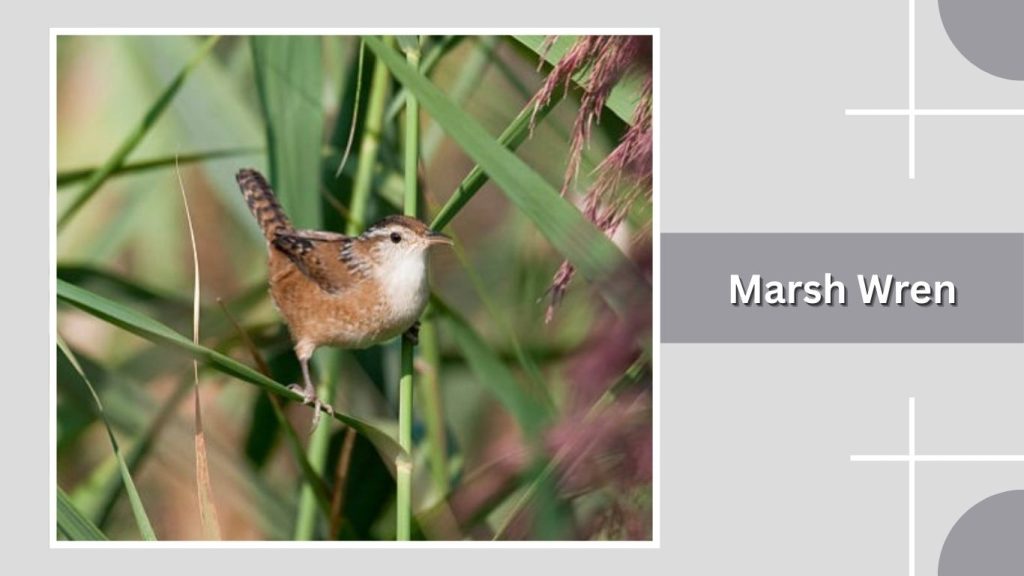
The marsh wren is a tiny brown bird strongly associated with wetlands. It moves quickly through reeds and cattails, often clinging to stems. Although small and hard to spot, it is easily recognized by its bubbling, rapid song.
Identification
- Very small brown bird with a short tail often held upright
- Dark crown with a pale eyebrow stripe
- Streaked brown and black back
- Pale gray to buff underparts
- Length about 10–13 cm
Habitat & Distribution
Marsh wrens live almost exclusively in freshwater and saltwater marshes, cattail swamps, and wet reed beds. They are widely distributed across North America, migrating southward from colder regions in winter.
Diet & Feeding Habits
They mainly eat insects and spiders, including flies, beetles, and caterpillars. Marsh wrens forage by climbing reeds and picking prey from stems and leaves close to water.
Behavior & Nesting
Marsh wrens are very active and territorial. Males often build several “dummy” nests in their territory, while females choose one for egg-laying. Nests are woven balls of grass attached to reeds above water.
15. Winter Wren (Troglodytes hiemalis)
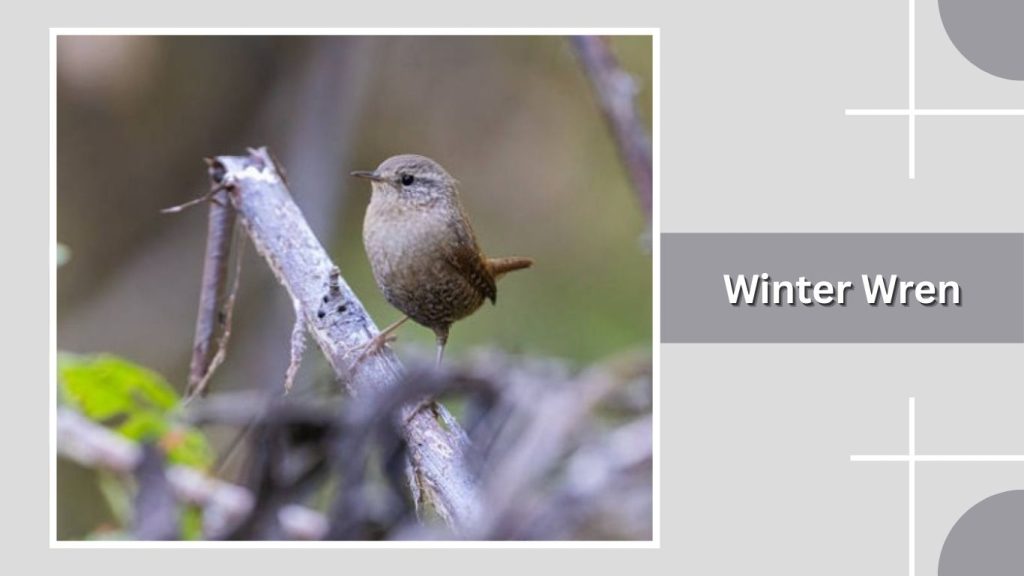
The winter wren is one of the smallest brown birds, yet it has one of the loudest and most complex songs. With its round body and very short tail, it often looks like a tiny brown ball hopping through dark, damp forests.
Identification
- Very small, round brown bird with a very short tail
- Fine dark barring on wings, tail, and sides
- Thin, slightly curved bill
- Short neck and compact appearance
- Length usually around 8–10 cm
Habitat & Distribution
Winter wrens prefer dense, moist forests, especially areas with fallen logs, roots, and thick undergrowth. They breed in northern forests and mountainous regions and move south into milder woodlands during winter.
Diet & Feeding Habits
They feed mainly on insects, spiders, and small invertebrates found in bark, moss, and leaf litter. Winter wrens often creep through tangled roots and fallen branches while searching for food.
Behavior & Nesting
Winter wrens are shy and quick-moving. They build mossy, dome-shaped nests in cavities, root masses, or under logs. Males sing long, bubbling songs that echo through forested areas.
16. Rock Wren (Salpinctes obsoletus)
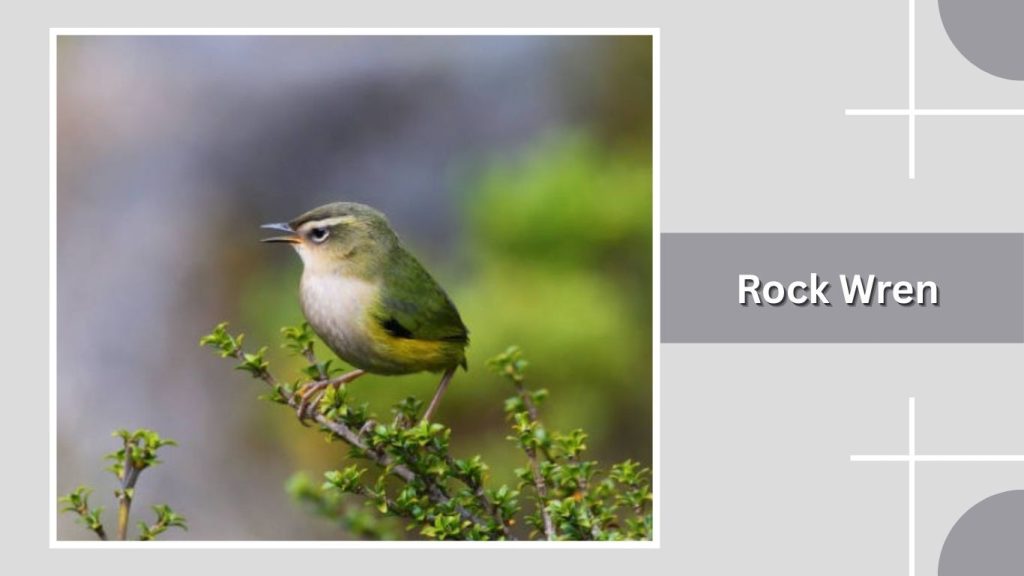
The rock wren is a small brown bird adapted to dry, rocky environments. It has a slender body, long legs, and a slightly curved bill, allowing it to move easily across stones and cliffs. Its pale coloring helps it blend into desert landscapes.
Identification
- Small, pale brown bird with fine dark spotting
- Long legs and thin, slightly curved bill
- Faint pale eyebrow stripe
- Light gray to buff underparts
- Length usually around 12–15 cm
Habitat & Distribution
Rock wrens inhabit deserts, rocky slopes, canyons, and dry open hillsides. They are found across western North America, especially in areas with loose rocks and sparse vegetation.
Diet & Feeding Habits
Their diet mainly consists of insects and spiders. They search for prey among stones and cracks, often hopping quickly and pausing to peck at the ground or rock surfaces.
Behavior & Nesting
Rock wrens are active ground birds. They build nests deep in rock crevices and often line the entrance with small stones. Males sing varied, ringing songs from boulders and cliffs.
17. European Dunnock (Prunella modularis)
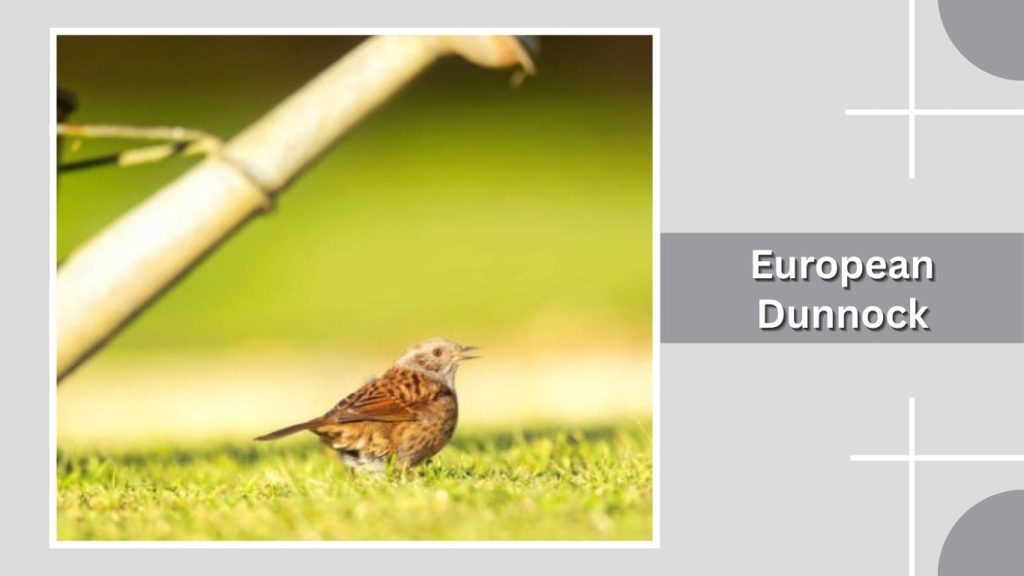
The European dunnock, often called the hedge sparrow, is a small brown bird with a shy nature and soft, muted colors. It is commonly seen creeping along hedges and low shrubs, where it quietly searches for food on or near the ground.
Identification
- Small, slim brown bird with fine dark streaks
- Gray face, throat, and chest
- Thin, pointed bill
- Short wings and fairly long legs
- Length usually around 13–14 cm
Habitat & Distribution
European dunnocks are widespread across Europe and parts of western Asia. They live in gardens, hedgerows, woodland edges, and parks, often staying close to dense cover.
Diet & Feeding Habits
They mainly feed on insects, spiders, and small worms. Seeds and berries are also eaten, especially in winter. Dunnocks often forage quietly on the ground, flicking leaves aside to uncover prey.
Behavior & Nesting
Dunnocks are secretive and usually seen alone or in pairs. They build neat cup-shaped nests low in bushes or hedges. Males sing soft, high-pitched songs from low, hidden perches.
18. Brown Creeper (Certhia americana)
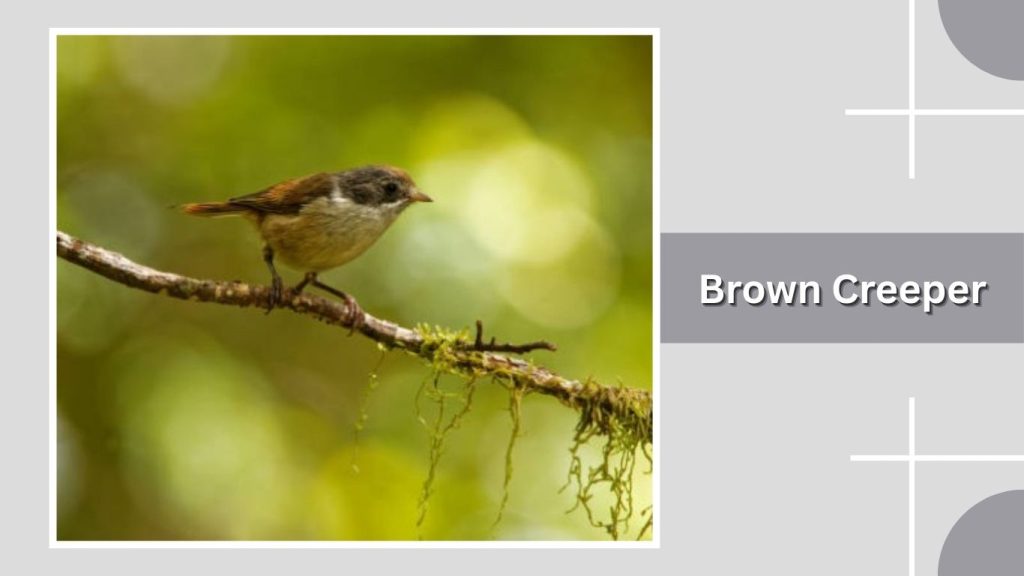
The brown creeper is a tiny brown bird famous for its tree-climbing behavior. It spends most of its time spiraling up tree trunks, using its stiff tail for support. Its mottled brown color perfectly matches bark, making it easy to miss unless you watch closely.
Identification
- Very small brown bird with heavily mottled bark-like pattern
- Thin, slightly curved bill for probing insects
- White underparts
- Stiff tail feathers used for support on trees
- Length usually around 12–13 cm
Habitat & Distribution
Brown creepers are found in forests, woodlands, parks, and large gardens. They are widely distributed across North America, especially in areas with mature trees. Some populations migrate short distances, while others stay year-round.
Diet & Feeding Habits
They feed mainly on insects, spiders, and larvae hidden under tree bark. Using their curved bill, they probe into crevices to pull out prey. In winter, they may also eat small seeds.
Behavior & Nesting
Brown creepers move upward in a spiral on tree trunks, then fly down to the base of another tree and start again. They build nests behind loose bark or in tree crevices, using twigs, bark strips, and soft plant fibers.
19. Horned Lark (Eremophila alpestris)
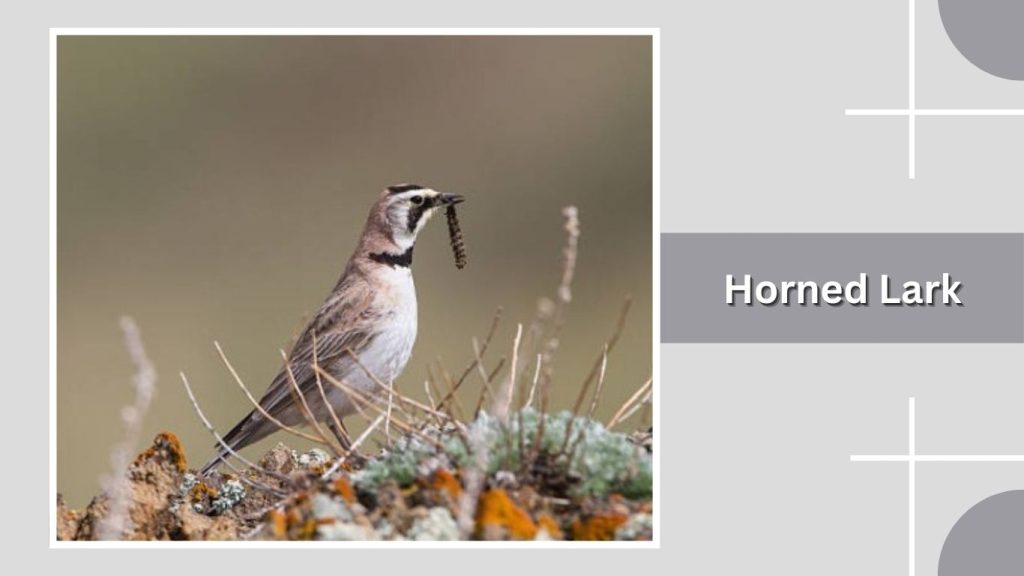
The horned lark is a small brown bird of wide, open spaces. It is known for the tiny feather “horns” on the male’s head and its habit of spending much of its time on the ground. Its pale brown coloring blends well with dry soil and short grass.
Identification
- Small brown bird with pale face and black facial markings
- Males show tiny black feather tufts (“horns”)
- Yellowish throat and white belly
- Slender body with long wings
- Length usually around 16–20 cm
Habitat & Distribution
Horned larks live in open grasslands, deserts, tundra, farmland, beaches, and roadsides. They are one of the most widely distributed birds in the world, found across North America, Europe, Asia, and parts of northern Africa.
Diet & Feeding Habits
They feed mostly on seeds and grains, especially in winter. During warmer months, insects such as beetles and grasshoppers become important. Horned larks forage almost entirely on the ground.
Behavior & Nesting
Horned larks are often seen walking or running across open ground. They build cup-shaped nests on the ground, sometimes partly covered with grass or small stones. Males sing while hovering high in the air.
20. Spotted Towhee (Pipilo maculatus)
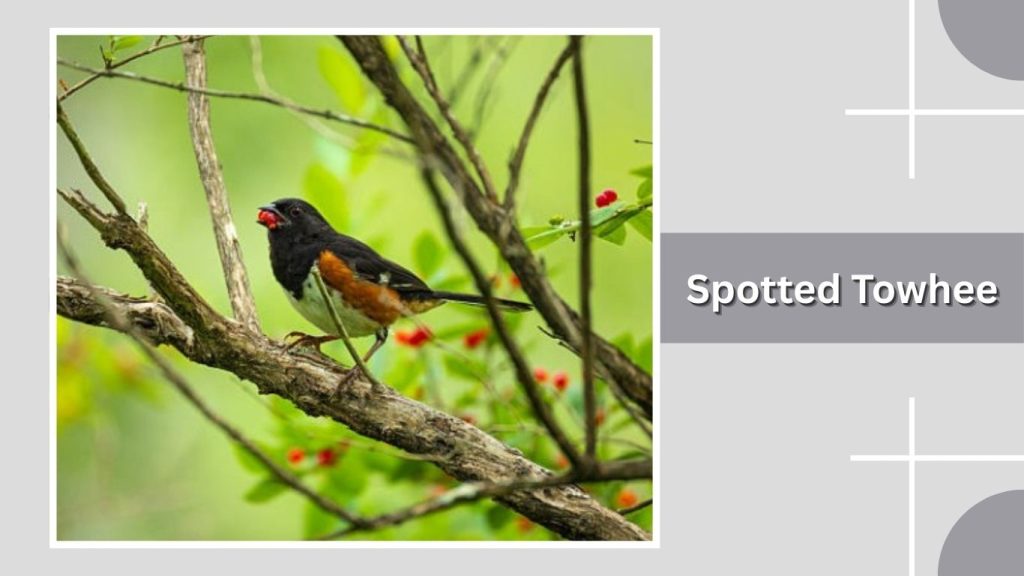
The spotted towhee is a larger brown-and-black bird often found scratching noisily in leaf litter. While more colorful than many small brown birds, females and juveniles show mostly brown tones, fitting well into the “small brown bird” group. It is best known for its bold spots and strong ground-feeding behavior.
Identification
- Medium-sized bird with brown to dark upperparts
- White spots on wings and back
- Rufous-brown sides and pale belly
- Long, rounded tail
- Length usually around 18–21 cm
Habitat & Distribution
Spotted towhees live in brushy areas, forest edges, chaparral, and gardens. They are mainly found in western North America, from southern Canada to Mexico, often staying year-round in many regions.
Diet & Feeding Habits
They eat seeds, berries, and insects. Towhees are famous for their “double-scratch” feeding style, hopping backward to uncover food beneath leaves and soil.
Behavior & Nesting
Spotted towhees spend much of their time on the ground under shrubs. They build nests low in bushes or directly on the ground, hidden in dense vegetation. Males sing sharp, clear songs from exposed perches.
FAQs
What are small brown birds commonly called?
Small brown birds are often called “LBJs,” meaning “little brown jobs,” by birdwatchers because many species look similar at first glance. This nickname refers to sparrows, wrens, and other small brown birds that require closer observation to identify correctly.
Why do so many small birds have brown coloring?
Brown coloring helps small birds blend into their surroundings. This camouflage protects them from predators and allows them to forage safely on the ground, in bushes, and among dry leaves, soil, bark, and grasses where brown shades dominate.
How can I tell small brown birds apart?
You can identify small brown birds by focusing on details like beak shape, chest streaking, eye stripes, tail length, and behavior. Habitat and song are also very helpful, since many brown birds live in different environments and have unique calls.
Are small brown birds good for gardens?
Yes, many small brown birds are excellent for gardens. They eat insects that damage plants and help control pests naturally. Sparrows and wrens also feed on weed seeds, making them beneficial for maintaining a healthier outdoor space.
Do small brown birds migrate?
Some small brown birds migrate long distances, while others stay in the same area year-round. Migration depends on the species and climate. Birds living in colder regions often move south in winter, while those in mild areas may remain all year.