



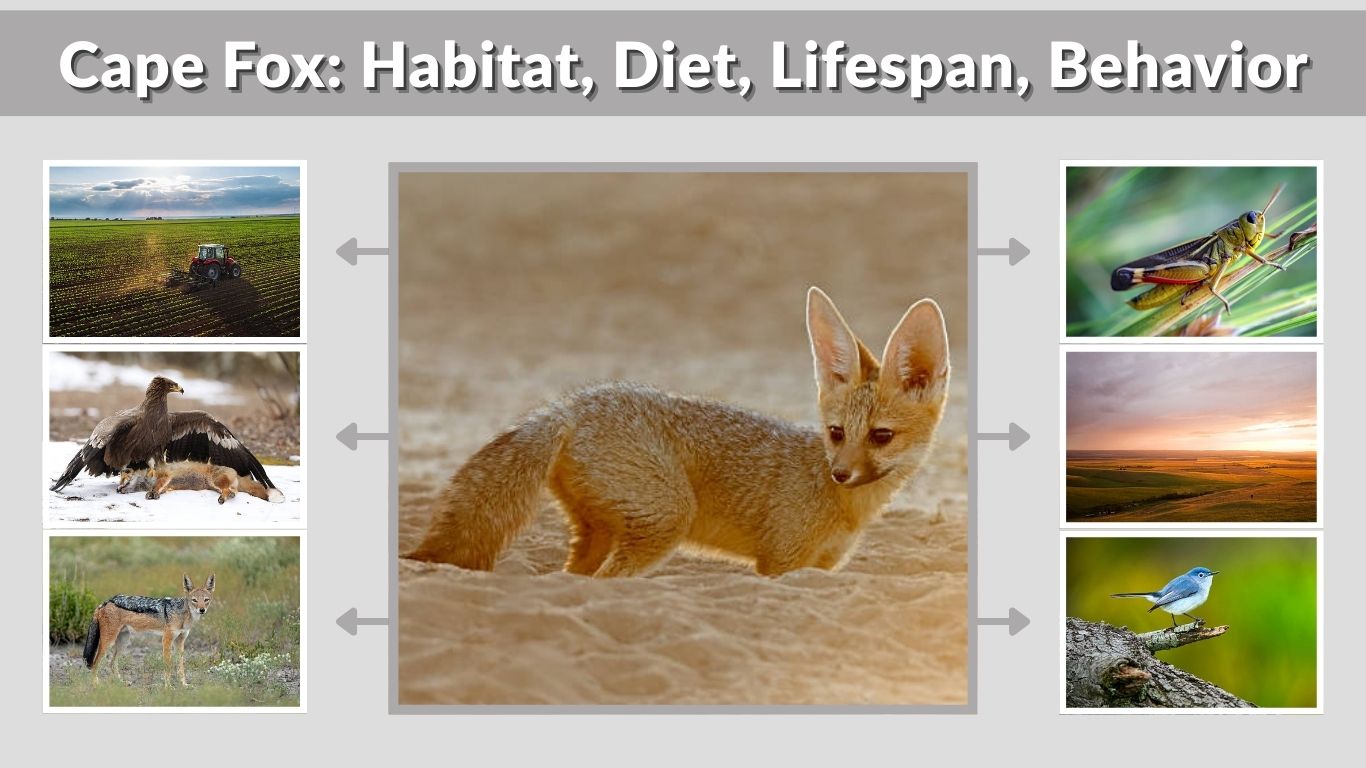
The Cape fox is a small wild fox species native to the dry regions of southern Africa. Known for its slender body, large ears, and silver-gray fur, this fox has adapted well to life in open grasslands and semi-desert environments. The Cape fox plays an important role in its ecosystem by helping control populations of insects and small animals. Because of its distinctive coat color, it is sometimes called the silver-backed fox. Despite living in harsh environments, the Cape fox is highly adaptable and capable of surviving in a variety of dry habitats.
What is a Cape Fox?
The Cape fox (Vulpes chama) is a small fox species belonging to the Canidae family, which also includes wolves, jackals, and domestic dogs. It is the only true fox species native to southern Africa.
Cape foxes are easily recognized by their silver-gray fur, pointed ears, and bushy tail. Their light-colored coat helps them blend into dry grasslands and desert landscapes.
These foxes are mostly nocturnal, meaning they are active during the night when temperatures are cooler. During the day, they rest in burrows or sheltered areas to avoid the heat.
Cape foxes are generally shy animals that prefer to avoid humans. They rely on their sharp hearing and strong sense of smell to detect prey and stay alert to danger.
Cape Fox Identification
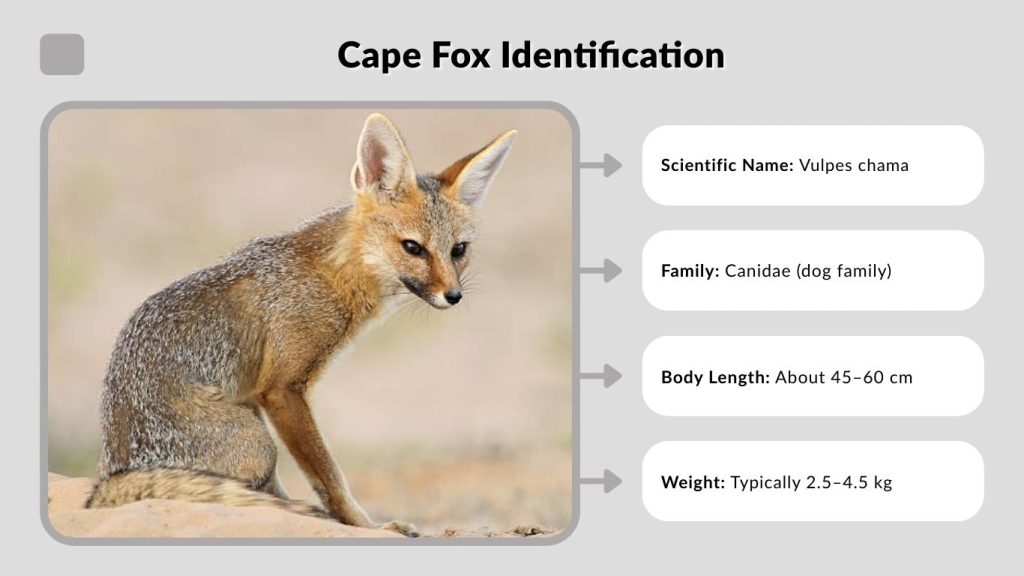
The Cape fox (Vulpes chama) is a small fox species native to the dry grasslands and semi-desert regions of southern Africa. It is easily recognized by its silver-gray coat, slender body, and large pointed ears. Sometimes called the silver-backed fox, this species is well adapted to hot and arid environments. Its light-colored fur helps it blend into open landscapes, while its bushy tail and sharp senses assist with balance, hunting, and survival in the wild.
Key Identification Features
- Scientific Name: Vulpes chama
- Common Name: Cape Fox
- Animal Type: Mammal
- Family: Canidae (dog family)
- Body Length: About 45–60 cm (18–24 inches)
- Tail Length: Around 30–40 cm (12–16 inches)
- Weight: Typically 2.5–4.5 kg (5–10 pounds)
- Fur Color: Silver-gray back with a lighter underside
- Ears: Large, pointed ears for detecting prey
- Tail: Long, bushy tail usually ending with a dark or black tip
- Habitat: Grasslands, semi-deserts, and savannas of southern Africa
- Activity Pattern: Mostly nocturnal (active at night)
These features help distinguish the Cape fox from other fox species and reflect its adaptations for life in open, dry environments.
Cape Fox Habitat
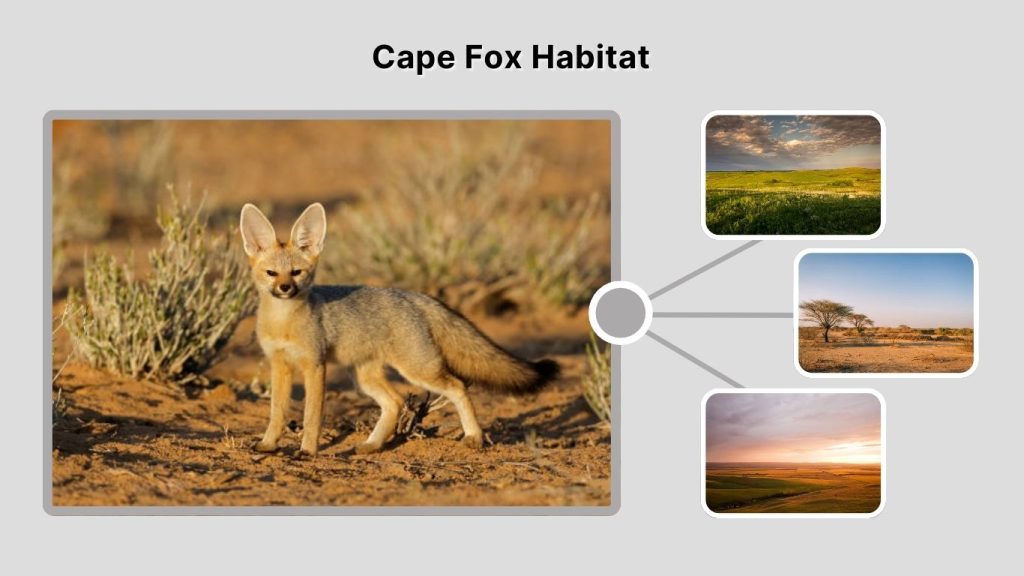
The Cape fox habitat mainly consists of open and dry landscapes where vegetation is sparse. These environments provide good hunting opportunities and enough space for the fox to move freely.
Where Do Cape Foxes Live?
Cape foxes are mainly found in southern Africa, particularly in countries such as:
- South Africa
- Namibia
- Botswana
- Zimbabwe
They are especially common in regions with semi-arid climates.
Preferred Environments
Cape foxes prefer habitats that provide open areas for hunting and burrowing. These environments often include:
- Grasslands
- Semi-desert regions
- Open savannas
- Shrublands
These landscapes provide both shelter and access to food sources.
Habitat Adaptations
The Cape fox has developed several adaptations that help it survive in dry climates.
Its light-colored fur helps reflect sunlight and blend into its surroundings. The fox also digs or uses burrows and underground dens, which provide protection from heat and predators.
Because temperatures can become extremely high during the day, Cape foxes are mostly active at night, when conditions are cooler.
Cape Fox Diet
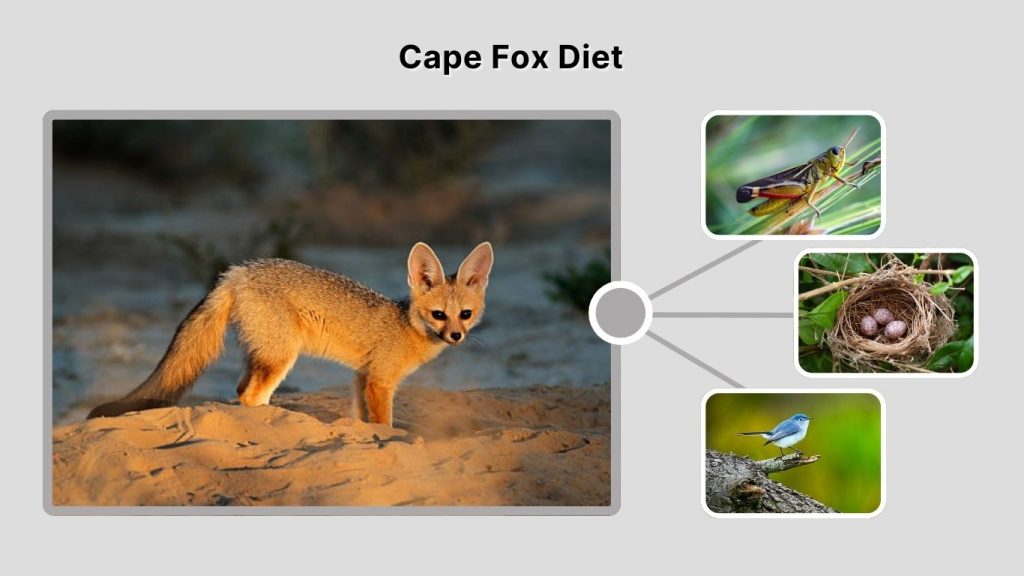
The Cape fox diet is varied because these animals are omnivores. They eat a combination of animal prey and plant-based foods depending on what is available in their environment.
What Do Cape Foxes Eat?
Cape foxes commonly feed on:
- Small mammals such as rodents
- Insects like beetles and grasshoppers
- Birds and bird eggs
- Reptiles
- Fruits and plant material
This diverse diet helps them survive in areas where food availability can change throughout the year.
Hunting Behavior
Cape foxes are skilled nocturnal hunters. They use their keen sense of hearing and smell to locate prey hidden in grass or underground.
Once prey is detected, the fox quickly pounces or digs to capture it.
Seasonal Diet Changes
The diet of Cape foxes may vary depending on the season. During warmer months, they may eat more insects and fruits, while in cooler periods they rely more on small mammals and birds.
Cape Fox Behavior
Cape foxes display several behaviors that help them survive in the dry environments of southern Africa. They are generally cautious animals that prefer to stay away from human activity. Their behavior is adapted to open landscapes where predators and prey can be spotted from a distance.
Activity Patterns
Cape foxes are primarily nocturnal, meaning they are most active during the night. This behavior helps them avoid the intense daytime heat common in semi-desert and grassland regions.
During the day, they usually rest in burrows, abandoned dens, or sheltered areas that protect them from the sun and predators.
Social Structure
Cape foxes are often seen living in pairs, especially during the breeding season. A male and female may share the same territory and work together to raise their young.
Outside the breeding season, some Cape foxes may live alone while still maintaining a defined territory.
Communication
Cape foxes communicate with each other using several methods:
- Vocal sounds such as barks and yips
- Scent marking to establish territory
- Body language and tail movements
These signals help foxes interact with mates and warn other animals to stay away from their territory.
Cape Fox Life Cycle
The life cycle of the Cape fox includes several stages from birth to adulthood. Each stage helps young foxes gradually develop the skills needed to survive in their environment.
Breeding Season
Cape foxes usually breed once each year. The mating season typically occurs during late winter or early spring, depending on the region.
During this time, pairs strengthen their bond and prepare a safe den where the female will give birth.
Gestation and Birth
After mating, the female Cape fox carries the pups for about 50–55 days before giving birth.
A typical litter contains 3–6 pups, although litter size can vary depending on environmental conditions.
Pup Development
At birth, the pups are blind and completely dependent on their mother. They remain inside the den where they are protected from predators and harsh weather.
Their eyes usually open after about 10–14 days, and they begin exploring outside the den several weeks later.
Growth to Adulthood
As the pups grow, both parents may help provide food and protection. Young Cape foxes learn hunting skills by observing their parents.
By the time they are about 8–10 months old, they are usually ready to live independently.
Cape Fox Lifespan
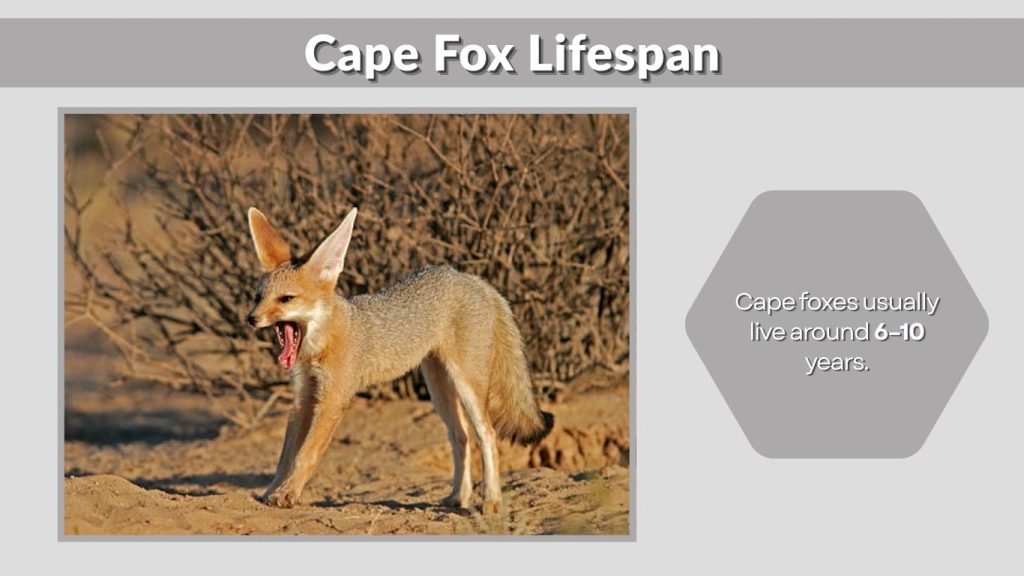
The Cape fox lifespan can vary depending on environmental conditions and threats in the wild.
Lifespan in the Wild
In natural environments, Cape foxes usually live around 6–10 years. However, survival rates can be affected by predators, disease, and food availability.
Lifespan in Captivity
In protected environments such as wildlife reserves or zoos, Cape foxes may live up to 12–14 years with proper care.
Factors Affecting Lifespan
Several factors influence how long Cape foxes live:
- Predators such as jackals and birds of prey
- Disease and parasites
- Habitat loss
- Human-related threats
Protecting natural habitats helps improve survival chances for Cape fox populations.
Predators and Threats to Cape Foxes
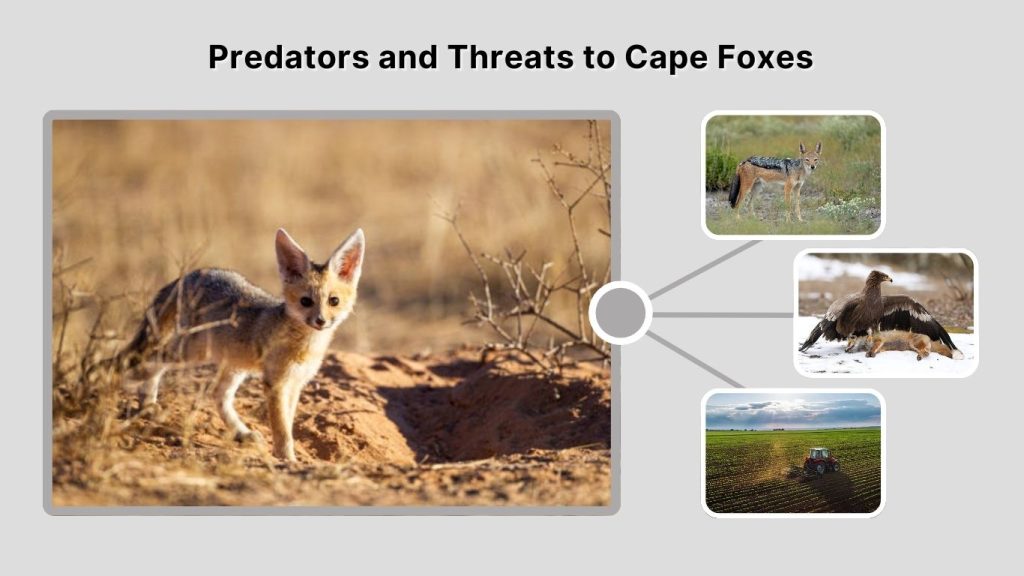
Even though Cape foxes are quick and alert animals, they still face several threats in the wild.
Common predators include:
- Black-backed jackals
- Larger carnivores
- Eagles and other birds of prey
Human activities can also affect Cape fox populations. Farming activities, habitat changes, and accidental poisoning sometimes impact these animals.
Conservation Status of the Cape Fox
The Cape fox is currently considered not globally endangered, and its population is generally stable in many parts of southern Africa.
However, conservation efforts are still important to ensure that their natural habitats remain protected.
Maintaining healthy grassland and savanna ecosystems helps support stable Cape fox populations.
Interesting Cape Fox Facts
Cape foxes have several fascinating characteristics:
- They are one of the only true fox species native to southern Africa.
- Their silver-gray coat gives them the nickname “silver-backed fox.”
- Cape foxes are highly adaptable and can survive in dry and semi-desert environments.
- They help control populations of rodents and insects, which benefits local ecosystems.
FAQs
Where do Cape foxes live?
Cape foxes live mainly in southern Africa, including countries such as South Africa, Namibia, Botswana, and Zimbabwe.
What do Cape foxes eat?
They eat rodents, insects, birds, reptiles, fruits, and other small animals.
How long do Cape foxes live?
Cape foxes typically live 6–10 years in the wild and may live longer in protected environments.
Are Cape foxes dangerous to humans?
No. Cape foxes are generally shy animals and rarely interact with humans.