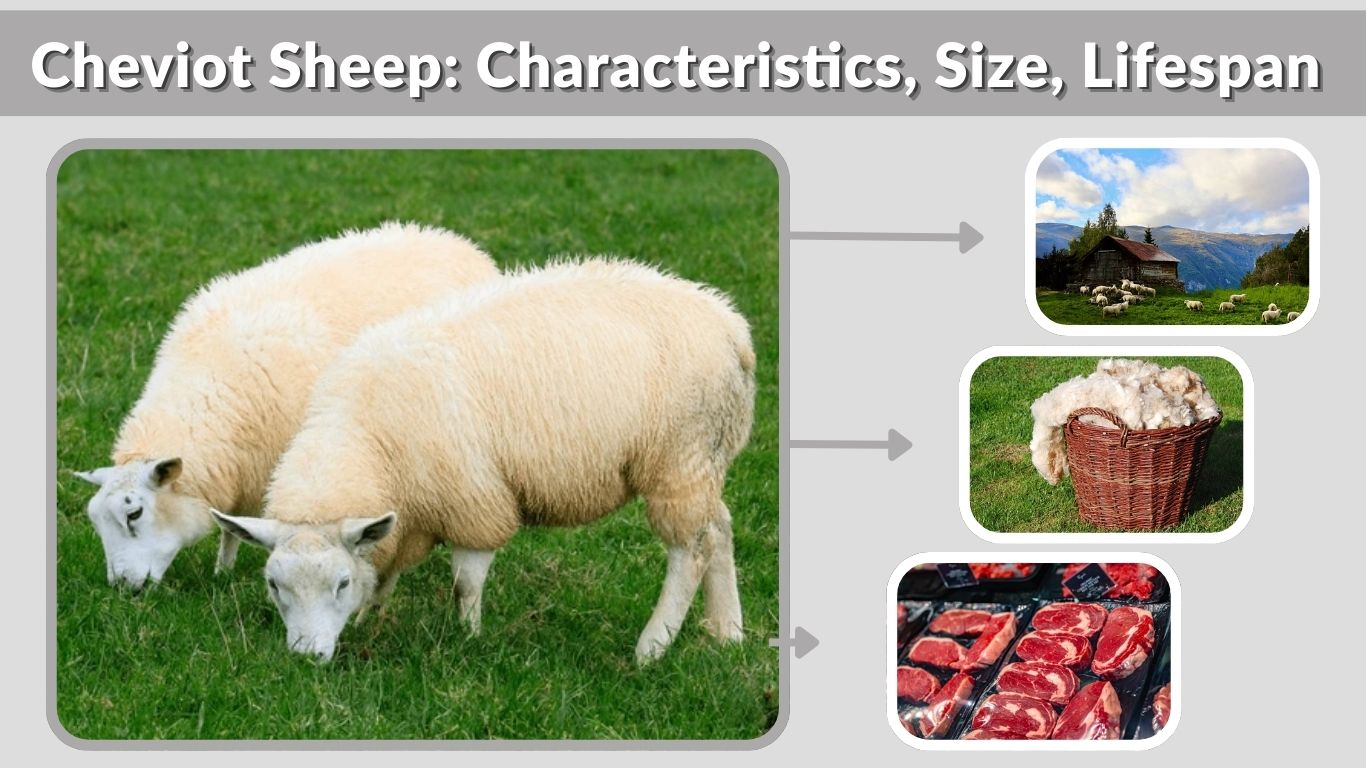
Cheviot sheep are a hardy and adaptable sheep breed known for their strong grazing ability and excellent resilience in harsh environments. Originating from the Cheviot Hills along the border of England and Scotland, these sheep have been valued for centuries for both meat and wool production. Their alert appearance, white face, and sturdy body make them easy to recognize. Farmers appreciate Cheviot sheep for their ability to thrive on rough pasture and for their reliable lamb production. This guide explores Cheviot sheep characteristics, size, lifespan, and important facts about this historic breed.
What is Cheviot Sheep?
Cheviot sheep are a traditional hill sheep breed developed in the rugged landscapes of the Cheviot Hills, which lie between England and Scotland. Because of their strong adaptability and grazing ability, they are well suited to mountainous and rough grazing areas.
Origin and History
The Cheviot sheep breed has a long history dating back several centuries. It is believed that these sheep developed naturally in the Cheviot Hills region, where farmers needed animals capable of surviving harsh weather and rough terrain.
Over time, Cheviot sheep became known for their strength, resilience, and productive performance. Their ability to graze efficiently on sparse pasture made them valuable for hill farming systems.
The breed later spread to other parts of the world, including:
- United States
- Canada
- Australia
- New Zealand
In these regions, Cheviot sheep are used both for meat production and wool production.
Why Cheviot Sheep is Popular
Cheviot sheep are widely appreciated by farmers because of their strong adaptability and productivity. Their hardy nature allows them to thrive where other sheep breeds may struggle.
Some key reasons for their popularity include:
- Strong resistance to harsh climates
- Excellent grazing ability
- Good meat production
- Quality wool production
- Strong maternal instincts
Because of these qualities, Cheviot sheep are commonly used in crossbreeding programs to improve lamb production in other sheep breeds.
Cheviot Sheep Characteristics
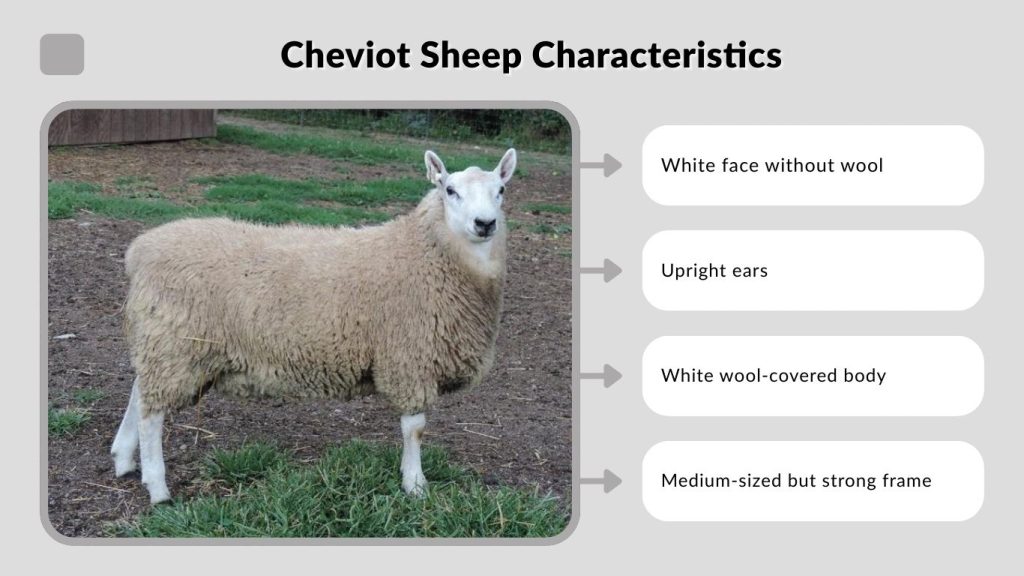
Cheviot sheep have several distinctive characteristics that make them easy to identify. Their physical features and hardy nature are well suited to challenging environments.
Physical Appearance
One of the most noticeable features of Cheviot sheep is their clean white face with no wool covering. Their upright ears and alert expression give them a very distinctive appearance.
Common physical characteristics include:
- White face without wool
- Upright ears
- White wool-covered body
- Medium-sized but strong frame
- Bright and alert expression
These features help Cheviot sheep remain alert and active in hill farming environments.
Body Structure
Cheviot sheep have a compact and muscular body structure that allows them to move easily across rough terrain.
Important structural features include:
- Broad and deep chest
- Strong legs suitable for climbing hills
- Well-developed muscles
- Balanced body proportions
This strong body structure helps them remain healthy and productive even in challenging grazing conditions.
Temperament
Cheviot sheep are generally known for their active and independent temperament. Unlike some other sheep breeds, they tend to be more alert and energetic.
Typical temperament traits include:
- Active grazing behavior
- Strong survival instincts
- Adaptability to pasture-based systems
Their independent nature allows them to perform well in large grazing areas where constant human supervision may not be possible.
Cheviot Sheep Size
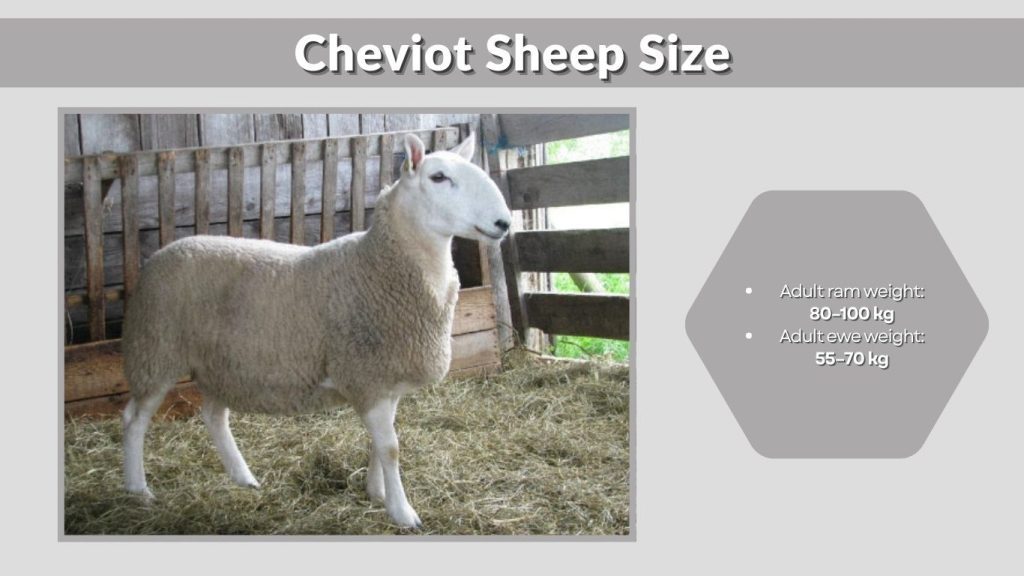
Cheviot sheep are considered a medium-sized breed, but they are strong and well built. Their body size makes them suitable for both wool and meat production.
Adult Body Weight
The body weight of Cheviot sheep varies depending on feeding, genetics, and farm management.
Typical body weights include:
- Adult ram weight: 80–100 kg
- Adult ewe weight: 55–70 kg
Although they are not the largest sheep breed, their strong body structure allows them to produce good-quality meat.
Growth Rate
Cheviot lambs have a steady growth rate, which makes them suitable for meat production.
Important growth advantages include:
- Efficient use of pasture
- Strong lamb survival rates
- Good carcass quality
Because of these qualities, Cheviot sheep are often used in lamb production systems.
Body Frame
Cheviot sheep have a medium but strong body frame that helps them survive in hill farming environments.
Key body frame characteristics include:
- Compact build
- Strong skeletal structure
- Good balance and mobility
These features make Cheviot sheep especially suitable for rough grazing landscapes.
Cheviot Sheep Lifespan
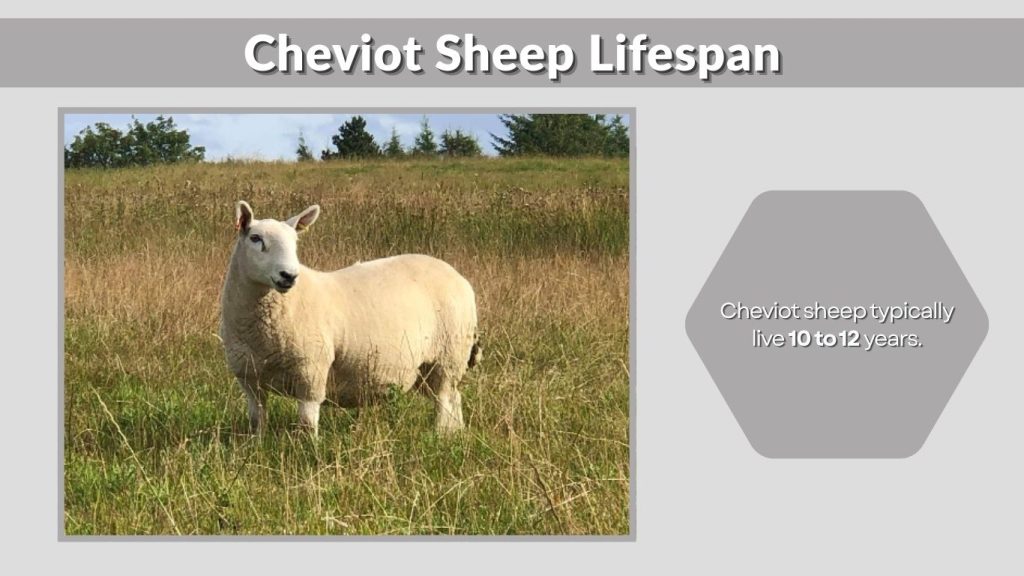
The lifespan of Cheviot sheep is generally similar to many other sheep breeds, but their hardy nature often allows them to remain productive for many years.
Average Lifespan
Cheviot sheep typically live 10 to 12 years, although some animals may live longer when they receive proper care and nutrition.
During their lifetime, Cheviot sheep can produce multiple lamb crops and provide annual wool production.
Productive Years
The most productive years for Cheviot sheep usually occur during the first 6 to 8 years of life. During this time, ewes produce healthy lambs and maintain strong wool production.
Good nutrition, pasture quality, and veterinary care can help extend their productive lifespan.
Cheviot Sheep Wool
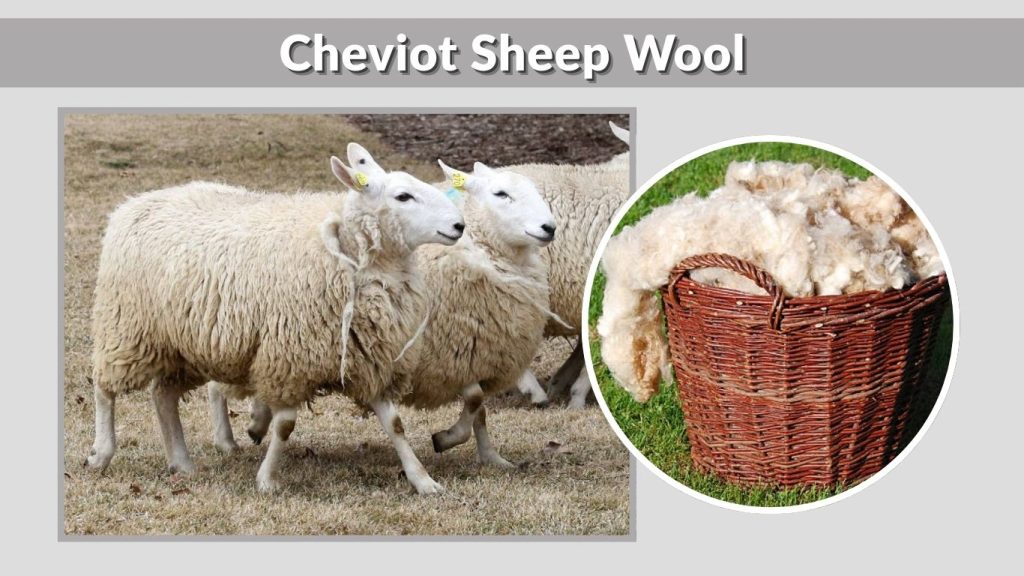
Cheviot sheep are valued not only for meat production but also for their high-quality wool. Their fleece is known for being durable, springy, and suitable for various textile products. Because of its unique characteristics, Cheviot wool is widely used in the wool industry.
Wool Quality
Cheviot wool is considered medium-grade wool, which means it is not as fine as Merino wool but still very useful for many textile applications.
Important wool characteristics include:
- Strong and durable fibers
- Good elasticity and resilience
- Naturally bright white color
- Medium fiber diameter
Because of these qualities, Cheviot wool is often used to produce durable fabrics and yarns.
Wool Production
Cheviot sheep produce a moderate amount of fleece each year. The amount of wool can vary depending on the sheep’s age, health, and feeding conditions.
Typical wool production includes:
- Average fleece weight: 2–4 kg per year
- Annual shearing required
- Good fleece density and coverage
Their wool is commonly used for making:
- Sweaters
- Blankets
- Carpets
- Wool yarn and fabrics
Cheviot Sheep Facts
Cheviot sheep have several interesting characteristics that make them a unique and valuable sheep breed.
Known for Hardiness
One of the most remarkable facts about Cheviot sheep is their ability to survive in harsh environments. They can live in rough grazing areas where other breeds might struggle.
Their strong legs and active grazing habits help them move easily across hills and rocky terrain.
Excellent Grazers
Cheviot sheep are known for their excellent grazing ability. They can efficiently utilize pasture and rough vegetation, making them suitable for hill farming systems.
This ability allows farmers to raise them in areas where pasture quality may be limited.
Strong Lamb Survival Rates
Cheviot ewes are known for their strong maternal instincts. They take good care of their lambs and often produce healthy offspring.
Benefits of their maternal ability include:
- High lamb survival rates
- Good milk production
- Strong mother-lamb bonding
These qualities make Cheviot sheep reliable for lamb production.
Used in Crossbreeding
Cheviot sheep are often used in crossbreeding programs to improve the performance of other sheep breeds.
Crossbreeding with Cheviot sheep can help:
- Improve lamb growth rate
- Increase meat production
- Enhance adaptability to rough environments
Cheviot Sheep Farming Guide
Raising Cheviot sheep can be a productive farming activity when proper management practices are followed.
Housing Requirements
Cheviot sheep are hardy animals, but they still need shelter to protect them from extreme weather conditions.
Important housing features include:
- Clean and dry shelter
- Proper ventilation
- Protection from heavy rain and strong winds
- Adequate space for movement
Providing proper housing helps maintain the health of the flock.
Feeding Management
Cheviot sheep rely mainly on pasture grazing for their nutrition. Their strong grazing ability allows them to survive on natural vegetation.
Common feed sources include:
- Natural grasses
- Legumes such as clover
- Hay during winter months
- Mineral supplements
Access to clean drinking water is also essential for maintaining healthy sheep.
Health Management
Proper health management helps prevent diseases and improves productivity.
Basic health management practices include:
- Regular vaccination programs
- Deworming to control parasites
- Maintaining clean housing conditions
- Monitoring sheep for signs of illness
Early detection of health problems helps farmers avoid serious losses.
Advantages of Raising Cheviot Sheep
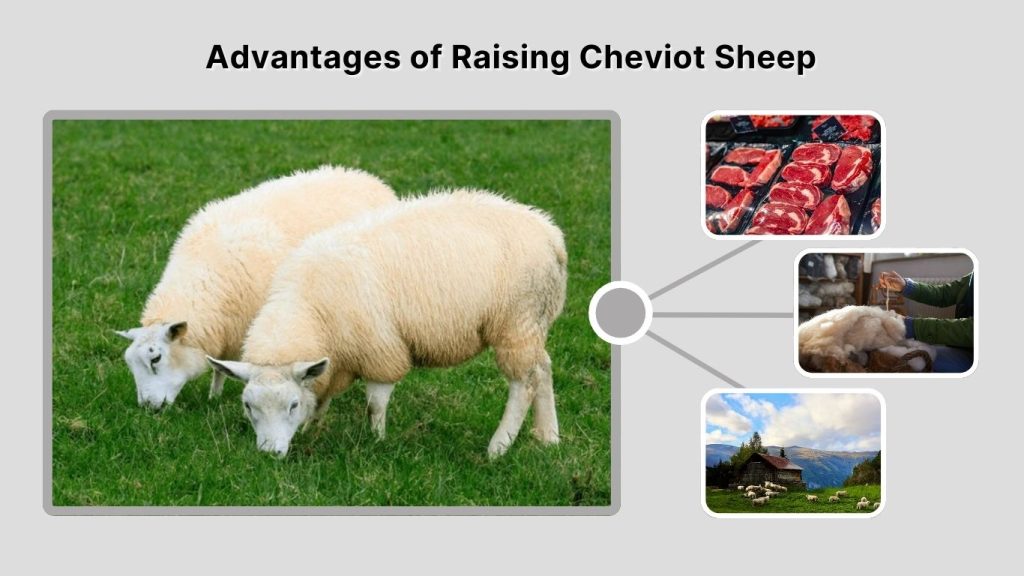
Cheviot sheep provide several advantages that make them attractive to livestock farmers.
Hardy and Adaptable
Cheviot sheep can survive in difficult environments and harsh weather conditions. Their strong adaptability makes them suitable for hill and pasture-based farming systems.
Good Meat Production
Although they are not the largest sheep breed, Cheviot sheep produce good-quality lamb meat that is valued in many markets.
Quality Wool Production
Their wool is durable and useful for many textile products, providing an additional income source for farmers.
Suitable for Hill Farming
Because of their strong legs and grazing ability, Cheviot sheep perform especially well in hill farming systems where pasture may be rough or uneven.
Cheviot Sheep vs Other Sheep Breeds
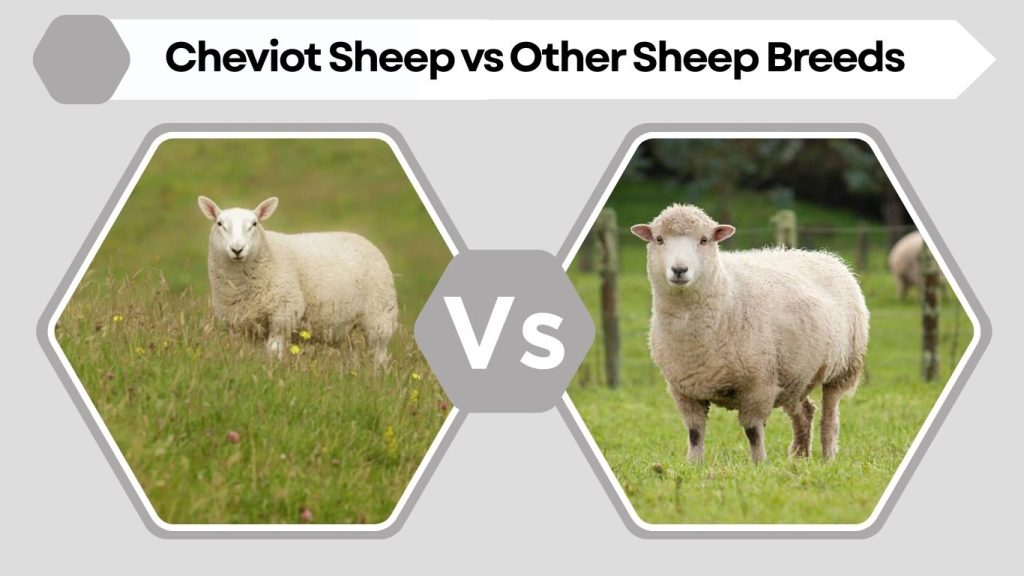
Farmers often compare Cheviot sheep with other breeds when deciding which breed is best for their farming system.
Cheviot vs Suffolk
Suffolk sheep are primarily raised for meat production and grow very quickly. Cheviot sheep, on the other hand, are valued for their hardiness and ability to survive in rough grazing conditions.
Cheviot vs Dorset
Dorset sheep are known for their ability to breed throughout the year, while Cheviot sheep are especially valued for their strong grazing ability and adaptability.
Differences in Purpose
Different sheep breeds serve different farming purposes. While some breeds specialize in meat or wool production, Cheviot sheep offer a balanced combination of meat, wool, and adaptability.
Conclusion
Cheviot sheep are a hardy and versatile breed that has been used for centuries in sheep farming. Their ability to thrive in harsh environments, combined with good meat and wool production, makes them a valuable breed for many farmers. With proper feeding, housing, and health management, Cheviot sheep can provide reliable production and long-term benefits for livestock farmers around the world.