



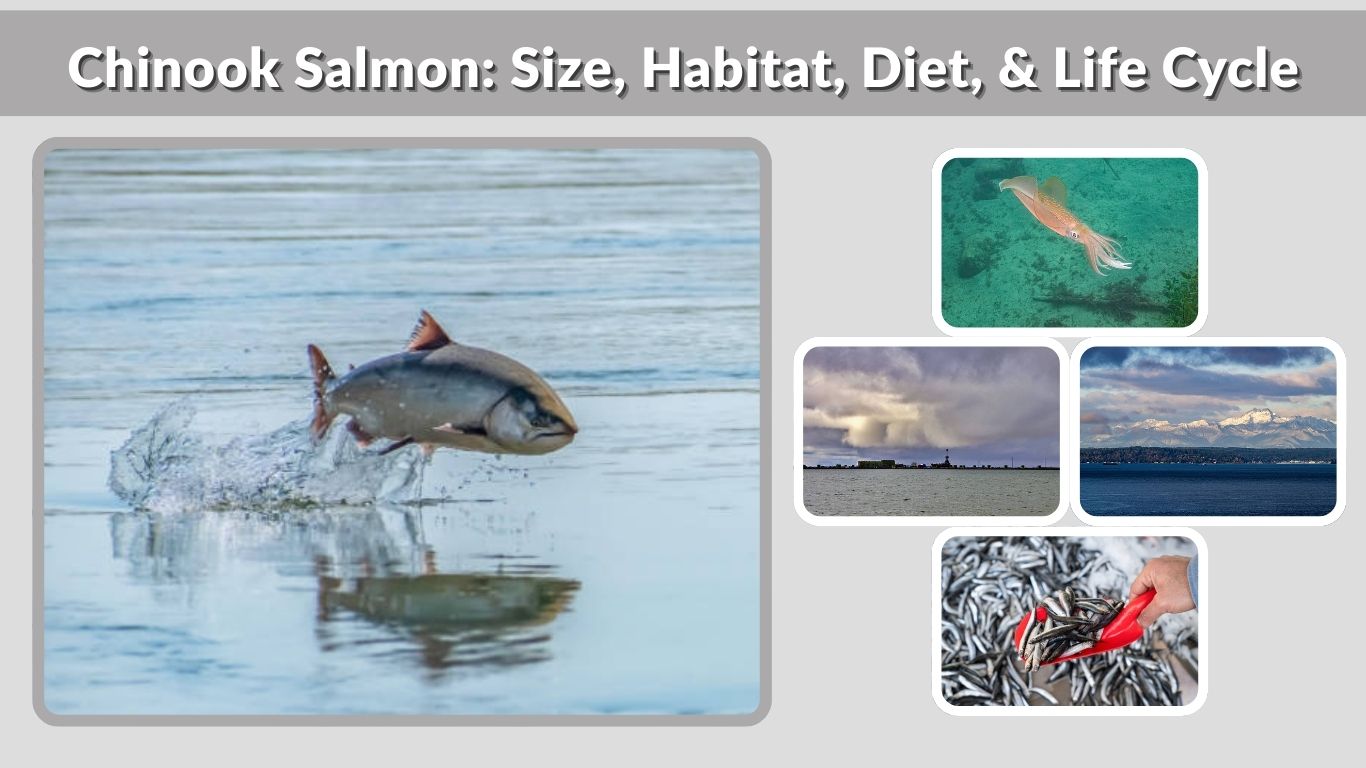
Chinook salmon, often called “King Salmon,” are the largest and most prized of all Pacific salmon species. Known for their impressive size, rich flavor, and powerful migrations, these fish play a vital role in both marine ecosystems and coastal economies. From icy northern rivers to the vast Pacific Ocean, Chinook salmon complete one of nature’s most remarkable life cycles. Their ecological importance, cultural significance, and culinary value make them one of the most fascinating fish in the world.
What Is Chinook Salmon?
Chinook salmon (Oncorhynchus tshawytscha) are the largest species of Pacific salmon. They are commonly known as King Salmon due to their size and high market value. Other names include Spring Salmon and Tyee, particularly in certain regions of North America.
These fish are anadromous, meaning they hatch in freshwater rivers and streams, migrate to the ocean to grow and mature, and then return to freshwater to spawn. This life strategy allows them to take advantage of rich ocean feeding grounds while still reproducing in protected inland waters.
Chinook salmon are native to the North Pacific Ocean and the river systems of western North America and eastern Asia. In North America, they range from California to Alaska, with particularly strong populations in Alaska and parts of the Pacific Northwest.
Physical Characteristics
Chinook salmon are known for their impressive size. Adult fish typically weigh between 10 and 50 pounds, though some individuals can exceed 100 pounds. The largest recorded Chinook weighed over 125 pounds, earning the species its royal nickname.
In the ocean, Chinook salmon have a blue-green back, silvery sides, and a white underside. They also feature small black spots on both the upper and lower lobes of the tail, which helps distinguish them from other salmon species.
As they prepare to spawn and re-enter freshwater, their coloration changes dramatically. Males often develop darker hues, sometimes turning reddish or brownish, and may grow a pronounced hooked jaw called a kype. These physical changes signal their transition into the final stage of their life cycle.
Habitat and Distribution
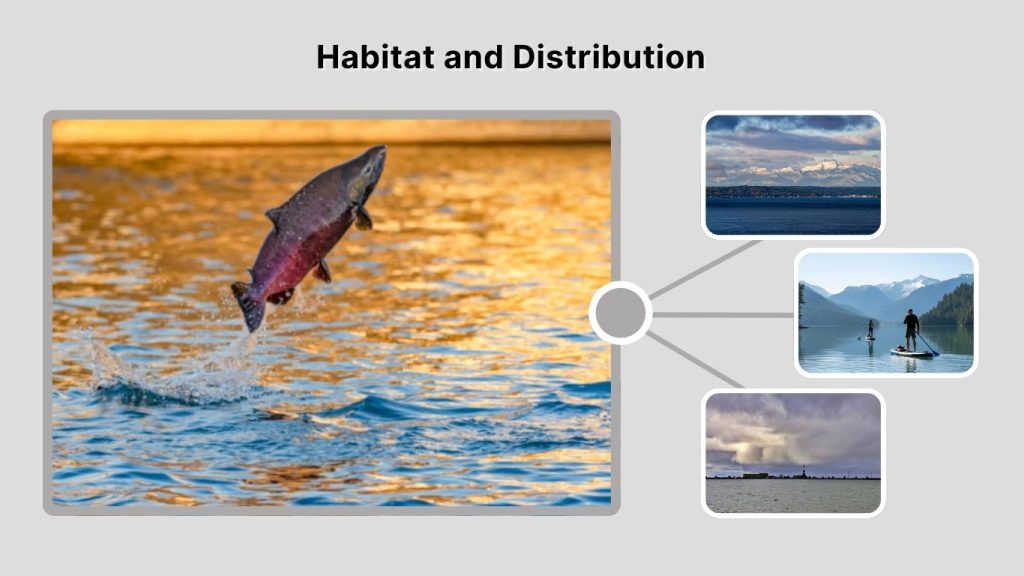
Chinook salmon inhabit the North Pacific Ocean and adjacent freshwater systems. In North America, they are found along the western coastline, from central California to northern Alaska. In Asia, they occur in parts of Russia and northern Japan.
During their early life stages, Chinook salmon live in freshwater rivers and streams. After several months to a year, they migrate downstream to the ocean. In marine waters, they may travel thousands of miles, feeding and growing in nutrient-rich coastal and offshore environments.
Eventually, adult Chinook salmon begin their remarkable return journey to their natal rivers. Guided by a keen sense of smell, they navigate back to the exact stream where they were born. This homing ability ensures the continuation of distinct regional populations.
Life Cycle of Chinook Salmon
The life cycle of Chinook salmon is both complex and extraordinary. It begins when adult salmon lay eggs in freshwater gravel nests called redds. After spawning, most Chinook die, completing their life cycle.
The eggs hatch into alevins, which remain in the gravel while feeding from their yolk sacs. Once they absorb the yolk, they emerge as fry and begin feeding on small aquatic insects and plankton. Depending on the population, juveniles may remain in freshwater for several months or up to a year.
As they grow, young salmon undergo physiological changes that prepare them for saltwater. This stage, known as the smolt phase, allows them to transition from freshwater to the ocean. In the ocean, Chinook salmon spend between one and five years feeding and growing before returning to spawn.
Their journey upstream is physically demanding. They stop feeding once they enter freshwater and rely entirely on stored energy reserves to reach their spawning grounds. After spawning, the cycle begins again with a new generation.
Diet and Feeding Habits
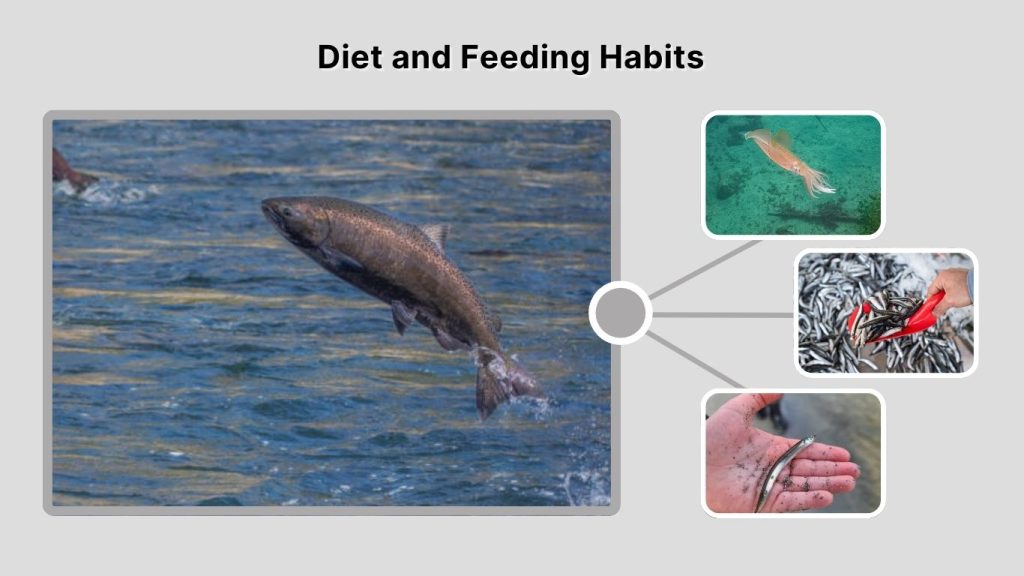
Chinook salmon are opportunistic feeders whose diet changes as they grow. In freshwater, juvenile Chinook feed primarily on insects, crustaceans, and small aquatic organisms. This protein-rich diet supports rapid early growth.
Once in the ocean, their diet expands significantly. Adult Chinook consume fish such as herring, anchovies, sardines, and sand lance, along with squid and crustaceans. This high-fat diet contributes to their rich flavor and firm texture, which are highly valued in culinary markets.
As top predators in many marine ecosystems, Chinook salmon help regulate populations of smaller fish species. At the same time, they serve as a critical food source for orcas, seals, sea lions, bears, and eagles, making them an essential link in both oceanic and freshwater food webs.
Fishing and Commercial Importance
Chinook salmon are among the most economically valuable fish species in the Pacific region. They support both commercial and recreational fisheries, particularly in Alaska, Canada, and the Pacific Northwest of the United States. Their large size and fighting strength make them a favorite target for sport anglers.
Commercially, Chinook salmon are sold fresh, frozen, smoked, and canned. Wild-caught Alaskan Chinook is especially prized for its quality and sustainability standards. In addition to wild fisheries, farmed Chinook salmon are produced in some regions to meet market demand.
However, strict regulations often govern Chinook harvests. Seasonal limits, size restrictions, and quota systems are commonly used to prevent overfishing and protect vulnerable populations.
Nutritional Value and Culinary Uses
Chinook salmon is widely regarded as one of the most nutritious fish available. It is rich in high-quality protein, omega-3 fatty acids, and essential vitamins such as B12 and D. Omega-3s are particularly important for heart health, brain function, and reducing inflammation.
Compared to other salmon species, Chinook typically has a higher fat content. This gives it a buttery texture and rich flavor that chefs and home cooks appreciate. The deep red color of its flesh is due to natural pigments from its diet.
Popular cooking methods include grilling, baking, broiling, pan-searing, and smoking. Because of its natural fat content, Chinook salmon remains moist and flavorful even with simple preparation. It is often seasoned lightly to allow its natural taste to shine.
Conservation Status and Threats
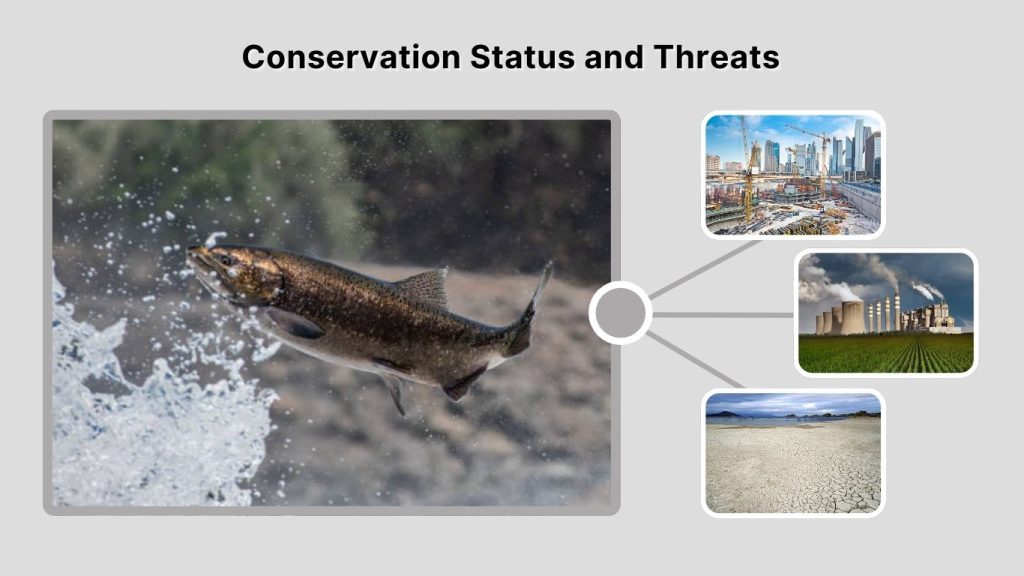
Despite its popularity and ecological importance, many Chinook salmon populations face significant challenges. Habitat loss is one of the primary threats. Dam construction, urban development, and pollution can block migration routes and degrade spawning grounds.
Climate change also poses risks. Rising water temperatures can stress salmon, reduce oxygen levels in rivers, and alter ocean food availability. Changes in ocean conditions may affect survival rates during the marine phase of their life cycle.
Overfishing has historically reduced some populations, although modern regulations and monitoring have improved management in many regions. Conservation efforts include habitat restoration, dam removal projects, hatchery programs, and strict fishing quotas.
Some Chinook populations are listed as threatened or endangered under environmental protection laws, while others—particularly in Alaska—remain relatively healthy due to careful management practices.
Chinook Salmon vs. Other Salmon Species
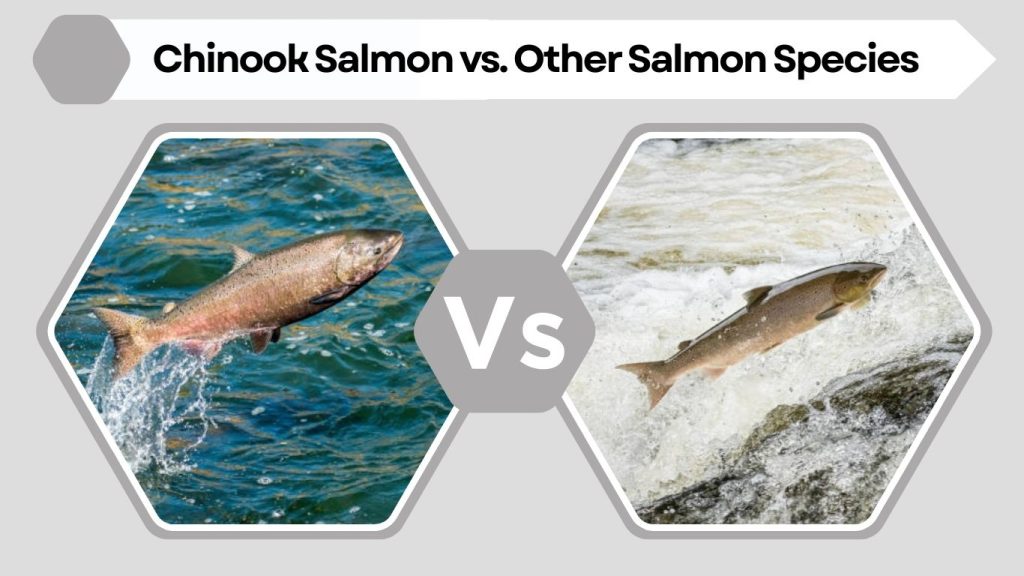
Chinook salmon stand out primarily because of their size. They are the largest of the Pacific salmon species, larger than coho, sockeye, pink, and chum salmon.
In terms of flavor, Chinook is often considered the richest and most luxurious. Its higher fat content gives it a softer texture compared to leaner species like sockeye. Sockeye tends to have a stronger flavor, while coho offers a milder, more balanced taste.
Because of its size and quality, Chinook salmon usually commands the highest price in seafood markets. Its premium status contributes to its reputation as the “King” of salmon.
Interesting Facts About Chinook Salmon
Chinook salmon hold several impressive records. Some individuals have traveled thousands of miles in the ocean before returning to their birthplace to spawn. Their homing ability is so precise that they can locate the exact stream where they hatched.
They also have deep cultural significance. Indigenous communities along the Pacific coast have relied on Chinook salmon for thousands of years, incorporating them into traditional diets, ceremonies, and trade networks.
Another fascinating feature is their strength. Anglers often describe hooking a Chinook as an intense battle, as these fish are powerful swimmers capable of strong runs and sudden bursts of speed.
FAQs
Why is Chinook salmon called King salmon?
Chinook salmon are called King salmon because they are the largest of all Pacific salmon species. Their impressive size, high fat content, and premium flavor also contribute to their royal reputation. The name reflects both their physical dominance and their high market value compared to other salmon types.
How big can Chinook salmon grow?
Most adult Chinook salmon weigh between 10 and 50 pounds, but some individuals grow much larger. Exceptional fish can exceed 100 pounds, with record catches surpassing 120 pounds. Their large size is one of the key traits that distinguishes them from other Pacific salmon species.
Where do Chinook salmon spawn?
Chinook salmon spawn in freshwater rivers and streams along the Pacific coast of North America and parts of eastern Asia. They return to the exact river where they were born, using their strong sense of smell to locate their natal spawning grounds.
Is Chinook salmon healthy to eat?
Yes, Chinook salmon is highly nutritious. It is rich in protein, omega-3 fatty acids, and important vitamins like B12 and D. These nutrients support heart health, brain function, and overall wellness. Its natural fat content also provides sustained energy and a satisfying meal.
How long do Chinook salmon live?
Chinook salmon typically live between three and seven years. The exact lifespan varies depending on the population and environmental conditions. After spending several years growing in the ocean, they return to freshwater to spawn, completing their life cycle.