



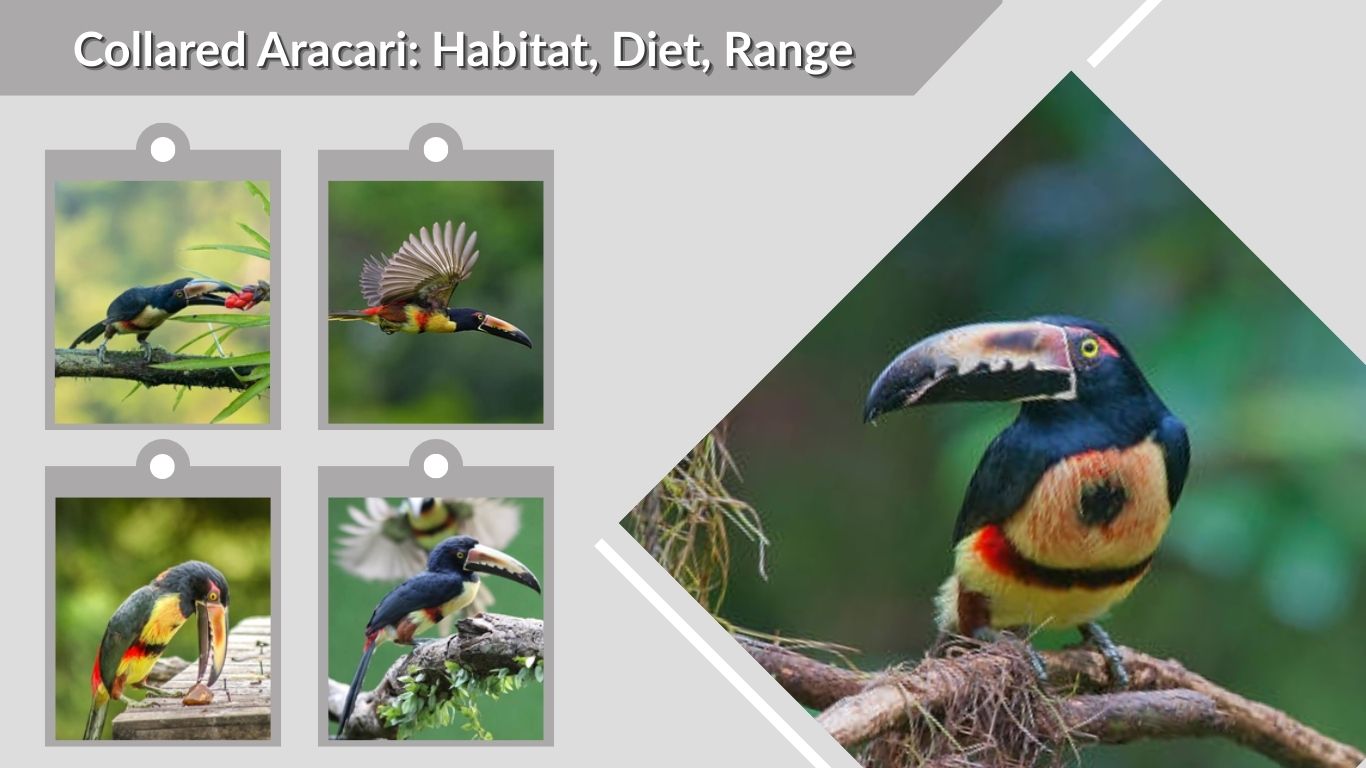
The Collared Aracari (Pteroglossus torquatus) is one of the most colorful and charismatic birds of the Neotropical forests. Belonging to the toucan family, this small yet striking bird is instantly recognizable by its patterned bill and bold chest markings. Found across parts of Mexico and Central America, the Collared Aracari plays an important ecological role while delighting birdwatchers with its lively behavior. This article explores its habitat, diet, geographic range, and the fascinating traits that make it such a remarkable species.
Taxonomy and Classification
The Collared Aracari is scientifically classified as Pteroglossus torquatus and belongs to the family Ramphastidae, which includes toucans and other aracaris. The genus Pteroglossus contains several small to medium-sized aracari species, distinguished from larger toucans by their slimmer bodies and proportionally smaller bills. While closely related to iconic toucans like the Keel-billed Toucan, the Collared Aracari is more compact and agile, traits that suit its forest lifestyle. Several subspecies have been described, mainly differing in coloration and geographic range.
Physical Description and Identification
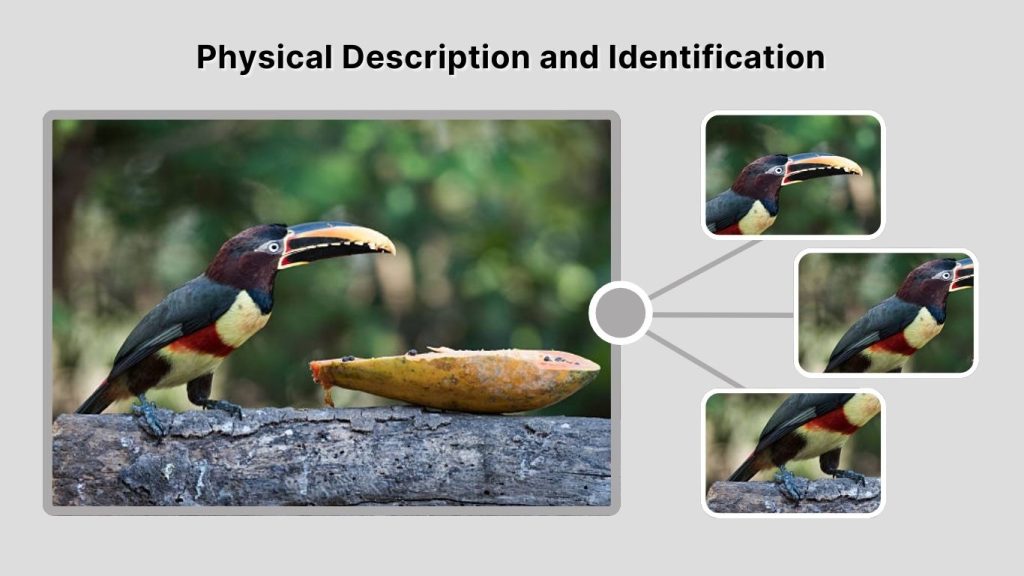
The Collared Aracari is a medium-sized bird, measuring approximately 35 to 40 centimeters (14–16 inches) in length. It has a lightweight body, short neck, and long tail, giving it a streamlined appearance compared to bulkier toucans.
Its plumage is both bold and elegant. The head, throat, and upper chest are glossy black, sharply contrasted by a vivid red band bordered with yellow across the lower chest—commonly referred to as the “collar” that gives the species its name. The wings are dark green with subtle yellow edging, while the tail feathers often show chestnut or maroon tones.
The bill is one of its most striking features. Though large relative to body size, it is lightweight and brightly colored, displaying a mix of yellow, black, and red. Males and females look very similar, though males typically have slightly larger bills, a common trait among toucans and aracaris.
Habitat and Preferred Environment
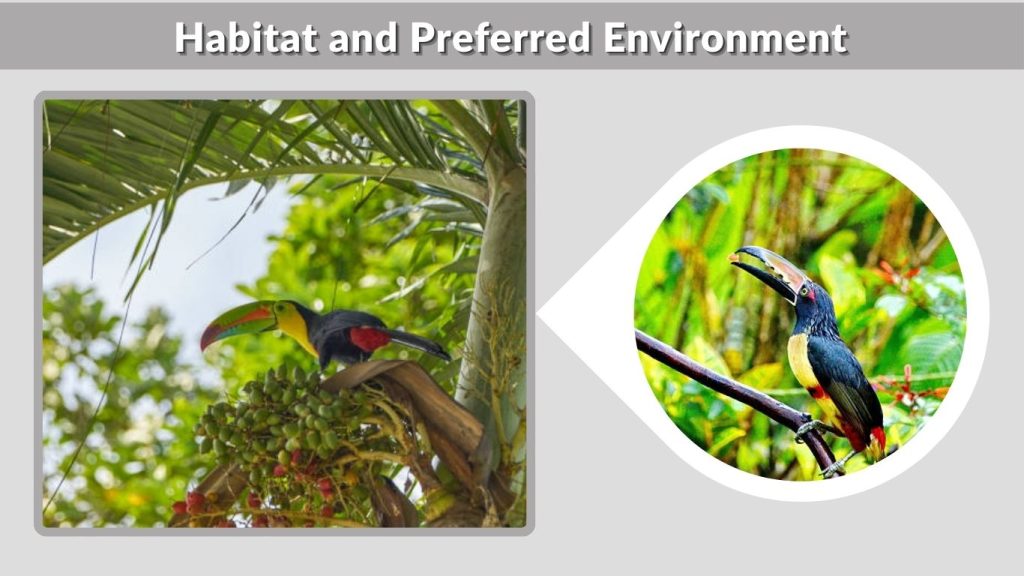
Collared Aracaris primarily inhabit lowland tropical forests, thriving in warm, humid environments rich in fruit-bearing trees. They are most commonly found in evergreen rainforests, semi-deciduous forests, and forest edges where food sources are abundant.
One of the species’ strengths is its adaptability. Unlike some forest birds that require untouched wilderness, Collared Aracaris can tolerate moderate habitat disturbance. They are often seen in secondary forests, plantations, and even near rural settlements, provided there are large trees for nesting and feeding. Their typical elevation range extends from sea level up to around 1,500 meters, though they are most abundant in lowland areas.
For roosting and nesting, Collared Aracaris rely on natural tree cavities, often those excavated by woodpeckers. Old-growth trees are especially important, as they provide the secure hollows needed for shelter and reproduction.
Geographic Range and Distribution
The Collared Aracari has a broad but well-defined range across Mesoamerica. It is native to southern Mexico, particularly in states such as Veracruz, Oaxaca, and Chiapas. From there, its range extends through Central America, including Belize, Guatemala, Honduras, Nicaragua, Costa Rica, and into western Panama.
Within this range, populations are generally stable, especially in regions with protected forests. The species does not migrate long distances but may move locally in response to seasonal fruit availability. These short movements help them exploit changing food resources without leaving their established territories.
Diet and Feeding Behavior

Fruits form the cornerstone of the Collared Aracari’s diet. It feeds on a wide variety of tropical fruits, with figs being a particular favorite. By consuming fruit whole and later dispersing seeds through droppings, the bird plays a vital role in forest regeneration.
In addition to fruit, Collared Aracaris are opportunistic feeders. They supplement their diet with insects, spiders, and other arthropods, as well as small vertebrates such as lizards and tree frogs. Occasionally, they may raid nests for eggs or nestlings, especially during the breeding season when protein demands are higher.
Feeding usually takes place in the mid to upper canopy. Aracaris are agile foragers, often feeding in pairs or small groups. Their bills are used skillfully to pluck fruit, toss it into the air, and swallow it whole.
Behavior and Social Structure
Collared Aracaris are highly social birds. They are most often observed in pairs or small family groups, though larger flocks may form when food is plentiful. Strong pair bonds are common, and mates frequently remain together year-round.
They are active during daylight hours and are known for their expressive vocalizations, which include yelps, rattles, and chattering calls. These sounds help maintain group cohesion and establish territory. Collared Aracaris are also known to roost communally, sometimes squeezing multiple birds into a single tree cavity at night—a behavior that highlights their social nature.
Breeding and Reproduction
The breeding season of the Collared Aracari varies slightly across its range but generally coincides with periods of increased fruit availability. This timing ensures that adults have enough food to meet the high energy demands of raising young. In many regions, breeding begins in late spring and continues through the summer months.
Courtship behavior is subtle yet engaging. Pairs often engage in mutual preening and food-sharing, where one partner offers fruit or insects to the other. These behaviors help reinforce long-term pair bonds, which are a defining characteristic of the species.
Nesting takes place in natural tree cavities, often reused from previous years. The female typically lays two to four white eggs inside the hollow. Both parents share incubation duties, which last just over two weeks. Once hatched, the chicks are blind and featherless, relying entirely on parental care. Both adults feed the chicks regurgitated fruit and protein-rich prey until they are ready to fledge several weeks later.
Ecological Importance
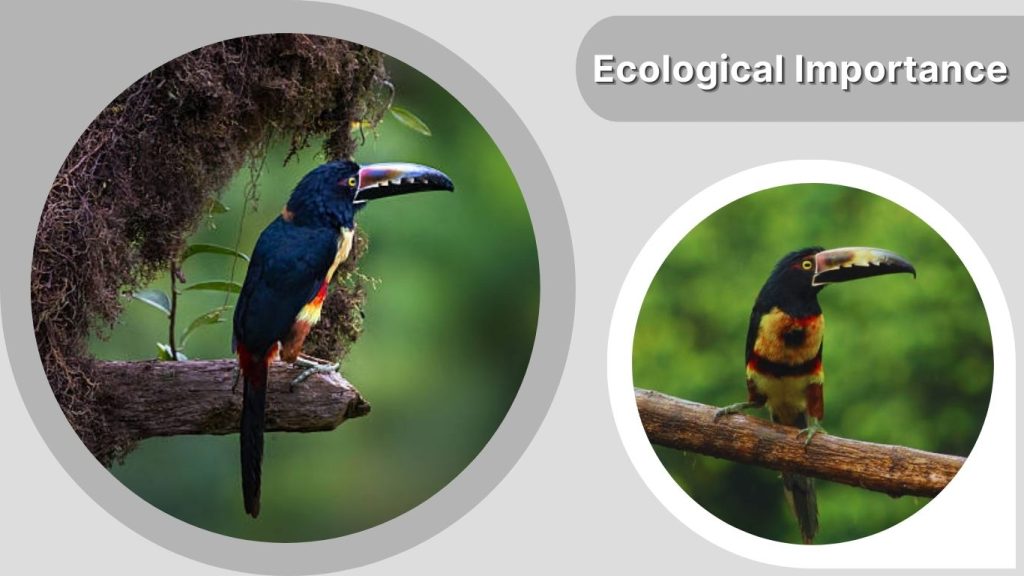
The Collared Aracari plays a crucial role in maintaining healthy tropical ecosystems. As a primary fruit eater, it acts as an effective seed disperser, transporting seeds far from the parent tree. This process promotes forest regeneration and increases plant diversity.
Because aracaris move frequently between feeding sites, they help connect different parts of the forest, making them especially valuable in fragmented landscapes. Their presence is often considered a sign of a relatively healthy forest, particularly in areas where large fruiting trees remain intact.
Conservation Status and Threats
The Collared Aracari is currently classified as Least Concern by the International Union for Conservation of Nature (IUCN). Its wide distribution and adaptability have helped it avoid the rapid declines seen in more specialized forest birds.
However, this does not mean the species is free from threats. Deforestation remains the most significant challenge, especially in parts of Central America where forests are cleared for agriculture and urban expansion. Habitat fragmentation can limit nesting opportunities by reducing the number of large, cavity-bearing trees.
In some regions, Collared Aracaris are captured for the illegal pet trade, although this threat is localized and less severe than habitat loss. Conservation efforts focused on preserving tropical forests, establishing protected areas, and enforcing wildlife protection laws are essential for the species’ long-term survival.
Fascinating Facts About the Collared Aracari
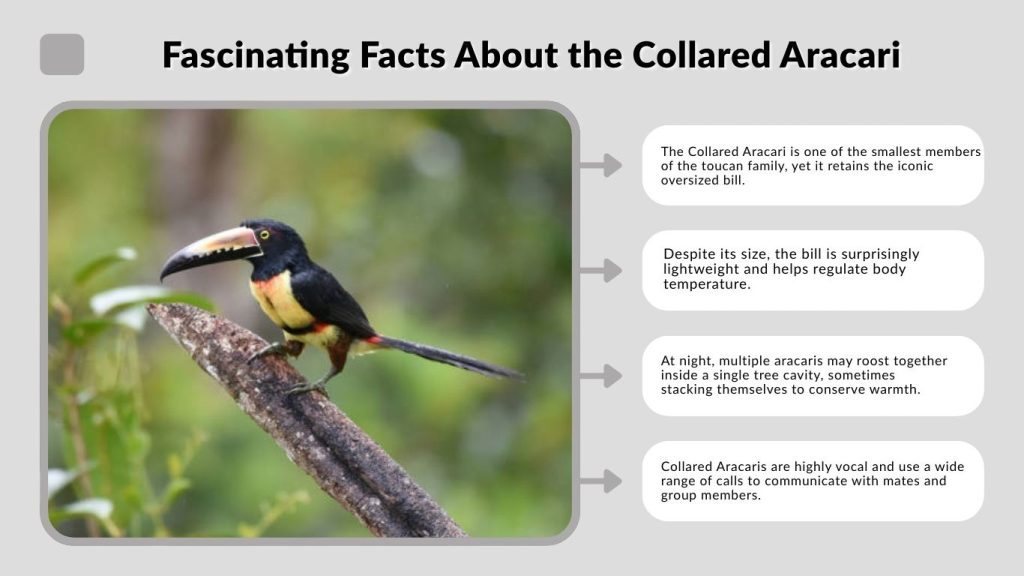
- The Collared Aracari is one of the smallest members of the toucan family, yet it retains the iconic oversized bill.
- Despite its size, the bill is surprisingly lightweight and helps regulate body temperature.
- At night, multiple aracaris may roost together inside a single tree cavity, sometimes stacking themselves to conserve warmth.
- Collared Aracaris are highly vocal and use a wide range of calls to communicate with mates and group members.
- In captivity, these birds have been known to live well over 20 years, highlighting their longevity compared to many birds of similar size.
Collared Aracari vs. Other Aracaris
Compared to other aracari species, such as the Green Aracari, the Collared Aracari is easily distinguished by its bold red-and-yellow chest band. While their ranges may overlap in some areas, Collared Aracaris tend to prefer slightly drier forests and forest edges. Subtle differences in bill coloration and vocalizations also help birdwatchers tell these species apart in the wild.
FAQs
Is the Collared Aracari a toucan?
Yes. The Collared Aracari belongs to the toucan family, Ramphastidae. Aracaris are essentially smaller, slimmer relatives of the larger toucan species.
Can Collared Aracaris be kept as pets?
While they may appear appealing, Collared Aracaris are wild birds and are not suitable pets. Keeping them is illegal in many places and can negatively impact wild populations.
How long do Collared Aracaris live?
In the wild, they typically live 10 to 15 years, though individuals in captivity may live longer under proper care.
What predators do Collared Aracaris have?
Natural predators include large birds of prey, snakes, and arboreal mammals that can access nest cavities.
Are Collared Aracaris endangered?
No, they are currently listed as Least Concern, but ongoing habitat protection is essential to maintain stable populations.