




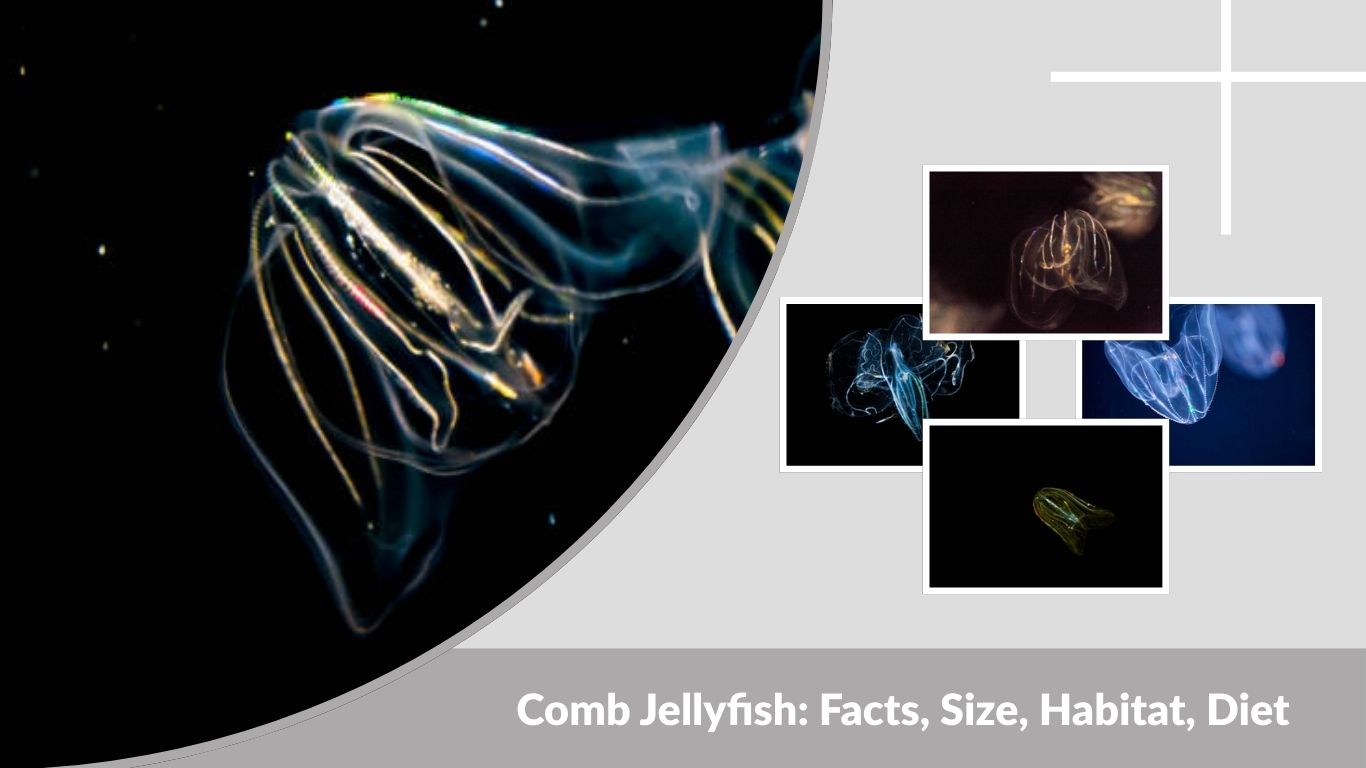
Comb jellyfish are some of the most mesmerizing creatures in the ocean, famous for the rainbow-like shimmer that runs across their bodies as they move through the water. Although they resemble jellyfish, comb jellyfish are actually a completely different group of animals with unique anatomy and behavior. Scientifically known as ctenophores, these gelatinous organisms are found in oceans around the world. In this article, we’ll explore essential comb jellyfish facts, including their size, habitat, movement, anatomy, bioluminescence, and diet.
What Is a Comb Jellyfish?
A comb jellyfish is a marine invertebrate belonging to the phylum Ctenophora. Unlike true jellyfish, which belong to the phylum Cnidaria, comb jellyfish do not have stinging cells. Instead, they use sticky cells to capture prey. The name “comb jellyfish” comes from the eight rows of tiny hair-like structures, called ctenes, that run along their bodies.
These ctenes beat in coordinated waves, allowing comb jellyfish to glide smoothly through the water. As light reflects off the moving cilia, it creates a dazzling rainbow effect, one of the most recognizable features of comb jellyfish.
Comb Jellyfish Size and Appearance
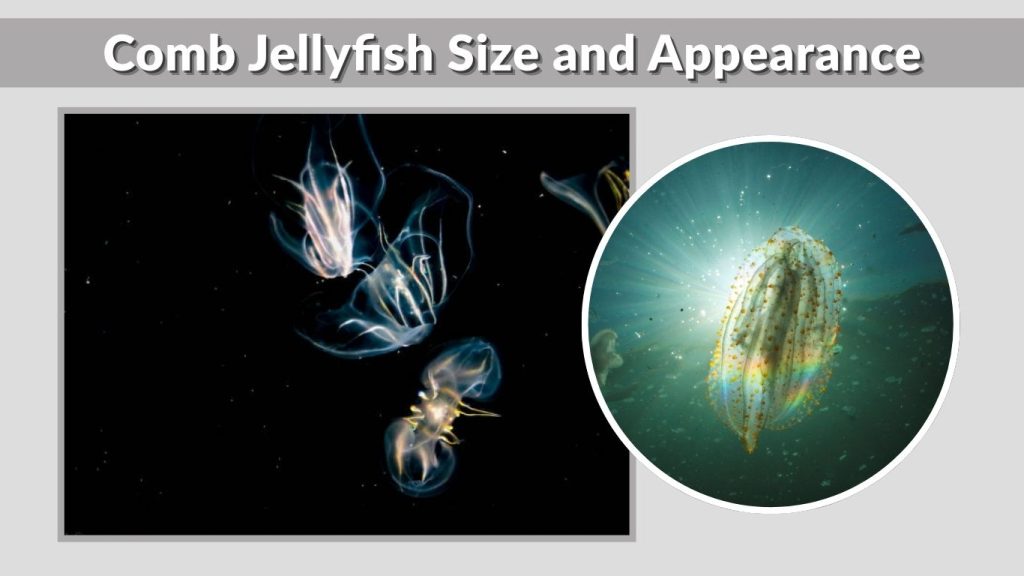
Comb jellyfish vary greatly in size depending on the species. Some are only a few millimeters long, while others can grow over 6 inches (15 cm) in length. Most comb jellyfish have oval, spherical, or elongated bodies that are transparent or milky white.
Their gelatinous bodies are soft and fragile, with no hard structures. Many species have long trailing tentacles, while others are completely tentacle-free. Because of their transparency, comb jellyfish can be nearly invisible in the water unless light catches their cilia.
Comb Jellyfish Habitat and Range
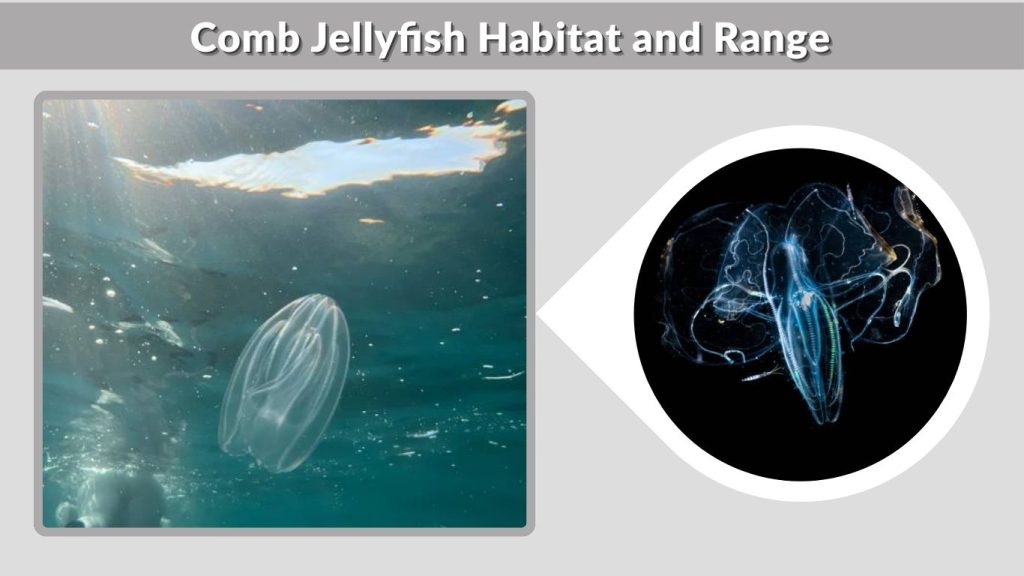
The comb jellyfish habitat includes oceans worldwide, from warm tropical waters to cold polar seas. They are found in both coastal regions and the open ocean, ranging from the surface to deep waters.
Comb jellyfish are highly adaptable and can survive in a wide range of temperatures and salinity levels. Some species thrive in nutrient-rich coastal waters, while others drift through deep offshore environments. Their broad range has allowed certain species to spread rapidly when introduced to new regions.
Where Are Comb Jellyfish Found?
Comb jellyfish are found in major oceans such as the Atlantic Ocean, Pacific Ocean, and Indian Ocean. They are also present in enclosed seas like the Mediterranean and Black Sea.
In some regions, invasive comb jellyfish species have caused ecological problems by consuming large amounts of plankton and fish larvae. Their ability to reproduce quickly and tolerate different environments makes them highly successful marine organisms.
How Do Comb Jellyfish Move?
Unlike true jellyfish that move by pulsing their bell, comb jellyfish rely entirely on their ctenes for movement. Each comb row contains thousands of tiny cilia that beat in a coordinated pattern.
As the cilia move, they diffract light, producing shimmering bands of rainbow colors along the body. This effect is not bioluminescence but rather light refraction, though many people mistake it for glowing.
Comb Jellyfish Bioluminescence
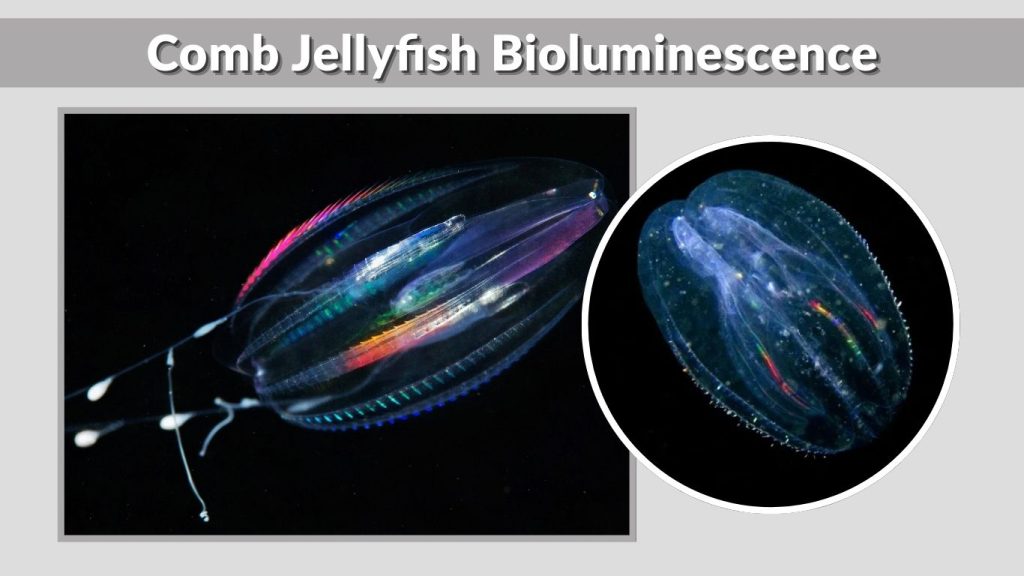
Some comb jellyfish species are truly bioluminescent, meaning they can produce light through chemical reactions within their bodies. This light is usually blue or green and may serve as a defense mechanism or a way to confuse predators.
It’s important to note that the rainbow colors seen on most comb jellyfish are caused by light interacting with moving cilia, not bioluminescence. Only certain species emit their own light when disturbed.
Comb Jellyfish Anatomy
Comb jellyfish anatomy is simple but distinct. Their bodies are composed mostly of water and include a mouth, digestive canals, and a basic nerve network. Some species have long tentacles equipped with colloblasts, specialized sticky cells used to trap prey.
Unlike jellyfish, comb jellyfish do not have nematocysts or venom. Their lack of stinging cells makes them harmless to humans.
Comb Jellyfish Diet
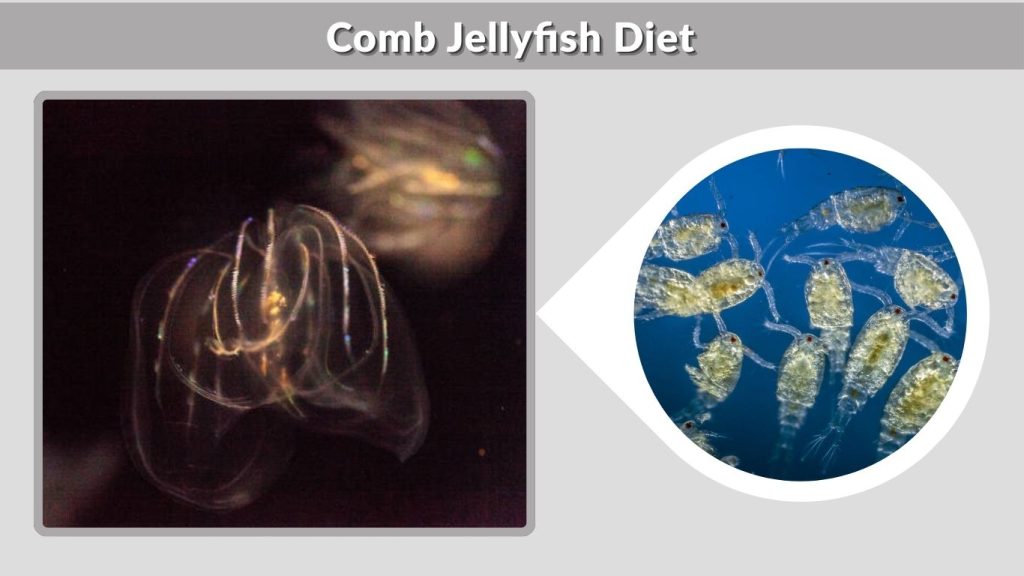
Comb jellyfish are carnivorous and feed primarily on zooplank, small crustaceans, fish eggs, and fish larvae. Their diet can have a significant impact on local ecosystems, especially when populations grow rapidly.
How Do Comb Jellyfish Eat?
Comb jellyfish capture prey using tentacles lined with colloblasts. When prey touches these sticky cells, it becomes trapped and is then moved toward the mouth. Digestion occurs internally as nutrients are absorbed and distributed throughout the body.
This efficient feeding strategy allows comb jellyfish to consume large quantities of prey with minimal energy use.
Comb Jellyfish Lifespan
The comb jellyfish lifespan varies by species and environmental conditions. Most comb jellyfish live for a few weeks to several months, although some species can survive longer in stable environments with abundant food. Their rapid growth and early reproduction help compensate for their short lifespan.
Because comb jellyfish are highly sensitive to temperature, food availability, and water chemistry, changes in ocean conditions can significantly affect how long they survive and how large their populations become.
Are Comb Jellyfish Dangerous?
Comb jellyfish are not dangerous to humans. Unlike true jellyfish, they do not have stinging cells or venom. Comb jellyfish use sticky cells called colloblasts to capture prey, which are completely harmless to people.
While they may look similar to jellyfish, touching a comb jellyfish does not result in stings or irritation. However, handling them is discouraged because their soft bodies are extremely fragile.
Comb Jellyfish vs True Jellyfish
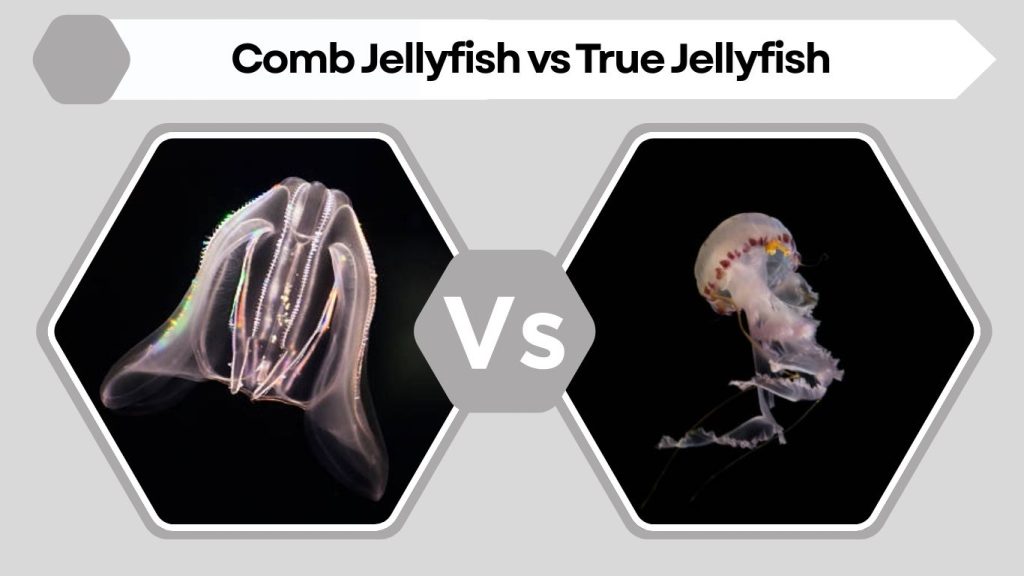
Although comb jellyfish resemble true jellyfish, they are very different animals. True jellyfish belong to the phylum Cnidaria and use venomous stinging cells called nematocysts. Comb jellyfish belong to the phylum Ctenophora and rely on sticky colloblasts instead.
They also move differently. True jellyfish pulse their bell, while comb jellyfish glide using rows of cilia. These differences make comb jellyfish unique among gelatinous marine animals.
Ecological Impact of Comb Jellyfish
Comb jellyfish can have a major impact on marine ecosystems, especially when introduced to new environments. Some invasive species have caused declines in fish populations by consuming large amounts of zooplankton and fish larvae.
Their ability to reproduce quickly and tolerate a wide range of conditions allows them to dominate ecosystems under certain circumstances. Scientists closely monitor comb jellyfish populations to understand their role in changing ocean environments.
Interesting Comb Jellyfish Facts
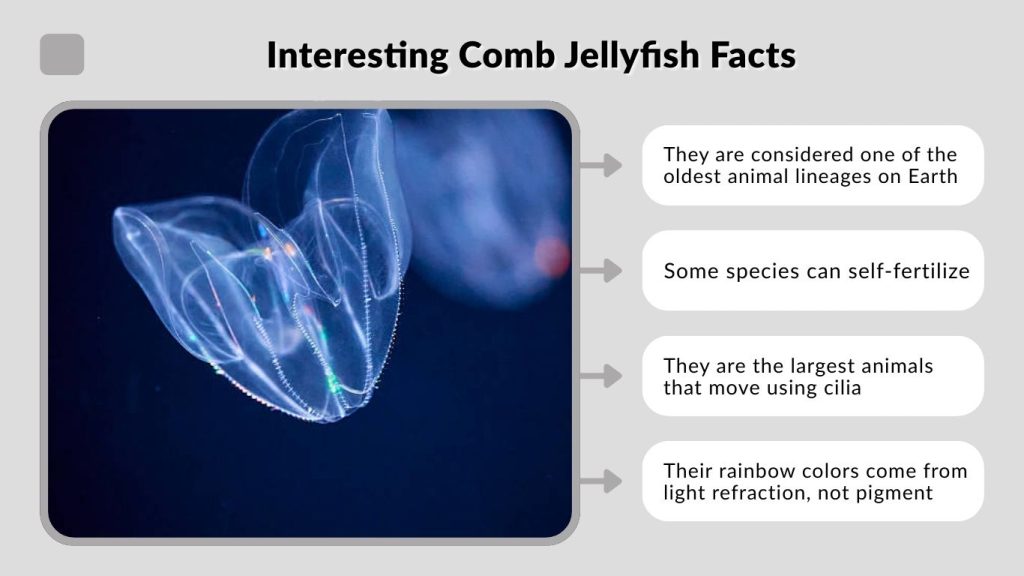
Comb jellyfish have several remarkable traits:
- They are considered one of the oldest animal lineages on Earth
- Some species can self-fertilize
- They are the largest animals that move using cilia
- Their rainbow colors come from light refraction, not pigment
These features make comb jellyfish a frequent subject of evolutionary and marine biology research.
FAQs
What is a comb jellyfish?
A comb jellyfish is a marine invertebrate belonging to the phylum Ctenophora. Despite their name, they are not true jellyfish. They are known for their rows of cilia, called ctenes, which create a shimmering rainbow effect as they move through the water.
Are comb jellyfish the same as jellyfish?
No, comb jellyfish are not the same as true jellyfish. True jellyfish use venomous stinging cells, while comb jellyfish use sticky colloblasts to capture prey. They also belong to different biological groups and move in different ways.
Do comb jellyfish sting humans?
Comb jellyfish do not sting humans. They lack venom and stinging cells, making them harmless to touch. However, touching them is discouraged because their delicate bodies can be easily damaged.
What do comb jellyfish eat?
Comb jellyfish feed on zooplankton, small crustaceans, fish eggs, and fish larvae. They capture prey using sticky cells on their tentacles and digest food internally, allowing them to feed efficiently in nutrient-rich waters.
Why do comb jellyfish look like they glow?
The rainbow-like colors seen on comb jellyfish are caused by light reflecting off their moving cilia, not true bioluminescence. Some species can produce light, but the shimmering effect most people see is due to light refraction.