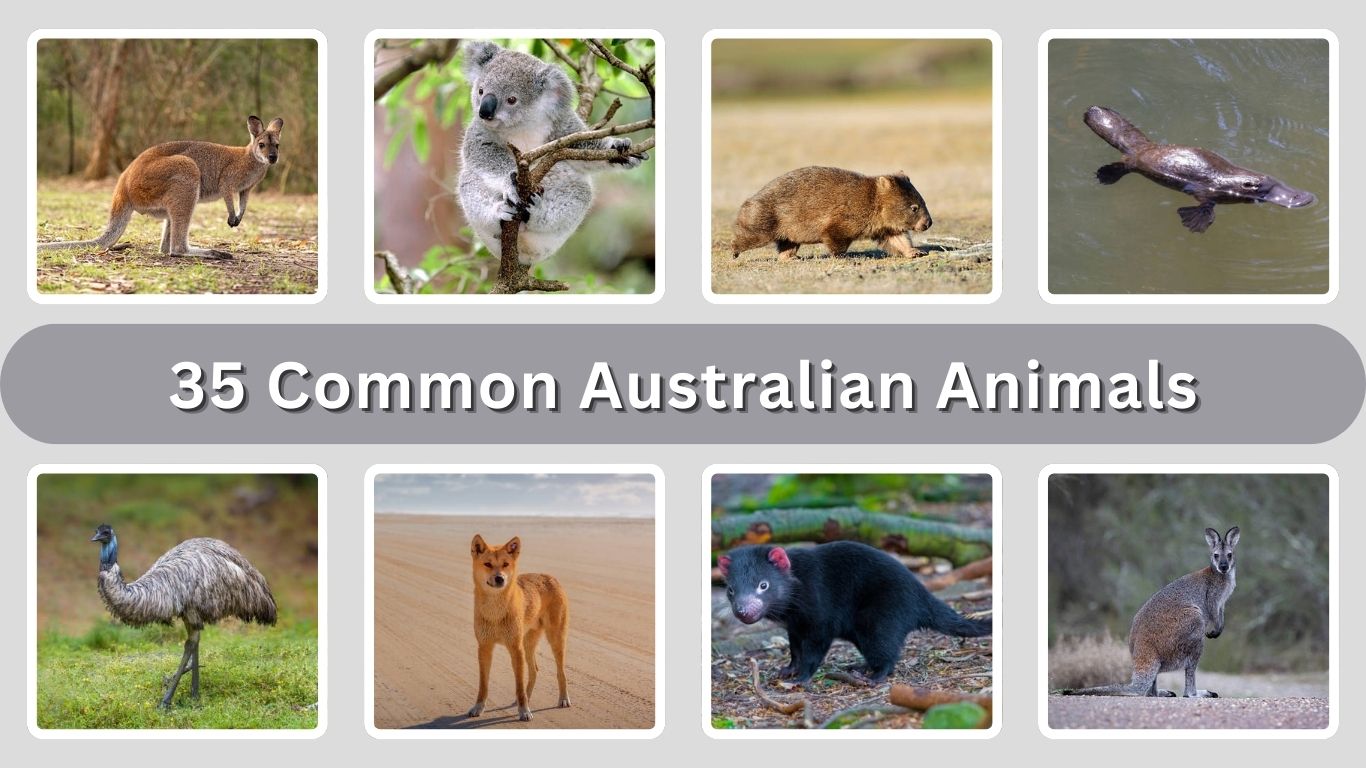
Australia is home to some of the most fascinating and unique animals on Earth, found nowhere else in the world. From iconic marsupials like kangaroos and koalas to extraordinary birds, reptiles, and monotremes, Australian wildlife reflects millions of years of isolated evolution. These animals are specially adapted to survive in diverse habitats, including deserts, rainforests, grasslands, and coastal regions. Together, they form an essential part of Australia’s natural heritage and ecological balance.
1. Kangaroo
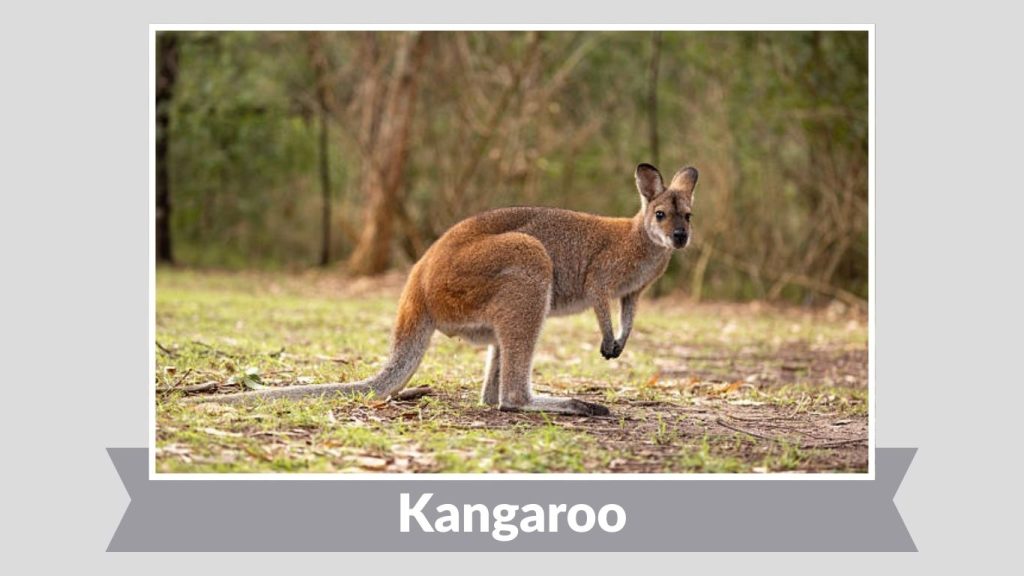
Kangaroos are iconic Australian marsupials known for their powerful hind legs, long tails, and distinctive hopping movement. They play an important role in Australia’s ecosystems and are widely recognized as a national symbol. Kangaroos are social animals that usually live in groups and are well adapted to Australia’s varied climates, from grasslands to open woodlands.
Identification
- Large hind legs built for hopping
- Long, muscular tail used for balance
- Short front limbs
- Pouch in females for carrying young (joeys)
- Fur color ranges from reddish-brown to grey
Habitat
Kangaroos are commonly found in grasslands, savannas, open forests, and scrublands across Australia. They prefer areas with access to open spaces for movement and sufficient vegetation for feeding.
Behaviors
Kangaroos are mostly active during the early morning and late afternoon to avoid heat. They are social animals, often living in groups called mobs, and communicate through body language, vocal sounds, and foot thumping.
Diet and Lifespan
Kangaroos are herbivores that mainly eat grasses, leaves, and shrubs. They have specialized digestive systems to extract nutrients from tough plant material. In the wild, kangaroos typically live between 6 and 8 years, though some may live longer in protected environments.
2. Koala
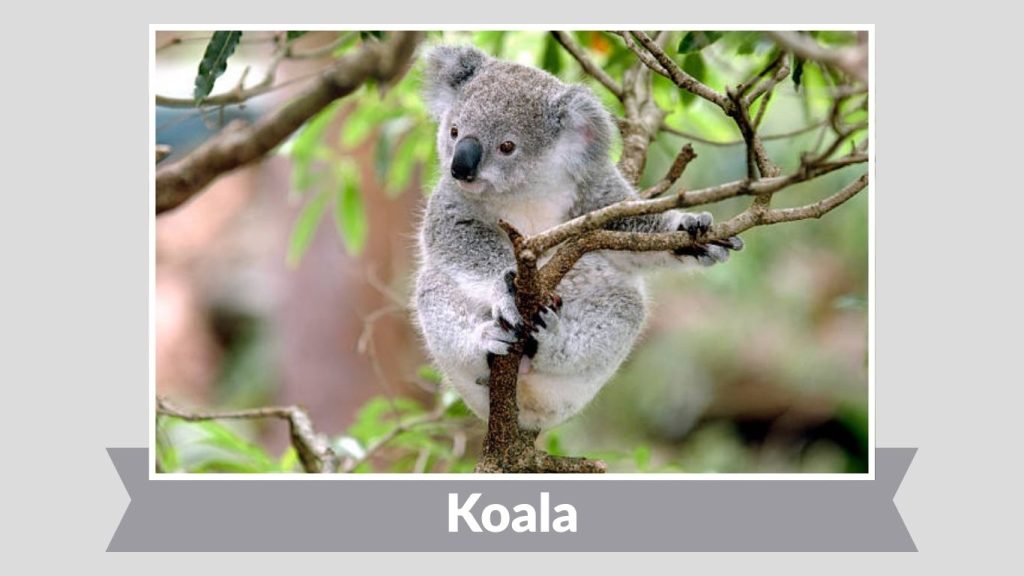
Koalas are tree-dwelling marsupials native to Australia, famous for their fluffy ears, large noses, and calm appearance. They spend most of their lives in eucalyptus trees and are well adapted to a slow, energy-conserving lifestyle. Koalas are an important part of Australia’s natural heritage and are loved worldwide.
Identification
- Stocky body with thick grey or brown fur
- Large, round ears with white tufts
- Big, black leathery nose
- Strong claws adapted for climbing
- Pouch in females for carrying young
Habitat
Koalas live in eucalyptus forests and woodlands, mainly along eastern and southeastern Australia. Their distribution depends heavily on the availability of suitable eucalyptus tree species.
Behaviors
Koalas are mostly solitary and sleep up to 18–20 hours a day to conserve energy. They are mainly active at night and communicate using deep bellows, especially during the breeding season.
Diet and Lifespan
Koalas feed almost exclusively on eucalyptus leaves, which are low in nutrients and toxic to most animals. Their specialized digestive system allows them to process this diet. In the wild, koalas usually live between 10 and 15 years.
3. Wombat
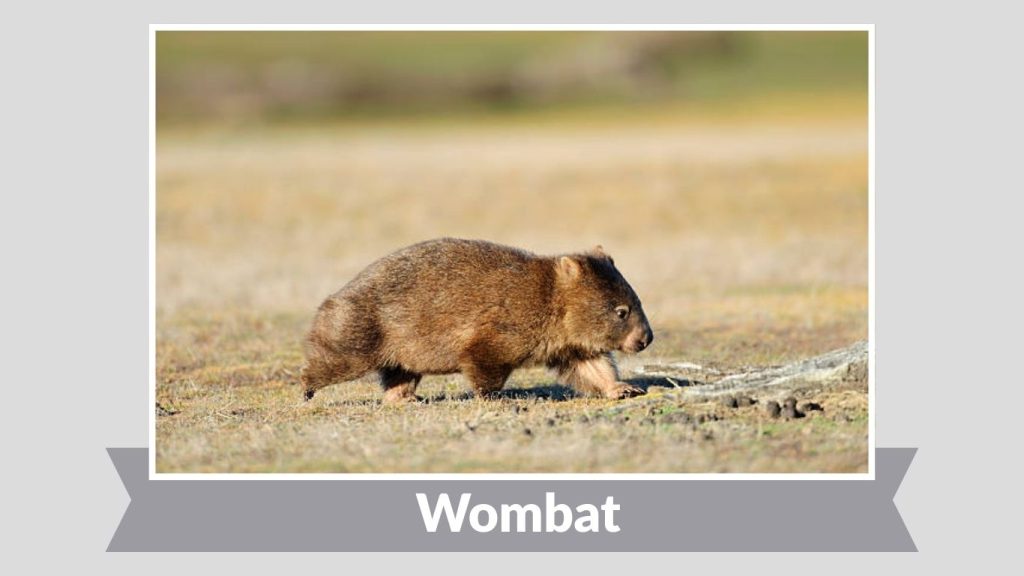
Wombats are sturdy, burrowing marsupials native to Australia, known for their compact bodies and strong digging abilities. Despite their bear-like appearance, wombats are fast and powerful animals. They play a key ecological role by aerating soil through their extensive burrow systems.
Identification
- Short, stocky body with strong muscles
- Short legs with sharp claws for digging
- Broad head with small eyes and ears
- Thick fur, usually brown, grey, or sandy
- Backward-facing pouch in females
Habitat
Wombats inhabit forests, woodlands, grasslands, and mountainous regions of Australia. They prefer areas with soft soil suitable for digging complex burrow systems.
Behaviors
Wombats are mostly nocturnal and solitary. They spend much of the day resting in burrows and emerge at night to feed. Wombats are territorial and may mark their areas with scent.
Diet and Lifespan
Wombats are herbivores that feed on grasses, roots, bark, and shrubs. Their slow metabolism helps them survive on low-nutrient food. In the wild, wombats typically live between 5 and 15 years, with some living longer in captivity.
4. Platypus
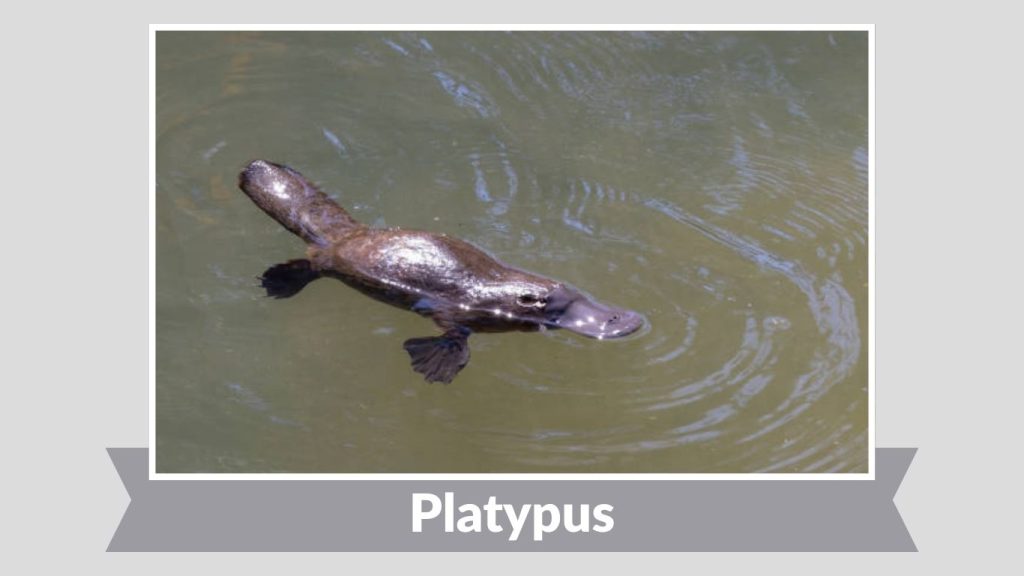
The platypus is one of the most unusual mammals in the world, combining features of mammals, birds, and reptiles. Native to eastern Australia, it is a semi-aquatic, egg-laying mammal known for its duck-like bill and unique hunting abilities. The platypus is an important indicator of healthy freshwater ecosystems.
Identification
- Flat, duck-like bill
- Dense, waterproof brown fur
- Webbed feet adapted for swimming
- Broad, flat tail used for steering and fat storage
- Males have venomous spurs on hind legs
Habitat
Platypuses live in freshwater rivers, streams, and lakes, mainly in eastern Australia and Tasmania. They build burrows in riverbanks for shelter and breeding.
Behaviors
Platypuses are mostly nocturnal and spend many hours foraging underwater. They hunt with their eyes and ears closed, using electroreception in their bill to detect prey.
Diet and Lifespan
Platypuses feed on aquatic invertebrates such as insects, worms, and crustaceans. They scoop food into cheek pouches while diving. In the wild, a platypus can live up to about 10–12 years.
5. Emu
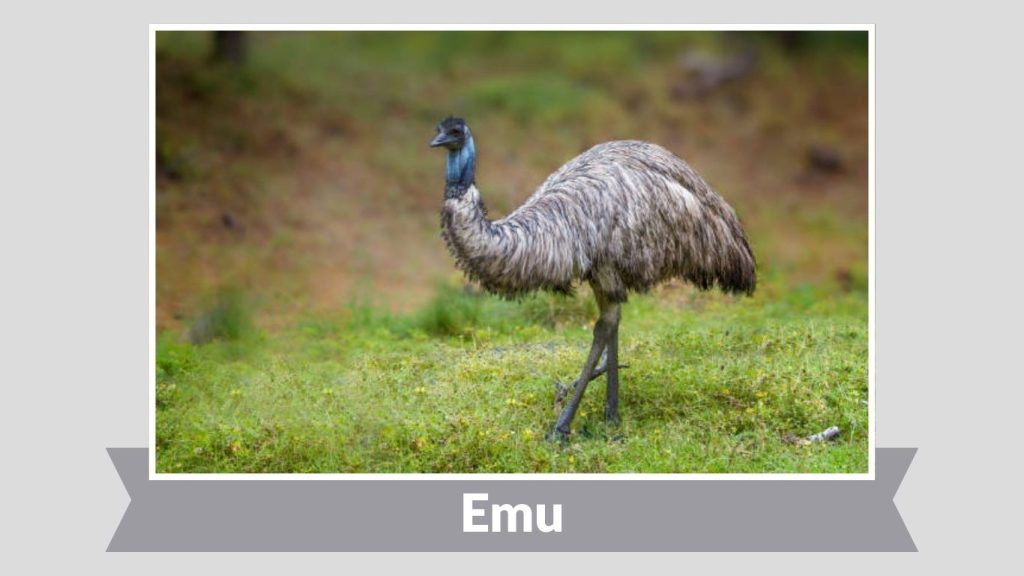
The emu is Australia’s largest native bird and the second-largest bird in the world by height. Although flightless, emus are powerful runners and can travel long distances across the landscape. They are an important part of Australia’s natural and cultural identity.
Identification
- Tall, flightless bird with long legs and neck
- Soft, shaggy brown feathers
- Small wings hidden beneath feathers
- Large three-toed feet adapted for running
- Can reach speeds up to 50 km/h
Habitat
Emus are found across most of Australia, including grasslands, savannas, open forests, and semi-arid regions. They avoid dense forests and very dry deserts.
Behaviors
Emus are nomadic and often travel in search of food and water. They are mostly active during the day and are known for their deep drumming and grunting sounds.
Diet and Lifespan
Emus are omnivores, feeding on seeds, fruits, insects, and small animals. They also swallow stones to help grind food. In the wild, emus typically live between 10 and 20 years.
6. Dingo
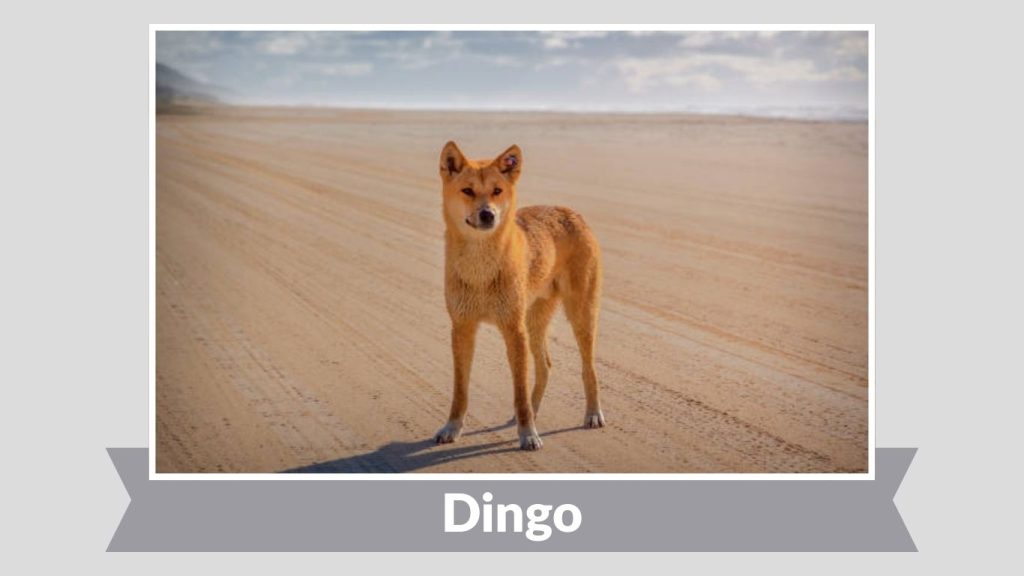
The dingo is Australia’s wild dog, known for its intelligence, adaptability, and important role as a top predator. Dingoes have lived in Australia for thousands of years and are deeply connected to Indigenous culture and the natural balance of ecosystems.
Identification
- Medium-sized dog with a lean, athletic build
- Pointed ears and long muzzle
- Bushy tail often with a white tip
- Fur usually sandy yellow, but can be black or white
- Sharp teeth adapted for hunting
Habitat
Dingoes live in a wide range of environments including deserts, grasslands, forests, and coastal areas. They are absent from Tasmania and prefer regions with available prey and water.
Behaviors
Dingoes can live alone, in pairs, or in packs. They communicate through howls, body language, and scent marking. Dingoes are mostly active at dawn and dusk.
Diet and Lifespan
Dingoes are carnivores that hunt mammals, birds, reptiles, and occasionally scavenge. They also eat fruits when available. In the wild, dingoes generally live between 5 and 10 years.
7. Tasmanian Devil
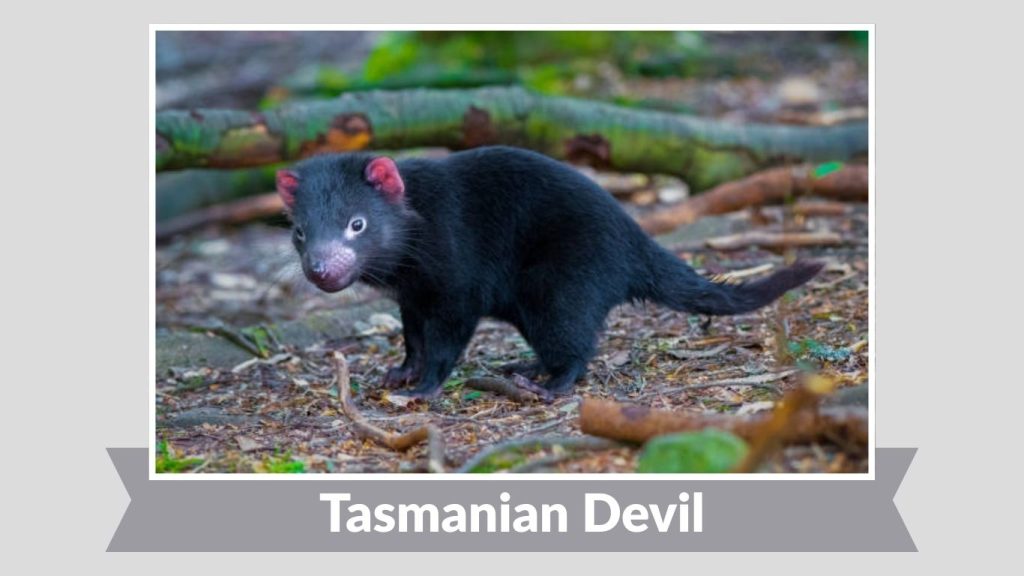
The Tasmanian devil is a stocky, carnivorous marsupial famous for its loud screeches and powerful jaws. Found only in Tasmania, it plays a vital role as a scavenger, helping keep the environment clean by consuming carrion.
Identification
- Stocky body with black fur
- White markings on chest or rump
- Large head with strong jaws and teeth
- Short legs and thick tail
- Sharp claws for gripping food
Habitat
Tasmanian devils live in forests, woodlands, coastal scrub, and farmland areas of Tasmania. They often shelter in caves, hollow logs, or burrows.
Behaviors
Tasmanian devils are mostly nocturnal and solitary. They are known for loud vocalizations during feeding and breeding, which help establish dominance.
Diet and Lifespan
Tasmanian devils are carnivores and scavengers, feeding on dead animals, small mammals, birds, and insects. They can consume bones and fur due to their strong jaws. In the wild, they typically live around 5 to 6 years.
8. Wallaby
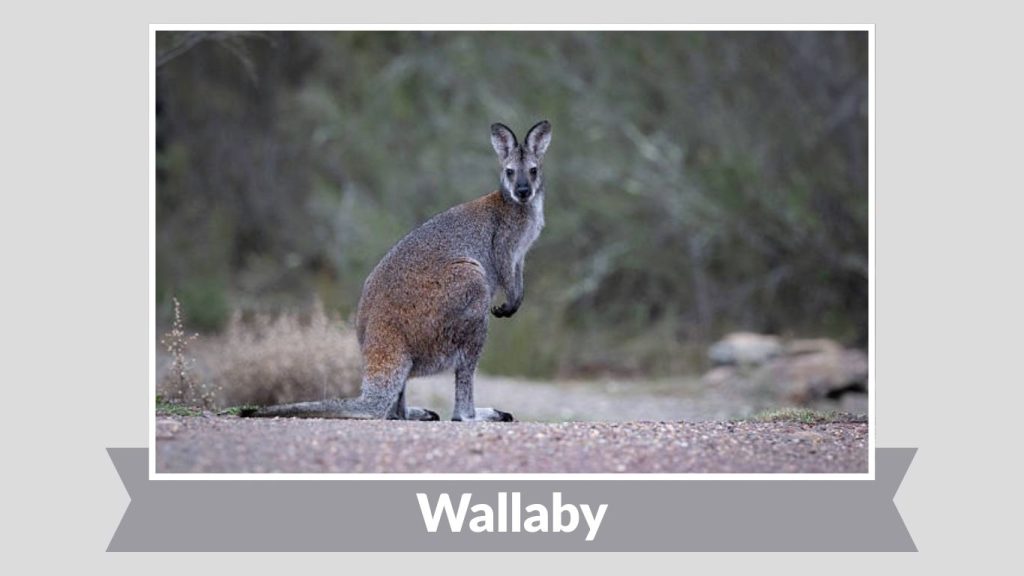
Wallabies are small to medium-sized marsupials closely related to kangaroos. They are known for their agility, compact bodies, and ability to live in a wide range of environments across Australia. Wallabies are important grazers and browsers within their ecosystems.
Identification
- Smaller and more compact than kangaroos
- Strong hind legs for hopping
- Long tail used for balance
- Shorter snout and ears compared to kangaroos
- Fur color varies by species
Habitat
Wallabies inhabit forests, woodlands, grasslands, coastal scrub, and rocky areas throughout Australia. Some species prefer dense cover, while others live in open landscapes.
Behaviors
Wallabies are mostly crepuscular, being active at dawn and dusk. They are generally shy and may live alone or in small groups, depending on the species.
Diet and Lifespan
Wallabies are herbivores that feed on grasses, leaves, shoots, and shrubs. Their diet changes with seasonal availability. In the wild, wallabies usually live between 5 and 15 years.
9. Echidna
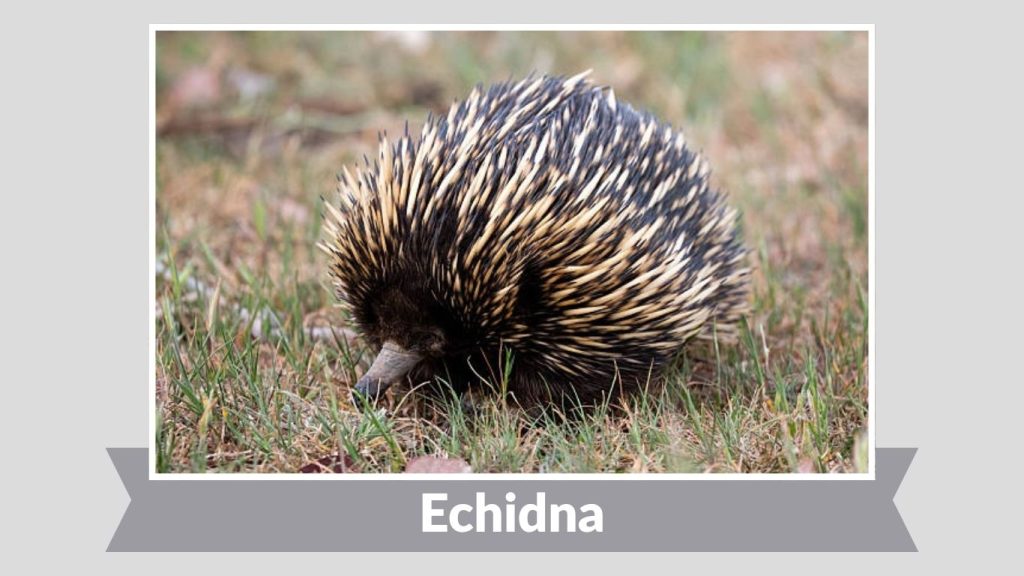
The echidna, also known as the spiny anteater, is a unique egg-laying mammal native to Australia. Along with the platypus, it belongs to a rare group of mammals called monotremes. Echidnas are well adapted for digging and feeding on ants and termites.
Identification
- Body covered with sharp spines and coarse fur
- Long, narrow snout with a small mouth
- Short, strong legs with powerful claws
- No visible teeth
- Males have a spur on the hind legs
Habitat
Echidnas are found in a wide range of environments including forests, woodlands, grasslands, deserts, and even alpine regions across Australia.
Behaviors
Echidnas are mostly solitary and can be active during the day or night depending on temperature. When threatened, they curl into a ball or dig quickly into the ground to protect themselves.
Diet and Lifespan
Echidnas feed mainly on ants, termites, and other small invertebrates using their sticky tongues. They have a slow metabolism and can live a long time, often reaching 40–50 years in the wild.
10. Kookaburra
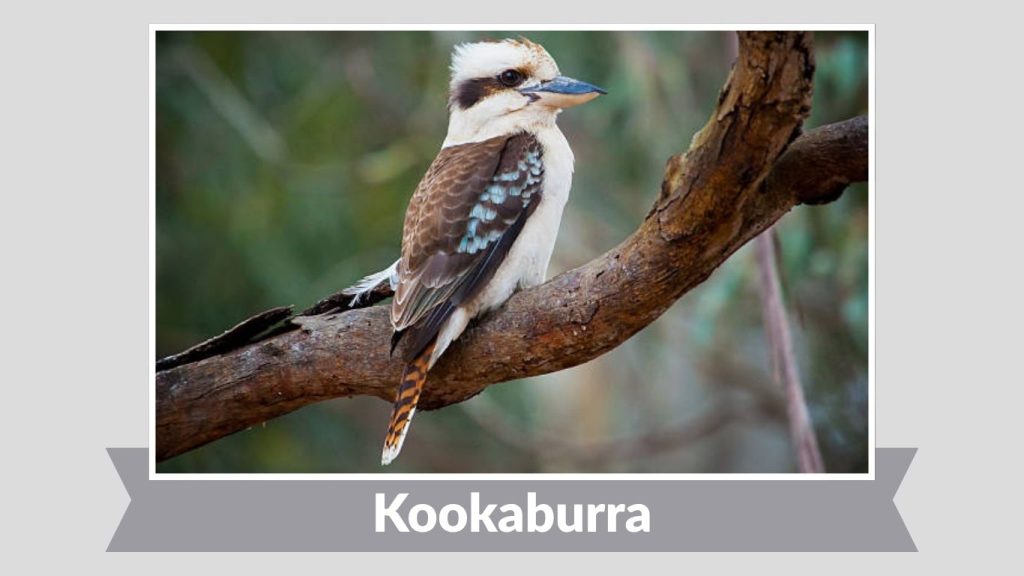
The kookaburra is a large kingfisher famous for its loud, laughing call that echoes through Australian forests and woodlands. It is a well-known and much-loved bird, often associated with the Australian bush and morning soundscape.
Identification
- Large bird with a big, strong bill
- Brown, white, and blue plumage
- Broad head with dark eye stripe
- Short neck and sturdy body
- Strong feet for perching
Habitat
Kookaburras live in open forests, woodlands, parks, and suburban areas across eastern and southwestern Australia.
Behaviors
Kookaburras are diurnal and highly territorial. They often sit quietly on branches watching for prey and use loud calls to defend their territory and communicate with family groups.
Diet and Lifespan
Kookaburras are carnivorous, feeding on insects, small mammals, reptiles, and occasionally birds. They usually live around 15–20 years in the wild.
11. Cassowary
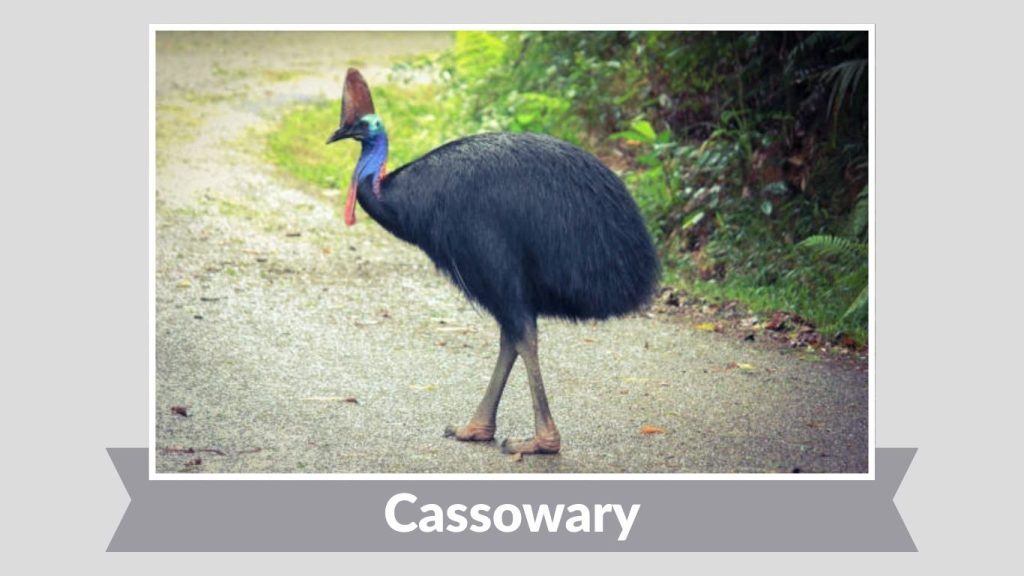
The cassowary is a large, flightless bird known for its striking appearance and powerful presence. It is considered one of the most dangerous birds in the world due to its strength and sharp claws. Cassowaries play a crucial role in rainforest ecosystems by dispersing seeds.
Identification
- Large, flightless bird with black feathers
- Brightly colored blue and red neck and head
- Prominent casque (helmet-like structure) on the head
- Strong legs with sharp dagger-like claws
- Can grow up to 1.7 meters tall
Habitat
Cassowaries live in tropical rainforests of northeastern Australia, particularly in Queensland. They depend on dense vegetation and abundant fruit sources.
Behaviors
Cassowaries are mostly solitary and shy but can be aggressive if threatened. They are excellent runners and swimmers and prefer to avoid human contact.
Diet and Lifespan
Cassowaries are primarily frugivores, eating fruits, along with fungi, insects, and small animals. In the wild, they can live between 40 and 50 years.
12. Quokka
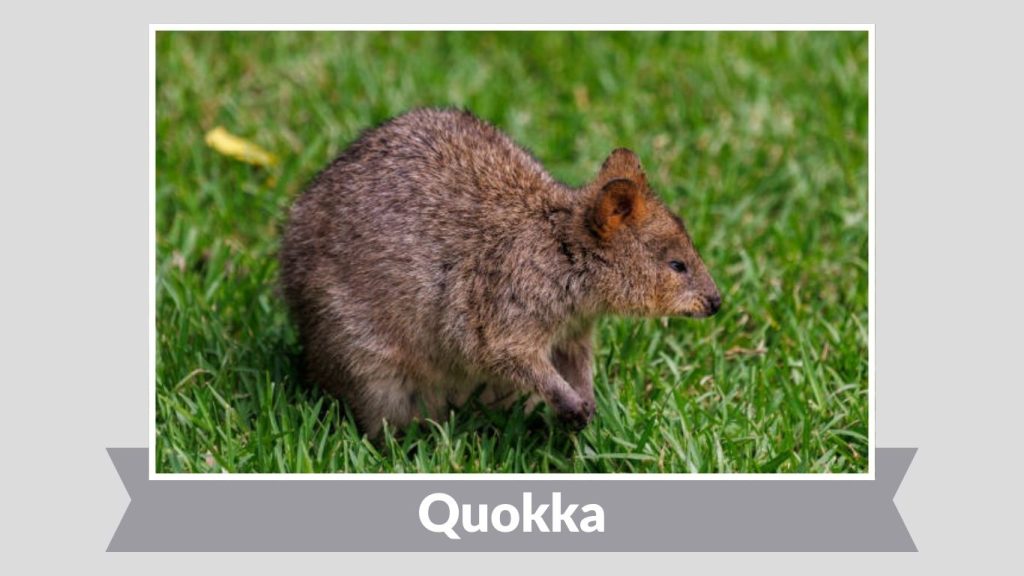
The quokka is a small marsupial native to Western Australia, often called “the world’s happiest animal” because of its friendly appearance. Despite its cute reputation, the quokka is a hardy animal well adapted to its environment. It is an important species in local ecosystems and a popular symbol of Australian wildlife.
Identification
- Small, compact body with rounded shape
- Short tail compared to kangaroos and wallabies
- Brown to grey fur
- Rounded ears and short snout
- Strong hind legs for hopping
Habitat
Quokkas are mainly found on Rottnest Island, Bald Island, and small areas of mainland Western Australia. They prefer dense vegetation, coastal scrub, and forests near water sources.
Behaviors
Quokkas are mostly nocturnal and rest in shaded areas during the day. They are social animals and may gather in small groups. Quokkas are generally curious and show little fear of humans.
Diet and Lifespan
Quokkas are herbivores that feed on grasses, leaves, stems, and shrubs. They can survive long periods without fresh water by getting moisture from plants. In the wild, quokkas typically live around 10 years.
13. Possum
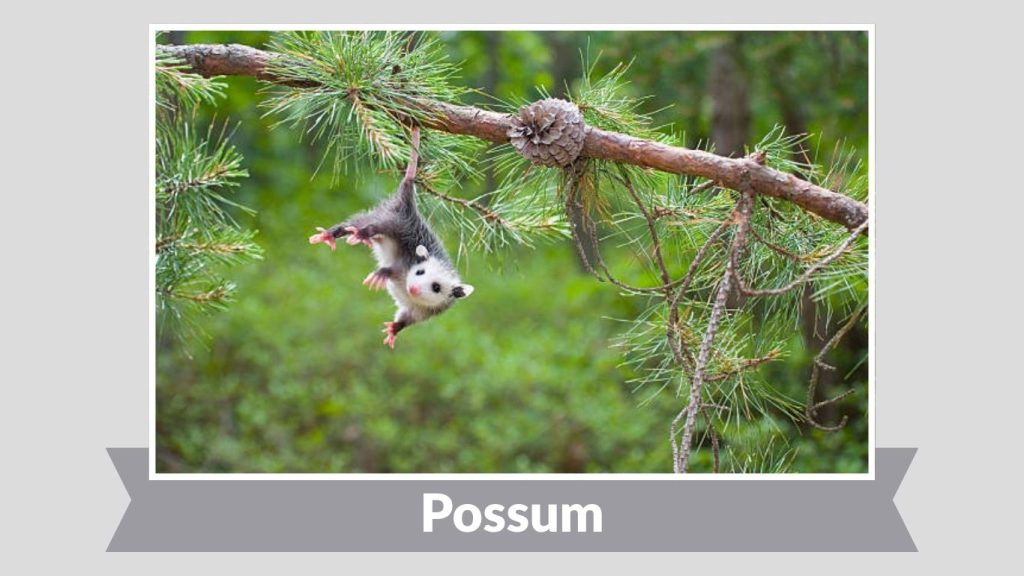
Possums are small to medium-sized arboreal marsupials commonly found across Australia. They are highly adaptable animals, often living close to human settlements as well as in natural forests. Possums play an important role in seed dispersal and maintaining healthy ecosystems.
Identification
- Medium-sized body with soft fur
- Large eyes adapted for night vision
- Long, often prehensile tail
- Rounded ears and pointed snout
- Fur color varies from grey to brown
Habitat
Possums live in forests, woodlands, and urban areas throughout Australia. They shelter in tree hollows, roofs, and other enclosed spaces.
Behaviors
Possums are nocturnal and spend most of the day sleeping. They are generally solitary and can be territorial, especially around nesting sites. Vocal calls are often heard at night.
Diet and Lifespan
Possums are omnivores, feeding on leaves, fruits, flowers, insects, and small animals. In the wild, possums usually live between 6 and 10 years.
14. Bandicoot
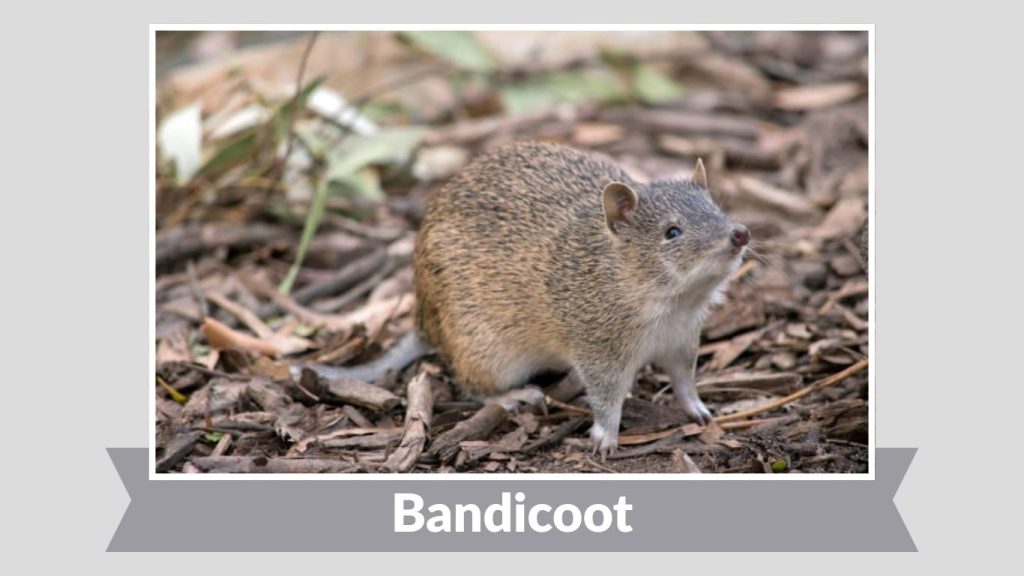
Bandicoots are small, ground-dwelling marsupials native to Australia. They are shy, fast-moving animals best known for their pointed snouts and digging habits. Bandicoots help improve soil health by turning over soil while searching for food.
Identification
- Small to medium-sized body
- Pointed snout and large ears
- Short, thin tail
- Coarse fur, usually brown or grey
- Strong hind legs for quick movement
Habitat
Bandicoots live in forests, woodlands, grasslands, and coastal scrub across Australia. They prefer areas with dense ground cover for protection.
Behaviors
Bandicoots are mostly nocturnal and solitary. They create small conical holes in the ground while foraging, which helps aerate the soil.
Diet and Lifespan
Bandicoots are omnivores that eat insects, worms, roots, seeds, and fungi. In the wild, they generally live between 2 and 4 years.
15. Numbat
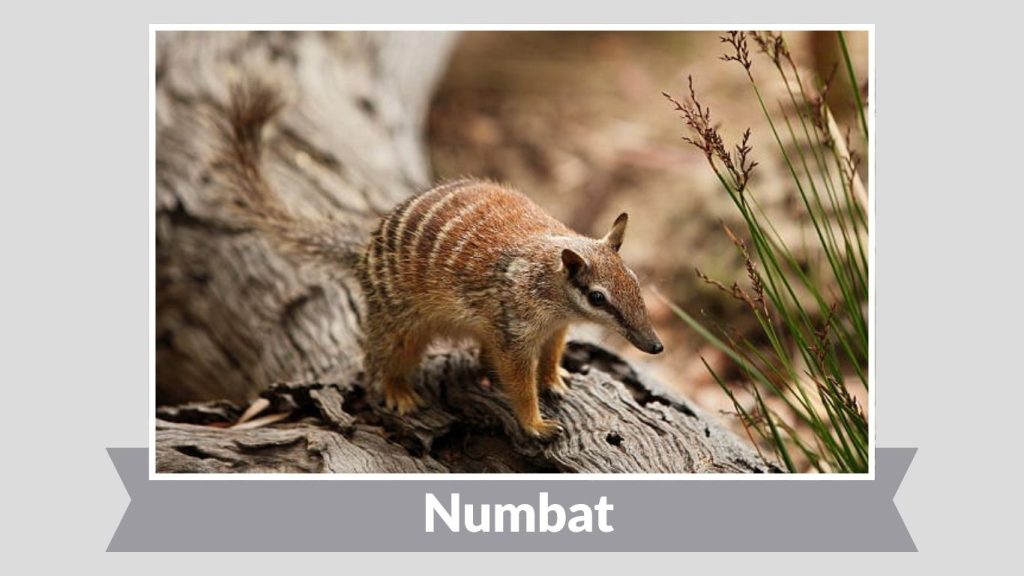
The numbat is a small, colorful marsupial native to Western Australia and is the state’s animal emblem. Unlike many marsupials, numbats are active during the day and are highly specialized termite feeders. They are an endangered species and play a unique role in Australia’s biodiversity.
Identification
- Slender body with reddish-brown fur
- Distinct white stripes across the back
- Long, bushy tail
- Narrow snout with a small mouth
- Sharp claws for digging into termite mounds
Habitat
Numbats inhabit open forests and woodlands, particularly areas with fallen logs and termite-rich soils. Today, their range is limited to small protected regions of Western Australia.
Behaviors
Numbats are diurnal and rely heavily on sight to detect predators. They shelter in hollow logs or burrows and are mostly solitary animals.
Diet and Lifespan
Numbats feed almost exclusively on termites, using a long, sticky tongue to capture them. In the wild, numbats typically live between 4 and 6 years.
16. Bilby
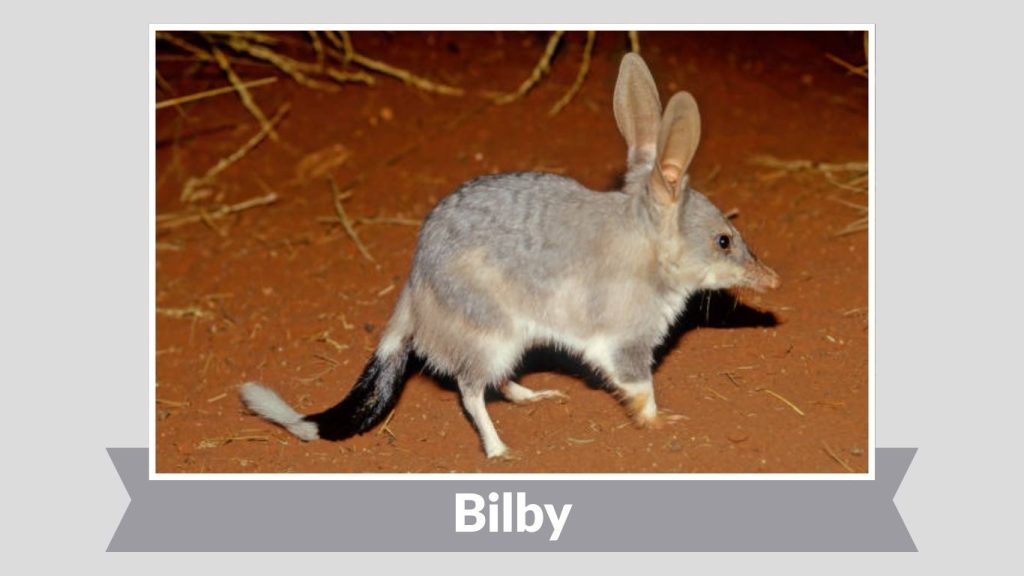
The bilby is a small nocturnal marsupial with long ears and a pointed snout, often called the “rabbit-eared bandicoot.” It is an iconic Australian animal and a symbol of wildlife conservation. Bilbies are well adapted to life in arid and semi-arid environments.
Identification
- Long, upright ears that help release heat
- Slender body with soft grey or sandy fur
- Long, pointed snout
- Long tail with a black-and-white tip
- Strong claws for digging burrows
Habitat
Bilbies live in deserts, grasslands, and shrublands of central and western Australia. They prefer sandy or loamy soils suitable for digging deep burrows.
Behaviors
Bilbies are nocturnal and spend the day resting in burrows. They are solitary animals and are excellent diggers, creating complex tunnel systems for shelter.
Diet and Lifespan
Bilbies are omnivores, feeding on insects, larvae, seeds, bulbs, and fungi. They rarely need to drink water, obtaining moisture from food. In the wild, bilbies usually live between 5 and 7 years.
17. Sugar Glider
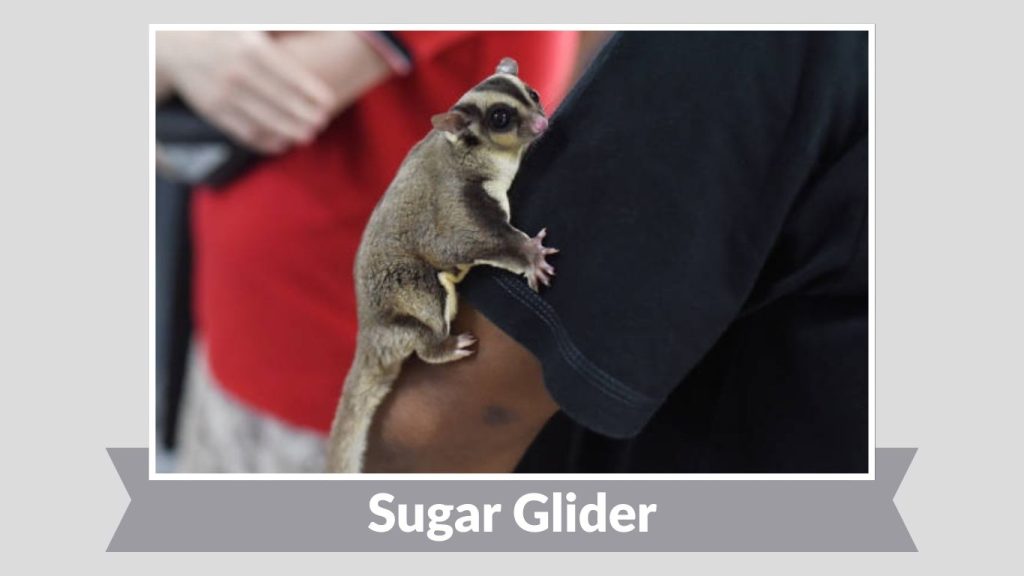
The sugar glider is a small, tree-dwelling marsupial known for its ability to glide between trees using a membrane of skin. It is a social and active animal, often heard before it is seen. Sugar gliders play a role in pollination and insect control.
Identification
- Small body with soft grey fur
- Large, dark eyes adapted for night vision
- Skin membrane stretching from wrists to ankles
- Long, bushy tail for balance
- Dark stripe running from nose to back
Habitat
Sugar gliders inhabit forests and woodlands across eastern and northern Australia. They rely on tree hollows for nesting and shelter.
Behaviors
Sugar gliders are nocturnal and highly social, living in family groups. They communicate using a range of vocal sounds and scent marking. Gliding allows them to travel efficiently between trees.
Diet and Lifespan
Sugar gliders are omnivores, feeding on nectar, sap, pollen, insects, and fruits. In the wild, they typically live between 9 and 12 years.
18. Thorny Devil
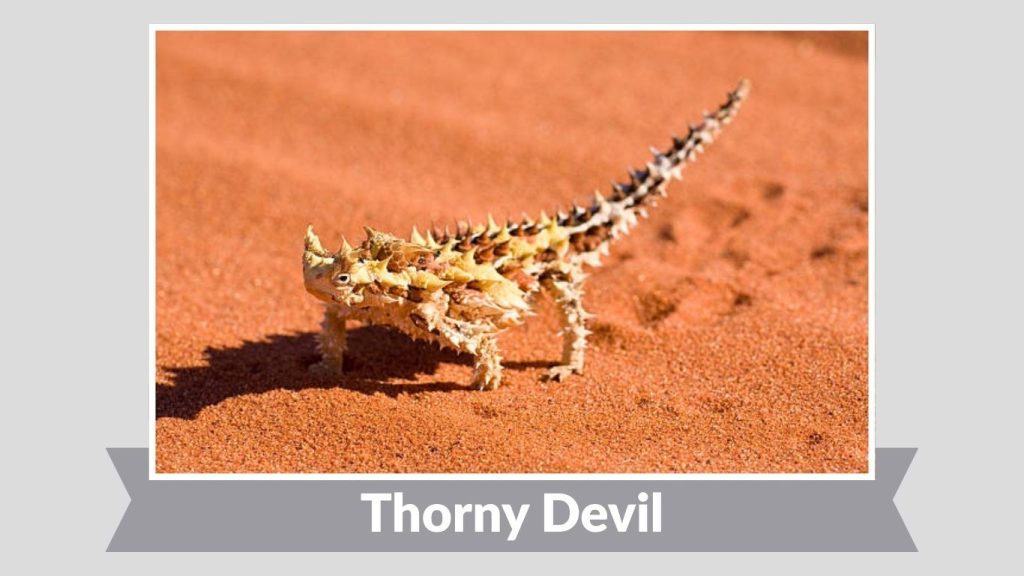
The thorny devil is a small desert lizard famous for its spiky appearance and remarkable survival adaptations. Native to Australia’s arid regions, it is well camouflaged and capable of collecting water through its skin, making it perfectly suited to harsh desert conditions.
Identification
- Small lizard covered in sharp, thorn-like spines
- Broad, flattened body
- Large false head behind the real head for defense
- Color changes from yellow to reddish-brown
- Short legs and slow movement
Habitat
Thorny devils live in deserts, sandy plains, and spinifex grasslands of central and western Australia. They prefer dry, sandy soils.
Behaviors
Thorny devils are solitary and slow-moving. When threatened, they tuck their head down and present the spiny false head. They are active during cooler parts of the day.
Diet and Lifespan
Thorny devils feed almost exclusively on ants, consuming thousands each day. They can absorb moisture from dew and rain through channels in their skin. In the wild, they usually live around 15 to 20 years.
19. Frilled-neck Lizard
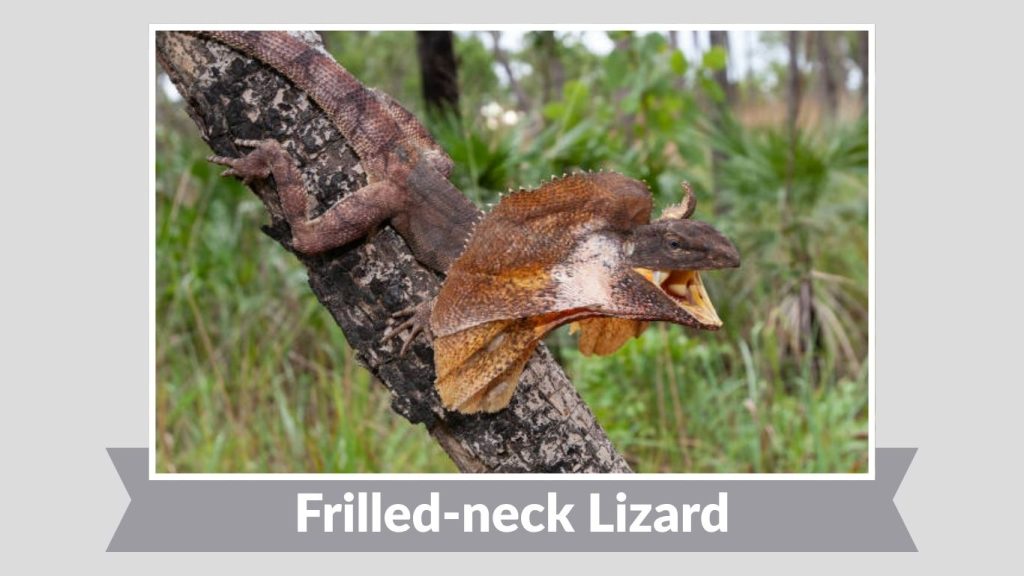
The frilled-neck lizard is a striking reptile best known for the large frill around its neck, which it displays when threatened. This dramatic behavior makes it one of Australia’s most recognizable lizards. Despite its fierce display, it is generally shy and avoids confrontation.
Identification
- Medium to large lizard with long tail
- Large expandable frill around the neck
- Brown or grey body with patterned markings
- Strong hind legs for running
- Sharp claws for climbing trees
Habitat
Frilled-neck lizards live in tropical and subtropical woodlands, savannas, and open forests of northern Australia. They are often found near trees, which they use for safety.
Behaviors
Frilled-neck lizards are mostly arboreal and spend much of their time on tree trunks. When threatened, they open their frill, hiss, and may run away on their hind legs.
Diet and Lifespan
They are carnivores that feed on insects, spiders, and small reptiles. In the wild, frilled-neck lizards typically live between 10 and 15 years.
20. Blue-tongued Skink
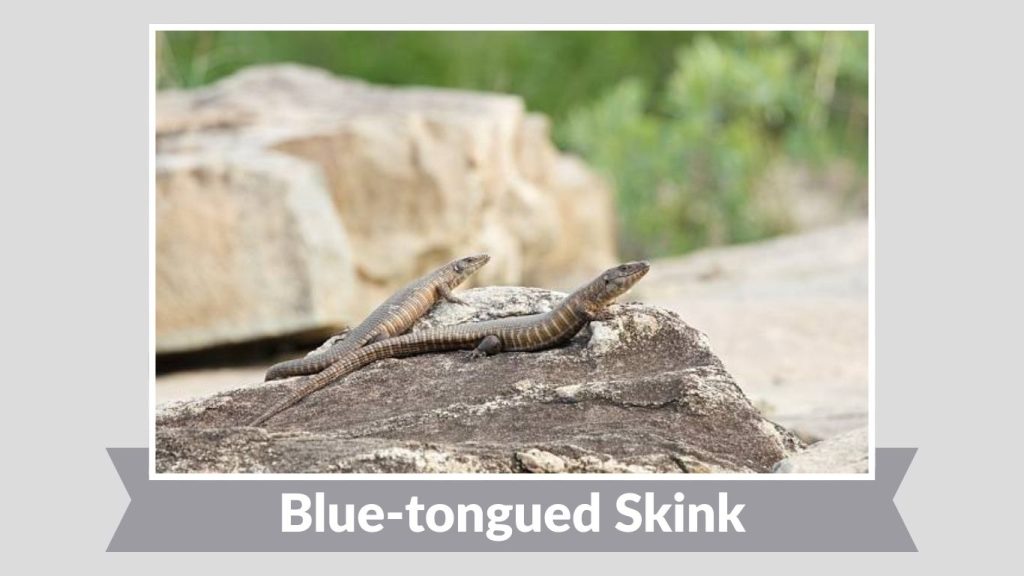
The blue-tongued skink is a large, slow-moving lizard known for its bright blue tongue, which it displays to scare off predators. It is one of the most common and easily recognized reptiles in Australia and is often found near human habitats.
Identification
- Stout body with smooth, shiny scales
- Short legs and broad head
- Bright blue tongue used as a warning display
- Body color ranges from grey to brown with bands
- Thick tail used for fat storage
Habitat
Blue-tongued skinks inhabit woodlands, grasslands, gardens, and suburban areas across much of Australia. They prefer places with good ground cover.
Behaviors
These skinks are mostly diurnal and slow-moving. When threatened, they hiss, flatten their bodies, and display their blue tongues to appear more intimidating.
Diet and Lifespan
Blue-tongued skinks are omnivores, eating insects, snails, fruits, flowers, and vegetation. In the wild, they commonly live between 15 and 20 years.
21. Saltwater Crocodile
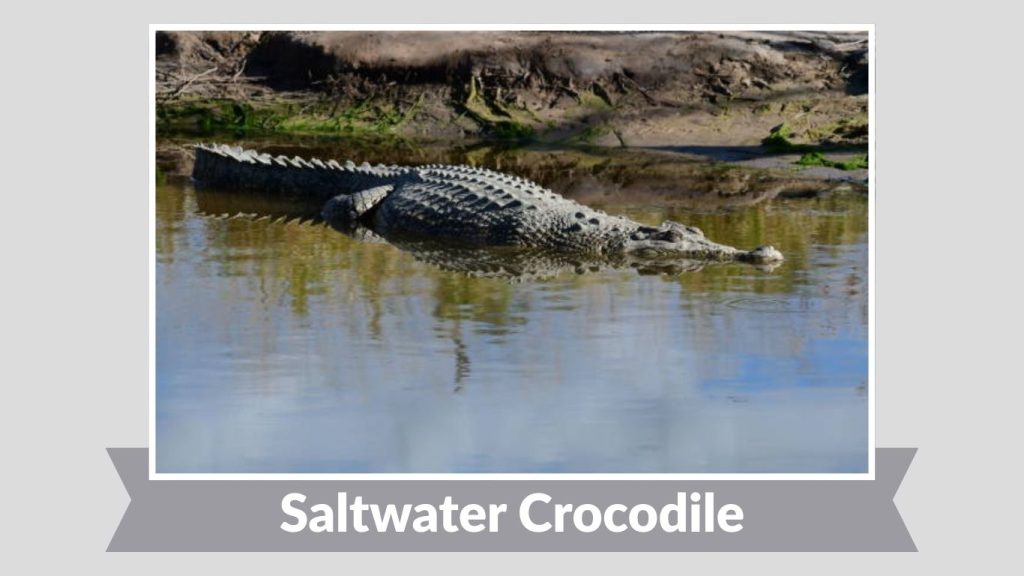
The saltwater crocodile is the largest living reptile in the world and a powerful apex predator. Found in northern Australia, it is known for its strength, stealth, and ability to live in both saltwater and freshwater environments. Despite its fearsome reputation, it plays an essential role in maintaining healthy ecosystems.
Identification
- Massive, heavy-bodied reptile
- Broad head with strong jaws and conical teeth
- Dark grey to olive-green scaly skin
- Long, muscular tail for swimming
- Adult males much larger than females
Habitat
Saltwater crocodiles inhabit rivers, estuaries, mangroves, swamps, and coastal waters of northern Australia. They can travel long distances at sea and often move between different water systems.
Behaviors
Saltwater crocodiles are ambush predators, remaining still for long periods before striking. They are highly territorial and mostly solitary, becoming aggressive when defending territory or during breeding season.
Diet and Lifespan
They are carnivores that feed on fish, birds, mammals, and other reptiles. Large adults can take very big prey. In the wild, saltwater crocodiles can live 60 to 70 years or more.
22. Freshwater Crocodile
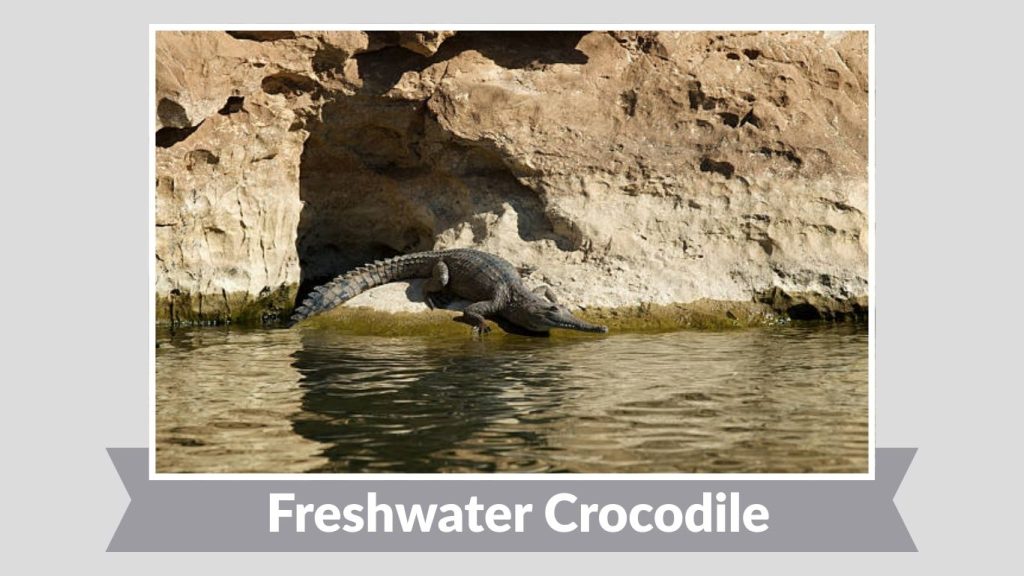
The freshwater crocodile, also known as “freshie,” is smaller and less aggressive than the saltwater crocodile. Native to northern Australia, it is well adapted to inland waterways and plays an important role in freshwater ecosystems.
Identification
- Slender body compared to saltwater crocodiles
- Narrow, longer snout
- Light brown to grey scaly skin with darker bands
- Strong tail for swimming
- Adults significantly smaller than saltwater crocodiles
Habitat
Freshwater crocodiles live in rivers, lakes, billabongs, and freshwater wetlands of northern Australia. They prefer calm inland waters rather than coastal areas.
Behaviors
Freshwater crocodiles are mostly shy and avoid human contact. They bask in the sun to regulate body temperature and are active hunters in the water.
Diet and Lifespan
They are carnivores that feed on fish, frogs, insects, and small reptiles. In the wild, freshwater crocodiles typically live between 40 and 50 years.
23. Red Kangaroo
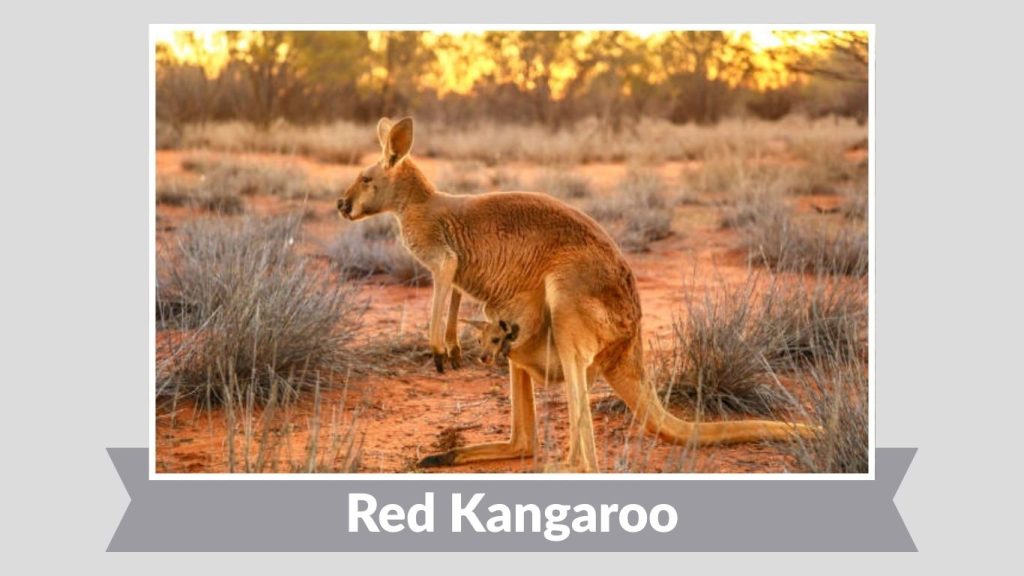
The red kangaroo is the largest marsupial in the world and one of Australia’s most famous animals. Known for its strength and speed, it is well adapted to Australia’s arid and semi-arid landscapes. The red kangaroo is a powerful symbol of the Australian outback.
Identification
- Large, muscular body with powerful hind legs
- Reddish-brown fur in males; greyish in females
- Long, thick tail for balance and support
- Small head with large ears
- Males significantly larger than females
Habitat
Red kangaroos live in deserts, open grasslands, shrublands, and plains across central and western Australia. They prefer open areas with access to grasses and low vegetation.
Behaviors
Red kangaroos are mostly crepuscular, being active in the early morning and late afternoon. They live in groups called mobs and can travel long distances in search of food and water.
Diet and Lifespan
They are herbivores that mainly eat grasses and low plants. Red kangaroos can survive long periods without water by obtaining moisture from food. In the wild, they usually live between 8 and 12 years.
24. Grey Kangaroo
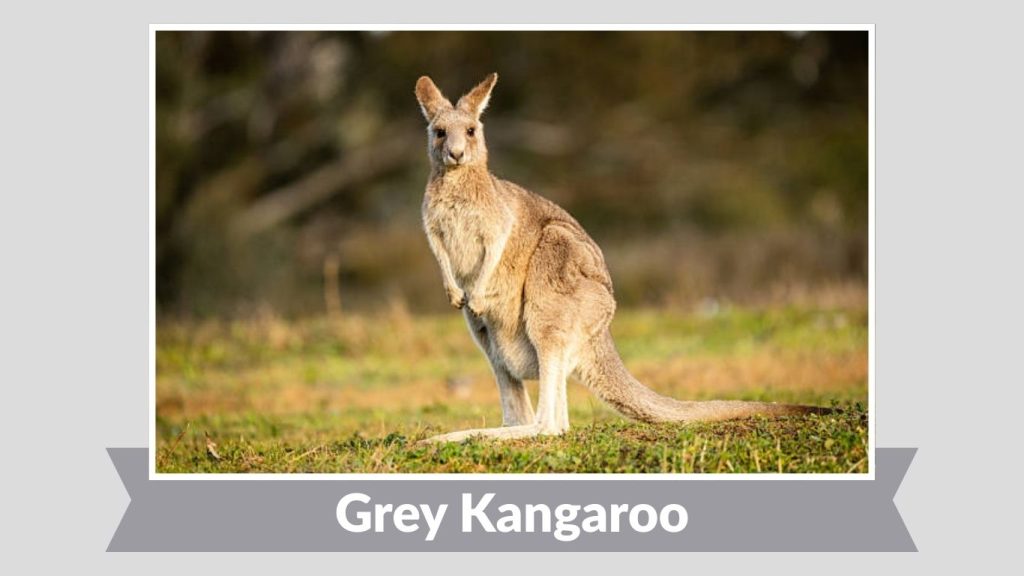
The grey kangaroo, including the eastern and western grey species, is one of the most widespread kangaroos in Australia. It is known for its adaptable nature and ability to live in a variety of environments, from forests to farmland.
Identification
- Large body with grey to brown fur
- Powerful hind legs and long tail
- Broad head with large ears
- Softer facial features compared to red kangaroo
- Females smaller than males
Habitat
Grey kangaroos inhabit forests, woodlands, grasslands, and coastal areas across eastern and southern Australia. They often live near water sources and grassy feeding areas.
Behaviors
Grey kangaroos are social animals that live in groups. They are mostly active at dawn and dusk and often rest in shaded areas during the day.
Diet and Lifespan
They are herbivores that feed mainly on grasses and leaves. Grey kangaroos generally live between 10 and 15 years in the wild.
25. Flying Fox
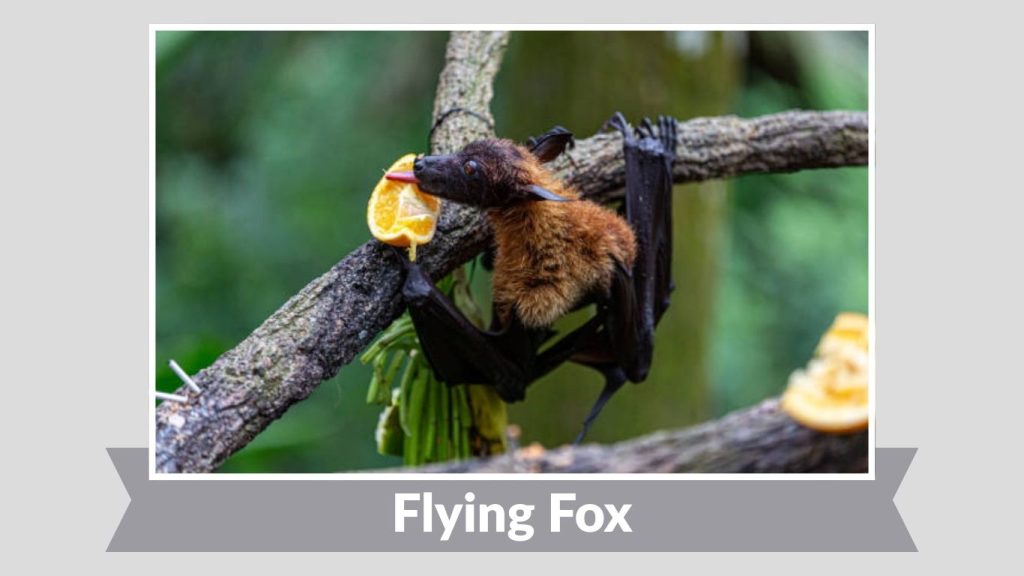
The flying fox is a large fruit bat known for its fox-like face and important role in pollination and seed dispersal. Found across Australia, flying foxes are vital to forest health but are often misunderstood.
Identification
- Large bat with wingspan up to 1.5 meters
- Fox-like face with large eyes
- Dark brown or black fur with lighter neck fur
- Long wings adapted for sustained flight
- Sharp claws for hanging
Habitat
Flying foxes live in forests, woodlands, mangroves, and urban areas across northern and eastern Australia. They roost in large colonies in trees near food sources.
Behaviors
Flying foxes are nocturnal and highly social. They travel long distances at night to feed and communicate using vocal sounds and body movements.
Diet and Lifespan
They are herbivores that feed on fruits, nectar, and flowers. In the wild, flying foxes typically live between 15 and 20 years.
26. Little Penguin
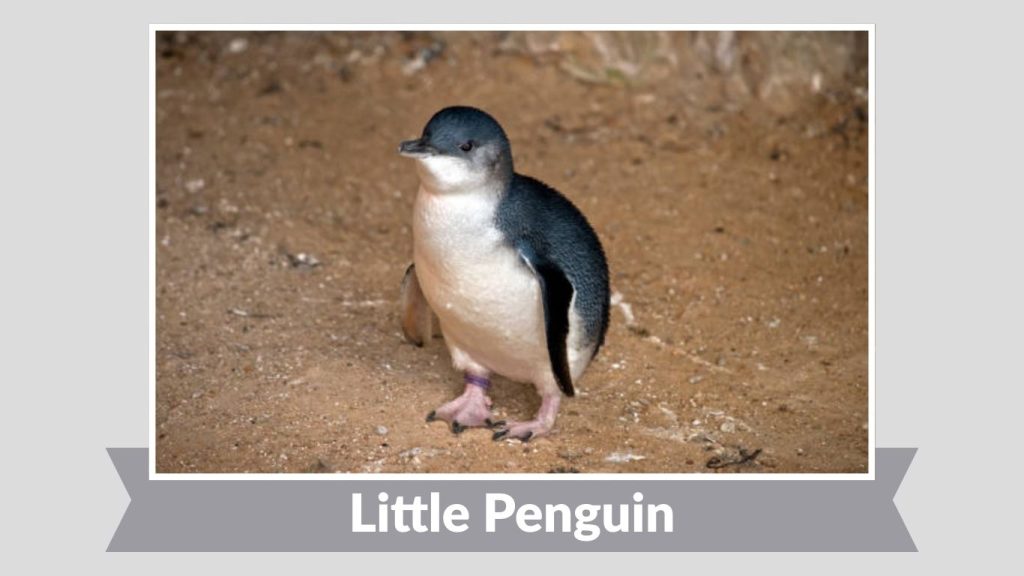
The little penguin is the smallest penguin species in the world and is sometimes called the fairy penguin. Native to southern Australia, it is well known for its nightly return from the sea to coastal nesting sites.
Identification
- Small body with blue-grey back and white belly
- Short flippers adapted for swimming
- Small, dark bill
- Webbed feet
- Adult height around 30–35 cm
Habitat
Little penguins live along the southern coastline of Australia and on offshore islands. They nest in burrows, rock crevices, or under vegetation close to the shore.
Behaviors
Little penguins are nocturnal on land and spend most of the day at sea. They often return to shore in groups after sunset to avoid predators.
Diet and Lifespan
They feed on small fish, squid, and crustaceans. In the wild, little penguins typically live between 6 and 10 years.
27. Australian Magpie
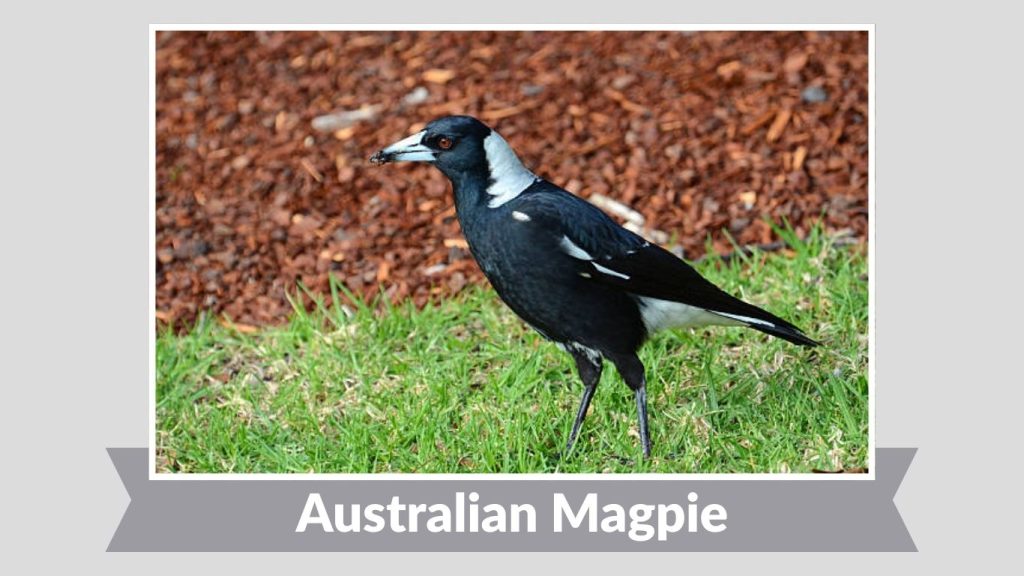
The Australian magpie is a highly intelligent and recognizable bird known for its black-and-white plumage and complex musical calls. It is common across Australia and is famous for its strong territorial behavior, especially during breeding season. Despite its reputation, the magpie plays an important role in controlling insects.
Identification
- Medium to large bird with black-and-white feathers
- White nape and shoulder patches
- Strong, pointed grey beak
- Red eyes in adults
- Long legs adapted for walking on the ground
Habitat
Australian magpies live in open woodlands, grasslands, parks, farms, and suburban areas throughout Australia. They prefer open spaces with nearby trees for nesting.
Behaviors
Magpies are diurnal and highly territorial. They are known for their melodious songs and complex vocalizations. During breeding season, some magpies may swoop to protect nests.
Diet and Lifespan
Australian magpies are omnivores, feeding on insects, worms, small reptiles, seeds, and scraps. In the wild, they commonly live between 20 and 25 years.
28. Lyrebird
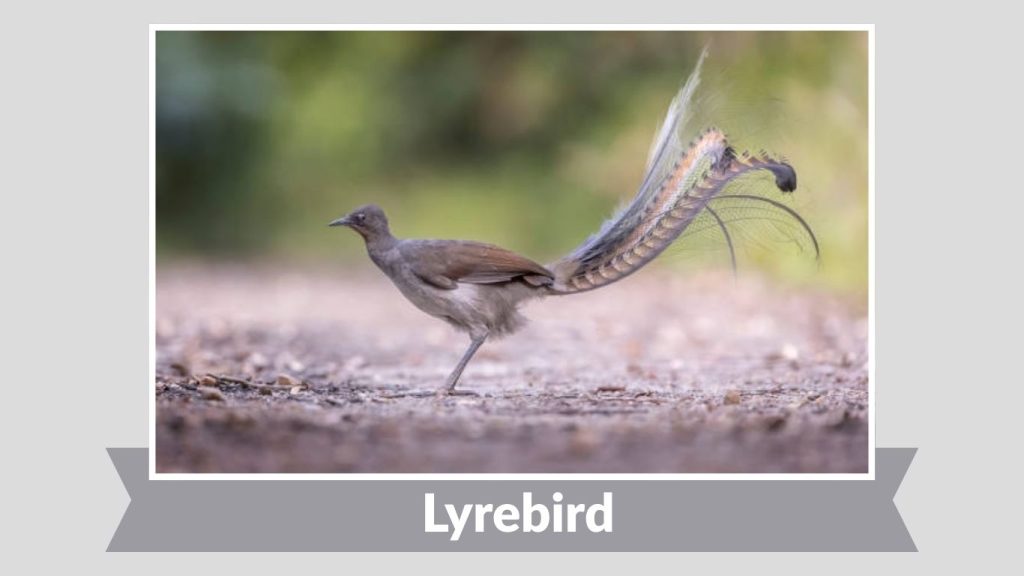
The lyrebird is a remarkable Australian bird best known for its extraordinary ability to mimic natural and artificial sounds. It is shy and rarely seen, but its complex songs are often heard echoing through forests. The lyrebird is one of the world’s greatest vocal mimics.
Identification
- Medium to large bird with brown plumage
- Males have long, ornate tail feathers shaped like a lyre
- Strong legs adapted for scratching the ground
- Short, rounded wings
- Females have shorter, simpler tails
Habitat
Lyrebirds inhabit dense forests and rainforests of southeastern Australia. They prefer moist environments with deep leaf litter.
Behaviors
Lyrebirds are ground-dwelling birds that forage by scratching soil and leaves. Males perform elaborate displays and vocal performances during the breeding season.
Diet and Lifespan
They feed on insects, spiders, worms, and other small invertebrates. In the wild, lyrebirds can live up to 20 years or more.
29. Cockatoo
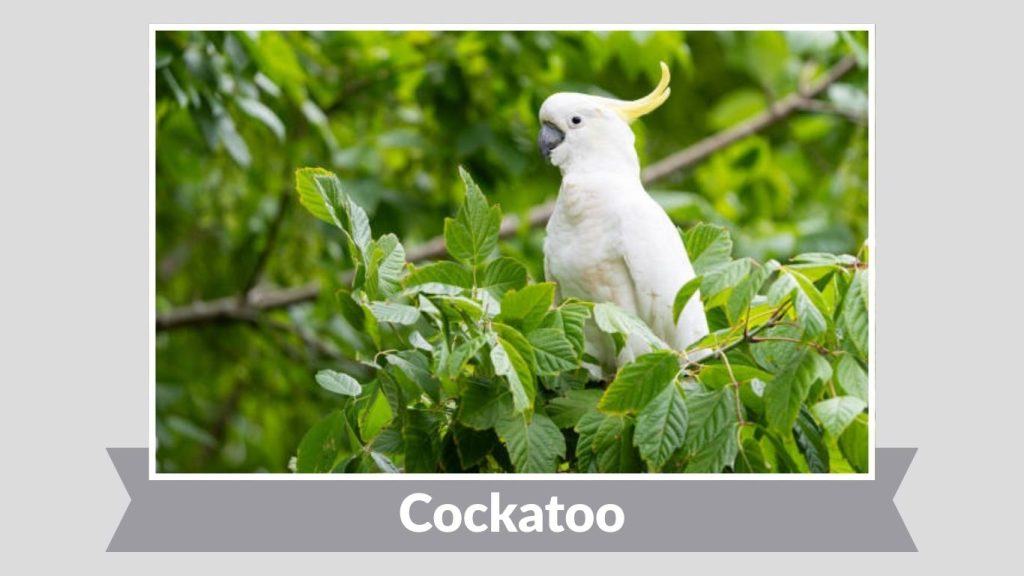
Cockatoos are highly intelligent and social parrots known for their expressive crests and loud calls. They are widespread across Australia and are famous for their playful behavior and strong bonds within flocks. Cockatoos are an important part of Australia’s birdlife.
Identification
- Medium to large parrot with curved beak
- Prominent crest on the head
- Mostly white, black, or pink plumage depending on species
- Strong feet with grasping toes
- Powerful beak for cracking seeds
Habitat
Cockatoos live in forests, woodlands, grasslands, farmlands, and urban areas throughout Australia. They adapt well to human environments.
Behaviors
Cockatoos are highly social and often seen in large flocks. They are vocal, curious, and known for problem-solving skills and playful antics.
Diet and Lifespan
Cockatoos are omnivores, feeding on seeds, nuts, fruits, roots, and insects. Many species are long-lived, often reaching 40 to 60 years in the wild.
30. Galah
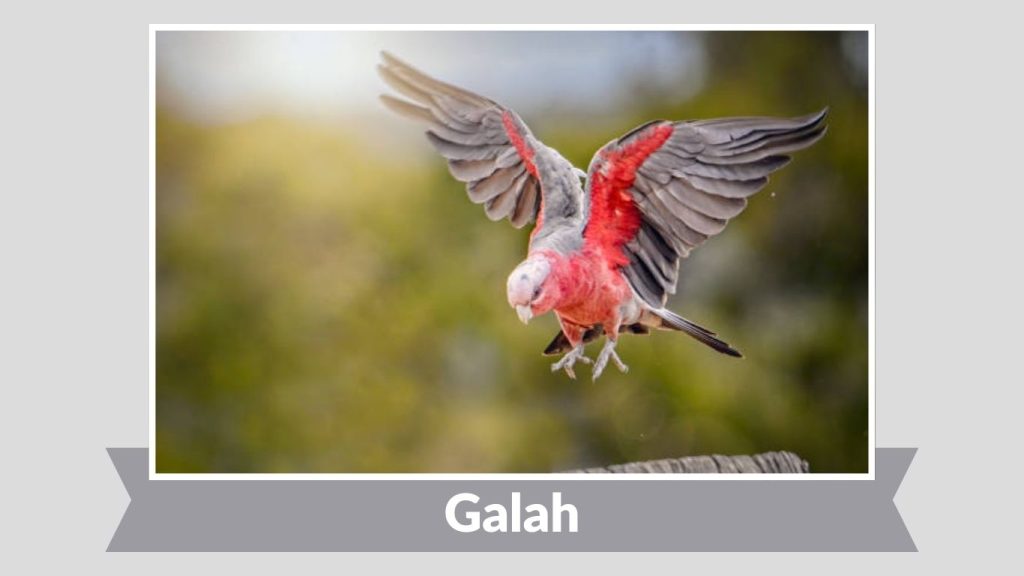
The galah is a distinctive pink-and-grey cockatoo and one of the most familiar birds in Australia. Known for its playful personality and loud calls, the galah is highly adaptable and commonly seen in both rural and urban areas. It is a social bird and often forms large, noisy flocks.
Identification
- Medium-sized cockatoo
- Pink chest, face, and underparts
- Pale grey wings and back
- Short, pale crest
- Strong, curved beak
Habitat
Galahs inhabit open woodlands, grasslands, farmlands, and towns across most of Australia. They prefer areas with scattered trees and open ground for feeding.
Behaviors
Galahs are diurnal and extremely social. They are often seen playing, hanging upside down, and interacting noisily within flocks. They form strong pair bonds.
Diet and Lifespan
Galahs are herbivores, feeding mainly on seeds, grains, grasses, and roots. In the wild, they commonly live between 30 and 40 years.
31. Wallaroo
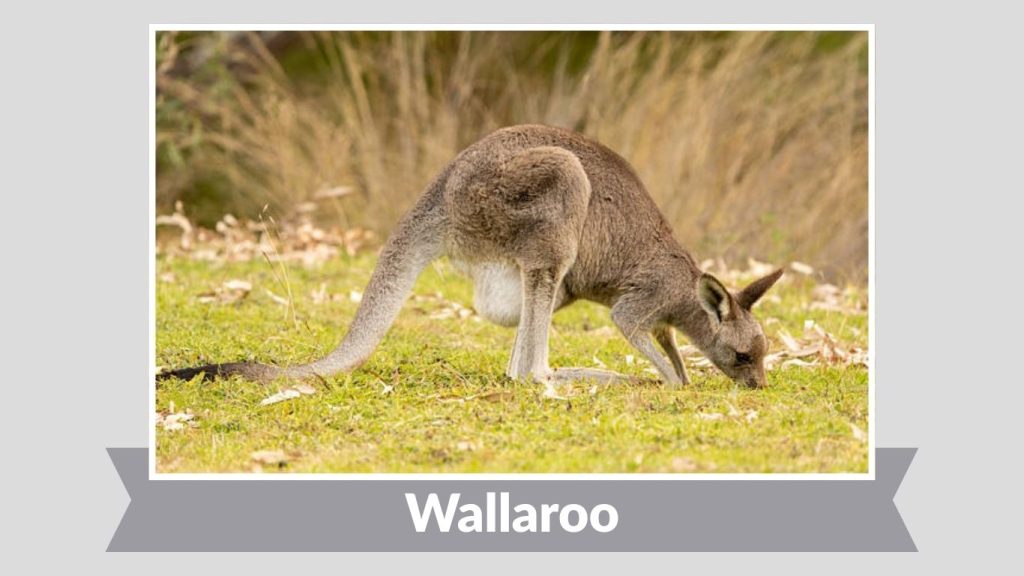
The wallaroo is a robust marsupial that sits between kangaroos and wallabies in size and appearance. It is well adapted to rugged and rocky landscapes and is known for its strength and agility. Wallaroos are less commonly seen than kangaroos but are widespread across Australia.
Identification
- Stocky, muscular body
- Thick, coarse fur ranging from grey to reddish-brown
- Shorter legs and tail compared to kangaroos
- Broad head with strong jaws
- Males larger and more muscular than females
Habitat
Wallaroos live in rocky hills, escarpments, open woodlands, and mountainous regions across Australia. They prefer rugged terrain with shelter and nearby feeding areas.
Behaviors
Wallaroos are mostly solitary or found in small groups. They are active during cooler parts of the day and are strong climbers on rocky surfaces.
Diet and Lifespan
Wallaroos are herbivores, feeding on grasses, shrubs, and leaves. In the wild, they typically live between 10 and 15 years.
32. Bush Stone-curlew
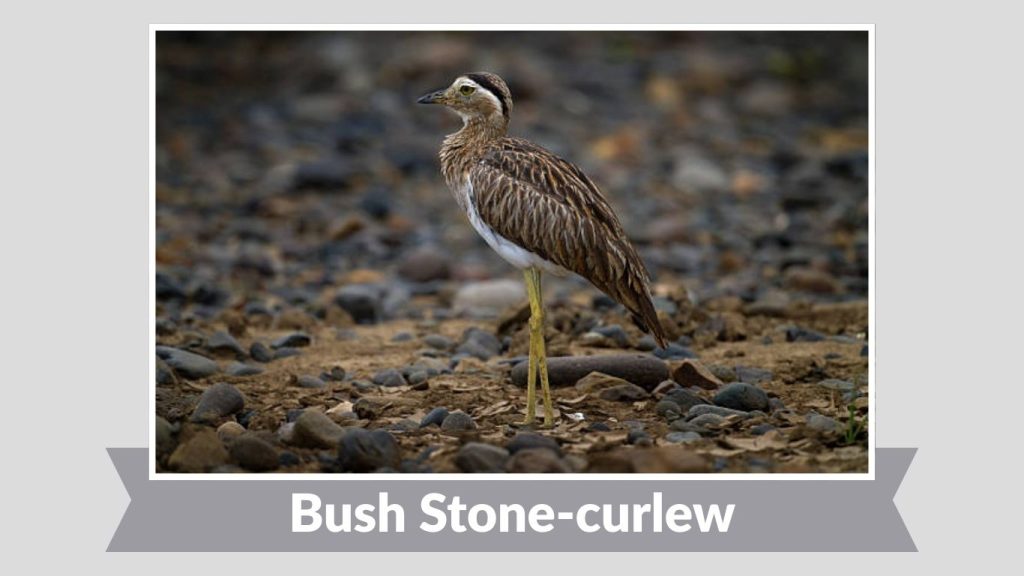
The bush stone-curlew is a long-legged, ground-dwelling bird known for its eerie, wailing call at night. It is a shy and well-camouflaged species that relies on stillness to avoid detection. This bird is an important part of Australia’s nocturnal soundscape.
Identification
- Medium-sized bird with long legs
- Brown and grey streaked plumage for camouflage
- Large yellow eyes adapted for night vision
- Long, straight bill
- Upright posture
Habitat
Bush stone-curlews live in open woodlands, grasslands, farmland, and coastal areas across Australia. They prefer sparsely vegetated ground for nesting and foraging.
Behaviors
They are mostly nocturnal and rest quietly during the day. When threatened, bush stone-curlews freeze in place rather than flying away.
Diet and Lifespan
They feed on insects, spiders, small reptiles, and seeds. In the wild, bush stone-curlews usually live between 15 and 20 years.
33. Tree Kangaroo
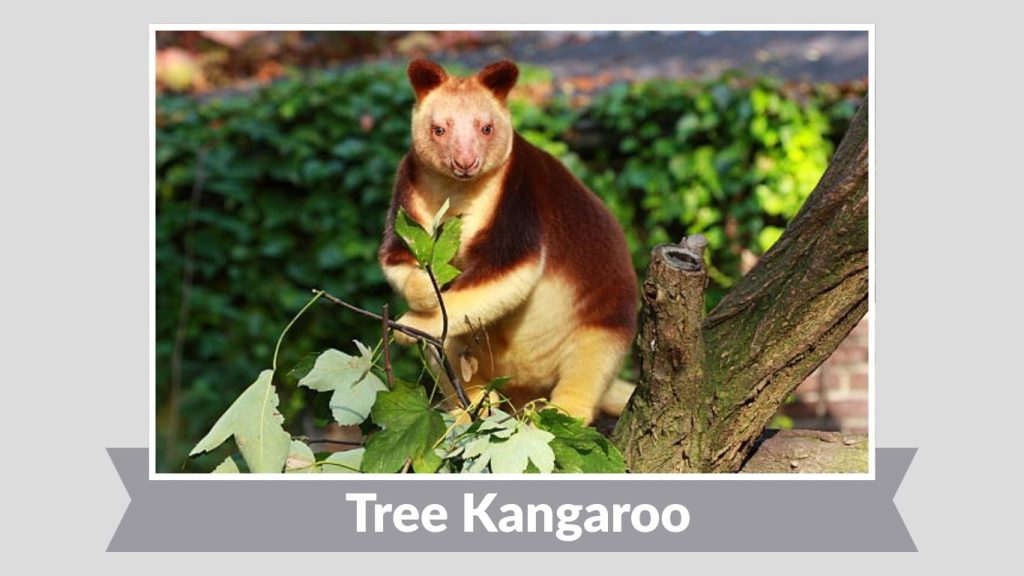
Tree kangaroos are unique marsupials adapted for life in trees rather than on open ground. Unlike their ground-dwelling relatives, they are skilled climbers and spend much of their time in forest canopies. In Australia, tree kangaroos are found only in tropical rainforests.
Identification
- Stocky body with shorter legs than ground kangaroos
- Strong forelimbs for climbing
- Long tail used for balance
- Thick fur, often dark brown or patterned
- Rounded ears
Habitat
Tree kangaroos inhabit tropical rainforests of northeastern Australia, particularly in Queensland. They depend on dense forest cover and tall trees.
Behaviors
Tree kangaroos are mostly solitary and move slowly and carefully through trees. They can leap between branches and descend headfirst, unlike most kangaroos.
Diet and Lifespan
They are herbivores, feeding on leaves, fruits, flowers, and bark. In the wild, tree kangaroos typically live between 15 and 20 years.
34. Fairy Penguin
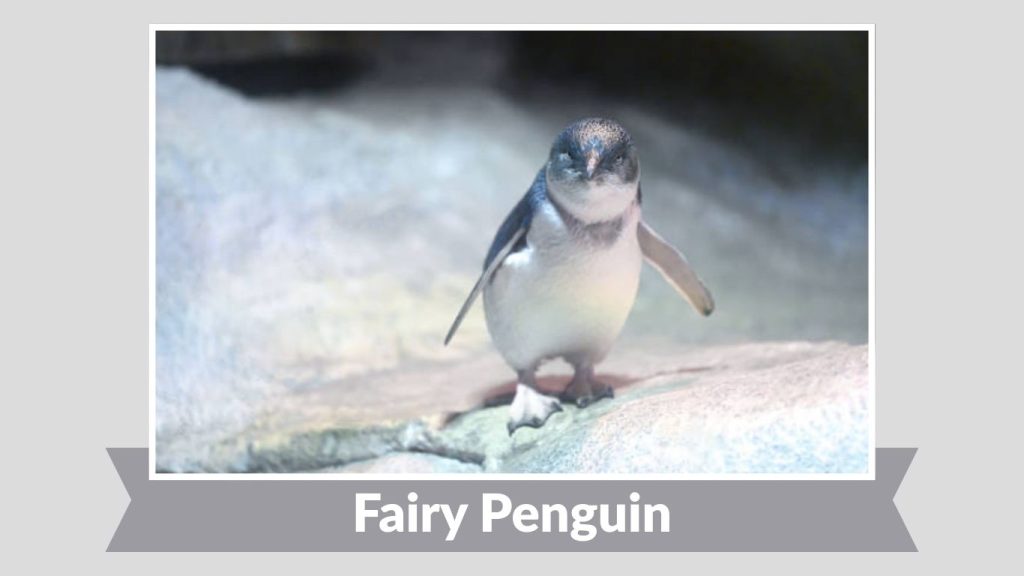
The fairy penguin, also known as the little blue penguin, is the smallest penguin species in the world. It is famous for its blue-tinted feathers and charming appearance. Fairy penguins are a beloved symbol of Australia’s southern coastline.
Identification
- Small penguin with blue-grey feathers
- White underparts
- Short flippers for swimming
- Small, dark beak
- Compact body
Habitat
Fairy penguins live along southern Australian coastlines and offshore islands. They nest in burrows, rock crevices, or under vegetation close to the sea.
Behaviors
They are nocturnal on land and spend daylight hours at sea hunting. Fairy penguins often return to shore in groups after sunset for safety.
Diet and Lifespan
They feed on small fish, squid, and crustaceans. In the wild, fairy penguins usually live between 6 and 10 years.
35. Lace Monitor
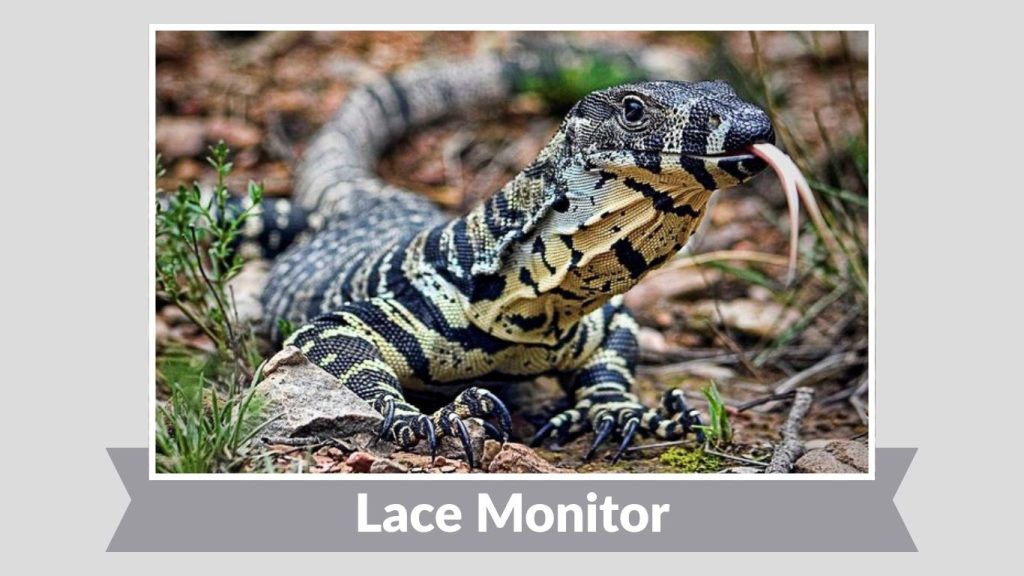
The lace monitor, also known as the goanna, is one of Australia’s largest lizards. It is an excellent climber and a powerful predator, often seen basking in trees or on the ground. Lace monitors are intelligent reptiles and play an important role in controlling pests.
Identification
- Large lizard with long body and tail
- Black or dark brown skin with yellow or cream markings
- Strong limbs with sharp claws
- Long, forked tongue
- Powerful jaws
Habitat
Lace monitors inhabit forests, woodlands, coastal scrub, and open areas of eastern Australia. They are often found near trees and water sources.
Behaviors
Lace monitors are mostly diurnal and active hunters. They are skilled climbers and swimmers and may hiss or whip their tails when threatened.
Diet and Lifespan
They are carnivores, feeding on insects, birds, eggs, small mammals, and carrion. In the wild, lace monitors typically live between 15 and 20 years.
FAQs
What makes Australian animals unique?
Australian animals are unique because of the continent’s long geographic isolation. This allowed many species, especially marsupials and monotremes, to evolve separately from animals found elsewhere in the world.
Why are marsupials common in Australia?
Marsupials are common in Australia because they evolved there with little competition from placental mammals. Their pouch-based reproduction helped them survive and adapt to different environments.
Are Australian animals dangerous?
Some Australian animals can be dangerous, such as crocodiles and venomous reptiles, but most animals avoid humans. Many species are shy and play important roles in maintaining ecological balance.
What habitats do Australian animals live in?
Australian animals live in a wide range of habitats including deserts, rainforests, grasslands, mountains, rivers, and coastal areas. Each species is specially adapted to its environment.
Are Australian animals protected?
Yes, many Australian animals are protected by law. National parks, wildlife reserves, and conservation programs help protect endangered species and preserve natural habitats.