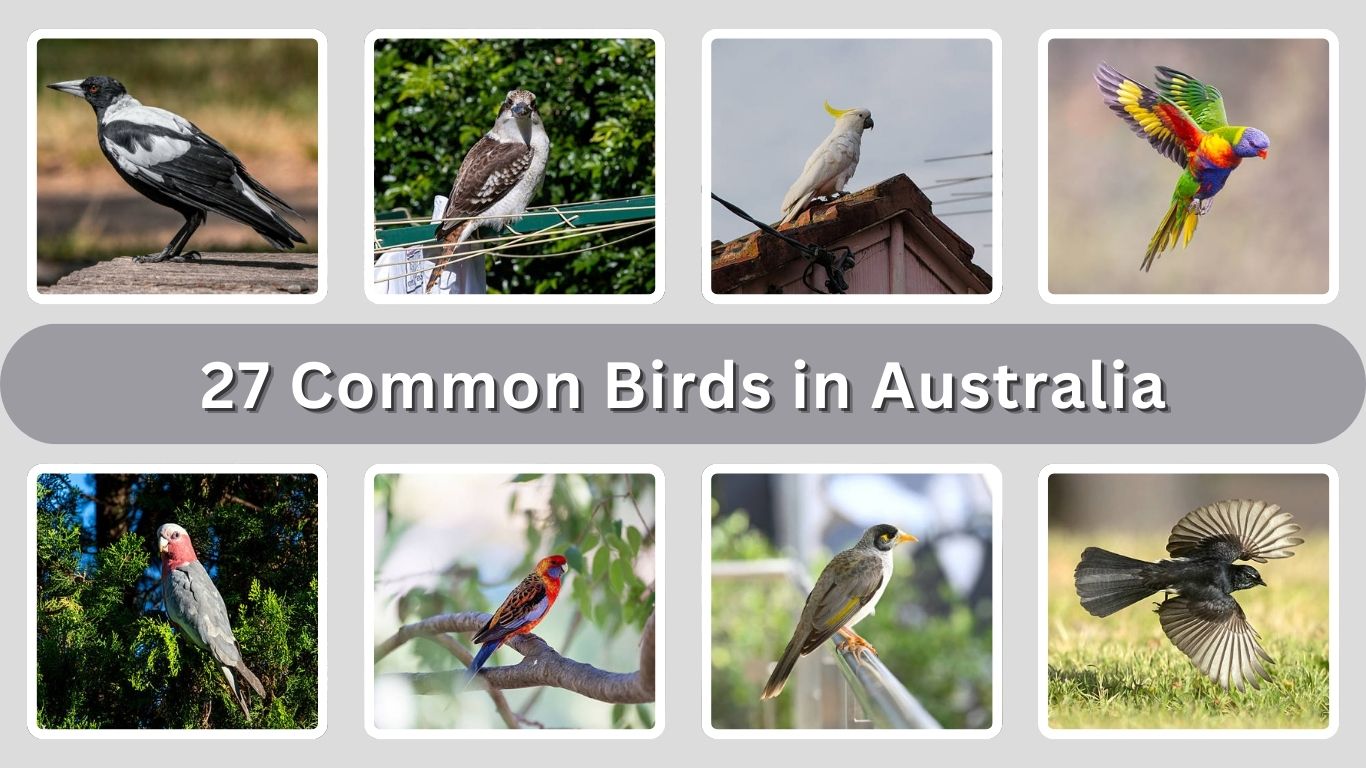
Australia is home to a remarkable variety of bird species, many of which are found nowhere else in the world. From colorful parrots and intelligent songbirds to graceful waterbirds, these birds are a familiar part of everyday life across cities, forests, wetlands, and open countryside. Their unique behaviors, calls, and adaptations make birdwatching in Australia both fascinating and rewarding, offering endless opportunities to observe wildlife in natural and urban environments alike.
1. Australian Magpie
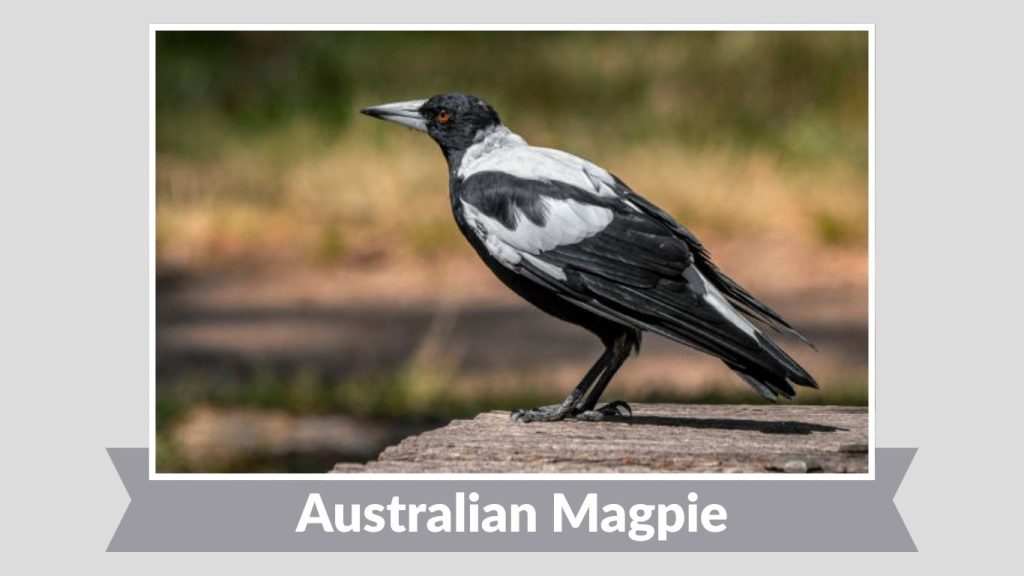
The Australian Magpie is one of the most familiar and intelligent birds in Australia. Known for its striking black-and-white plumage and rich, flute-like song, it is commonly found in urban areas as well as open countryside. Magpies are highly adaptable and often form strong social bonds.
Identification
- Black and white plumage with a white nape (male brighter than female)
- Strong, pointed pale bill
- Red or dark brown eyes
- Medium to large-sized songbird
Habitat
Australian Magpies inhabit open areas such as parks, gardens, farmland, and grasslands. They prefer spaces with short grass where foraging is easy and often live close to human settlements.
Behaviors
Magpies are highly territorial, especially during breeding season, and are well known for defensive swooping. They are intelligent birds with complex vocalizations and can recognize individual humans.
Diet and Lifespan
Their diet mainly consists of insects, worms, small reptiles, and occasionally seeds. In the wild, Australian Magpies typically live between 12 to 20 years, with some individuals living even longer.
2. Laughing Kookaburra
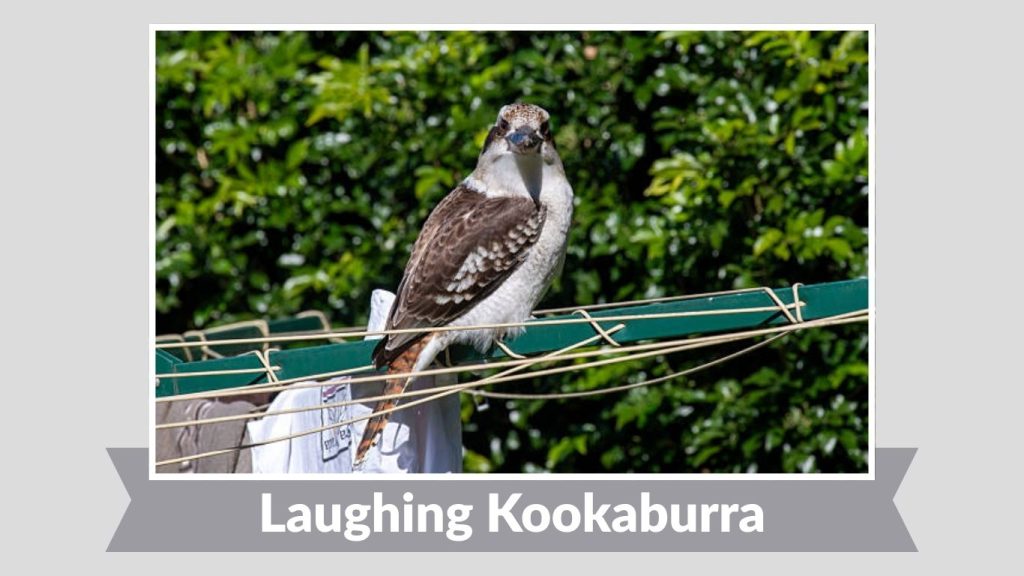
The Laughing Kookaburra is famous for its loud, laughing call that echoes through forests and suburbs alike. As the world’s largest kingfisher, it is a bold and charismatic bird, often seen perched quietly before swooping down on prey.
Identification
- Large, stocky body with a big head
- Brown and white plumage with dark eye stripes
- Heavy, long bill adapted for hunting
- Loud, distinctive “laughing” call
Habitat
Laughing Kookaburras are commonly found in open woodlands, forests, parks, and suburban areas. They prefer habitats with trees for perching and nesting and open ground for hunting.
Behaviors
These birds are highly territorial and often live in family groups. They spend long periods perched while scanning for prey and are most vocal at dawn and dusk, using calls to mark territory.
Diet and Lifespan
Their diet includes insects, small mammals, reptiles, frogs, and occasionally small birds. Laughing Kookaburras can live up to 15–20 years in the wild under favorable conditions.
3. Sulphur-crested Cockatoo
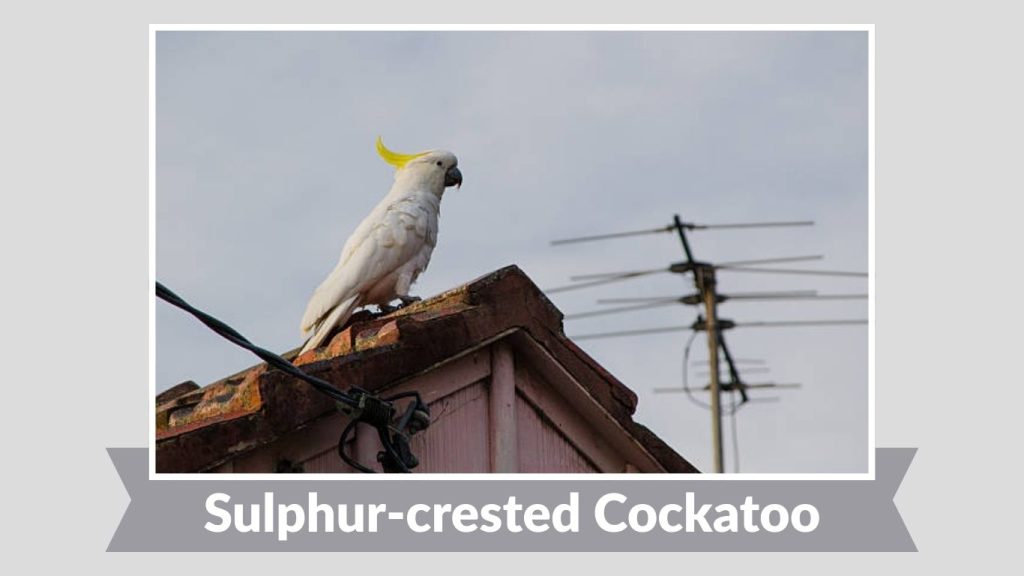
The Sulphur-crested Cockatoo is a large, striking white parrot well known for its intelligence and loud, raucous calls. Highly social and expressive, this bird is a common sight in both urban and rural parts of Australia, often seen in noisy flocks.
Identification
- White plumage with a prominent yellow crest
- Strong, curved black bill
- Dark eyes and grey feet
- Large parrot with a wingspan over 1 meter
Habitat
Sulphur-crested Cockatoos inhabit woodlands, forests, farmland, and city parks. They readily adapt to human environments and often nest in tree hollows near towns and suburbs.
Behaviors
These cockatoos are extremely social and intelligent, capable of problem-solving and tool use. They are known for their loud calls, playful nature, and sometimes destructive behavior when foraging.
Diet and Lifespan
Their diet consists of seeds, nuts, fruits, roots, and cultivated crops. Sulphur-crested Cockatoos are long-lived birds, commonly living 40–60 years, and sometimes longer in captivity.
4. Rainbow Lorikeet
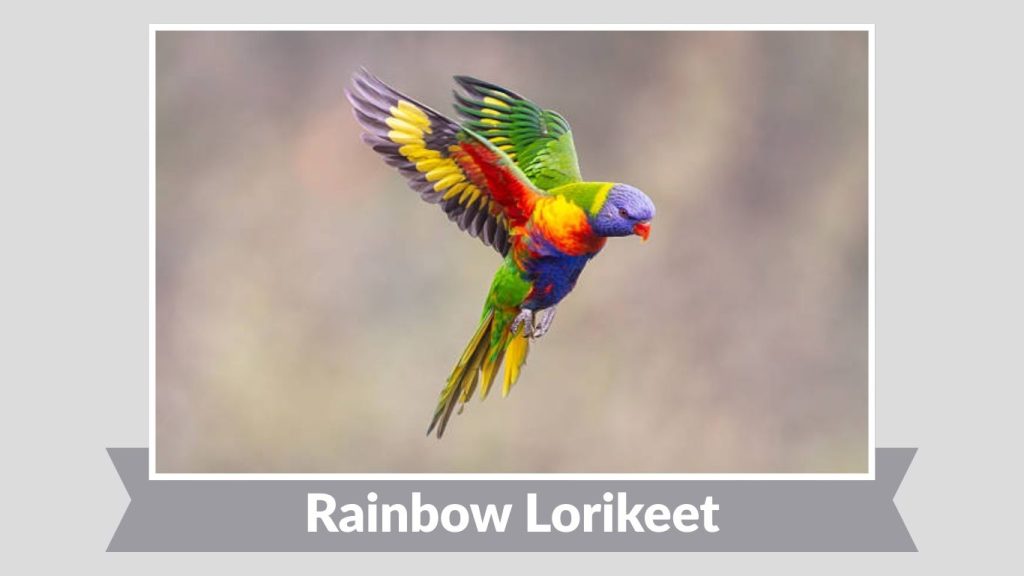
The Rainbow Lorikeet is one of Australia’s most colorful and energetic birds. With its vivid plumage and playful personality, it is a favorite in urban areas, often seen feeding noisily in flowering trees.
Identification
- Bright blue head and face
- Green wings and back
- Orange to yellow chest with red markings
- Curved orange bill and red eyes
Habitat
Rainbow Lorikeets are commonly found in coastal regions, forests, woodlands, parks, and suburban gardens. They are especially attracted to areas with flowering trees such as eucalyptus.
Behaviors
These birds are highly social and usually seen in pairs or large flocks. They are fast, acrobatic fliers and are known for their loud, chattering calls while feeding and flying.
Diet and Lifespan
Their diet mainly includes nectar, pollen, fruits, and blossoms, with occasional insects. Rainbow Lorikeets typically live around 20–25 years in the wild.
5. Galah
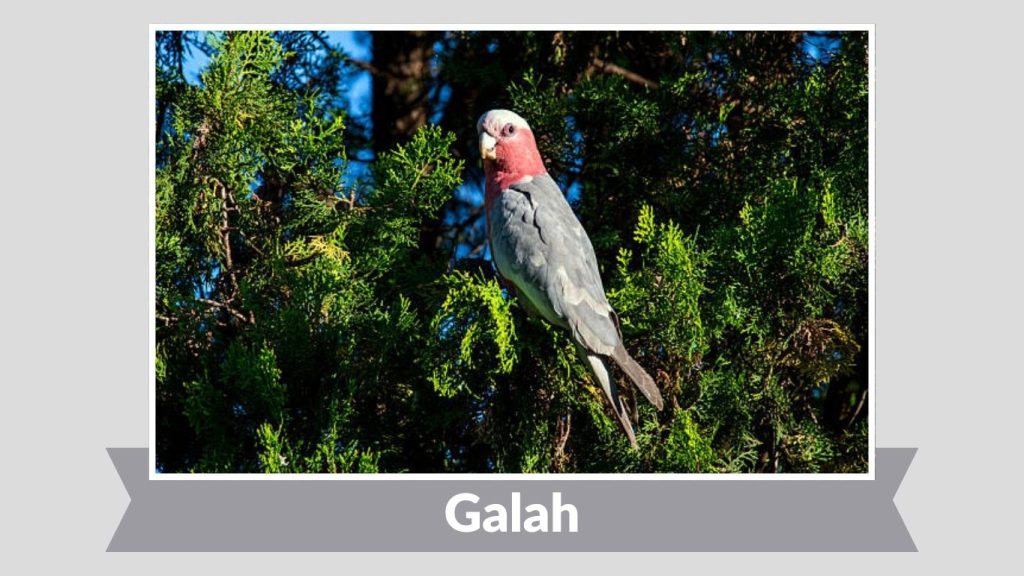
The Galah is a well-known and much-loved Australian cockatoo, easily recognized by its soft pink and grey coloring. Highly social and intelligent, it is often seen in large, noisy flocks across much of the country.
Identification
- Pink face, chest, and belly
- Pale grey wings and back
- White cap and short crest
- Medium-sized cockatoo with a pale bill
Habitat
Galahs inhabit open woodlands, grasslands, farmland, and urban areas. They adapt easily to human-modified environments and often feed on open lawns and agricultural fields.
Behaviors
Galahs are playful and acrobatic, frequently seen hanging upside down or performing aerial displays. They are social birds that form strong pair bonds and communicate with loud calls.
Diet and Lifespan
Their diet includes seeds, grains, grasses, roots, and some fruits. Galahs are long-lived birds, commonly reaching 30–40 years in the wild.
6. Crimson Rosella
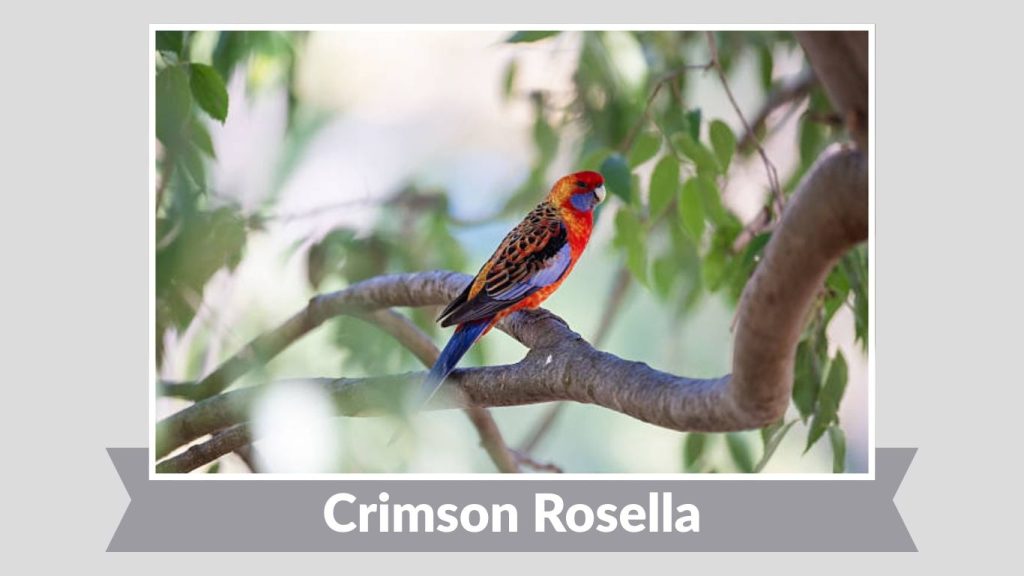
The Crimson Rosella is one of Australia’s most striking parrots, admired for its deep red plumage and calm presence. Often seen quietly feeding in trees or on the ground, it is less noisy than many other parrots and is popular with birdwatchers for its beauty and gentle nature.
Identification
- Bright crimson-red head, chest, and body
- Blue cheeks, wings, and tail with black scalloped pattern
- Pale grey, curved bill
- Medium-sized parrot with a long, broad tail
Habitat
Crimson Rosellas are found in forests, woodlands, mountain ranges, and well-vegetated suburbs. They prefer areas with mature trees, especially eucalyptus, which provide both food and nesting hollows.
Behaviors
These birds are usually seen alone, in pairs, or small family groups. They are generally quiet and shy compared to other parrots, spending much time feeding calmly. During breeding season, they become more territorial around nesting sites.
Diet and Lifespan
Their diet consists of seeds, fruits, berries, blossoms, nectar, and insects. Crimson Rosellas typically live 20–30 years in the wild, with longer lifespans possible in protected environments.
7. Noisy Miner
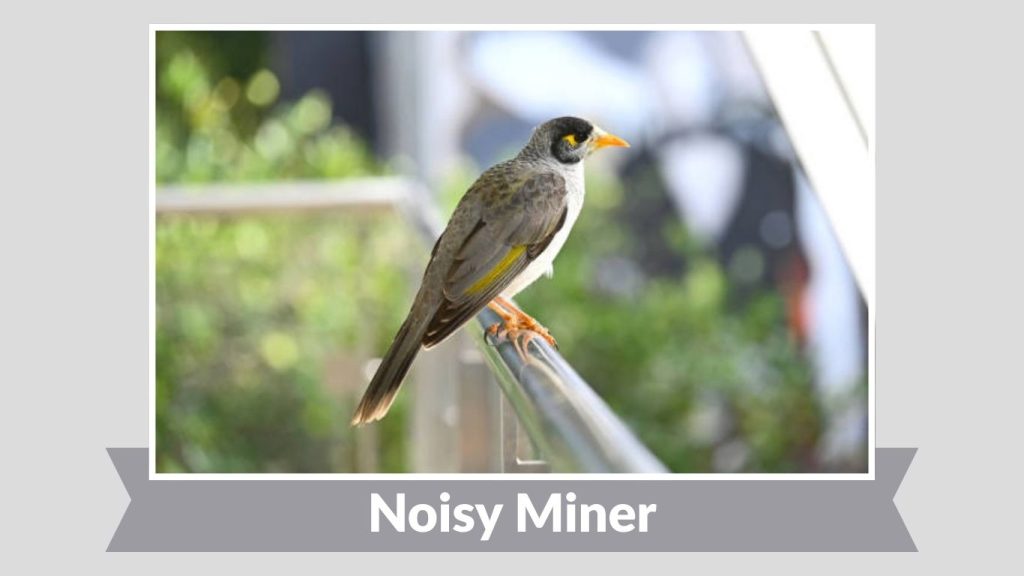
The Noisy Miner is a bold and highly vocal honeyeater commonly found across eastern and southern Australia. Despite its name, it is not a true miner but is famous for its aggressive behavior and constant chattering calls.
Identification
- Grey body with lighter underparts
- Black face mask around the eyes
- Bright yellow beak, eye patch, and legs
- Medium-sized honeyeater with a sturdy build
Habitat
Noisy Miners thrive in open woodlands, parks, gardens, and urban streets lined with trees. They prefer areas with scattered trees and open ground, which allow them to easily defend territory.
Behaviors
These birds are extremely territorial and often live in large cooperative groups. They aggressively chase away other birds, sometimes much larger than themselves, and communicate constantly with loud calls and alarm notes.
Diet and Lifespan
Their diet includes nectar, fruits, insects, and occasionally small reptiles. Noisy Miners usually live around 10–15 years in the wild.
8. Willie Wagtail
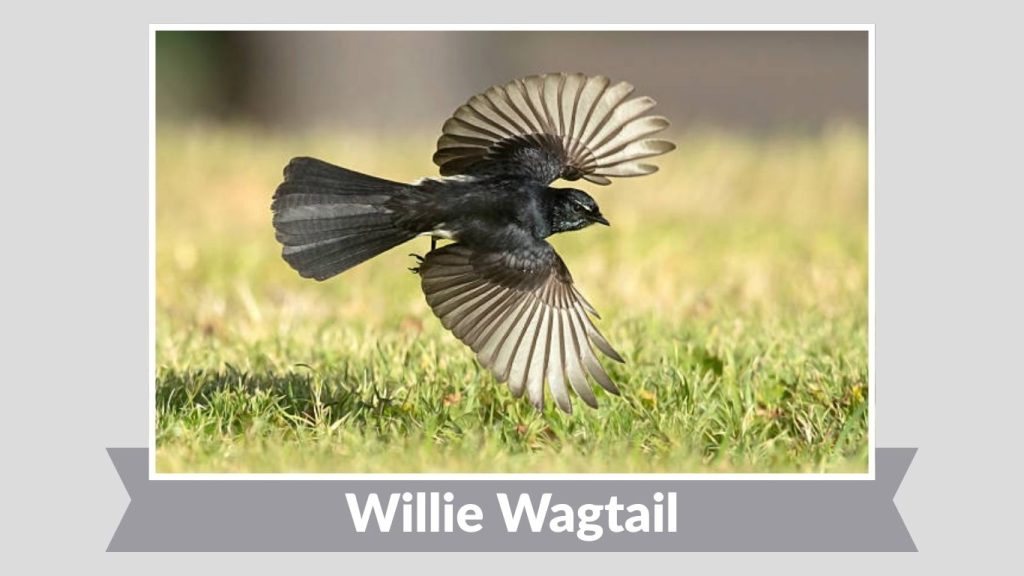
The Willie Wagtail is a small but fearless bird, well known for its constant tail-wagging and bold attitude. Despite its tiny size, it readily confronts much larger animals and is a familiar sight around homes, farms, and open spaces across Australia.
Identification
- Black head, back, and chest
- White eyebrows, throat, and belly
- Long black tail with white edges, constantly wagged
- Small, slim body with a fine bill
Habitat
Willie Wagtails are found in open woodlands, grasslands, wetlands, farmland, and suburban gardens. They prefer areas with open ground for hunting insects and nearby perches such as fences or low branches.
Behaviors
Highly active and confident, Willie Wagtails often chase insects on the ground or in mid-air. They are famously bold, frequently swooping much larger birds, livestock, and even humans to defend their territory.
Diet and Lifespan
Their diet mainly consists of insects, spiders, and other small invertebrates. Willie Wagtails typically live for about 5–10 years in the wild.
9. Superb Fairy-wren
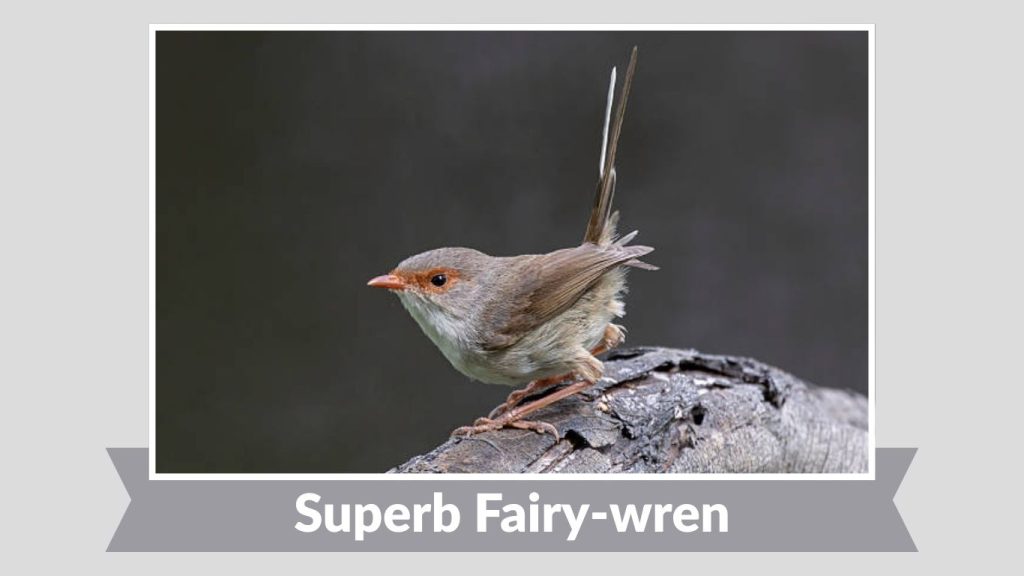
The Superb Fairy-wren is a tiny, energetic bird admired for the male’s brilliant blue breeding plumage. Often seen darting through shrubs in small groups, it is a favorite among birdwatchers for both its color and lively behavior.
Identification
- Breeding male with bright blue crown, ear coverts, and tail
- Black throat and chest in breeding season
- Females and non-breeding males are brown with reddish eye rings
- Very small body with a long, upright tail
Habitat
Superb Fairy-wrens live in dense shrubs, grasslands, forests, and suburban gardens. They require thick vegetation for shelter and nesting, often staying close to the ground.
Behaviors
These birds are highly social and usually move in family groups. They are constantly active, flicking their tails and hopping through undergrowth. Males sing frequently, especially during breeding season.
Diet and Lifespan
Their diet consists mainly of insects and small invertebrates. Superb Fairy-wrens generally live 5–8 years in the wild.
10. Australian Raven
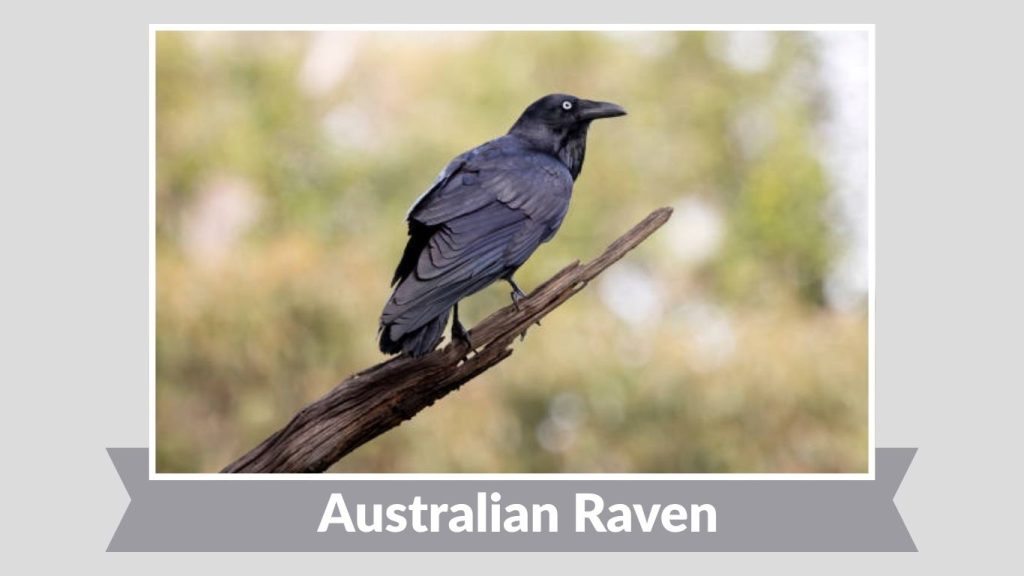
The Australian Raven is a large, intelligent black bird known for its deep, drawn-out calls and commanding presence. Often misunderstood, it plays an important role in the ecosystem as both scavenger and predator.
Identification
- Entirely black plumage with glossy sheen
- Thick black bill and shaggy throat feathers
- White eyes (adults)
- Large body with long wings and tail
Habitat
Australian Ravens are found in forests, woodlands, farmland, coastal areas, and urban environments. They are highly adaptable and can live close to human activity.
Behaviors
Highly intelligent and curious, Australian Ravens use complex vocalizations to communicate. They are often seen alone, in pairs, or small groups, and are known for problem-solving and food caching behaviors.
Diet and Lifespan
Their diet is very diverse, including insects, small animals, eggs, carrion, seeds, and human food scraps. Australian Ravens can live 15–20 years in the wild.
11. Pied Currawong
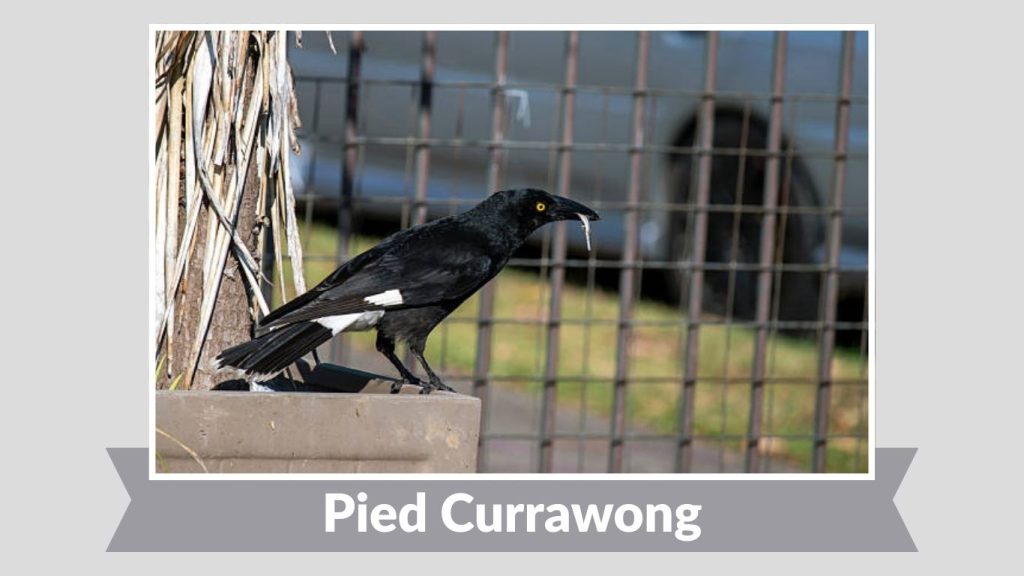
The Pied Currawong is a bold, medium-large songbird recognized by its striking black-and-white plumage and piercing yellow eyes. Its loud, echoing calls are a common sound in forests and suburbs, especially during early morning and evening.
Identification
- Glossy black body with white patches on wings and tail
- Bright yellow eyes
- Strong, slightly hooked bill
- Long tail and sturdy build
Habitat
Pied Currawongs inhabit forests, woodlands, coastal scrub, and urban areas with trees. They are highly adaptable and often move into cities, especially during winter.
Behaviors
Currawongs are confident and sometimes aggressive birds. They are known to raid nests of smaller birds and are highly vocal, producing a range of ringing calls. They often forage both in trees and on the ground.
Diet and Lifespan
Their diet includes insects, small birds, eggs, fruits, seeds, and carrion. Pied Currawongs typically live around 12–20 years in the wild.
12. Eastern Rosella
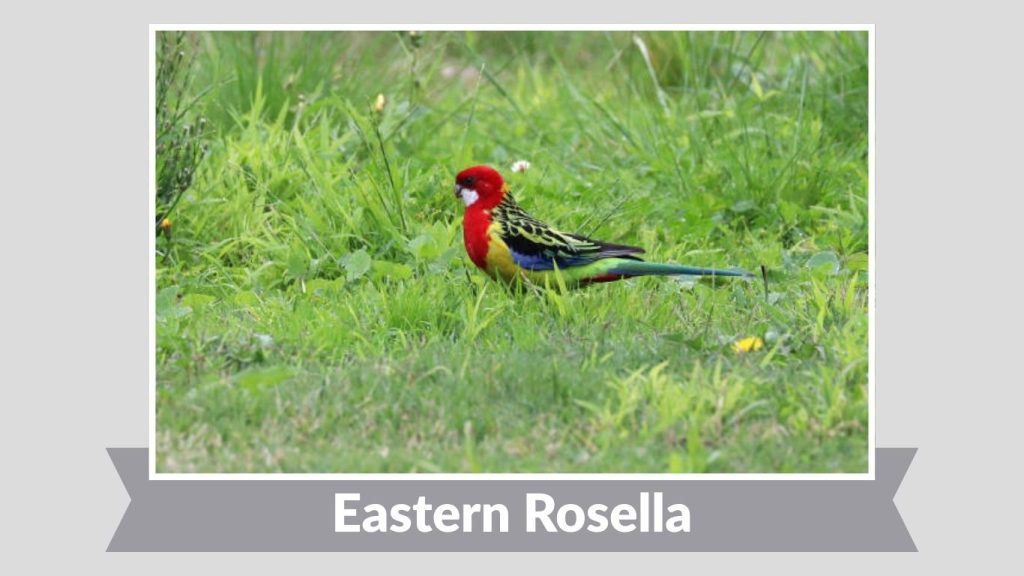
The Eastern Rosella is a brightly colored parrot admired for its vibrant plumage and gentle appearance. Common in many parts of eastern Australia, it is often seen feeding quietly on the ground or perched in trees.
Identification
- Red head and white cheeks
- Yellow belly with black scalloped pattern
- Green and blue wings and tail
- Pale curved bill and long tail
Habitat
Eastern Rosellas are found in open woodlands, grasslands, farmland, parks, and gardens. They prefer areas with scattered trees and open grassy spaces for foraging.
Behaviors
These parrots are usually seen in pairs or small groups. They are calm and less noisy than many other parrots, spending much of their time feeding on the ground and flying short distances between trees.
Diet and Lifespan
Their diet consists of seeds, fruits, berries, grasses, blossoms, and insects. Eastern Rosellas typically live 15–25 years in the wild.
13. Masked Lapwing
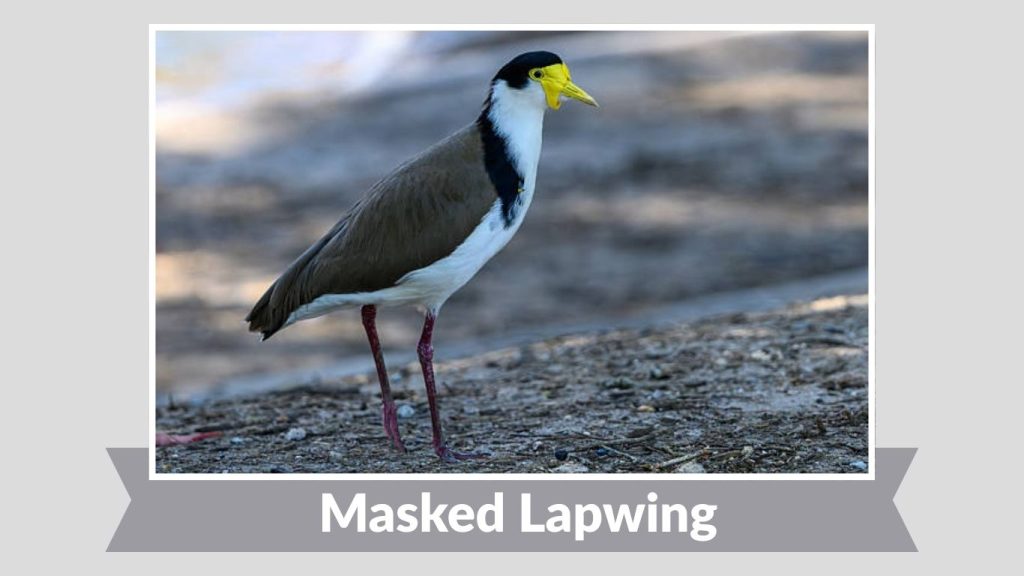
The Masked Lapwing is a distinctive ground-dwelling bird best known for its loud calls and bold defensive behavior. Often seen on lawns, sports fields, and open grasslands, it is especially noticeable during breeding season.
Identification
- Brown wings and back with white underparts
- Black crown and face mask
- Yellow wattles on the face
- Long yellow legs and a sharp spur on each wing
Habitat
Masked Lapwings live in open grasslands, wetlands, farmland, parks, and urban lawns. They prefer flat, open areas where they can easily spot predators and nest directly on the ground.
Behaviors
These birds are highly territorial and aggressively defend their nests, often swooping humans and animals. They are usually seen in pairs or small groups and are most active during the day.
Diet and Lifespan
Their diet includes insects, worms, larvae, and other small invertebrates. Masked Lapwings typically live around 10–15 years in the wild.
14. Crested Pigeon
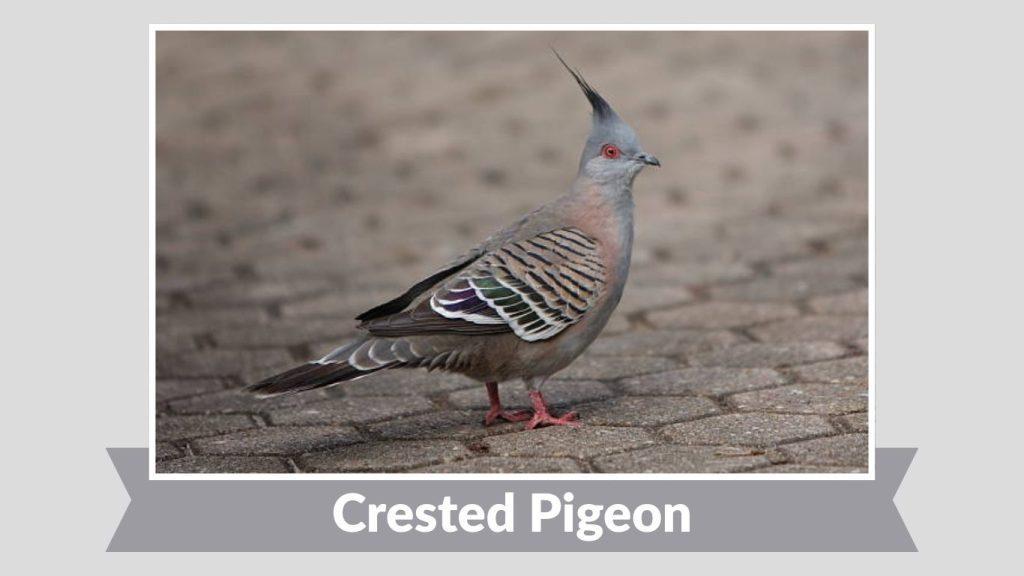
The Crested Pigeon is a graceful and easily recognizable bird, famous for the whistling sound made by its wings during flight. Calm and social, it is commonly seen feeding on the ground in open areas across much of Australia.
Identification
- Soft grey body with a pinkish chest
- Tall, thin black crest on the head
- Black wing markings with white spots
- Red eyes and red eye ring
Habitat
Crested Pigeons are found in open woodlands, grasslands, farmland, parks, and urban areas. They have adapted well to human-altered landscapes and are often seen near towns and cities.
Behaviors
These pigeons are usually seen in pairs or flocks and spend much of their time walking on the ground while feeding. When startled, they take off suddenly, producing a distinctive whistling wing sound.
Diet and Lifespan
Their diet mainly consists of seeds, grains, and grasses. Crested Pigeons typically live around 10–15 years in the wild.
15. Australasian Swamphen
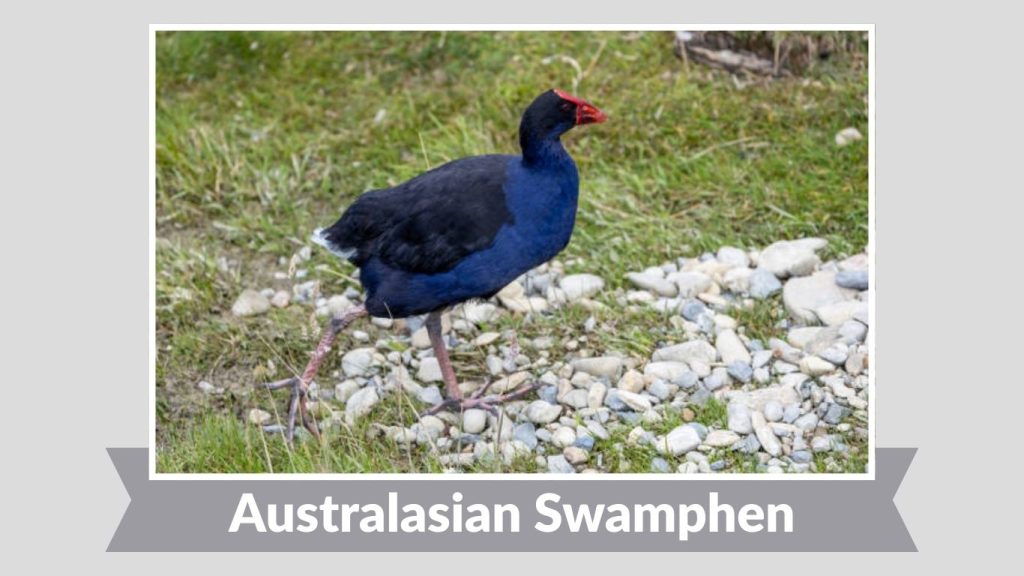
The Australasian Swamphen is a large, colorful wetland bird known for its bold behavior and striking blue and purple plumage. Often seen walking confidently through reeds or along water edges, it is one of Australia’s most distinctive waterbirds.
Identification
- Deep blue to purple body plumage
- Bright red bill with frontal shield
- Long red legs and toes
- Short tail often held upright
Habitat
Australasian Swamphens inhabit wetlands, swamps, lakes, rivers, and marshes with dense vegetation. They prefer areas with reeds and grasses near fresh or brackish water.
Behaviors
These birds are bold and territorial, often seen in small family groups. They use their strong legs and feet to grasp food and are capable swimmers, though they spend most of their time walking.
Diet and Lifespan
Their diet includes aquatic plants, grasses, seeds, insects, frogs, and small animals. Australasian Swamphens typically live around 10–15 years in the wild.
16. Australian Pelican
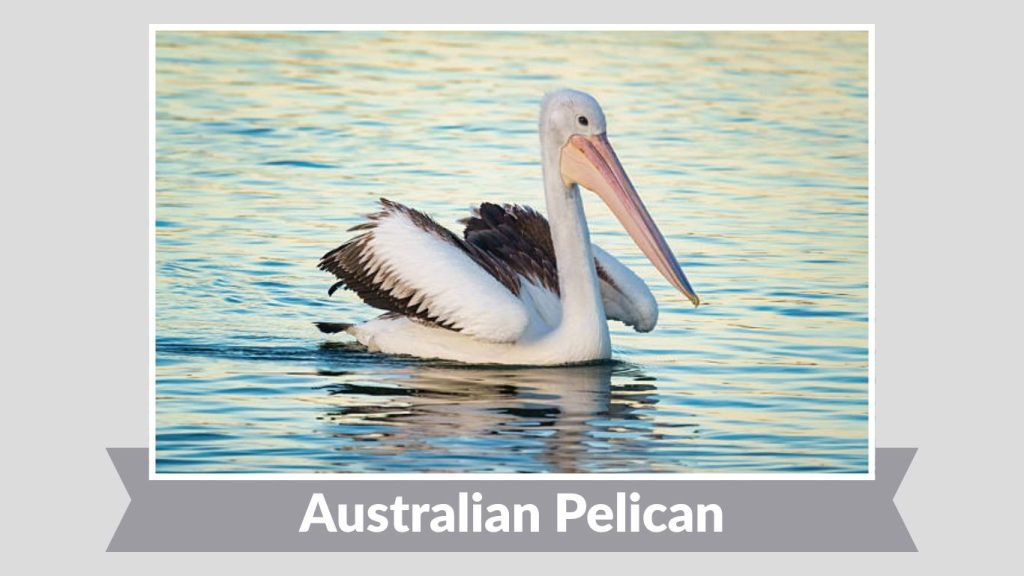
The Australian Pelican is an impressive and unmistakable waterbird, best known for its enormous bill and graceful gliding flight. It is widely distributed across Australia and often seen resting or fishing in large groups.
Identification
- Large white body with black wings
- Extremely long bill with expandable throat pouch
- Pale pink to yellow bill and pouch
- Long neck and broad wingspan
Habitat
Australian Pelicans are found in coastal waters, lakes, rivers, estuaries, and inland wetlands. They can travel long distances to find suitable water bodies, especially during dry periods.
Behaviors
Pelicans are highly social and often feed cooperatively, herding fish into shallow water. They are strong fliers and can soar effortlessly for long periods using thermal air currents.
Diet and Lifespan
Their diet consists mainly of fish, but they also eat crustaceans and occasionally small birds. Australian Pelicans typically live 15–25 years in the wild.
17. Silver Gull
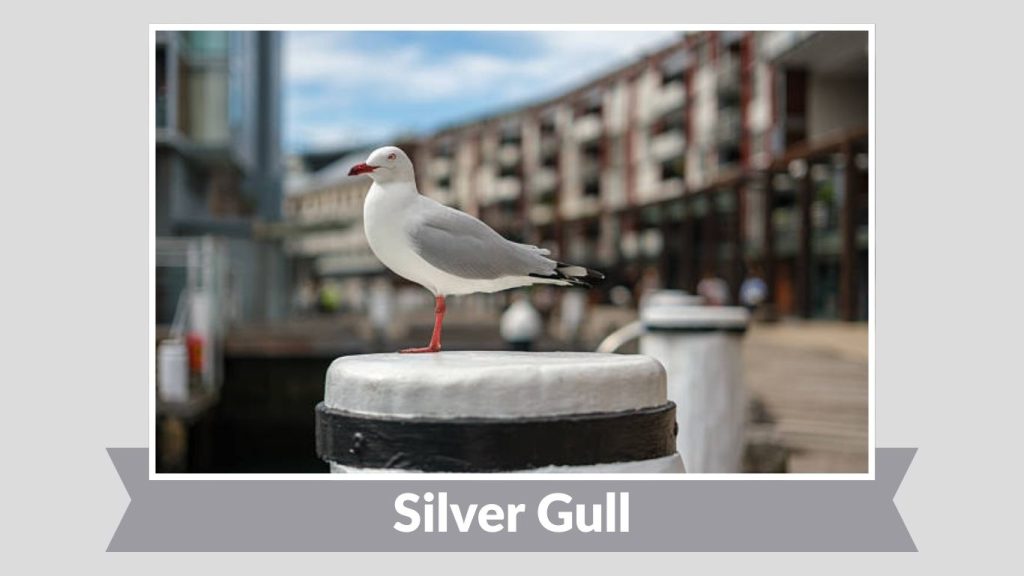
The Silver Gull is one of the most familiar coastal birds in Australia, commonly seen around beaches, harbors, and urban areas. Highly adaptable and opportunistic, it thrives alongside human activity.
Identification
- White head and underparts
- Pale grey wings with black and white tips
- Red bill with a pale tip
- Red legs and webbed feet
Habitat
Silver Gulls inhabit coastal regions, beaches, estuaries, lakes, rivers, and urban environments. They are often found near fishing areas, picnic spots, and landfills.
Behaviors
These gulls are highly social and often gather in large flocks. They are opportunistic feeders and are well known for stealing food from people and scavenging around human settlements.
Diet and Lifespan
Their diet includes fish, crustaceans, insects, scraps, and carrion. Silver Gulls typically live around 10–15 years in the wild.
18. Little Corella
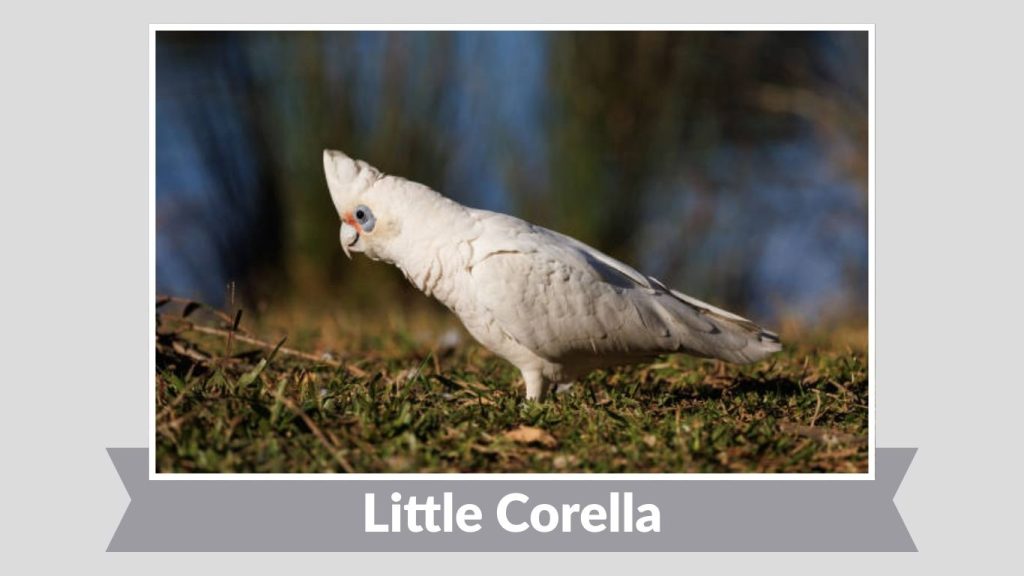
The Little Corella is a small, lively white cockatoo known for its noisy flocks and playful behavior. Often seen in large groups flying or feeding together, it is a common sight in many parts of Australia, especially in open country and towns.
Identification
- Small white cockatoo with a short crest
- Pale blue eye ring and base of bill
- Grey bill shorter than larger cockatoos
- Stocky body with pointed wings
Habitat
Little Corellas inhabit open woodlands, grasslands, farmland, wetlands, and urban areas. They adapt well to human environments and frequently gather near water sources and open feeding areas.
Behaviors
Highly social and energetic, Little Corellas form large, noisy flocks. They are playful birds, often seen hanging upside down, chasing each other, and calling constantly while feeding or flying.
Diet and Lifespan
Their diet consists mainly of seeds, grains, grasses, roots, and agricultural crops. Little Corellas typically live around 20–40 years in the wild.
19. Australian King-Parrot
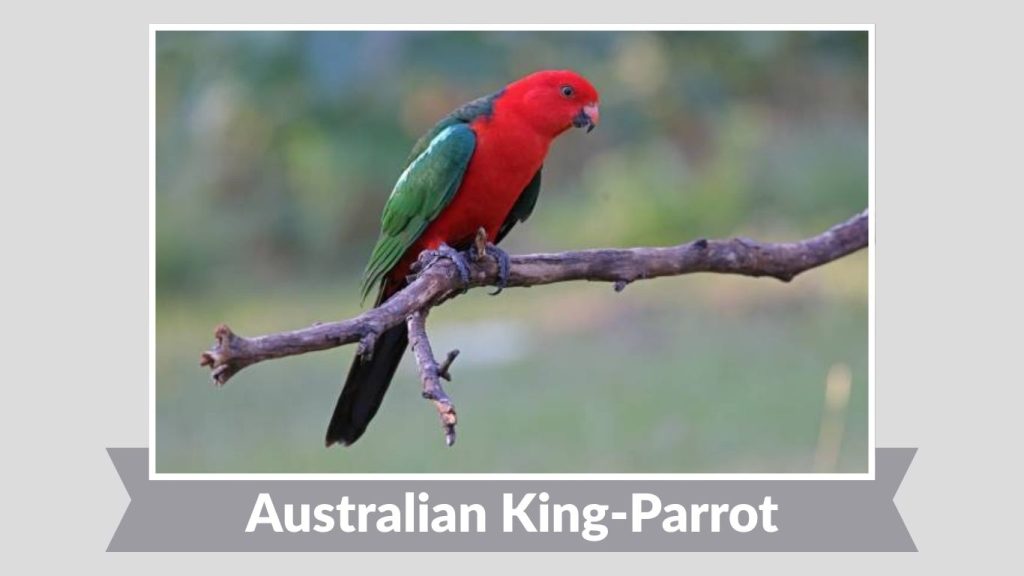
The Australian King-Parrot is a strikingly colored parrot, admired for the vivid red and green plumage of the male. Often seen quietly feeding in trees, it is a calm and beautiful presence in forests and well-wooded suburbs.
Identification
- Male with bright red head and chest, green wings and back
- Female with green head and chest, red belly
- Blue-tinted wings and tail
- Strong red bill and long tail
Habitat
Australian King-Parrots are found in forests, woodlands, and well-vegetated suburban areas, particularly along eastern Australia. They prefer areas with tall trees for feeding and nesting.
Behaviors
These parrots are usually seen alone, in pairs, or small family groups. They are generally quiet and gentle compared to other parrots, often feeding high in tree canopies.
Diet and Lifespan
Their diet includes seeds, fruits, berries, nuts, blossoms, and insects. Australian King-Parrots typically live 25–30 years in the wild.
20. Welcome Swallow
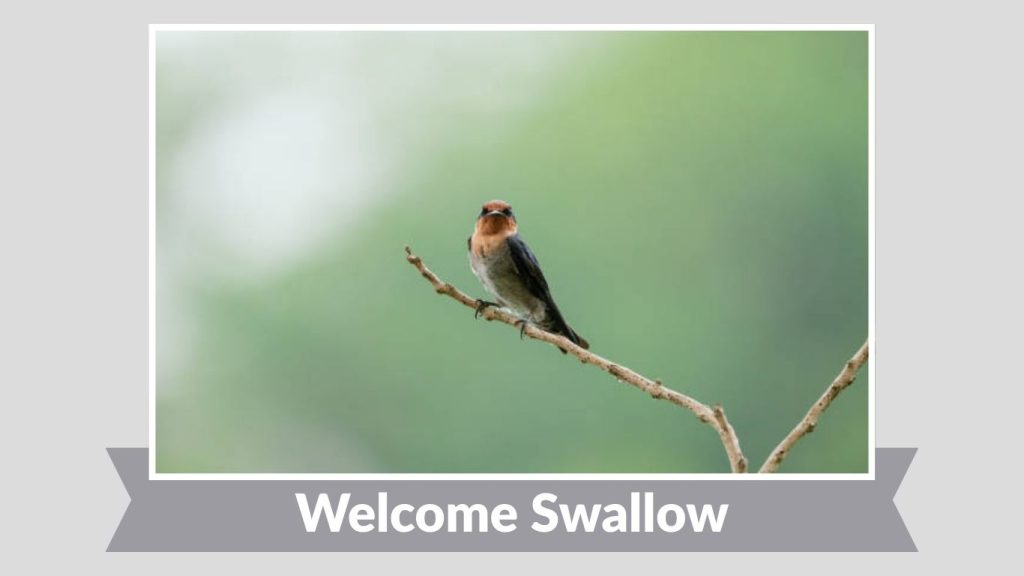
The Welcome Swallow is a graceful and agile bird, easily recognized by its forked tail and swift, acrobatic flight. Often seen swooping low over open areas, it is a familiar sight around homes, farms, and waterways.
Identification
- Metallic blue-black upperparts
- Pale grey to white underparts
- Distinctive reddish-brown forehead and throat
- Long, deeply forked tail
Habitat
Welcome Swallows are found in open country, farmland, wetlands, towns, and cities. They commonly nest on buildings, bridges, and other man-made structures as well as natural cliffs.
Behaviors
These swallows are fast and agile fliers, catching insects in mid-air. They are social birds, often seen in pairs or small flocks, and are known for their cheerful, twittering calls.
Diet and Lifespan
Their diet consists almost entirely of flying insects. Welcome Swallows typically live around 4–8 years in the wild.
21. Eastern Spinebill
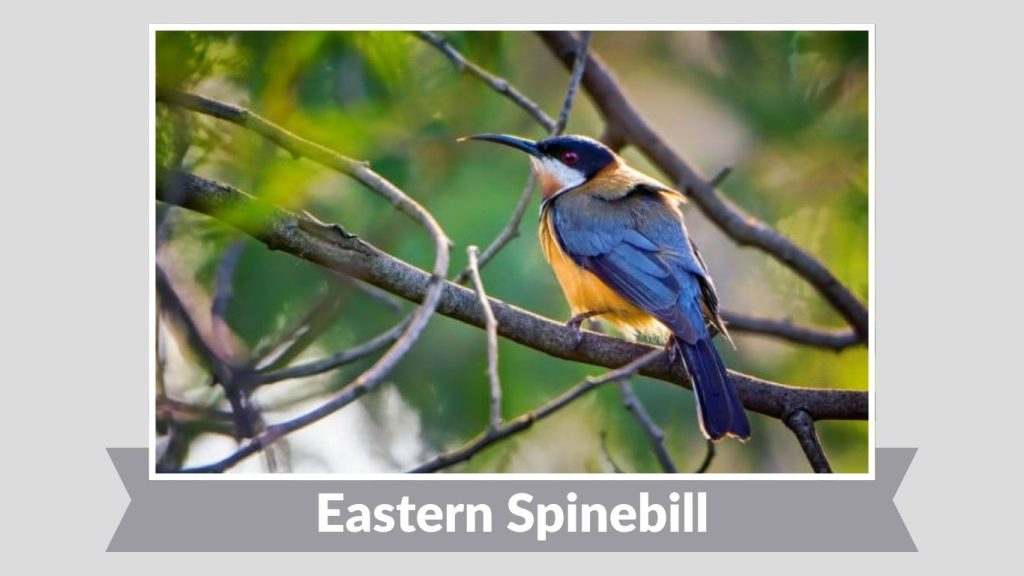
The Eastern Spinebill is a slender, fast-moving honeyeater recognized by its long, curved bill adapted for feeding on nectar. It is often seen darting between flowering plants in gardens and forests.
Identification
- Long, thin, down-curved bill
- Grey-brown upperparts with white underparts
- Reddish-brown eyes
- Black tail with white tips
Habitat
Eastern Spinebills inhabit forests, woodlands, heathlands, and gardens with flowering shrubs. They are most common in eastern and southeastern Australia.
Behaviors
These birds are highly active and rarely stay still for long. They move quickly between flowers and shrubs, using their specialized bill to extract nectar, and are usually seen alone or in pairs.
Diet and Lifespan
Their diet consists mainly of nectar, insects, and spiders. Eastern Spinebills typically live around 5–10 years in the wild.
22. White-plumed Honeyeater
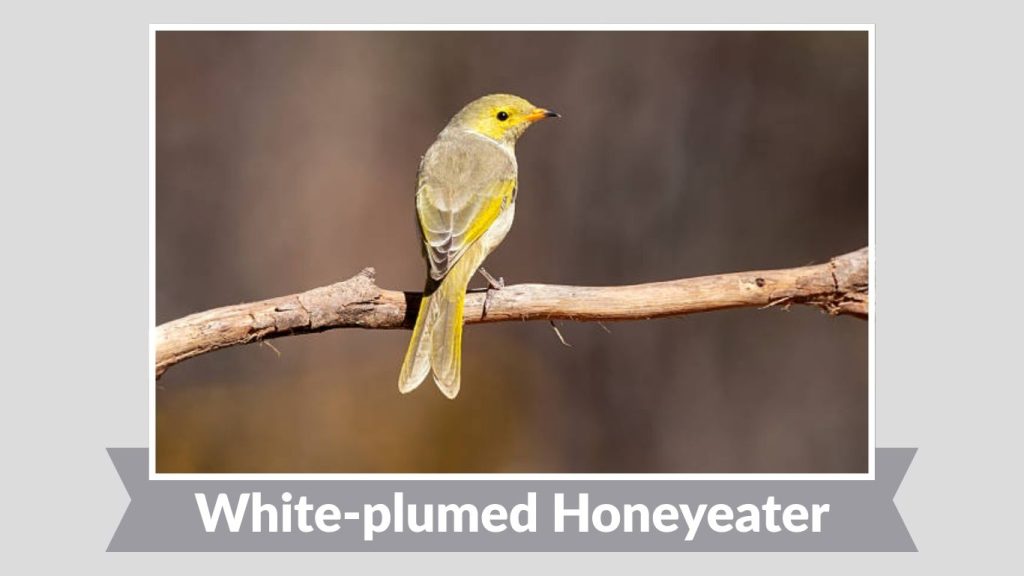
The White-plumed Honeyeater is a friendly and energetic bird commonly found in groups. Easily recognized by the white plume behind its eye, it is a frequent visitor to gardens, parks, and riverside trees.
Identification
- Grey-brown body with paler underparts
- Distinct white plume behind each eye
- Black bill and legs
- Medium-sized honeyeater with a slim build
Habitat
White-plumed Honeyeaters live in open forests, woodlands, riverbanks, parks, and suburban gardens. They are especially common near water and areas with flowering trees.
Behaviors
These birds are highly social and often move in small flocks. They are active and noisy, constantly calling while foraging among leaves and blossoms for food.
Diet and Lifespan
Their diet includes nectar, insects, spiders, and honeydew. White-plumed Honeyeaters typically live around 8–15 years in the wild.
23. Black-faced Cuckooshrike
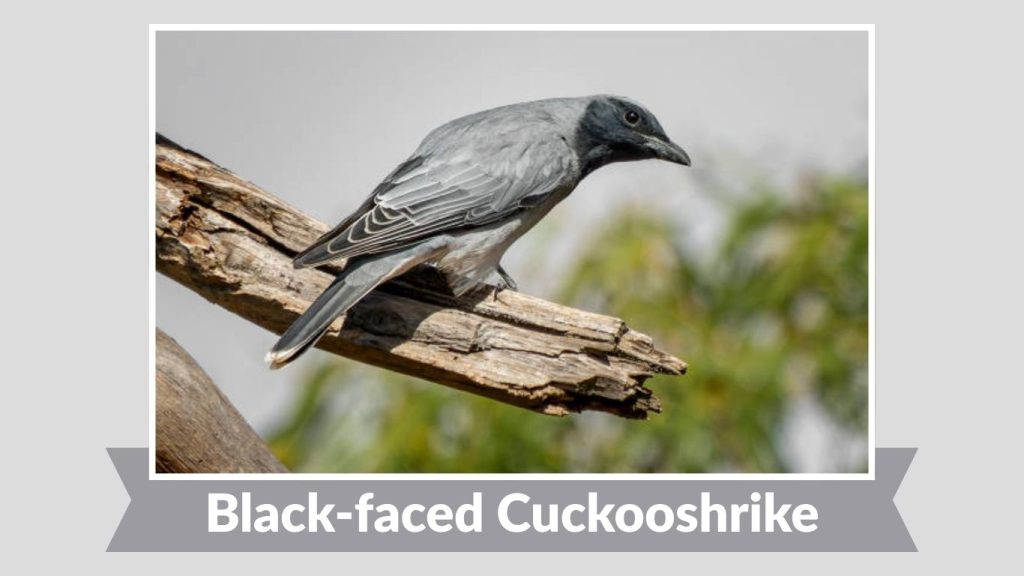
The Black-faced Cuckooshrike is a sleek, grey songbird known for its calm behavior and distinctive black facial markings. It is commonly seen perched quietly in trees or gliding smoothly between branches.
Identification
- Grey upperparts with lighter underparts
- Distinct black face mask and throat
- Slender body with long wings
- Medium-sized bird with a smooth, upright posture
Habitat
Black-faced Cuckooshrikes are found in open forests, woodlands, farmland, and suburban areas with scattered trees. They are widespread across most of Australia.
Behaviors
These birds are usually seen alone or in pairs. They forage calmly, often sallying out from a perch to catch insects in the air or picking prey from foliage.
Diet and Lifespan
Their diet mainly consists of insects and other small invertebrates, with occasional fruit. Black-faced Cuckooshrikes typically live around 8–15 years in the wild.
24. Red Wattlebird
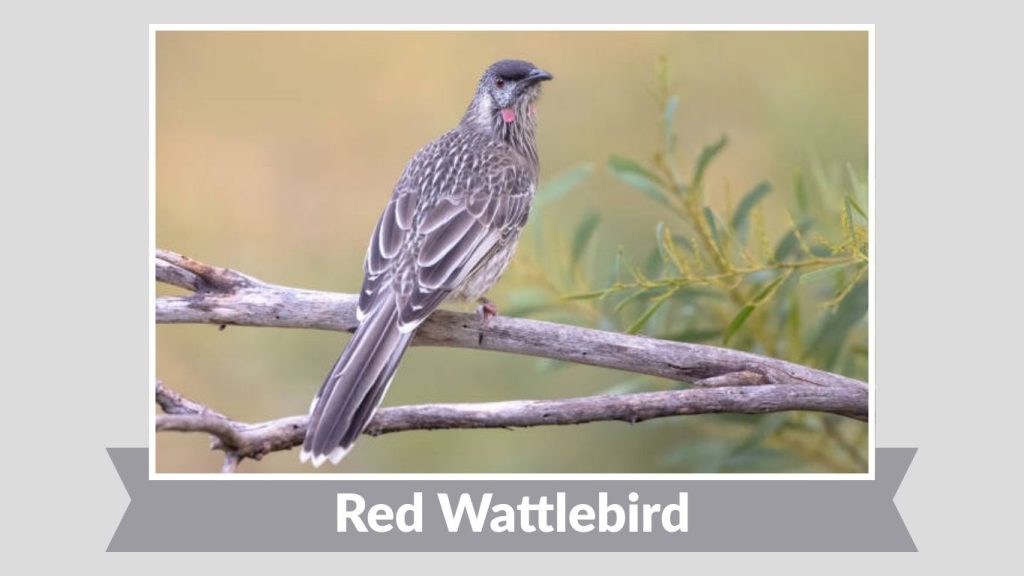
The Red Wattlebird is a large, noisy honeyeater well known for its aggressive behavior and loud, harsh calls. Easily identified by the red wattles on its neck, it is a dominant bird in many gardens and woodlands.
Identification
- Grey-brown streaked body
- Distinct red wattles on the sides of the neck
- Yellow belly patch
- Long, slightly curved bill
Habitat
Red Wattlebirds inhabit open forests, woodlands, coastal scrub, parks, and suburban gardens. They are especially common in areas with flowering trees and shrubs.
Behaviors
Highly territorial, Red Wattlebirds aggressively chase away other birds from feeding areas. They are strong fliers and vocal birds, often calling loudly while perched high in trees.
Diet and Lifespan
Their diet includes nectar, insects, fruits, and berries. Red Wattlebirds typically live around 10–15 years in the wild.
25. Tawny Frogmouth
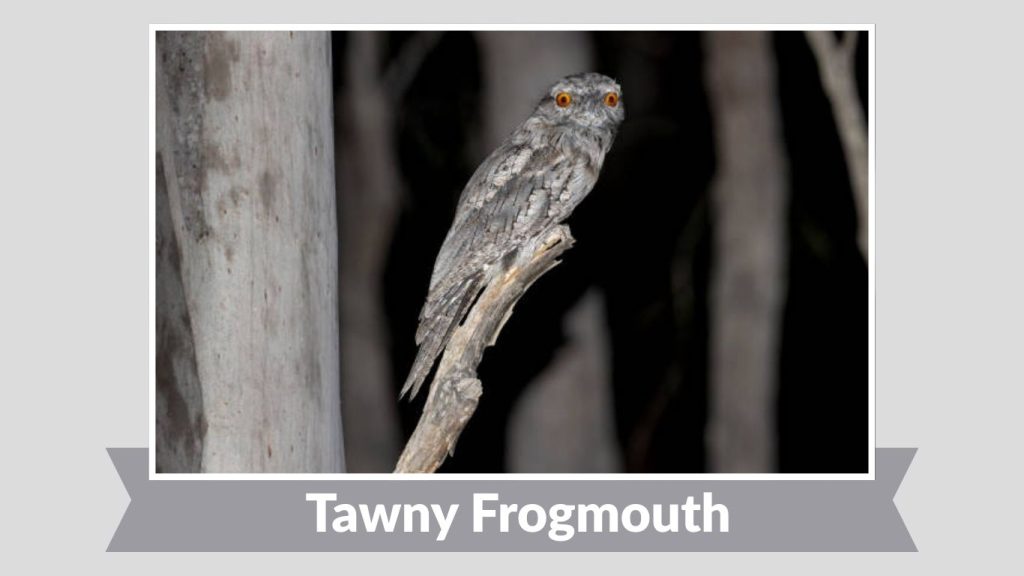
The Tawny Frogmouth is a master of camouflage, often mistaken for a tree branch while resting. Although it resembles an owl, it is more closely related to nightjars and is known for its wide mouth and nocturnal habits.
Identification
- Mottled grey, brown, and rufous plumage
- Large head with a wide, flat bill
- Yellow eyes and whisker-like bristles around the mouth
- Medium-sized bird with a stout body
Habitat
Tawny Frogmouths live in forests, woodlands, parks, and suburban areas with trees. They rely on tree branches for roosting and nesting and blend perfectly with their surroundings.
Behaviors
Mostly nocturnal, these birds hunt at night and remain motionless during the day. When threatened, they freeze and stretch their neck upward to resemble a broken branch.
Diet and Lifespan
Their diet consists mainly of insects, spiders, worms, and small animals. Tawny Frogmouths typically live around 10–15 years in the wild.
26. Peaceful Dove
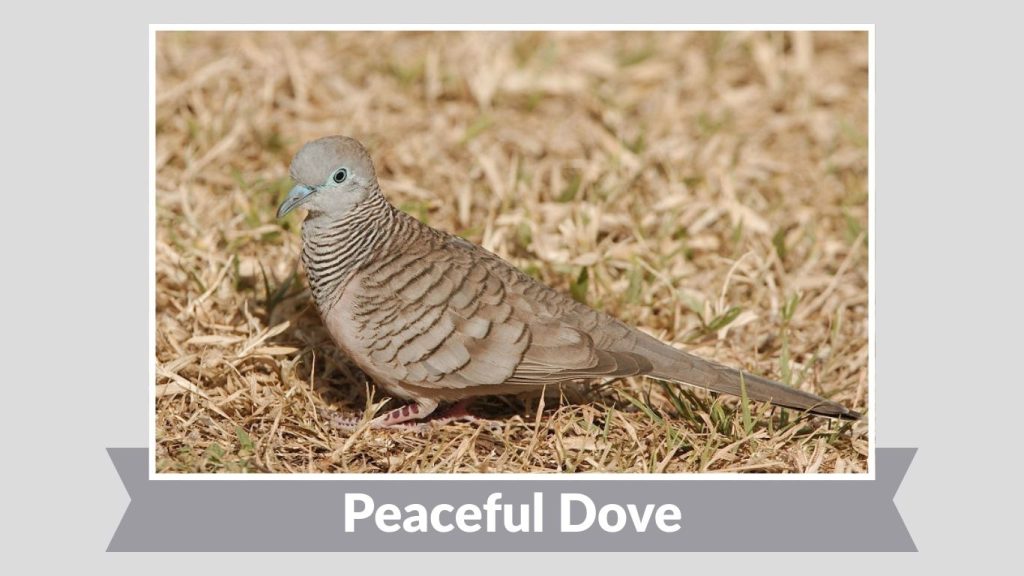
The Peaceful Dove is a small, gentle-looking bird commonly found across much of Australia. Known for its soft, pleasant calls and delicate appearance, it is often seen foraging quietly on the ground.
Identification
- Soft grey-brown body with a pale face
- Distinctive black-and-white barred patch on the side of the neck
- Long, tapered tail with pale edges
- Small, slender bill
Habitat
Peaceful Doves inhabit open woodlands, grasslands, farmland, parks, and suburban gardens. They prefer areas with open ground and nearby trees or shrubs for shelter.
Behaviors
These doves are usually seen alone or in pairs. They spend much of their time walking on the ground searching for food and fly up quickly when disturbed.
Diet and Lifespan
Their diet mainly consists of seeds and small grains. Peaceful Doves typically live around 5–10 years in the wild.
27. Spotted Pardalote
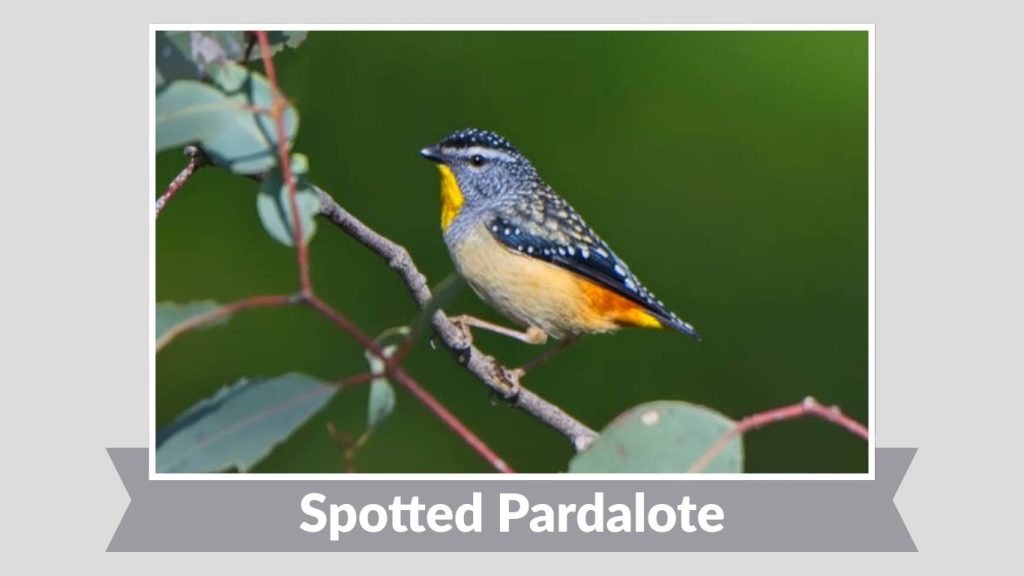
The Spotted Pardalote is one of Australia’s smallest and most colorful birds. Despite its tiny size, it is easily noticed by its bright plumage and high-pitched calls, especially during the breeding season.
Identification
- Black head with white spots
- Bright red rump
- Yellow throat and eyebrow
- Greenish wings with white markings
Habitat
Spotted Pardalotes inhabit forests, woodlands, and eucalyptus-dominated areas. They are often found high in tree canopies but nest in tunnels dug into banks or the ground.
Behaviors
These birds are energetic and active, constantly moving through foliage while foraging. They are usually seen alone or in pairs and are more often heard than seen.
Diet and Lifespan
Their diet consists mainly of insects, lerps, and other small invertebrates. Spotted Pardalotes typically live around 5–8 years in the wild.
FAQs
What is the most common bird seen in Australia?
The Australian Magpie is one of the most commonly seen birds across Australia, especially in urban areas, parks, and open grasslands.
Are Australian birds found in cities as well as forests?
Yes, many Australian birds such as Rainbow Lorikeets, Galahs, Noisy Miners, and Welcome Swallows adapt very well to cities, suburbs, and human-made environments.
Which Australian birds are known for loud calls?
Birds like the Laughing Kookaburra, Sulphur-crested Cockatoo, Red Wattlebird, and Australian Raven are well known for their loud and distinctive calls.
Are most Australian birds aggressive?
Not most, but some species like the Noisy Miner, Masked Lapwing, and Australian Magpie can be aggressive, especially during breeding season when defending their nests.
What do most common Australian birds eat?
Diet varies by species, but common foods include insects, seeds, nectar, fruits, and small animals. Many birds are opportunistic feeders.
Do Australian birds live long lives?
Lifespan depends on the species. Smaller birds may live 5–10 years, while larger parrots and cockatoos can live 30–60 years or more.
Can Australian birds be found year-round?
Yes, most common Australian birds are resident species and can be seen throughout the year rather than migrating long distances.