




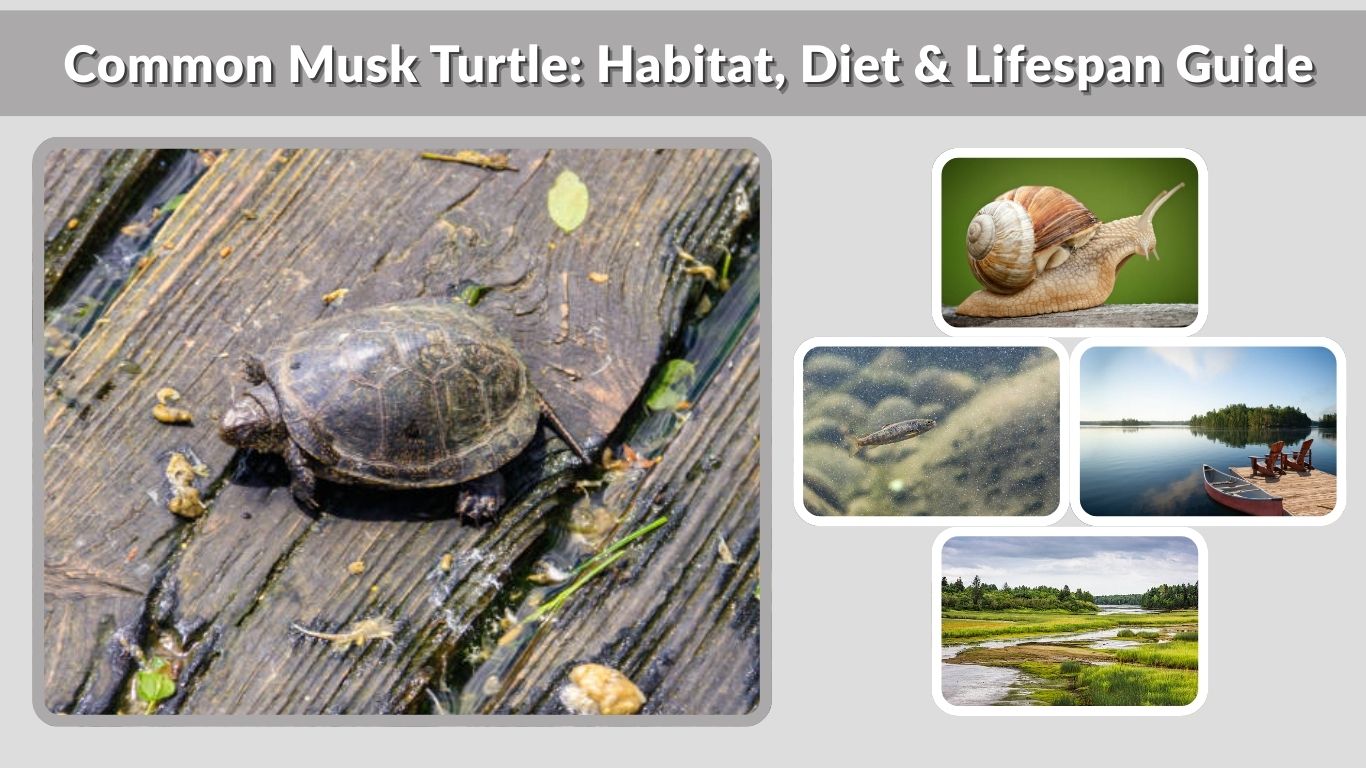
The common musk turtle (Sternotherus odoratus), often called the stinkpot turtle, is one of the smallest and most fascinating freshwater turtles in North America. Despite its modest size, this species is well known for its strong defensive odor and hardy adaptability. Found in ponds, lakes, and slow-moving streams, the common musk turtle plays an important role in aquatic ecosystems as both predator and scavenger. In this guide, we’ll explore its identification, habitat, diet, and key characteristics.
Overview of the Common Musk Turtle
Scientific Classification
The common musk turtle belongs to the family Kinosternidae, which includes both musk turtles and mud turtles. Its scientific name, Sternotherus odoratus, reflects its ability to release a strong-smelling musk when threatened. Within the genus Sternotherus, several species exist, but the common musk turtle is the most widespread and frequently encountered.
Unlike larger basking turtles such as painted turtles or sliders, the common musk turtle is compact, secretive, and spends much of its time underwater.
Geographic Range
The common musk turtle has a broad distribution across eastern North America. Its range extends from southern Ontario and Quebec down through the eastern United States to Florida, and westward into parts of Texas and Wisconsin.
This species thrives in temperate climates and adapts well to various freshwater systems. It is especially common in slow-moving streams, shallow lakes, farm ponds, swamps, and marshes. Because it tolerates murky water and soft substrates, it often lives in habitats other turtles avoid.
Why It’s Called the “Stinkpot”
The nickname “stinkpot” comes from the turtle’s unique defense system. When threatened or handled, it can release a strong, musky odor from glands located near the edge of its shell. This scent is unpleasant to predators and serves as a deterrent.
Although the smell can be noticeable, captive turtles often release musk less frequently when they feel secure and unthreatened.
Physical Characteristics and Identification
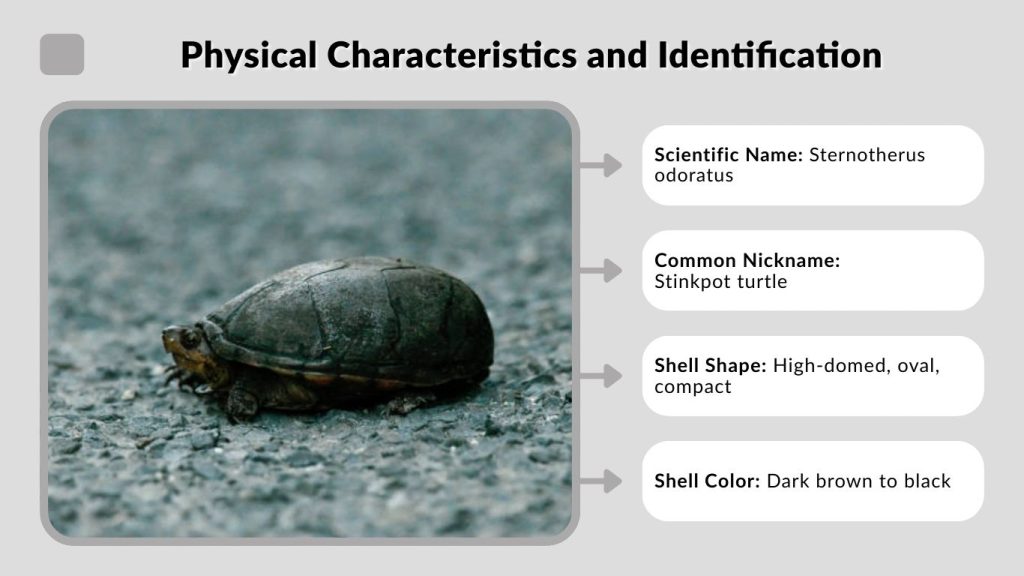
The common musk turtle is a small, dark-colored freshwater turtle with a compact body and rugged appearance. Unlike brightly colored species such as painted turtles, it has more subdued tones that help it blend into muddy, low-visibility waters. Its high-domed shell, reduced plastron, and distinctive facial stripes make it relatively easy to identify once you know what to look for.
Key Identification Features
- Scientific Name: Sternotherus odoratus
- Common Nickname: Stinkpot turtle
- Adult Size: 3–5 inches in shell length
- Shell Shape: High-domed, oval, compact
- Shell Color: Dark brown to black
- Shell Ridges (Juveniles): Three faint keels that smooth with age
- Plastron: Small, light-colored, limited underside coverage
- Head Markings: Two yellow or cream stripes on each side
- Tail (Males): Longer and thicker than females
- Defense Feature: Musk glands that release strong odor
These features distinguish the common musk turtle from mud turtles and other small freshwater species in its range.
Common Musk Turtle Habitat
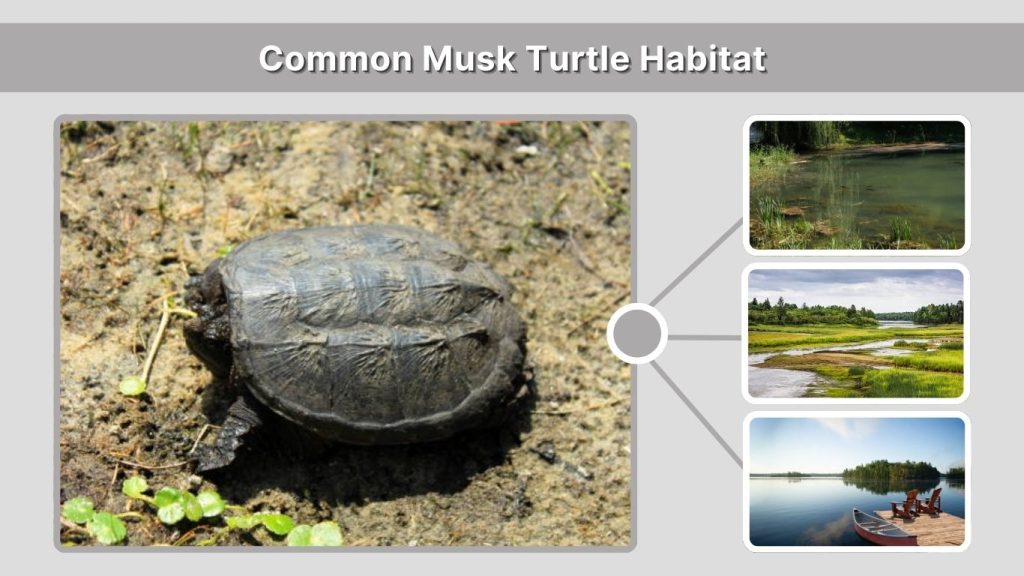
Preferred Water Bodies
The common musk turtle prefers slow-moving or still freshwater environments. Ideal habitats include:
- Shallow ponds
- Swamps and marshes
- Quiet lakes
- Gentle streams with soft bottoms
Unlike some basking turtle species, musk turtles rarely venture far from water. They are highly aquatic and spend most of their lives submerged.
Water Conditions
This species thrives in habitats with muddy or sandy bottoms where it can forage for food. Dense aquatic vegetation provides both shelter and hunting opportunities. Submerged logs, branches, and root systems are important structural features, offering protection from predators and resting spots.
Common musk turtles tolerate low-visibility water conditions and are well adapted to murky environments.
Basking and Movement
Unlike painted turtles that frequently bask in the sun, common musk turtles bask less often and usually remain close to the water’s surface. When they do bask, they often climb onto low branches or partially submerged logs rather than fully exposed rocks.
Interestingly, they are known more for “walking” along the bottom of a water body than actively swimming in open water. Their strong legs and claws allow them to grip surfaces and climb underwater structures effectively.
Common Musk Turtle Diet
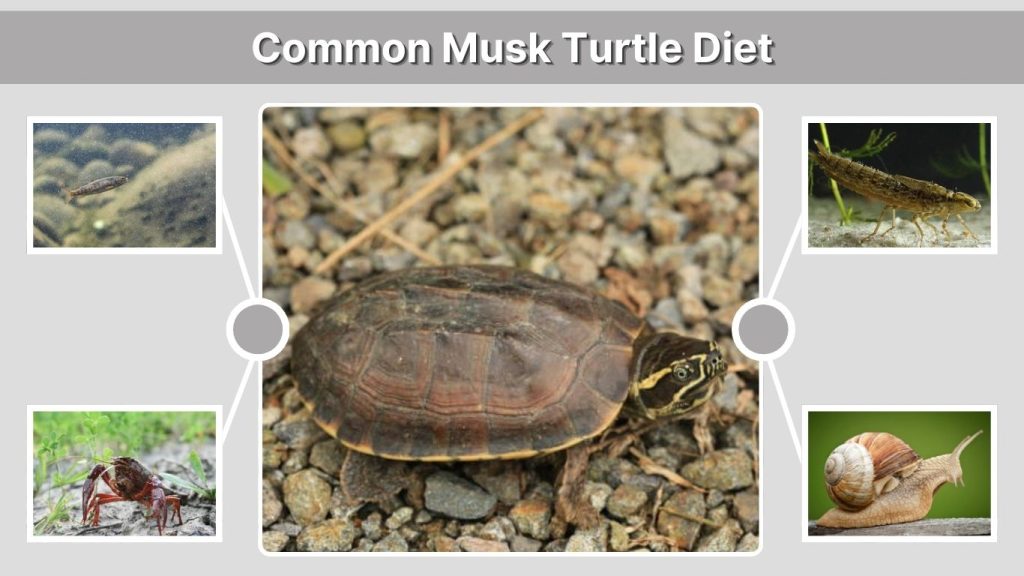
The common musk turtle diet consists mainly of animal-based foods. Unlike many other freshwater turtles that shift toward a plant-heavy diet as adults, musk turtles remain largely carnivorous throughout their lives. They are opportunistic feeders and play an important role as both predators and scavengers in aquatic ecosystems.
What Do Common Musk Turtles Eat?
In the wild, their diet commonly includes:
- Aquatic insects and insect larvae
- Snails and other mollusks
- Small fish
- Crayfish and crustaceans
- Worms
- Carrion (dead fish or animals)
- Occasional aquatic vegetation
Their strong jaws allow them to crush snail shells and hard-bodied prey with ease. Because they often forage along the bottom, they frequently consume slow-moving or bottom-dwelling organisms.
Feeding Behavior
Common musk turtles are primarily bottom feeders. They use their sense of smell to locate food in murky water and often search along the substrate for edible items. They are most active during the evening and nighttime hours (crepuscular to nocturnal behavior), which helps them avoid predators and compete less with other turtle species.
Young turtles may feed more actively during daylight hours but still rely heavily on protein-rich prey for growth.
Diet Differences by Age
Juvenile musk turtles consume a high-protein diet to support rapid growth. As they mature, their diet remains mostly carnivorous, though adults may occasionally ingest plant matter. Unlike painted turtles, they do not shift to a predominantly herbivorous diet with age.
Common Musk Turtle Lifespan and Reproduction
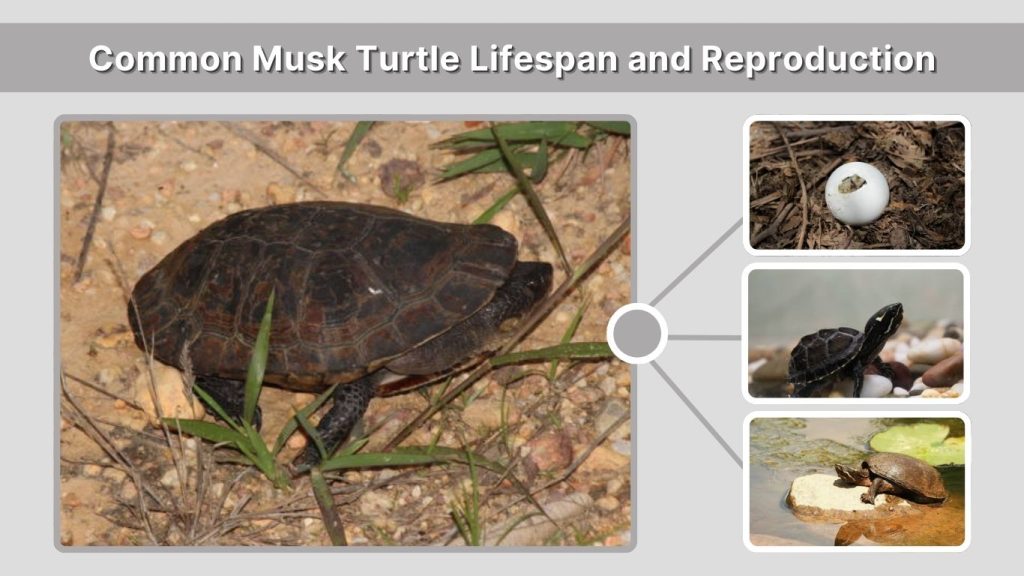
Average Lifespan
The common musk turtle lifespan typically ranges between 20 and 30 years in the wild. In protected environments with minimal predation and good water quality, some individuals may live even longer. In captivity, with proper care and nutrition, they can exceed 30 years.
Their relatively long lifespan makes them a significant long-term commitment for pet owners.
Breeding and Nesting
Mating usually occurs in spring and early summer. After breeding in the water, females travel onto land to lay eggs. They search for soft, moist soil near the water’s edge and dig small nests using their hind legs.
Clutch sizes are generally small, often containing 2 to 9 eggs. Some females may lay more than one clutch during a breeding season.
Hatchlings and Survival
Eggs typically incubate for about 60 to 80 days, depending on temperature. Hatchlings are very small—around 1 inch long—and face high predation rates from birds, raccoons, and fish. Only a small percentage survive to adulthood, which makes stable adult populations especially important for species survival.
Musk Turtle vs Mud Turtle
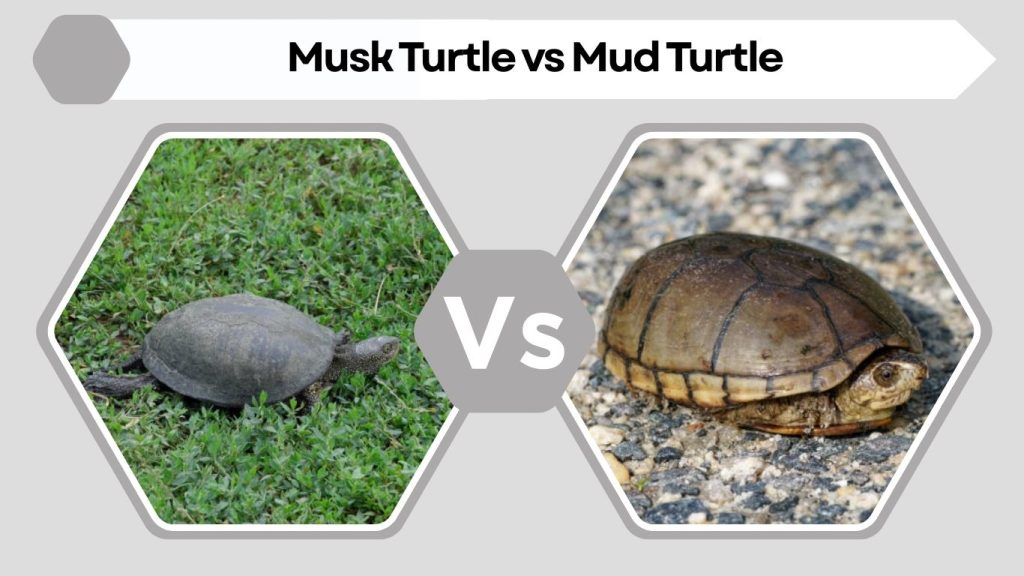
Because they belong to the same family (Kinosternidae), musk turtles and mud turtles are often confused. However, there are clear differences between the two.
Key Differences in Appearance
- Shell Shape: Musk turtles tend to have a more domed shell; mud turtles often have a slightly flatter profile.
- Plastron Size: Mud turtles usually have a larger plastron that provides more underside protection. Musk turtles have a smaller plastron.
- Facial Stripes: Common musk turtles typically have two light stripes on the head; mud turtles may lack these bold stripes.
- Size: Both are small, but mud turtles can sometimes appear slightly stockier.
Behavioral Differences
- Musk turtles are more aquatic and rarely leave the water.
- Mud turtles may spend more time on land in certain conditions.
- Both can release musk, but the common musk turtle is especially known for its strong odor defense.
Understanding these differences helps with proper identification in the wild.
Behavior and Defense Mechanisms
Common musk turtles are generally shy and secretive. They spend much of their time hiding among vegetation or submerged debris. While they are not aggressive by nature, they may bite if handled roughly.
Their most famous defense is the release of a strong-smelling musk from glands near the shell edge. This scent discourages predators and gives rise to their “stinkpot” nickname. In addition, their dark coloration helps them remain camouflaged in muddy water.
Interesting Common Musk Turtle Facts
Here are some quick common musk turtle facts:
- They are one of the smallest freshwater turtles in eastern North America.
- They are excellent underwater climbers and grip submerged branches with ease.
- They can remain submerged for extended periods.
- Their powerful jaws allow them to crush hard-shelled prey.
- They adapt well to murky or low-visibility waters.
Threats and Conservation
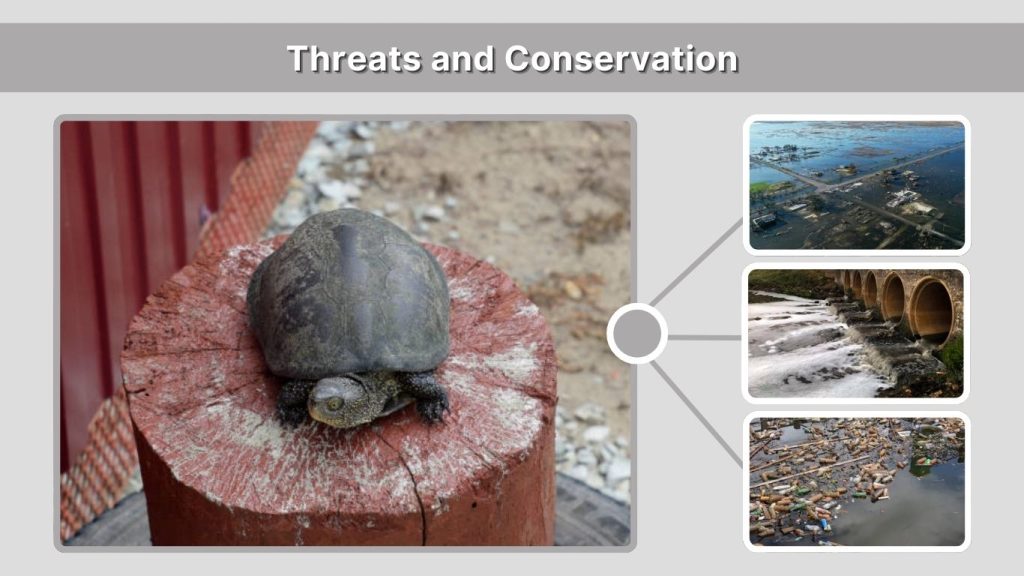
Although the species is not currently considered endangered, habitat destruction remains a concern. Wetland drainage, water pollution, and shoreline development reduce suitable habitat. Road mortality can also occur when females cross land to nest.
Protecting wetlands and maintaining clean freshwater systems are critical for supporting stable common musk turtle populations.
Conclusion
The common musk turtle (Sternotherus odoratus) is a small but resilient freshwater species known for its strong musk defense, carnivorous diet, and preference for slow-moving waters. With a lifespan of up to 30 years and an important ecological role as both predator and scavenger, it remains a vital part of eastern North America’s aquatic ecosystems. By protecting freshwater habitats and understanding this unique turtle’s needs, we can help ensure its continued survival for generations to come.