
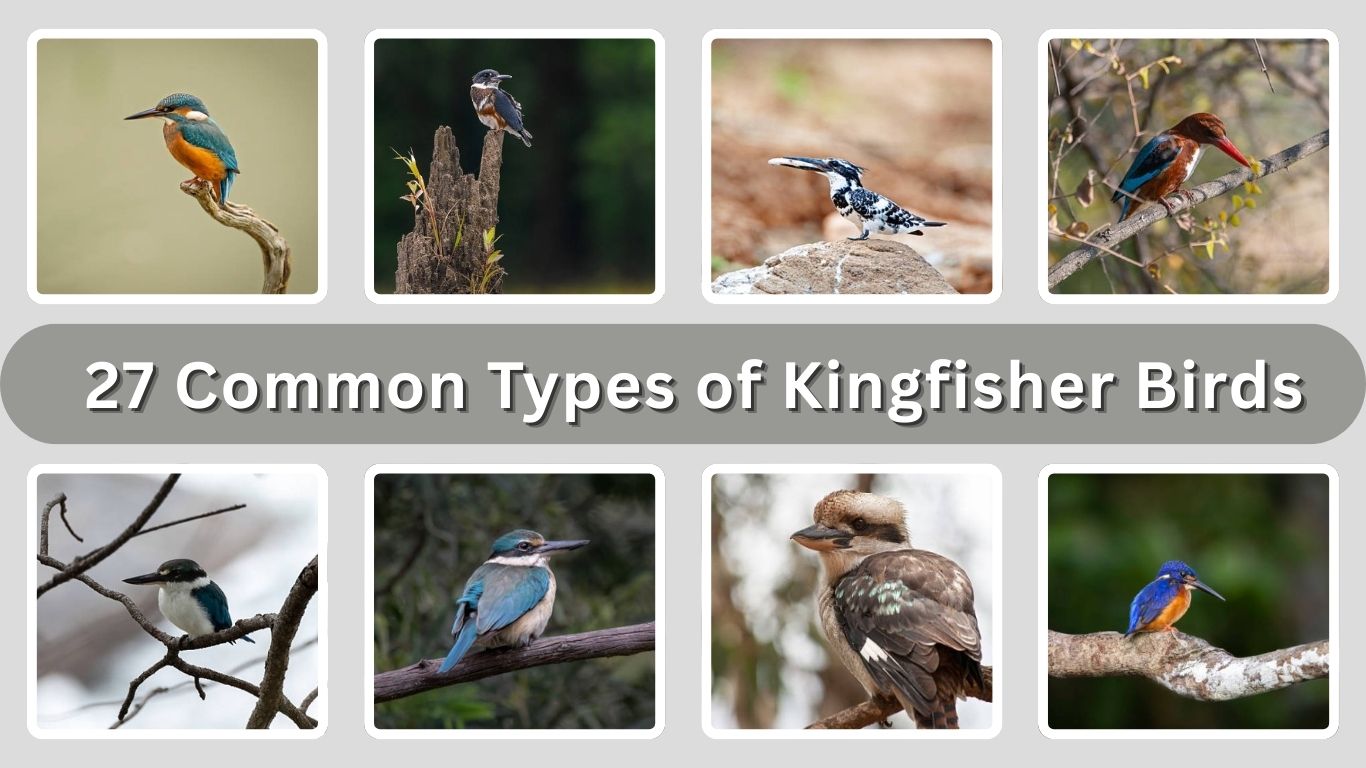
Kingfishers are among the most colorful and fascinating birds in the world, known for their bright plumage, sharp bills, and impressive fishing skills. Found on every continent except Antarctica, these birds live near rivers, lakes, wetlands, forests, and even coastal areas. Some species dive into water for fish, while others hunt insects, reptiles, and small animals on land. In this guide, you’ll explore 27 common types of kingfishers, focusing on their species names and basic identification features.
1. Common Kingfisher (Alcedo atthis)
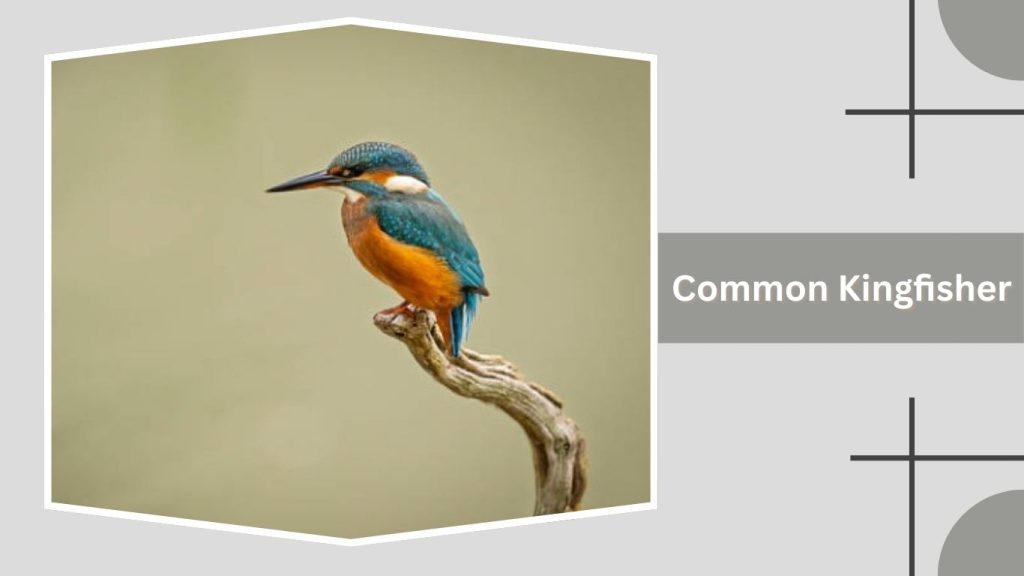
The Common Kingfisher is a small, brightly colored bird found across Europe, Asia, and North Africa. Despite its tiny size, it is famous for its vivid blue upperparts, orange underparts, and incredible fishing skills. This species usually lives near clear rivers, lakes, canals, and streams, where it hunts small fish and aquatic insects by diving head-first into the water with remarkable speed and accuracy.
Identification
- Small, compact body with a short tail
- Bright metallic blue upperparts
- Rich orange to chestnut underparts
- Long, sharp black bill adapted for fishing
- White patch on the neck and throat
- Rapid, direct flight low over water
Habitat
Common Kingfishers prefer clean, slow-moving or still freshwater habitats. They are most often seen along rivers, streams, ponds, lakes, and canals with plenty of small fish. Steep, soft riverbanks are important because they dig nesting tunnels into the soil to lay eggs and raise their young safely.
Diet
Their diet mainly consists of small fish such as minnows and sticklebacks. They also eat aquatic insects, crustaceans, and tadpoles. The bird usually hunts from a low perch, watching the water carefully before diving swiftly to catch prey in its pointed bill.
Behavior
Common Kingfishers are solitary and territorial, especially during the breeding season. They are known for their sharp, high-pitched call and fast, low flight over water. When not hunting, they often perch quietly on branches, reeds, or rocks near the water’s edge.
2. Belted Kingfisher (Megaceryle alcyon)
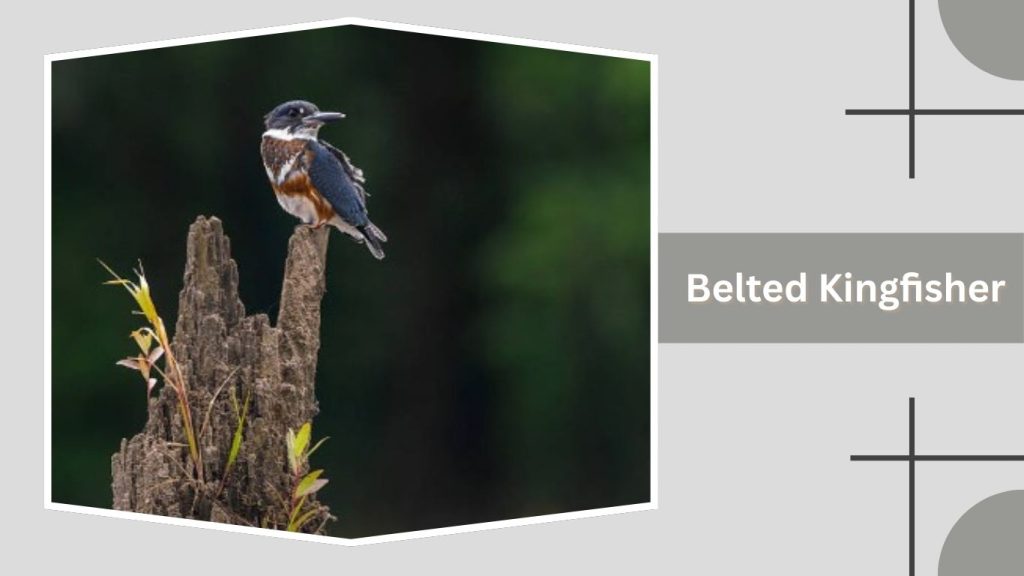
The Belted Kingfisher is a large, heavy-bodied kingfisher native to North America and parts of Central America. It is easily recognized by its shaggy crest, bluish-gray body, and loud rattling call. This species is often seen perched above rivers, lakes, and coastlines, where it hunts fish by plunging directly into the water from elevated lookout points.
Identification
- Large kingfisher with a shaggy, spiky crest
- Bluish-gray upperparts and white underparts
- Prominent blue chest band (both sexes)
- Females have an extra rusty-brown belly band
- Thick, straight, dark bill
- Stocky body with short legs
Habitat
Belted Kingfishers live near a wide range of water bodies, including rivers, lakes, ponds, estuaries, and coastal shorelines. They require clear water for hunting and sandy or earthen banks for nesting, where they dig long tunnels to protect their eggs.
Diet
Their diet mainly includes small fish, but they also eat crayfish, aquatic insects, frogs, and occasionally small mammals. They hunt by hovering or perching before diving headfirst into the water to seize prey.
Behavior
This species is strongly territorial and often announces its presence with a loud, rattling call. It is usually seen alone, flying rapidly over water or sitting motionless on exposed branches. Both parents help dig nesting tunnels and care for the young.
3. Pied Kingfisher (Ceryle rudis)
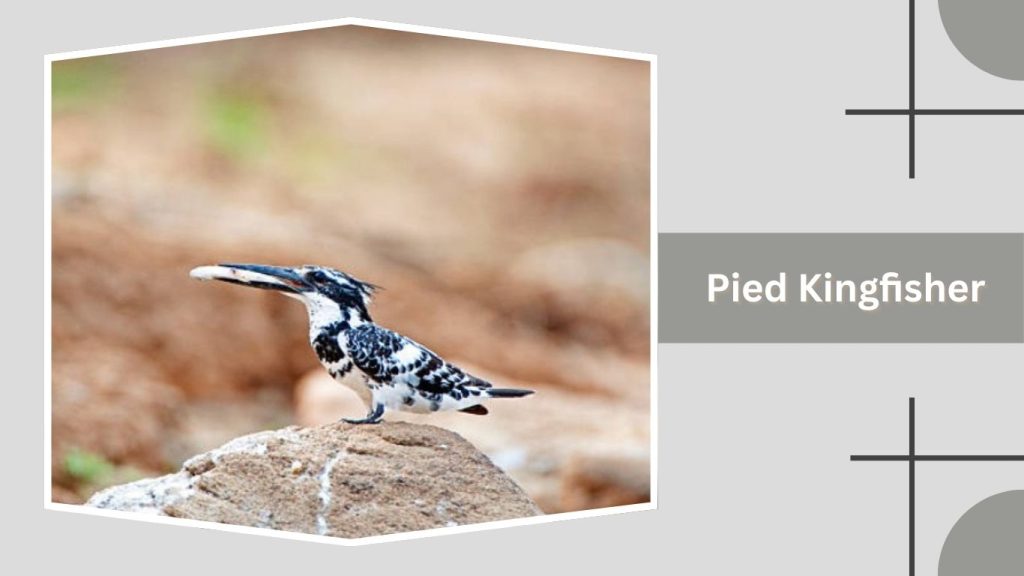
The Pied Kingfisher is a striking black-and-white species widely distributed across Africa and southern Asia. Unlike most kingfishers, it frequently hovers over water before diving to catch prey. Its bold markings and active hunting style make it one of the easiest kingfishers to recognize.
Identification
- Medium-sized kingfisher with black and white plumage
- White head with black eye-stripe and crown markings
- Speckled black wings and back
- Long, sharp black bill
- Males have a double black breast band
- Slender body with pointed wings
Habitat
Pied Kingfishers inhabit rivers, lakes, reservoirs, wetlands, and even coastal lagoons. They favor open water with good visibility and nearby perches such as poles, branches, or reeds.
Diet
Their diet consists mainly of small fish, along with aquatic insects, crustaceans, and tadpoles. They often hunt by hovering in mid-air, then diving vertically into the water to capture prey.
Behavior
This species is highly active and social compared to many kingfishers. It frequently hunts in open view and may nest in colonies along sandy riverbanks. Its ability to hover makes its feeding behavior especially distinctive.
4. White-throated Kingfisher (Halcyon smyrnensis)
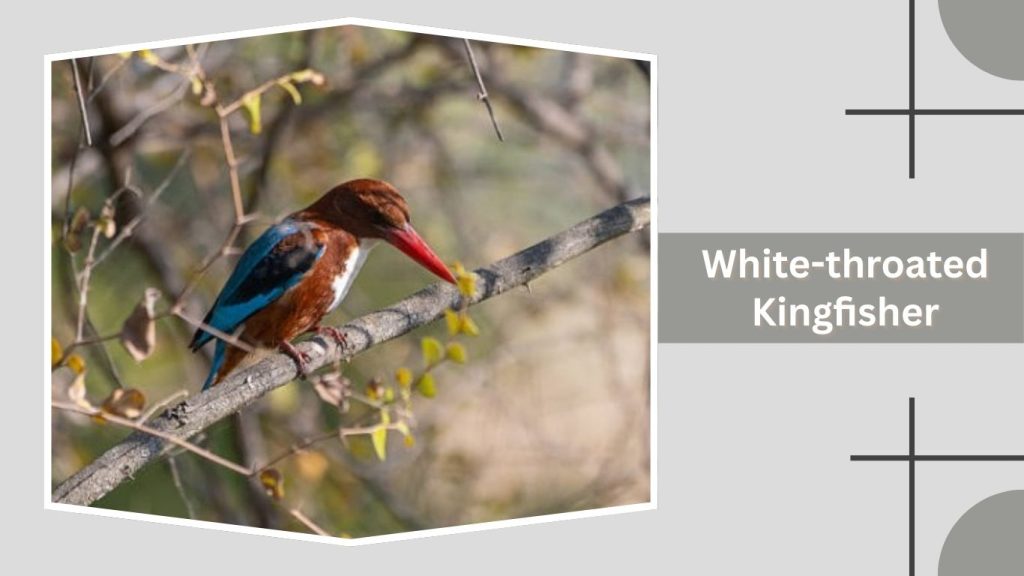
The White-throated Kingfisher is a large, colorful species commonly found across South and Southeast Asia. Unlike many kingfishers, it is not limited to water and is often seen far from rivers, hunting insects and small animals in open fields, gardens, and farmlands. Its bright blue wings, rich chestnut body, and clean white throat make it very easy to recognize.
Identification
- Large kingfisher with a heavy red bill
- Bright turquoise-blue wings and back
- Rich chestnut head, belly, and flanks
- Distinct white throat and breast patch
- Strong legs adapted for ground hunting
- Loud, harsh, and repeated calls
Habitat
White-throated Kingfishers live in a wide variety of habitats including lakes, rivers, wetlands, agricultural fields, parks, and even urban areas. They are highly adaptable and often perch on wires, trees, and posts.
Diet
This species has a very broad diet. It eats fish, frogs, crabs, large insects, earthworms, lizards, and even small rodents. It usually hunts from a perch, swooping down to grab prey from the ground or shallow water.
Behavior
White-throated Kingfishers are bold, noisy, and strongly territorial. They are often seen alone or in pairs, giving loud calls while flying between perches. They dig nesting tunnels in mud banks, walls, or termite mounds.
5. Collared Kingfisher (Todiramphus chloris)
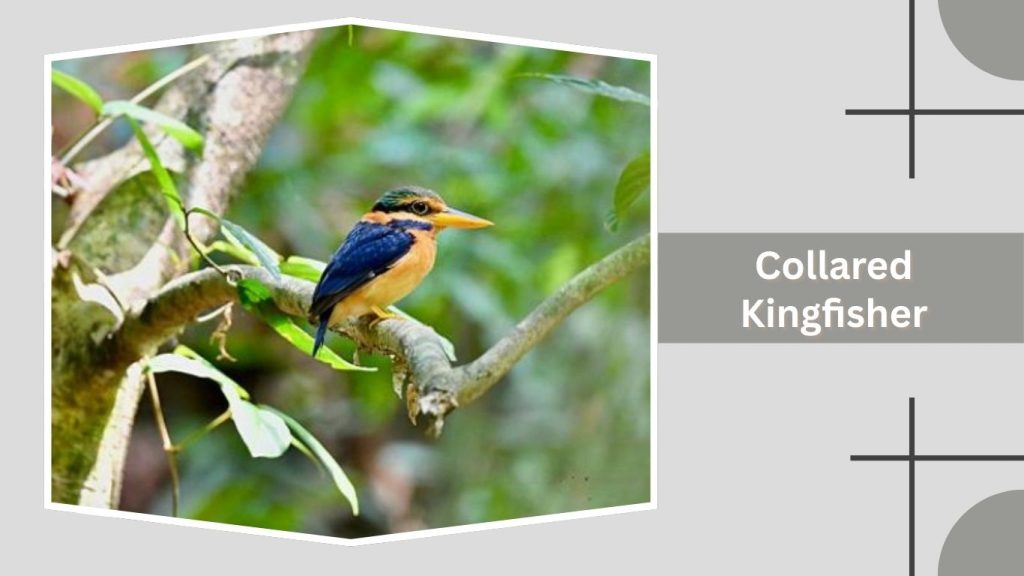
The Collared Kingfisher is a medium-sized kingfisher widely distributed from East Africa across southern Asia to Australia and the Pacific islands. It is well known for its turquoise-blue upperparts, white collar, and calm, watchful posture while perched near water or coastal habitats.
Identification
- Medium-sized kingfisher with large dark bill
- Bright blue to turquoise upperparts
- White face, throat, and collar
- Pale underparts
- Stocky body with short tail
- Often seen perched openly
Habitat
Collared Kingfishers are commonly found in mangroves, coastal forests, beaches, estuaries, and river mouths. They also occur inland near lakes, rivers, and open woodlands, especially in tropical regions.
Diet
Their diet includes small fish, crabs, insects, spiders, and small reptiles. They usually hunt from exposed perches, swooping down to seize prey from the ground or shallow water.
Behavior
This species is territorial and vocal, often giving repeated, harsh calls. It is usually seen singly or in pairs. Collared Kingfishers nest in tree holes, termite mounds, or earthen banks, where both parents care for the chicks.
6. Sacred Kingfisher (Todiramphus sanctus)
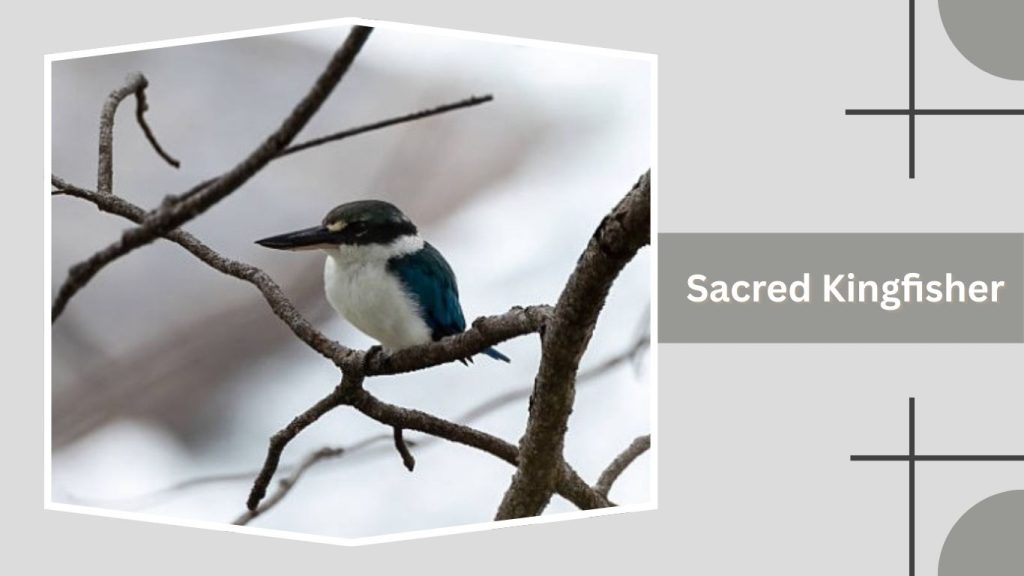
The Sacred Kingfisher is a slender, medium-sized kingfisher found across Australia, New Zealand, Indonesia, and many Pacific islands. It is well known for its striking turquoise-blue back, buff underparts, and distinctive dark eye stripe. This adaptable species often hunts away from water, catching insects and small animals in open woodland and coastal areas.
Identification
- Medium-sized, slim kingfisher
- Bright turquoise-blue back and wings
- Buff to creamy underparts
- Bold dark stripe through the eye
- Long, straight black bill
- Relatively long tail
Habitat
Sacred Kingfishers live in a wide range of environments including open forests, woodlands, mangroves, riverbanks, farmland, and coastal regions. They often migrate seasonally, moving to warmer northern areas during winter.
Diet
Their diet mainly consists of insects, spiders, worms, small lizards, and occasionally fish and crustaceans. They usually hunt from a low perch, swooping down quickly to grab prey from the ground or shallow water.
Behavior
Sacred Kingfishers are usually seen alone or in pairs. They are alert, frequently flicking their tails while perched. During breeding season, they nest in tree hollows, termite mounds, or earthen banks.
7. Laughing Kookaburra (Dacelo novaeguineae)
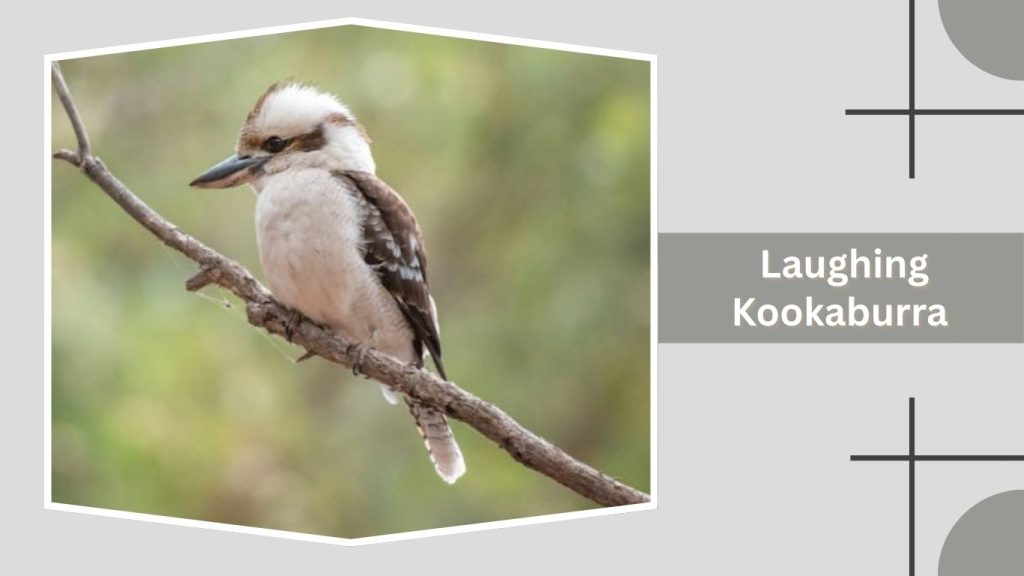
The Laughing Kookaburra is the largest member of the kingfisher family and is native to eastern Australia. It is famous worldwide for its loud, laughing call that sounds like human laughter. Unlike many kingfishers, it feeds mostly on land rather than fish.
Identification
- Very large kingfisher with heavy body
- Big head with stout, powerful bill
- Brown and white plumage with blue wing patches
- Dark eye stripe across the face
- Short neck and broad tail
- Strong legs for ground hunting
Habitat
Laughing Kookaburras inhabit open woodlands, forests, parks, and farmland. They are often seen perched on fence posts, trees, and wires, watching the ground for prey.
Diet
Their diet includes insects, earthworms, mice, snakes, frogs, and lizards. They hunt by dropping from a perch to seize prey on the ground, often beating it against a branch before swallowing.
Behavior
This species is highly social and lives in family groups. Their loud chorus calls are used to defend territory. They are mostly sedentary and often remain in the same area year-round.
8. Blue-eared Kingfisher (Alcedo meninting)
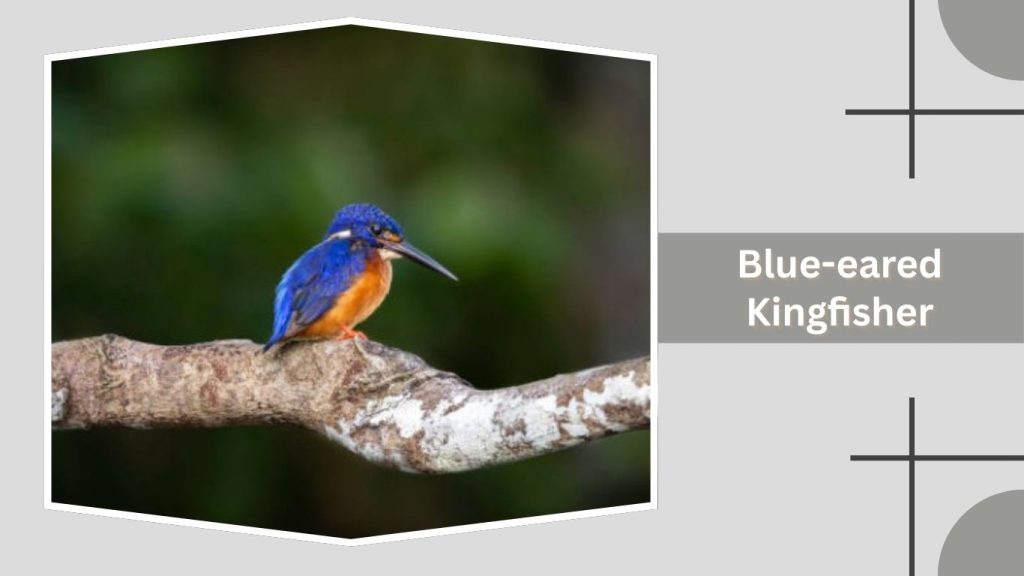
The Blue-eared Kingfisher is a small, brilliantly colored species found in South and Southeast Asia. It closely resembles the Common Kingfisher but is usually darker with deeper blue tones and distinctive ear-coverts. This shy bird prefers shaded forest streams and is most often seen briefly as a flash of blue near water.
Identification
- Small, compact kingfisher
- Deep cobalt-blue upperparts
- Bright orange underparts
- Distinct blue ear coverts
- Long, sharp black bill
- Short tail and fast direct flight
Habitat
Blue-eared Kingfishers live mainly along clear forest streams, rivers, and shaded waterways. They prefer dense vegetation near water, which provides cover and suitable perches for hunting.
Diet
Their diet consists mostly of small fish, aquatic insects, and tiny crustaceans. They hunt from low branches, diving quickly into the water to catch prey.
Behavior
This species is secretive and usually solitary. It perches quietly close to water before making rapid dives. During breeding season, it nests in burrows dug into riverbanks.
9. Malachite Kingfisher (Corythornis cristatus)
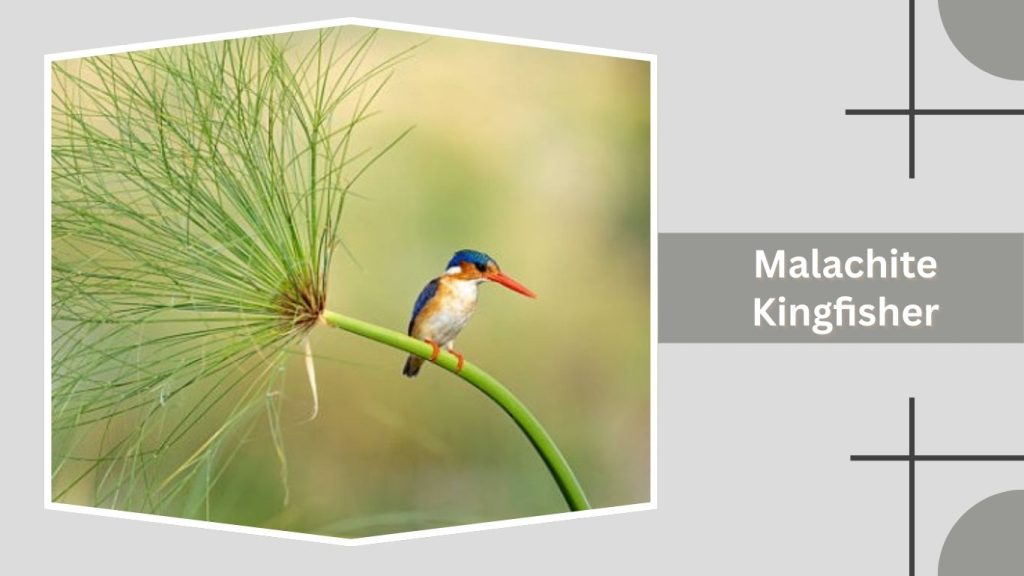
The Malachite Kingfisher is a tiny, strikingly colorful kingfisher widespread across sub-Saharan Africa. Its brilliant blue back, orange underparts, and delicate crest make it one of the most beautiful African kingfishers.
Identification
- Very small kingfisher with fine bill
- Bright electric-blue upperparts
- Orange to rufous underparts
- Short crest on the head
- White neck patch
- Rapid, low flight over water
Habitat
Malachite Kingfishers are commonly found along rivers, lakes, swamps, and wetlands with reeds and overhanging vegetation. They favor calm, shallow waters rich in small fish.
Diet
They feed mainly on small fish, aquatic insects, and crustaceans. From low perches, they dive swiftly to capture prey near the water’s surface.
Behavior
This species is usually seen alone or in pairs. It is very active, often flicking its tail while perched. Nests are made in tunnels dug into riverbanks or termite mounds.
10. Giant Kingfisher (Megaceryle maxima)
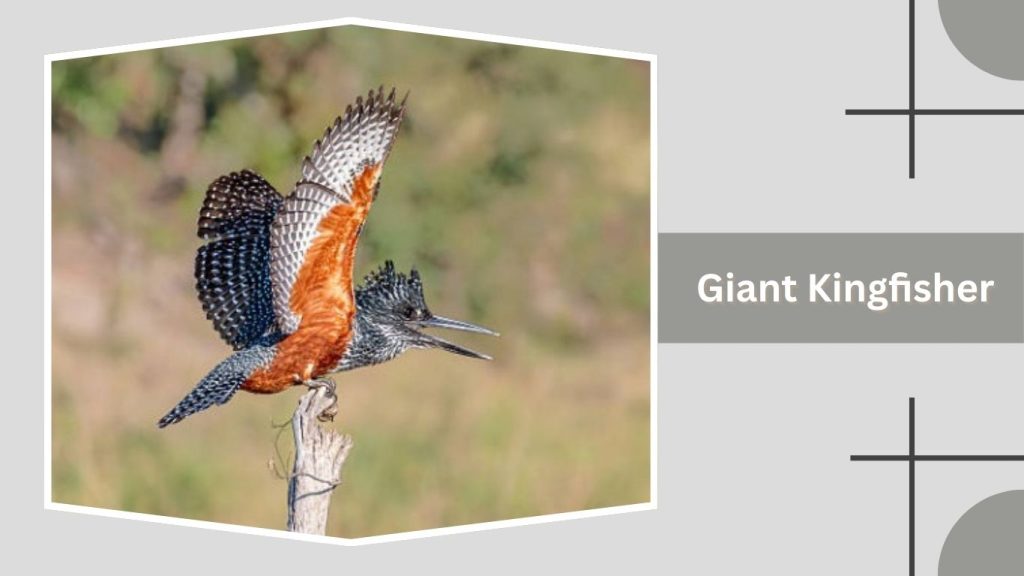
The Giant Kingfisher is the largest kingfisher in Africa and one of the biggest in the world. It is boldly patterned in black and white and is commonly seen along rivers and large streams, where it hunts powerful aquatic prey. Its strong flight and loud, ringing call make it very noticeable near waterways.
Identification
- Very large, heavy-bodied kingfisher
- Black-and-white spotted and barred plumage
- Shaggy crest on the head
- Thick, powerful black bill
- White underparts with dark markings
- Strong wings and short tail
Habitat
Giant Kingfishers live mainly along rivers, streams, and lakes with clear or moderately clear water. They need steep, sandy banks for nesting, where they dig deep tunnels.
Diet
Their diet includes fish, crabs, frogs, and even small aquatic reptiles. They often hunt from high perches, diving forcefully into the water to seize prey.
Behavior
This species is solitary and territorial. It is often seen perched prominently above rivers, giving loud calls and defending feeding areas. Both parents participate in nest excavation and chick care.
11. Amazon Kingfisher (Chloroceryle amazona)
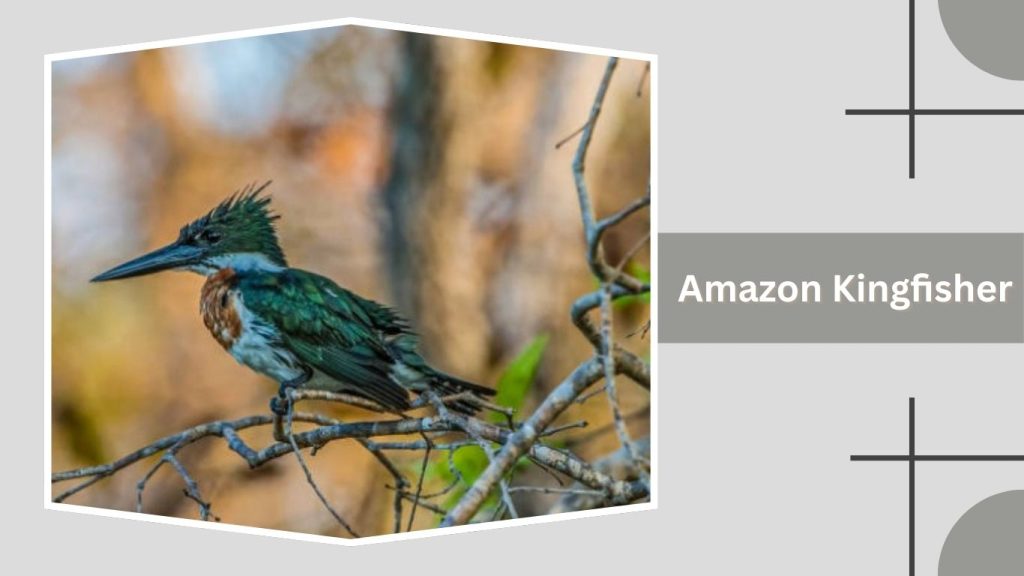
The Amazon Kingfisher is a medium-sized green kingfisher found across Central and South America. It is recognized by its dark green back, white collar, and long bill. It frequently perches quietly above rivers before diving to catch fish.
Identification
- Medium-sized kingfisher with long straight bill
- Dark metallic-green upperparts
- White collar and throat
- Rufous underparts in males
- Compact body with short tail
- Often seen perched over water
Habitat
Amazon Kingfishers inhabit rivers, streams, lakes, mangroves, and forested waterways. They are commonly found near slow-moving water with overhanging branches.
Diet
They feed mainly on fish, but also take aquatic insects, shrimp, and small crustaceans. Hunting is done by watching from a perch and diving quickly into the water.
Behavior
This species is usually solitary. It is relatively quiet compared to other kingfishers and often remains motionless before suddenly plunging to catch prey.
12. Green Kingfisher (Chloroceryle americana)
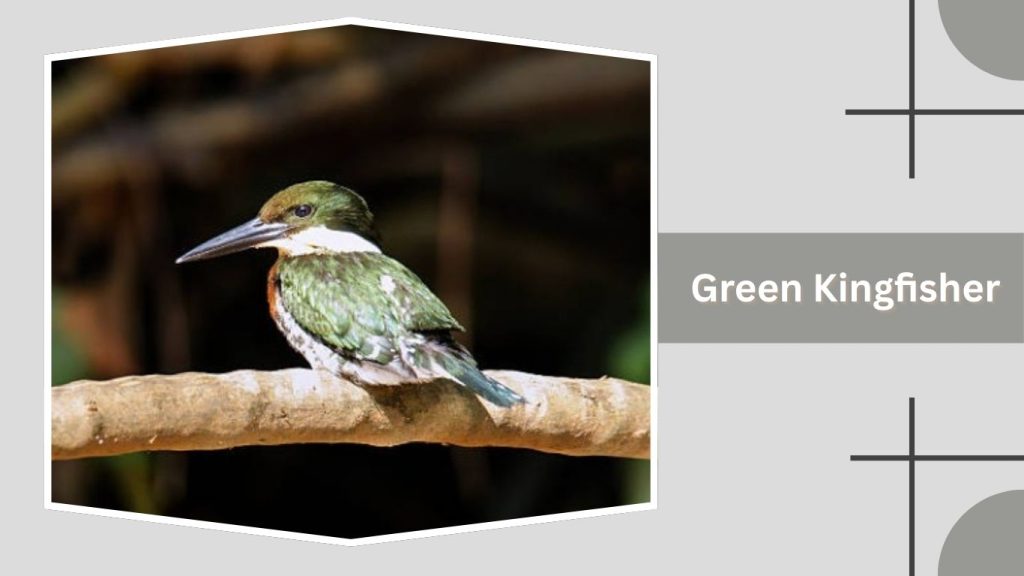
The Green Kingfisher is a small, compact kingfisher found from the southern United States through Central America and into northern South America. It is known for its glossy green upperparts, white collar, and fine, pointed bill. This shy species often stays close to shaded streams and slow-moving rivers.
Identification
- Small kingfisher with compact body
- Glossy dark green upperparts
- White collar and throat
- Long, thin black bill
- Rufous belly band in males
- Short tail and rapid wingbeats
Habitat
Green Kingfishers live along forest streams, rivers, ponds, and mangroves. They prefer quiet, shallow water with overhanging vegetation for cover and perching.
Diet
Their diet consists mainly of small fish, tadpoles, aquatic insects, and tiny crustaceans. They hunt from low perches, diving quickly to seize prey near the surface.
Behavior
This species is solitary and secretive. It often gives sharp calls when flushed and flies low over water before perching again nearby.
13. Ringed Kingfisher (Megaceryle torquata)
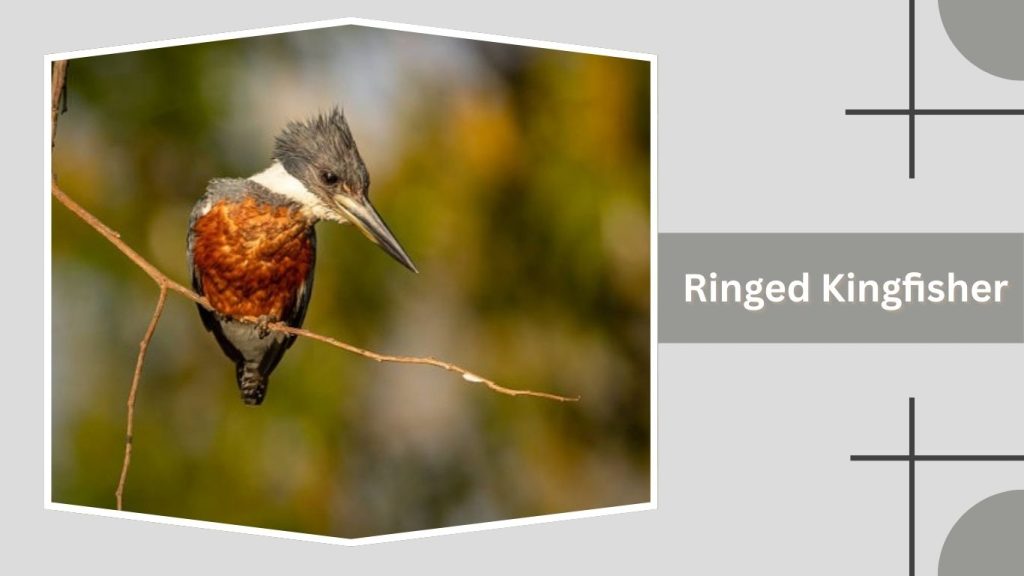
The Ringed Kingfisher is a large, powerful kingfisher widely distributed from the southern United States to South America. It is easily recognized by its heavy red bill, slate-blue back, and broad chest band. This bold species often hunts in open areas near rivers and coastlines.
Identification
- Large kingfisher with thick red bill
- Slate-blue upperparts
- White collar and broad blue chest band
- Rufous underparts in males
- Heavy body and shaggy crest
- Strong, direct flight
Habitat
Ringed Kingfishers occupy rivers, lakes, estuaries, mangroves, and coastal shores. They prefer open water where fish are abundant and suitable banks are available for nesting.
Diet
They mainly eat fish but also take crabs, shrimp, frogs, and aquatic insects. They hunt from high perches or while hovering before diving into the water.
Behavior
This species is noisy and territorial. It is often seen patrolling waterways, calling loudly, and defending favored fishing spots.
14. Woodland Kingfisher (Halcyon senegalensis)
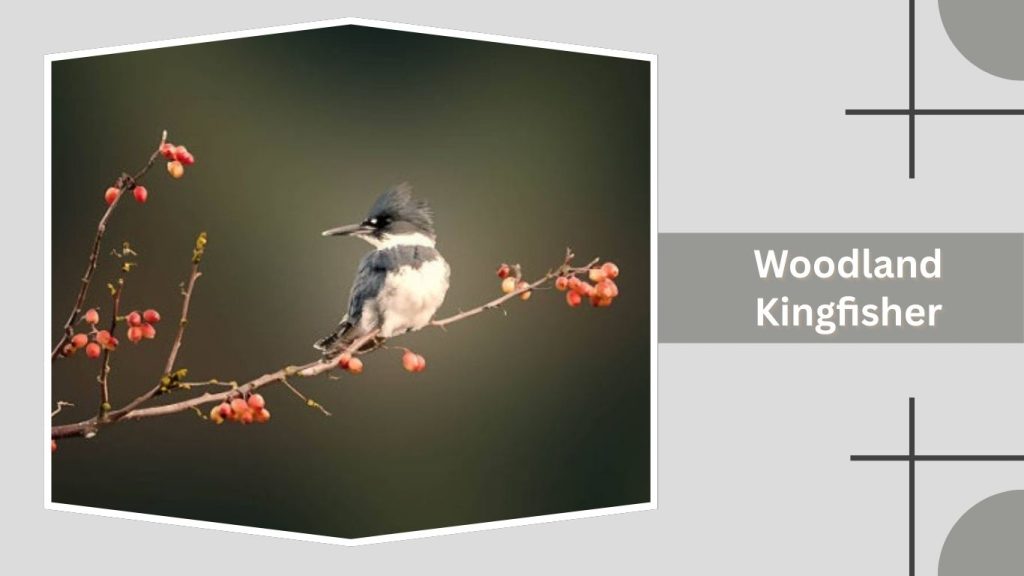
The Woodland Kingfisher is a striking blue-and-white kingfisher native to sub-Saharan Africa. Unlike many kingfishers, it is commonly found far from water, living in forests, savannas, and woodland edges. Its loud, laughing call is often heard during the breeding season.
Identification
- Medium-sized kingfisher with sturdy red bill
- Bright turquoise-blue wings and back
- White head, throat, and underparts
- Black mask through the eye
- Stocky body with short tail
- Often seen perched in open trees
Habitat
Woodland Kingfishers live in open woodlands, forest edges, savannas, and gardens. They migrate seasonally in many parts of Africa and do not depend strictly on water habitats.
Diet
Their diet includes insects, beetles, caterpillars, earthworms, lizards, and small frogs. They usually hunt from a perch, swooping down to grab prey from the ground.
Behavior
This species is active and vocal, especially in the breeding season. It is usually seen alone or in pairs and nests in tree cavities or termite mounds.
15. Grey-headed Kingfisher (Halcyon leucocephala)
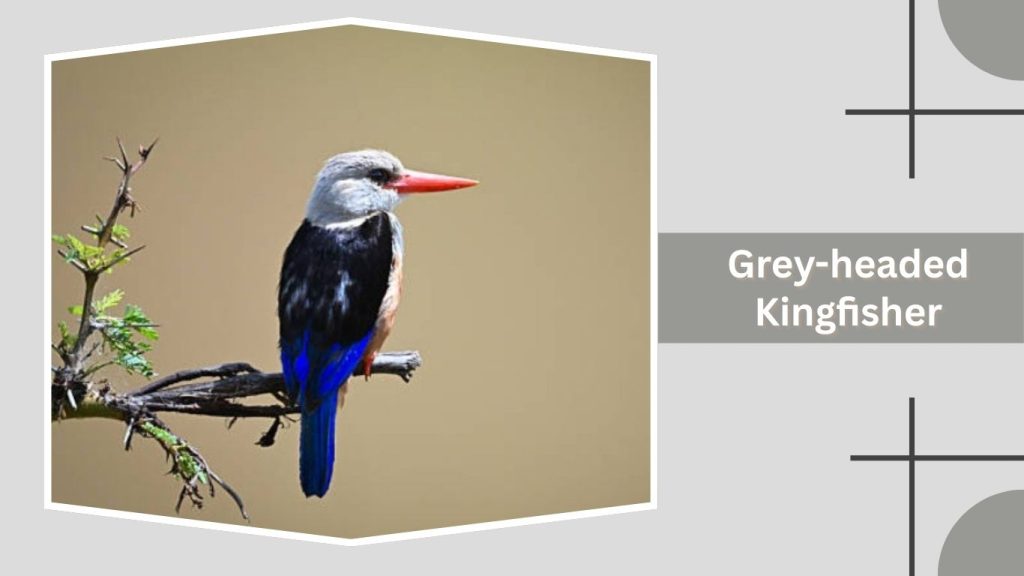
The Grey-headed Kingfisher is a colorful African kingfisher known for its pale grey head, chestnut underparts, and bright blue wings. It is often seen perched conspicuously in open woodland and farmland, scanning the ground for prey.
Identification
- Pale grey head and neck
- Bright blue wings and tail
- Chestnut-brown belly
- Strong red bill
- White throat patch
- Medium-sized, upright posture
Habitat
Grey-headed Kingfishers inhabit savannas, open forests, agricultural areas, and riverine woodlands. They are less tied to water than many other kingfishers.
Diet
They feed mainly on insects, grasshoppers, beetles, small reptiles, and occasionally fish. They often drop from a perch to capture prey on the ground.
Behavior
This species is alert and often solitary. It gives loud calls while flying and is known for long seasonal movements in some regions.
16. Brown-hooded Kingfisher (Halcyon albiventris)
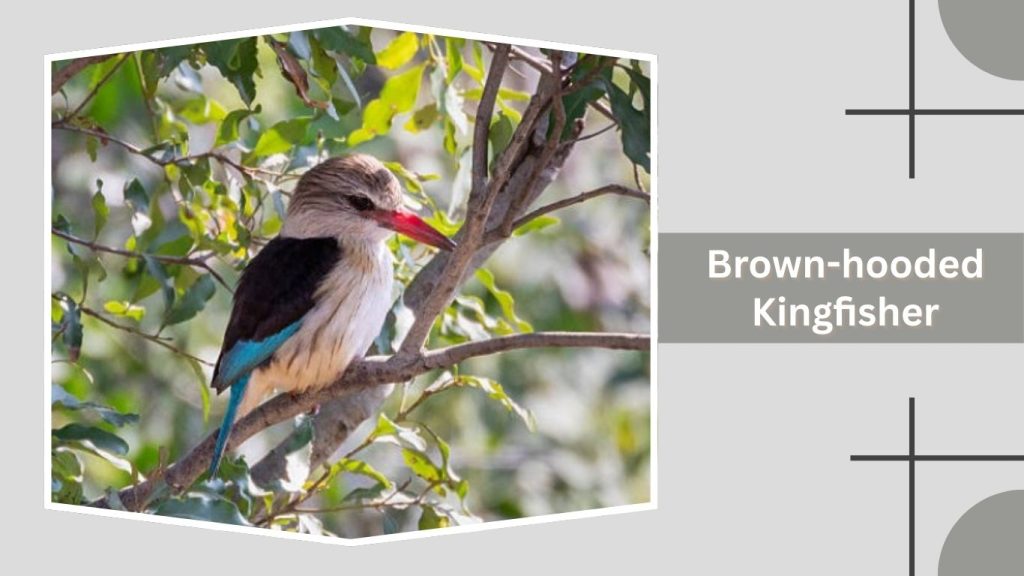
The Brown-hooded Kingfisher is a medium-sized African kingfisher easily recognized by its chocolate-brown head, bright blue wings, and white underparts. It is commonly found in open woodland, savanna, and suburban gardens, often far from water.
Identification
- Rich brown head and crown
- Bright turquoise-blue wings and tail
- White throat and underparts
- Strong red bill
- Compact, sturdy body
- Upright perching posture
Habitat
Brown-hooded Kingfishers inhabit woodlands, savannas, farmland, parks, and gardens. They are not strictly tied to water and often hunt in dry habitats.
Diet
Their diet mainly consists of insects, beetles, grasshoppers, small lizards, frogs, and occasionally fish. They hunt by watching from a perch and dropping quickly onto prey.
Behavior
This species is bold and often tame around people. It is usually seen alone or in pairs and nests in tree holes, termite mounds, or earthen banks.
17. Striped Kingfisher (Halcyon chelicuti)
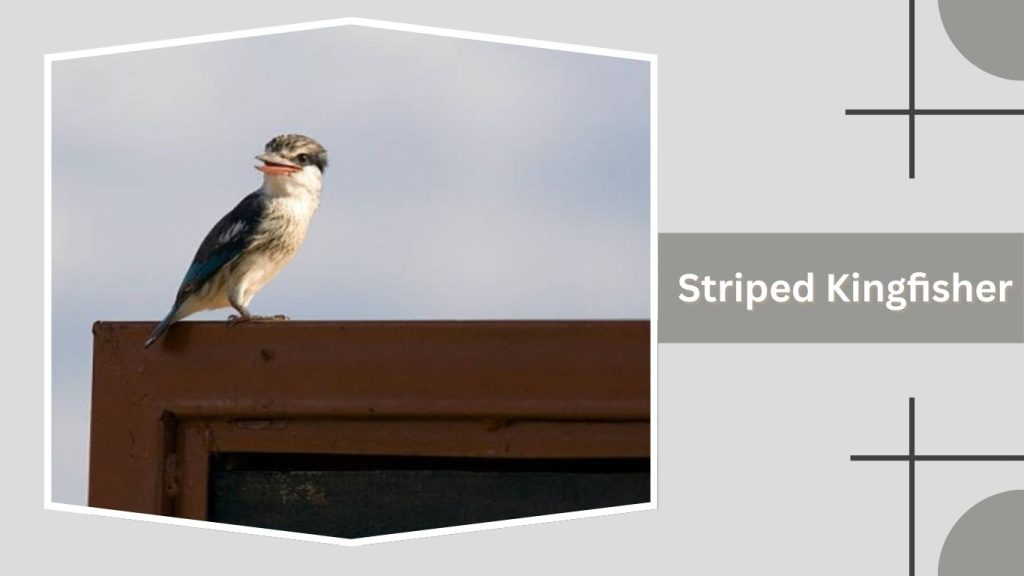
The Striped Kingfisher is a small, brightly colored African kingfisher with bold facial stripes and a distinctive call. It prefers dry woodland and scrub habitats rather than riverbanks, making it different from many other kingfishers.
Identification
- Small kingfisher with long red bill
- White face with bold black stripes
- Bright blue wings and tail
- Pale buff underparts
- Slender body shape
- Often flicks tail while perched
Habitat
Striped Kingfishers live in dry woodlands, thorn scrub, savannas, and forest edges. They are commonly found in warm, open areas.
Diet
They feed mainly on insects, spiders, small reptiles, and occasionally tiny fish. They usually hunt from exposed perches.
Behavior
This species is usually solitary and very vocal. It is often heard calling before being seen. Nests are made in holes in trees, banks, or termite mounds.
18. Black-capped Kingfisher (Halcyon pileata)
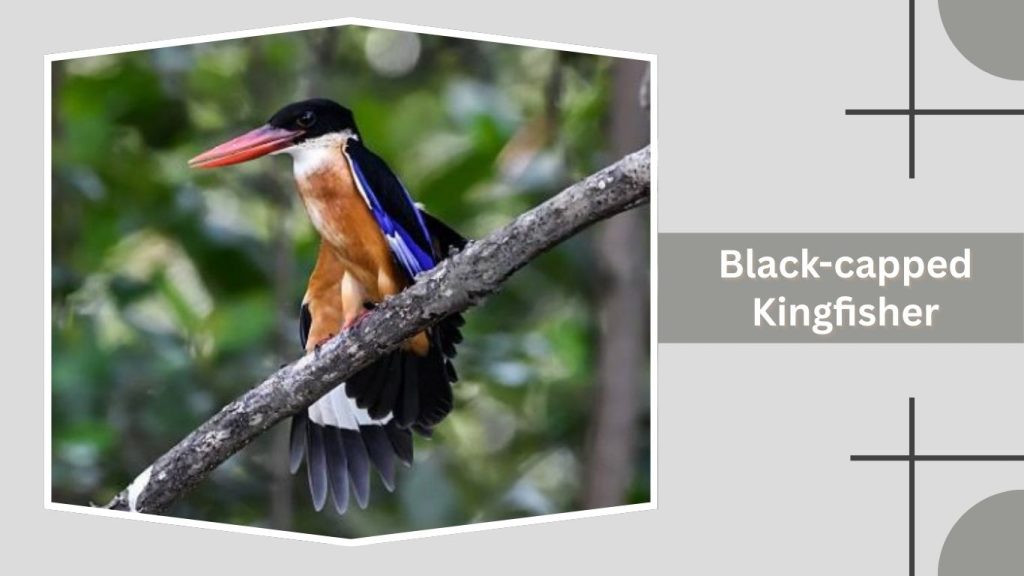
The Black-capped Kingfisher is a striking coastal and wetland species found across South and Southeast Asia. It is easily recognized by its jet-black cap, bright blue wings, white collar, and massive red bill. This bold, colorful kingfisher is often seen near estuaries, mangroves, rivers, and tidal creeks.
Identification
- Large kingfisher with heavy red bill
- Distinct black cap and crown
- Bright electric-blue wings and back
- White collar and throat
- Pale buff to white underparts
- Strong, direct flight
Habitat
Black-capped Kingfishers live mainly in mangroves, estuaries, coastal wetlands, rivers, lakes, and flooded fields. They often perch on poles, trees, and branches near water.
Diet
Their diet includes fish, crabs, shrimp, frogs, and large aquatic insects. They hunt from exposed perches, diving swiftly to seize prey from water or mudflats.
Behavior
This species is usually solitary and strongly territorial. It is bold and noisy, often calling loudly while flying between feeding areas and perches.
19. Stork-billed Kingfisher (Pelargopsis capensis)
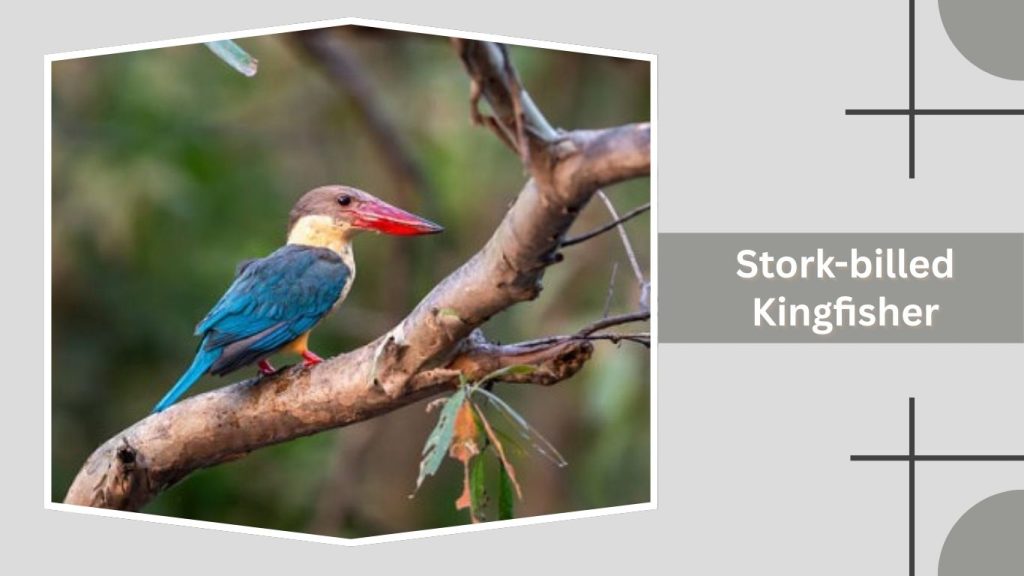
The Stork-billed Kingfisher is one of the largest Asian kingfishers and is named for its huge, stork-like red bill. It is widely distributed across South and Southeast Asia and is commonly found along rivers, lakes, and mangrove-lined waterways.
Identification
- Very large kingfisher with massive red bill
- Dark green to blue-green upperparts
- Pale buff to whitish head and underparts
- Heavy body with short tail
- Thick neck and strong posture
- Loud, ringing calls
Habitat
Stork-billed Kingfishers inhabit rivers, streams, lakes, estuaries, and mangroves. They favor large bodies of water with overhanging trees and good fishing opportunities.
Diet
They mainly eat fish, frogs, crabs, snakes, and large insects. They usually hunt from high perches, plunging powerfully into the water to capture prey.
Behavior
This species is bold and territorial. It is often seen perched prominently near water and gives loud calls while flying or defending feeding areas.
20. Crested Kingfisher (Megaceryle lugubris)
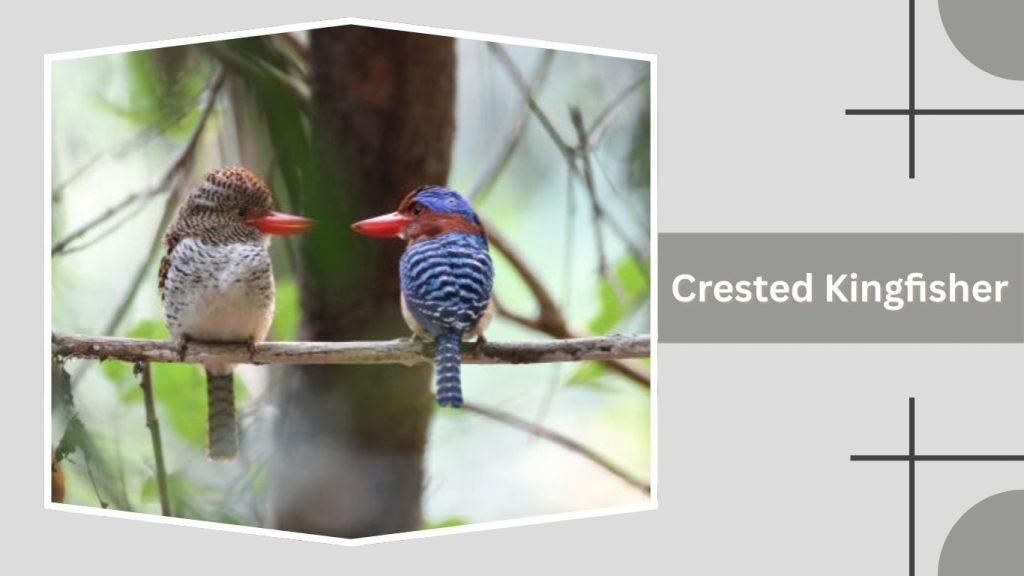
The Crested Kingfisher is a large, striking black-and-white kingfisher found across East and South Asia. It is well known for its shaggy crest, bold spotting, and preference for fast-flowing mountain rivers. This powerful bird is often seen perched high above water before making strong, direct dives for fish.
Identification
- Large kingfisher with prominent shaggy crest
- Black-and-white spotted and barred plumage
- Heavy, straight black bill
- White throat and collar
- Long wings and strong body
- Loud, ringing calls near rivers
Habitat
Crested Kingfishers live mainly along clear rivers, forest streams, and rocky mountain waterways. They prefer fast-flowing water with nearby trees or cliffs that provide high perches and nesting sites.
Diet
Their diet consists mainly of fish, along with aquatic insects, frogs, and crustaceans. They hunt from elevated perches, plunging steeply into the water to seize prey.
Behavior
This species is solitary and territorial. It often patrols stretches of river, calling loudly in flight. Nests are dug into earthen riverbanks or sandy cliffs near water.
21. Azure Kingfisher (Ceyx azureus)
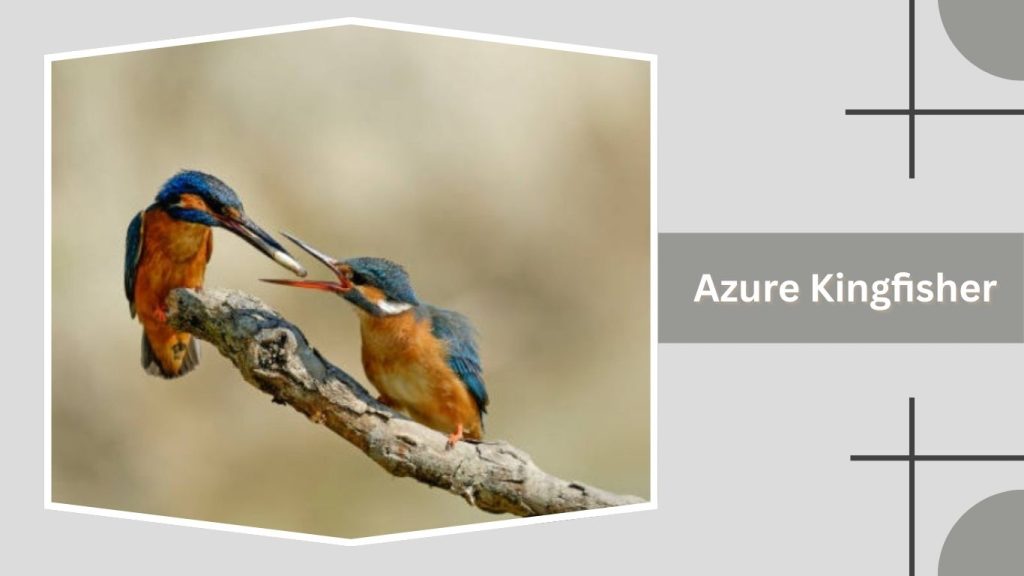
The Azure Kingfisher is a small, brilliantly colored kingfisher native to Australia, New Guinea, and nearby islands. It is famous for its deep blue back, bright orange underparts, and delicate appearance. This tiny bird is usually seen as a flash of blue darting low over water.
Identification
- Very small kingfisher with compact body
- Deep azure-blue upperparts
- Bright orange underparts
- Long, fine black bill
- Short tail and rapid flight
- Often perches close to water
Habitat
Azure Kingfishers inhabit rivers, creeks, billabongs, mangroves, and wetlands. They favor calm or slow-moving water with overhanging vegetation.
Diet
They feed mainly on small fish, aquatic insects, and tiny crustaceans. Hunting is done from low perches, followed by quick, shallow dives.
Behavior
This species is usually solitary and quiet. It perches low and still before suddenly darting into the water. During breeding season, it nests in tunnels dug into riverbanks.
22. Little Kingfisher (Ceyx pusillus)
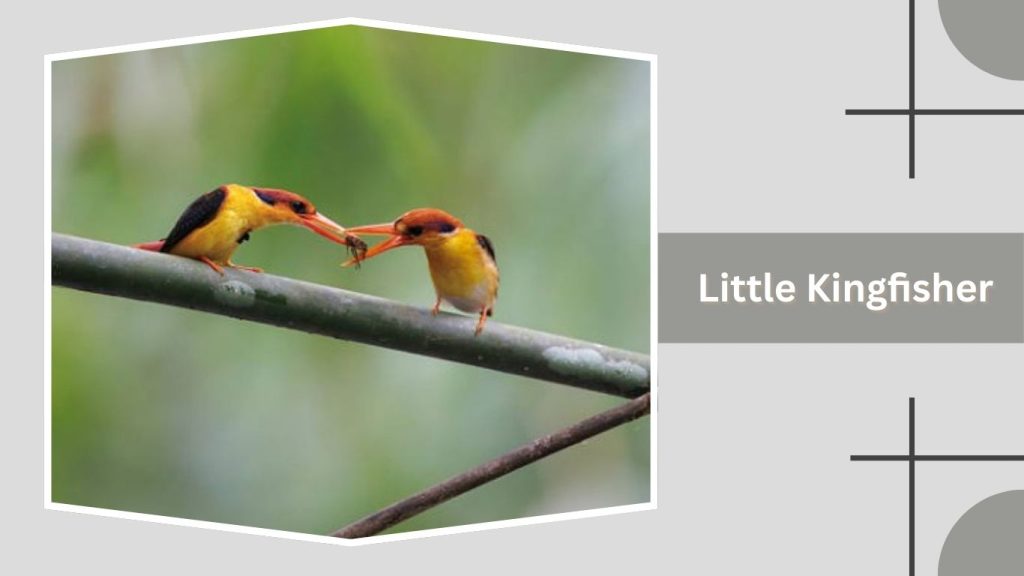
The Little Kingfisher is one of the smallest kingfishers in the world. It is found in northern Australia, New Guinea, and nearby islands. Despite its tiny size, it has extremely bright colors, with electric-blue upperparts and vivid orange underparts. It is usually seen quietly perched near shaded streams.
Identification
- Extremely small kingfisher with compact body
- Bright electric-blue back and wings
- Vivid orange underparts
- Fine, straight black bill
- Short tail and rounded wings
- Very fast, low flight over water
Habitat
Little Kingfishers live near rainforest streams, creeks, mangroves, and quiet wetlands. They prefer shaded areas with dense vegetation and low branches.
Diet
Their diet consists mainly of very small fish, aquatic insects, and tiny crustaceans. They hunt from low perches, making quick, shallow dives.
Behavior
This species is shy and secretive. It usually sits motionless before suddenly darting into the water. Nests are built in burrows dug into stream banks.
23. Rufous-collared Kingfisher (Actenoides concretus)
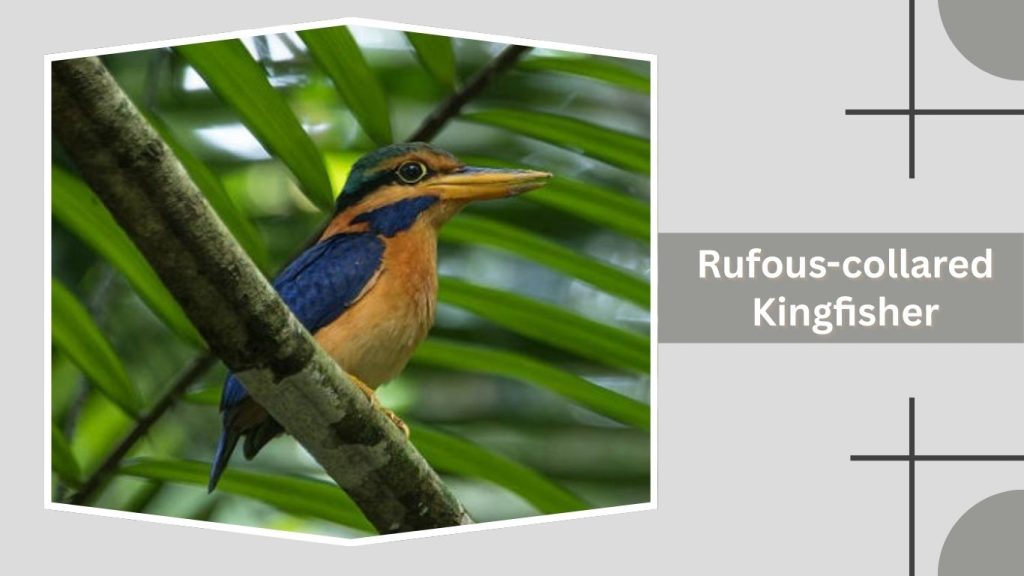
The Rufous-collared Kingfisher is a forest-dwelling species found in Southeast Asia. It is known for its deep blue wings, rich rufous collar, and powerful bill. This shy kingfisher prefers dense tropical forests rather than open waterways.
Identification
- Medium-sized kingfisher with thick bill
- Dark blue wings and back
- Rich rufous collar and neck
- Pale face and throat
- Stocky body shape
- Often seen in shaded forest
Habitat
Rufous-collared Kingfishers inhabit lowland and hill rainforests, forest edges, and wooded ravines. They are often found far from open water.
Diet
They feed on insects, beetles, worms, small reptiles, and occasionally frogs and fish. They usually hunt from low forest perches.
Behavior
This species is secretive and usually solitary. It is more often heard than seen, giving loud, echoing calls from within dense forest.
24. Oriental Dwarf Kingfisher (Ceyx erithaca)
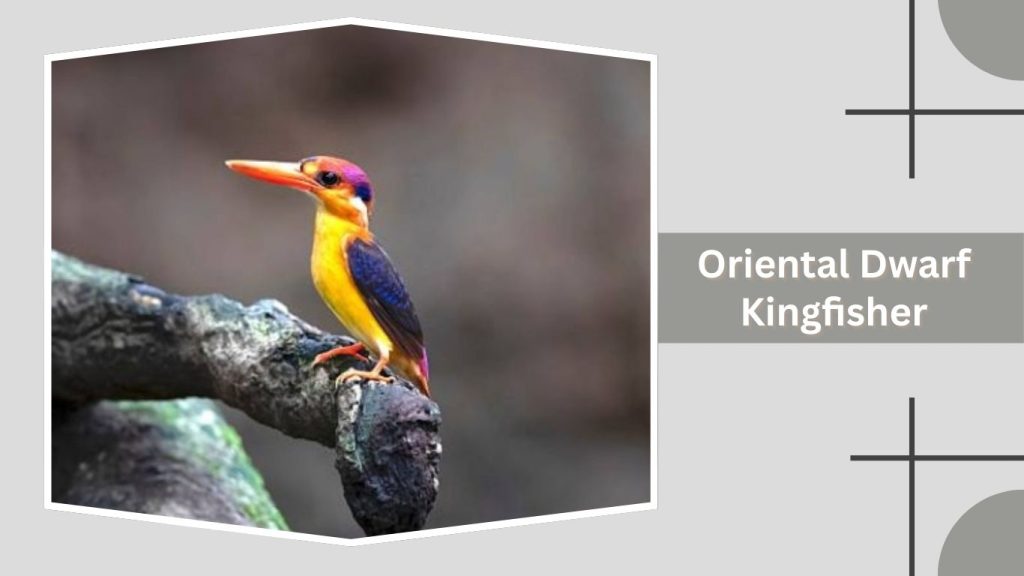
The Oriental Dwarf Kingfisher is one of the smallest and most colorful kingfishers in the world. Found in South and Southeast Asia, it is famous for its brilliant mix of purple, blue, orange, and yellow. This tiny bird prefers dense forest near streams and is rarely seen in open areas.
Identification
- Very small kingfisher with short tail
- Bright orange and purple body
- Deep blue and violet wings
- Red bill and feet
- Rounded head with large dark eyes
- Extremely vivid plumage
Habitat
Oriental Dwarf Kingfishers live mainly in tropical evergreen forests, bamboo groves, and shaded forest streams. They prefer dense vegetation and quiet, undisturbed environments.
Diet
Their diet includes insects, spiders, small crabs, worms, and occasionally tiny fish. They hunt from low forest perches, dropping quickly onto prey.
Behavior
This species is very shy and secretive. It stays hidden in forest undergrowth and is usually active at dawn and dusk. Nests are built in tunnels dug into soft banks.
25. African Pygmy Kingfisher (Ispidina picta)
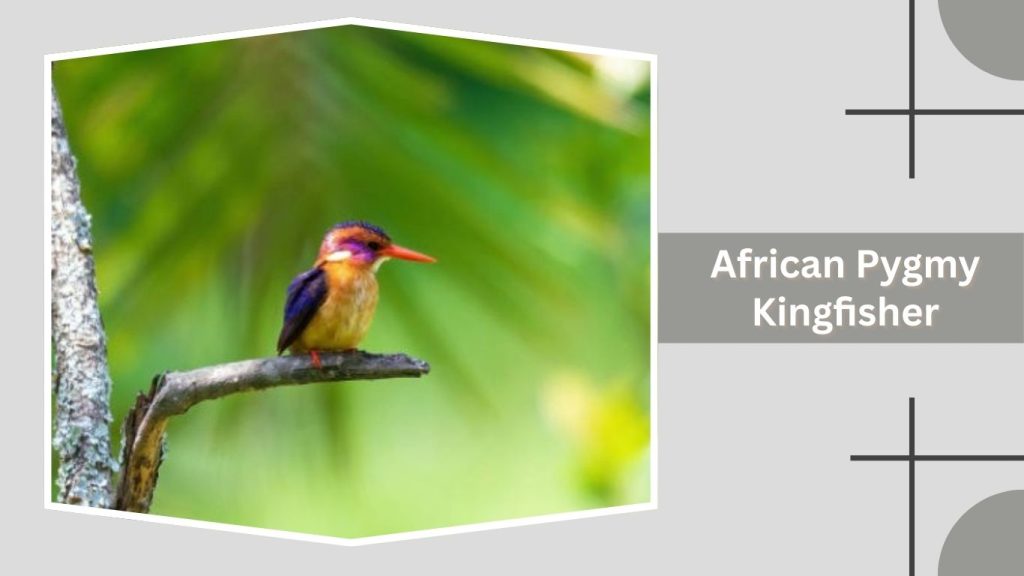
The African Pygmy Kingfisher is a tiny, brilliantly colored kingfisher widely distributed across sub-Saharan Africa. Despite its small size, it has bold blue, purple, and orange plumage and a loud, high-pitched call.
Identification
- Very small kingfisher with short tail
- Bright blue and violet upperparts
- Orange underparts
- Red bill and feet
- Compact, rounded body
- Often perches low in shrubs
Habitat
African Pygmy Kingfishers inhabit woodland, savanna, forest edges, and gardens. They are not strongly tied to water and are often found far from rivers.
Diet
They mainly eat insects, beetles, spiders, and small invertebrates. They hunt by watching from low perches and darting down to catch prey.
Behavior
This species is lively and often flicks its wings and tail. It is usually solitary and nests in holes in banks, walls, or termite mounds.
26. Banded Kingfisher (Lacedo pulchella)
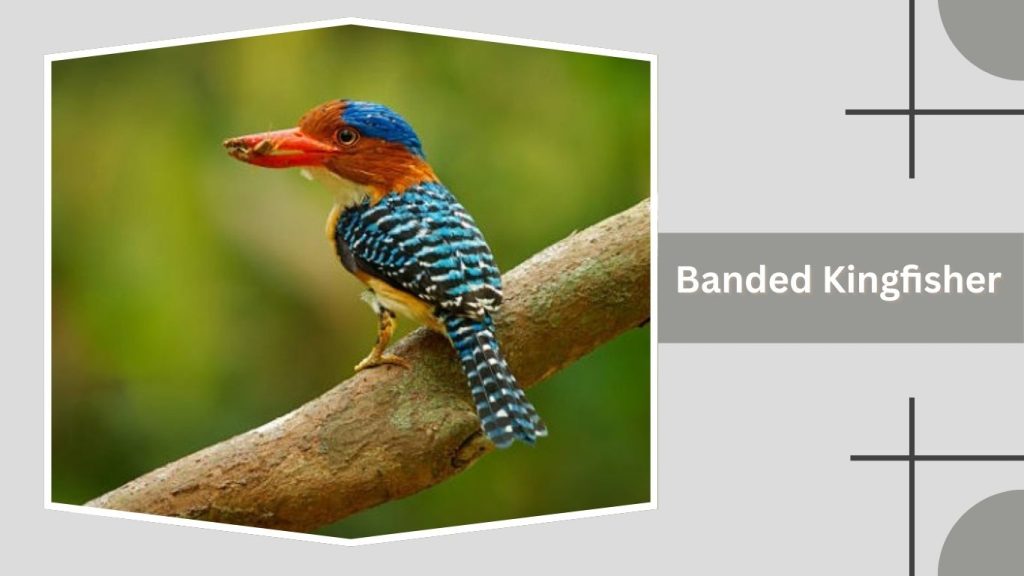
The Banded Kingfisher is a rare and beautifully patterned forest kingfisher found in Southeast Asia. It is known for its pale body, bold dark bands, and thick red bill. Unlike most kingfishers, this species lives deep in tropical forests and is only occasionally seen near water.
Identification
- Medium-sized kingfisher with heavy red bill
- Pale buff to whitish body
- Distinct dark bands across wings and back
- Broad head with strong neck
- Short tail and rounded wings
- Quiet, watchful posture
Habitat
Banded Kingfishers inhabit lowland and hill rainforests, forest edges, and dense woodland. They are usually found in shaded areas with thick vegetation and are not strictly dependent on rivers.
Diet
They mainly feed on insects, beetles, caterpillars, small reptiles, and occasionally frogs. They hunt from low forest perches, dropping down to seize prey.
Behavior
This species is shy and secretive. It is usually seen alone and remains motionless for long periods before making quick hunting strikes. Nests are made in tree cavities or earthen banks.
27. Indigo-banded Kingfisher (Ceyx cyanopectus)
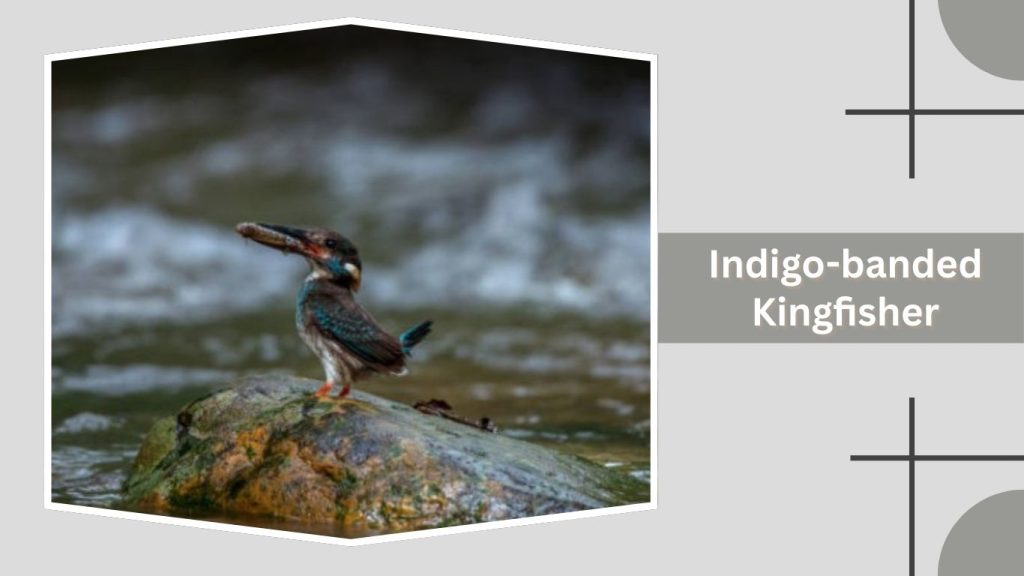
The Indigo-banded Kingfisher is a small, brilliantly colored kingfisher endemic to the Philippines. It is admired for its deep indigo-blue upperparts and bright orange underparts. This rare species lives near forest streams and is most active in shaded environments.
Identification
- Small kingfisher with compact body
- Deep indigo-blue head, back, and wings
- Bright orange underparts
- Long, straight red bill
- Short tail and rounded wings
- Often seen low near water
Habitat
Indigo-banded Kingfishers live along forest streams, rivers, and wetlands, especially in lowland tropical forests. They prefer quiet, shaded waterways with dense surrounding vegetation.
Diet
Their diet consists mainly of small fish, aquatic insects, crustaceans, and tiny frogs. They hunt from low branches, diving quickly to catch prey.
Behavior
This species is very secretive and usually solitary. It stays hidden in forest cover and is most active early in the morning and late afternoon.