



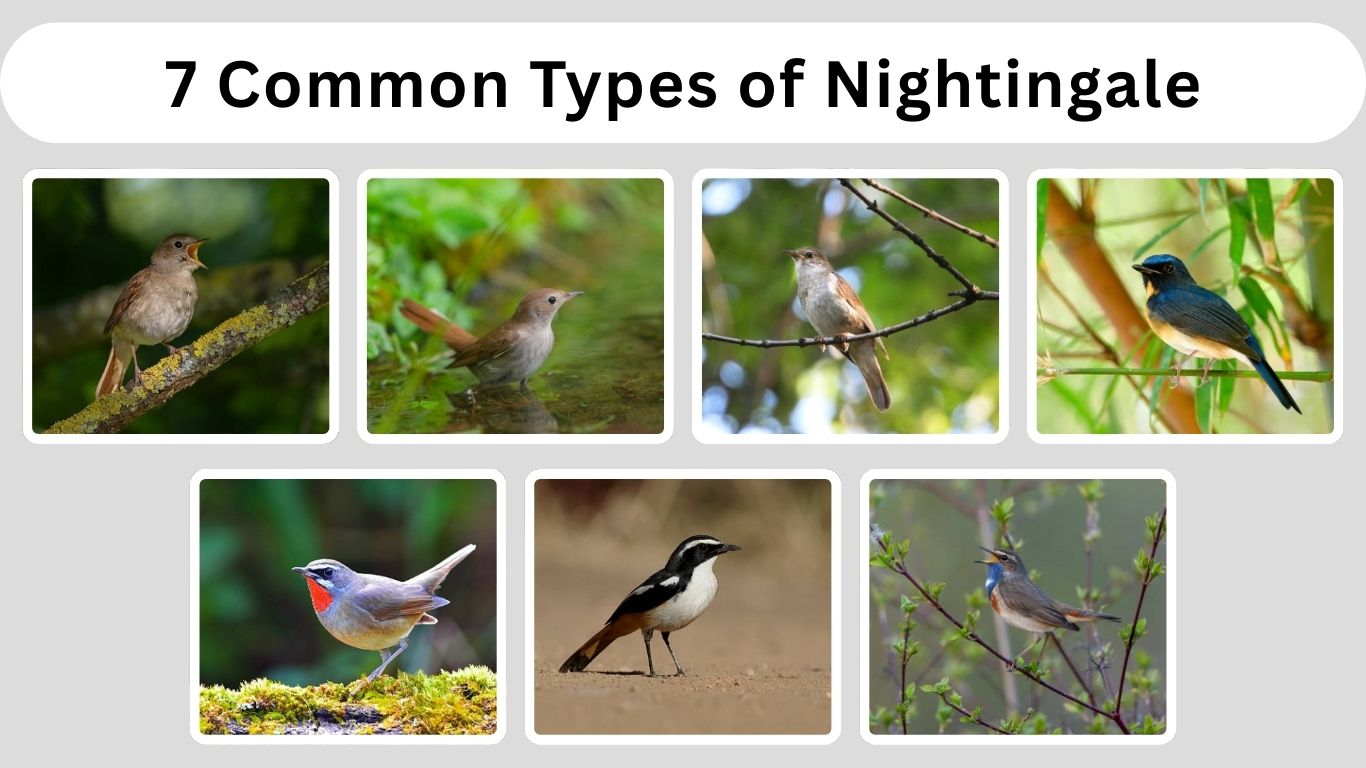
Nightingales are legendary songbirds admired for their powerful, rich, and beautifully complex songs. Although many people think of only one bird, “nightingale” actually refers to several closely related species found across Europe, Asia, and parts of Africa. These birds are usually shy and well hidden in dense vegetation, yet their voices can travel long distances, especially at night during breeding season. In this guide, you will discover seven common types of nightingales and what makes each one unique.
1. Common Nightingale (Luscinia megarhynchos)
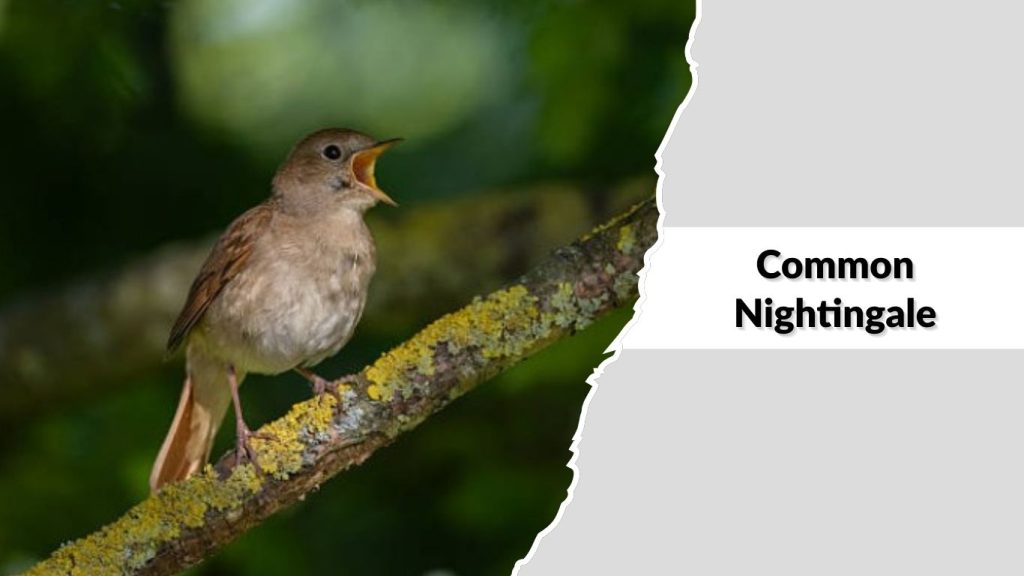
The Common Nightingale is one of the most celebrated songbirds in the world, famous for its powerful, rich, and highly varied song. Unlike many birds, it often sings at night as well as during the day, which is how it earned its name. Native to Europe, North Africa, and parts of Western Asia, this shy bird prefers dense cover but announces its presence with one of the most beautiful natural melodies.
Identification
- Small to medium-sized songbird, about 15–16 cm long
- Plain warm-brown upperparts with a distinctive reddish-brown tail
- Pale gray to buff underparts
- Large, dark, expressive eyes
- Slim body with long legs
- Straight, slender beak suited for catching insects
Habitat
Common Nightingales favor dense shrubs, woodland edges, thickets, hedgerows, and overgrown gardens. They prefer areas with thick undergrowth close to the ground, which provides both nesting sites and protection from predators. During winter, they migrate to sub-Saharan Africa, where they inhabit similar scrubby habitats.
Behavior
They are secretive and ground-oriented birds, often hidden in vegetation. Males are especially vocal during the breeding season, delivering long, complex songs that include whistles, trills, and gurgles. Singing frequently occurs at night, when fewer competing sounds allow their calls to travel farther.
Diet and Lifespan
Their diet mainly consists of insects, larvae, spiders, ants, and small beetles. In late summer and autumn, they also eat berries and soft fruits. In the wild, Common Nightingales usually live around 3 to 5 years, though some individuals can survive longer under favorable conditions.
2. Thrush Nightingale (Luscinia luscinia)
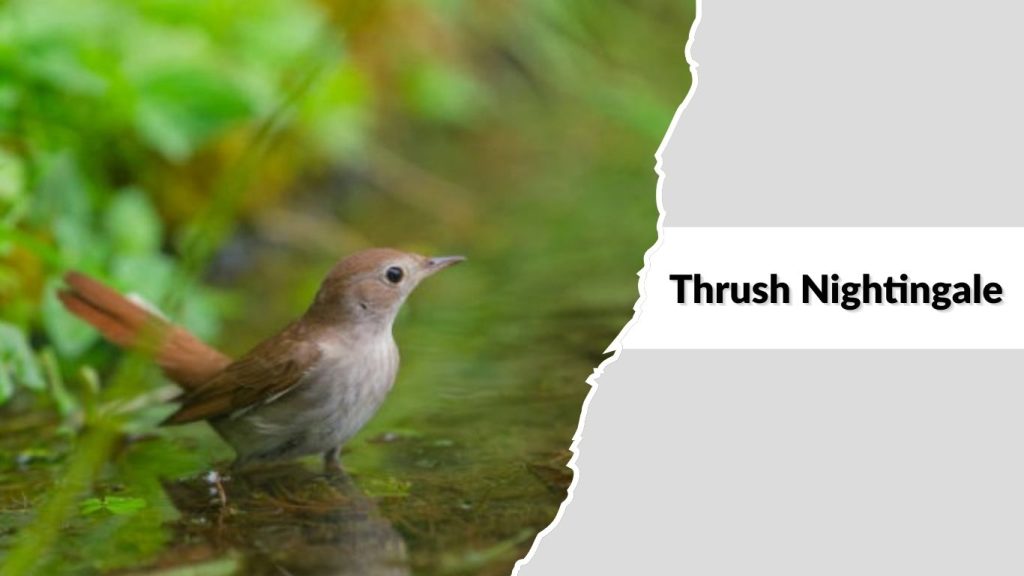
The Thrush Nightingale is a close relative of the Common Nightingale and is equally admired for its powerful, flute-like song. It is slightly larger and darker in appearance and is widely distributed across Eastern and Northern Europe and western Asia. Its rich, resonant voice often carries through forests and river valleys, especially during the breeding season.
Identification
- Medium-sized songbird, about 16–17 cm long
- Dark brown upperparts with little contrast
- Buff to grayish underparts
- Large, dark eyes
- Stronger-looking body than the Common Nightingale
- Straight, pointed beak suited for insect feeding
Habitat
Thrush Nightingales prefer moist woodlands, forest edges, riverside thickets, and dense scrub. They are often associated with areas near water, such as floodplains and marshy woodland. During winter, they migrate to eastern and southern Africa, where they occupy thick bushes and forest undergrowth.
Behavior
They are shy, ground-foraging birds that spend much of their time hidden in dense vegetation. Males sing loudly from concealed perches, producing deep whistles, rich notes, and rolling phrases. Their song is often slower and more flute-like than that of the Common Nightingale.
Diet and Lifespan
Their diet consists mainly of insects, beetles, caterpillars, spiders, and worms. In autumn, they also eat berries and other soft fruits. In the wild, Thrush Nightingales generally live about 3 to 6 years, depending on habitat conditions and predation.
3. Rufous-tailed Nightingale (Luscinia sibilans)
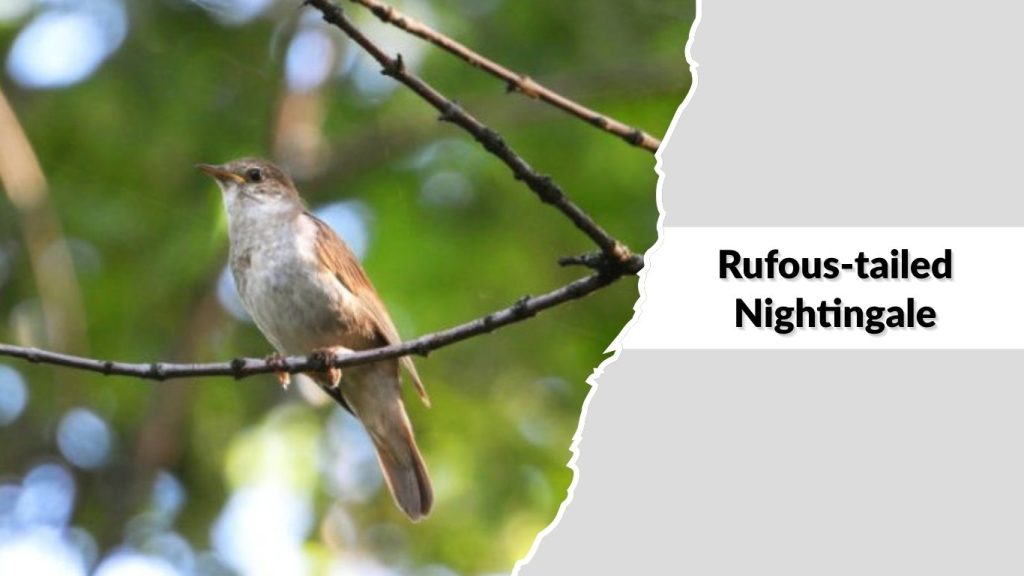
The Rufous-tailed Nightingale is a lesser-known nightingale species found mainly in East Asia. It is admired by bird enthusiasts for its clear, musical song and its subtle but attractive coloration. Although not as famous as the Common Nightingale, it produces a beautiful series of whistles and trills during the breeding season.
Identification
- Medium-sized songbird, about 15–16 cm long
- Olive-brown upperparts
- Pale grayish to whitish underparts
- Distinct rufous or reddish-brown tail
- Large dark eyes
- Slim body with a fine, straight beak
Habitat
Rufous-tailed Nightingales live in deciduous and mixed forests, forest edges, and dense undergrowth. They are often found near streams and damp woodland areas where insects are abundant. In winter, they migrate to Southeast Asia, occupying thick scrub and secondary forests.
Behavior
They are shy and secretive birds that usually stay close to the ground. Males sing from hidden perches, delivering clear whistles, trills, and varied notes. Their song is strong but slightly softer and less explosive than that of the Common Nightingale.
Diet and Lifespan
Their diet mainly consists of insects, larvae, spiders, and small invertebrates. During autumn and winter, they may also consume berries. In the wild, Rufous-tailed Nightingales are believed to live around 3 to 5 years under natural conditions.
4. Indian Blue Robin (Indian Nightingale) (Larvivora brunnea)
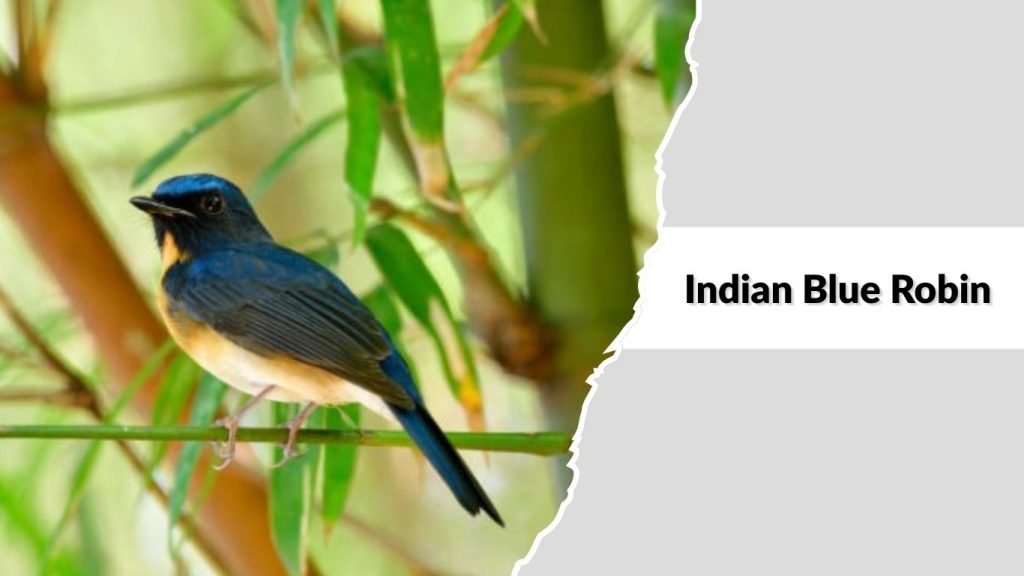
The Indian Blue Robin, often called the Indian Nightingale, is a beautifully colored songbird found across the Indian subcontinent and parts of Southeast Asia. Although not a true nightingale, it is widely grouped with nightingales because of its rich, melodious song and secretive forest lifestyle.
Identification
- Small to medium-sized songbird, about 13–14 cm long
- Adult males show deep blue upperparts and face
- Underparts are pale gray to whitish
- Females are brownish with lighter underparts
- Large dark eyes and slender legs
- Fine, straight insect-eating beak
Habitat
Indian Blue Robins inhabit forest undergrowth, bamboo thickets, wooded ravines, and shaded hillsides. They prefer cool, moist environments with dense ground cover. During winter, many populations move to lower elevations and more open woodland.
Behavior
They are shy, ground-dwelling birds that frequently flick their tails and move quickly between bushes. Males sing sweet, clear, flute-like songs from low concealed perches, especially early in the morning and at dusk during breeding season.
Diet and Lifespan
Their diet consists mainly of insects, caterpillars, ants, spiders, and small beetles. They also eat small berries and soft fruits occasionally. In the wild, Indian Blue Robins typically live around 3 to 5 years, depending on habitat quality and predation.
5. Siberian Rubythroat (Calliope calliope)
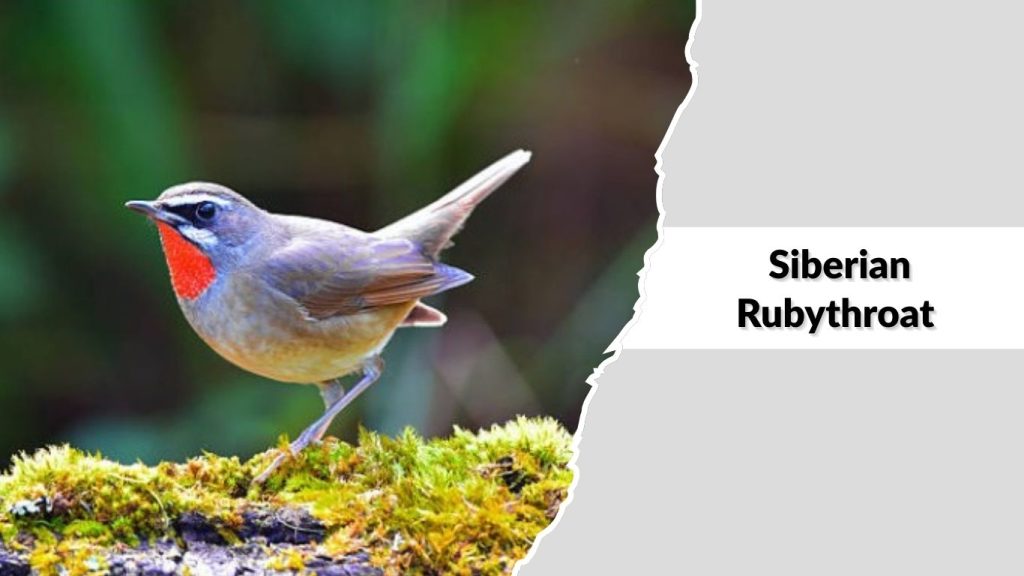
The Siberian Rubythroat is a striking nightingale-like bird known for the brilliant ruby-red throat of adult males and its clear, musical song. Found across northern Asia, it breeds in cold forest regions and migrates long distances to warmer areas in winter.
Identification
- Small songbird, about 13–14 cm long
- Males have a bright ruby-red throat bordered with black and white
- Upperparts are brown to olive-brown
- Underparts pale gray to whitish
- Females lack the red throat and are more plainly colored
- Large dark eyes and a slender, pointed beak
Habitat
Siberian Rubythroats inhabit dense coniferous forests, willow thickets, forest edges, and shrubby tundra during breeding season. In winter, they migrate to South and Southeast Asia, where they live in bamboo groves, scrublands, and forest undergrowth.
Behavior
They are shy, ground-oriented birds that stay low in thick vegetation. Males sing from concealed perches, producing rich whistles and varied phrases. During migration, they are often seen flicking their tails and hopping among bushes.
Diet and Lifespan
Their diet mainly includes insects, larvae, spiders, ants, and small beetles. In winter, they may also eat berries and soft fruits. In the wild, Siberian Rubythroats generally live about 3 to 6 years.
6. White-throated Robin (Irania gutturalis)
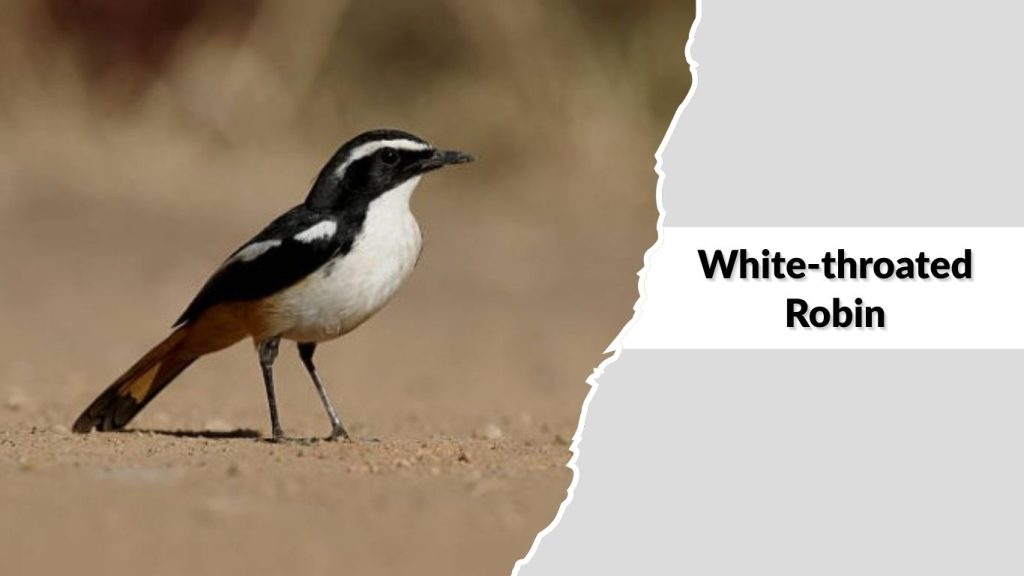
The White-throated Robin is a striking, nightingale-like songbird known for its bold facial pattern and rich, flute-like song. It breeds in rocky mountain regions of Western and Central Asia and is often grouped with nightingales because of its beautiful voice and secretive habits.
Identification
- Medium-sized songbird, about 15–16 cm long
- Males have a bright white throat bordered by black
- Bluish-gray upperparts with darker wings
- Pale underparts with contrasting markings
- Females are duller, more brownish-gray
- Slender body with long legs and a fine, straight beak
Habitat
White-throated Robins prefer rocky slopes, alpine scrub, mountain valleys, and open woodland with scattered bushes. During winter, they migrate to South Asia and northeastern Africa, where they inhabit scrublands, gardens, and forest edges.
Behavior
They are shy but active birds that often forage on the ground or low branches. Males sing clear, melodic songs from exposed rocks or shrubs during the breeding season. They frequently flick their wings and tails while moving through vegetation.
Diet and Lifespan
Their diet consists mainly of insects, beetles, caterpillars, ants, and spiders, along with occasional berries. In the wild, White-throated Robins typically live around 3 to 6 years.
7. Bluethroat (Luscinia svecica)

The Bluethroat is a colorful, nightingale-like songbird known for the brilliant blue patch on the male’s throat and its rich, varied song that often includes mimicry of other birds. It breeds across northern Europe and Asia and migrates to warmer regions in winter.
Identification
- Small songbird, about 13–14 cm long
- Males have a bright blue throat with a central white or red spot
- Brown upperparts and pale underparts
- Females have a pale throat with less color
- Large dark eyes and slender legs
- Fine, pointed insect-eating beak
Habitat
Bluethroats inhabit wetlands, marsh edges, tundra, riverbanks, and shrubby meadows. They prefer low vegetation near water. In winter, they migrate to southern Europe, North Africa, and South Asia, living in reed beds and scrub.
Behavior
They are active, low-flying birds that often stay near the ground. Males sing from bushes or low perches, delivering complex songs mixed with imitations. Bluethroats frequently flick their tails and make short hopping flights.
Diet and Lifespan
Their diet mainly includes insects, larvae, spiders, small crustaceans, and occasionally berries. In the wild, Bluethroats generally live about 3 to 5 years.
FAQs
What makes nightingales famous around the world?
Nightingales are famous mainly because of their powerful, complex, and melodious songs. Males can produce a wide range of whistles, trills, and gurgling notes, often singing at night when fewer background sounds are present. Their beautiful voice has inspired poetry, music, and folklore for centuries.
Do all nightingales sing at night?
Not all nightingale-type birds sing only at night. While Common Nightingales are well known for nighttime singing, most nightingales also sing during the day, especially at dawn. Night singing is most common during breeding season when males are defending territory and attracting mates.
Where do nightingales usually live?
Nightingales prefer habitats with dense undergrowth such as woodland edges, scrublands, riverbanks, forest thickets, and gardens. Many species breed in Europe or Asia and migrate long distances to Africa or South Asia for winter, where similar dense vegetation provides food and shelter.
What do nightingales eat in the wild?
Nightingales mainly feed on insects, beetles, caterpillars, ants, spiders, and other small invertebrates. In late summer and autumn, they also eat berries and soft fruits. This diet provides the high energy they need for singing, breeding, and long migratory journeys.
How long do nightingales usually live?
In the wild, most nightingales live between 3 and 6 years. Their lifespan depends on factors such as food availability, habitat quality, migration risks, and predation. Some individuals may survive longer if they avoid disease and major environmental threats.