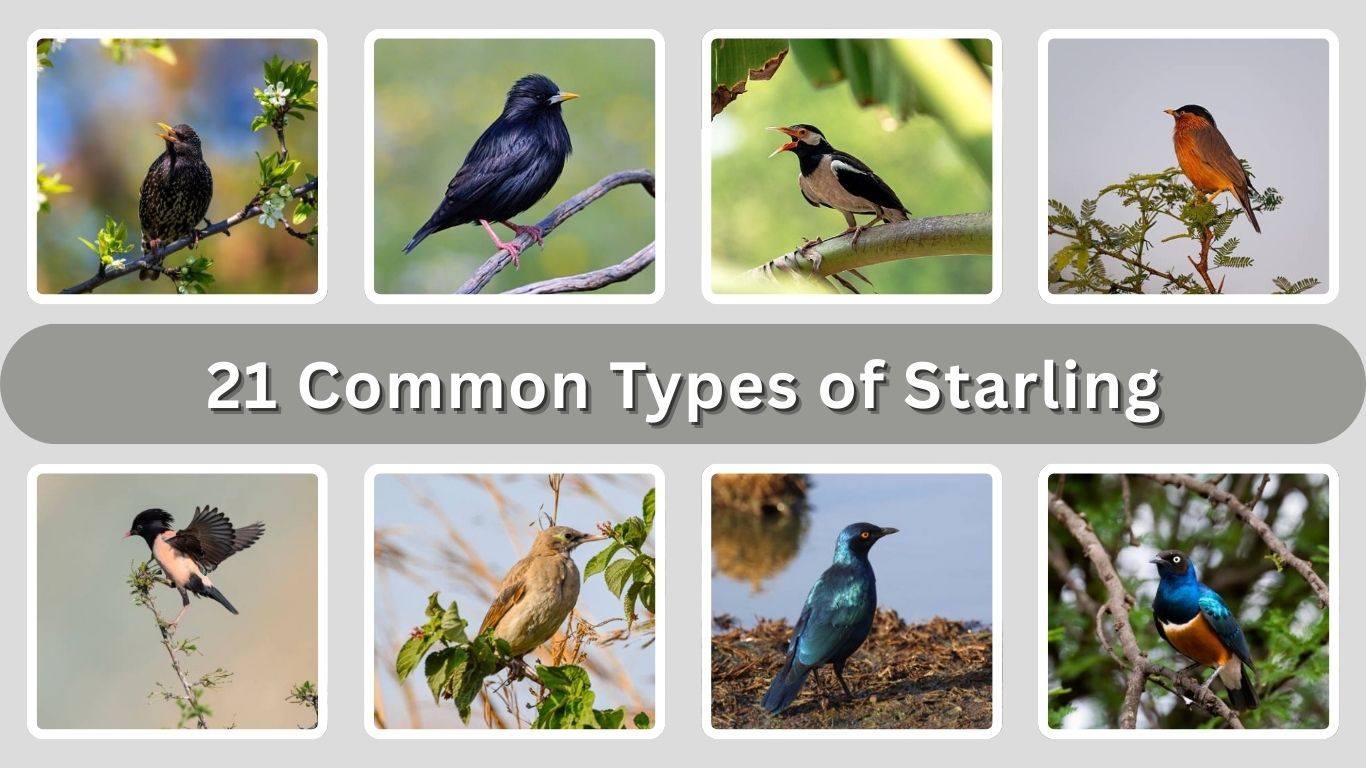
Starlings are lively, intelligent birds found across Europe, Asia, Africa, and Australia, famous for their glossy feathers, social behavior, and impressive vocal abilities. Some species form massive flocks that create breathtaking sky patterns, while others are brightly colored forest dwellers or powerful mimics of sounds and human speech. From farmland and cities to rainforests and savannas, starlings thrive in a wide range of habitats. In this guide, you’ll explore 20 common types of starling birds, learning how diverse this fascinating bird family truly is.
1. Common Starling (European Starling)
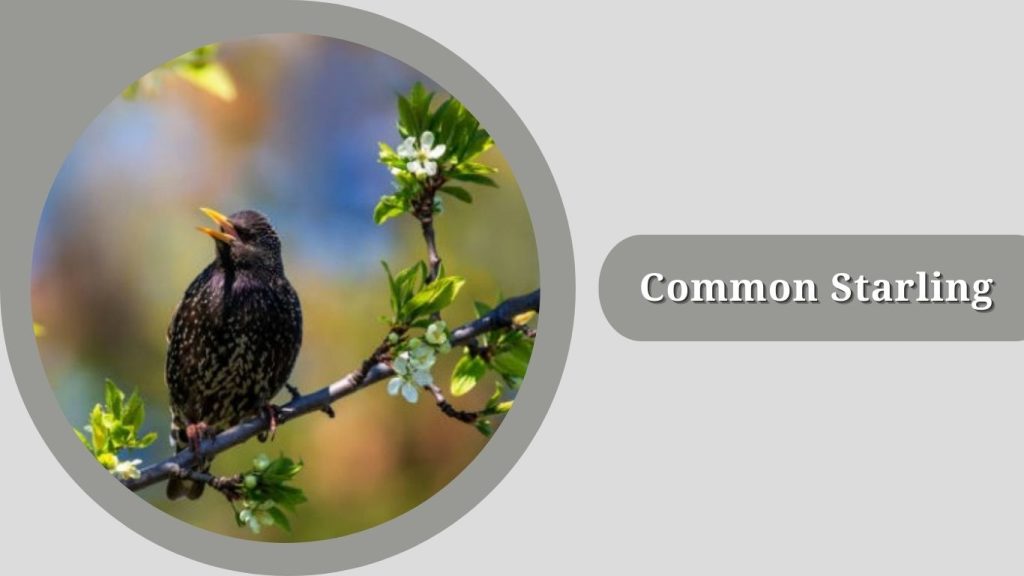
The Common Starling is one of the most widespread and adaptable birds in the world. Famous for its glossy black feathers speckled with white and its ability to mimic sounds, this starling thrives in cities, farms, and natural landscapes alike. It is highly social and often seen in huge flocks performing spectacular aerial displays called murmurations.
Habitat
Common Starlings live in a wide variety of habitats, including open woodlands, farmland, grasslands, city parks, gardens, and urban areas. They prefer places with short grass for feeding and nearby trees, buildings, or cavities for nesting.
Range
Originally native to Europe, western Asia, and North Africa, the Common Starling has been introduced to many other parts of the world. Today it is widespread across North America, South Africa, Australia, and New Zealand, making it one of the most successful introduced bird species.
Behaviors
Common Starlings are extremely social, intelligent, and vocal. They often gather in massive flocks, especially in the non-breeding season. They are excellent mimics, copying other birds, animals, and even mechanical sounds. While foraging, they walk on the ground probing soil for insects and larvae.
Nest
They are cavity nesters and build their nests in tree holes, rock crevices, building vents, roofs, and nest boxes. The nest is made from grass, straw, feathers, and other soft materials. Both parents help build the nest and care for the chicks, which usually hatch after about two weeks.
2. Spotless Starling (Sturnus unicolor)
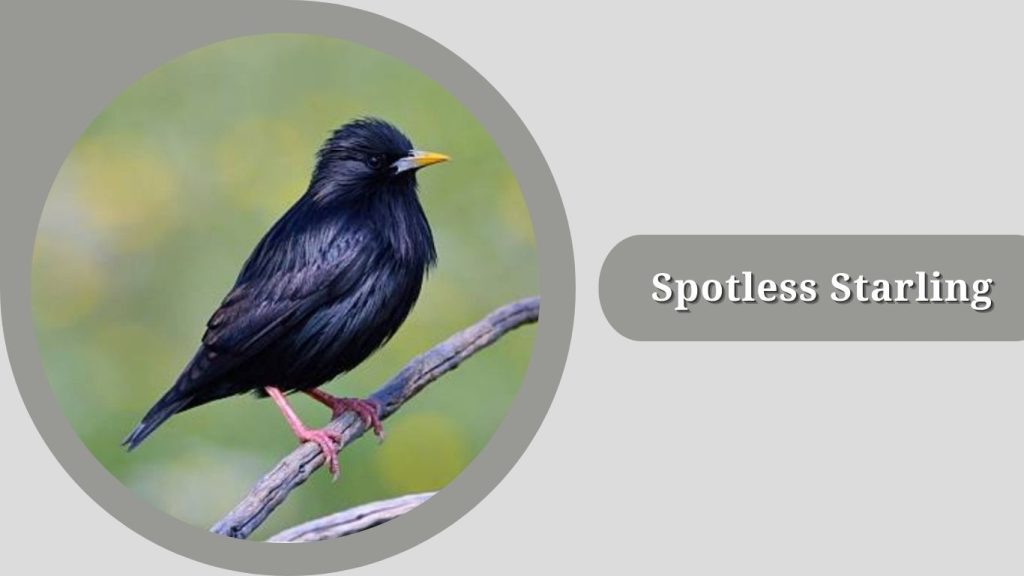
The Spotless Starling is a close relative of the Common Starling and is easily recognized by its glossy black plumage without white speckles. It is native mainly to southwestern Europe and parts of North Africa, where it often lives near farms and towns.
Habitat
Spotless Starlings prefer open woodlands, farmland, orchards, olive groves, grasslands, and urban areas. They are especially common in agricultural landscapes with scattered trees and buildings.
Range
This species is found primarily in Spain and Portugal, southern France, Italy, and parts of northwest Africa. It has also expanded its range into some neighboring regions over time.
Behaviors
Spotless Starlings are highly social birds that form large flocks outside the breeding season. They are noisy, active, and often seen foraging on the ground for insects, seeds, and scraps.
Nest
They nest in cavities such as holes in trees, cliffs, walls, and buildings. Nests are built from grass, straw, feathers, and leaves. Both parents participate in feeding the chicks.
3. Asian Pied Starling (Gracupica contra)
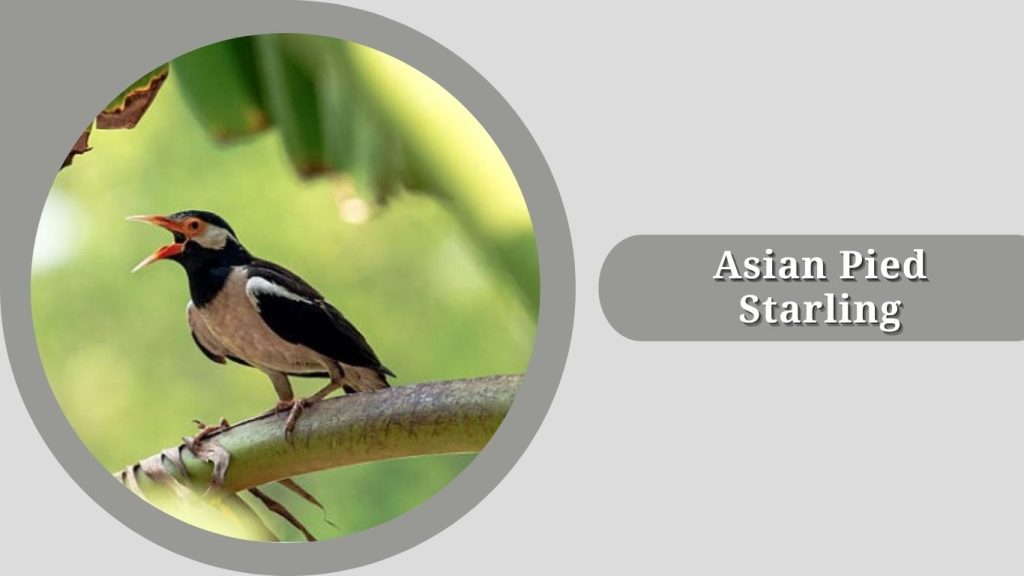
The Asian Pied Starling, also known as the Pied Myna, is a striking black-and-white starling commonly seen across South and Southeast Asia. It is very adaptable and often lives close to human settlements.
Habitat
This starling inhabits open countryside, wetlands, agricultural fields, city parks, and villages. It favors areas near water and open feeding grounds.
Range
Asian Pied Starlings are native to the Indian subcontinent, southern China, and much of Southeast Asia, including Thailand, Myanmar, and Indonesia.
Behaviors
They are social, bold, and noisy birds, frequently seen in small groups or large flocks. They forage on the ground, eating insects, grains, fruits, and scraps.
Nest
They nest in tree cavities, holes in buildings, and sometimes old nests of other birds. The nest is made of grass, twigs, and feathers, and both parents care for the young.
4. Brahminy Starling (Sturnia pagodarum)
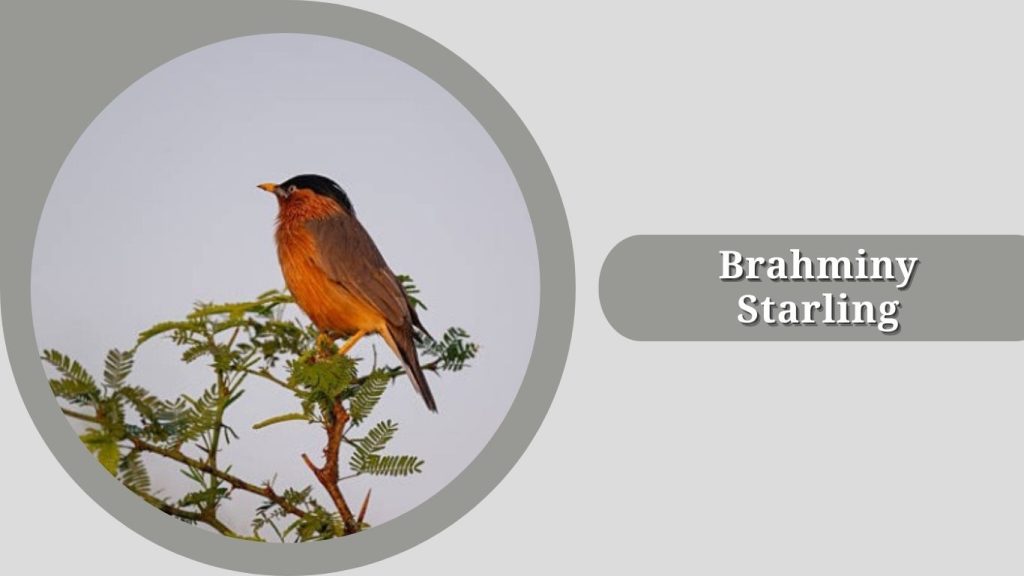
The Brahminy Starling is a beautiful small starling known for its black crested head and warm buff-orange body. It is common across the Indian subcontinent and often seen perched openly on trees, wires, and buildings.
Habitat
Brahminy Starlings live in open woodlands, farmland, groves, gardens, city parks, and village areas. They prefer open country with scattered trees.
Range
This species is native to India, Sri Lanka, Nepal, and Bangladesh, and is also found in parts of Pakistan and Southeast Asia.
Behaviors
They are social, gentle birds usually seen in pairs or small flocks. They feed mainly on insects and fruits and are active, agile flyers.
Nest
Brahminy Starlings nest in tree holes, building crevices, and occasionally nest boxes. The nest is lined with grass, feathers, and soft plant material. Both parents care for the chicks.
5. Rosy Starling (Pastor roseus)
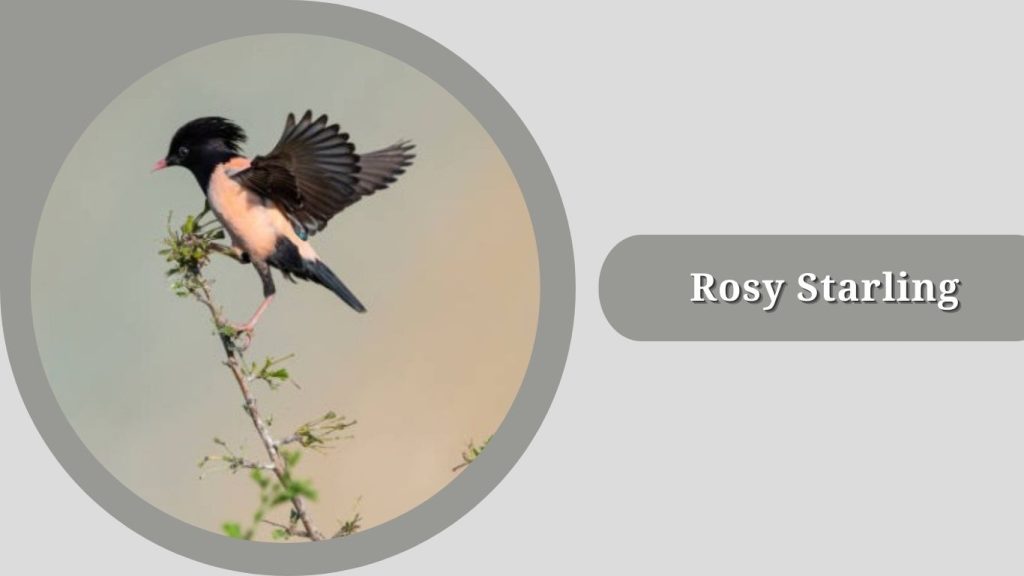
The Rosy Starling is a striking migratory species famous for its pink body and glossy black head, wings, and tail. It often forms enormous flocks, especially during migration.
Habitat
Rosy Starlings inhabit open grasslands, steppes, farmlands, and semi-desert regions. During breeding, they often use rocky hillsides and open plains.
Range
They breed from eastern Europe through Central Asia and migrate to South Asia and the Middle East during winter.
Behaviors
Rosy Starlings are highly social and often travel in huge flocks. They are especially important for controlling locust populations, which form a major part of their diet.
Nest
They nest in large colonies in rock crevices, walls, cliffs, and sometimes buildings. Nests are made of grass and lined with feathers. Both parents feed the young.
6. Wattled Starling (Creatophora cinerea)
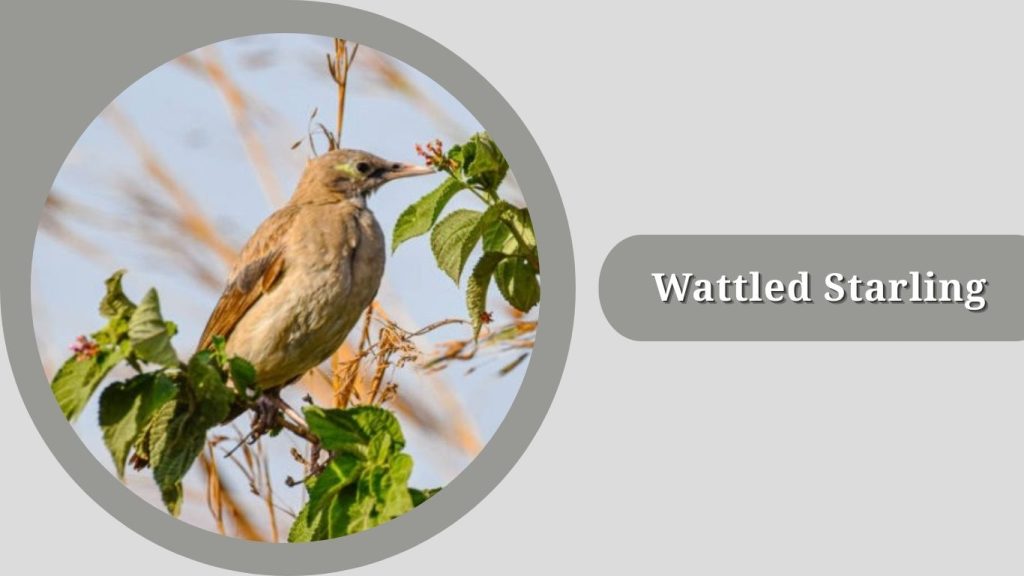
The Wattled Starling is an unusual-looking African starling, best known for the bare facial skin and fleshy wattles that develop on breeding adults. It is a highly social bird often seen in massive flocks.
Habitat
Wattled Starlings live mainly in open grasslands, savannas, floodplains, and agricultural fields. They are closely associated with grazing animals and wet ground.
Range
They are found widely across sub-Saharan Africa, especially in eastern and southern regions.
Behaviors
Wattled Starlings are nomadic and move in large flocks following rainfall and insect outbreaks. They often forage around livestock, feeding on insects disturbed by grazing animals.
Nest
They nest in dense colonies in trees or shrubs, often near water. Nests are loosely built from grass and lined with softer plant material. Breeding is strongly linked to rainfall patterns.
7. Cape Starling (Lamprotornis nitens)

The Cape Starling is a glossy, dark starling with subtle green and purple iridescence. It is common and easily recognized in southern Africa.
Habitat
Cape Starlings inhabit open woodlands, savannas, farmlands, gardens, and urban parks. They adapt well to human environments.
Range
This species is native to southern Africa, including South Africa, Namibia, Botswana, and Zimbabwe.
Behaviors
Cape Starlings are social, vocal, and often seen in flocks. They walk on the ground while foraging and feed on insects, fruits, and scraps.
Nest
They nest in tree cavities, holes in buildings, and nest boxes. The nest is built from grass, leaves, and feathers, and both parents care for the young.
8. Superb Starling (Lamprotornis superbus)
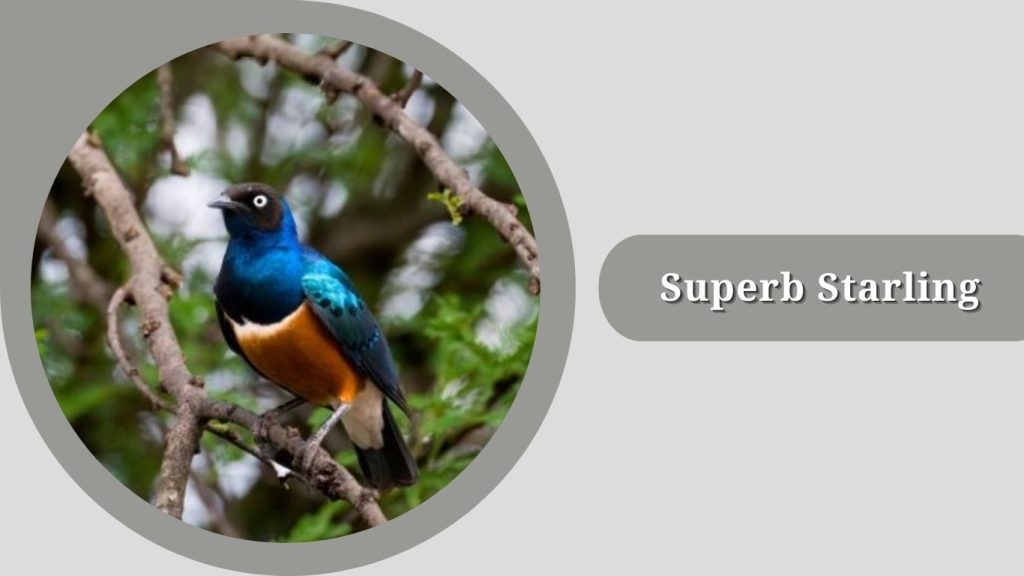
The Superb Starling is one of the most colorful starlings in the world, famous for its bright metallic blues, greens, chestnut, and white patterns. It is very common in East Africa and is often seen confidently walking around hotels, parks, and savannas.
Identification
- Metallic blue-green head and back
- Bright white chest and belly
- Rich chestnut belly band
- Long dark tail with glossy shine
- Sharp black bill and strong legs
Habitat
Superb Starlings live in savannas, open woodlands, thorn scrub, gardens, city parks, and lodge grounds. They prefer open areas with scattered trees and nearby water sources.
Behaviors
They are highly social, noisy, and intelligent birds. Superb Starlings are often seen in active flocks, foraging on the ground for insects and scraps. They are bold around humans and use many different calls to communicate within the group.
9. Violet-backed Starling (Cinnyricinclus leucogaster)
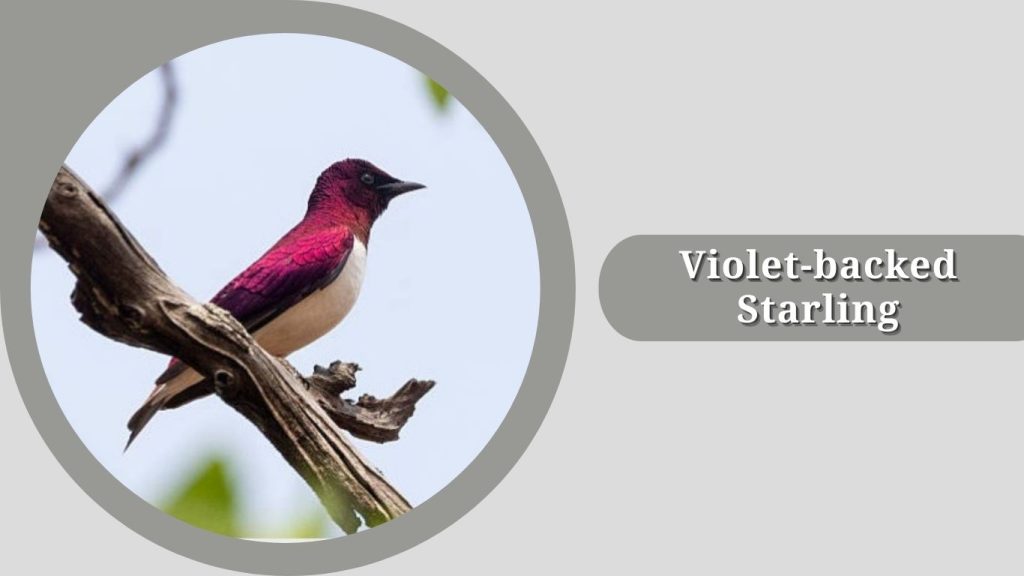
The Violet-backed Starling is a small but dazzling starling known for the male’s brilliant purple back and snowy white underside. It is one of the most visually striking African starlings.
Identification
- Shining violet-purple back and wings (male)
- Pure white belly and underparts
- Black bill and dark eyes
- Short tail and compact body
- Females are brownish with streaked underparts
Habitat
This species inhabits open woodlands, forest edges, savannas, riverine forests, and gardens. It is often found near fruiting trees.
Behaviors
Violet-backed Starlings are active, agile, and usually seen in pairs or small groups. They feed mainly on fruits and insects and move quickly through trees while calling softly to each other.
10. Purple Starling (Lamprotornis purpureus)
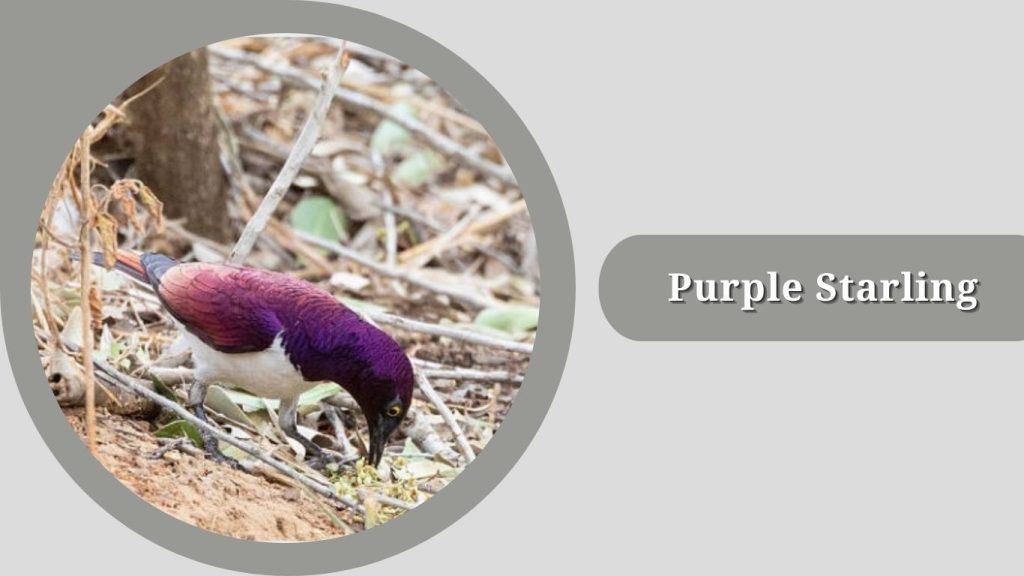
The Purple Starling is a glossy African starling with rich purple and green iridescence. It is often seen in noisy groups and is well known for its bright metallic shine in sunlight.
Identification
- Deep purple and green glossy plumage
- Dark wings and tail with metallic sheen
- Sharp black bill
- Dark eyes and strong legs
- Medium-sized starling body
Habitat
Purple Starlings inhabit open woodlands, savannas, forest edges, and cultivated areas. They are especially common near fruiting trees.
Behaviors
They are social, vocal, and active birds. Purple Starlings often forage in groups, feeding on insects and fruits, and are quick to mob predators.
11. Greater Blue-eared Starling (Lamprotornis chalybaeus)
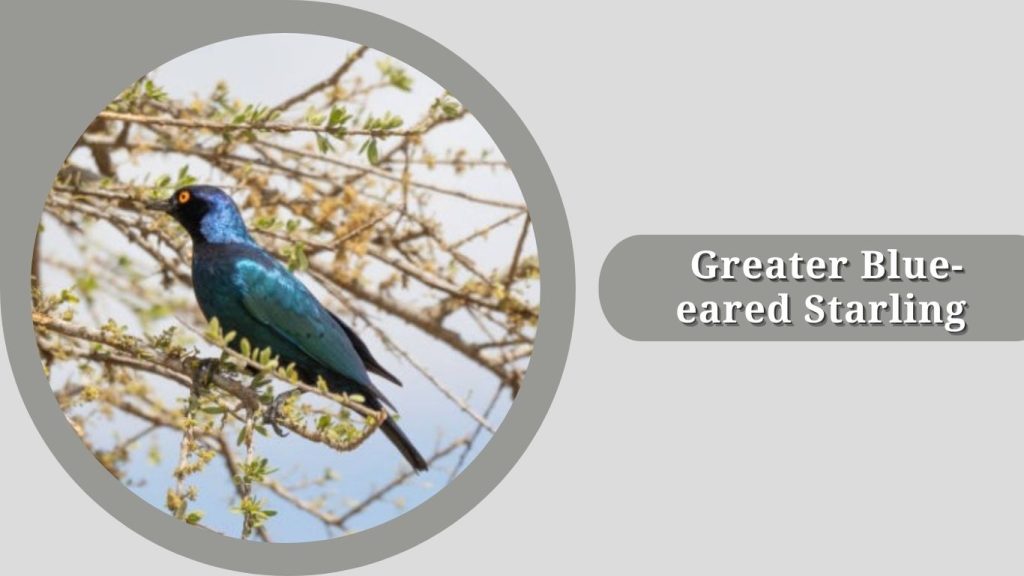
The Greater Blue-eared Starling is one of the most widespread glossy starlings in Africa, known for its intense blue-green iridescence and striking red eyes.
Identification
- Brilliant blue-green metallic plumage
- Distinct bright red eyes
- Long tail and sleek body
- Strong black bill
- Glossy wings with green and purple tones
Habitat
This species lives in savannas, open woodlands, farmland, and town outskirts. It often feeds on the ground in open areas.
Behaviors
Greater Blue-eared Starlings are highly social and often gather in large flocks. They are noisy, alert birds that forage for insects, fruits, and scraps both on the ground and in trees.
12. Lesser Blue-eared Starling (Lamprotornis chloropterus)
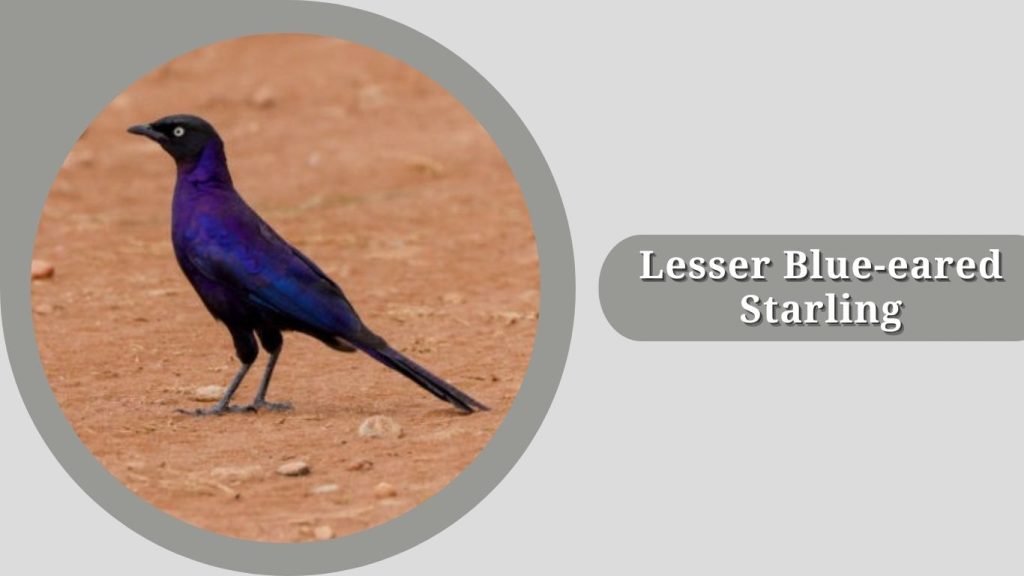
The Lesser Blue-eared Starling is a sleek, metallic starling very similar to the Greater Blue-eared Starling, but generally smaller and with a shorter tail. Its glossy plumage shines bright green and blue in strong sunlight.
Identification
- Shimmering green-blue metallic feathers
- Dark eyes and black bill
- Shorter tail compared to Greater Blue-eared Starling
- Slender, streamlined body
- Glossy wings with emerald tones
Habitat
They inhabit open savannas, woodlands, farmlands, and grassy plains. They are frequently seen walking on the ground while foraging.
Behaviors
Lesser Blue-eared Starlings are social and energetic birds. They forage in flocks, often mixing with other starling species, and feed on insects, fruits, and seeds.
13. Golden-breasted Starling (Lamprotornis regius)
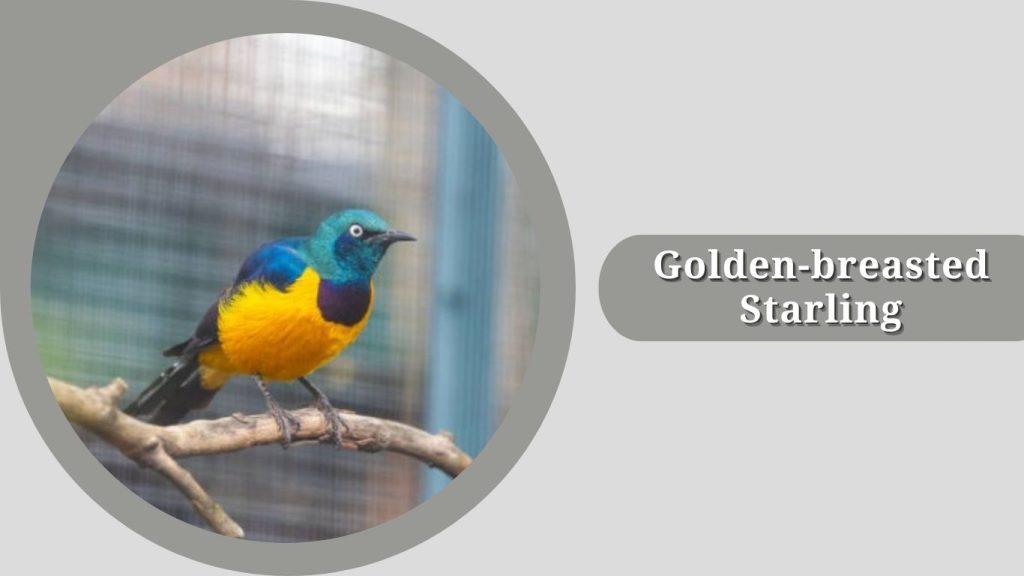
The Golden-breasted Starling is one of Africa’s most spectacular birds, known for its brilliant golden-orange chest and striking blue-green body.
Identification
- Bright golden-yellow breast
- Iridescent blue-green head and wings
- White band across the belly
- Dark tail and black bill
- Bold facial markings
Habitat
Golden-breasted Starlings live in dry savannas, acacia woodlands, and open thorn scrub, especially in East Africa.
Behaviors
They are social, often seen in pairs or small flocks. Golden-breasted Starlings are agile, fast flyers and feed mainly on insects and fruits.
14. Long-tailed Glossy Starling (Lamprotornis caudatus)
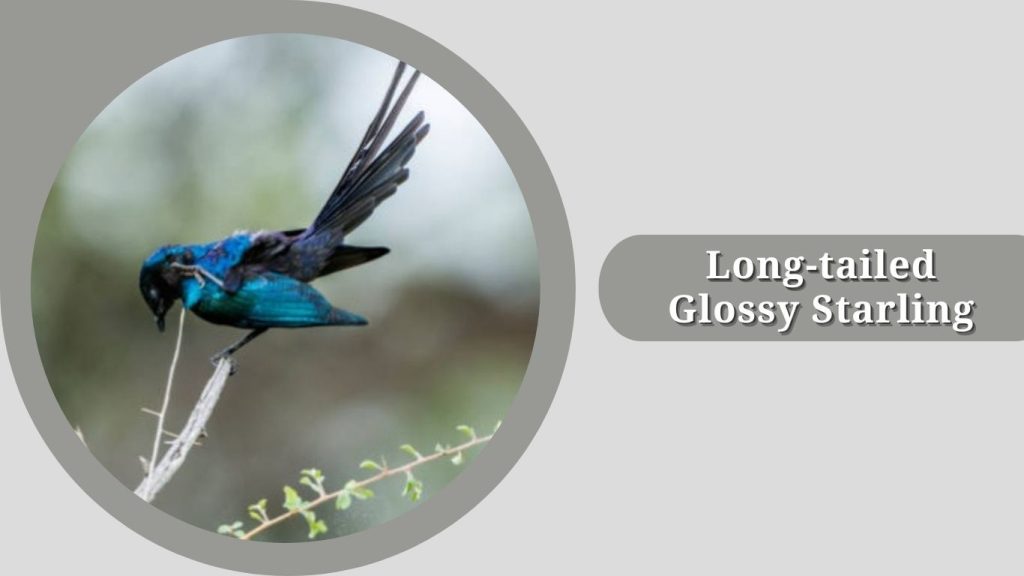
The Long-tailed Glossy Starling is a striking African starling best known for its extremely long tail and bright metallic blue-green plumage.
Identification
- Very long, flowing tail feathers
- Brilliant blue-green glossy body
- Dark wings with metallic shine
- Black bill and legs
- Slender, elegant appearance
Habitat
This species inhabits dry savannas, open woodlands, semi-desert regions, and cultivated lands. It often perches on tall trees or buildings.
Behaviors
Long-tailed Glossy Starlings are active and social. They forage on the ground for insects and fruits and are often seen in small flocks or loose groups.
15. Splendid Starling (Lamprotornis splendidus)
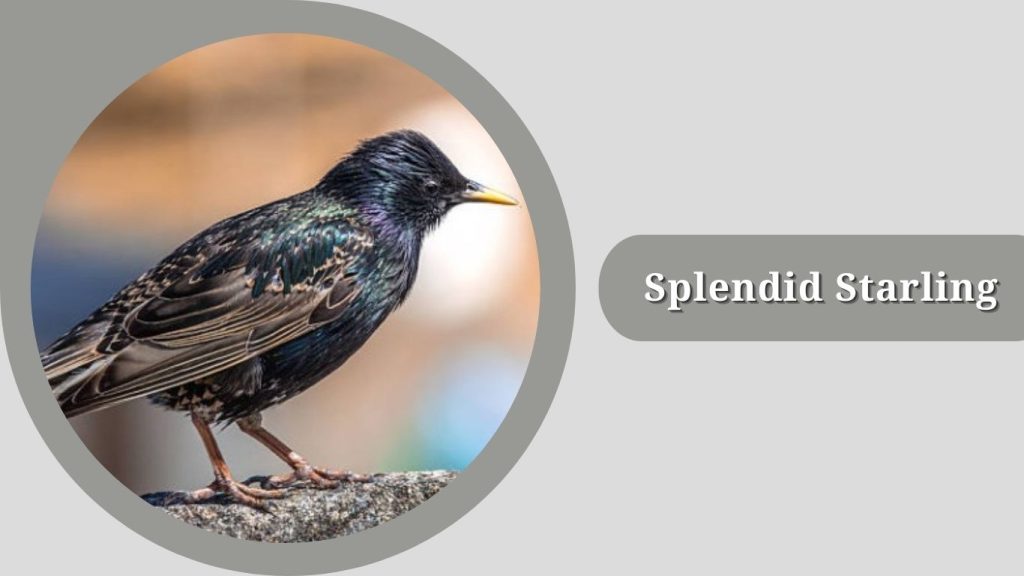
The Splendid Starling is a vividly colored species with rich blue, green, and purple iridescence, making it one of the most eye-catching birds of West Africa.
Identification
- Brilliant blue head and neck
- Green and purple iridescent body
- Dark wings and tail
- Black bill and strong legs
- Medium-sized glossy starling
Habitat
They inhabit tropical forests, forest edges, savannas, and cultivated areas.
Behaviors
Splendid Starlings are lively, social birds. They forage in trees and on the ground, feeding mainly on fruits and insects, and often gather in noisy groups.
16. Emerald Starling (Lamprotornis iris)
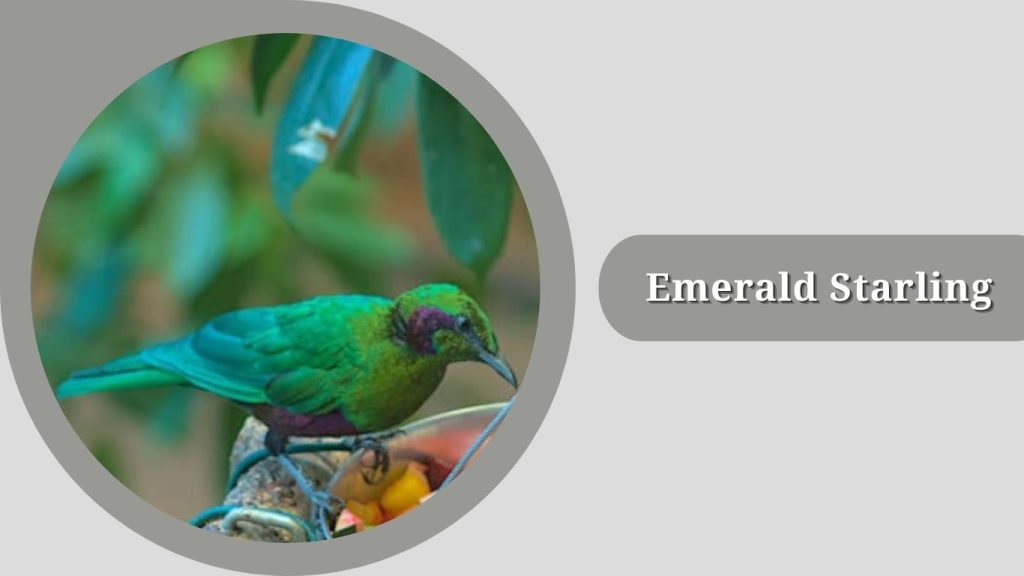
The Emerald Starling is a rare and beautiful West African starling known for its glowing green body and contrasting purple-blue face. It is mostly seen in small groups and is one of the most visually striking glossy starlings.
Identification
- Bright emerald-green body
- Deep violet-blue face and throat
- Black wings with glossy sheen
- Sharp black bill and dark eyes
- Medium-sized, sleek build
Habitat
Emerald Starlings inhabit tropical lowland forests, forest edges, clearings, and wooded savannas. They are strongly associated with dense tree cover and fruiting forests.
Behaviors
They are active, social birds often moving in small flocks. Emerald Starlings feed mainly on fruits and insects and are agile climbers, frequently calling softly while moving through tree canopies.
17. Red-billed Starling (Spodiopsar sericeus)
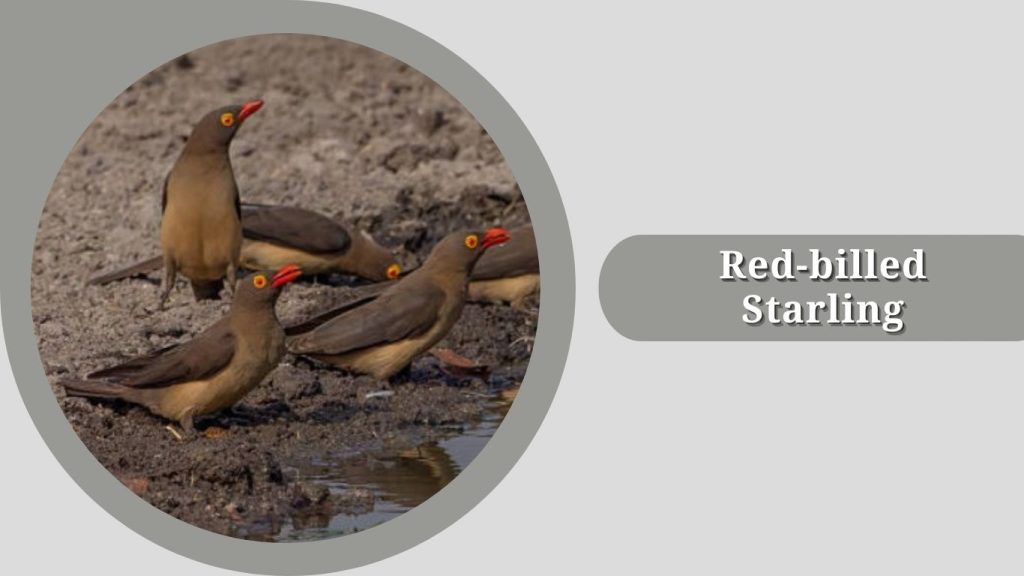
The Red-billed Starling is a bold East Asian starling easily recognized by its bright red bill and contrasting black, gray, and white plumage.
Identification
- Bright red bill
- Black head and upper chest
- Pale gray body and wings
- White patches on wings
- Medium-sized, strong-bodied starling
Habitat
They live in open woodlands, farmlands, wetlands, city parks, and suburban areas. They adapt well to human environments.
Behaviors
Red-billed Starlings are social, noisy birds often seen in flocks. They forage on the ground for insects, grains, and scraps and roost communally, especially outside the breeding season.
18. Chestnut-tailed Starling (Sturnia malabarica)
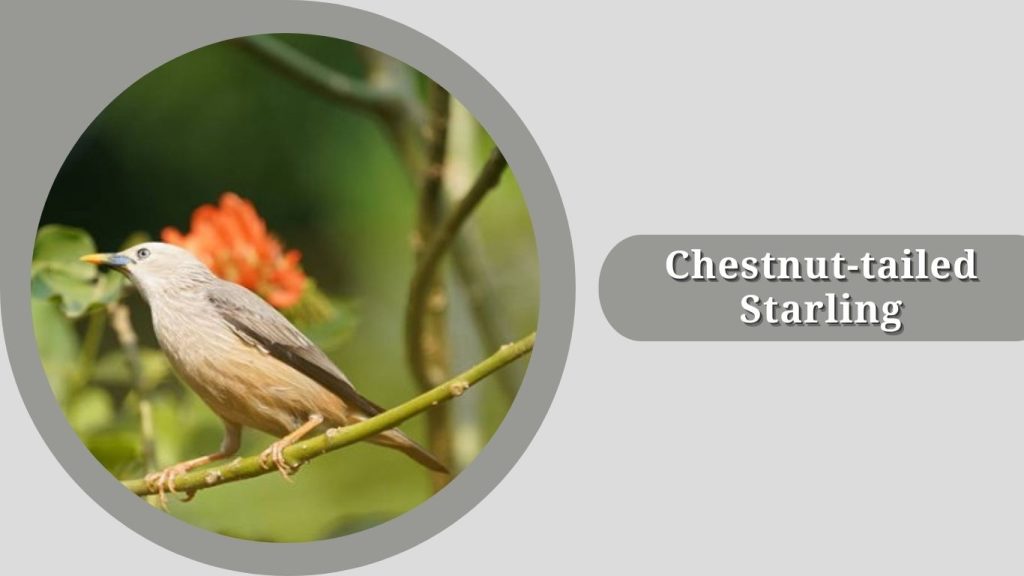
The Chestnut-tailed Starling is a colorful Asian starling known for its pale gray body, dark head, and rich chestnut-colored tail. It is commonly seen perched in open areas and forest edges.
Identification
- Dark glossy head
- Pale gray to buff body
- Rich chestnut tail
- Black wings with pale patches
- Sharp black bill
Habitat
They inhabit open forests, woodland edges, gardens, plantations, and farmland across South and Southeast Asia.
Behaviors
Chestnut-tailed Starlings are social, often seen in small flocks. They feed mainly on insects and fruits and are active, alert birds.
19. Bali Myna (Bali Starling) (Leucopsar rothschildi)
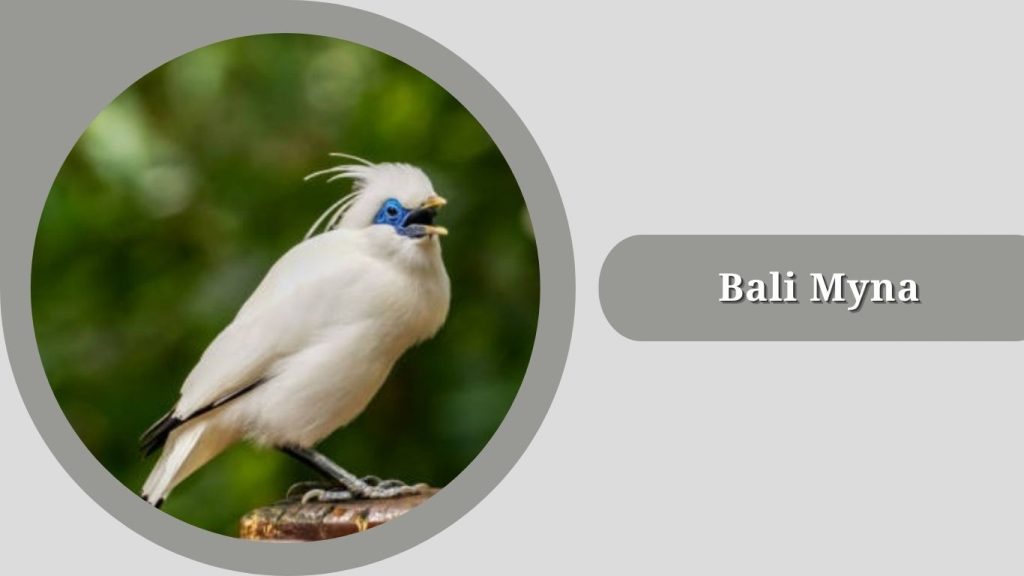
The Bali Myna is a critically endangered white starling native to Bali. It is famous for its pure white feathers, long crest, and bright blue skin around the eyes.
Identification
- Pure white plumage
- Long flowing crest
- Bright blue bare skin around the eyes
- Black wing tips and tail edges
- Pale yellow bill
Habitat
Bali Mynas live in dry lowland forests, savannas, and coastal woodlands.
Behaviors
They are gentle, social birds usually seen in pairs or small groups. Bali Mynas feed on insects, fruits, seeds, and small reptiles and are known for soft, varied calls.
20. Common Hill Myna (Gracula religiosa)
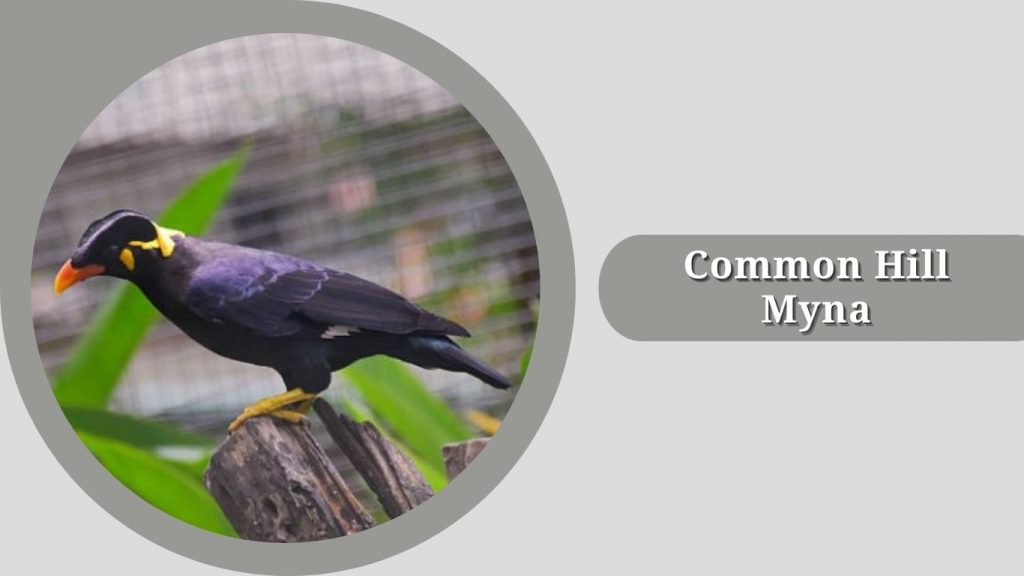
The Common Hill Myna is one of the most famous starlings in the world, widely known for its exceptional ability to mimic human speech and environmental sounds. With its glossy black feathers and bright yellow facial wattles, it is both visually striking and highly intelligent.
Identification
- Glossy jet-black plumage with green and purple shine
- Bright orange-yellow wattles on the sides of the head
- Yellow to orange bill with red interior
- White wing patches visible in flight
- Strong legs and short, rounded tail
Habitat
Common Hill Mynas inhabit tropical forests, forest edges, plantations, orchards, and wooded villages. They prefer warm, humid regions with tall trees and are often found near fruiting trees.
Behaviors
They are intelligent, social, and very vocal birds. Common Hill Mynas are usually seen in pairs or small groups. They are excellent mimics, copying other birds, whistles, and even human speech. They are agile climbers and spend much of their time in the tree canopy feeding and calling.
21. Greater Hill Myna (Gracula religiosa religiosa)
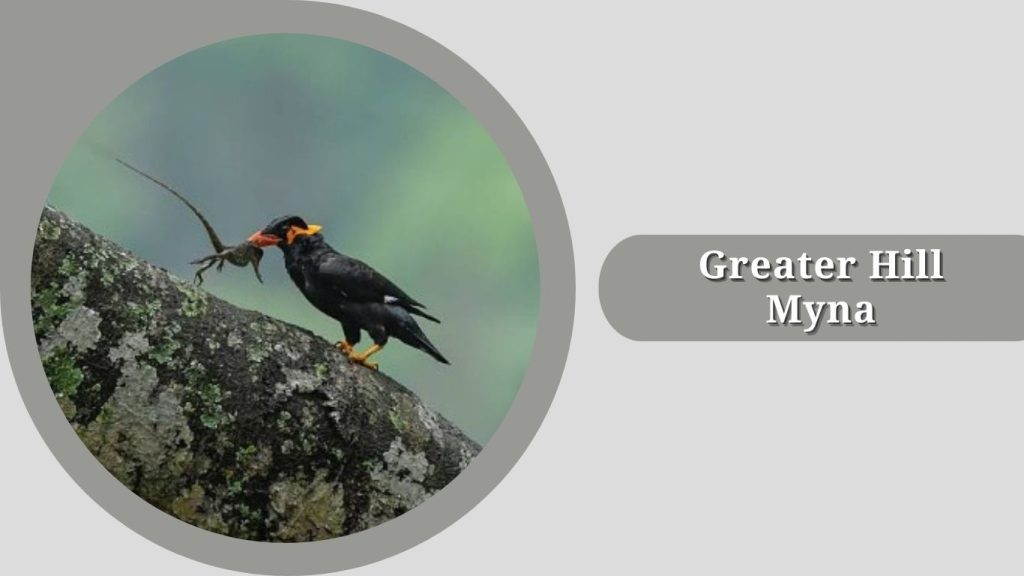
The Greater Hill Myna is the best-known form of the hill myna group and is especially famous in the pet trade due to its powerful voice and clear speech mimicry. It is slightly larger and more robust than many other hill myna types.
Identification
- Large, stocky black starling with metallic gloss
- Thick bright yellow wattles extending behind the eyes
- Strong curved orange-yellow bill
- Bold white wing patches
- Dark eyes with alert expression
Habitat
This bird mainly lives in dense tropical rainforests, forested hills, and mature woodland. It prefers tall, old-growth trees where it can roost, feed, and interact vocally.
Behaviors
Greater Hill Mynas are curious, intelligent, and expressive. They communicate constantly with whistles, screeches, and mimicry. They are strong flyers, active climbers, and often form long-term pair bonds.