


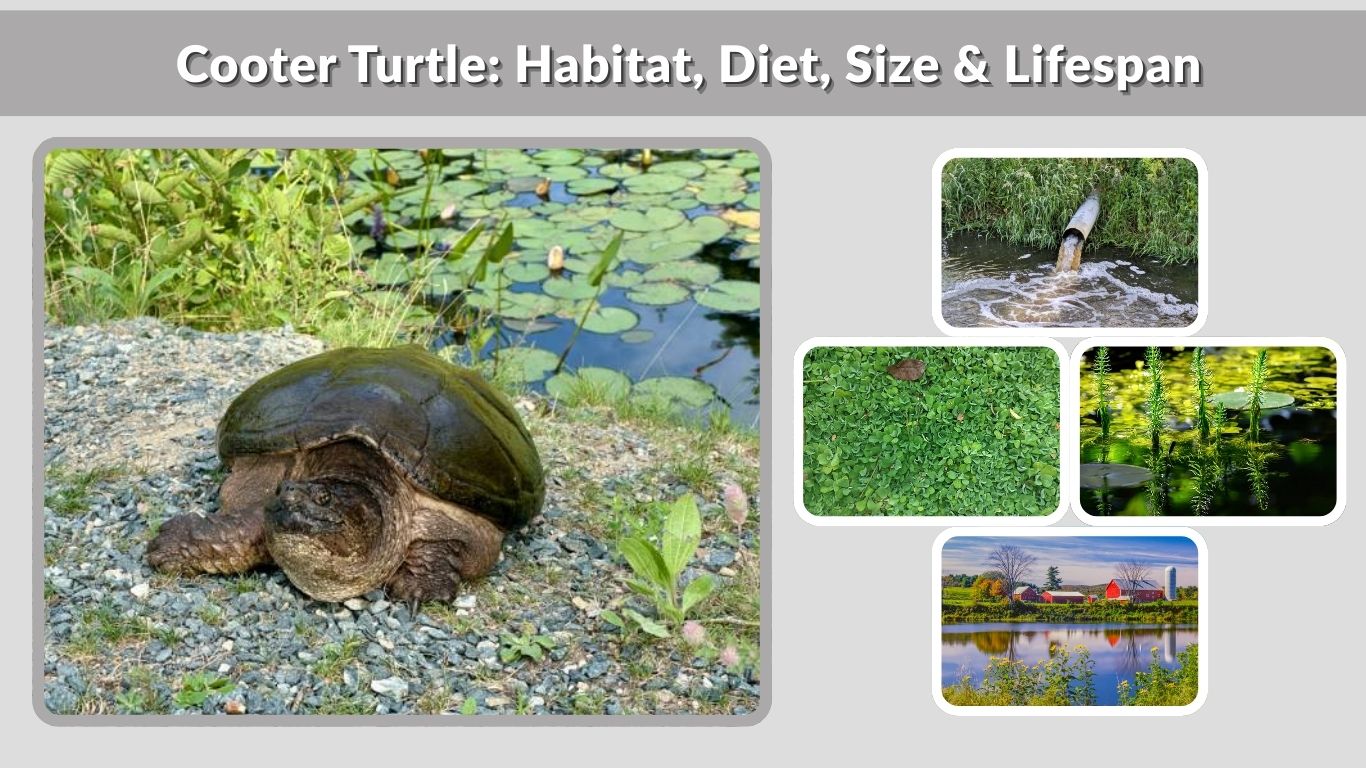
The cooter turtle is a large freshwater turtle belonging to the genus Pseudemys. Commonly found in rivers, lakes, and ponds across the southeastern United States, cooters are well known for their impressive size and frequent basking behavior. They are often confused with sliders due to similar markings and habitat overlap, but cooters differ in diet, growth size, and certain physical traits. In this guide, we’ll explore the cooter turtle’s identification, habitat, and feeding habits to better understand this important aquatic species.
Overview of the Cooter Turtle
Scientific Classification
Cooter turtles belong to the family Emydidae, which includes many common pond and river turtles. The genus Pseudemys includes several recognized species, such as:
- River cooter (Pseudemys concinna)
- Florida cooter (Pseudemys floridana)
- Coastal plain cooter (Pseudemys palustris)
Although these species vary slightly in markings and range, they share many common physical and behavioral traits. All cooters are semi-aquatic and rely heavily on freshwater environments.
Geographic Range
Cooters are native primarily to the southeastern United States. Their range extends from Virginia down through Florida and west into parts of Texas. River cooters are commonly found in flowing rivers and large streams, while Florida and coastal plain cooters are more frequently seen in lakes, marshes, and slow-moving waters.
They prefer warm, temperate climates and are most active in regions with abundant aquatic vegetation.
General Characteristics
Cooters are among the larger freshwater turtles in their range. They are strong swimmers and often seen basking on logs or rocks in groups. Unlike sliders, adult cooters are primarily herbivorous, feeding heavily on aquatic plants.
Because of their size and plant-based diet, cooters play a key role in maintaining the balance of freshwater ecosystems.
Physical Characteristics and Identification
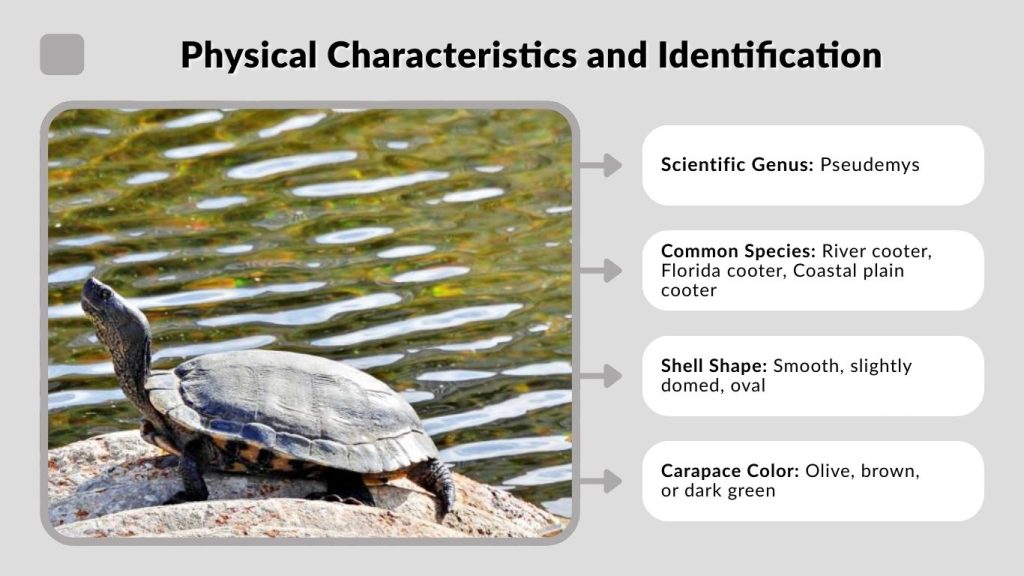
Cooter turtles are large, smooth-shelled freshwater turtles known for their olive-to-brown coloration and light swirling patterns. They closely resemble pond sliders but can be distinguished by their larger adult size and lack of a red ear patch. Their streamlined shell and strong limbs make them excellent swimmers, especially in rivers and larger lakes. Below are the key traits used to identify a cooter turtle.
Key Identification Features
- Scientific Genus: Pseudemys
- Common Species: River cooter, Florida cooter, Coastal plain cooter
- Adult Size:
- Males: 8–12 inches
- Females: 12–16+ inches
- Males: 8–12 inches
- Shell Shape: Smooth, slightly domed, oval
- Carapace Color: Olive, brown, or dark green
- Shell Markings: Light swirl or “C-shaped” patterns
- Plastron (Bottom Shell): Yellow to cream, sometimes faintly marked
- Head & Neck: Thin yellow stripes
- Ear Patch: No red patch (distinguishes from red-eared sliders)
- Male Traits: Longer front claws, thicker tail
- Female Traits: Larger body size
These features help separate cooter turtles from sliders and other similar freshwater species.
Cooter Turtle Habitat
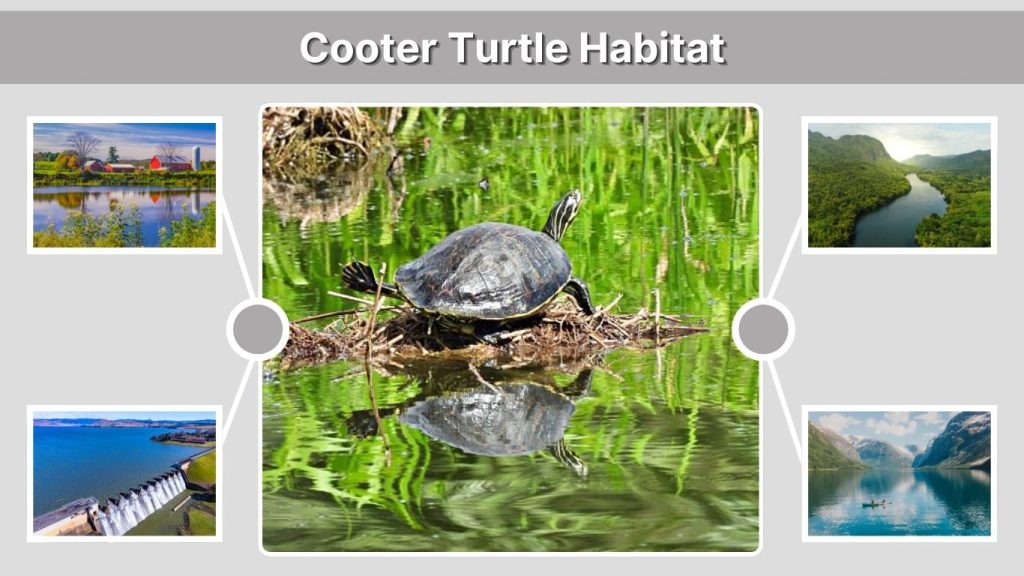
Preferred Water Bodies
Cooter turtle habitat includes a variety of freshwater environments such as:
- Large rivers
- Clear springs
- Lakes
- Farm ponds
- Reservoirs
They prefer permanent bodies of water with stable water levels.
Habitat Requirements
Cooters thrive in areas with abundant aquatic vegetation, which forms the foundation of their diet. Clean to moderately murky water is suitable, as long as plant life is plentiful.
Basking sites are essential. Fallen logs, exposed rocks, and sandbars provide places for turtles to regulate body temperature. Sandy or muddy bottoms allow easy foraging.
Cooter Turtle Diet
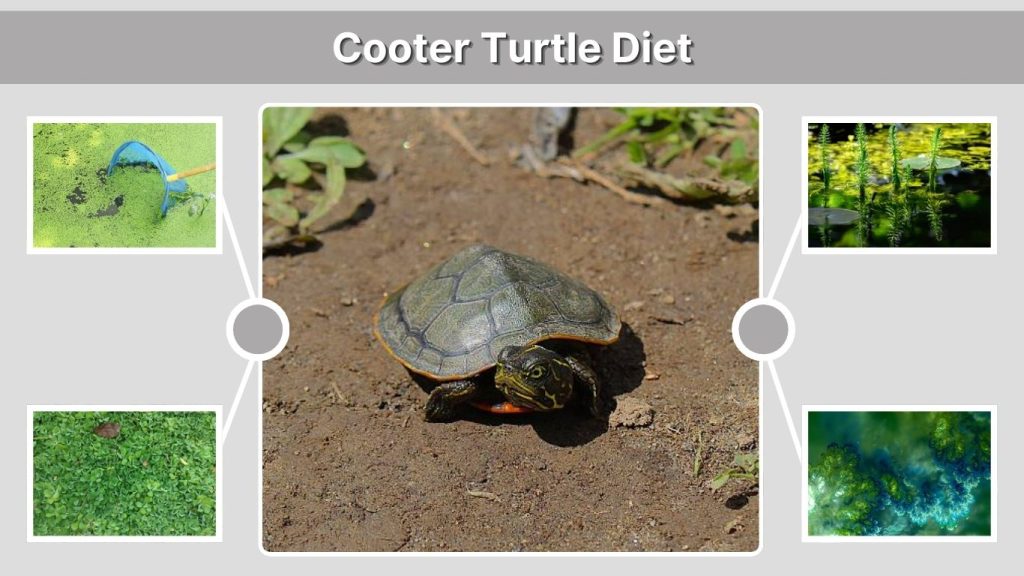
The cooter turtle diet is one of the main traits that separates it from similar species like sliders. Adult cooters are primarily herbivorous, meaning most of their food comes from plant matter. This makes them important grazers in freshwater ecosystems.
What Do Cooter Turtles Eat?
In the wild, cooters commonly feed on:
- Aquatic plants
- Algae
- Pond weeds
- Water lettuce and duckweed
- Submerged grasses
- Occasional insects or small invertebrates
Juveniles may consume more protein than adults, including insects and small aquatic animals. However, as they mature, plant material becomes the dominant part of their diet.
Diet Changes by Age
- Hatchlings and juveniles: More omnivorous, higher protein intake
- Subadults: Mixed diet
- Adults: Mostly herbivorous
This shift helps support rapid growth early in life while allowing adults to thrive on abundant aquatic vegetation.
Feeding Behavior
Cooters typically forage in shallow water, grazing on submerged plants. They may stretch their necks to reach floating vegetation or browse along the bottom. Because of their size and plant-based feeding habits, they help control excessive aquatic plant growth and maintain ecosystem balance.
Cooter Turtle Lifespan and Reproduction
Cooter Turtle Lifespan
The cooter turtle lifespan commonly ranges from 20 to 40 years in the wild. In protected environments with minimal threats, some individuals may live even longer. Their relatively long lifespan, combined with slow maturity, means population recovery can take time if numbers decline.
Breeding Season
Breeding usually occurs in spring and early summer. Courtship takes place in the water, where males use their long front claws to stimulate females.
After mating, females leave the water to search for suitable nesting areas.
Nesting and Hatchlings
Females dig nests in sandy or loose soil, often some distance from the water’s edge. Clutch sizes can range from 10 to 25 eggs depending on the species and size of the female.
After several weeks of incubation, hatchlings emerge at about 1–1.5 inches in length. Young turtles face high predation from raccoons, birds, and fish, and only a small percentage survive to adulthood.
Cooter Turtle vs Slider
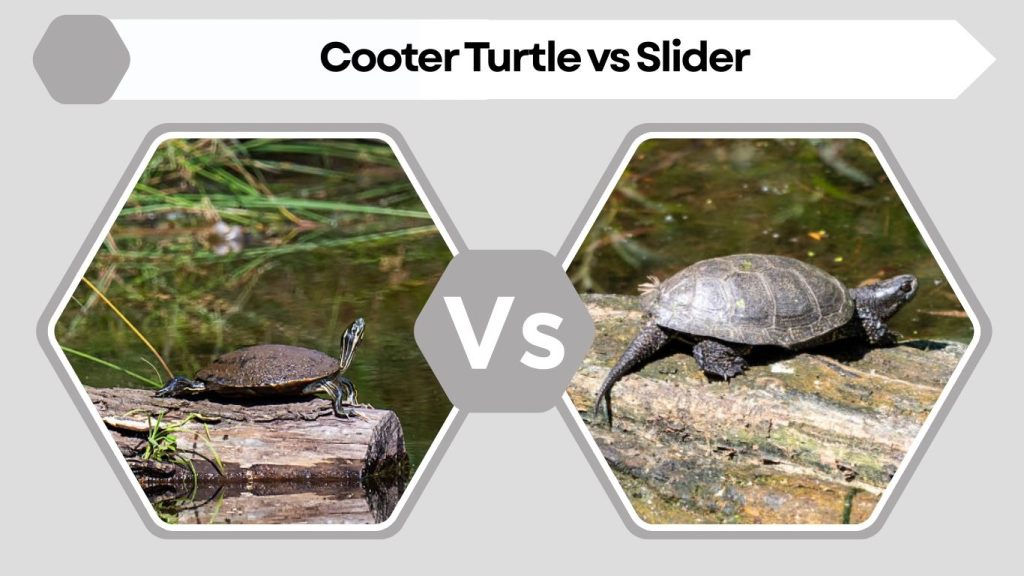
Cooters are often mistaken for sliders because both belong to the same family and share similar habitats.
Key Differences in Appearance
- Ear Patch:
- Sliders (like red-eared sliders) have a red or colored patch behind the eye.
- Cooters do not have a red patch.
- Sliders (like red-eared sliders) have a red or colored patch behind the eye.
- Size:
- Cooters generally grow larger, especially females.
- Cooters generally grow larger, especially females.
- Shell Patterns:
- Cooters often display lighter swirl or “C-shaped” patterns.
- Sliders tend to have more defined striping patterns.
- Cooters often display lighter swirl or “C-shaped” patterns.
Diet Differences
- Cooters are mostly herbivorous as adults.
- Sliders remain more strongly omnivorous throughout life.
Understanding these differences helps with proper identification in the wild.
Behavior and Temperament
Cooter turtles are diurnal, meaning they are active during the day. They are frequently seen basking in groups on logs or rocks. Basking helps regulate body temperature and supports digestion and shell health.
When disturbed, cooters quickly slide into the water and swim away. They are strong swimmers and can remain submerged for extended periods.
Although not aggressive, they may bite if handled improperly.
Interesting Cooter Turtle Facts
Here are some notable cooter turtle facts:
- Some females can grow over 16 inches long.
- They are among the most herbivorous freshwater turtles in North America.
- They are powerful swimmers and often inhabit large rivers.
- They can live for several decades.
- They are commonly mistaken for pond sliders.
Threats and Conservation
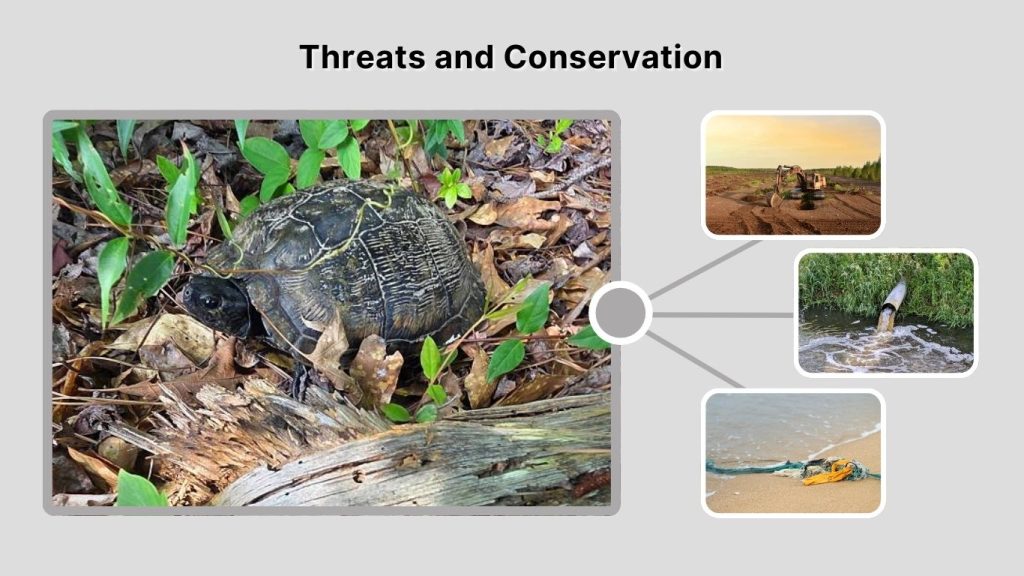
Cooters face environmental threats such as wetland destruction, water pollution, and habitat fragmentation. Road mortality is common during nesting season when females travel over land to lay eggs.
Although many populations remain stable, protecting freshwater habitats is essential for long-term survival.
Conclusion
The cooter turtle is a large, primarily herbivorous freshwater species found throughout the southeastern United States. Known for its impressive size, plant-based diet, and strong basking behavior, it plays an important role in maintaining aquatic ecosystems. Often confused with sliders, cooters can be identified by their larger size and lack of a red ear patch. By preserving clean freshwater habitats, we can help ensure these long-lived turtles continue to thrive for generations to come.