




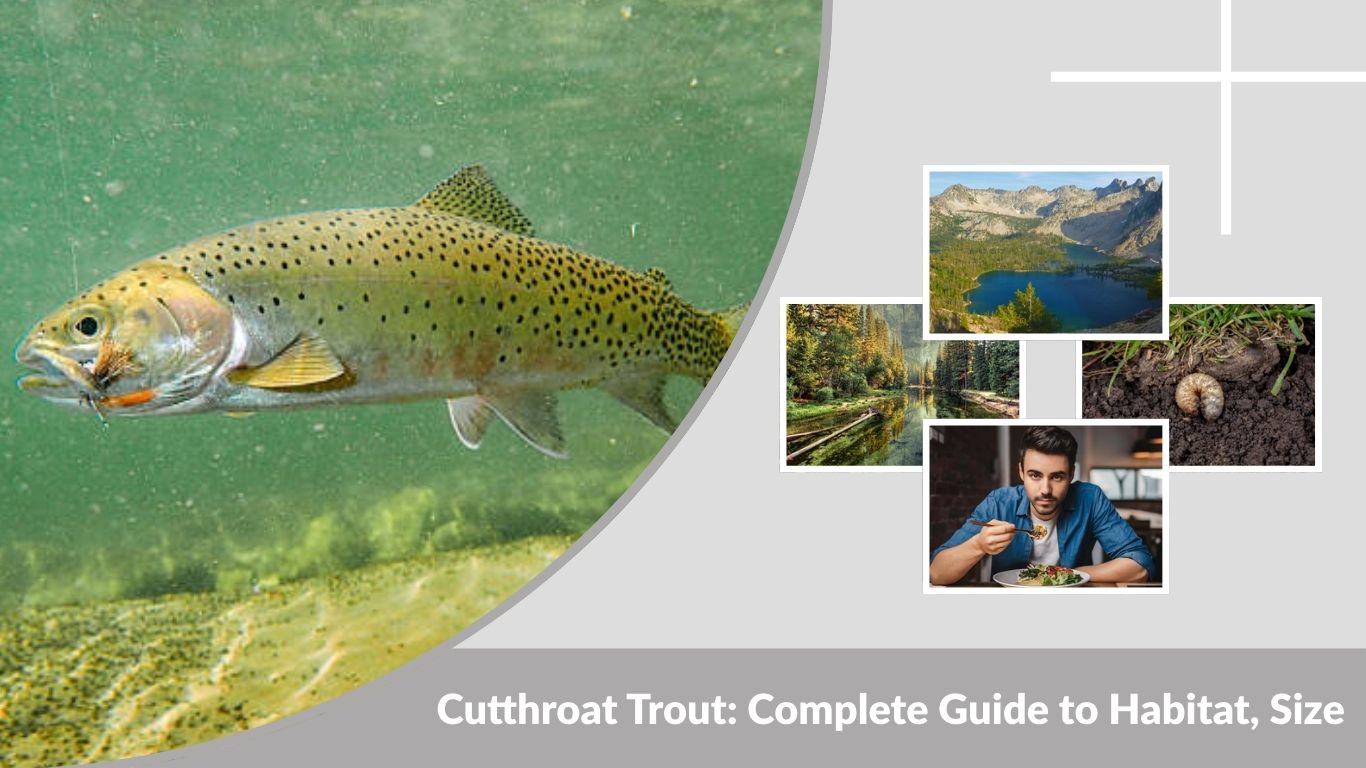
Cutthroat trout are one of the most iconic native trout species in western North America. Known for the distinctive red or orange slash beneath their lower jaw, the cutthroat trout fish is both visually striking and highly valued by anglers. Native to cold rivers, streams, and high-elevation lakes, this species plays an important role in western freshwater ecosystems. In this guide, you’ll discover essential cutthroat trout facts, including identification, habitat, size, and feeding habits.
What Is a Cutthroat Trout?
The cutthroat trout (Oncorhynchus clarkii) belongs to the Salmonidae family and is closely related to rainbow trout. The species was named after William Clark of the Lewis and Clark Expedition.
Identifying Features
The most recognizable feature of cutthroat trout is the bright red, orange, or pink marking beneath the lower jaw. This “cut” appearance gives the species its name.
The cutthroat trout pattern varies by subspecies but typically includes black spots concentrated toward the tail and along the upper body. Compared to rainbow trout, cutthroat often have fewer spots near the head.
The cutthroat trout head is slightly rounded with a medium-sized mouth adapted for feeding on insects and small fish. Their jaw may extend slightly past the eye in larger individuals.
The cutthroat trout tail is usually slightly forked and covered with small black spots, especially near the edges. Body coloration ranges from silvery in lake populations to golden or olive tones in river environments.
Types of Cutthroat Trout (Subspecies)
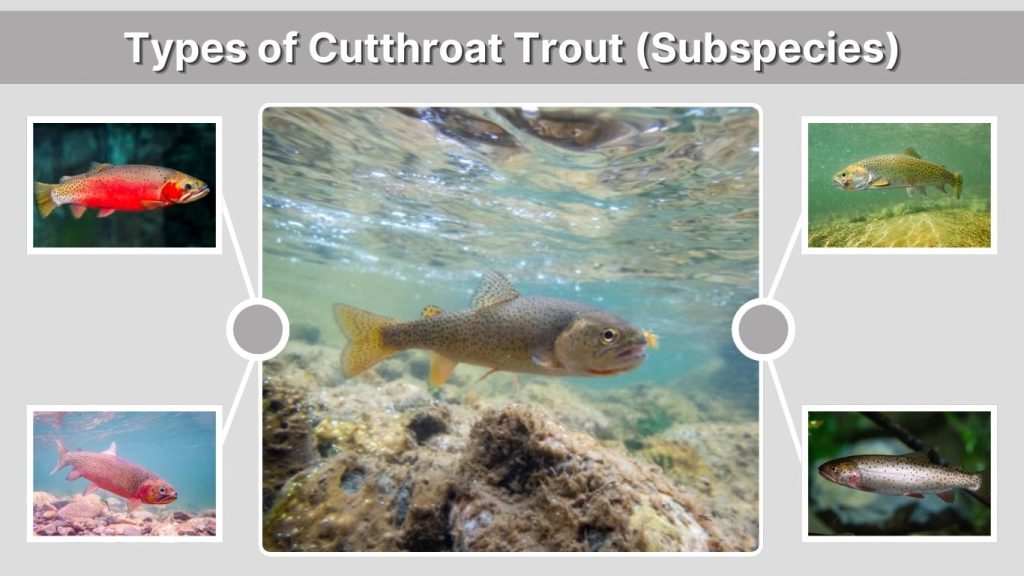
There are several recognized cutthroat trout species and subspecies, each adapted to specific regions.
Coastal Cutthroat Trout
Found along the Pacific coast from Alaska to Northern California, this subspecies can live in both freshwater and saltwater environments. Sea-run coastal cutthroat migrate between rivers and the ocean.
Yellowstone Cutthroat Trout
Native to the Yellowstone River drainage, this subspecies is known for its golden coloration and larger black spots. It is one of the most famous native trout in the western United States.
Bonneville Cutthroat Trout
Originally found in the Bonneville Basin, this trout inhabits rivers and lakes in Utah, Idaho, and Nevada.
Colorado River Cutthroat Trout
Native to the upper Colorado River basin, this subspecies typically lives in small mountain streams.
Westslope Cutthroat Trout
Found west of the Continental Divide, this variety features smaller spots concentrated toward the tail.
Some subspecies have experienced population declines due to habitat loss, competition, and hybridization with rainbow trout.
Cutthroat Trout Habitat
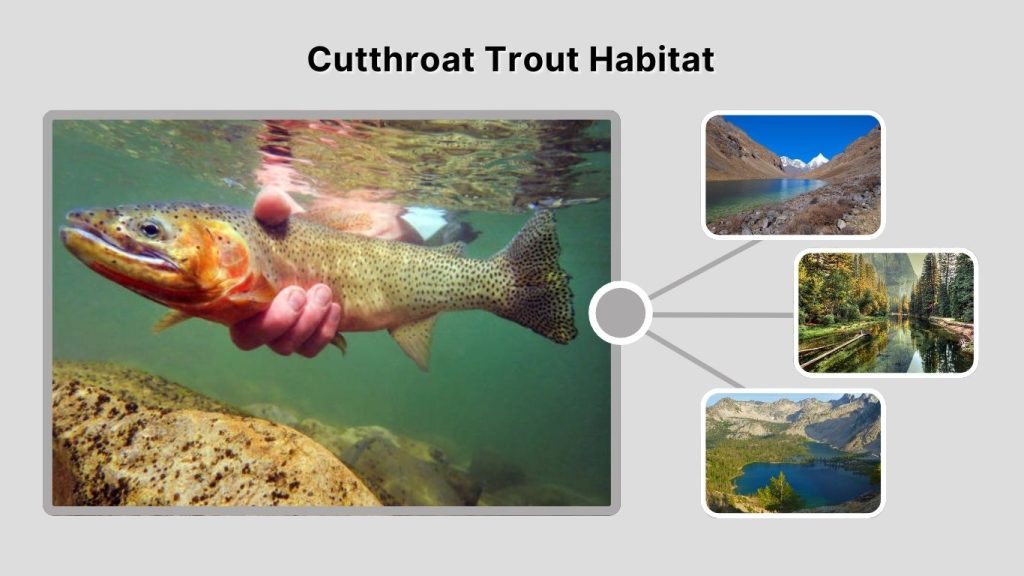
Cutthroat trout habitat is closely tied to clean, cold freshwater systems.
Natural Habitat
Cutthroat trout thrive in:
- Cold mountain streams
- Clear rivers
- High-elevation lakes
- Spring-fed creeks
They prefer gravel-bottomed streams with good water flow and ample cover such as rocks, logs, and overhanging vegetation.
Water Requirements
Like most trout species, cutthroat trout require cold, oxygen-rich water. Ideal temperatures range between 50°F and 60°F (10°C–15°C).
They are sensitive to pollution and sediment, which can damage spawning areas and reduce oxygen levels.
Geographic Distribution
Cutthroat trout are native to western North America, including:
- Rocky Mountain states
- Pacific Northwest
- Parts of Canada
Some subspecies also migrate between freshwater and saltwater environments, particularly coastal forms.
Cutthroat Trout Size and Weight
Cutthroat trout size varies significantly depending on habitat and subspecies.
Cutthroat Trout Average Size
The cutthroat trout average size in streams typically ranges from:
- Length: 12–20 inches
- Weight: 1–4 pounds
In smaller mountain streams, individuals may remain under 12 inches due to limited food supply.
Maximum Size
In lakes or coastal environments with abundant prey, cutthroat trout weight can exceed 10 pounds. Sea-run varieties often grow larger than inland populations.
Growth depends on:
- Food availability
- Water temperature
- Habitat space
- Subspecies genetics
Larger bodies of water generally support faster growth and bigger fish.
What Do Cutthroat Trout Eat?
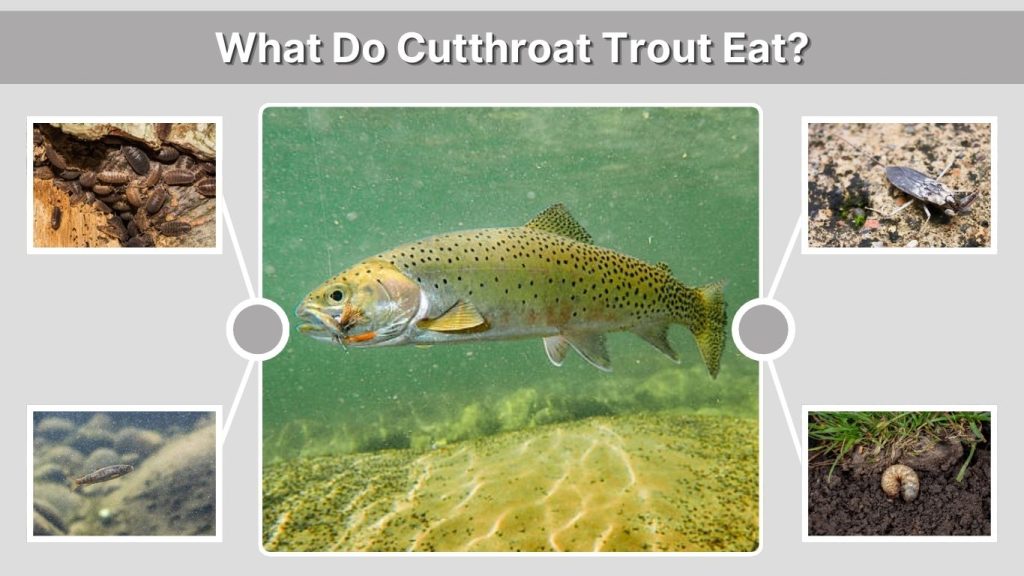
If you’re wondering what do cutthroat trout eat, their diet primarily consists of insects and small aquatic organisms.
Natural Diet
Cutthroat trout commonly feed on:
- Aquatic insects (mayflies, caddisflies, stoneflies)
- Insect larvae
- Terrestrial insects
- Small fish
- Crustaceans
Young cutthroat trout baby fish, known as fry, begin feeding on plankton and tiny invertebrates before transitioning to larger prey as they grow.
Feeding Behavior
Cutthroat trout are opportunistic feeders. They often rise to the surface during insect hatches and can be aggressive feeders compared to other trout species.
In clear mountain streams, they may position themselves behind rocks or near current seams, waiting for food to drift toward them.
Cutthroat Trout Lifespan and Life Cycle
The cutthroat trout lifespan varies depending on habitat and subspecies. Fish living in protected lakes often live longer than those in small streams.
Cutthroat Trout Lifespan
On average, cutthroat trout live between 6 and 10 years. In ideal lake environments with stable water conditions and abundant food, some individuals may live longer. Growth rates and survival depend heavily on water temperature, habitat quality, and competition with other fish species.
Because many cutthroat trout populations live in high-elevation or remote waters, environmental changes can significantly impact their lifespan.
Spawning and Cutthroat Trout Eggs
Cutthroat trout typically spawn in the spring, once water temperatures begin to rise. Females move into shallow gravel beds in streams to build nests called “redds.”
They deposit hundreds to several thousand cutthroat trout eggs, depending on their size. Males fertilize the eggs externally. The eggs settle into gravel, where flowing water provides oxygen throughout development.
Eggs usually hatch in several weeks, depending on water temperature. Clean, sediment-free gravel is critical for successful reproduction.
Cutthroat Trout Baby (Fry Stage)
A cutthroat trout baby, known as a fry, emerges with a yolk sac attached to its body. This sac supplies nutrients for the first stage of life. Once absorbed, the fry begin feeding on small aquatic insects and plankton.
Juvenile cutthroat trout develop vertical markings called parr marks, which provide camouflage in streams. As they mature, these markings fade and are replaced by the species’ characteristic spotting pattern.
Cutthroat Trout vs Rainbow Trout
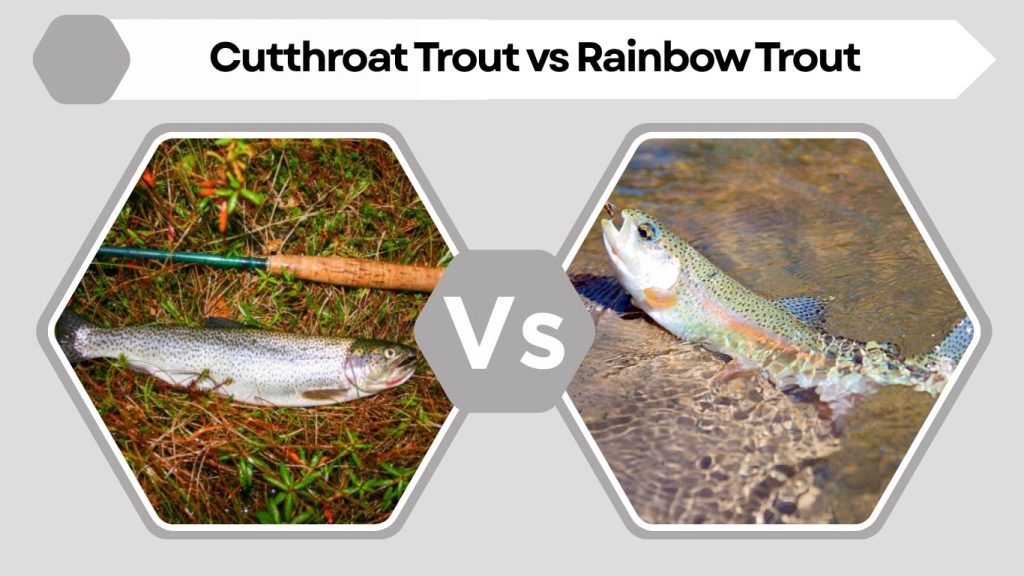
The cutthroat trout vs rainbow trout comparison is common because both belong to the same genus.
Physical Differences
- Throat Marking: Cutthroat trout have the distinctive red or orange slash beneath the jaw, while rainbow trout do not.
- Spot Pattern: Cutthroat trout pattern usually has fewer spots near the head and more toward the tail. Rainbow trout have more evenly distributed spots.
- Coloration: Rainbow trout feature a pink lateral stripe, while cutthroat trout often display golden or olive tones.
Hybridization (Cutbow)
In some regions, cutthroat and rainbow trout interbreed, producing hybrids known as “cutbows.” These fish may display features of both species, including a faint throat slash and a pink side stripe.
Habitat and Behavior Differences
Cutthroat trout often prefer higher-elevation, colder streams, while rainbow trout are more adaptable to varied water conditions. Cutthroat trout are sometimes considered more aggressive surface feeders during insect hatches.
Cutthroat Trout Fishing Guide
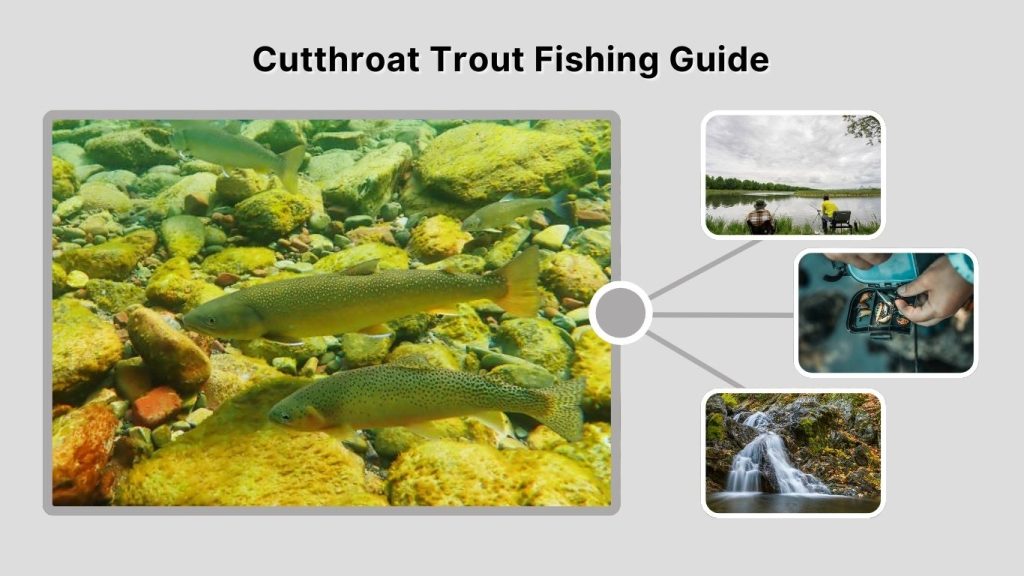
Cutthroat trout fishing is especially popular in western mountain streams and scenic high-elevation lakes.
Best Time to Catch Cutthroat Trout
- Late spring and early summer
- During insect hatches
- Early morning and late evening
- Cooler months before spawning
Cutthroat trout are often willing to rise to dry flies, making them a favorite for fly anglers.
Best Lures and Flies
Effective options include:
- Dry flies (mayfly and caddisfly imitations)
- Nymphs
- Small spinners
- Lightweight spoons
Because cutthroat trout frequently feed near the surface, topwater presentations can be highly successful.
Where to Find Them
Look for cutthroat trout in:
- Headwater streams
- Gravel-bottomed rivers
- High-elevation lakes
- Coastal rivers (for sea-run varieties)
Understanding cutthroat trout habitat greatly increases fishing success.
Cutthroat Trout Nutrition and Benefits
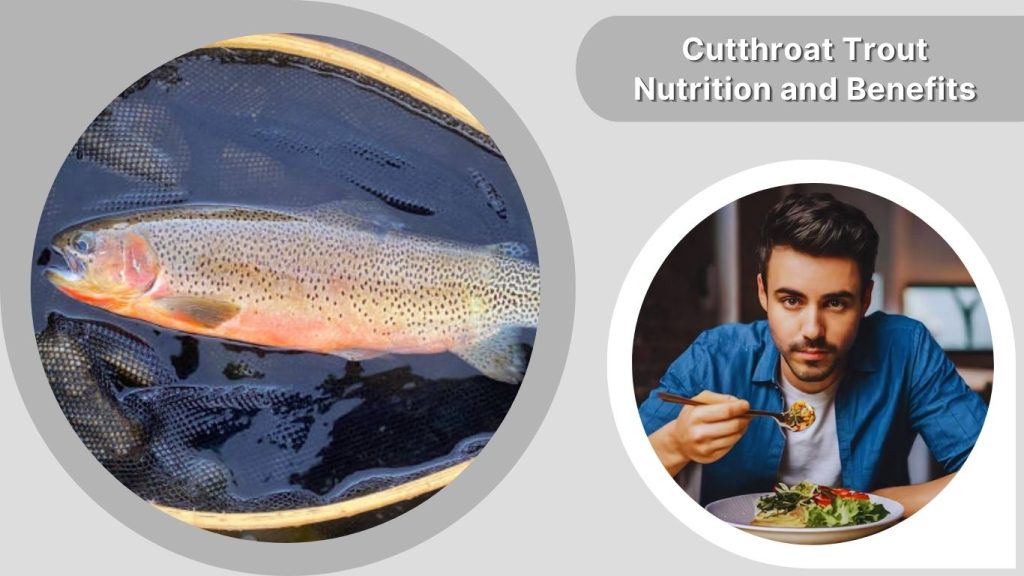
Cutthroat trout are not only prized for sport but also valued as a nutritious food source.
Cutthroat Trout Nutrition
Cutthroat trout provide:
- High-quality protein
- Omega-3 fatty acids
- Vitamin B12
- Vitamin D
- Essential minerals such as selenium
Their lean yet nutrient-rich flesh makes them a healthy seafood choice.
Cutthroat Trout Benefits
Some key cutthroat trout benefits include:
- Supporting heart health
- Promoting brain function
- Helping muscle growth and repair
- Providing essential nutrients with moderate fat content
When harvested responsibly, they can be part of a balanced diet.
Interesting Cutthroat Trout Facts
Here are some notable cutthroat trout facts:
- The species was named after explorer William Clark.
- Their red throat slash is unique among North American trout.
- Some subspecies are considered threatened or of conservation concern.
- Sea-run forms migrate between freshwater and saltwater.
- They are native to western North America and play a key ecological role.
FAQs
What is the average size of a cutthroat trout?
The cutthroat trout average size typically ranges from 12 to 20 inches and weighs between 1 and 4 pounds. Lake and coastal forms may grow significantly larger under ideal conditions.
How long do cutthroat trout live?
The cutthroat trout lifespan usually ranges from 6 to 10 years. In productive lake environments, some individuals may live longer depending on habitat quality and food availability.
What do cutthroat trout eat?
If you’re wondering what do cutthroat trout eat, they feed mainly on aquatic insects, larvae, crustaceans, and small fish. Young cutthroat trout baby fry begin with plankton before expanding their diet.
How can you tell a cutthroat trout from a rainbow trout?
In the cutthroat trout vs rainbow trout comparison, the red or orange throat slash is the clearest identifying feature. Rainbow trout lack this marking and instead have a pink stripe along their sides.
Are cutthroat trout native to North America?
Yes, cutthroat trout are native to western North America. Different subspecies inhabit mountain streams, rivers, lakes, and coastal waters throughout the region.